

Household garden chippers top out at about 2 in (50 mm), gas-powered homeowner machines reach up to 6–8 inches, tractor-driven PTO chippers handle around 8 inches, and commercial disc and brush chippers take 12 inches and up. The rating on any of them is the thickest straight limb the infeed throat will accept, not the size you should feed all afternoon.
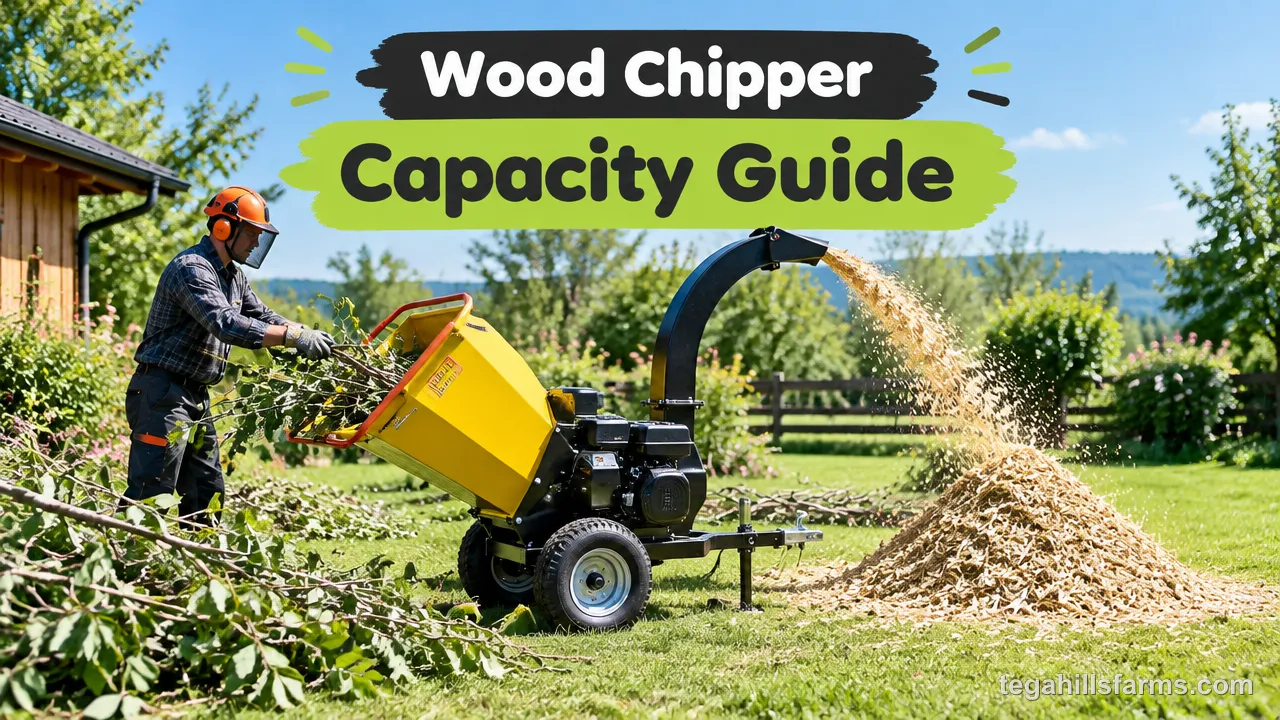
Three things decide how close you get to that number in practice: the wood itself (density, moisture, forks and leaves), the cutting system behind the throat, and the feed system that pulls limbs in. A machine that clears pine prunings at its full rating can bog down on seasoned oak of the same diameter.
The real risk is a mismatch. A chipper sized too small stalls, clogs and wears its knives early. One sized too big costs more to fuel, tow and store than your yard ever repays.
Before you shop, measure the butt end of the heaviest limbs you cut in a normal year. That one measurement narrows the field faster than any spec sheet.
What Does Chipping Capacity Actually Mean?
It is the largest branch diameter the infeed throat is rated to accept, measured across a straight, clean limb at its thickest point.
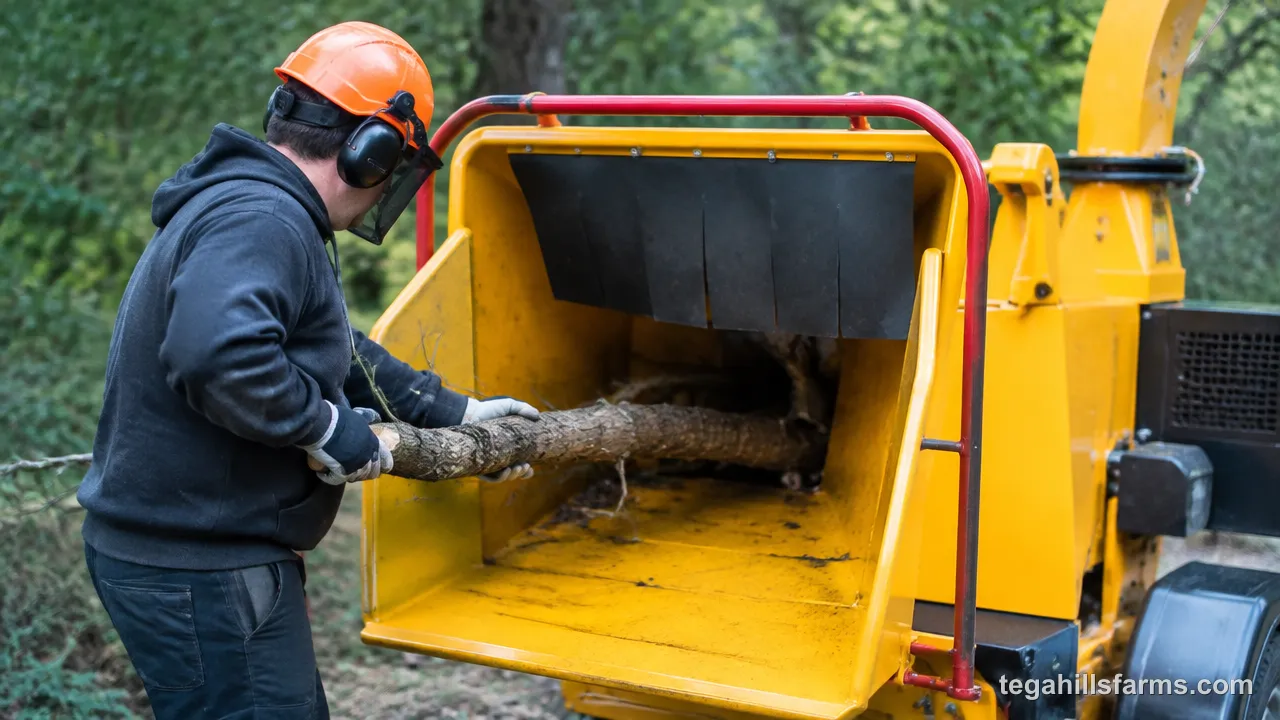
Treat that figure as a ceiling. A limb at the full rating will usually go through, but the engine slows, the knives work hard, and the feed gets jerky, so your comfortable everyday size sits a step below it. The rating also isn’t a measurement of the opening alone. The throat sets the physical limit, while the engine or motor has to keep the knives turning through the full cut, and the disc or drum has to shear that much wood without jamming. A wide opening in front of a weak engine gives you a number on paper that the machine can’t sustain.
Capacity is only one factor, so if you are still narrowing down your options, our guide on how to choose a wood chipper puts it next to the other buying decisions.
How Big a Branch Can Each Type of Chipper Take?
Power source sets the ceiling more than any other spec, because the motor or engine has to keep the cutters at speed through the thickest part of every limb.
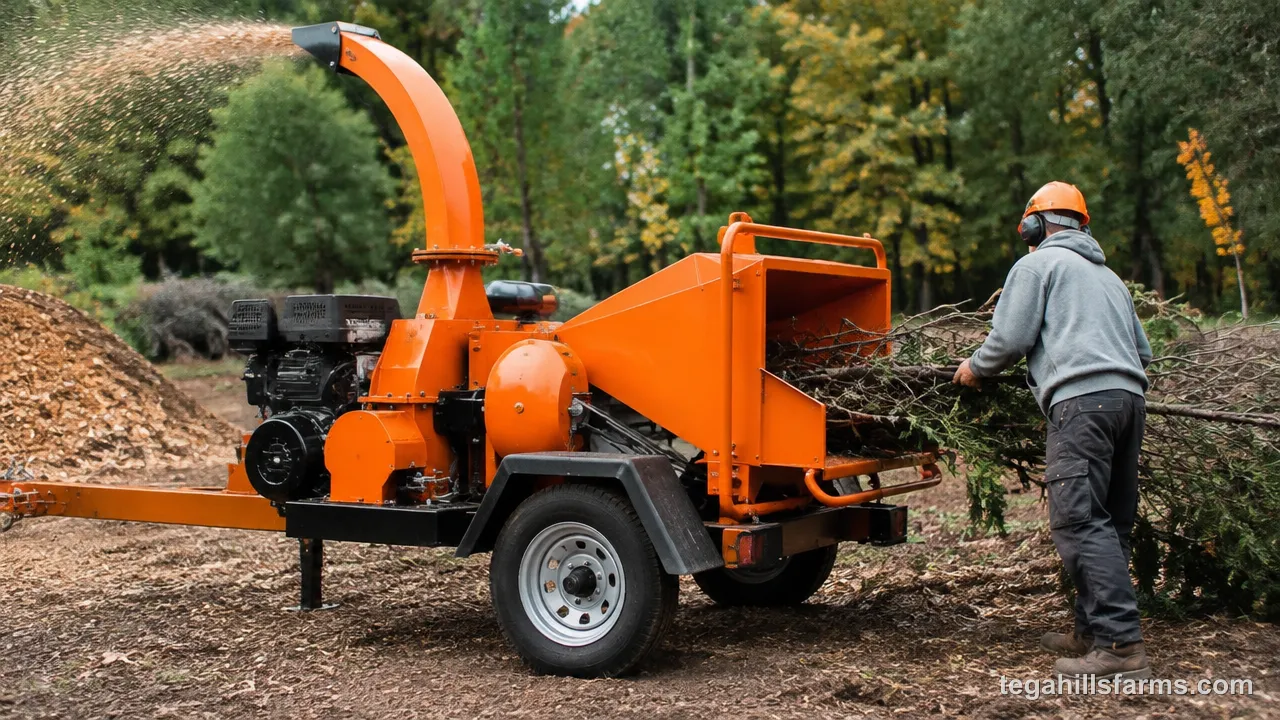
That’s why chippers fall into fairly clear classes. Each step up in power brings a wider throat, but it also brings more weight, more noise and a different way of moving the machine around your property. For a homeowner, the useful question is which class covers the limbs your trees actually drop.
How Big a Branch Can an Electric Chipper Take?
Electric chippers sit in the household garden class, which handles up to about 2 in (50 mm) on most models. Work heading toward 3 to 4 in (75–100 mm) moves into heavier chipping than this class is built for.
You’ll see different ceilings quoted for electric models, and the spread comes from conditions. Softwood cuts more easily than hardwood, so a branch of pine at a given diameter loads the motor less than the same branch of maple. Green wood still holds moisture and shears more cleanly than seasoned wood, which has dried hard. Light-duty units with small motors stall well before heavier electric models with stronger motors and better cutters.
This class suits hedge trimmings, shrub prunings, small fruit-tree cuttings and the twiggy ends of larger limbs. Anything thicker belongs on a saw or a bigger machine.
How Big a Branch Can a Gas-Powered Chipper Take?
Gas-powered chippers handle up to 6–8 inches of coarse, woody branches, which puts them between household electric units and tractor-driven machines.
That gap matters because most yards with mature trees produce limbs too thick for an electric chipper but not thick enough to justify a tractor. A gas engine supplies enough torque to keep the cutters moving through real limb wood, and the machine doesn’t need a cord, so you can roll it to the brush pile instead of dragging brush to an outlet.
Within the class, smaller-throat mid-size models cover storm-dropped limbs and the trimmings from a few large shade trees. The models near the top of the range take the thicker butt ends after a big pruning job.
The trade-offs come with the engine. Gas chippers need oil changes, fresh fuel and winter storage prep, and they’re loud enough that hearing protection is part of the job.
How Big a Branch Can a PTO or Diesel Chipper Take?
A PTO chipper runs off a tractor’s power take-off shaft, and the rural property owners who use them typically chip limbs up to about 8 inches. Diesel PTO machines used by municipal crews reach 12–15 inches.
The appeal is that the tractor supplies the engine. You don’t maintain a second motor, and the chipper itself is a gearbox, rotor and hopper hung on the three-point hitch. The catch is that you need a tractor with a working PTO and enough horsepower to match the chipper’s rating. An undersized tractor will lug down well before the throat limit.
This class fits farms, orchards and acreage where a tractor is already on hand for mowing, hauling and grading. If you don’t own one, a PTO chipper isn’t a shortcut to more capacity. It’s a reason to compare self-powered gas or diesel units instead.
What Can Large Brush and Industrial Chippers Handle?
Industrial disc chippers take 12–15 inches, and contractors, tree services and municipalities use them to process whole trees and thick branches. Bandit’s disc and drum lineup spans 6 inches to 21 inches, and Vermeer builds brush chippers across a similarly wide range.
At this size, infeed capacity is a business decision. A wider throat means fewer saw cuts before feeding, which keeps a crew moving and turns a takedown into a single site visit.
These machines ride on their own trailer axles and carry large diesel engines, so they need a heavy tow vehicle and a proper hitch. For a homeowner, they’re rental or hired-crew equipment.
How Big of a Tree Can a Chipper Take?
The machine takes limbs and bucked sections, not a standing tree or whole trunk, so what matters is whether each piece you cut is narrower than the rated throat.
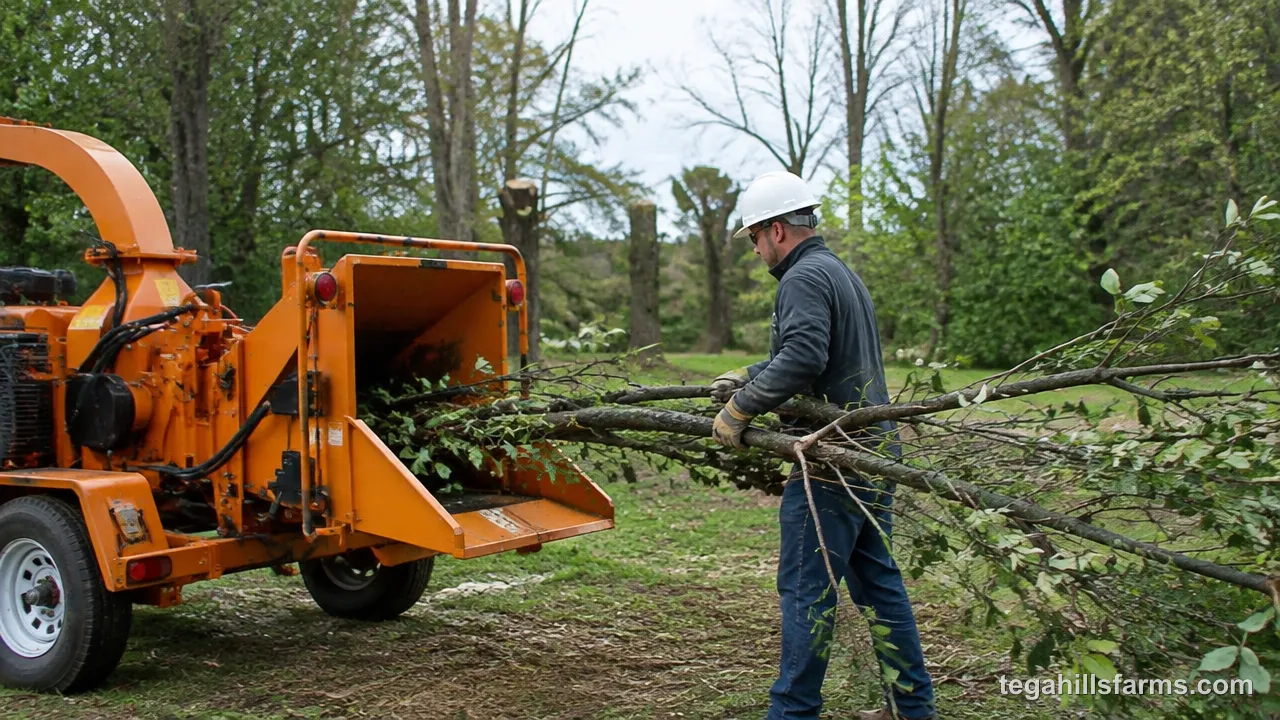
A homeowner gas chipper can take the crown and upper limbs of a small tree, but the trunk usually ends up as firewood or a log round. Tractor PTO units cover more of a mid-size tree. Professional brush chippers are the only class that regularly swallows large trunk sections in residential takedowns.
To get a tree into feedable pieces, drop it safely or have it felled, then limb it from the base toward the top. Cut forks apart so each piece is a single stem, and cut the thick butt into firewood lengths rather than forcing it through the throat. Feed thinner sections from the top of the tree first while the engine is fresh.
Does Wood Type and Condition Change Chipper Capacity?
Yes. The rated diameter is a best case for straight softwood, and dense hardwoods, seasoned wood and forked limbs all pull real capacity below it.
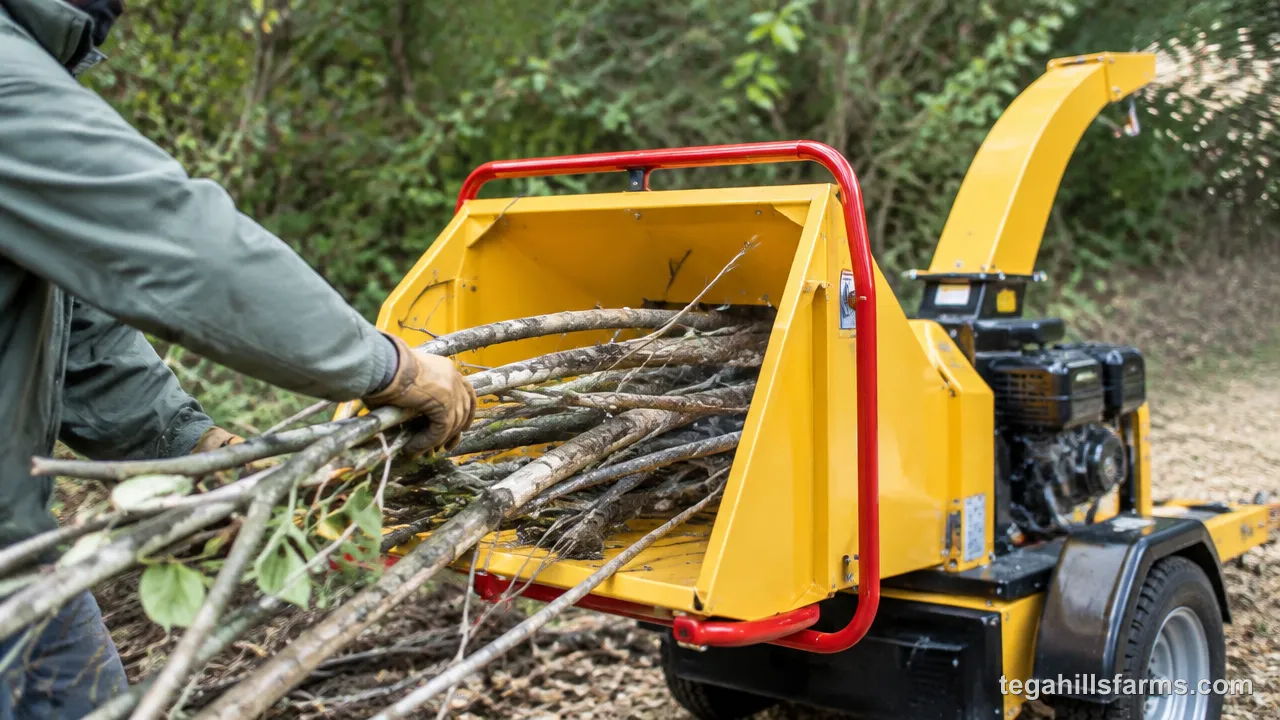
That matters most when your trees are oak, hickory or maple, or when the brush pile has sat for months. Two yards with the same limb sizes can need different machines.
Hardwood vs. Softwood: How Much Does Density Matter?
Hardwoods need roughly 15–20% more power than softwoods to chip, because dense fibers resist the knives harder on every cut. At the same diameter, an oak limb pulls the engine down further than a pine limb does.
You can answer that load two ways. Feed hardwood a size smaller than the rating, or buy a machine with more engine than your softwood work alone would call for. If your trees are mostly hardwood, I’d lean toward the extra power, since cutting every limb down by hand gets old fast.
Moisture changes the picture too. Green wood still holds water, so it shears cleanly and the chips come out even. Seasoned wood has dried hard, especially hardwood, and it dulls knives faster while making the engine work harder. Chip limbs within a few weeks of cutting when you can.
How Do Forked Branches, Leaves and Fibrous Material Affect Capacity?
The rated diameter assumes a single straight limb. A forked branch is wider at the crotch than either stem, so a limb well under the rating can still catch on the throat edges or jam at the knives.
Leafy growth causes a different problem. Leaves and thin twigs compress into a mat that wraps the feed area and slows the cutters, especially on small gravity-fed units. Stringy material like palm fronds and some vines is worse, because long fibers wrap around the disc or drum instead of shearing, and the machine clogs even though nothing thick went in.
The fixes are simple. Split forks with pruners or a saw so each piece is a single stem. Feed leafy brush mixed with woody limbs so the wood clears the throat as it goes. Keep fibrous material in small batches.
Which Chipper Size Fits Your Yard and the Debris You Have?
Match the machine to the thickest limbs your property produces in a normal year, not to one rare storm, because that ordinary load is what the chipper handles most of the time.
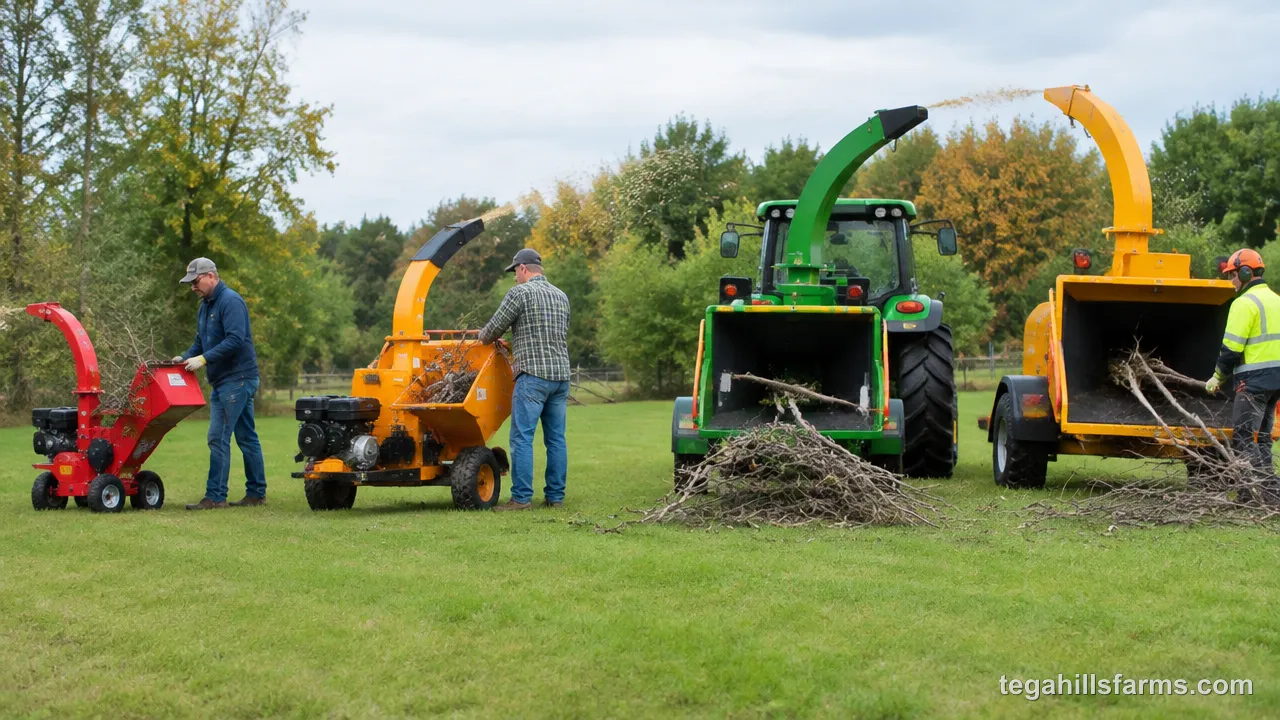
Property size is a useful starting point, since larger lots tend to hold more mature trees and heavier cleanup. The kind of trees and how often you prune matter just as much, so read each group against what’s actually in your brush pile.
What Capacity Suits a Small Yard?
A small suburban lot mostly produces shrub prunings, hedge trimmings and the odd small limb, and the household electric class covers that debris. On softwood at a small property, a residential unit processes around half a cubic yard per hour, which is plenty for a weekend of yard cleanup.
A bigger machine is wasted here. A gas chipper with a wide throat takes up garage or shed space all year, needs fuel and engine upkeep, and is loud enough to bother neighbors on a tight street. An electric unit plugs in, runs quieter and stores in a corner. The occasional thick limb from a storm is cheaper to cut for firewood or haul to the curb than to justify a larger chipper.
What Capacity Suits a Medium-Sized Property?
A 4–6 inch throat is the usual recommendation for medium yards of 1 to 5 acres, where mature shade trees and storm cleanup produce real limb wood rather than just prunings.
A gas-powered chipper in that range handles most of what falls on a property this size: broken limbs after wind, branches from routine pruning and thinning along a tree line. It runs away from an outlet, so you can work at the brush pile instead of hauling limbs to the house.
It falls short with big hardwood limbs near the top of its rating, seasoned piles that sat over winter, and anything left from a full tree removal. Those pieces need a saw first or a larger rented machine. If heavy storm work comes every year rather than now and then, step up to the top of the gas class.
What Capacity Suits Large Acreage?
Large properties of 5 acres and up, including farms and orchards, call for 8–9 inches of capacity. That covers woodlot thinning, fence-line clearing and orchard pruning, which produce heavy brush on a regular schedule.
Regular volume changes the target. A machine that handles a big limb once a year is fine for a medium lot, but on acreage you’re feeding thick material for hours, so you want a rating comfortably above your typical limb rather than right at it.
If you already own a tractor, a PTO chipper pays off here, since it uses an engine you maintain anyway. Without one, a larger self-powered gas or diesel unit does the same job and tows to the work site.
What Capacity Does a Tree Care Contractor Need?
Trimming work, meaning limbs, slash and brush, typically calls for a 9- to 12-inch brush chipper. Takedown work, including whole residential trees and land clearing, calls for 15 to 19 inches.
Bandit advises going up one or two sizes if a crew regularly chips material 8 inches or larger, which puts that crew in the 12- or 15-inch class rather than at the edge of a smaller machine.
For contractors, throat opening translates directly into crew time, because every extra saw cut before feeding slows the job. Feed strength matters as much as the opening, since hydraulic rollers have to grab and pull heavy limbs without stalling. Trailer mobility rounds out the decision. The machine has to reach tight residential driveways and move between job sites every day.
What Else Limits Capacity Besides the Throat Opening?
The cutting system and the feed system decide how close a machine gets to its rated throat size in daily use.
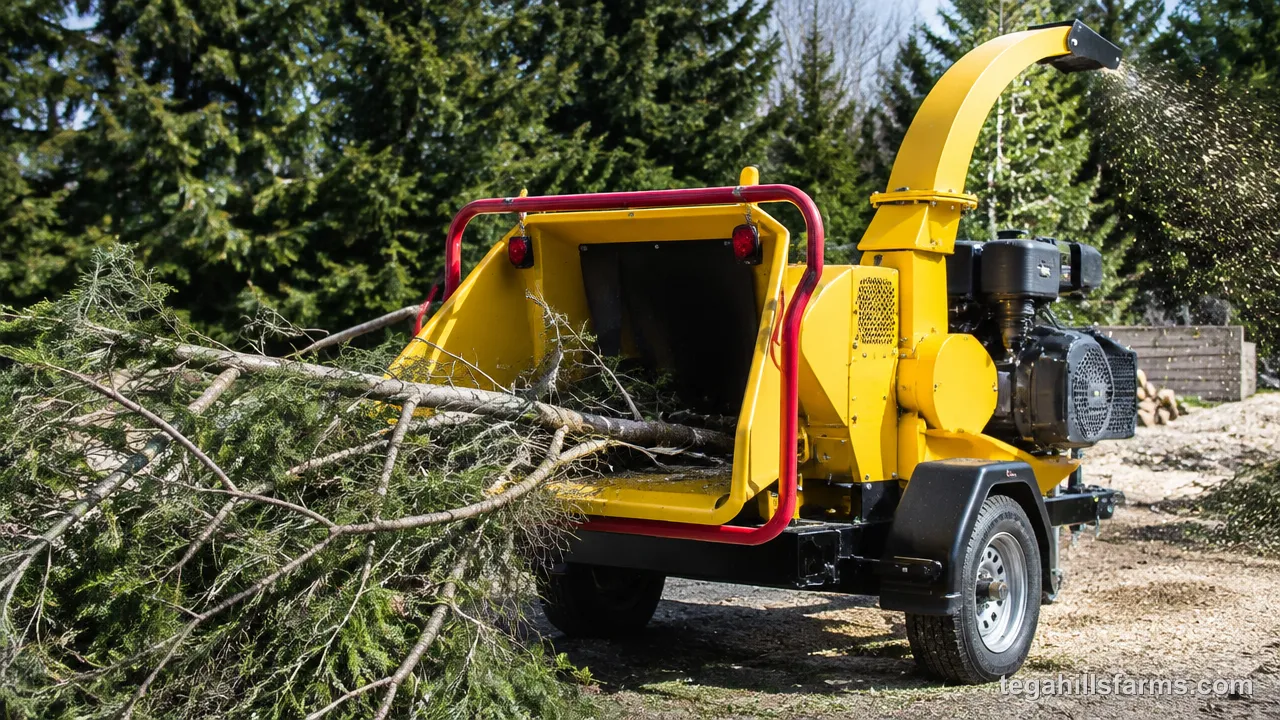
Two chippers with the same opening can perform very differently. One may take limbs near its limit all day, while the other bogs down well below it. Looking beyond the headline number means checking how the wood gets cut and how it gets pulled in.
Disc Chipper vs. Drum Chipper: How Does Design Affect Capacity?
A disc chipper mounts knives on a heavy flywheel that spins across the infeed, while a drum chipper mounts them on a rotating cylinder that pulls material in as it cuts.
The disc design stores momentum in the flywheel, which helps it shear long, straight limbs smoothly and throw chips out the discharge without a separate fan. It does best when wood arrives in clean, single-stem pieces. Bushy material can slow it, because the disc slices at an angle and doesn’t grab brush aggressively.
A drum chipper bites into material and drags it forward, so it handles bulky, branchy brush and tangled tops with less hand-feeding. That aggressive pull makes it effective on mixed debris, though the drum takes more power to keep turning through a heavy cut.
For capacity, the takeaway is practical. A disc chipper suits straight limb work near its rating, and a drum chipper suits messy brush where shape matters more than diameter.
Gravity Feed vs. Feed Wheels: What Does the Feed System Change?
Gravity-fed chippers rely on the knives catching the limb while you push it in, and powered feed wheels grip the limb with toothed rollers and pull it through at a steady rate.
On a gravity machine, the largest usable limb is often smaller than the throat suggests. A thick branch can bounce off the knives or stall the cut unless you push steadily, so you end up working harder near the rating. Most small electric and entry-level gas chippers feed this way.
Feed wheels, usually hydraulic, crush slightly forked ends and keep the cutters loaded evenly. That lets a machine use more of its throat opening, because the rollers supply the force rather than your arms. A wide opening paired with weak rollers gives you less real capacity than a slightly narrower throat with strong ones.
Knowing how to use a wood chipper with powered rollers starts with letting go once the wheels bite, since they pull faster than you can feed by hand.
What Horsepower, Weight and Towing Setup Go With Each Capacity?
Bigger throats need more engine, more machine weight and a heavier transport setup, rising in steps with each class.
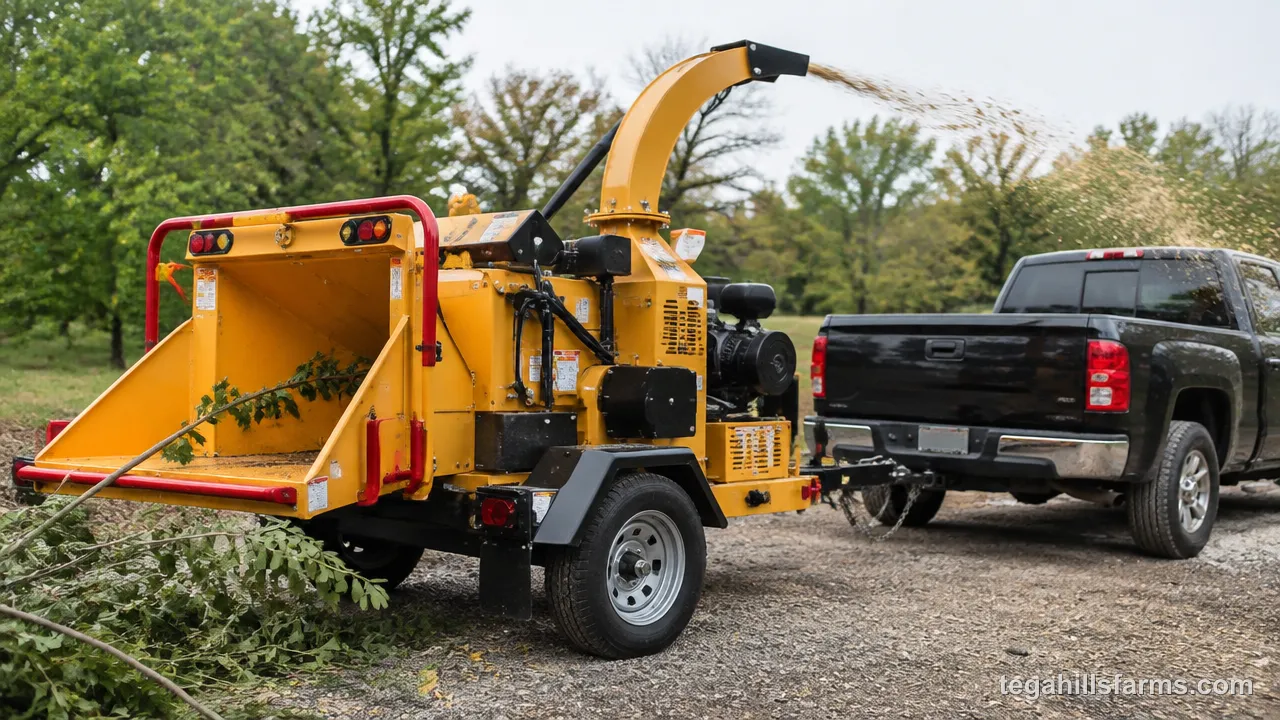
These items are specified separately, but they move together. Once you know the capacity class you need, you also know roughly what engine, storage space and vehicle come with it.
How Much Engine Power Does Each Capacity Class Need?
Each class steps up in engine type as well as size. Household chippers run on electric motors, homeowner and small-property machines on single-cylinder gas engines, PTO units on the tractor’s own engine, and commercial brush chippers on larger gas or diesel engines.
Power has to match the throat, not just the limb diameter. Denser wood demands more power at the same limb size, so a machine built for hardwood work carries more engine than a softwood-rated unit with an identical opening. If your trees are dense species, compare engine size between two models with the same rating. The stronger one will run closer to its ceiling without bogging.
Diesel engines above 74 horsepower require diesel exhaust fluid (DEF). That puts DEF on the maintenance list for most large commercial brush chippers but not for homeowner machines. For buyers looking at a used professional unit, DEF is one more fluid to buy, store and keep topped up.
How Heavy Is Each Class and What Does It Take to Move It?
Some 18- and 19-inch chippers exceed 10,000 pounds, depending on model and configuration. At that weight, a heavy-duty truck with a matching hitch and tow rating is part of the purchase.
The lighter classes are easier. Household electric units are light enough to carry or roll on small wheels and store in a corner of the garage. Homeowner gas chippers roll on wheeled frames, and the larger ones tow behind a lawn tractor, ATV or pickup at low speed, so you’ll want a dedicated bay in a shed. PTO chippers hang on the tractor’s three-point hitch and go wherever the tractor goes, so storage follows the tractor.
Trailer-mounted brush chippers need a ball or pintle hitch rated for their weight, plus a parking spot long enough for the trailer. Check your tow vehicle’s rating before considering one.
How Do You Avoid Buying a Chipper That Is Too Small or Too Big?
Size the throat to cover 80 to 90 percent of the material you expect to chip, and handle the few oversized limbs with a saw or a rental.
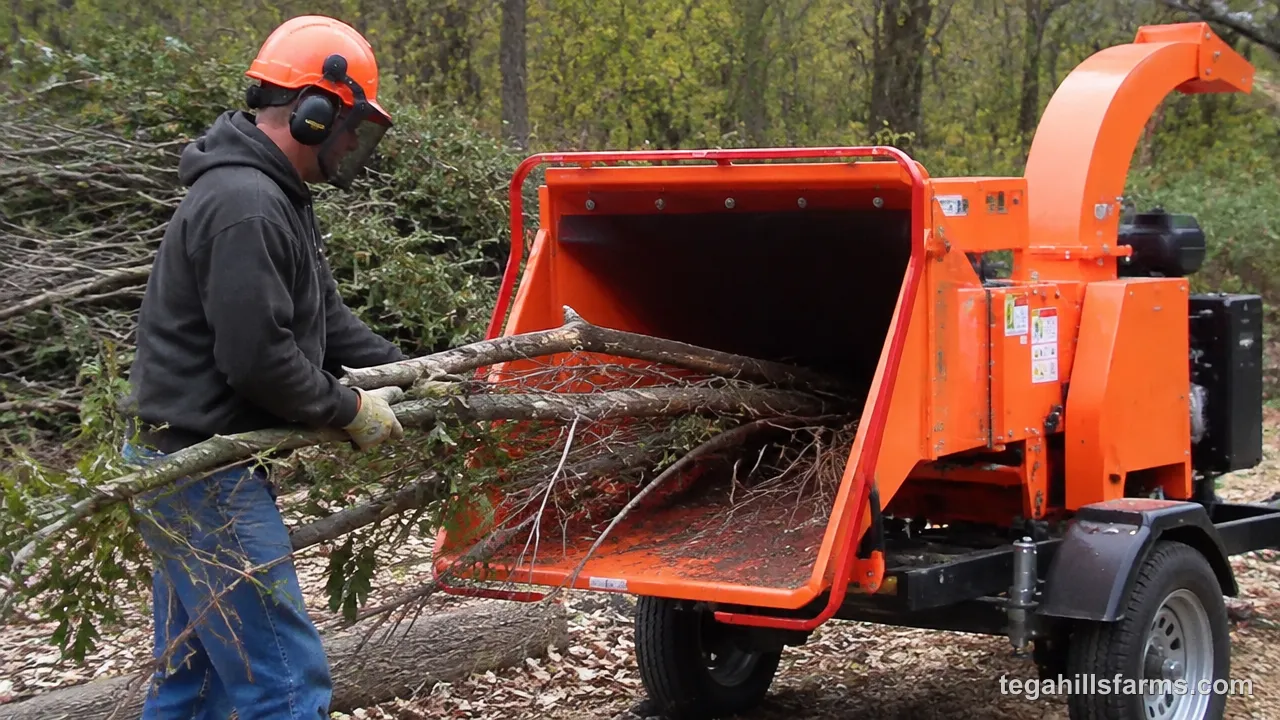
Undersizing costs you every time you run the machine. You spend time cutting limbs down before feeding, the engine runs near its limit, knives dull faster, and clogs interrupt the work. A machine that barely keeps up turns a two-hour cleanup into a full day.
Oversizing costs you in quieter ways. A bigger engine burns more fuel at idle and under load, a heavier frame is harder to move around the yard, and the machine takes more storage space all year for capacity you rarely use. You also pay up front for throat width your trees never fill. If you’re weighing that trade-off against your budget, how much a wood chipper costs at each capacity class is worth checking before you settle on a size.
Should You Rent a Chipper for a One-Off Job?
Yes, when the oversized work happens once, like a single tree removal or a big storm cleanup, renting beats buying a machine sized for that one event.
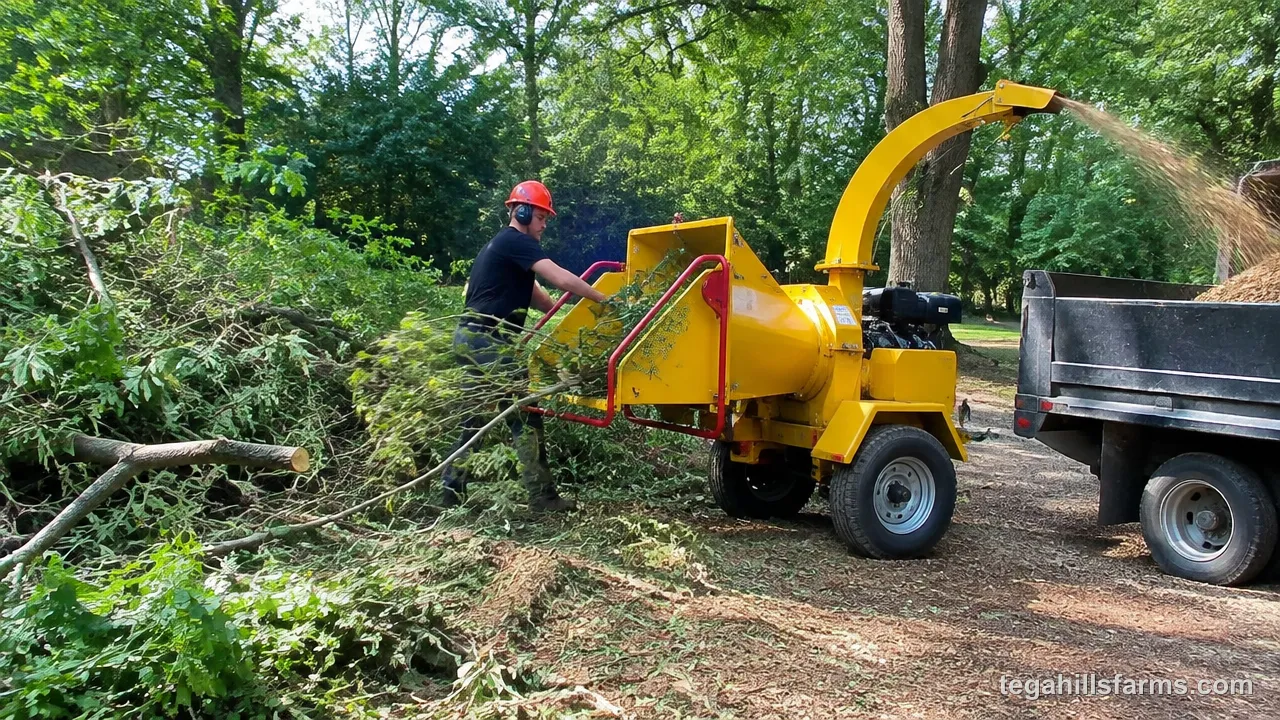
Rental lets you borrow a larger chipper for a day or a weekend, finish the job, and return it, while your own machine (or no machine) stays sized for normal years. Towable rentals usually need a suitable hitch, so confirm your vehicle can handle it before you reserve.
If you’re buying used instead, measure the throat yourself rather than trusting the stated size. Check the knives for chips and rounded edges, look at the feed rollers and belts for wear, and run it on a sample limb to hear whether the engine holds speed.
A limb that fits the throat can still drag the engine down to a crawl, spit out shredded strips instead of chips, and leave the knives noticeably duller by the end of the pile. Running a chipper this way for a full season turns a machine that matched your yard on paper into one that needs sharpening, parts and engine work before the next spring cleanup.
How Can You Tell a Chipper Is Being Overloaded?
A chipper working past its comfort range bogs down audibly. Engine speed drops each time a limb enters, the cut slows, and you hear the motor struggle instead of a steady crunch. On a well-matched job, the engine holds speed and each limb feeds through in one smooth pull.
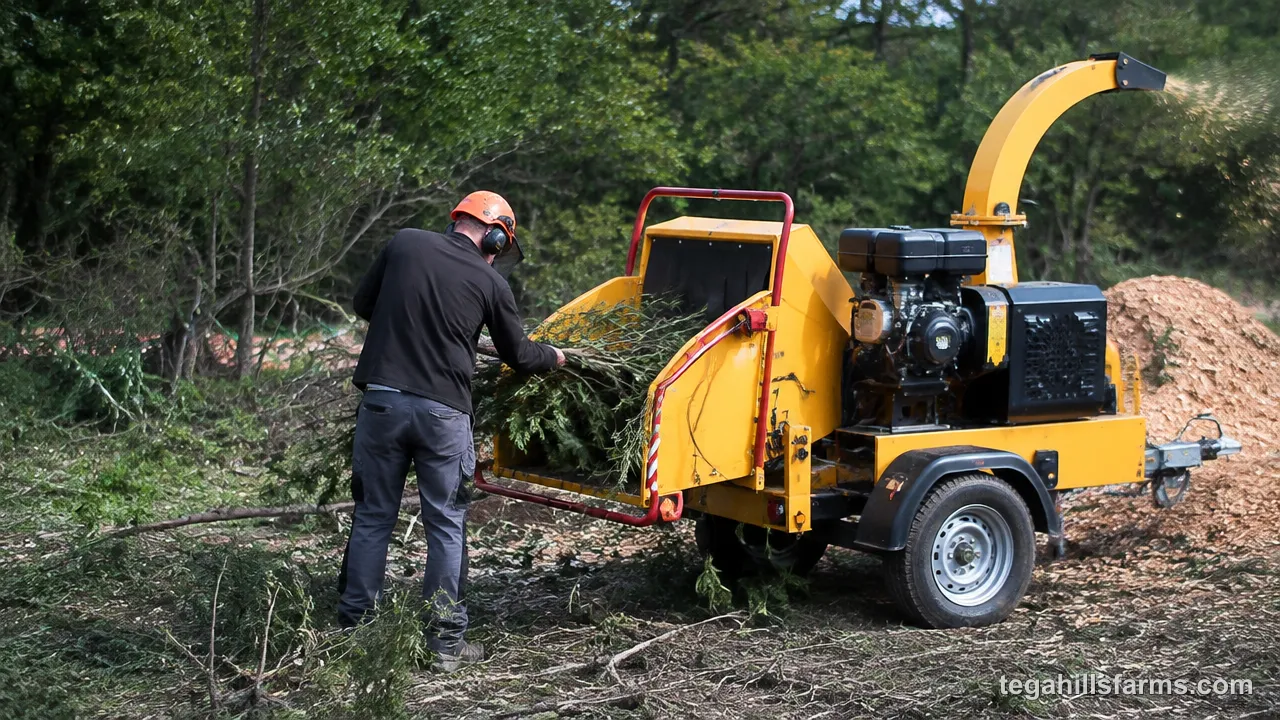
Other signs follow. Repeated clogs, ragged or oversized chips, extra vibration through the frame, and knives that need sharpening far sooner than normal all point to the same problem. Long strips instead of chips mean the knives are tearing wood rather than shearing it.
The fixes are on the material side. Cut limbs a size smaller, split forked ends into single stems, and feed dense hardwood more slowly. Let the engine recover to full speed between pieces.
Steady overloading also cuts into how long wood chippers last, because it strains bearings, belts and the engine along with the knives. If repeated stalls leave you pulling a cord on a machine that suddenly seems dead, that’s a separate problem. When a wood chipper won’t start after a jam, clear the throat and check the safety switches first.
What Should Never Go Into a Chipper, Whatever Its Rating?
Stones, metal, nails, wire and treated lumber never belong in a chipper, even when the piece is well within the throat rating. Hard foreign objects chip or crack knives instantly, and they can be thrown back out of the infeed or discharge at high speed.
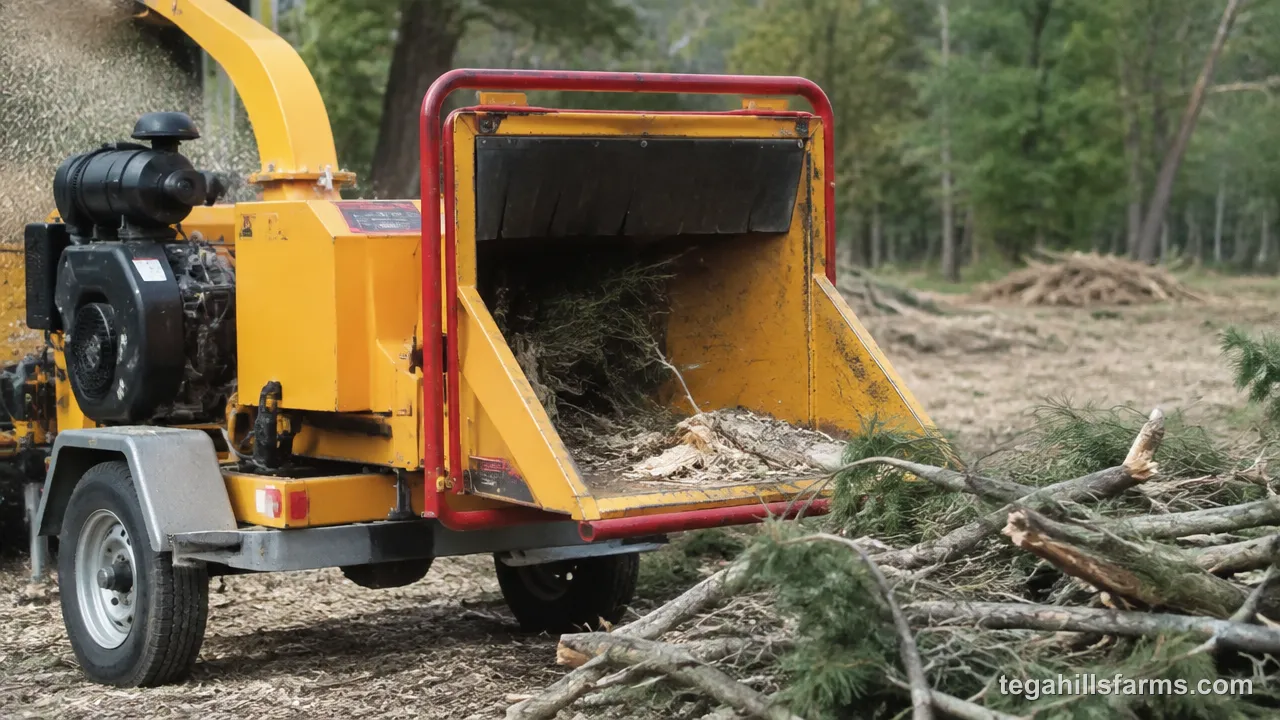
Treated and painted lumber is a different hazard. The chemicals end up in the chips and the dust, which makes the mulch unsafe for garden beds and the dust unsafe to breathe. Root-heavy material carries soil and embedded rocks that grind down knives the same way stones do.
A limb that fits can still be unsafe to feed. Look for old fence wire grown into the bark, nails from treehouses or signs, and clothesline hooks. Long limbs can whip as the rollers grab them, so stand to the side of the infeed. Very short pieces leave your hands too close to the throat, so push them in with the next limb or a wooden stick.
Wood Chipper Capacity FAQs
Is a larger chipper always better?
No. A larger chipper costs more to fuel, move and store, and that extra throat width does nothing for you if your limbs rarely approach it. The right machine covers nearly all of your normal debris, with the occasional oversized limb handled by a saw or a rental machine.
Can a small chipper handle an occasional thicker limb?
It can if the limb is under the rated diameter, but feed it slowly and expect the engine to labor. Limbs over the rating shouldn’t go in at all. Cut them down into smaller pieces, split them for firewood, or set them aside for a larger rented machine.
How does chip size relate to the machine?
Chippers are designed to produce dimensional chips of approximately 5/8 inch, which break down well as mulch and spread evenly around beds and trees. Dull knives, wrong feed speed or overloading produce ragged strips instead, so uneven chips usually point to maintenance or feeding habits rather than the machine’s size.
How do I know a stated capacity applies to straight limbs?
Assume it does unless the manufacturer says otherwise. Ratings describe a single straight, clean limb at its thickest point. Forked branches, leafy brush, fibrous material and dense seasoned hardwood all reduce what the machine can realistically take, so plan to feed those below the printed figure.
Write Your Review
No reviews yet. Be the first to share your experience!