

My shortlist of the best Husqvarna hedge trimmers for 2026 comes down to the Husqvarna 320iHD60 Battery Hedge Trimmer (Best Overall), the Husqvarna 322HD60 Hedge Trimmer 24in (Best Gas-Powered), the Husqvarna 115iHD55 Battery Hedge Trimmer (Best Budget) and the Husqvarna 522iHD60 Battery Hedge Trimmer (Also Great). Between them they handle everything from weekend shaping around the foundation to long sessions on an overgrown property line.
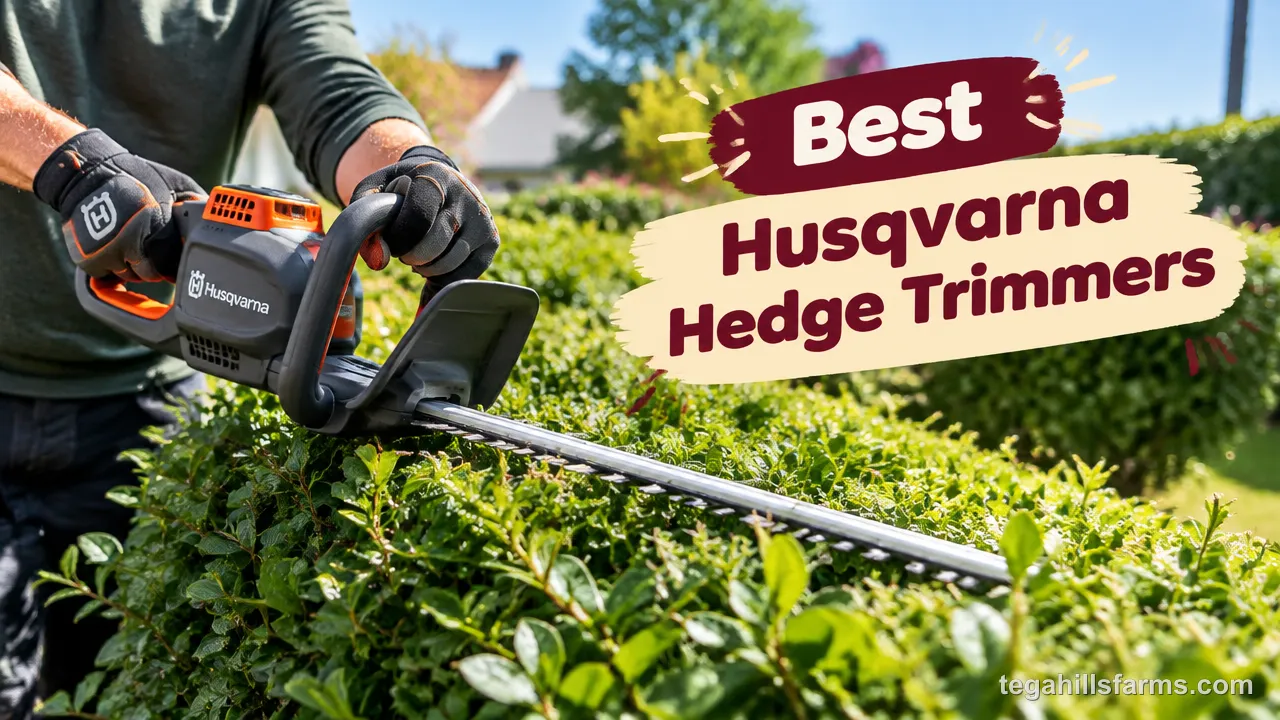
What separates them on the hedge is the power source, how much weight you hold at arm’s length, how thick a stem the knife can take, and whether the trimmer arrives as a complete kit or a bare tool. Those details decide whether a trimmer still feels easy at the end of a long row or wears you out halfway down it.


The bigger worry is committing to the wrong setup. A gas trimmer brings mixed fuel, pull starts and winter fuel prep. A battery trimmer ties every tool you add later to the same brand’s batteries, so the choice reaches well past this one purchase.
Are Husqvarna Hedge Trimmers Good?
Yes, for most homeowners: the lineup pairs pro-grade knife blades with sturdy gearboxes, and the battery models run on brushless motors built for regular use.
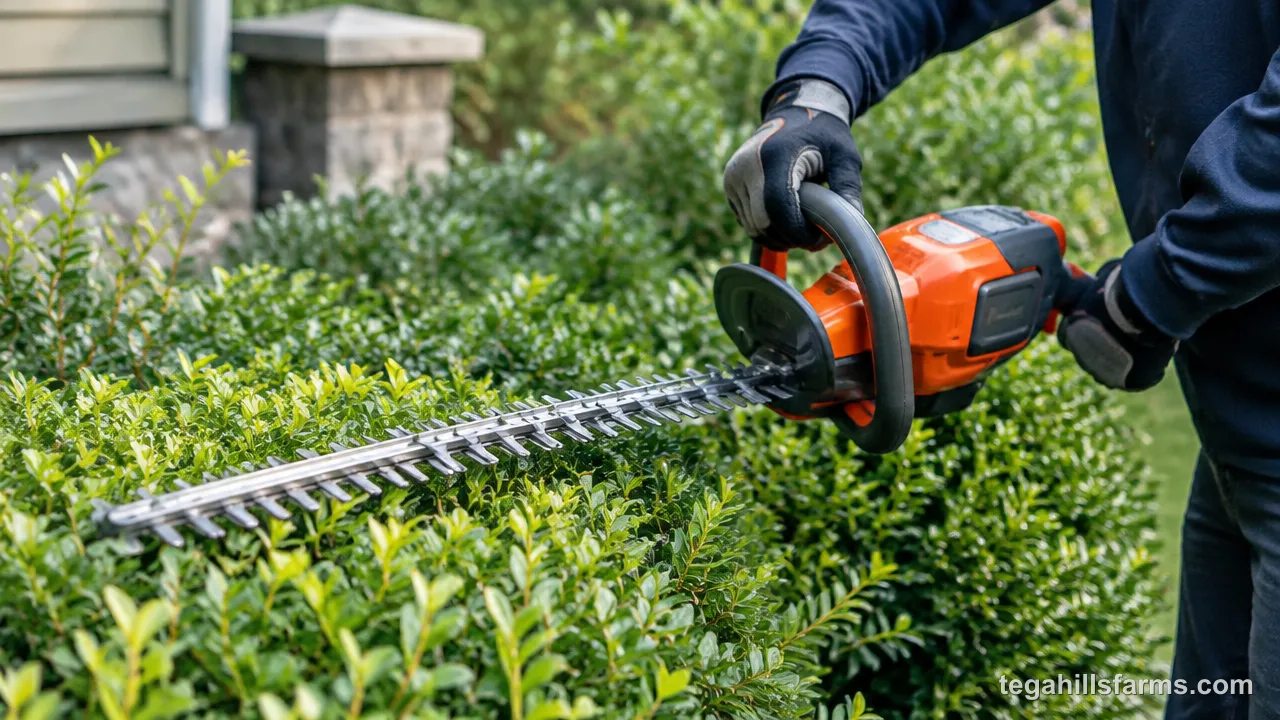
Stainless steel knives on the gas 322HD60 and hardened steel trim cut blades on the 522iHD60 hold an edge, and a sharp edge slices stems instead of crushing them. The gearboxes get the same attention, from the aluminum housing on the 115iHD55 that sheds heat to a gas gearbox built for part-time professional use. The range also covers different kinds of hedge work: battery kits for routine shaping, a gas model for long sessions, and a weatherproof, connected model for owners who trim in any weather.
The gas 322HD60 carries engine weight and brings fuel mixing and pull starts, which is a lot of machine for a few foundation shrubs. The battery models make sense if you’re happy to stay on Husqvarna batteries. If your garage already runs on another brand’s packs, a Husqvarna trimmer means a second charger and a second battery family. If you’re still weighing whether Husqvarna is the name to shop at all, see how it stacks up among the best hedge trimmer brands before settling on a model.
The 4 Best Husqvarna Hedge Trimmers of 2026
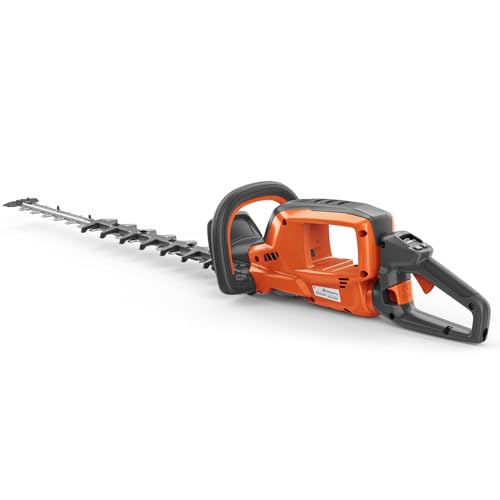
The Husqvarna 320iHD60 Battery Hedge Trimmer, Husqvarna 115iHD55 Battery Hedge Trimmer and Husqvarna 522iHD60 Battery Hedge Trimmer run on batteries, while the Husqvarna 322HD60 Hedge Trimmer 24in runs on a 2-cycle engine. That split decides more than fuel. The gas model runs on fuel instead of a battery pack, so it keeps cutting after a quick refill. The 320iHD60 ships with its battery and charger, which makes it an easy fit for small to mid-sized hedges. The 115iHD55 is a ready-to-use kit for routine shaping on a tighter budget, and the 522iHD60 is a tool-only, weatherproof, connected model for owners who already have the battery.
#1 Husqvarna 320iHD60 Battery Hedge Trimmer — Best Overall
If you want one cordless trimmer that handles routine shaping and the occasional overgrown branch, start here, because its 24-inch knife cuts branches up to 1 inch thick. The 40V battery and charger ship in the same box.
Key Specs:
- Power: 40V lithium-ion battery, 4Ah, charger included
- Knife length: 24 in
- Cutting capacity: branches up to 1 in thick
- Motor: brushless
- Handle: tri-handle grips
- Weight: 7.94 lb
Detailed Review:
Woody stems are where this trimmer pulls ahead. A hedge that skipped a season mixes soft growth with older branches, and this knife can take those branches instead of stalling on them. When a branch does lock the blade, the un-jam button clears it and gets you cutting again.
The blade runs 15 percent faster than comparable trimmers, and quicker strokes slice soft new growth before the stems can bend away from the teeth. The tri-handle grips add 30 percent more reach with better control. That helps when you’re leaning over a wide top or angling down the far side of a hedge you can only reach from one side.
Compared with the 322HD60, this trimmer is rated for thicker branches and weighs noticeably less, so it’s easier to hold out over a tall hedge. What it gives up is the gas model’s ability to keep going after a quick refill: here the session ends when the battery runs down.
The brushless motor has a high torque-to-weight ratio and is built for reduced noise and a longer service life. The quieter running matters if you trim on a Saturday morning with neighbors close by.
Pros:
- Handles woody branches as well as soft growth.
- Un-jam button clears stuck stems and gets you cutting again.
- Tri-handle grips add reach over wide hedge tops.
- Brushless motor runs quieter for early-morning trimming.
Cons:
- Session length is capped by a single battery charge.
- Long 24-inch knife feels less nimble around small, rounded shrubs.
Who It’s For:
Homeowners with a mix of tidy shrubs and neglected, woody stretches will put this kit to full use, since it cuts thicker growth and needs nothing else to get started. It suits anyone building a yard-tool setup around a 40V battery. If you only touch up a few soft shrubs, it’s more machine than the job asks for.
Editor’s Verdict:
I’d steer most homeowners to this kit, because its thick-branch capacity and light build handle both routine shaping and an overdue cutback.
#2 Husqvarna 322HD60 Hedge Trimmer 24in — Best Gas-Powered
Gas makes sense for long sessions on big hedge rows, and this 21.7cc 2-cycle engine keeps cutting as long as there’s fuel in the tank. Expect more upkeep than a battery tool asks for.
Key Specs:
- Engine: 21.7cc, 2-cycle
- Blade: 24 in stainless steel, dual action, cuts in both directions
- Cutting capacity: twigs and shrubs up to 4/5 in thick
- Handle: adjustable rear handle
- Gearbox: built for demanding residential or part-time professional use
- Weight: 11.5 lb
Detailed Review:
The dual action blade cuts in either direction, so you sweep back and forth along a hedge face instead of resetting at the end of every stroke. The stainless steel knives are professional-grade and hold their sharpness, which keeps cuts clean instead of leaving torn, browning leaf tips.
The adjustable rear handle lets you turn the blade vertical for the sides and flat for the top without bending your wrist into an awkward angle. Behind the blade, the gearbox is built for demanding residential or part-time professional use. That’s the part that takes the shock when the knives hit a stem near their cutting limit.
The engine keeps the blade moving as long as there’s fuel and refills in seconds when a long property line outlasts a tankful. The trade-off is weight: carrying the engine adds up on overhead passes across a tall top.
Upkeep comes with the engine: mixed fuel, a pull start, and spark plug and air filter checks through the season. If you already run a gas mower or string trimmer, that routine won’t add much to your weekend.
Pros:
- Dual action blade cuts on both forward and back strokes.
- Refueling takes seconds, so long sessions skip the charging wait.
- Adjustable rear handle keeps your wrist straight on hedge sides.
- Professional-grade stainless steel knives hold their sharpness.
Cons:
- 2-cycle engine adds fuel mixing, spark plug and filter upkeep.
- Extra engine weight tires your arms on overhead cuts.
- Engine noise makes early-morning trimming hard on neighbors.
Who It’s For:
If you trim long rows of privet or a whole property line without stopping, the engine keeps going without a charging break. It fits owners who are already comfortable mixing oil into their gas. Anyone trimming a few shrubs by the house, or anyone who dreads pull starts, will be happier with a battery model.
Editor’s Verdict:
Choose this one when run time matters more than weight; the dual action blade and adjustable rear handle make long hedge rows go faster.
#3 Husqvarna 115iHD55 Battery Hedge Trimmer — Best Budget
For a homeowner who wants an affordable cordless kit for routine shaping, this one fits, since savE mode stretches each charge on light work. It ships with the B140 battery and QC80 charger.
Key Specs:
- Power: B140 battery and QC80 charger included
- Motor: brushless
- savE mode: lowers rpm for longer run time and less noise
- Gearbox: aluminum
- Controls: key pad
- Weight: 10.14 lb
Detailed Review:
savE mode lowers the motor’s rpm, which slows the knife, draws less from the battery, cuts noise and spares the battery some wear over its life. On soft new growth the slower strokes still cut cleanly, so you get longer run time without losing much.
The cost shows up on older, woody stems, where a slower knife is more likely to hesitate. Switching back to full speed for those stretches keeps the blade moving, and savE can go back on once you’re into soft growth again.
The aluminum gearbox sheds heat well, and that matters because the gearbox takes the strain every time the knives meet resistance. The brushless motor is built for a longer life and less maintenance than a brushed design, so there’s little on the drive side to service. The key pad is simple to operate, which helps if the trimmer only comes out a few times a season and you don’t want to relearn the controls each time.
Pros:
- savE mode stretches run time and lowers noise on light trims.
- Aluminum gearbox sheds heat for longer service life.
- Brushless motor needs less maintenance than a brushed design.
- Simple key pad is easy to learn.
Cons:
- savE mode slows the blade on thicker, woody stems.
- Weighs more than the 320iHD60 kit.
Who It’s For:
Shoppers who keep a few foundation shrubs and a short hedge in shape on weekends get a complete, affordable kit with nothing extra to buy, and savE mode keeps early-morning trimming quieter for the neighbors. If your hedges have gone woody and overgrown, you’ll want full blade speed more often than run-time savings.
Editor’s Verdict:
Buy it for routine shaping on a modest budget; savE mode and the aluminum gearbox make it a sensible, low-fuss first battery trimmer.
#4 Husqvarna 522iHD60 Battery Hedge Trimmer — Also Great
Owners who already keep a compatible Husqvarna 40V battery on the shelf get a pro-leaning trimmer that keeps cutting through drizzle and wet foliage, thanks to its IPX4 rating. Battery and charger are sold separately.
Key Specs:
- Power: 40V battery (tool only; battery and charger sold separately)
- Blade: 24 in double-sided trim cut blades, hardened steel
- Weatherproofing: IPX4
- Connectivity: built-in module for Husqvarna Fleet Services
- Weight: 9.1 lb
Detailed Review:
The trim cut blades combine hardened steel, improved tooth geometry and a high knife speed, so they bite into growth faster and leave cleaner cuts. Husqvarna places this model at the top of its battery hedge trimmer range for cutting performance.
The IPX4 rating means the housing resists water splashing from any direction, so dew-soaked foliage or a passing drizzle doesn’t end the session. If you trim the spring flush, keep up through summer and finish with a fall cleanup, that gives you more days when the job can get done.
The built-in connectivity module links to Husqvarna Fleet Services, where you can see the trimmer’s last known location, usage stats and service history, and update its firmware. A homeowner gets a running service log out of it. The location tracking matters more for crews, or for anyone who keeps tools in a detached shed.
Husqvarna kept the weight down with optimized components and a lightweight motor, which you notice when holding the double-sided blade out across a wide top. It ships as a bare tool, so you’ll need a compatible Husqvarna battery and charger before the first cut.
Pros:
- Hardened steel trim cut blades hold a clean edge.
- IPX4 rating keeps it working in drizzle and wet foliage.
- Fleet Services logs usage, service history and location.
- Double-sided blade cuts in both sweep directions.
Cons:
- Sold tool-only, so you need a battery and charger.
- Connectivity features add little for a single-tool homeowner.
Who It’s For:
Anyone who trims through wet spring growth and late-season cleanup, with a compatible Husqvarna 40V battery already on hand, will get steady use out of this tool, and the automatic service log is a plus if you like keeping records. Buyers starting with no battery at all are better served by a complete kit such as the 320iHD60.
Editor’s Verdict:
Pick this one if a compatible battery is already on your shelf and you want weatherproofing and service tracking for all-season trimming.
What Should You Look for in a Husqvarna Hedge Trimmer?
The specs worth comparing are the ones that change how a trimmer behaves deep into a long session, not the ones printed largest on the box. Several of these models share a blade length, so the differences that matter show up as you work down a long row, reach across a tall top or meet a stem at the limit of what the teeth can handle. That’s where a trimmer either suits your hedge or starts fighting you.
How Do Blade Length and Cutting Capacity Affect Your Hedge Work?
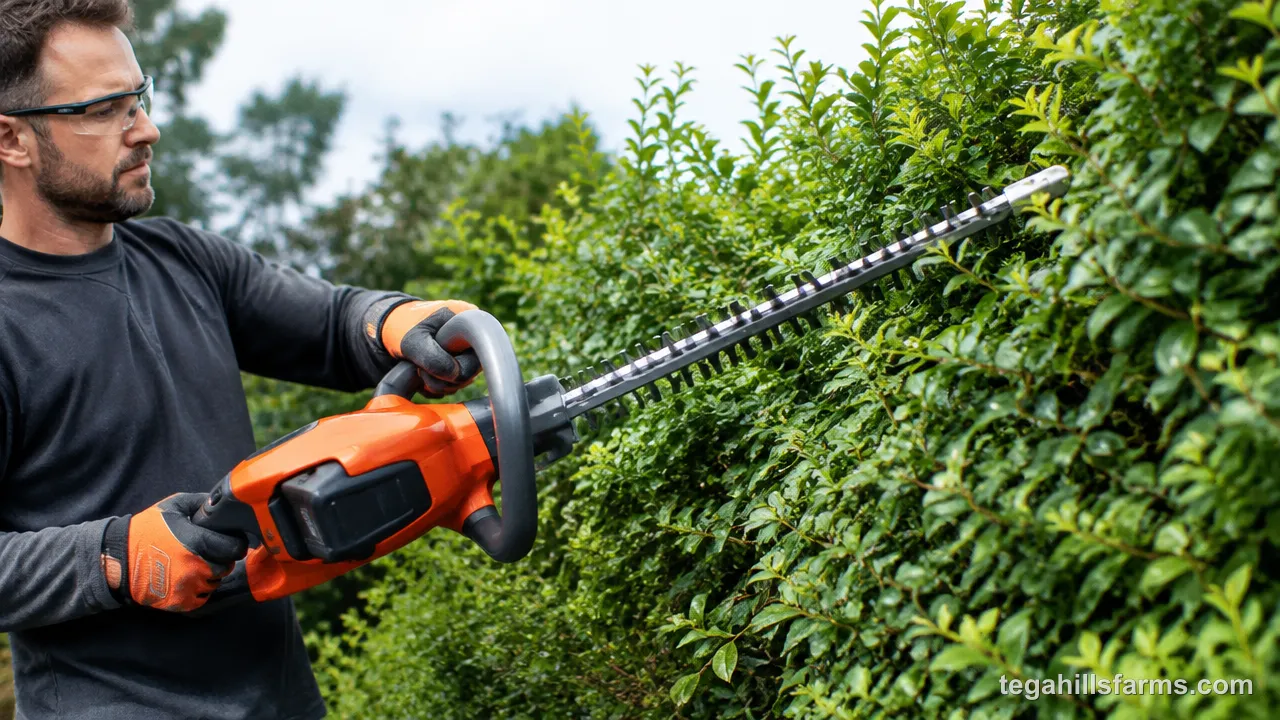
Every inch of knife widens the strip of hedge you clear in one sweep and adds to how far you can reach across a wide top without leaning in. The gap between the teeth sets the other limit: stems that fit get sliced, while stems thicker than the rated capacity stall the knife or get chewed instead of cut.
A longer blade also puts more weight out in front of your hands, so it feels less nimble around rounded shrubs and in tight spots against a wall or fence. A shorter blade gives you more control for detail shaping, though a long, flat face takes more passes to finish.
Forcing a branch past the rated capacity strains the gearbox and leaves a torn stub that tends to die back. Those branches belong to loppers or a pruning saw.
A single-sided blade cuts on one edge, which works for flat tops where you sweep in one direction. A double-sided, dual action blade cuts on both edges with both knives moving, so you can sweep back and forth along the sides, and the opposing knife motion keeps vibration down.
How Much Do Weight and Handle Design Matter?
Extra pounds held at arm’s length and above shoulder height are what wear you out on a tall hedge, far more than the same load carried at your waist. A longer blade adds to it, because the farther the weight sits from your hands, the harder your shoulders and wrists work to keep the cutting line level.
The handle layout decides how well you can manage that load at different angles. A rotating rear handle lets you turn the blade vertical for the sides while your hand stays in a natural grip, so your wrist isn’t bent through a whole row. A tri-handle layout gives you more places to hold on, which lets you choke up for control near the ground or reach out across a wide top.
These details matter most on long runs of tall sides, on flat tops above eye level, and on hedges against a fence or wall that you can only work from one side.
Which Built-In Features Reduce Downtime and Upkeep?
A brushless motor, a jam-clearing button, a power-saving mode, a sturdy gearbox and splash resistance each take away a reason to stop mid-hedge or haul the trimmer in for repair.
Brushless motors have no carbon brushes to wear down, so they run cooler and go longer between problems. A jam-clearing button frees a stalled knife quickly instead of leaving you to work a stem loose by hand. Power-saving modes, such as savE on the 115iHD55, are worth leaving on for soft growth because they stretch each charge.
The gearbox turns motor or engine power into knife motion, and it takes the shock whenever a stem is too thick, so a well-built, heat-shedding housing keeps a trimmer working for years. Weather resistance such as an IPX4 rating means water splashes don’t end the session, though it’s still no reason to hose the trimmer down.
An integrated connectivity module, like the Fleet Services link on the 522iHD60, logs location, usage and service history. Landscape crews tracking several machines get real use from it, while a homeowner mostly gets a service log.
Battery or Gas: Which Husqvarna Hedge Trimmer Fits Your Yard?
For a typical suburban lot I’d go cordless, and I’d save a 2-cycle engine for long sessions on dense, overgrown growth, where a quick refill beats waiting on a charger.
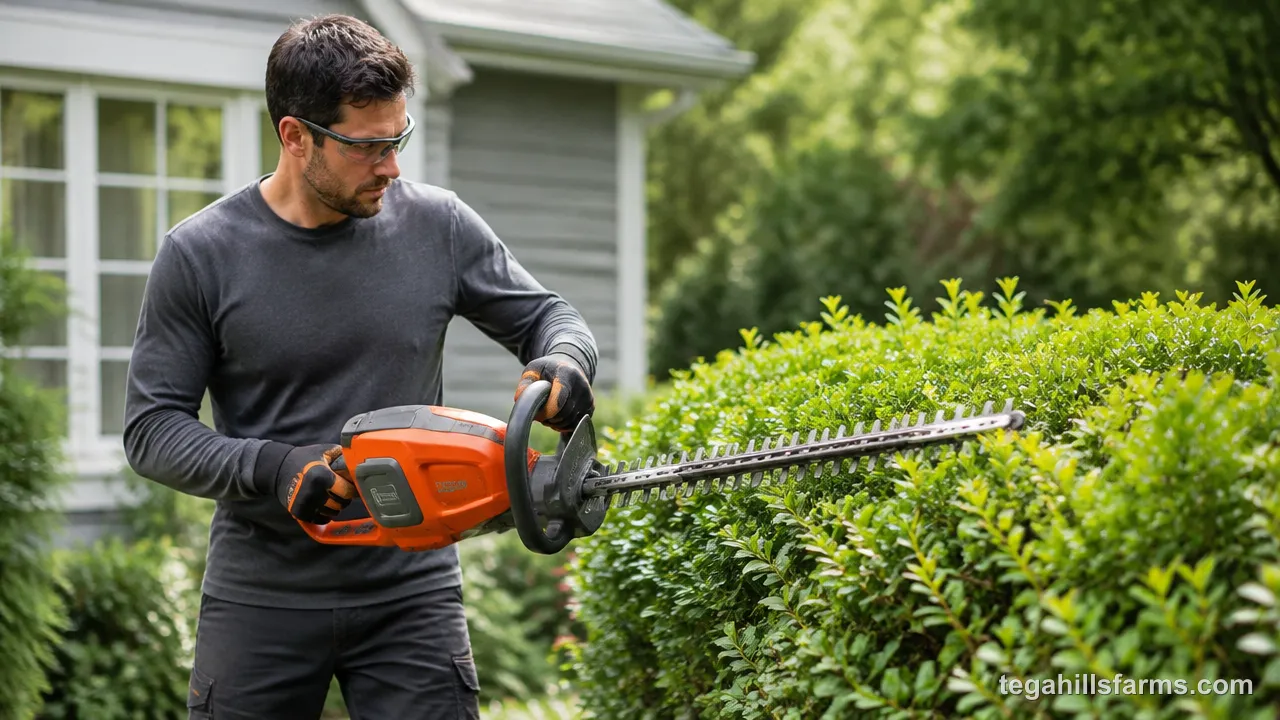
Raw cutting power is closer than you might expect, since the battery 320iHD60 is rated for branches up to 1 inch thick while the gas 322HD60 handles up to 4/5-in. The engine pulls ahead on staying power under load: it keeps the knife at speed as long as there’s fuel, while battery run time depends on the pack’s capacity. At the same voltage, a higher amp-hour battery stores more energy and keeps the blade moving longer, and a second charged pack is the usual fix for a long row.
Side by side, the two power sources compare like this:
| Factor | Battery | Gas |
|---|---|---|
| Power on thick growth | Strong within the rated capacity | Steady under load for long stretches |
| Run time | Set by battery size; swap packs to extend | Runs as long as fuel lasts; refills in seconds |
| Weight | Lighter in this lineup | Heaviest in this lineup |
| Noise | Quieter | Loud; hearing protection advised |
| Starting | Press the trigger and go | Choke, primer and pull start |
| Routine | Charge, then store the battery indoors | Mix fuel, plug and filter care, winter fuel prep |
The battery side can make sense over time once you commit to a platform. One battery and charger can run a trimmer, a blower and a string trimmer, so every tool after the first can be bought bare, the way the 522iHD60 is sold. The same logic works against Husqvarna if your garage is already full of another brand’s packs. Owners with a lot of DeWalt cordless tools should compare the best DeWalt hedge trimmers before starting a second battery family.
Sap and resin from privet, boxwood and evergreens leave a sticky film on the teeth after every trim, and by the next session the knives drag through stems instead of slicing them. A blade left that way tears leaves into brown, ragged edges and makes the motor or engine strain on every stroke, which wears out the gearbox long before its time.
How Do You Keep a Husqvarna Hedge Trimmer Cutting Cleanly?
A wipe-down and a light coat of oil on the knives after every session prevent most of the problems that shorten a trimmer’s life. Pull the battery or the spark plug wire first. Then scrub the sap off both sides of the blade with a stiff brush and resin solvent, and spray a blade lubricant along the teeth.
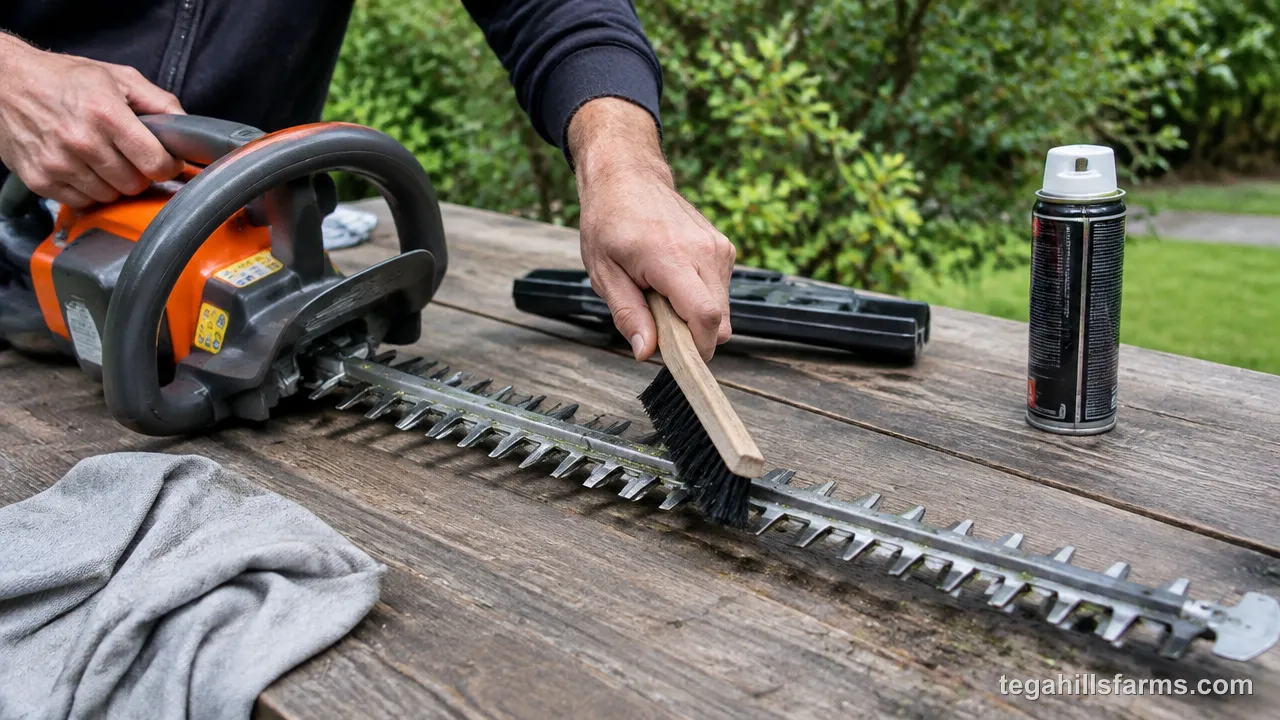
Sharpen dull or nicked teeth with a flat file, following the original bevel, and replace a blade with bent or chipped teeth. Grease the gearbox at the interval in your owner’s manual. Watch for ragged, torn cuts, stalling on stems the trimmer used to handle, and new vibration, which usually points to loose blade bolts or wear inside the gearbox.
Gas models add their own routine. Mix fresh fuel at the ratio in the manual, check the spark plug and clean the air filter each season, and before winter either run the tank dry or treat the fuel with stabilizer. Battery models are easier: store the battery indoors, partly charged and off the charger, and keep its contacts clean and dry.
When Is a Different Brand a Better Fit Than Husqvarna?
Another brand fits better when your garage already runs on its batteries, when you trim only now and then and want something lighter, or when you prefer a different gas engine design.
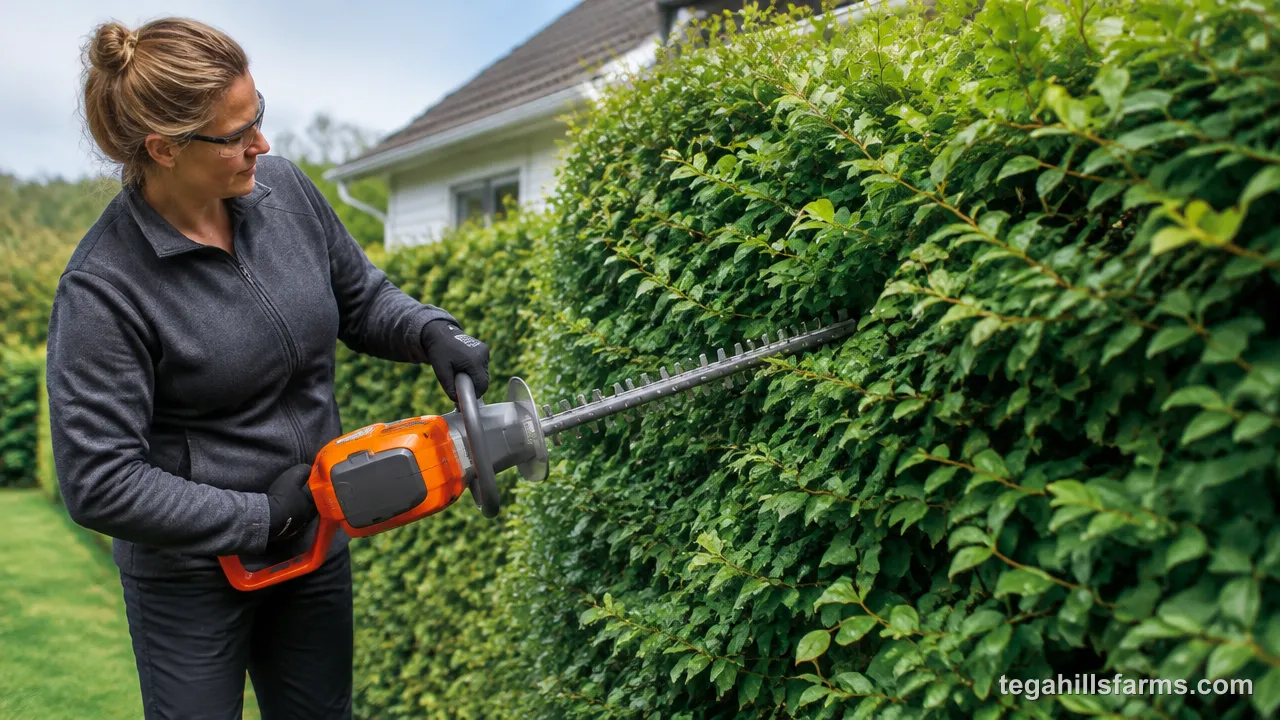
Buying into a platform and buying a single tool are different decisions. A Husqvarna battery trimmer bought as a lone tool starts a new battery family, with its own charger and packs. A bare tool from the brand you already own just borrows a battery from the shelf. If your mower and blower run on EGO packs, the best EGO hedge trimmers keep everything on one charger.
For occasional touch-ups on a few soft shrubs, Husqvarna’s heavy-duty knives and gearboxes are more than the job needs, and a lighter, simpler trimmer will be easier to grab. Gas owners who prefer a different engine layout, or who already use another brand’s dealer for service, can compare the best Echo hedge trimmers before committing.
Husqvarna Hedge Trimmer FAQ
Can a Husqvarna battery hedge trimmer share batteries with other Husqvarna tools?
Often, yes, but match the battery model rather than the brand name. The 320iHD60 and the 522iHD60 both run on 40V power, and the 522iHD60 is sold without a battery for owners who already have one. Before buying a bare tool, check Husqvarna’s compatibility list for the exact battery you own.
When should you use a pole hedge trimmer instead of a standard one?
Switch to a pole hedge trimmer when the tops are higher than you can reach while keeping your arms below shoulder height, or when you’d otherwise be working from a ladder. The extended shaft keeps your feet on the ground, which is safer and easier on your shoulders, though it’s slower and clumsier for detailed shaping on low shrubs.






Write Your Review
No reviews yet. Be the first to share your experience!