

For the best echo hedge trimmers in 2026, the choices are Echo 20in 21.2cc Gas Hedge Trimmer (Best Overall), Echo HCA-2620 Hedge Trimmer (Best Premium), ECHO DHCS-3400R1 56V Hedge Trimmer 34in (Best Precision Cutting), ECHO DHC-2800R1 56V Hedge Trimmer 28in (Best for Heavy Pruning), and ECHO DHC-2200R1 56V Hedge Trimmer 22in (Best Budget).
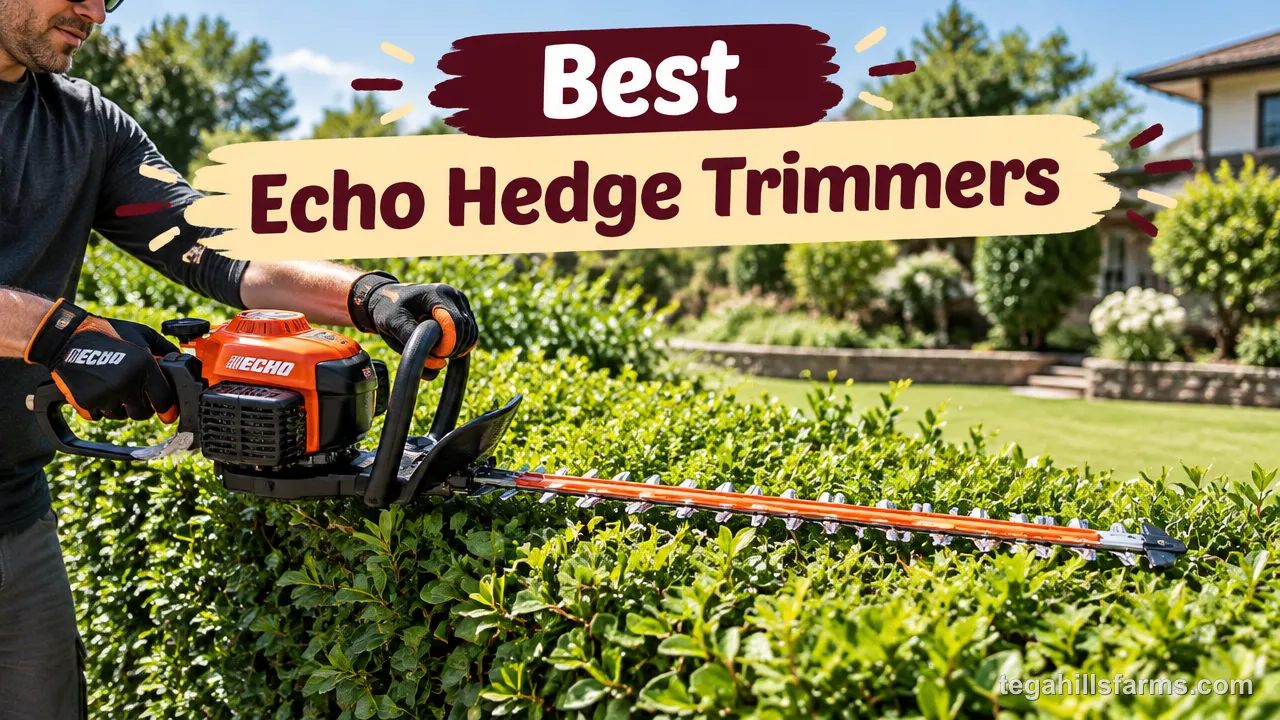
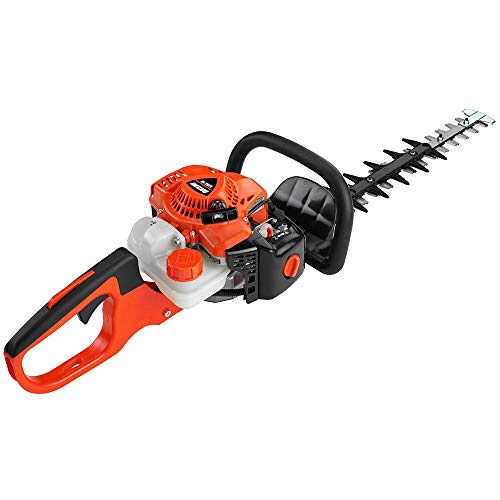
In the yard, these machines differ mainly in where the power comes from and how the blade is laid out. A gas engine keeps going as long as you have fuel. A 56V battery gets rid of the fuel can and the pull cord, and you get a charger and a set runtime in their place. Blade length decides how much hedge each pass covers. A single-sided blade holds a flatter face, and a double-sided blade cuts in both directions as you sweep.


The real cost of a hedge trimmer shows up late in a long job: your arms tire from holding weight at shoulder height, sap gums the teeth, and a gas engine that sat all winter won’t start. Handle design, weight balance and simple upkeep features decide how much of that you have to deal with.
Are Echo Hedge Trimmers Any Good?
Yes. Homeowners and light-commercial users get pro-grade build, RazorEdge blades that push through dense growth with less snagging, and low-fuss upkeep such as the tool-less air filter cover and grease fitting on the gas HC-2020.
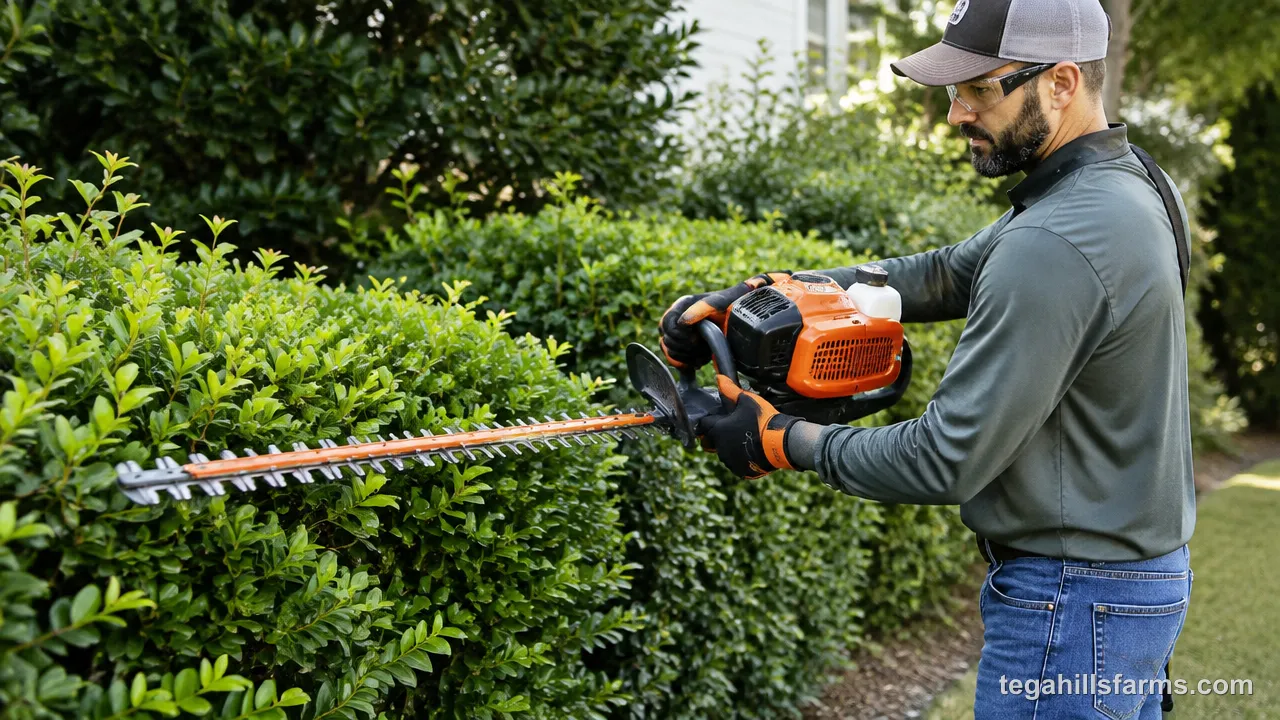
Echo designs much of its lineup for commercial use. That’s why the parts are built to start reliably and last for many seasons, not to hit the lowest price. The RazorEdge blades grind extra sharpened edges onto the cutters, so a branch gets sliced instead of crushed. The cut is cleaner on privet or boxwood, and the blade can push into thick growth without catching on every twig.
That build is more machine than you need if you only shape a few small shrubs now and then, and a lighter-duty brand will handle that work. The owners who get the most out of Echo have long privet rows, overgrown borders or more than one property to keep up. Husqvarna builds for the same professional-leaning buyer, so if you’re cross-shopping on build and workload, look at the best Husqvarna hedge trimmers.
The lineup below covers gas models with fixed or articulating heads, plus 56V battery models with single-sided or double-sided blades. To see where Echo lands against its rivals, browse the best hedge trimmer brands before you commit.
The 5 Best Echo Hedge Trimmers of 2026
The gas models are the Echo 20in 21.2cc Gas Hedge Trimmer and Echo HCA-2620 Hedge Trimmer, and the 56V battery models are the ECHO DHCS-3400R1 56V Hedge Trimmer 34in, ECHO DHC-2800R1 56V Hedge Trimmer 28in and ECHO DHC-2200R1 56V Hedge Trimmer 22in. Among the battery models, blade layout decides the job. The DHCS-3400R1 has a long single-sided blade for flat, formal faces, and the DHC-2800R1 and DHC-2200R1 cut on both sides for heavy pruning and everyday shaping. On the gas side, the HC-2020 has a fixed head for general work. The HCA-2620 adds an articulating head for tall tops and low edges, which only helps if your hedges sit well above or below eye level.
#1 Echo 20in 21.2cc Gas Hedge Trimmer — Best Overall
The HC-2020 fits a homeowner who wants gas power without a long maintenance routine, because its zero-type grease fitting and tool-less air filter cover make upkeep quick. Its 20-inch double-sided blades cut whichever way you sweep.
Key Specs:
- Model: HC-2020
- Engine: 21.2 cc gas, 2-stroke
- Blade: 20 in, double-sided, double-reciprocating RazorEdge
- Lubrication: zero-type grease fitting
- Air filter: tool-less cover
Detailed Review:
The 21.2 cc two-stroke engine runs as long as you have fuel, which matters on a long fence-line hedge where you’d otherwise stop to recharge. Next to the battery-powered DHC-2800R1, it swaps a charger for a fuel can, so the job ends when the tank runs dry instead of the pack.
The 20-inch double-sided RazorEdge blades let you sweep left and right along a hedge face without turning the tool over. That length is easy to steady near corners, windows and the base of a shrub, so it handles general shaping on most suburban hedges without feeling like too much bar.
The zero-type grease fitting lets you grease the gear case with a grease gun without taking anything apart, and a greased gear case keeps the blade drive from wearing early. The air filter cover comes off by hand, so you can check the filter after a dusty trim without a screwdriver, and a clean filter helps a two-stroke start easily.
Pros:
- Grease fitting makes gear case lubrication quick and simple.
- Tool-less air filter cover allows checks without hand tools.
- Double-sided blades cut in either sweep direction.
- Gas engine runs as long as you have fuel.
Cons:
- Two-stroke engine means keeping mixed fuel on hand.
- Pull start takes more effort than a battery trigger.
- Engine noise and exhaust follow you along the hedge.
Who It’s For:
Homeowners who already keep mixed fuel for a string trimmer or blower can fit this into their routine easily, especially if their hedges are long enough to outlast a battery charge. It suits someone who wants gas without fiddly upkeep. If you’d rather skip fuel storage and pull starts entirely, the battery-powered DHC-2800R1 is the better fit.
Editor’s Verdict:
Buy the HC-2020 if you want gas runtime with upkeep simple enough for a non-mechanic. Its grease fitting and tool-less filter cover take care of most of the usual small-engine chores.
#2 Echo HCA-2620 Hedge Trimmer — Best Premium
The HCA-2620 is built for hedges you can’t reach comfortably from flat ground: its articulating head angles the 21-inch double-sided RazorEdge blades so you can level a tall top or trim a low edge without bending. That reach is the reason to buy it.
Key Specs:
- Model: HCA-2620
- Blade length: 21 in
- Blade type: double-sided, double-reciprocating RazorEdge
- Cutting edges: three sharpened edges
Detailed Review:
Angling the blade away from the shaft changes how you handle the hardest parts of a hedge. On a tall privet top you can set the 21-inch bar flat and sweep across while your arms stay below shoulder height, and along a low walkway edge you tip it down instead of crouching.
The double-sided, double-reciprocating RazorEdge blades have three sharpened edges, which slice stems instead of crushing them and push through dense interior growth with less snagging. Because the bar cuts on both sweeps, you rarely have to flip the tool, and that helps a lot at the odd angles this machine is built for.
Gas power keeps the head working along a long row without a battery swap, but it comes with the same fuel and pull-start routine as any gas trimmer. The extra reach also puts more length out in front of you, so close work around windows and small shrubs takes a steadier hand.
I’d only point someone to this model if a good share of their hedge work is above head height or right at ground level. For eye-level shaping on short shrubs, you’d rarely use the articulation.
Pros:
- Articulating head angles the blade for tall tops and low edges.
- Three sharpened edges slice stems instead of crushing them.
- Double-sided blade cuts in both sweep directions.
- Gas engine keeps long rows going without battery swaps.
Cons:
- Long reach makes close work near windows harder to control.
- Gas engine brings fuel mixing and pull starts.
- Articulation adds little for eye-level shaping on small shrubs.
Who It’s For:
If your hedge tops sit above your head or you trim long, low borders along walkways, this tool will spare your back and shoulders. It also fits light-commercial users who deal with awkward angles every week. Owners who only shape small shrubs at chest height won’t use what the adjustable head offers.
Editor’s Verdict:
Choose the HCA-2620 when height and awkward angles, not hedge length, are what make your trimming hard.
#3 ECHO DHCS-3400R1 56V Hedge Trimmer 34in — Best Precision Cutting
Owners with long, formal hedges get a lot from the DHCS-3400R1: its 34-inch single-sided RazorEdge blade covers a wide swath per pass, and the integrated debris sweeper pushes clippings off the top as you cut. Flat faces come out cleaner.
Key Specs:
- Model: DHCS-3400R1
- Power: 56V battery, MAXOUT Technology
- Blade: 34 in, single-sided, double-reciprocating RazorEdge
- Cutting edges: three sharpened edges
- Debris sweeper: integrated
- Included: 2.5 Ah battery and rapid charger
Detailed Review:
The 34-inch blade gives each pass along a privet row or a formal boxwood wall a wide cutting span, which means fewer seams where strokes overlap. The reach also lets you level a wide top from the side instead of working it in short strips.
The blade is single-sided and cuts on one edge, which keeps the bar steady against the hedge face and helps you hold a flat plane. The integrated debris sweeper pushes clippings off as you go, so the top stays clear enough for you to see your line. Next to the double-sided DHC-2800R1, you lose cutting in both sweep directions and gain a flatter, more controlled finish, which suits formal shapes but works against you in shaggy growth.
The long bar puts more length out in front of you, so tight corners and small shrubs feel clumsy and your forearms carry more leverage. MAXOUT Technology on the 56V platform helps the long blade keep its pace when it hits thicker stems along the row.
Pros:
- Long blade covers wide hedge faces in fewer passes.
- Single-sided cut helps hold a flat, formal plane.
- Integrated debris sweeper clears clippings off the top.
- 56V battery skips fuel storage and pull starts.
Cons:
- Long bar feels clumsy around corners and small shrubs.
- Single-sided blade cuts in one direction only.
Who It’s For:
Anyone keeping up long formal hedges, boxwood borders or clipped privet walls will appreciate the reach and the flat finish this trimmer leaves. It’s also a natural fit if you already run Echo 56V tools and want batteries that work across them. For thick, overgrown growth you have to cut back from several angles, the double-sided DHC-2800R1 suits the job better.
Editor’s Verdict:
Pick the DHCS-3400R1 for formal hedges where a flat, clean face matters more than agility in tight spots. The debris sweeper keeps your line visible.
#4 ECHO DHC-2800R1 56V Hedge Trimmer 28in — Best for Heavy Pruning
Overgrown hedges you have to cut from several sides suit the DHC-2800R1, because its 5-position, 180-degree rotating rear handle keeps your wrist straight on vertical faces and tops alike. The 28-inch double-sided blade cuts on both sweeps.
Key Specs:
- Model: DHC-2800R1
- Power: 56V battery, MAXOUT Technology
- Blade: 28 in, double-sided, double-reciprocating RazorEdge
- Cutting edges: three sharpened edges
- Rear handle: 5-position, 180-degree rotating
- Included: 2.5 Ah battery and rapid charger
Detailed Review:
Thick, neglected growth is where a battery trimmer tends to bog down, and MAXOUT Technology is built to keep power up when woody stems load the blade. Together with RazorEdge blades that have three sharpened edges, this lets the DHC-2800R1 cut into an overgrown privet or forsythia instead of bouncing off it.
The rear handle rotates through 180 degrees with five positions. When you turn the trimmer on its side for a vertical face, the grip turns with it and your wrist stays in line with your forearm. On a hedge you cut from the front, the side and over the top, that saves you an awkward regrip every time you change angle.
The 28-inch double-sided blade reaches farther than the 22-inch DHC-2200R1 and still cuts on both sweeps, so a big hedge goes faster, but you have more length to steady near corners. If I were facing a hedge that had gone a few seasons without a cut, this is the 56V model I’d pick.
Pros:
- MAXOUT Technology helps hold power in dense growth.
- Rotating rear handle keeps wrists straight on vertical cuts.
- Double-sided 28-inch blade cuts both ways along the face.
- Kit includes battery and rapid charger.
Cons:
- Longer blade takes more control near corners and windows.
- Double-sided cut is harder to keep perfectly flat on formal shapes.
Who It’s For:
When a hedge has gotten away from you and needs cutting back from the sides and top, this trimmer’s handle and power fit the work. It’s a strong match for anyone already using Echo’s 56V batteries. Owners shaping a small row of tidy shrubs will find the shorter DHC-2200R1 easier to handle.
Editor’s Verdict:
Reach for the DHC-2800R1 when most of your trimming is overgrown hedges, not tidy shapes. Its rotating handle and MAXOUT power suit long, awkward sessions.
#5 ECHO DHC-2200R1 56V Hedge Trimmer 22in — Best Budget
Small suburban hedges and foundation shrubs don’t need a long bar, and the DHC-2200R1’s 22-inch double-sided blade keeps the tool short enough to steady close to the house. You still get the 5-position rotating rear handle.
Key Specs:
- Model: DHC-2200R1
- Power: 56V battery, MAXOUT Technology
- Blade: 22 in, double-sided, double-reciprocating RazorEdge
- Cutting edges: three sharpened edges
- Rear handle: 5-position, 180-degree rotating
- Included: 2.5 Ah battery and rapid charger
Detailed Review:
A 22-inch blade keeps the tip close to your hands, so the tool goes where you aim it around a mailbox planter, a foundation yew or the curve of a bed edge. That control counts for more than reach when your hedges are small and close to the house. The rotating rear handle helps too, since small shrubs often need a mix of vertical sides and rounded tops.
Next to the DHC-2800R1, you give up length per pass, so a long fence-line hedge takes more strokes and more walking. Both have double-sided RazorEdge blades with three sharpened edges, MAXOUT Technology and a 5-position, 180-degree rotating rear handle, so the shorter bar is the only real difference between them.
This is a budget-friendly way onto Echo’s 56V platform, and with the included 2.5 Ah battery and rapid charger you can start cutting the day it arrives. If you add other Echo 56V tools later, you can use the same battery in them.
Pros:
- Short blade is easy to steady near the house.
- Rotating rear handle adjusts for vertical and top cuts.
- Includes battery and rapid charger in the box.
- RazorEdge blades with three sharpened edges cut cleanly.
Cons:
- Shorter bar needs more passes on long hedges.
- Limited reach for tall tops from the ground.
Who It’s For:
Budget-minded buyers with small suburban hedges get easy control and a battery they can share with other Echo 56V tools. It works well as a starter cordless trimmer. Long fence-line hedges or tall tops call for more reach, which the DHC-2800R1 provides.
Editor’s Verdict:
Start with the DHC-2200R1 if your hedges are small and close to the house. The short blade and rotating handle make tidy work easy without extra bulk.
What Should You Look for in an Echo Hedge Trimmer?
The right model depends on how much hedge you cut in one session and how you have to stand to reach it, because those set how long a job takes and how tired your arms get. A trimmer that matches your hedges lets you finish a long row in one go. A mismatched one either stalls in thick growth or wears out your shoulders before you’re done.
Should You Choose a Gas or a 56V Battery Echo Hedge Trimmer?
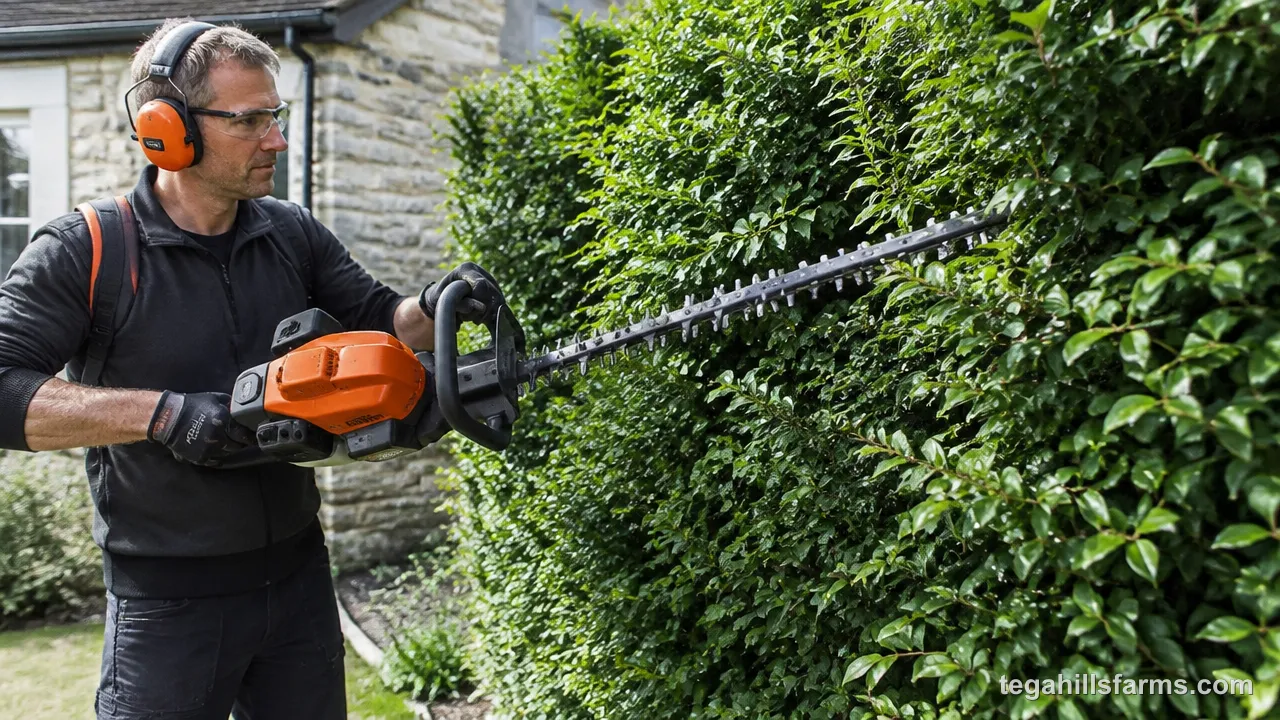
Go with gas if your hedge work runs long and you already keep a fuel can for other yard tools. A 56V battery model is the better choice if you want quieter starts, no exhaust and a tool that sits ready on a charger.
A gas engine runs until the tank is empty and refills quickly, so on a big job your runtime depends on how much fuel you carry. In return you put up with noise and exhaust at face height, a pull start, and upkeep like air filter checks, spark plugs and stabilized fuel over winter.
A 56V battery model starts with a trigger and leaves no fumes. A large hedge can outlast one charge, though, so you either stop to recharge or keep a spare pack ready. Echo’s MAXOUT Technology on the 56V picks is built to hold power when the blade hits thicker stems. Owners who already have other Echo 56V tools get the most from going cordless. If you’re also weighing another 56V platform, the best EGO hedge trimmers are the natural rival to compare.
How Long Should the Blade Be?
Match blade length to your hedges. A longer blade covers long, straight runs and wide tops in fewer passes, and a shorter blade gives you more control around small shrubs, corners and anything near the house.
Every extra inch puts weight farther from your hands, so the blade works like a longer lever. It takes more effort to hold level overhead and more care to steady near a window, and the tip wanders more when you reach out.
How you stand matters as much as hedge size. If you cut from the ground and reach up, a long blade lets you level a top without dragging out a ladder. If most of your cutting is close-up at chest height, a shorter blade tires you less and makes curves and rounded shapes easier.
Are Single-Sided or Double-Sided Blades Better?
Double-sided blades are better for speed and general shaping. Single-sided blades are better for a flat, controlled finish on formal hedges.
A double-sided blade cuts on both edges, so you sweep back and forth without lifting or flipping the tool, and you can cut from either side of the hedge. That makes it the quicker choice for informal or overgrown growth. A single-sided blade cuts on one edge only. The bar sits steadier against a flat face, and on the DHCS-3400R1 the other side carries a debris sweeper that clears clippings off the top.
Every pick here uses double-reciprocating blades, meaning both blades move against each other, which cuts down on the vibration in your hands. The three sharpened edges on Echo’s RazorEdge blades slice stems cleanly in either layout. On a double-sided bar that cutting works on both sweeps, and on a single-sided bar it’s all on the edge you hold to your line. For boxwood walls and clipped privet, the single-sided blade comes out ahead. Everywhere else, double-sided is the better choice.
How Do Handle Design and Weight Affect Long Sessions?
A rotating rear handle or an articulating head lets you keep your wrists straight and your arms low, and that’s what keeps fatigue down over a long session. Weight and balance decide how fast the tiredness builds.
On the DHC-2800R1 and DHC-2200R1, the rear handle rotates, so when you turn the trimmer sideways for a vertical face, your grip stays natural instead of twisting your wrist. The HCA-2620 takes a different approach and angles the blade itself, so you can cut a tall top or a low edge without raising your arms or bending over.
Balance matters as much as total weight. Battery models carry the pack near your rear hand, and gas models carry the engine there, and either one can offset the blade out front. The farther the balance point sits from your grip, the harder your forearms work to hold the blade level. Pick up a trimmer the way you’d hold it on your tallest hedge, not at waist height, to feel how it will wear on you.
Which Echo Hedge Trimmer Should You Choose for Your Yard?
For most suburban lots I’d start with the DHC-2200R1, move to the DHC-2800R1 for overgrown hedges, and save the DHCS-3400R1 for long formal rows.
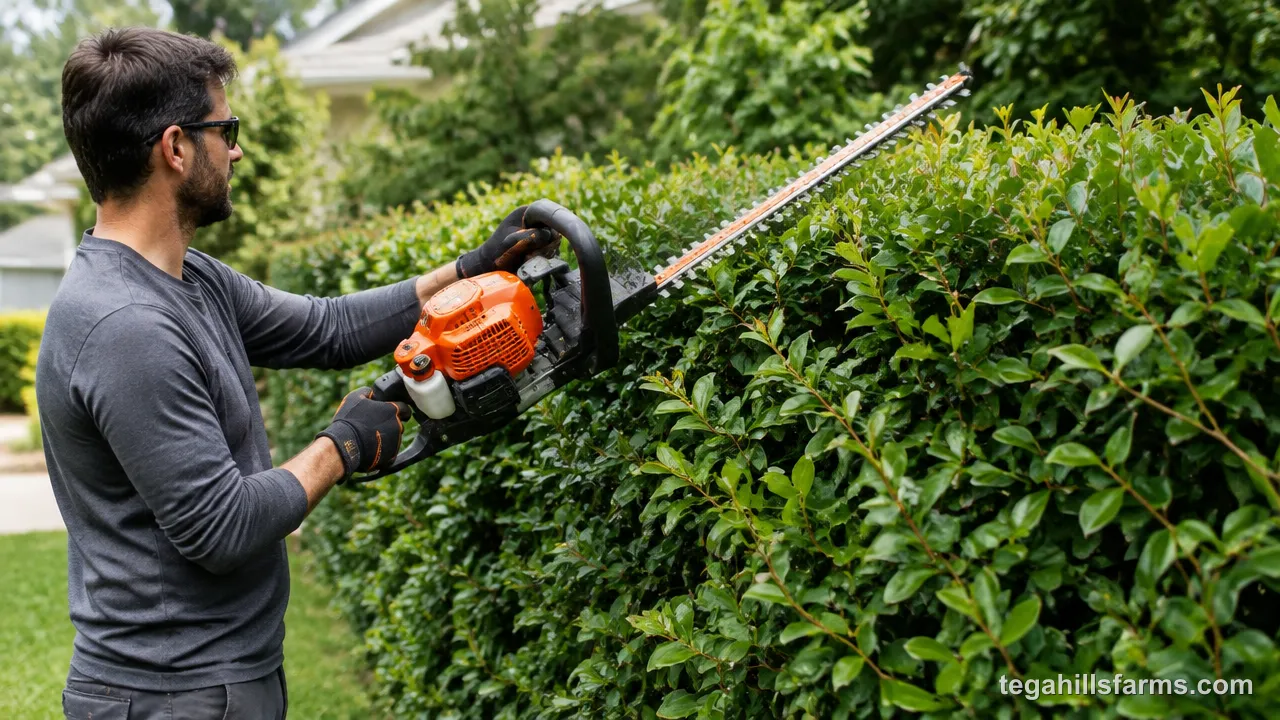
Each pick matches a specific yard job:
| Yard situation | Pick | Why it fits |
|---|---|---|
| Small suburban lot, light shaping | DHC-2200R1 | Short double-sided blade, easy control |
| Long or tall formal hedges | DHCS-3400R1 | Long single-sided blade, debris sweeper |
| Thick, overgrown growth | DHC-2800R1 | MAXOUT power, rotating rear handle |
| Awkward angles, tall tops, low edges | HCA-2620 | Articulating head |
| Gas over battery | HC-2020 | Gas runtime, easy upkeep features |
| Tight budget | DHC-2200R1 | Budget-friendly entry to 56V |
The HCA-2620 is overkill if your hedges top out at chest height, because you’d be carrying an articulating head you never angle. The DHCS-3400R1 is too much bar for foundation shrubs, where its length works against you near siding and windows.
If you’d rather run gas, the HC-2020 handles general shaping and keeps small-engine chores light. I’d choose it over a battery model mainly when you already store fuel for other tools, since otherwise you’re starting a fuel routine for one machine.
Owners who trim a few shrubs a season don’t need Echo’s pro-grade build at all. For that kind of light-duty work, the best Ryobi hedge trimmers are worth a look, and they give you less machine to store and maintain.
Sap and clippings start packing between the teeth during a single session of heavy hedge work, and dull edges begin tearing stems instead of slicing them. Leave that buildup on through a few jobs and a winter in the shed, and next season starts with blades that drag, cuts that brown at the tips, and a gas engine that won’t catch no matter how many times you pull.
How Do You Maintain an Echo Hedge Trimmer?
Clean the blades after every use, keep them lubricated and sharp, check the air filter on gas models, and store fuel and batteries properly over winter. Each habit prevents a specific failure.
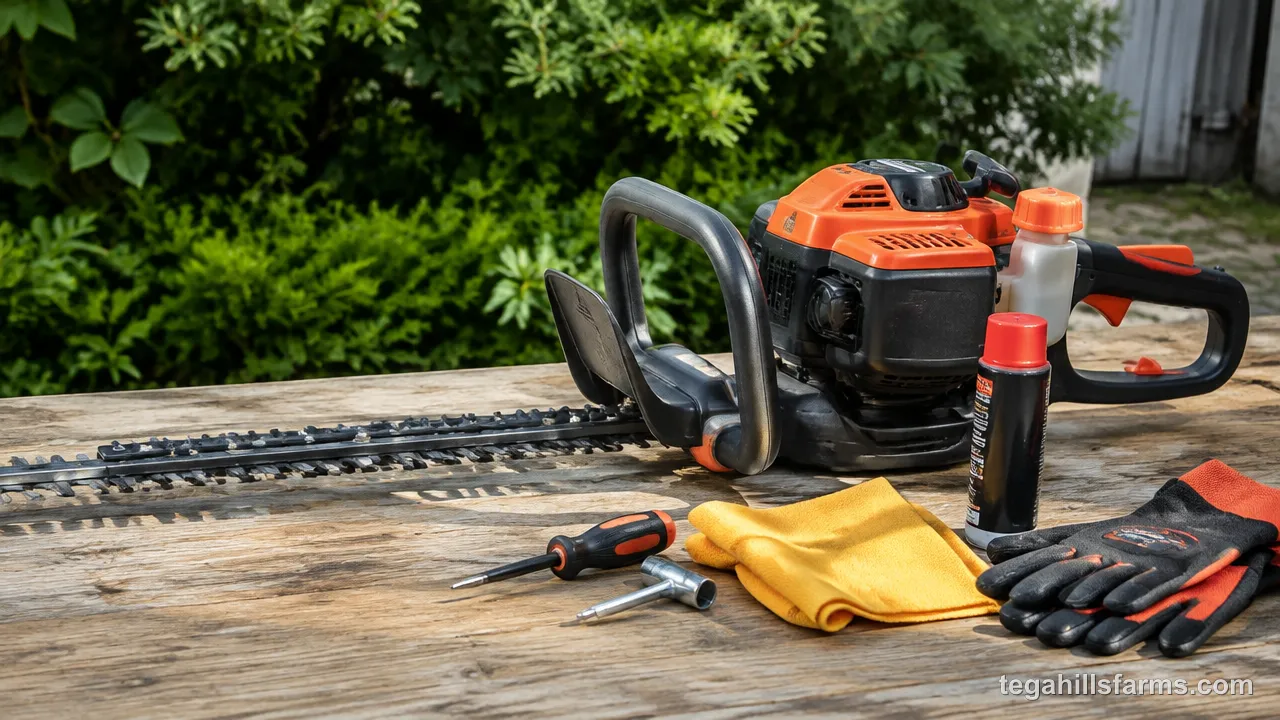
- Blade cleaning: Brush off clippings, wipe away sap with a resin cleaner, then spray the blades with lubricant. Hardened sap gums the teeth, so the engine or motor strains and a battery drains faster.
- Lubrication and sharpening: On the HC-2020, grease the gear case through its grease fitting on the schedule in the operator’s manual. Sharpen or replace dull blades, because torn stems brown at the tips and a dull edge puts more load on the drive.
- Air filter (gas models): Check it after dusty jobs. A clogged filter starves the engine of air, which leads to hard starts and lost power.
- Winter storage: For gas units, run the tank dry or add fuel stabilizer, because old fuel leaves varnish in the carburetor that causes hard spring starts. Store battery packs indoors, away from freezing temperatures and heat, at the charge level the manual recommends, so the pack doesn’t come back weak.
When Is It Time to Replace Worn Parts on an Echo Hedge Trimmer?
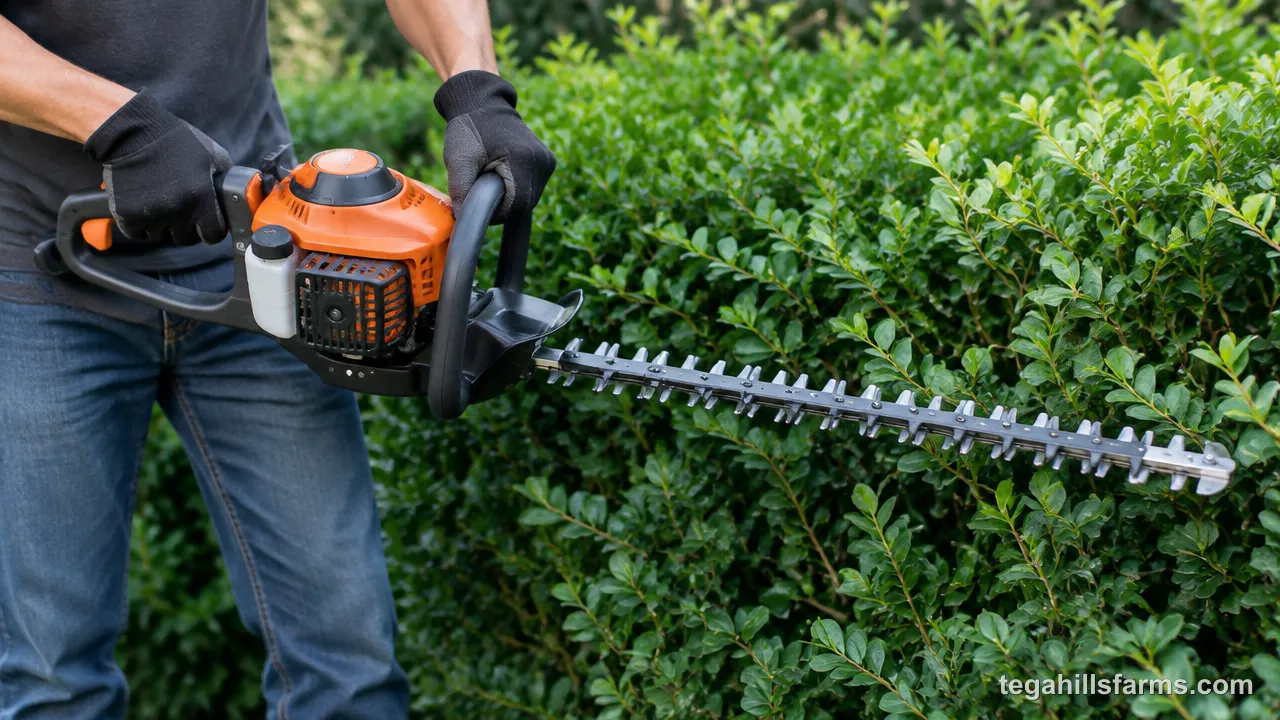
Most wear on these trimmers can be fixed with new blades, hardware, filters, plugs or a fresh battery pack. The whole unit only needs to go when the engine, motor or gear drive fails and the repair costs about as much as a replacement.
- Blades that tear after sharpening: Chipped, bent or worn-down teeth can’t hold an edge anymore, so a new blade set is the fix.
- Loose blade hardware: Tighten it first. If the blades keep loosening or wobble, the bolts or spacers are worn and should be replaced before they damage the blades.
- Hard starting or stalling under load (gas): Work through a spark plug, air filter, fresh fuel and carburetor cleaning. If the engine still struggles after that tune-up, take it to a shop for an honest repair estimate.
- Short battery runtime: A pack that runs out far sooner than it used to has aged. Replace the battery, not the trimmer.
Echo Hedge Trimmer FAQ
Can one 56V battery power other Echo tools?
Yes. Echo’s eFORCE 56V batteries fit the brand’s other 56V tools, including string trimmers, blowers and chainsaws, so the pack that comes with the DHCS-3400R1, DHC-2800R1 or DHC-2200R1 can move between machines. Check the battery and tool model numbers against Echo’s compatibility list before you buy a bare tool.
Do Echo gas hedge trimmers need a fuel and oil mix?
Yes. The HC-2020 and HCA-2620 run two-stroke engines, so the gasoline has to be mixed with two-stroke engine oil at the ratio in the operator’s manual. Pre-mixed canned fuel saves you the measuring. Straight gas without oil damages the engine quickly, so keep a dedicated can apart from your four-stroke mower fuel.
Can you trim wet hedges with an Echo hedge trimmer?
It’s better to wait until the hedge dries. Wet leaves clump on the blades and slow the cut, wet grass makes your footing slippery while you hold a running blade, and battery models shouldn’t be used in rain. A gas model can handle damp foliage, but clean and oil the blades afterward so they don’t rust.






Write Your Review
No reviews yet. Be the first to share your experience!