

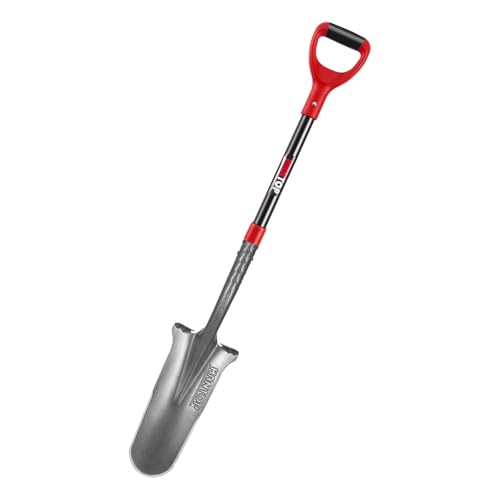
My recommendations for the best garden spades under $30 are HANTOP Flat Spade (Best Overall), WIKER Drain Spade 45in (Best Rust-Resistant), VNIMTI Spade Shovel 45in D-Grip Wood Handle (Editor’s Choice), VNIMTI Spade Shovel D-Handle 45in (Also Great), HANTOP Drain Spade Root Saw 44in (Also Great), Hantop Drain Spade 44in (Also Great) and Fiskars 46in Transplanting Spade (Best Ergonomic Design).
Blade shape comes first, since a flat square edge and a slender drain blade do different jobs. After that, look at the steel and coating that keep rust away, the handle material, and how the spade’s weight and length suit your height.
The real risk with an inexpensive spade is that it won’t survive its first hard season. Heads wobble, handles crack and rust spreads under chipped paint. Nearly all of that starts at the joint where blade meets shaft, so the way a spade is put together matters as much as the steel it is cut from.


Before you order, stand your current shovel upright beside you. If the grip sits well below your hip, a longer shaft will save your back on every lift.
What Should You Look for in a Garden Spade Under $30?
At this price, durability comes down to how well the blade suits your soil and how solidly it joins the handle, because most budget models use comparable steel and differ mainly in shape and assembly. A tool that suits your ground and your frame gets picked up every week. One that fights you leaves your wrists and lower back doing the work the blade should do. If you want to compare spades at every price before settling on a budget model, our guide to the best garden spades covers the full range.
Which Blade Shape Fits Your Digging Job?
A flat square-point spade suits edging, cutting turf and moving loose soil, while a narrow drain blade suits deep, tight holes and transplanting. The flat edge meets the ground along its full width, so it cuts a straight line through sod and lifts a level scoop. The trade-off is that it needs more downward force to sink into firm soil, because your weight spreads across the whole edge.
A slender drain blade puts your weight onto a much smaller edge. That is why it plunges deep beside a shrub and lifts a narrow root ball without tearing up the bed around it.
A pointed tip starts the cut at a single spot, so it breaks into hard or stony ground where a flat edge would skate. Saw teeth along the edge help in a different way: they bite through fibrous roots and crumble hardened clods instead of bouncing off them. If your beds are full of tree roots or packed soil, a toothed blade saves you from chopping with the corner of a flat spade.
Does Blade Steel and Coating Matter at This Budget?
Yes. Hardened manganese or carbon-type steel holds an edge through a season of digging, and a good coating keeps that steel from rusting in wet soil. Manganese steel, which is common on budget heads, is hard enough to stay sharp and tough enough to resist chipping on a buried stone. Left bare, though, it rusts quickly once damp soil sits on it. A powder coat or layered anti-corrosion finish seals the surface, so moisture only reaches the steel where the coating has chipped or worn.
Stainless steel resists rust without any coating and sheds sticky soil more cleanly, which helps in clay. It usually weighs more for the same strength, so it suits gardeners who dig wet ground often and don’t mind the extra heft. The best stainless steel spades make sense in that situation.
Whatever the steel, the weld or socket where blade meets shaft is the weak point, because every pry puts its force on that one joint.
Fiberglass, Wood or Steel: Which Handle Holds Up Best?
For a tool that lives outside, fiberglass outlasts wood. Solid wood feels warmer in the hand but needs care, and an all-steel shaft gives the stiffest pry. Fiberglass doesn’t absorb water, so it won’t rot or swell after a night in the rain, though years of strong sun can roughen its surface. Wood flexes slightly and absorbs some shock, which is easier on your hands. Once moisture gets past the finish, though, wood cracks or rots, often around the bolt holes. Steel barely flexes when you lever soil, but it passes more of each jolt into your wrists.
| Handle material | Flex under load | Outdoor aging | Typical failure |
|---|---|---|---|
| Fiberglass | Moderate | Resists rot and rain | Surface fibers fray after long sun exposure |
| Solid wood | Slight, absorbs shock | Needs drying and oil | Rot or splitting at the joint |
| Steel | Very little | Rusts where coating chips | Bent shaft or cracked weld |
A D-grip lets you wrap your whole hand around the top, even in gloves. That lets you lever soil up and steer the blade with less wrist twist. A straight handle gives more reach but less control over the blade angle. Whatever the shaft, the grip material should stay firm when wet, and the blade-to-handle connection decides how many seasons the spade lasts.
How Much Weight and Handle Length Is Right for You?
A heavier spade sinks into soil with less pushing but tires your wrists and back over a long session. A lighter one is easier to lift and steer but needs more downward force from your foot. Weight helps on the cut, because the head’s mass drives the edge. It works against you on every lift, because you raise that same mass with each scoop. For older gardeners or smaller hands, a lighter tool usually wins over an afternoon, as long as the blade is narrow enough to go in without much body weight.
Length matters as much as weight. When the grip sits well below your hip, you bend at the waist on each lift, and that repeated bending is what leaves your lower back sore. Taller gardeners should look at the best long handle spades.
A wide foot step on top of the blade lets you push with the full sole of your boot rather than the arch. That way you can stand on the spade and let your body weight do the work.
The 7 Best Garden Spades Under $30 of 2026
You can dig, edge and transplant well on a tight budget with HANTOP Flat Spade, WIKER Drain Spade 45in, VNIMTI Spade Shovel 45in D-Grip Wood Handle, VNIMTI Spade Shovel D-Handle 45in, HANTOP Drain Spade Root Saw 44in, Hantop Drain Spade 44in and Fiskars 46in Transplanting Spade.
Blade shape sorts them by job first. The flat heads handle edging and turf, and the narrow drain and transplanting blades handle deep holes and moving plants. The teeth on the HANTOP Flat Spade and the HANTOP root saw help where roots and hardened clods stop a plain edge. Handle material then sorts them by comfort: weatherproof fiberglass, warmer solid wood, or the rigid welded steel shaft on the Fiskars. Between them, they cover home gardeners digging beds, transplanting, edging, and trenching through roots or compacted soil.
#1 HANTOP Flat Spade — Best Overall
If your yard needs a bit of everything, from edging a bed to cutting thick turf, this spade covers it with a flat 1050 manganese steel head and a sawtooth edge that breaks into hard soil. The fiberglass handle won’t rot outdoors.
Key Specs:
- Blade: 1050 manganese steel, flat square point with sawtooth edge
- Handle: fiberglass with PP grip
- Size: 7.5 x 2 x 43 in (L x W x H)
- Weight: 4.5 lb
- Foot platform: widened foot steps
Detailed Review:
The square point and sawtooth edge give this flat spade more range than its shape suggests. The teeth catch on compacted soil and dried clods instead of skating across them, so a cut starts in hard ground without repeated stamping. Once the blade is in, the flat face lifts a level scoop of compost and leaves a clean, straight wall in a trench or along a bed edge.
The manganese steel head and fiberglass handle make a solid, weatherproof build, with a PP grip at the top. It is heavier than the VNIMTI Spade Shovel 45in D-Grip Wood Handle, and that extra mass helps drive the edge through thick turf. The same mass loads your wrists on every lift, which you will feel toward the end of a long edging job.
The widened foot platforms give your boot a broad, secure surface, so your foot stays put when you lean onto the blade. For a home gardener who wants one spade to edge, transplant, furrow and move compost, that range of jobs from a single tool is what I’d buy it for. I’d brush the teeth clean after each use so packed soil doesn’t blunt their bite.
Pros:
- Sawtooth edge breaks into hard soil and dried clods.
- Flat square point cuts clean edges and trench walls.
- Wide foot platforms keep your boot planted while pushing.
- Fiberglass handle won’t rot when left out in rain.
Cons:
- Heavier head tires wrists during long edging sessions.
- Teeth trap packed soil and need cleaning after use.
Who It’s For:
Gardeners who switch between edging, turf cutting and moving compost in the same afternoon can use this flat, toothed blade for each job without a tool change. If lighter handling matters more to you than cutting power, the VNIMTI Spade Shovel 45in D-Grip Wood Handle sits more easily in the hand.
Editor’s Verdict:
Its sawtooth edge and wide foot platforms make hard ground and thick turf manageable, which makes it a dependable all-round spade for a mixed home garden.
#2 WIKER Drain Spade 45in — Best Rust-Resistant
For planting in wet beds where rust pits an uncoated blade, this drain spade’s manganese steel head carries three layers of anti-corrosion coating. Its slender blade lifts a plant with the roots intact.
Key Specs:
- Blade: high-strength manganese steel, narrow drain profile
- Finish: three-layer anti-corrosion coating
- Handle: fiberglass with D-grip
- Length: 45 in
- Warranty: lifetime
Detailed Review:
A high-strength manganese steel head under a layered anti-corrosion coating suits beds you water often or dig after rain. Wet clay that clings to the blade sits on the coating rather than on bare steel, so rust has no easy place to start and the edge stays keen through repeated planting. That protection only lasts as long as the coating does, so I’d clean it with a stiff brush rather than scraping the face against a stone.
The narrow, slender head is shaped for planting and transplanting. You can dig straight down beside a shrub, go deep enough to bring up the whole root system, and leave the surrounding lawn intact instead of carving out a wide hole. The same profile digs fence post holes and narrow trenches for sprinkler lines, and the sharp edge cuts through lawn sod on the way in.
A D-handle on the fiberglass shaft gives you a full-hand hold for prying soil up from deep holes. Compared with the VNIMTI Spade Shovel 45in D-Grip Wood Handle, you give up the warm feel of solid wood but gain a shaft that tolerates wind, rain and sun. WIKER backs it with a lifetime warranty, which counts for a lot on a tool you will lever hard.
Pros:
- Layered anti-corrosion coating keeps wet soil off bare steel.
- Slender head lifts plants without tearing up nearby lawn.
- D-handle gives a full-hand grip for prying deep holes.
- Lifetime warranty backs a tool built for prying.
Cons:
- Narrow blade moves less soil per scoop than a flat head.
- Coating can chip on rocks, exposing the steel underneath.
Who It’s For:
If your beds stay damp from frequent watering, or you garden where rain keeps the soil wet, this narrow, coated spade is a practical choice for planting shrubs and perennials. It also handles post holes and sprinkler trenches. Gardeners who mostly edge borders or move loose compost will want a flat head instead.
Editor’s Verdict:
Choose this spade when rust worries you most; the coated manganese steel head and fiberglass shaft are made to cope with wet seasons outdoors.
#3 VNIMTI Spade Shovel 45in D-Grip Wood Handle — Editor’s Choice
At 3 lb, this narrow spade is easy for older gardeners and smaller hands to lift and steer while transplanting perennials. Its long blade cuts a neat root plug.
Key Specs:
- Blade: long, narrow transplanting profile
- Handle: solid wood with steel D-grip
- Foot plates: corrugated, slightly extended
- Length: 45 in
- Weight: 3 lb
Detailed Review:
A long, narrow blade lets this spade slide down beside a perennial and under most root systems. The narrow width cuts a round plug, so you can lift one plant from a crowded border without slicing into its neighbors. It also works in tight corners and around small plants where a wide blade would not fit.
That narrow width concentrates the force you apply, so the edge goes into clay-like soil, hard ground and thick grass with less effort than its light build suggests. It weighs noticeably less than the HANTOP Drain Spade Root Saw 44in, which makes scoop after scoop easier on your arms. The heavier HANTOP carries more momentum into a hard cut in exchange.
The steel D-grip gives you leverage to lift soil out of deep holes. The corrugated foot plates are a little longer, so your boot slips less on wet ground. The solid wood handle feels warm and natural in the hand, though it needs drying and an occasional coat of oil to stay sound.
For dividing and moving perennials through light and medium daily work, this is the spade I’d reach for first. It is not built for heavy prying, and treating it gently keeps the wood and the joint in good shape.
Pros:
- Weighs 3 lb, easy to lift through repeated scoops.
- Narrow blade cuts a root plug without harming neighbors.
- Corrugated foot plates reduce slipping on wet ground.
- Solid wood handle feels warm and comfortable to hold.
Cons:
- Wood handle needs drying and oil to avoid rot.
- Light build suits light to medium work, not heavy prying.
Who It’s For:
Older gardeners and anyone with less grip or upper-body strength will find this spade manageable for dividing and moving perennials in crowded beds. It handles small plantings and tight spaces well. If you mostly trench through roots or cut heavy sod, a heavier toothed blade will do that work with less strain.
Editor’s Verdict:
Light, narrow and precise, it moves perennials cleanly out of crowded beds without asking much of your wrists or back.
#4 VNIMTI Spade Shovel D-Handle 45in — Also Great
Gardeners who edge borders and cut turf by hand get a sharp, flat, high-strength steel blade under a rust-resistant coating, on a solid wood handle with an ergonomic D-grip. It weighs 3.74 lb.
Key Specs:
- Model: HT_004
- Blade: high-strength steel, flat square head with rust-resistant coating
- Handle: solid wood with ergonomic D-grip
- Treads: non-slip, on top of the head
- Length: 45 in
- Weight: 3.74 lb
Detailed Review:
A flat head of high-strength steel gives this spade a straight, sharp edge for digging, edging and cutting turf. Along a lawn border, the full-width edge keeps your line straight. It also lifts squared-off sections of sod when you clear ground for a new bed.
A rust-resistant coating covers the head, which protects the steel in wet soil and helps the edge stay sharp after heavy use. It is lighter than the HANTOP Flat Spade, so it swings more easily through a long edging session. The HANTOP’s extra mass helps it drive into firm ground with less push from you.
The solid wood handle and ergonomic D-grip give a comfortable, secure hold, and the non-slip treads on top of the head keep your boot from sliding while you press down. The longer overall length lets adult gardeners stand straighter as they dig, which reduces back strain across a full bed.
Wood needs drying after wet work, but in return it feels warmer in the hand than a slick shaft. For a homeowner who mainly edges and cuts sod, a coated flat head on a comfortable wood handle covers that work without extra weight.
Pros:
- Flat high-strength steel blade cuts straight border edges.
- Rust-resistant coating protects the head in wet soil.
- Non-slip treads steady your boot while pushing down.
- Ergonomic D-grip gives a secure, comfortable hold.
Cons:
- Flat edge needs more force to enter compacted soil.
- Solid wood handle needs drying and oil between seasons.
Who It’s For:
Homeowners who keep lawn edges crisp and cut out sod for new beds will appreciate the straight edge and coated head. Adult gardeners also get a reach that eases back strain. If you mostly dig narrow planting holes or move established perennials, a slim drain blade is a better match.
Editor’s Verdict:
Pick this one for edging and turf work if you want a flat spade that handles lightly, with a coated head and the warm feel of solid wood.
#5 HANTOP Drain Spade Root Saw 44in — Also Great
Root-bound beds and trenches through old shrub roots are where this narrow spade pays off, thanks to a reinforced toothed blade of 1050 manganese steel. Wide foot steps add pushing power.
Key Specs:
- Blade: 1050 manganese steel, narrow, reinforced with teeth
- Handle: fiberglass with PP D-grip
- Size: 7 x 2 x 44 in (L x W x H)
- Weight: 4.4 lb
- Foot steps: wide
Detailed Review:
Teeth along the reinforced blade let this spade saw through roots that would stop a smooth edge. You can trench beside a hedge or clear a bed full of old roots without stopping to chop them by hand. The narrow profile keeps each cut tight, which suits small, deep holes, narrow trenches and transplanting young trees.
Compared with the Hantop Drain Spade 44in, which shares its steel, size and weight, this version trades a sharpened plain edge for teeth. The teeth bite harder into roots and packed soil, while the plain-edged blade slides through soft ground and leaves smoother hole walls. If your yard has mature trees or old shrubs, the teeth earn their place.
Its weight helps drive the teeth through resistance, and the wide foot steps let you stand on the blade with your full weight. The steel head, fiberglass handle and PP D-grip make a weatherproof build that can stay out in a muddy trench.
For a home gardener with roots running through every bed, it does the work of a spade and a root saw in one tool. That is why I’d choose it over a flat spade for any planting near trees.
Pros:
- Toothed blade saws through roots while you dig.
- Narrow profile cuts tight trenches and deep holes.
- Wide foot steps let you push with full weight.
- Fiberglass handle holds up to rain and mud.
Cons:
- Toothed edge leaves rougher hole walls than a plain blade.
- Narrow blade lifts less soil per scoop.
Who It’s For:
Yards with mature trees, overgrown shrubs or old hedgerows give this toothed spade plenty to do, especially when you trench or transplant through roots. Landscaping work in tight spaces suits it too. If your soil is soft and root-free, the plain-edged Hantop Drain Spade 44in gives smoother cuts on the same build.
Editor’s Verdict:
When roots stand between you and a clean hole, this toothed drain spade cuts through them without a separate tool.
#6 Hantop Drain Spade 44in — Also Great
Sharpened along both the tip and the sides, this drain spade slices through soil and roots on the way down, which makes digging tree pits and deep ditches steadier work. A tempered, powder-coated head resists rust.
Key Specs:
- Blade: 1050 manganese steel, tempered and powder-coated
- Edge: sharpened tip and sides
- Handle: fiberglass, smooth surface
- Size: 7 x 2 x 44 in (L x W x H)
- Weight: 4.4 lb
Detailed Review:
Because the blade is sharpened along the tip and both sides, it keeps cutting as it sinks instead of tearing at the walls of the hole. That helps when you dig tree pits, clean out ditches or slice through thick turf, because the sides shear small roots that a dull-sided blade would push against. Each stroke goes deeper with less rocking.
The manganese steel head is hard and strong, and its tempered, powder-coated surface stands up to wet ground. That keeps rust from starting along the sharpened sides, where a pitted edge would lose its cut first. The narrow profile handles cleaning plant roots and lifting potatoes as readily as trenching.
The smooth fiberglass handle gives a comfortable grip that slides easily as you move your hands between digging and lifting. It won’t rot when the spade is left outside after a wet job, which suits a tool you use in ditches and low spots.
That combination of edged sides and a weatherproof build suits a home gardener who plants trees or keeps a drainage ditch clear. If that describes your yard, I’d pick this plain-edged version over a toothed blade for its smoother hole walls.
Pros:
- Sharpened tip and sides cut roots on the way down.
- Tempered, powder-coated head resists rust in wet ground.
- Fiberglass handle won’t rot in wet weather.
- Narrow blade digs tree pits and deep ditches cleanly.
Cons:
- Narrow head moves less soil per scoop than a flat spade.
- Sharp side edges call for care when handling the blade.
Who It’s For:
Planting a young tree, clearing a drainage ditch or lifting potatoes calls for a blade that keeps cutting as it sinks, which makes this spade a good fit for gardeners who take on deeper jobs. If edging and sod cutting fill most of your yard work, a flat-headed spade will serve you better.
Editor’s Verdict:
Expect clean, steady cuts in tree pits and ditches from this sharp-sided, powder-coated drain spade.
#7 Fiskars 46in Transplanting Spade — Best Ergonomic Design
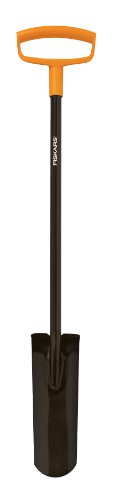
With gloves on, the extra-large D-handle on this transplanting spade still gives you a secure two-handed hold, and the teardrop-shaped shaft settles into your palm instead of rolling. It is built for small, deep holes.
Key Specs:
- Model: 96546925J
- Blade: welded 14-gauge steel, sharpened
- Shaft: 18-gauge steel, teardrop-shaped profile
- Handle: extra-large D-handle
- Length: 46 in
Detailed Review:
A teardrop-shaped shaft follows the natural curve of your closed hand, so the blade angle stays put without a hard squeeze. A round shaft can roll in a tiring grip, and this profile resists that. It matters most when your hand strength fades partway through a planting job.
The extra-large D-handle leaves room for both hands, even in thick gloves, so you steer and lever with your arms rather than twisting your wrists. Set beside the HANTOP Drain Spade Root Saw 44in, the steel shaft won’t flex the way fiberglass does, which gives a firmer pry. In exchange, steel sends more of the jolt into your hands when the blade strikes a stone.
The welded steel blade is sharpened, so it starts a cut in tough soil and breaks up hardened clods instead of bouncing off them. It is shaped for small, deep holes and digging up bulbs, which makes it a precise planting tool rather than one for moving bulk soil. Because blade and shaft are welded steel, there is no wood to rot at the joint.
For a home gardener whose hands or wrists tire before the planting is done, I’d put the grip and shaft design ahead of every other feature on this spade.
Pros:
- Teardrop-shaped shaft keeps the blade from turning in your grip.
- Extra-large D-handle fits two gloved hands.
- Welded steel shaft won’t flex when you pry.
- Sharpened blade breaks up hardened dirt clods.
Cons:
- Steel shaft passes more shock to your hands than wood.
- Narrow transplanting blade isn’t meant for moving bulk soil.
Who It’s For:
Anyone with weaker hands, stiff wrists or a habit of wearing thick gloves will find this spade’s grip and shaft easy to control while planting bulbs and small shrubs. If you need to shift large amounts of soil or edge long borders, those jobs go faster with a flat square blade.
Editor’s Verdict:
Its teardrop shaft and oversized D-handle keep control comfortable for gloved or tiring hands, while the welded steel build stands up to firm prying.
Which Budget Spade Should You Pick for Your Yard?
Your soil and your most frequent job decide it: the HANTOP Flat Spade for mixed digging and edging, the VNIMTI Spade Shovel 45in D-Grip Wood Handle for light transplanting, and the WIKER Drain Spade 45in for wet ground. The other picks cover more specific needs:
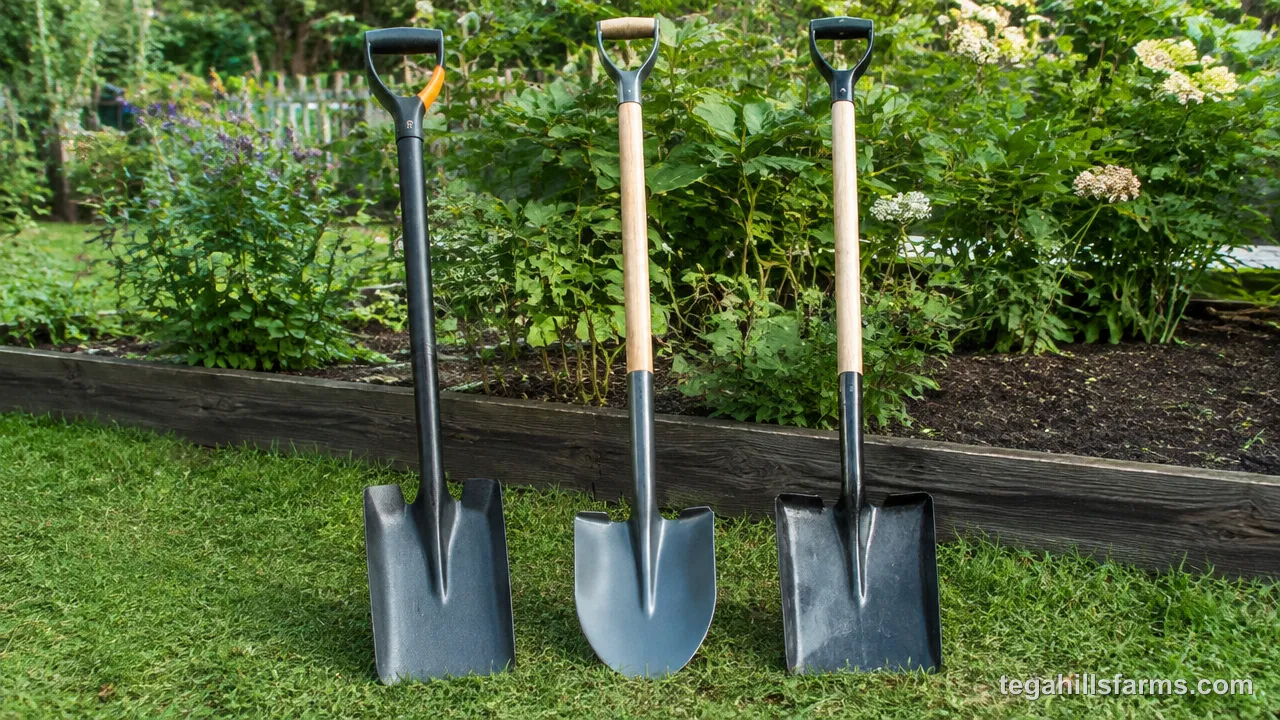
- Tight planting and transplanting: the VNIMTI Spade Shovel 45in D-Grip Wood Handle cuts a narrow plug and stays light in the hand. The Fiskars 46in Transplanting Spade suits bulbs and small, deep holes.
- Roots and hardened soil: the HANTOP Drain Spade Root Saw 44in saws through roots as it digs, while the HANTOP Flat Spade brings a sawtooth edge to a flat head for hardened clods.
- Wet or rainy ground: the WIKER Drain Spade 45in has a layered anti-corrosion coating, and the Hantop Drain Spade 44in has a powder-coated head with sharpened sides.
- Weaker hands or wrists: the VNIMTI Spade Shovel 45in D-Grip Wood Handle is light to lift, and the Fiskars 46in Transplanting Spade keeps control easy with its teardrop shaft.
- Edging with extra handle comfort: the VNIMTI Spade Shovel D-Handle 45in pairs an ergonomic D-grip on solid wood with a flat, coated edge.
The trade-off behind most of these choices is weight against cutting power. The lighter VNIMTI pair spares your wrists, while the heavier HANTOP models carry more mass into hard ground. Wood feels warmer and absorbs some shock but needs care, while fiberglass can stay outside without rotting.
Gardeners who work mostly in raised beds or containers may find the best short handle spades easier to control. If you want a wider range of builds to choose from, look at garden spades under $50.
A wobble that starts at the neck of a spade rarely stays small, because every pry works the joint where blade meets shaft a little looser. On a budget model, the steel itself is seldom the first thing to give out. Miss the early signs and the head can fold sideways mid-dig, leaving you with a bent tool and a half-dug hole.
Where Do Budget Spades Usually Fail?
Most give out at the joint where blade meets shaft: a cracked weld, a bent socket, or a bolted wood handle that rots and splits around its fasteners. The other common endings are plastic grips that crack at the top and coating that chips and lets rust in along the edge.
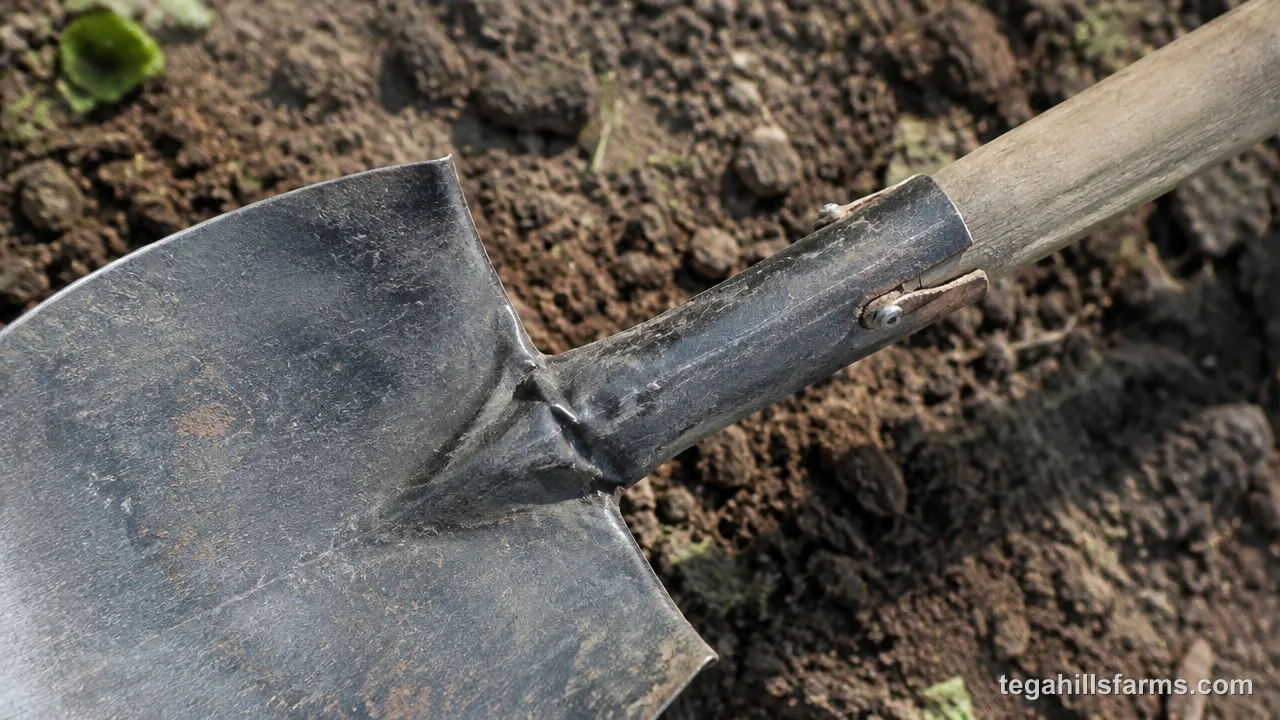
Each failure gives warning before it ends the tool. A loosening joint shows up as a small wobble or click when you lever soil, and the head shifts slightly against the shaft. A weakening shaft flexes more than it used to under the same load. A cracked grip twists or pinches your palm. Chipped coating shows as orange freckles along the edge after a wet week.
Catching these early keeps the spade working. Tighten or replace the bolts on a wood handle, sand and seal small rust spots, and stop prying with a spade whose joint has started to move, since prying is what turns a wobble into a fold.
If you keep replacing the same kind of spade, the joint design is the problem rather than bad luck. That is the point where moving up to garden spades under $100 makes sense, because a sturdier joint outlasts a string of replacements.
When Is a Spade the Wrong Tool for the Job?
Scooping loose material, chopping into rocky ground and cutting small, precise holes all call for something else: a round-point shovel, a mattock or a hori hori knife. A spade has a flatter, straighter blade made to slice and lift. A round-point shovel has a curved, pointed bowl that digs into piles and throws soil, gravel or mulch.
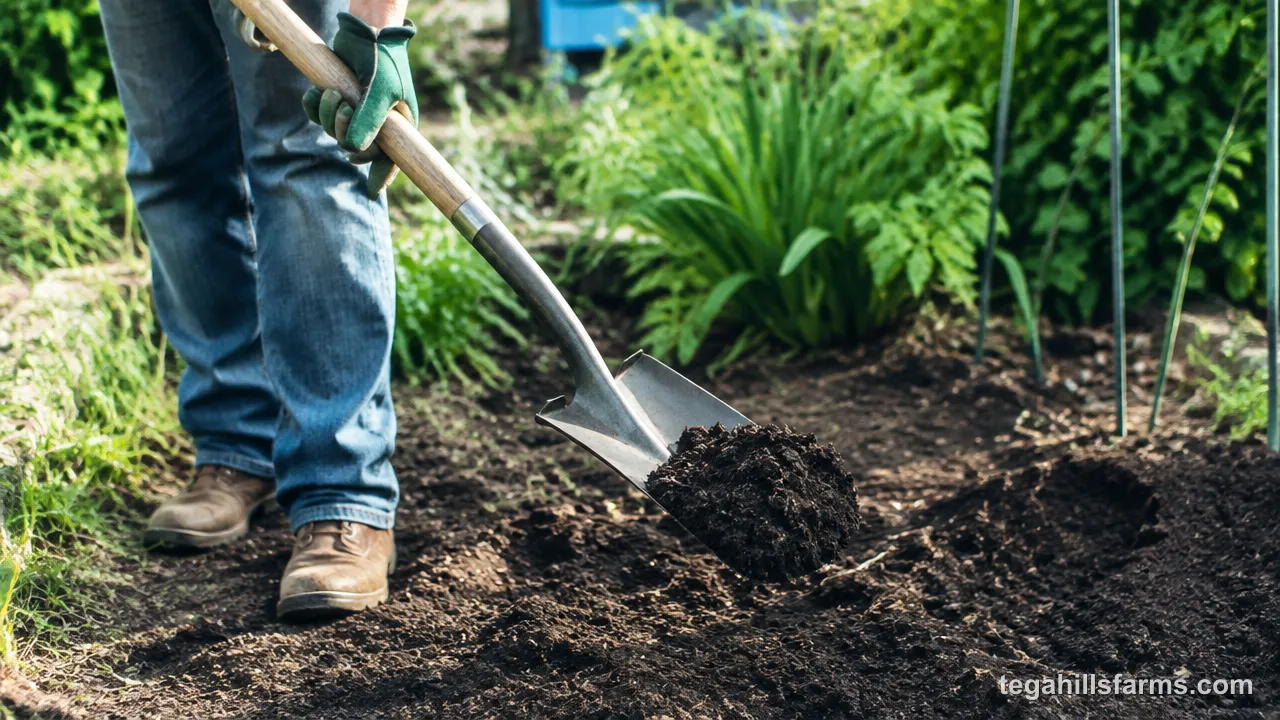
A drain spade is the narrow form of a spade, made for deep, tight holes and trenches. A hori hori knife is a hand tool with a concave, serrated blade for bulbs, weeds and small plantings at ground level. A mattock pairs a wide adze with a pick or axe blade, and you swing it to break ground rather than push into it.
Rocky ground, thick roots and heavy clay are where flat spades get bent. Prying a stuck blade against a stone or root puts the whole load on the joint, and that is how heads fold and shafts snap. Break up rocky or root-bound ground with a mattock first, or switch to a toothed blade for roots. If dense clay is your everyday soil, the best garden spades for clay soil are worth a look.
How Do You Keep a Budget Spade Sharp and Rust-Free?
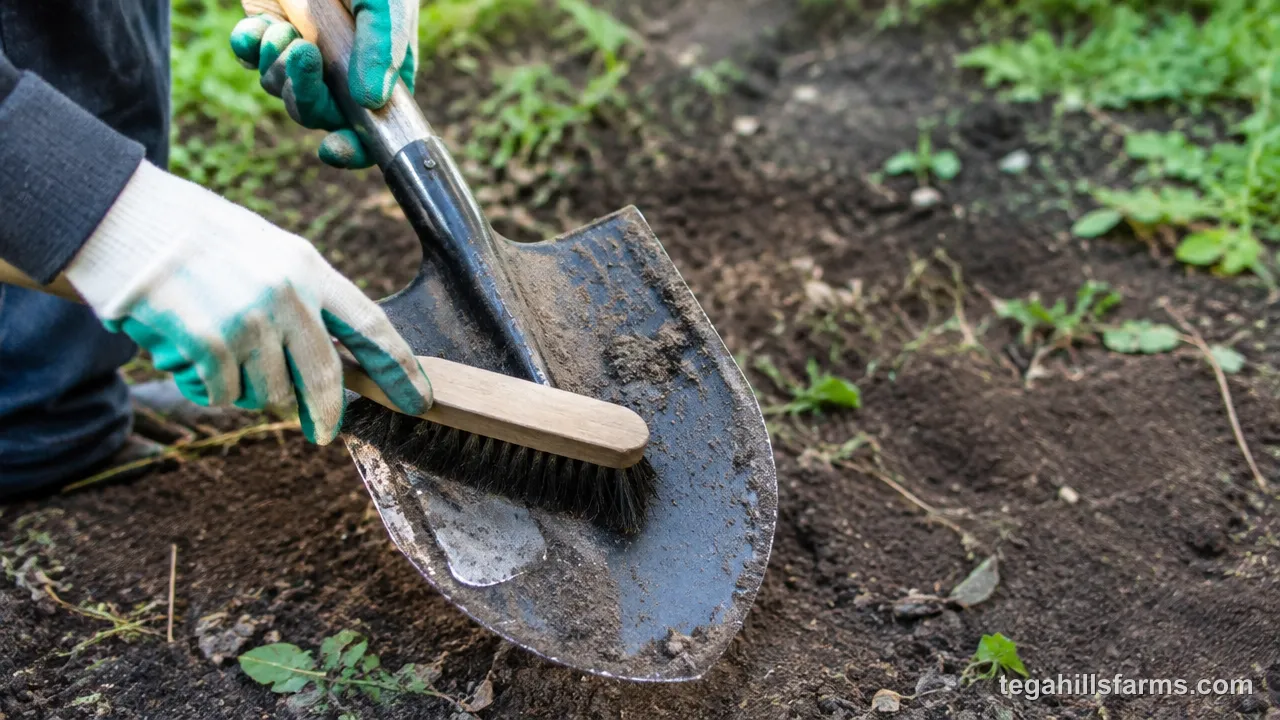
Scrape soil and sap off after every use, dry the blade before storing it, file the edge each season, and oil the steel and any wood handle. Soil left on the blade holds moisture against the steel, so rust starts under the dirt wherever the coating has worn. A stiff brush or putty knife clears clay, and a rag with a little mineral spirits lifts sap before it hardens and grabs soil next time.
A flat mill file restores the edge. Work along the beveled face, pushing away from the edge, until it feels even along its length. A sharp edge enters soil with less force, which saves your wrists on every cut.
A thin coat of oil on bare steel slows rust, and boiled linseed oil keeps a wood handle from drying and cracking.
Storage decides the rest. A spade left on damp ground or in a wet corner wicks moisture into the wood and keeps the joint wet, which speeds both rot and rust under the coating. Hang it on a wall or stand it in a dry spot off the floor, and the coating, the joint and the handle all last noticeably longer.
Write Your Review
No reviews yet. Be the first to share your experience!