

My picks for the best garden spades under $100 in 2026 are HANTOP Flat Spade (Best Overall), WIKER Drain Spade 45in (Best for Heavy Soil), Root Slayer Nomad Garden Spade 22311 (Best for Raised Beds), VNIMTI Spade Shovel D-Handle 45in (Also Great), Hantop Drain Spade 44in (Also Great), Fiskars 46in Transplanting Spade (Best Ergonomic Design), Berry&Bird Garden Digging Spade 41in (Best Durability), Spear & Jackson Kew Gardens Digging Spade (Best Rust-Resistant), Fiskars Garden Spade 46in (Best for Seed Starting), Kent & Stowe Garden Life Digging Spade 70100702 (Also Great) and Kent & Stowe Garden Life Digging Spade 70100700 (Best Compact). Each one pairs a particular blade shape with a handle built for a different kind of digging, from root-choked clay to tight raised beds.
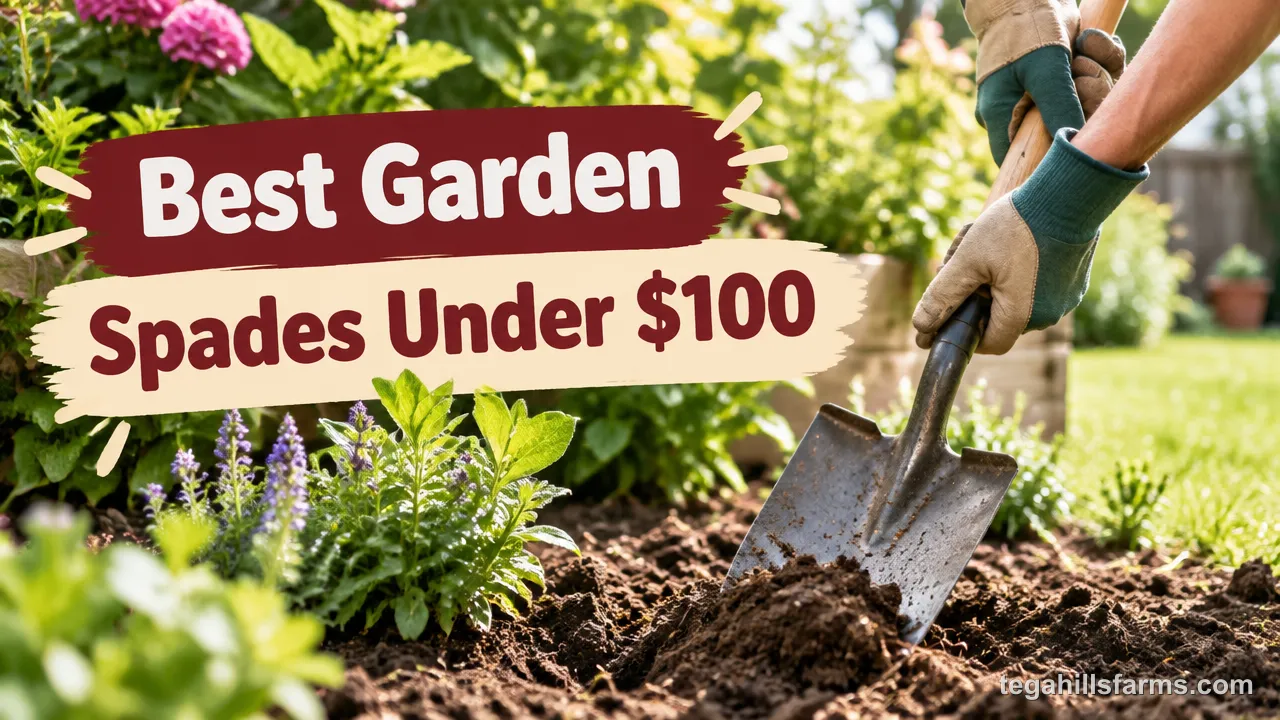
A few build choices decide whether a spade lasts or fails. The blade shape has to fit the job. The steel and its coating decide whether rust and sticky soil become a problem. The handle material and style decide how the tool feels once your hands are tired, and length and weight determine whether you dig with a straight back or a bent one.
Most spades feel fine for the first few minutes in a store aisle. Trouble starts an hour into a job, when a heavy head, a short shaft or a hard, slick grip begins to wear on your wrists, palms and lower back. It shows up again seasons later, when a thin joint loosens or bare steel rusts through.


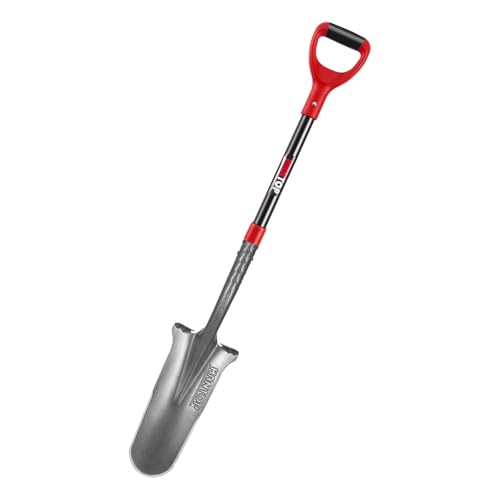
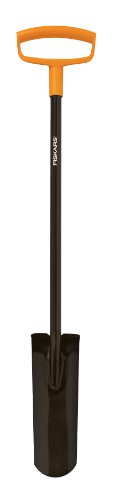
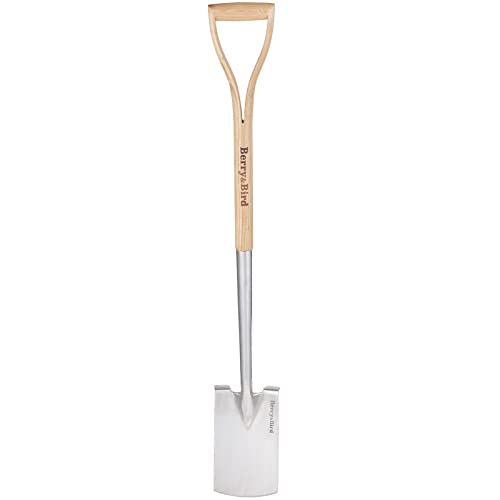


Start with your ground. Dense clay and root-filled beds reward a narrow or toothed blade, while loose, worked soil lets a lighter, broader spade do more with less effort.
How Is a Garden Spade Different From a Shovel?
The flat-bladed tool has a square edge that slices straight down into soil, while its scoop-shaped cousin has a curved bowl and pointed tip built to lift and throw loose material.
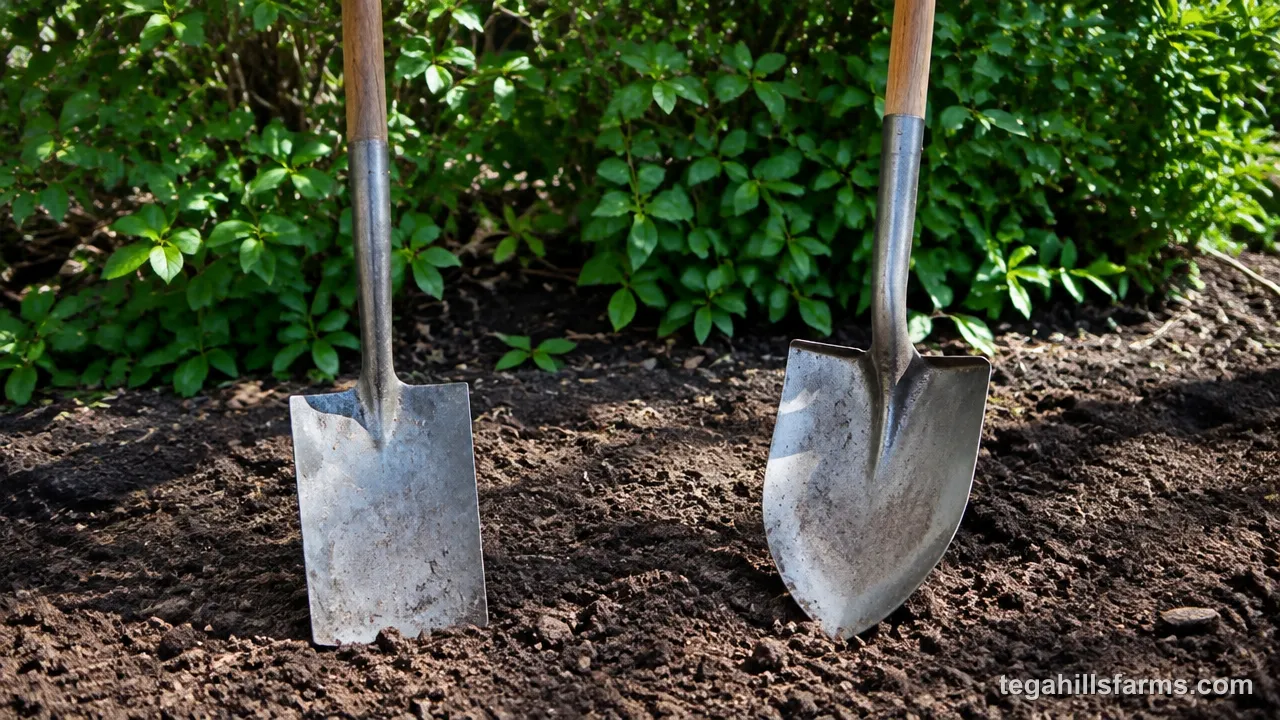
That blade shape changes the work. A spade enters soil nearly vertically, so it cuts clean bed edges, slices turf, splits perennials and lifts a plant with its root ball intact. A shovel’s curve and angled blade hold a pile of loose material, which makes it the better tool for moving gravel, mulch or compost from a heap into a wheelbarrow.
In a bed or border, the difference shows quickly. A shovel’s rounded tip leaves ragged edges and wide holes, while a spade keeps cuts straight and holes no wider than the root ball needs. If you are buying one tool for beds and borders, the spade covers edging, transplanting and turning soil, and you only need a shovel once you start moving bulk material. For a wider look at spades of every kind, without the price cap, our roundup of the best garden spades covers the full range.
11 Best Garden Spades Under $100 of 2026
The spades worth digging with at this price are HANTOP Flat Spade, WIKER Drain Spade 45in, Root Slayer Nomad Garden Spade 22311, VNIMTI Spade Shovel D-Handle 45in, Hantop Drain Spade 44in, Fiskars 46in Transplanting Spade, Berry&Bird Garden Digging Spade 41in, Spear & Jackson Kew Gardens Digging Spade, Fiskars Garden Spade 46in, Kent & Stowe Garden Life Digging Spade 70100702 and Kent & Stowe Garden Life Digging Spade 70100700. Blade steel and coating, handle material and handle style are what separate them, because those choices decide whether a spade rusts, how it feels after an hour and how much leverage you get. Narrow drain heads and toothed edges suit homeowners digging in dense or root-filled soil. Compact blades fit raised beds and tight borders, and the lighter stainless models ease the load for gardeners whose backs or hands need it. On a tighter budget, garden spades under $50 and garden spades under $30 raise the same questions about steel, coating and handle joints.
#1 HANTOP Flat Spade — Best Overall
If you want a single spade that can edge a bed in the morning and cut thick turf in the afternoon, this square-point flat head handles both jobs. Its sawtooth edge bites into hard soil and breaks up dried clods.
Key Specs:
- Blade: 1050MN manganese steel, sawtooth square point
- Handle: fiberglass with PP hand grip
- Tread: widened foot platforms
- Size: 7.5 x 2 x 43 in (L x W x H)
- Weight: 4.5 lb
Detailed Review:
The head is 1050MN manganese steel with a sawtooth edge, and those teeth take over work that a smooth blade leaves to your leg. Each tooth concentrates your push onto a small point, so the blade starts into hard or compacted soil before its full width meets resistance. The same teeth crack dried clods that a flat edge tends to skid across.
Widened foot platforms run along the top of the blade and give your boot a broad, secure place to land. You can put body weight into each push instead of balancing on a thin rim, and your foot is less likely to slip off when the blade hits a root.
The fiberglass handle and PP grip bring the spade to 4.5 lb and 43 inches overall. That mass helps the blade sink through thick turf, though you will feel it after a long session of lifting compost. I’d reach for this spade first for mixed yard work, because the square point cuts trenches, edges and transplanting holes with straight walls.
Pros:
- Sawtooth edge starts easily in hard, compacted soil.
- Widened foot platforms give your boot a secure push.
- Square point cuts trenches and edges with straight walls.
- Fiberglass handle needs no oiling or sanding.
Cons:
- Sawtooth edge leaves a rougher cut than a smooth blade.
- Its weight adds up during long sessions of lifting.
Who It’s For:
Homeowners who need a do-everything spade for edging, trenching, transplanting and cutting turf will put every part of this build to work, especially in hard or compacted ground where the teeth earn their keep. If you mainly lift loose compost all day, a lighter spade will tire your arms less.
Editor’s Verdict:
A sawtooth manganese head and wide foot platforms make this a dependable all-round spade for hard ground, edging and transplanting.
#2 WIKER Drain Spade 45in — Best for Heavy Soil
Sticky clay and stubborn shrub roots suit this narrow drain spade. Its slender manganese steel head goes deep beside a plant without tearing up the surrounding lawn, so you can lift the whole root system intact.
Key Specs:
- Blade: narrow, slender manganese steel head
- Coating: three layers of anti-corrosion coating
- Handle: fiberglass shaft with D-handle
- Length: 45 in
- Warranty: lifetime
Detailed Review:
A slender head changes how you dig around established plants. The hole only needs to be as wide as the root ball, which spares the surrounding lawn and lets you cut straight down beside a shrub to lift its full root system. The same profile suits fence post holes and sprinkler line trenches, where you need depth without width.
The manganese steel head carries three layers of anti-corrosion coating that keep wet, sticky soil away from the bare metal. That protection matters in heavy ground, where the blade stays damp for hours and rust would roughen the surface until soil clings to it.
The D-handle lets you pull back on the top of the shaft to lever a stuck blade out of clay or a rocky pocket, rather than yanking on a straight pole. The fiberglass shaft holds up to wind, rain and direct sun, so leaving it by the bed between jobs does no harm. I would take this narrow head over a flat spade whenever the job is lifting a plant, since extra width there only means more lawn to repair.
Pros:
- Slender head lifts plants without digging wide holes.
- Three-layer coating protects the steel in wet, sticky soil.
- D-handle gives leverage to pry blades out of clay.
- Fiberglass shaft stands up to rain and direct sun.
- WIKER backs it with a lifetime warranty.
Cons:
- Narrow blade moves less soil per lift in open beds.
- Slender head makes long, straight edging lines slower.
Who It’s For:
Gardeners fighting sticky clay, rocky ground or shrubs with deep, spreading roots will appreciate how this narrow head gets down beside a plant without wrecking the lawn. It also suits anyone digging post holes or irrigation trenches. If most of your work is turning over wide, open beds, a broad flat blade will cover ground faster.
Editor’s Verdict:
For transplanting out of heavy, root-bound ground, this slender coated head and D-handle give you depth and leverage while leaving the lawn around it intact.
#3 Root Slayer Nomad Garden Spade 22311 — Best for Raised Beds
Raised beds leave little room to swing a full-size tool, and this compact Root Slayer, at 2.7 lb, works between plants and frame boards without bumping either. The inverted V tip cuts roots on the way in.
Key Specs:
- Blade: powder-coated carbon steel, serrated ripsaw-style teeth
- Tip: sharpened inverted V
- Shaft: fiberglass with non-latex grips
- Weight: 2.7 lb
- Model: 22311
Detailed Review:
Aggressive ripsaw-style teeth run along the blade up to a sharpened inverted V tip. The point enters first and splits the soil, and the teeth then saw through roots that would stop a smooth edge, which is what old perennial crowns and invading tree roots in a raised bed demand.
Its compact size makes it workable inside a frame. A full-size spade hits the opposite board or the plant behind you, while this tool lets you dig, plant and pull stubborn weeds from the bed edge with short, controlled strokes. Non-latex grips on the fiberglass shaft keep that control steady, and they are a sensible choice if latex irritates your skin.
It weighs well under the HANTOP Flat Spade, so it is easy to hold at an angle through a long weeding session, though it moves less soil per stroke. The powder coat protects the carbon steel from corrosion, and where it wears through on the teeth, a wipe of oil keeps rust from starting.
Pros:
- Inverted V tip and teeth cut through roots readily.
- Compact size works inside raised beds and narrow plots.
- Light weight is easy to hold at awkward angles.
- Powder coat shields the carbon steel from corrosion.
- Non-latex grips suit latex-sensitive hands.
Cons:
- Compact blade moves less soil when turning open beds.
- Serrated edge leaves ragged cuts along lawn edges.
Who It’s For:
Raised-bed growers and anyone working small plots, narrow borders or root-filled corners will find this compact tool easy to steer between plants, and it packs well for trail work or camping. Gardeners who mostly turn large, open beds or dig long trenches will want a full-size blade that lifts more soil per push.
Editor’s Verdict:
Compact, toothy and easy to handle, this Root Slayer cuts roots and works inside a raised bed where a full-size spade only gets in the way.
#4 VNIMTI Spade Shovel D-Handle 45in — Also Great
Gardeners who like the solid feel of a wooden handle but still want a coated blade that shrugs off wet soil will find that pairing in this flat spade. Its 45-inch length lets you stand straighter while edging.
Key Specs:
- Blade: high-strength steel, flat square head, rust-resistant coating
- Handle: solid wood with D-handle
- Length: 45 in overall
- Weight: 3.74 lb
- Tread: non-slip treads on the head
Detailed Review:
The flat head is high-strength steel under a rust-resistant coating, so wet soil never touches bare metal while you dig. The coating also helps the blade stay sharp after heavy use, which keeps edging and turf cuts clean rather than torn.
The overall length puts the D-handle high enough that an adult does not have to fold over to reach it. That height shifts more of the work to your legs and arms and less to your lower back, and the difference shows on long edging runs.
Non-slip treads on the head give your boot grip when you drive the blade down. Without them, a wet or muddy sole can skate off the top edge just as you push hardest, which is the moment that jars ankles and knees.
At 3.74 lb, the spade stays manageable through an hour of edging, and the D-shape gives a firm, comfortable top grip. I’d take this one over a fiberglass-handled spade if you prefer the feel of wood and don’t mind oiling it now and then.
Pros:
- Rust-resistant coating protects the blade in wet soil.
- Long overall length reduces bending while edging.
- Non-slip treads keep your boot planted on the head.
- D-handle gives a firm, comfortable top grip.
Cons:
- Wood handle needs occasional oiling to stay smooth.
- Flat square head meets more resistance than a narrow blade.
Who It’s For:
If you prefer a traditional wooden handle and spend much of your time edging beds, cutting turf or doing general digging, this spade fits that routine and spares your back with its height. Anyone who would rather skip handle care altogether may be happier with a fiberglass shaft.
Editor’s Verdict:
Choose it when you want wood in your hands and a coated, sharp flat blade for edging, with enough length to keep you standing tall.
#5 Hantop Drain Spade 44in — Also Great
Sharpened edges on the tip and sides let this drain spade slice down through soil and roots instead of shoving against them, which keeps tree pits and deep ditches moving. Deep, narrow work is its home ground.
Key Specs:
- Blade: 1050 manganese steel, tempered and powder-coated
- Edges: sharpened tip and sides
- Handle: long fiberglass with a smooth surface
- Size: 7 x 2 x 44 in (L x W x H)
- Weight: 4.4 lb
Detailed Review:
Edged sides set this drain spade apart in root-filled ground. When the tip goes in and meets a root off to one side, the sharpened side edge cuts it instead of deflecting, so the blade keeps traveling down the line you aimed. That makes clean, vertical walls far easier to hold in tree pits and deep ditches.
The head is 1050 manganese steel, hard and strong, with a tempered and powder-coated surface. That hardness gives you a firm blade to pry against compacted ditch spoil, while the powder coat keeps damp soil off the bare metal.
The HANTOP Flat Spade relies on a sawtooth edge, while this spade uses smooth sharpened edges on its tip and sides. Teeth give more bite on a hard, crusted surface, and smooth sharpened edges leave cleaner cuts through roots and turf, so the choice depends on whether you mostly break hard ground or clear roots.
The long fiberglass handle has a smooth surface that lets your lower hand slide as you shift grip, and the 4.4 lb weight carries enough mass to help the blade sink. It is also handy for lifting potatoes and cleaning roots out of an old bed.
Pros:
- Sharpened tip and sides cut roots instead of deflecting.
- Hard, tempered manganese steel stands up to prying.
- Powder coat protects the head in damp ditches.
- Smooth fiberglass handle lets your hands slide easily.
Cons:
- Drain-style head is slow for turning over wide beds.
- Sharp side edges need care when carrying and storing.
Who It’s For:
If you plant trees, clear drainage ditches or dig potatoes out of firm ground, the sharpened sides keep this blade moving through roots and packed soil. It is built for deep, narrow work. Anyone preparing broad beds or shifting loose mulch will make faster progress with a flat, wider head.
Editor’s Verdict:
Sharp on three edges and made from hard manganese steel, it cuts clean, deep holes through root-filled soil with less effort than a blunt blade.
#6 Fiskars 46in Transplanting Spade — Best Ergonomic Design
Planting bulbs and digging small, deep holes go easier with this transplanting spade’s extra-large D-handle, which leaves room for two gloved hands. The teardrop-shaped steel shaft settles into your palm.
Key Specs:
- Blade: welded 14-gauge steel, sharpened
- Shaft: 18-gauge steel, teardrop-shaped profile
- Handle: extra-large D-handle
- Length: 46 in
- Model: 96546925J
Detailed Review:
The extra-large D-handle is designed for secure two-handed control, even in gloves. A tight grip loop can pinch a thick glove against the crossbar, so the roomier opening lets both hands share the load and steer the blade into a narrow planting hole without your knuckles rubbing.
Below it, the 18-gauge steel shaft has a teardrop-shaped profile rather than a round tube. That shape follows the natural curve of a closed hand, so you do not have to squeeze as hard to stop the shaft rotating when the blade twists against a root.
The welded 14-gauge steel blade and steel shaft form an all-steel build with no wood to rot and no fiberglass to flex. When you lever a clump of bulbs out of the ground, your effort goes into the soil instead of into a bending shaft, which gives a direct, predictable feel. A rigid shaft also passes more of each impact to your hands, so a cushioned glove helps on stony ground.
The sharpened blade starts easily in tough soil and breaks hardened clods, which keeps small holes neat. I’d pick it for bulbs and transplanting over a broad digging spade, because its design favors control over volume.
Pros:
- Extra-large D-handle fits two gloved hands comfortably.
- Teardrop shaft resists rotating in your grip.
- Welded all-steel build won’t rot or flex.
- Sharpened blade breaks up hardened dirt clods.
Cons:
- Rigid steel shaft passes impacts straight to your hands.
- Transplanting blade moves little soil when turning open beds.
Who It’s For:
Gardeners with stiff joints or a weaker grip who plant bulbs and set young plants into small, deep holes will feel the difference the oversized handle and shaped shaft make, even through thick gloves. If you need to turn over whole beds, a broader digging blade suits that work better.
Editor’s Verdict:
Comfort and control come first here, with a glove-friendly D-handle and shaped steel shaft that make careful transplanting easier on stiff or tired hands.
#7 Berry&Bird Garden Digging Spade 41in — Best Durability
A polished stainless steel blade that resists bending under hard work suits gardeners who want a border spade to keep for many seasons. Soil slides off the polished face, so cleanup is quick.
Key Specs:
- Blade: polished stainless steel
- Handle: FSC-certified ash hardwood, non-slip D-handle
- Length: 41 in
- Warranty: 2 years, plus 30-day free replacement
- Model: 003
Detailed Review:
Stainless steel resists rust without a coating, and polishing reduces how much soil sticks to the blade. In damp clay, a rough blade gathers a layer of mud that adds weight to every lift, while this polished face sheds it and wipes clean with a rag.
The blade is built not to bend under hard digging, so you can pry in compacted spots or lever out a root without easing off. That stiffness lets the blade slice deep into soil and break up packed corners of a bed.
The handle is ash hardwood from FSC-certified forests, shaped to reduce hand fatigue. Ash is strong yet light, and the non-slip D-handle holds your wrist in a neutral line rather than bent back as you push.
At 41 inches, it is shorter than the Fiskars Garden Spade 46in, so it reaches close to plants in a border and suits shorter gardeners, while taller users will bend more. I’d choose it for edging and turning soil around established borders, where a rust-free blade and a warm wood grip count.
Pros:
- Polished stainless blade sheds sticky soil.
- Blade resists bending when prying hard ground.
- Ash D-handle keeps your wrist in a neutral position.
- Comes with a 2-year warranty and 30-day free replacement.
Cons:
- Its length makes taller gardeners bend further.
- Wood handle needs occasional oiling and dry storage.
Who It’s For:
Anyone who wants a traditional border spade to keep for years, with a blade that won’t rust and a wood handle that feels good in the hand, should look here. It suits edging, transplanting and work close to plants. Taller gardeners who dig for long stretches may prefer a longer shaft.
Editor’s Verdict:
Polished stainless steel and a well-shaped ash D-handle give this border spade the build to stay rust-free and comfortable through season after season of digging.
#8 Spear & Jackson Kew Gardens Digging Spade — Best Rust-Resistant
Wet, alkaline ground is hard on bare steel, and the hammer-finished epoxy coat here covers both the blade and the socket. Forged in one piece, it has no seam to loosen.
Key Specs:
- Blade: solid forged carbon steel, hammer-finished epoxy coating
- Socket: longer, epoxy-coated
- Shaft: FSC-approved weatherproofed ash with YD handle
- Weight: 5.05 lb
- Guarantee: 15 years
- Model: 1180SYDKEW
Detailed Review:
Because the blade and socket are forged from a single piece of steel, they are one part, with no weld or rivet line where the head can crack away from the shaft. The epoxy coating over both blade and socket resists rust, humidity and soil alkalis, which protects the joint where spades usually corrode first.
The longer socket raises the overall height of the spade, so you work with less bending and less strain on your lower back. It also wraps more of the shaft, which spreads prying force over a longer section of wood.
The weatherproofed ash shaft is split to form a classic YD handle, so shaft and grip are one continuous length of wood with no separate joint to wobble. At 5.05 lb, it is far heavier than the Kent & Stowe Garden Life Digging Spade 70100700, which gives more drive in heavy soil but more to lift on every stroke.
Kew Gardens’ horticultural team helped develop this spade, and it is used and recommended there. I’d choose it for heavy, wet ground, where the coating and forged socket pay off.
Pros:
- One-piece forged head has no seam to loosen.
- Epoxy coat guards blade and socket against rust.
- Longer socket raises the height and reduces bending.
- YD ash handle gives a joint-free grip.
- Backed by a 15-year guarantee.
Cons:
- Its weight tires arms during long digging sessions.
- Ash shaft still benefits from occasional oiling.
Who It’s For:
Wet clay, alkaline beds and heavy ground suit this forged, coated spade, especially for gardeners who like a traditional ash YD handle and want less bending. If your arms or back tire quickly under a heavy tool, a lighter stainless spade will be easier to manage.
Editor’s Verdict:
Built as a single forged piece and sealed in epoxy, this spade stands up to wet, alkaline soil and heavy prying for years.
#9 Fiskars Garden Spade 46in — Best for Seed Starting
Soft, low-stone beds that you turn over for sowing suit this round-bladed spade, whose sharp, hardened edge slips in with a light push. Its D-handle sits at a back-friendly height.
Key Specs:
- Blade: round, hardened steel with tread surface
- Handle: plastic D-handle
- Length: 46 in (117 cm)
- Weight: 4.3 lb (1.94 kg)
- Model: 1003456
Detailed Review:
The round, sharp blade is hardened and shaped for soft, low-stone soil. Its curved edge meets loose ground at the center first and widens as it sinks, so it slides in where a flat edge would need a harder stomp, and it stabs cleanly through lawn and roots.
A tread surface on top of the blade gives your foot grip as you press down, which keeps a muddy boot from slipping. With the sharp edge doing the cutting, steady, light pushes are enough to drive the blade into a prepared bed.
The spade is set at a back-friendly working height, and the D-handle puts your hands in a comfortable position whatever their size. That combination keeps your spine straighter through repeated lifts, which matters when you turn a whole bed in one session.
Steel and plastic need little care beyond cleaning, since there is no wood to oil. I’d steer away from it in rocky ground, though, because the round blade is built for soft soil and stones would work against its edge.
Pros:
- Round, sharp blade slides easily into soft soil.
- Tread surface keeps your foot steady on the blade.
- D-handle suits every hand size.
- Plastic handle needs no oiling or sanding.
Cons:
- Round blade is designed for soft, low-stone soil.
- Curved edge leaves rounded rather than straight bed edges.
Who It’s For:
Vegetable and flower gardeners who prepare soft, loose beds for sowing and planting will appreciate the easy entry and back-friendly height, and it handles lawn and root cutting too. Those digging stony or compacted ground should look at a toothed or narrow drain spade instead.
Editor’s Verdict:
Easy to push into soft soil and set at a comfortable height, this round Fiskars spade turns prepared beds with less strain on your back.
#10 Kent & Stowe Garden Life Digging Spade 70100702 — Also Great
A larger tread edge and a stainless head designed to shed soil make this light, compact spade an easy partner for edging around beds. It suits hands that tire quickly.
Key Specs:
- Head: stainless steel, rust-resistant, designed for minimal soil adhesion
- Handle: crafted ash wood
- Tread: larger tread edge
- Build: light and compact, 40 percent lighter than the brand’s full-size digging spade
- Model: 70100702
Detailed Review:
This spade is built light and compact for gardeners who struggle with heavier tools, so each lift and each move between plants takes less from your wrists and shoulders. That maneuverability also makes it practical as an edging spade, where you work along a bed in short, repeated cuts.
The stainless head offers strong rust resistance and is designed for minimal soil adhesion. Wet soil drops off instead of building up on the face, so the tool stays light in use and not only on the shelf.
A larger tread edge spreads the pressure of your boot across a wider strip of steel. Pushing down feels more comfortable, especially in thin-soled garden shoes, and your foot sits more steadily when you cut a straight line along a bed.
The crafted ash handle gives a traditional look and a warm grip. I’d pick it for edging and light digging around established beds, while heavy clay and deep, woody roots are better left to a narrow drain spade.
Pros:
- Light, compact build is easy on wrists and shoulders.
- Stainless head resists rust and sheds wet soil.
- Larger tread edge cushions your foot when pushing down.
- Works as an edging spade around garden beds.
Cons:
- Light build means more push in heavy clay.
- Ash handle needs occasional oiling to stay smooth.
Who It’s For:
Older gardeners, smaller-framed gardeners and anyone who finds standard spades tiring will get steady use from this light stainless tool, particularly for edging and routine bed work. If your yard has heavy clay or deep, woody roots, a narrow drain blade will handle that work with less struggle.
Editor’s Verdict:
Pick this spade when lighter weight and a rust-free head matter more than raw digging capacity, especially for edging and keeping established beds tidy.
#11 Kent & Stowe Garden Life Digging Spade 70100700 — Best Compact
At 2.4 lb (1.10 kg), this compact stainless spade lets gardeners who tire easily keep digging, turning soil and loosening beds for drainage longer than a heavier tool allows. It fits neatly into tight borders.
Key Specs:
- Weight: 2.4 lb (1.10 kg)
- Head: stainless steel
- Handle: ash wood
- Guarantee: 15 years
- Model: 70100700
Detailed Review:
This compact version of a full-size digging spade keeps the weight low enough that lifting a loaded blade takes far less from your arms. Strain peaks at the top of each stroke, when you raise the soil, so a light tool keeps your wrists and lower back from tiring as quickly.
Its compact size suits tight spaces, beds and borders, where a full-size blade knocks into neighboring plants. You can turn soil between perennials and work around shrubs without disturbing more of the bed than the job needs.
The stainless head pairs with an ash wood handle, so the blade stays clear of rust while the handle keeps a natural grip. It also loosens compacted patches to improve drainage, as long as you work in small bites instead of levering out big clods.
It weighs far less than the VNIMTI Spade Shovel D-Handle 45in, which makes it easier to carry and steer around the yard, while the VNIMTI’s extra weight helps drive its blade into harder ground. Kent & Stowe backs it with a 15-year guarantee, and I’d keep it for border work rather than breaking new ground.
Pros:
- Light build eases strain on wrists and back.
- Compact head moves easily in tight beds and borders.
- Stainless head stays free of rust.
- Kent & Stowe covers it with a 15-year guarantee.
Cons:
- Low weight gives less drive in hard, compacted ground.
- Compact blade lifts less soil with each stroke.
Who It’s For:
Small-space gardeners tending tight borders, crowded perennial beds or patio-side planting will find this compact tool easy to work with, and it suits anyone who tires quickly with heavier spades. If you regularly break new ground or dig through dense clay, you’ll want more heft behind the blade.
Editor’s Verdict:
Light, rust-free and backed by a long guarantee, this compact spade keeps border digging and soil turning manageable for gardeners who tire easily.
What Should You Look for in a Garden Spade?
Construction decides how your hands and back feel after an hour of digging and how many seasons the tool lasts, so blade and handle build matter more than finish or color. Tools that look alike on a store rack can behave very differently once the blade meets clay or the handle has spent a summer outside. A poor match shows up slowly, as a blade that bends, a joint that loosens or a grip that leaves your palms sore. Each part of the tool affects the others, so a well-made blade on a short, heavy shaft can still wear you out.
Which Type of Spade Suits Your Digging Job?
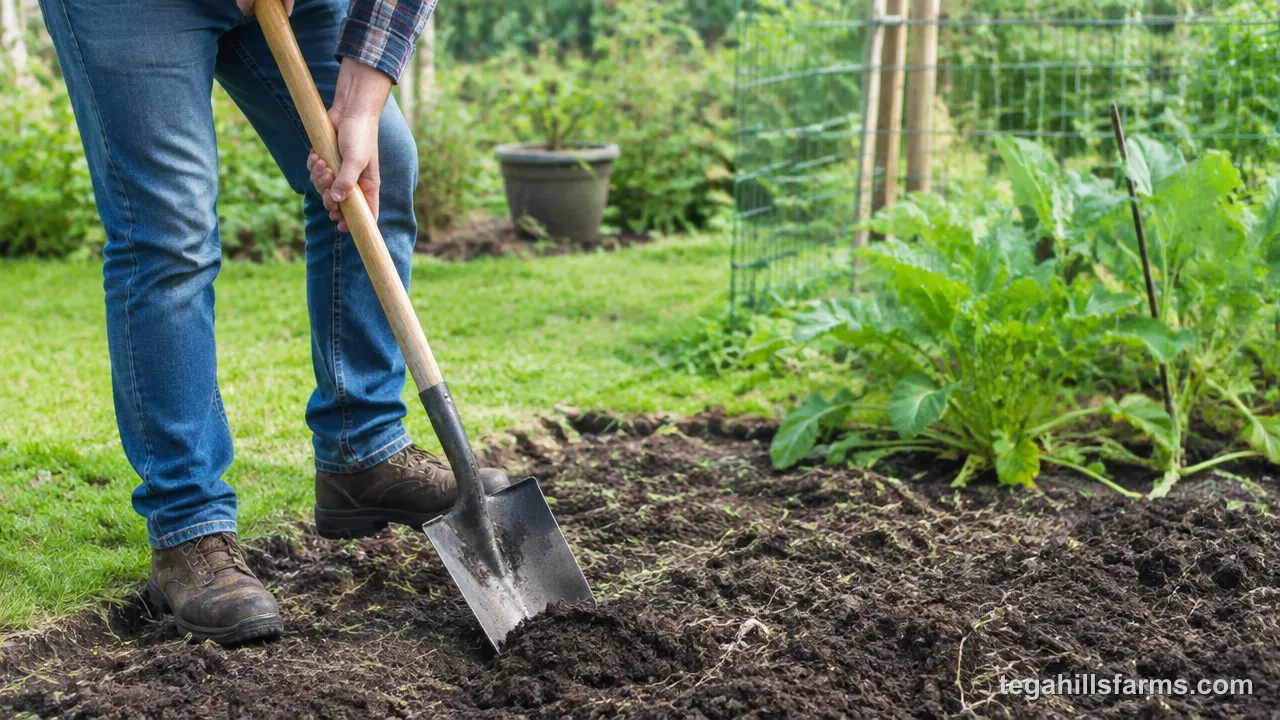
Pick the blade shape by the work you do most often. A full-size digging spade has a broad, flat blade for turning beds and lifting soil in volume. A border spade is a smaller version of it, light enough to work between established plants without knocking stems. A pointed or serrated spade concentrates force at the tip and along its teeth, so it cuts through roots and compacted ground. A transplanting or drain spade has a long, narrow blade for deep, tight holes, such as moving a shrub, setting bulbs or digging a trench for irrigation line.
The wrong shape costs effort on every stroke. A broad digging blade forced into root-choked clay meets resistance across its whole width, so you stomp harder and lift less. A narrow drain spade used to turn an open bed moves a small bite each time, which means many more strokes for the same patch. Most homeowners do well with one general digging or flat spade, then add a narrow drain spade once roots or clay make transplanting slow.
Stainless or Carbon Steel: What Makes a Spade Blade Last?
Rust resistance and easy soil release favor stainless, while carbon steel offers a tougher, longer-lasting edge but needs oiling to stay rust-free. A stainless blade can be rinsed and hung without further care, and sticky soil lets go of it more readily. Its edge is often softer, though, so it needs touching up with a file more often. Carbon steel, including the manganese steels used on many drain spades, takes a keen edge and holds it under hard use, but bare carbon steel rusts if it goes into storage wet.
Coatings narrow that gap. Powder coat and epoxy seal carbon steel away from moisture and soil alkalis, and they protect it until the coating chips at the edge or wears through on the face, where the bare metal then needs oil like any carbon blade.
The joint between blade and shaft matters as much as the steel. A solid socket, forged as part of the head and wrapped around the shaft, spreads prying force along a long section of handle. A thin stamped ferrule or a short tang concentrates that force at a single point, which is where poorly made spades usually bend or loosen first. If rust is your main worry, the best stainless steel spades take that concern off the table.
Fiberglass or Ash Wood: Which Handle Feels Better?
Low upkeep and weather resistance favor fiberglass, while ash absorbs more shock and feels warmer in the hand but needs occasional oiling. A fiberglass handle will not rot, swell or split if you leave it out by the bed, and a rinse is all the care it asks for. Fiberglass is stiffer, though, so more of the jolt from hitting a stone or a root travels into your wrists, and a smooth shaft can feel slick in wet gloves.
Ash flexes slightly under load and damps vibration, which is why it stays comfortable through a long session of digging. It ages well when you look after it, because a light coat of boiled linseed oil each season keeps the grain from drying and splintering. If ash is left wet or stored on damp ground, it can crack or rot at the socket, and that loosens the head. All-steel shafts sit apart from both: they give up some comfort, but the shaft will never rot or flex.
How Do Weight, Length and Handle Style Affect Your Back?
Too short a shaft forces you to bend at the waist on every stroke, while one that matches your height lets you push with your legs and lift with a straight back. With the blade in the ground, the grip should sit high enough that your elbows stay loose and your spine stays upright. If you have to reach down to it, your lower back takes the load your legs should carry.
Handle style changes leverage and grip. A D-handle gives your top hand a closed loop to pull and twist against, which helps you control the blade and lift soil, and it works well with gloves. A YD handle is the wooden version, where the shaft splits into a Y that closes into a D. A long straight handle has no grip at the top, but it lets you slide your hands to different positions and pry with a longer lever, which reduces bending for taller gardeners. The best long handle spades are built around that design.
Weight works both ways. A heavier head helps drive the blade into hard ground, but every lift raises that weight plus the soil. If your hands are smaller or weaker, or your back tires quickly, a lighter spade keeps each stroke manageable, and taking smaller bites makes up for its lower mass.
Which Garden Spade Should You Choose for Your Soil and Garden?
Match the blade to your ground first: narrow drain heads for dense or root-filled earth, a compact toothed blade for raised beds, and light stainless models when your back or hands need relief. Each of those strengths comes with a cost, so the right match depends on which cost your yard and body can live with.
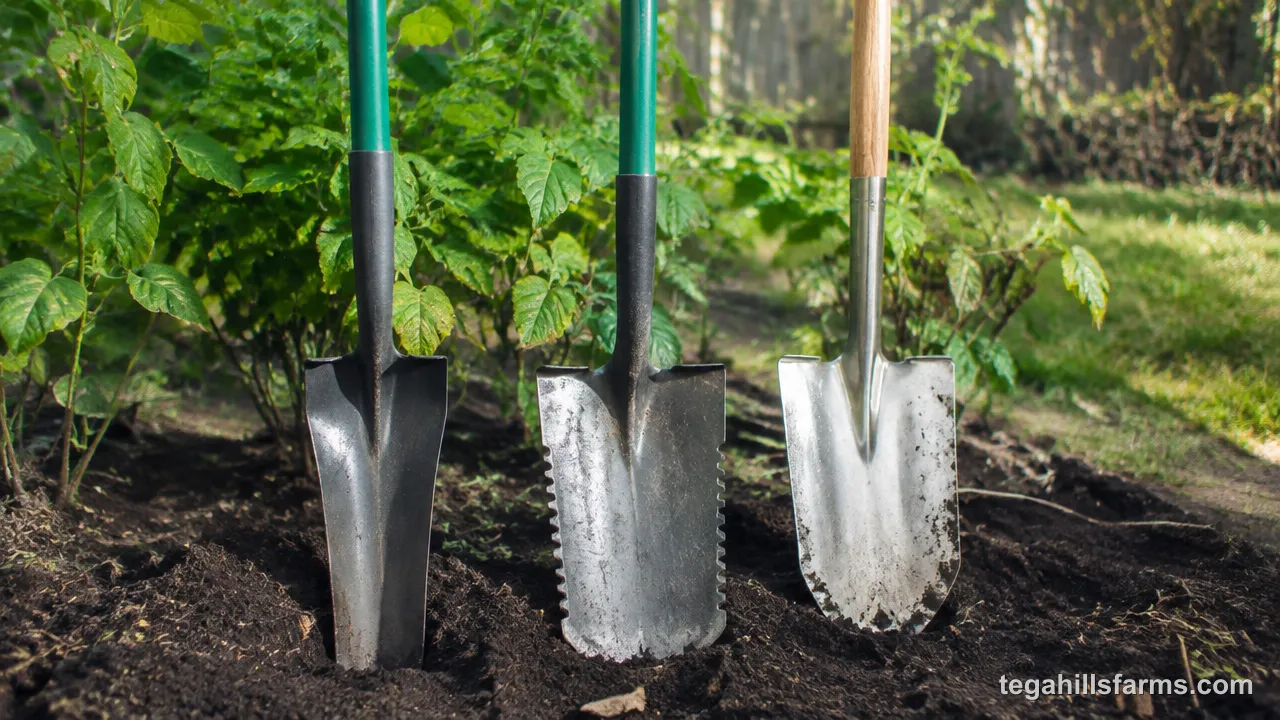
- Dense, sticky or rocky soil with deep roots: the WIKER Drain Spade 45in and the Hantop Drain Spade 44in both use narrow heads that go deep beside a plant. The WIKER’s D-handle helps you lever a stuck blade out of clay, and the Hantop’s sharpened sides cut roots on the way down, but neither turns much soil per lift. Wet clay that clings to steel is a problem of its own, and the best garden spades for clay soil deal with it directly.
- Hard, compacted ground and mixed yard work: the HANTOP Flat Spade’s sawtooth edge and wide foot platforms start holes and edges easily, though its weight builds up over a long afternoon.
- Raised beds and narrow planting areas: the Root Slayer Nomad Garden Spade 22311 fits between plants and frame boards and cuts roots with its inverted V tip, so you gain control and lose soil capacity. If you dig from a kneeling position or at bed height, the best short handle spades bring the grip even closer.
- Back comfort and light weight: the Kent & Stowe Garden Life Digging Spade 70100700 and the Kent & Stowe Garden Life Digging Spade 70100702 cut the load on each lift, and the Fiskars 46in Transplanting Spade eases grip strain with its extra-large D-handle and teardrop shaft. Lighter blades need more push in hard ground, and the Fiskars blade is built for small holes rather than whole beds.
- Rust resistance in wet ground: the Spear & Jackson Kew Gardens Digging Spade seals its one-piece forged head and socket in epoxy, though it is a heavy tool to lift all day. The Berry&Bird Garden Digging Spade 41in relies on polished stainless steel that sheds sticky soil, and its shorter length favors shorter gardeners.
- A traditional ash-handled stainless spade: the Berry&Bird or either Kent & Stowe model gives you a warm wooden grip with a rust-free head, as long as you oil the handle now and then. If you want wood with a coated blade instead, the VNIMTI Spade Shovel D-Handle 45in pairs a solid wood handle with a rust-resistant coating.
- Soft, worked beds: the Fiskars Garden Spade 46in slides its round, hardened blade into loose soil with little effort, but stony ground works against that edge.
A well-balanced spade can still wrench your lower back when you lift a full blade at arm’s length or twist to toss the soil aside. The load on your spine grows the farther that soil sits from your body, so a comfortable handle does little to offset poor technique. After a long afternoon of bed preparation, the strain tends to show up the next morning as stiffness that keeps you from the next job.
How Do You Dig With a Spade Without Hurting Your Back?
The load stays off your spine when you keep it close to your body, let your legs drive the blade, lift small amounts and turn with your feet instead of your hips. Each habit takes strain away from a specific weak point.
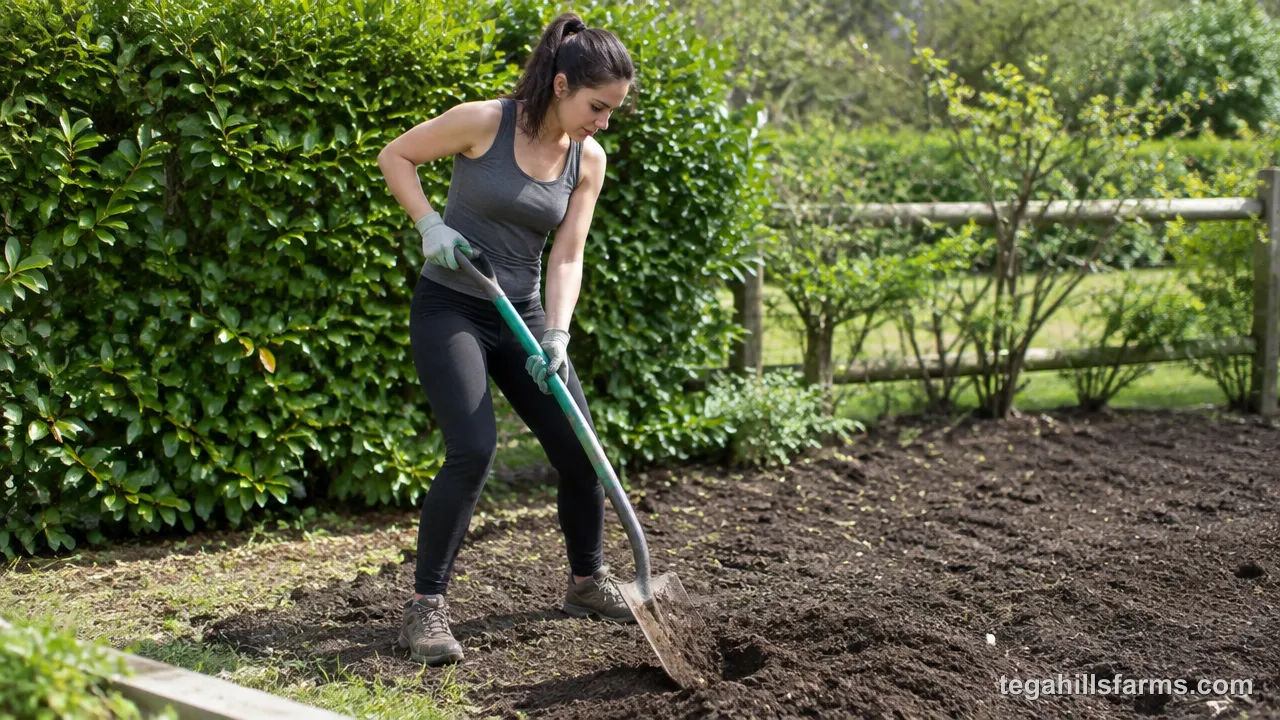
- Stand close and keep the spade near vertical beside your body. The farther a loaded blade sits from your spine, the more leverage it has on your lower back, so soil held close weighs on you far less than the same soil at arm’s length.
- Drive the blade with your foot on the tread and your body weight behind it, then bend your knees to lift. Your thigh muscles take the work that would otherwise fall on your back and wrists.
- Take smaller bites, especially in wet clay. A lighter load lets you lift with a straight back and keeps your wrists from bending under the weight.
- Step around to face where the soil is going instead of twisting your hips. Twisting while you hold a load is what strains the muscles and discs of the lower back.
- Switch your lead hand and foot from time to time, so one side of your body does not carry every stroke.
How Do You Clean, Sharpen and Store a Spade?
Knock off the soil after each use, dry the blade, oil bare steel and wood, file the edge now and then, and store the tool off damp ground. Together those habits stop rust, loose joints and dull edges.
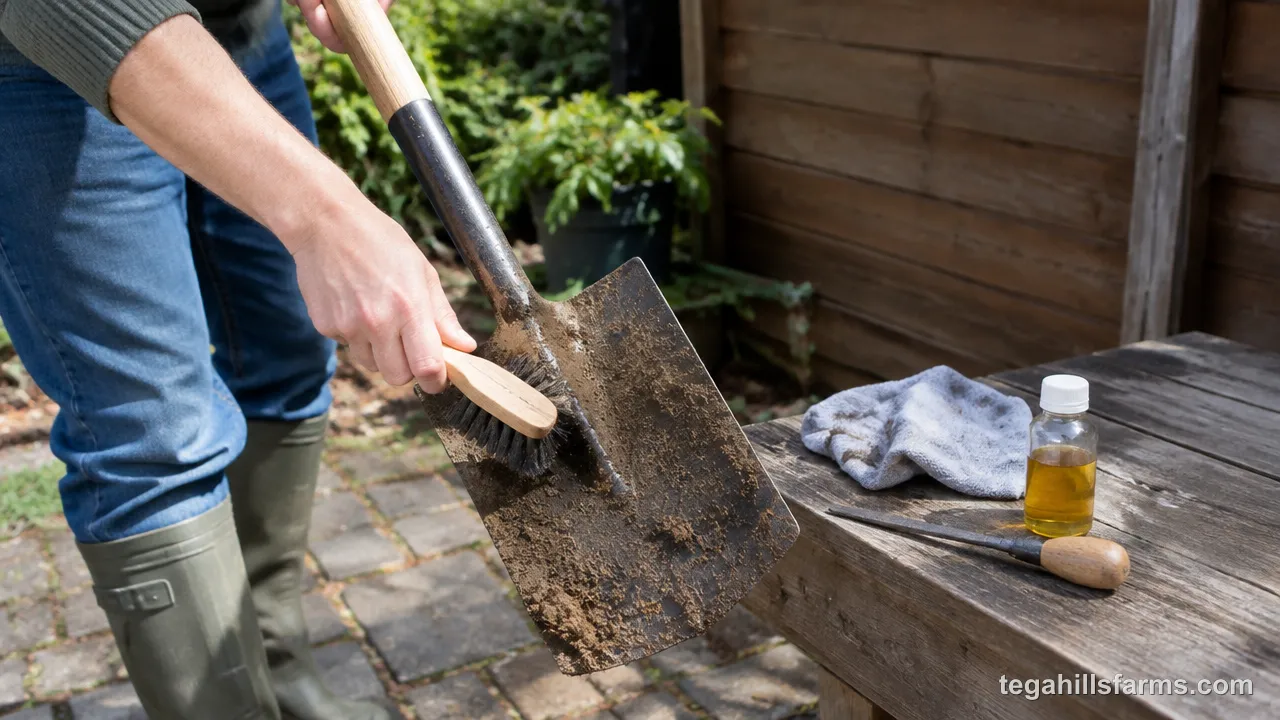
- Scrape off soil before it dries, then rinse the blade. Dried soil holds moisture against the steel and inside the socket, which starts rust where you cannot see it.
- Dry the blade and handle with a rag. Water left in the socket swells wood and corrodes the joint, and over time that loosens the head.
- Wipe bare carbon steel with a light coat of oil, and rub boiled linseed oil into ash handles a few times a season. The oil seals steel from air and keeps wood from drying, cracking and splintering.
- Touch up the edge with a mill file, following the existing bevel and stroking away from the edge. A sharp edge slices into soil instead of crushing it, so each push takes less effort. On coated blades, file only the edge itself.
- Hang the spade or stand it on a rack in a dry shed or garage, away from concrete floors and damp ground, which wick moisture into the steel and the end of the handle.
How Can You Tell When a Spade Is Worn Out or Poorly Made?
A blade that flexes under your foot, a socket that moves or cracks, a handle that splinters or bends, coating that flakes in patches and an edge too rounded to cut all mark a tool that is failing or was poorly made. Some of these can be fixed at home; others mean buying a replacement.
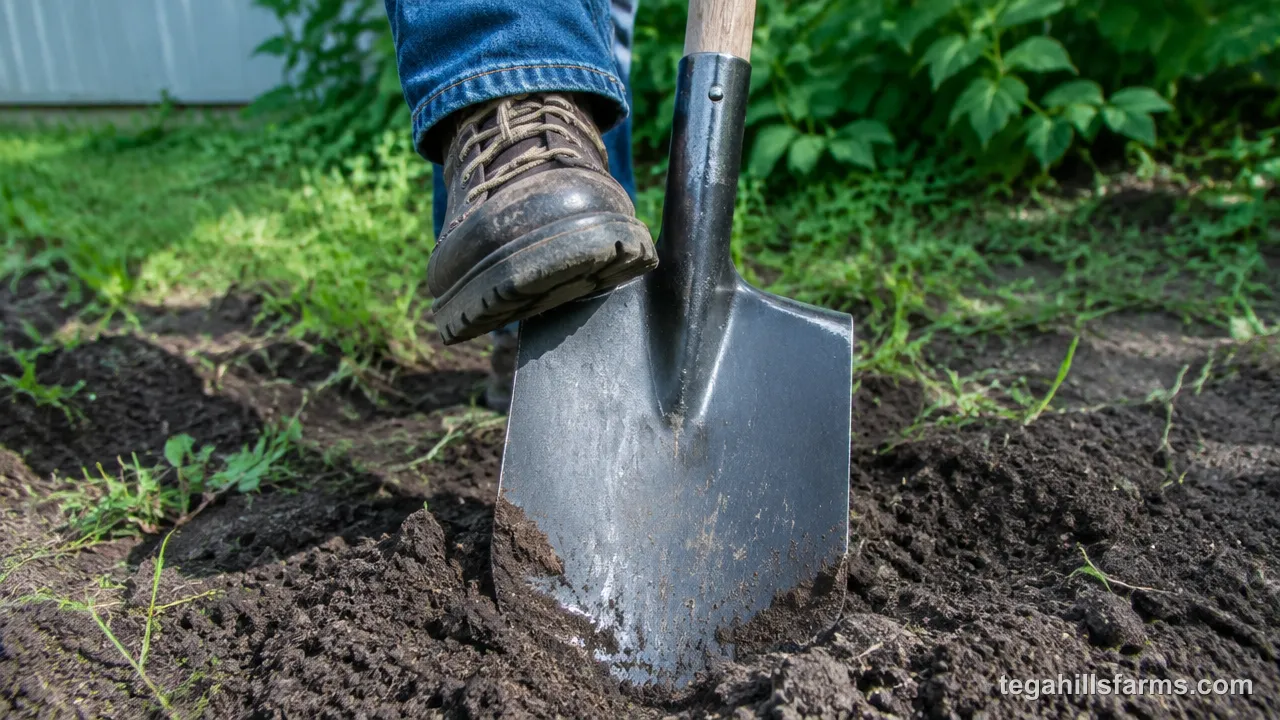
Problems you can usually repair:
- A dull or rounded edge, which a file restores.
- Flaking coating: wire-brush the loose flakes away, then keep the bare steel oiled or touch it up with rust-resistant paint.
- A loose head on a riveted or bolted socket, once you confirm the wood inside is sound and replace the rivet or bolt.
- Rough or lightly splintered ash, which sanding and a coat of linseed oil bring back.
Problems that mean replacing the tool:
- A bent blade, because steel that has bent once is weaker along that line and will fold again.
- A cracked weld, a split socket or a torn ferrule, since the joint carries every prying load.
- A cracked or splintering fiberglass handle, which cannot be glued back to full strength and can shed sharp fibers into your hands.
- Ash split along the grain or soft with rot at the socket.
Poor construction often shows before the first dig: a blade that flexes when you press it against the floor, a thin stamped ferrule crimped around the shaft, or a visible gap where the blade meets the handle.
Write Your Review
No reviews yet. Be the first to share your experience!