

Our picks for the best snow blowers under $200 in 2026 are the VOLTASK 24V 13.2in Cordless Snow Shovel (Best Overall), Westinghouse WSnow20 20in (Runner Up), etoolab 20V 13in Cordless Snow Shovel (Best Budget), Steelite 20in Corded Snow Blower (Best Performance), DEKOPRO 18in Corded Snow Blower (Also Great), Vibekio 40V 13.5in Cordless Snow Shovel (Also Great), Westinghouse WSnow23 23in Snow Blower (Best for Large Yards), GlimmaX 15.7in Cordless Snow Shovel (Also Great) and Mattily 12in Cordless Snow Shovel (Also Great).

Two things separate them. The first is how much snow each pass moves, which comes down to clearing width and intake depth. The second is how each machine gets its power. A cord gives you endless runtime but limits how far you can go, and a battery lets you go anywhere until the charge runs out. Chute control and weight cover the rest: where the snow lands, and whether you can lift the machine onto a step or fit it into a full garage.
None of these machines is built for wet, packed snow or the icy bank the plow leaves at the end of the driveway. They’re built for fresh, light-to-moderate snow on pavement, and they do that job well if you clear before the snow piles up past the intake.


If you already own Dewalt 20V MAX batteries, start with the Mattily, because the bare tool runs on packs you already have. Otherwise, walk from your nearest outdoor outlet to the far end of the driveway before you choose between a cord and a battery.
What Types of Snow Blowers Come in Under $200?
Corded electric blowers, cordless battery blowers and battery-powered snow shovels fill this price tier. None of them carries the engine, fuel system and recoil starter that push gas machines above it.
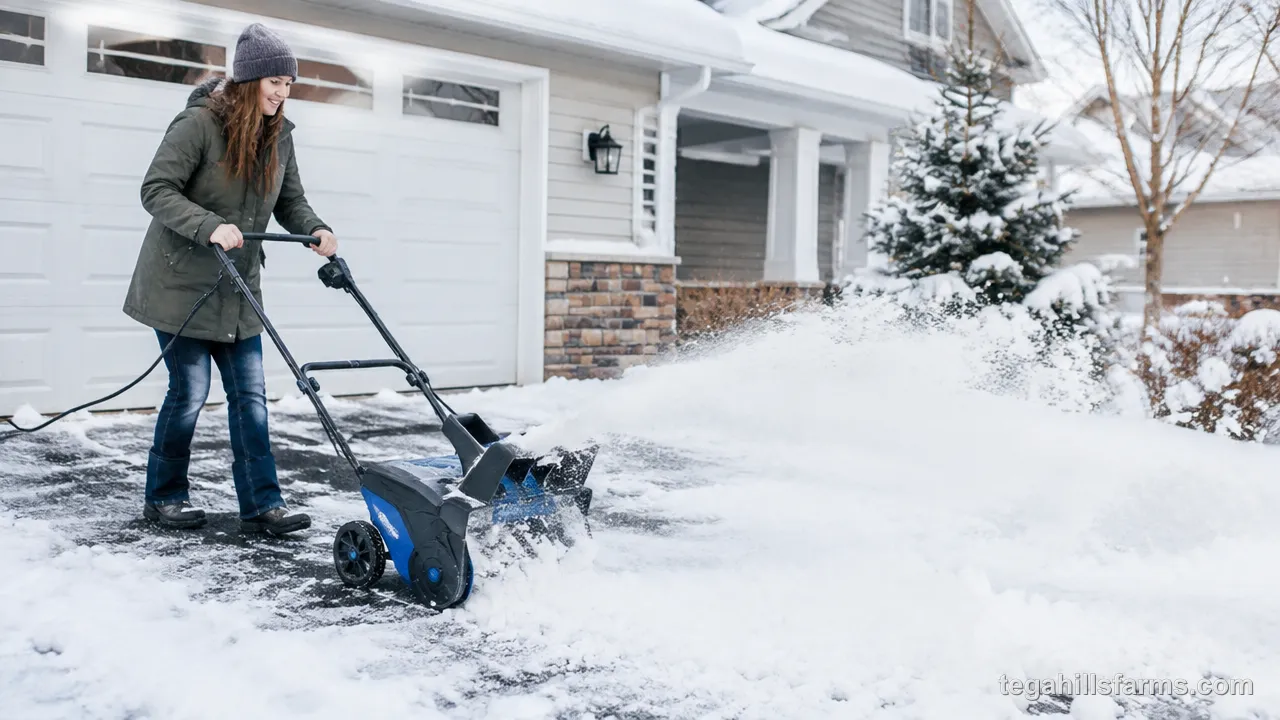
A corded blower plugs into a household outlet through an extension cord, so it runs until you switch it off. The catch is that everything you clear has to be within reach of the cord, and the cord trails behind you on every pass. A cordless blower puts a walk-behind housing on wheels and runs off one or two battery packs, so you’re free of the outlet until the charge runs down. A battery snow shovel shrinks that design into a narrow auger head on a long handle. It’s light enough to carry up steps and onto a deck, and its path is sized for walks and stoops, not a full driveway.
Gas machines rarely fit this budget. Even a basic engine model needs a carburetor, a fuel tank and a pull-start, and it comes with oil changes, fresh fuel and fuel storage over the winter. If you want to stay electric and can spend more, the best electric snow blowers go wider and hit harder, and the best battery snow blowers run on larger platforms built for full driveways. If you’re still comparing every price tier and machine type, our guide to the best snow blowers covers the full field.
The 9 Best Snow Blowers Under $200 of 2026
The VOLTASK 24V 13.2in Cordless Snow Shovel, Westinghouse WSnow20 20in, etoolab 20V 13in Cordless Snow Shovel, Steelite 20in Corded Snow Blower, DEKOPRO 18in Corded Snow Blower, Vibekio 40V 13.5in Cordless Snow Shovel, Westinghouse WSnow23 23in Snow Blower, GlimmaX 15.7in Cordless Snow Shovel and Mattily 12in Cordless Snow Shovel split between plug-in blowers and battery shovels. Both Westinghouse models, the Steelite and the DEKOPRO run as long as the outlet supplies power, but the cord limits how far you can go and has to stay clear of the auger on every pass. The battery shovels give up width and runtime, and in return they clear anywhere and store in a corner or a car trunk. All of them suit owners of small driveways, walkways, decks and steps who clear light-to-moderate snow from paved surfaces.
#1 VOLTASK 24V 13.2in Cordless Snow Shovel — Best Overall
For a front walk, porch steps and a short paved driveway, this shovel weighs 11.9 pounds with its battery, so you can lift it onto a step or deck one-handed and keep working with no cord behind you. The included 4.0Ah pack runs 30 minutes.
Key Specs:
- Power: 24V 4.0Ah lithium-ion battery, quick charger included
- Runtime: 30 minutes continuous; 2-hour recharge
- Clearing path: 13.2 in wide, up to 7 in deep
- Throw distance: up to 23 ft
- Deflector: rotates 30° left or right
- Weight: 11.9 lb (5.4 kg) with battery
Detailed Review:
At 11.9 pounds with the battery in, the VOLTASK is light enough to carry up porch steps in one hand and set down on a deck without straining your back. That weight also decides where it lives between storms: a garage shelf, a shed corner or a car trunk will hold it without any rearranging.
The 13.2-inch path and 7-inch intake suit fresh, light snow on walks and steps, where a narrow machine can follow the edge of the concrete closely. Deeper snow has to come off in layers, so a heavy overnight fall means several passes over the same strip. The deflector turns 30 degrees either way, which lets you aim the 23-foot throw away from the door, the car or the neighbor’s walk.
The 4.0Ah pack runs 30 minutes and recharges in 2 hours. One charge covers the walk-and-steps work this shovel is sized for, and a second session has to wait for the charger. The Vibekio runs longer on its two packs but carries noticeably more weight, so the VOLTASK gives up some clearing time for the easier carry.
Pros:
- 11.9-pound weight lifts easily onto steps and decks.
- Deflector rotates 30 degrees each way to aim snow.
- Dual safety buttons prevent accidental auger starts.
- Battery and quick charger come in the box.
- Critical components are waterproof for wet snow days.
Cons:
- 13.2-inch path means many passes on a full driveway.
- 7-inch intake forces layered passes in deeper snow.
- 30-minute runtime cuts longer jobs short.
Who It’s For:
Homeowners whose snow work is mostly a front walk, porch steps and a short paved driveway will get steady use from it, especially if lifting a heavy machine onto steps is a strain. If you clear a long driveway after bigger storms, a corded blower with a wider path fits that workload better.
Editor’s Verdict:
A light cordless shovel that makes walks and steps easy work. Its narrow path and short runtime keep it to small paved areas.
#2 Westinghouse WSnow20 20in — Runner Up
Plug it in and the 1800-watt motor keeps clearing a 20-inch path until the whole driveway is done, which suits a paved driveway too long for one battery charge. Dual LED headlights help on dark mornings.
Key Specs:
- Motor: 120V, 15A, 1800W corded electric
- Clearing path: 20 in wide, 10 in deep
- Clearing rate: 680 lb of snow per minute
- Throw distance: up to 25 ft
- Chute: 180° adjustable
- Weight: 29.3 lb
Detailed Review:
The 1800-watt motor runs off a standard 120V outlet, so the WSnow20 never stops halfway down the driveway to recharge. The cord sets your pace instead: you work away from the outlet and move the cord onto the cleared side at the end of each pass.
Each pass takes a 20-inch-wide, 10-inch-deep bite, and the motor moves 680 pounds of snow a minute, which keeps a full paved driveway to a manageable number of passes. The rubber-tipped steel auger scrapes close to the pavement without chewing into it.
The chute swings through 180 degrees and throws up to 25 feet, so you can send snow to either side of the driveway as you work back and forth. Dual LED headlights light the path when you clear before work or after dark.
The WSnow23 uses the same motor but takes a wider, deeper path and moves more snow per minute. What the WSnow20 has over it is larger 7-inch wheels, which roll more easily over packed spots. At 29.3 pounds it takes two hands to lift into a trunk, and I’d pick it for a mid-size paved driveway the cord can reach end to end.
Pros:
- Corded 1800-watt motor never stops for a recharge.
- Rubber-tipped steel auger scrapes close without gouging pavement.
- 180-degree chute sends snow to either side.
- Dual LED headlights light early-morning and evening clearing.
- Two-year limited warranty with lifetime technical support.
Cons:
- Extension cord length limits how far you can clear.
- Cord has to be moved aside on every pass.
- 29.3-pound body takes two hands to lift onto steps.
Who It’s For:
If your driveway is within extension-cord reach of an outdoor outlet and you’d rather not watch a battery gauge, this blower fits, especially if you clear in the dark before work. If your paved area runs well past cord reach, or you have to carry a machine up steps alone, a cordless shovel is the better fit.
Editor’s Verdict:
Pick it for steady, unlimited clearing on a driveway the cord can reach. The headlights and wide chute swing make early mornings easier.
#3 etoolab 20V 13in Cordless Snow Shovel — Best Budget
Steps, a patio and a short walk are the jobs this shovel fits. Its 20V 4.0Ah battery is built to resist cold, and the frame folds down to fit under a workbench, so it takes almost no storage space between storms.
Key Specs:
- Power: 20V 4.0Ah cold-resistant lithium-ion battery
- Runtime: about 15–20 minutes per charge
- Motor: 3000 RPM brushless
- Clearing path: 13 in wide, up to 8 in deep
- Throw: up to 19 ft out, 13 ft high
- Clearing rate: 300 lb per minute
Detailed Review:
The 3000 RPM brushless motor moves 300 pounds of snow a minute, a pace better suited to steps, a patio and a walk than to a full driveway. The 13-inch path and 8-inch intake clear a fresh, moderate snowfall on a walk in one pass.
Snow leaves the chute up to 19 feet out and 13 feet high, and that tall arc lifts it over any bank that has already built up along a walk. The discharge angle adjusts 30 degrees left or right, so you can keep snow off the patio door or a parked car.
The cold-resistant battery limits each charge to a short run, and that limit sets the size of the job. The VOLTASK runs longer on a pack of the same 4.0Ah capacity, but the etoolab takes a slightly deeper bite, so the choice between them is runtime versus intake height.
When you’re done, the frame folds down to fit under a workbench or in a garage corner. If your garage floor is already taken up by a car, a mower and bikes, that folding frame is the reason I’d look at this shovel.
Pros:
- Brushless motor holds steady power through the season.
- Cold-resistant battery suits freezing mornings.
- Folds down to store under a workbench.
- 13-foot-high throw arc clears existing snowbanks.
Cons:
- Short battery runtime keeps it to small jobs.
- 13-inch path makes a driveway slow going.
- 19-foot throw leaves banks close to the walk.
Who It’s For:
Renters, condo owners and homeowners with steps, a patio and a short walk to clear will find it covers those jobs, and it suits anyone who wants to spend as little as possible on snow removal. If you also have a full driveway to clear, its runtime will leave the job unfinished.
Editor’s Verdict:
Expect a compact, cold-ready shovel for small paved spots. There, its short runtime matters less than its low cost and folding storage.
#4 Steelite 20in Corded Snow Blower — Best Performance
This blower moves up to 860 pounds of snow a minute and throws it as far as 30 feet, so a full paved driveway under light-to-moderate snow clears in fewer, faster passes. Folding handles let it tuck into a garage corner afterward.
Key Specs:
- Motor: 15A brushless, corded electric
- Clearing path: 20 in wide, 10 in deep
- Clearing rate: up to 860 lb per minute
- Throw distance: up to 30 ft
- Chute: 180° rotating, with adjustable deflector
- Weight: 35 lb
Detailed Review:
Its 15-amp brushless motor clears up to 860 pounds of snow a minute on cord power, so runtime never comes into it. The WSnow20 takes the same 20-inch path, but the Steelite moves more snow per minute and throws it farther. In exchange, its heavier body takes more effort to lift.
The 20-inch path is built for light-to-moderate snow on flat paved ground. That makes it a driveway-and-sidewalk machine, and gravel and deep drifts are outside what it was designed for.
The chute rotates 180 degrees and the deflector adjusts the angle, which keeps snow from blowing back onto cleared pavement when the wind shifts. A 30-foot throw lands banks well back from the driveway edge, leaving room for the next storm. The LED headlight covers early-morning and evening work.
At 35 pounds it’s a two-hand lift, but the handles fold and the compact body fits in a garage or shed without taking much floor space. If you want speed from a corded machine, this is the one I’d steer you toward.
Pros:
- Brushless 15-amp motor moves up to 860 pounds per minute.
- 30-foot throw keeps banks well off the driveway.
- Adjustable deflector stops blowback onto cleared pavement.
- Folding handles shrink it for garage or shed storage.
Cons:
- Built for flat pavement, not gravel or deep drifts.
- 35-pound weight is a two-hand lift onto steps.
- Cord limits how far from the outlet you can work.
Who It’s For:
Owners of a full paved driveway near an outdoor outlet who want each storm finished quickly will appreciate its speed and long throw. It’s a poor match for a gravel driveway or deep drifts, or for anyone who has to carry a machine up stairs alone.
Editor’s Verdict:
Choose this blower when speed on paved ground is your priority. The brushless motor and long throw finish a cord-reachable driveway quickly.
#5 DEKOPRO 18in Corded Snow Blower — Also Great
An 18-inch path and a 15-amp corded motor that moves 800 pounds of snow a minute make this a good fit for a driveway and the walks around it, all cleared on one plug without stopping to recharge. The safety lock works with gloves on.
Key Specs:
- Motor: 15A corded electric, 3200 RPM
- Clearing path: 18 in wide, 9 in deep
- Clearing rate: up to 800 lb per minute
- Auger: 2-blade steel
- Throw distance: up to 25 ft
- Chute: 180° adjustable
Detailed Review:
The 15-amp motor spins at 3200 RPM and moves up to 800 pounds of snow a minute on cord power. Its 2-blade steel auger cuts an 18-inch-wide, 9-inch-deep path through fresh snow on pavement.
That width is narrower than the other corded machines here, so a wide driveway takes a few more trips up and back. The narrower housing pays off on sidewalks and walkways, where it follows the edge of the concrete without riding onto the lawn.
The chute adjusts through 180 degrees and throws snow up to 25 feet, which puts it past the edge of the driveway and keeps banks off the walk. Dual LED headlights light the path in low light, which helps when the plow comes through before sunrise.
The dual-action safety switch makes you press a lock before the trigger will engage. It’s designed to work with gloves on, so you don’t have to pull a glove off in the cold to start it. I’d call this a solid corded option for a household with both a driveway and long walkways to clear.
Pros:
- 15-amp motor moves up to 800 pounds per minute.
- Safety lock operates easily with gloves on.
- Dual LED headlights light pre-dawn clearing.
- Narrow housing follows sidewalk edges neatly.
Cons:
- 18-inch path adds passes on wide driveways.
- Cord ties every pass to outlet reach.
Who It’s For:
A household with a driveway plus long sidewalks or walkways around the house will get good use from it, especially if you clear before sunrise with gloves on. If you have a wide driveway and want fewer passes, a wider corded blower will serve you better.
Editor’s Verdict:
Count on steady corded clearing with glove-friendly controls. The narrower path costs you a few extra passes but suits walkways well.
#6 Vibekio 40V 13.5in Cordless Snow Shovel — Also Great
If you clear early and live close to your neighbors, this cordless shovel runs quietly enough for pre-dawn work. Two 20V 4.0Ah packs power a 1600-watt brushless motor for up to 35 minutes and throw snow up to 30 feet, well past the edge of a walk or deck.
Key Specs:
- Power: 2 × 20V 4.0Ah lithium-ion batteries (40V)
- Runtime: up to 35 minutes
- Motor: 1600W brushless, 3000 RPM auger
- Clearing path: 13.5 in wide, 8 in deep
- Throw: up to 30 ft out, 15 ft high
- Weight: 16.75 lb
Detailed Review:
Two 20V 4.0Ah packs feed a 1600-watt brushless motor and a 3000 RPM auger for up to 35 minutes per charge. That’s more runtime than the VOLTASK gives you, at the cost of a heavier carry.
The 13.5-inch path and 8-inch intake clear fresh snow on walks and decks in a single pass. Snow leaves the chute up to 30 feet out and 15 feet high, and the deflector turns 30 degrees either way, so you can lift snow over an existing bank and aim it clear of a neighbor’s walk.
Snow wheels and an adjustable support plate let it roll across pavement instead of being shoved like a shovel blade. The adjustable handle sets a working height that keeps your back straighter. At 16.75 pounds, it still lifts onto a deck or up a set of steps without much strain.
It runs relatively quietly, which matters when you clear before the neighbors are up. I’d lean toward it if a lighter shovel keeps running out of charge before your walk and deck are done.
Pros:
- Two batteries deliver up to 35 minutes of runtime.
- 30-foot throw and 15-foot arc clear existing banks.
- Snow wheels roll it smoothly over pavement.
- Relatively quiet for early-morning clearing.
- Adjustable handle reduces back strain.
Cons:
- 13.5-inch path means many passes on wide driveways.
- Charging two packs adds a step before each storm.
Who It’s For:
If you live in a close-set neighborhood and clear walks, decks and a short driveway before others are up, quiet, cord-free operation is a real advantage. It also suits you if your current shovel runs out of charge before the job is done. If carrying weight up stairs is your main concern, a lighter shovel fits better.
Editor’s Verdict:
Buy it for longer, quieter cordless sessions on walks and decks, and accept a heavier carry in exchange.
#7 Westinghouse WSnow23 23in Snow Blower — Best for Large Yards
On a longer paved driveway, the 23-inch, 12-inch-deep path cuts down the passes you walk, and the corded 1800-watt motor never runs out partway through. Dual LED headlights handle dark mornings.
Key Specs:
- Motor: 120V, 15A, 1800W corded electric
- Clearing path: 23 in wide, 12 in deep
- Clearing rate: 800 lb of snow per minute
- Throw distance: up to 25 ft
- Chute: 180° adjustable
- Weight: 30 lb
Detailed Review:
With a 23-inch path and a 12-inch intake, the WSnow23 takes a wide and deep bite on every pass, so a longer driveway needs fewer trips up and back. The 1800-watt motor moves 800 pounds of snow a minute on a standard 120V outlet.
The Steelite moves more snow per minute and throws it farther, but the WSnow23 covers more pavement on each pass. That saves more time when the driveway is long and the snow stays below the intake height. Fewer passes also means moving the cord out of the way fewer times.
The chute adjusts through 180 degrees and throws up to 25 feet, and dual LED headlights light the path on dark winter mornings. Its 6-inch wheels and soft-grip handle keep steering manageable on packed snow.
At 30 pounds it’s a two-hand lift, but it rolls out of the garage easily. On a long driveway the cord becomes the limit, so check that your extension cord is long enough before the first storm rather than finding out at the end of the drive.
Pros:
- 23-inch, 12-inch-deep path cuts passes on long driveways.
- Moves 800 pounds of snow per minute.
- Dual LED headlights for dark mornings.
- Two-year limited warranty and lifetime technical support.
Cons:
- Long driveways need a long, heavy-duty extension cord.
- 30-pound body is awkward to carry up steps.
Who It’s For:
It’s at its best on a long paved driveway close to the house’s outdoor outlet, for owners who want each storm done in fewer passes. If your snow work is mostly steps, decks and narrow walks, its width gets in the way, and a light cordless shovel suits that work better.
Editor’s Verdict:
Get it for a long paved driveway. The wide, deep path saves passes, and the cord means it never stops to recharge.
#8 GlimmaX 15.7in Cordless Snow Shovel — Also Great
If you want to stay cordless but cover more ground per pass, this shovel’s 15.7-inch path is wider than the other battery shovels here, and two 21V 4.5Ah packs run it for up to 35 minutes. Built-in wheels take the push off your arms.
Key Specs:
- Power: 2 × 21V 4.5Ah lithium-ion batteries
- Runtime: up to 35 minutes
- Motor: 1000W brushless
- Clearing path: 15.7 in wide, 8 in deep
- Throw distance: up to 25 ft
- Chute: rotates 45° left or right
Detailed Review:
The 15.7-inch path and 8-inch intake let it cover a walk or a short driveway in fewer passes than a narrower battery shovel, and the 1000-watt brushless motor keeps the auger turning through fresh snow. Two 21V 4.5Ah packs give up to 35 minutes, so a small clearing job usually fits in one session.
The Vibekio also runs up to 35 minutes, but the GlimmaX gives you a wider path and a chute that swings 45 degrees each way, while the Vibekio throws snow farther. On a walk lined with a fence or shrubs, that wider chute swing lets you put the snow on the open side every time.
Two built-in wheels carry the weight, so you push it like a small cart instead of lifting a shovel blade through the snow. The base plate is designed to resist freezing, and the body uses reinforced, weather-resistant materials meant to hold up through repeated wet clearing sessions.
To start it, you press the safety button and the trigger together, so the auger stays still while you carry it or set it down. I’d look at this shovel if a narrower cordless model has you making too many trips.
Pros:
- 15.7-inch path covers more ground per pass.
- Chute swings 45 degrees each way.
- Two batteries run it up to 35 minutes.
- Wheels make pushing easier than lifting.
- Freeze-resistant base plate suits wet winter clearing.
Cons:
- Two packs to keep charged between storms.
- 8-inch intake needs layered passes in deep snow.
Who It’s For:
Anyone set on staying cordless who finds a narrow shovel too slow on a short driveway or long walk will find this a sensible step up. If you mostly clear steps and a stoop, you’ll be carrying more machine than you need.
Editor’s Verdict:
Consider it if you want cordless convenience with a wider path, a broad chute swing and wheels that do the pushing.
#9 Mattily 12in Cordless Snow Shovel — Also Great
If you own Dewalt 20V MAX batteries, this shovel puts the packs already on your shelf to work on snow. The tool itself weighs 3.9 pounds, and an LCD display shows remaining charge, so you can lift it onto steps easily and see when a pack is about to run out.
Key Specs:
- Power: Dewalt 20V MAX batteries (tool only; battery and charger not included)
- Motor: brushless
- Clearing path: 12 in wide, up to 6 in deep
- Throw distance: up to 23 ft
- Deflector: 60° adjustable
- Weight: 3.9 lb
Detailed Review:
This is a tool-only shovel built around Dewalt 20V MAX batteries, and compatible packs include the DCB203, DCB205 and DCB240. If you already have those batteries, you add snow clearing without another charger or battery platform. If you don’t, plan on buying both before the first storm.
The tool weighs 3.9 pounds, and setup takes three steps: connect the three tubes, attach the adjustable handle and insert a battery. At that weight it’s easy to carry up a set of steps or onto a deck, and the ergonomic handle keeps it steady on the stairs.
Its 12-inch path and 6-inch optimal depth keep it compact and well suited to light, shallow snow. That suits steps, decks and stoops, but a driveway becomes a long series of passes. The 23-foot throw and 60-degree adjustable deflector move snow well off a narrow path and let you steer it away from railings and doors.
The LCD battery display shows remaining charge while you work, which helps because runtime depends on which Dewalt pack you put in. A dual safety switch requires a deliberate press before the auger starts.
Pros:
- Runs on Dewalt 20V MAX batteries you may already own.
- 3.9-pound tool lifts easily onto steps and decks.
- LCD display shows remaining battery charge.
- 60-degree deflector steers snow away from doors.
Cons:
- Battery and charger are sold separately.
- 12-inch path makes driveways slow going.
- 6-inch depth limits it to lighter snowfalls.
Who It’s For:
If you already run Dewalt 20V MAX tools and mainly clear steps, a deck or a stoop, this is an easy addition that shares the batteries you have. If you don’t have those batteries, or you have a full driveway to clear, a shovel that comes with its own pack or a wider machine makes more sense.
Editor’s Verdict:
Add it to an existing Dewalt 20V MAX kit for quick work on steps and decks. It isn’t a driveway machine.
What Should You Look for in a Snow Blower Under $200?
At this budget, a machine sized to your ground and your power supply matters more than any single spec. A light machine has no spare power to make up for being too narrow, too short on charge or too far from an outlet. A mismatch shows up as extra passes, a battery that dies halfway down the walk, or a machine that blocks the garage all summer. The full process of how to choose a snow blower starts with your yard size and your typical snowfall, and at this budget those same two facts tell you whether you need a cord, a battery or a wider path.
How Do Clearing Width and Intake Depth Affect Your Workload?
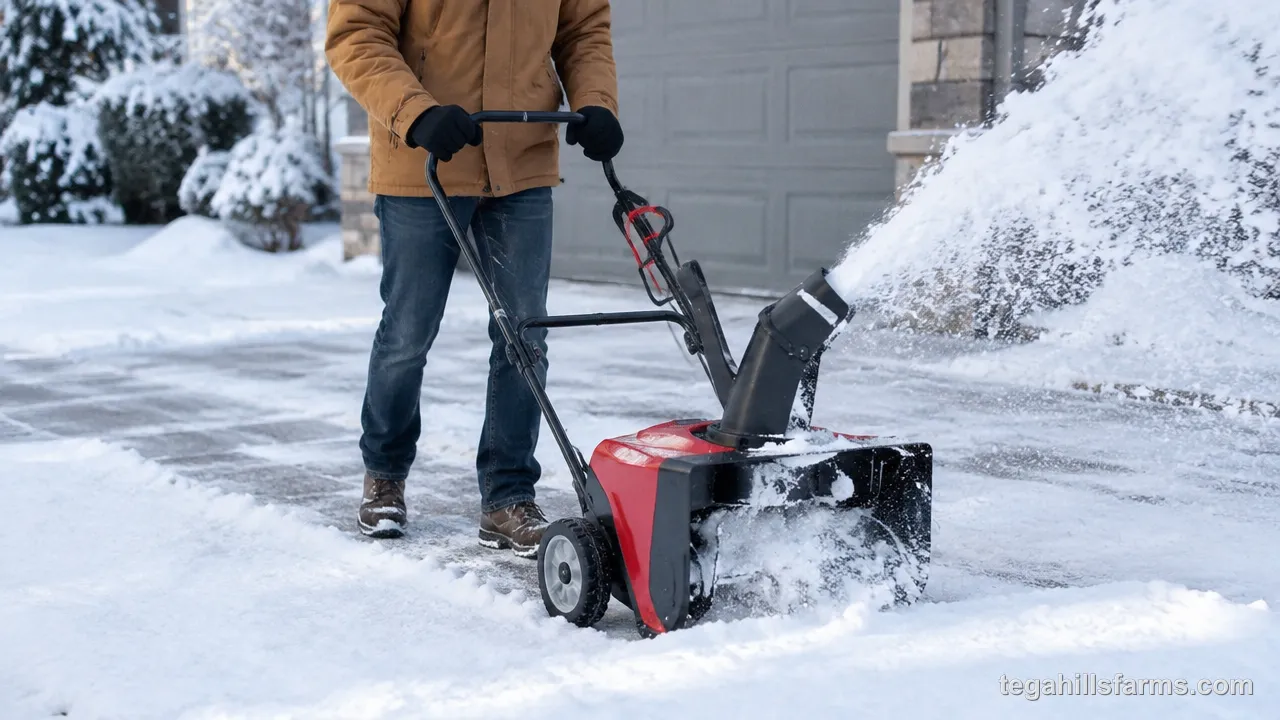
Clearing width decides how many passes a driveway takes. Intake depth decides how much snow the machine can swallow in one bite before it rides up over the top. A narrow path means more trips, and a shallow intake means clearing in layers whenever the snow is taller than the housing.
Each pass has to overlap the last one slightly so you don’t leave a ridge between strips, so on a wide driveway a narrow path adds up to a lot of extra walking. When the snow is deeper than the intake, the housing either pushes a wall of snow ahead of it or climbs onto it and packs down a layer you’ll have to scrape later. During a long storm, it’s better to clear partway through than to wait for it to end.
A narrow cordless shovel matches the width of a walkway or a stair tread, so its small path wastes no effort there, and it’s easy to lift from step to step. On a longer driveway, a wider corded blower saves effort, because every extra inch of width cuts passes, and fewer passes also means moving the cord fewer times. If your driveway is long enough that even a wide budget machine makes for a long session, the best snow blowers for large driveways step up in width and power.
What Do Amps, Watts and Battery Volts Tell You?
On a corded blower, amps and watts tell you how much power the motor draws from the outlet. On a battery unit, volts and amp-hours tell you how much energy the pack stores, which sets how long it runs. Neither number tells you how much snow the machine moves; the clearing rate in pounds per minute and the throw distance describe the result more directly.
On a corded machine, watts are amps multiplied by the outlet voltage, so two motors with the same amp rating on a household circuit draw about the same power. That power never runs out partway down the driveway, but it only reaches as far as your extension cord. A long, thin cord also drops voltage and leaves the motor weaker.
On a battery unit, voltage multiplied by amp-hours gives the pack’s stored energy, so a machine running two packs at once holds more than one running a single pack of the same size. That stored energy limits how much ground one charge can clear, and wet snow or cold weather drains it faster, so keep packs indoors and bring them out just before you start. A brushless motor has no carbon brushes to wear out and turns more of the battery’s energy into auger work.
How Much Do Chute Rotation and Throw Distance Matter?
Chute rotation decides which side of the path the snow lands on. The adjustable deflector sets how high the snow leaves the chute, so a crosswind doesn’t carry it back onto pavement you just cleared. Throw distance decides how far from the edge the banks build up.
A chute that swings from side to side lets you throw snow downwind and away from the house, the car and the neighbor’s walk as you work back and forth, without turning the machine around. A short throw stacks snow right at the edge of the path, and after a few storms those banks narrow the driveway and leave the next snowfall less room. A longer throw pushes the banks back and keeps the edges open through the season.
Gravel is a different problem. A light machine riding on loose stone can pick up gravel with the snow and send it out the chute toward windows, cars and people. Budget machines are built for pavement, and the best snow blowers for gravel driveways use designs that keep the intake above the stones.
How Much Do Weight and Folding Handles Matter for Storage?
Weight decides whether one person can push the machine without strain, lift it onto steps or a deck, and carry it out of a garage. Folding handles and a compact footprint decide where it fits between storms.
A battery snow shovel light enough to carry in one hand can go up porch steps and clear each tread on the way. A heavier wheeled blower can’t do that unless you lift it step by step. A corded blower weighs more, but on flat pavement the wheels carry most of that weight, so it only matters when you lift it into a trunk, over a curb or up onto a deck.
Storage matters because the machine sits unused for most of the year. Folding handles let a blower stand upright in a garage corner or slide under a workbench instead of taking floor space your car or mower needs. A small battery shovel can hang on a wall hook.
Is a Snow Blower Under $200 Enough, or Should You Spend More?
This tier handles fresh snow on paved driveways, walks and decks well. Deep storms, wet snow and the plow pile are where it runs out of muscle and a heavier machine is worth paying for.
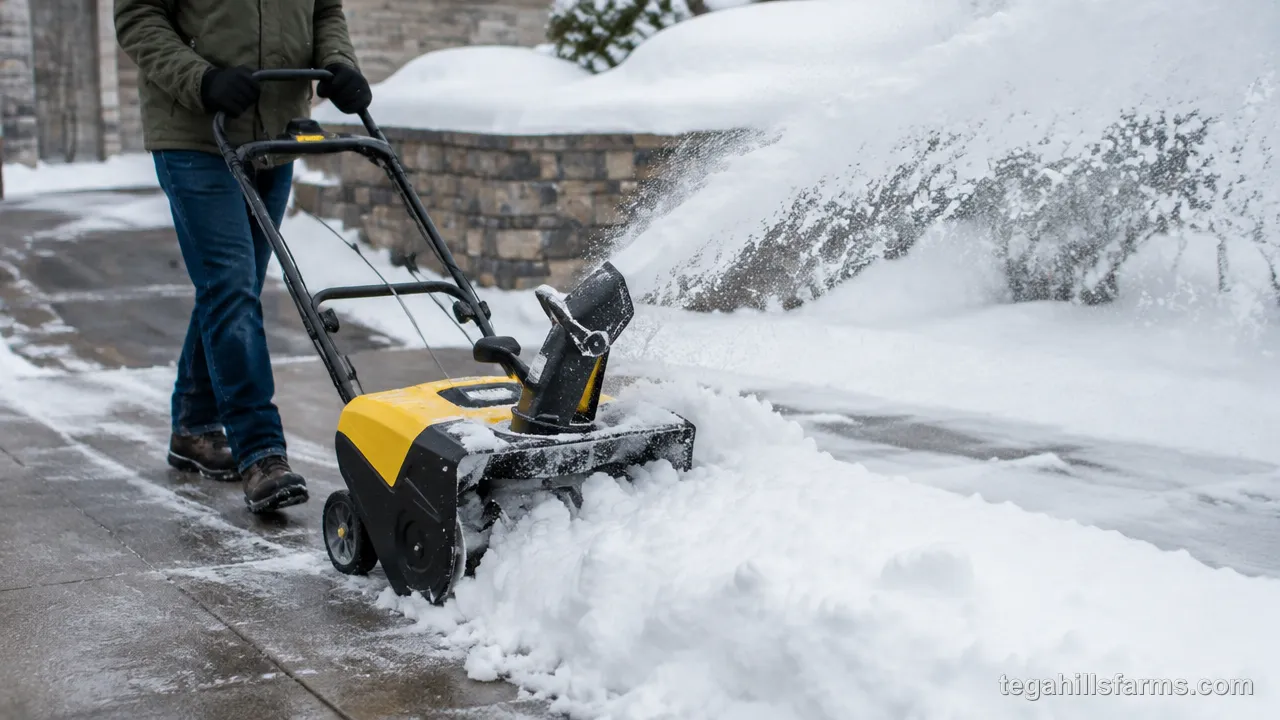
Once snow is taller than the housing, a light machine has to take it in layers. A storm that drops more than that overnight turns one session into several passes over every strip. Clearing partway through a long storm keeps each layer within reach.
Wet, heavy snow sticks to rubber auger paddles and packs into the chute, and the motor bogs down as the snow compresses instead of flying out. The bank the plow leaves at the end of the driveway is worse: it’s dense, icy chunks that a single-stage auger can’t break up, so with most budget machines that pile is shovel work.
A long driveway also means a long extension cord for a corded blower, or more than one charge for a battery shovel. Either way, a quick job turns into a long one.
Step up to a stronger class of machine, usually a two-stage gas model, if regular storms bury your intake, your snow tends to be wet, you face the plow pile after every storm, or your driveway is gravel or long. If your storms only occasionally outgrow these machines, snow blowers under $300 typically add some width and power without moving to gas. If your region gets mostly heavy, wet snowfalls, the best snow blowers for wet snow are built to throw slush without clogging.
The scraper bar and rubber auger paddles on a budget electric blower rub against concrete on every pass, and they wear thin long before the motor shows any trouble. Once the paddles round off, the machine still runs but leaves a slushy layer behind and dribbles snow out of the chute, and skipping that cheap replacement leaves you with a machine that quits early next season.
What Wears Out First on a Budget Electric Snow Blower?
The scraper bar and the rubber auger paddles wear out first, because both scrape against pavement on every pass. Shear pins, on machines that have them, are designed to snap when the auger hits a newspaper, a chunk of ice or a buried edge. That way the break happens at an inexpensive pin instead of inside the gearbox.
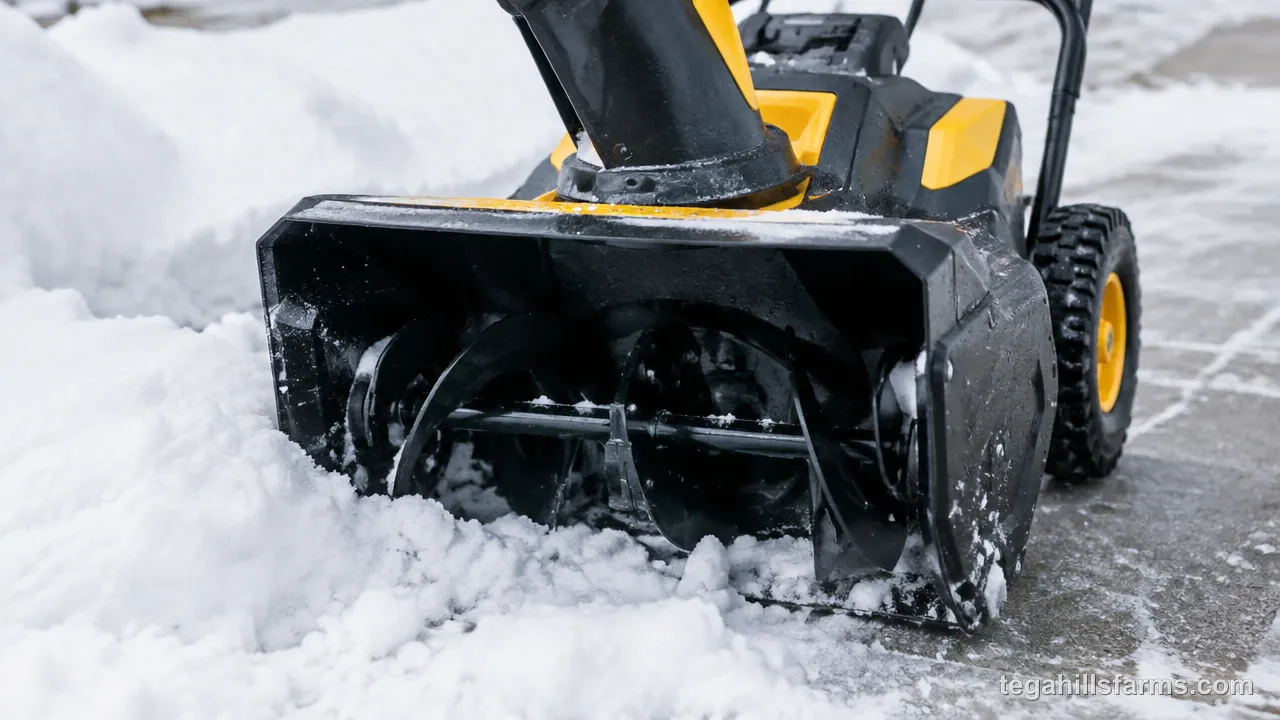
Replace the paddles when their edges look rounded or thin, when the machine leaves a layer of snow on the pavement, or when the throw gets noticeably shorter. Replace the scraper bar when it’s worn down to its mounting bolts or when the housing starts scraping the ground. Both parts usually unbolt from the housing, and the manual lists the part numbers.
Belt-drive machines have a belt that can stretch and slip, but swapping one is a simple job. Direct-drive machines skip the belt, so there’s less to wear out, but when one fails it’s usually the motor or gearbox, which is a bigger repair.
Before you put the machine away for the season, clear out all the snow and water, let it dry, and check the cord and plug for cuts. Bring batteries inside, store them at the partial charge the manual recommends, and keep them out of freezing temperatures until the next winter.
How Do You Use a Corded Snow Blower Safely Outdoors?
A corded blower puts a live cord and a motor into wet snow, so plug it into a GFCI-protected outlet. A GFCI cuts power almost instantly if current leaks to ground through water or a damaged cord. Outdoor outlets are usually GFCI-protected, but press the test button before the season to confirm yours works.
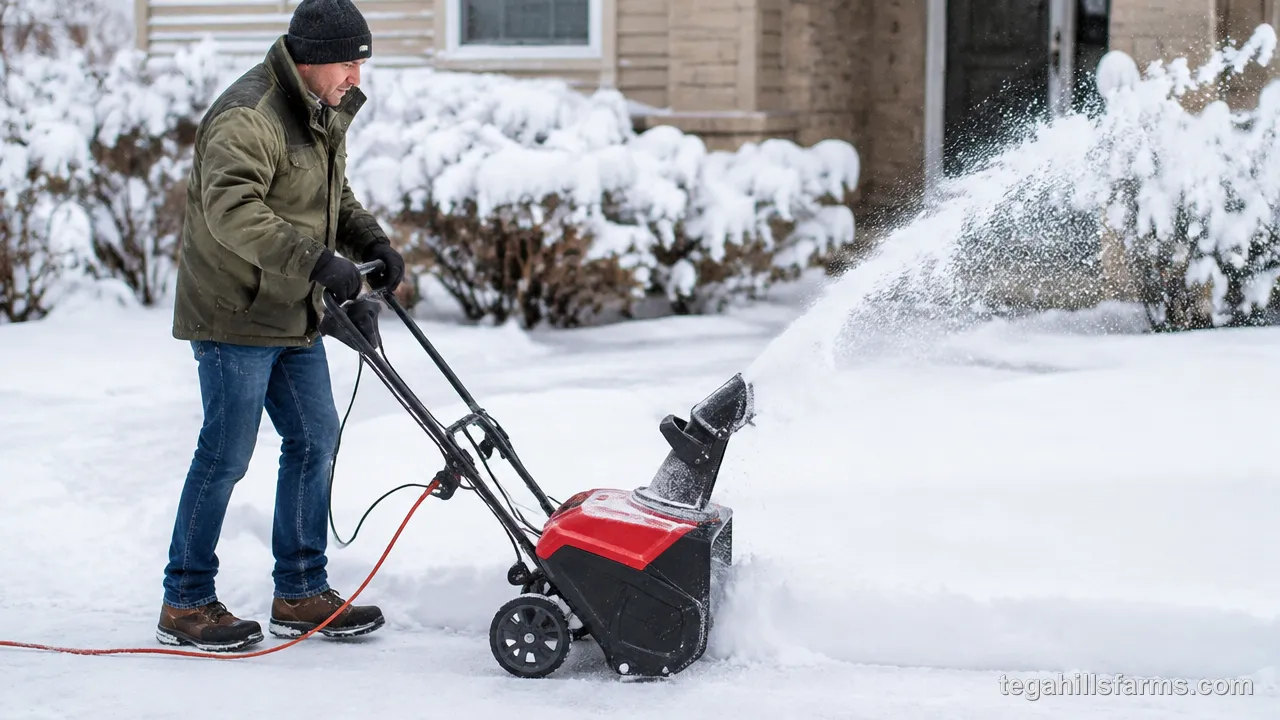
Start clearing nearest the outlet and work away from it. At the end of each pass, flip the cord onto the cleared side so it always stays behind you and away from the auger. If the handle has a cord retainer, loop the cord through it so the plug doesn’t pull out mid-pass.
Use an outdoor-rated extension cord of the gauge and length the manual specifies. A cord that’s too thin or too long for the motor heats up and leaves the motor short of power. Cold-weather cords stay flexible in freezing temperatures, which makes them easier to flip aside.
If the chute or auger jams, release the switch, unplug the machine (or remove the battery on a cordless unit) and wait for the auger to stop before you touch anything. Clear the snow with a stick or the clearing tool, never your hand, because an auger under load can turn again once the jam breaks free.
When Is the Best Time to Buy a Budget Snow Blower?
Buy in the fall, while retailers carry full stock and run early promotions. After the first big storm, shelves and online inventory thin out quickly, and you’re left choosing from whatever hasn’t sold.
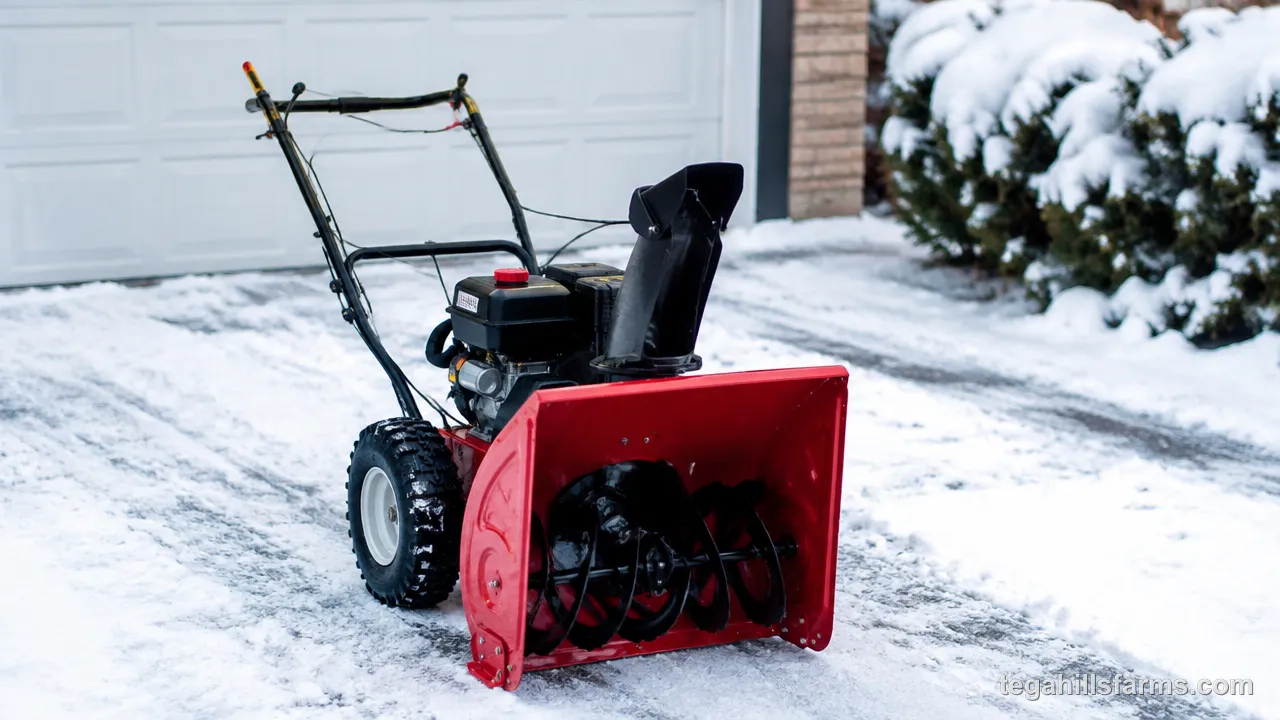
Demand follows the forecast. When a storm is a few days away, the popular budget models sell first, and restocks during the winter can lag behind.
End-of-season clearance in late winter and spring favors buyers who can wait, because retailers want to free up floor space for lawn equipment. The downside is that you may have to get through the rest of the winter with a hand shovel, and clearance selection is limited to leftover stock. Snow arrives at different times across the country, so watch your local retailers rather than a national sales calendar.









Write Your Review
No reviews yet. Be the first to share your experience!