

My picks for the best short handle spades in 2026 are DIOVPLX Garden Shovel 31in (Best Overall), HANTOP Mini Digging Shovel 28in (Runner Up), HANTOP Mini Round Digging Shovel 28in (Editor’s Choice), GSBLUNIE Garden Shovel 33in (Best Budget), Feblomst Flat Square Spade 31in (Best Rust-Resistant), Spear Head Spade SHMini 30in Mini Shovel (Best Precision Cutting) and DR.ÖTEK Spade Shovel T Handle 31in (Best for Heavy Pruning). Each suits low, close work in raised beds, containers and the tight gaps between established plants.
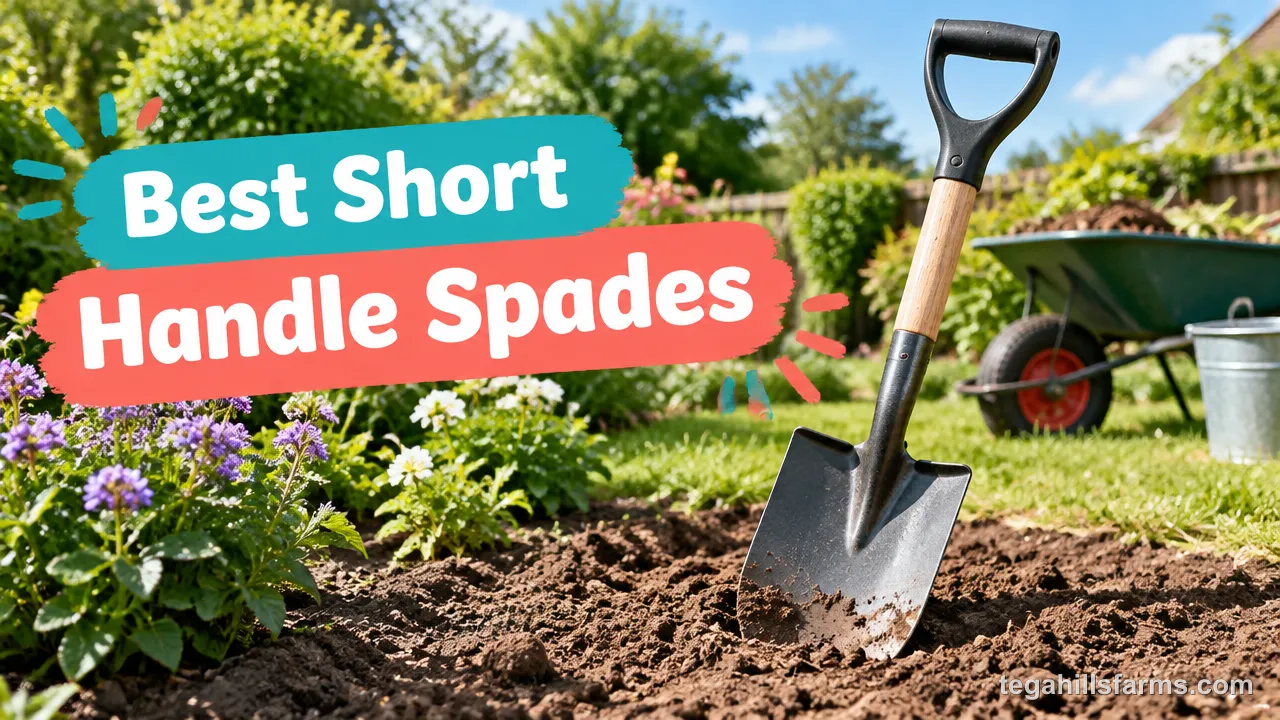
They differ in how they meet the soil and your hands. The grip can be a closed D-handle, a Y-grip or a detachable T-handle. The blade can be serrated, round, pointed, square or spear-shaped, and the shaft is either fiberglass or solid metal. Those choices decide how easily the blade bites into compacted ground, how much weight your wrists carry, and whether the tool lives on a shed hook, in a car trunk or in a backpack.


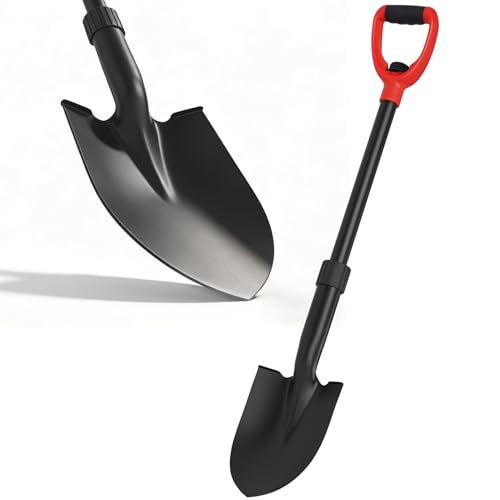


A short shaft gives up leverage, so a spade with a poor grip or too much weight sends the effort into your hands, wrists and lower back. Durability matters just as much. A blade-to-handle joint that loosens, or a bare steel head that stays damp, can end a spade’s useful life early.
How Is a Short Handle Spade Different From a Shovel or Trowel?
Its flat, sharp-edged blade slices straight down instead of scooping, and its compact shaft with a D- or T-grip gives two-hand control at close range, a scale between a long digging tool and a one-hand planter.
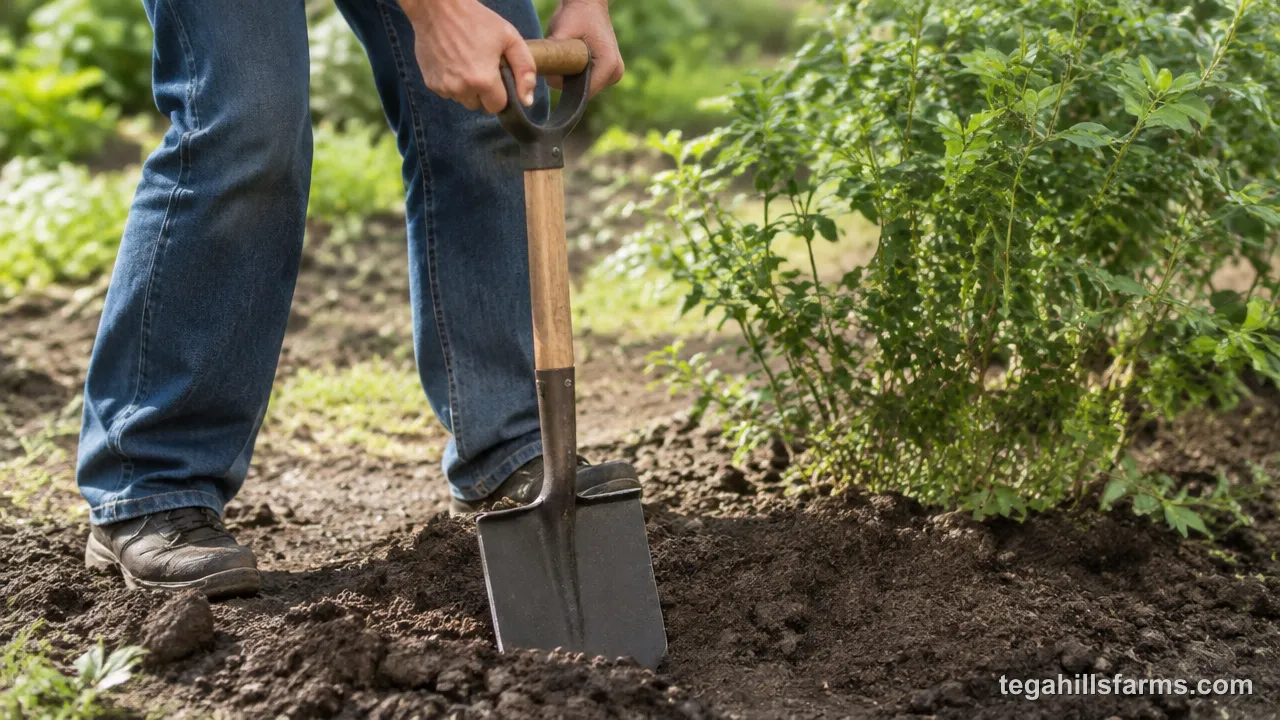
A shovel has a dished blade, usually rounded or pointed, built to lift and throw loose material, and its long shaft lets you work standing upright. A trowel is a hand-held blade small enough to use with one hand while kneeling. That suits bulbs and seedlings, but a trowel cannot cut through sod or a mat of roots. Many compact models blur the line by putting a rounded or pointed head on the spade format, so the grip and shaft length tell you more than the product name does.
Because your hands sit close to the blade, a short spade suits transplanting, edging, trenching, and work in raised beds, containers and tight spaces. You can place each cut exactly and lever out a root ball without swinging a long handle into neighboring plants. The same closeness has a limit: there is less shaft to multiply your force when you pry, and less reach, so deep holes in open ground mean more bending or kneeling.
If you are still weighing spade types before settling on a short handle, the guide to the best garden spades shows how the wider category compares.
The 7 Best Short Handle Spades of 2026
DIOVPLX Garden Shovel 31in, HANTOP Mini Digging Shovel 28in, HANTOP Mini Round Digging Shovel 28in, GSBLUNIE Garden Shovel 33in, Feblomst Flat Square Spade 31in, Spear Head Spade SHMini 30in Mini Shovel and DR.ÖTEK Spade Shovel T Handle 31in all give up some reach in exchange for control at close range. If roots and stones are your main problem, the serrated, round, pointed and spear-shaped heads matter more than the grip. If your hands tire quickly, a padded grip and a light fiberglass shaft matter more than the blade. Only the DR.ÖTEK adds a standing length, through its detachable T-handle. The all-metal DIOVPLX and DR.ÖTEK also take hard prying that can crack fiberglass, which is worth weighing if the spade will ride loose in a car trunk.
#1 DIOVPLX Garden Shovel 31in — Best Overall
If you dig, weed and transplant in tight beds and want one spade that also rides in the trunk, this is the all-metal tool I would hand you first: its curved D-handle has foam padding that lets you push hard without your grip slipping. It stores easily at 31 inches.
Key Specs:
- Overall length: 31 in
- Weight: about 2.5 lb
- Construction: heavy-duty metal blade, shaft and handle
- Handle: curved D-handle with foam padding
- Blade: thickened and sharpened
Detailed Review:
Your hand closes fully around the curved D-handle, so you can drive the blade down and lever it back without your fingers opening. The foam padding spreads that pressure across your palm instead of onto a bare metal edge, and it keeps your grip from slipping when your gloves are damp.
The blade is thickened and sharpened, so it cuts into bed soil for weeding, transplanting and short trenches instead of skidding across the surface. The extra thickness also resists bending when you pry out a stubborn root ball at close range.
The shaft and handle are heavy-duty metal like the blade, so there is no fiberglass section to crack under prying. The downside is weight: at about 2.5 lb, it is a little heavier than the fiberglass-shafted HANTOP Mini Digging Shovel 28in. Over a long session of transplanting, you feel that difference in your wrist more than in your back.
Its compact length fits a camping backpack or car trunk, so it can also be the spade you keep for clearing snow from around your tires. I like that range for a gardener who would rather own one small spade than two.
Pros:
- Foam-padded D-handle keeps a firm, slip-free grip.
- Thickened, sharpened blade cuts cleanly into bed soil.
- All-metal build has no fiberglass to crack.
- Compact length fits a backpack or car trunk.
Cons:
- All-metal build is heavier than the HANTOP models.
- Short shaft gives limited leverage for deep holes.
Who It’s For:
Gardeners who split their time between flower beds, containers and the odd roadside or campsite job will get steady use from this spade. The padded loop grip lets you push hard, and the compact size stores almost anywhere. If you mostly dig deep planting holes in open ground, a longer tool will spare your back.
Editor’s Verdict:
A sturdy, comfortable all-metal spade that handles everyday bed work and packs away small, as long as you accept a little extra weight in the hand.
#2 HANTOP Mini Digging Shovel 28in — Runner Up
For vegetable beds and cramped corners of the yard where roots get in the way, this spade’s sawtooth blade cuts through small roots as you rock it, and the fiberglass shaft keeps the whole tool at 2 lb. That light build is easier on your wrists through a long session of bed work.
Key Specs:
- Dimensions: 6 x 2 x 28 in (L x W x H)
- Weight: 2 lb
- Blade: sharp sawtooth edge, solid manganese steel
- Shaft: fiberglass
- Grip: Y-shaped non-slip PP
Detailed Review:
The sawtooth edge catches and cuts fine roots as you push and rock the blade, where a smooth edge tends to bounce back. That lets you open a planting pocket in an established vegetable bed without tearing up the plants beside it.
The head is solid manganese steel on a fiberglass shaft. Manganese steel resists wear, which helps the teeth keep their bite in gritty soil, and the fiberglass keeps the tool light while you work bent over a bed. The Y-shaped PP grip gives your palm a broad, non-slip surface to push against.
At 28 inches, the shaft keeps you kneeling or crouching for most digging. It also gives little leverage for prying out a large shrub root or digging a deep hole, so I would keep it for beds and borders rather than tree planting. Its small size makes it easy to carry in a camping backpack or keep in the car as an emergency tool.
Pros:
- Sawtooth blade cuts small roots while you dig.
- Fiberglass shaft keeps total weight to 2 lb.
- Non-slip Y-shaped grip gives a broad pushing surface.
- Small enough to store in a car trunk.
Cons:
- Short shaft gives little leverage for deep holes.
- Serrated edge is harder to sharpen than a straight one.
Who It’s For:
Vegetable growers who work close to existing plants, and anyone with tight yard beds to tend, will appreciate the root-cutting teeth and the light build. If your main job is moving loose soil or mulch, a broad scooping shovel will move more with each load.
Editor’s Verdict:
Light, good at cutting roots and easy to stash, this is a smart spade for working in and around vegetable beds where a smooth blade would stall.
#3 HANTOP Mini Round Digging Shovel 28in — Editor’s Choice
When your ground is hard or knotted with tough roots, the rounded sawtooth blade on this 1050MN steel head gets in and scoops where a flat edge would skate. It is built for ground-level work in tight spots.
Key Specs:
- Dimensions: 6 x 2 x 28 in (L x W x H)
- Weight: 2 lb
- Head: 1050MN steel, round blade with custom sawtooth edge
- Handle: fiberglass
- Grip: PP
Detailed Review:
The round blade meets the soil along a narrow curve first, so your push starts the cut before the full width has to follow, which is how it gets into hard ground. The sawtooth edge then catches the tough roots that run through old beds, and the curved head holds a scoop of soil as you lift.
The head is 1050MN steel, a manganese steel grade, on a fiberglass handle with a PP grip. That pairing keeps the tool light, so a long stretch of ground-level work is far easier on your wrists than with the all-metal DR.ÖTEK Spade Shovel T Handle 31in.
Next to the HANTOP Mini Digging Shovel 28in, this version shares the length, the weight, the fiberglass handle and the sawtooth edge. I would choose it for the rounded head, because holding soil helps when you lift a transplant out with its root ball intact. The short length still means kneeling for most digging and little leverage for deep holes. It fits a backpack or car trunk without taking up much space, and it doubles as a scoop for fireplace or grill ashes.
Pros:
- Rounded sawtooth blade gets into hard, root-filled ground.
- Curved head holds soil when lifting transplants.
- Fiberglass handle keeps the weight at 2 lb.
- Compact length stores in a backpack or trunk.
Cons:
- Short length means kneeling for most digging.
- Rounded head leaves uneven edges along beds.
Who It’s For:
If your beds have hard spots, old roots or rocky patches and you like to work kneeling close to the soil, this round spade fits the way you garden. If you want crisp, straight bed edges, a flat square blade will be far easier to guide.
Editor’s Verdict:
For hard, root-laced soil worked at ground level, this compact round spade digs in where flat blades stall, and it stays light enough to carry anywhere.
#4 GSBLUNIE Garden Shovel 33in — Best Budget
Compacted soil, tough roots and rocky ground are what this spade’s forged steel pointed blade is made for, and its lightweight fiberglass shaft and non-slip D-handle keep the effort manageable for seniors and casual gardeners. At 33 inches, it reaches a little farther than the 28-inch picks.
Key Specs:
- Overall length: 33 in
- Weight: about 2.8 lb
- Blade: forged steel, pointed
- Shaft: lightweight fiberglass
- Handle: ergonomic non-slip D-handle
- Warranty: 120 days
Detailed Review:
The pointed blade is forged steel, so the tip concentrates your push on a small area and starts into compacted soil, tough roots and rocky ground before the rest of the blade follows. Forging makes the steel denser than a stamped sheet, which helps the point keep its shape when it hits stone.
A lightweight fiberglass shaft and an ergonomic non-slip D-handle carry that push. Your fingers close around the D-handle, so you can steer the point without squeezing hard, which eases hand fatigue for seniors and gardeners with less grip strength. It is a little heavier than the Feblomst Flat Square Spade 31in, which is the price of a forged point and a longer overall length.
The shaft connects to the blade without tools, so the spade goes together in seconds and stows easily in a car trunk or backpack. Because that joint is assembled by hand, I would make sure it is fully seated before prying hard. For an affordable spade, a forged head on a fiberglass shaft is a sound pairing, and it comes with a 120-day warranty.
Pros:
- Forged pointed blade starts into compacted, rocky soil.
- Lightweight fiberglass shaft reduces hand fatigue.
- Non-slip D-handle gives a secure, closed grip.
- Shaft connects to the blade without tools.
Cons:
- Pointed blade leaves rough, uneven edges in beds.
- Heavier than the HANTOP and Spear Head models.
Who It’s For:
Older gardeners, casual weekend diggers and anyone on a tight budget who still faces hard, stony soil should look here first, because the pointed head does the hard part of getting into the ground. If you mainly edge beds or cut straight trenches, a flat square blade will give cleaner lines.
Editor’s Verdict:
Pairing a forged point with a light fiberglass shaft, this spade breaks hard ground without wearing out your hands.
#5 Feblomst Flat Square Spade 31in — Best Rust-Resistant
Edging, trenching and transplanting call for a flat, straight edge, and this square spade pairs one with an anti-rust powder coating that suits gardens where tools stay damp. A foot platform on the blade adds drive in tough soil.
Key Specs:
- Overall length: 31 in
- Weight: 2.2 lb
- Blade: flat square steel head with anti-rust powder coating
- Handle: large D-handle with foamed middle grip
- Foot platform: on the blade
- Guarantee: 12 months
Detailed Review:
The anti-rust powder coating seals the steel from moisture, so damp soil left on the blade after a session does far less harm than it would on bare steel. The coating only protects while it is intact, so rinsing and drying still matter, and touching up chips keeps rust from creeping under the edge.
The flat square head cuts a straight line for edging a bed, squaring off a trench or cutting a clean ring around a plant you are moving. The foot platform lets you stand on the blade and use your body weight to drive through tough soil and plant roots instead of pushing with your arms.
The large D-handle and foamed middle grip give you two places to hold: one hand on the loop to steer, the other on the foam to push and lift. At 2.2 lb, it stays easy to control through a long edging job and is light enough for children to help with.
In compacted, rocky ground, the square edge meets resistance across its full width, while the pointed GSBLUNIE Garden Shovel 33in starts in on a narrow tip. That makes this a spade for maintained beds more than for breaking new, stony ground.
Pros:
- Anti-rust powder coating protects the steel in damp conditions.
- Flat square edge cuts straight lines for edging.
- Foot platform lets body weight drive the blade.
- Foamed middle grip adds a second comfortable hold.
- Light 2.2 lb build is easy to control.
Cons:
- Square edge is slow to enter compacted, rocky soil.
- Rust protection ends wherever the finish chips.
Who It’s For:
Gardeners who keep tidy beds, edge borders, cut trenches for edging strips or live where tools rarely dry out completely will find this spade an easy fit. It is also a sensible family tool that children can help with. If you are breaking new ground full of stones, choose a pointed blade instead.
Editor’s Verdict:
Clean edges, a foot platform for drive and a coating that keeps rust at bay make this a dependable spade for neat beds in damp gardens.
#6 Spear Head Spade SHMini 30in Mini Shovel — Best Precision Cutting
Container gardens and raised beds are where this mini spade belongs, because its spear-shaped carbon manganese steel blade finds the path of least resistance through rocky soil. It is not meant for all-round digging.
Key Specs:
- Overall length: 30 in
- Blade: 6 x 8 in, spear-shaped carbon manganese steel, beveled
- Weight: 2 lb
- Handle: steel-reinforced fiberglass
- Finish: powder coat with epoxy resin that wears away to expose a pre-sharpened edge
- Grip: cushioned, UV-resistant D-grip
Detailed Review:
The spear-shaped blade narrows to a point, so when it meets a stone it tends to slide past and keep going instead of stopping dead. It is carbon manganese steel, thicker and harder than a standard short shovel blade, which lets it take that sideways force without bending.
The powder coat is finished with an epoxy resin that wears away gradually as you dig, exposing a pre-sharpened edge over time. That way, use reveals the edge rather than a file.
A steel-reinforced fiberglass handle keeps the tool light and stands up to weather, and the cushioned, UV-resistant D-grip stays stable when you work over a container. The compact blade and overall length are sized for petite women and kids working in container gardens and raised beds. The small blade also moves little soil per lift and is not designed for general gardening, so turning a vegetable plot or digging shrub holes calls for a bigger spade.
Pros:
- Spear-shaped blade slips past stones in rocky soil.
- Epoxy finish wears away to expose a pre-sharpened edge.
- Steel-reinforced fiberglass handle resists weather.
- Cushioned, UV-resistant D-grip feels stable in hand.
Cons:
- Small blade moves little soil per lift.
- Not designed for all-round gardening jobs.
Who It’s For:
Container growers, raised-bed gardeners and petite or younger gardeners who want a tool sized to their reach will feel at home with this spade. If you want one spade for every job in the yard, look at a broader, all-purpose design.
Editor’s Verdict:
Sharp, compact and built to slip past stones, this spade rewards careful work in pots and raised beds, but it remains a specialist tool.
#7 DR.ÖTEK Spade Shovel T Handle 31in — Best for Heavy Pruning
If you need to cut through roots near the ground but also want to dig standing up, this spade’s detachable handle switches between 31.6 and 45.6 inches. Its serrated V-shaped blade does the cutting.
Key Specs:
- Length: 31.6 in (short) or 45.6 in (long), detachable handle with lock nuts
- Weight: 4.5 lb (3.3 lb in short-handle form)
- Blade: powder-coated carbon steel, V-shaped with serrated edge
- Shaft: steel pipe
- Foot peg: anti-slip, on the blade
- Grip: non-slip, sweat-absorbing tape
Detailed Review:
The detachable handle locks with nuts on the shaft and sets to either length. In long form, you can stand and pry up soil and sod without squatting or bending, which spares your lower back. In short form, you get close control for cutting roots and lifting a transplant.
The V-shaped blade has a serrated edge that saws through roots as you rock it, and the anti-slip foot peg lets you put your body weight behind the cut instead of forcing it with your arms. Around shrubs and in root-bound ground, that pairing gets through roots a smooth blade would stall on.
The build is all metal, a powder-coated carbon steel blade on a steel pipe handle, so prying will not crack the shaft the way it can crack fiberglass. All that metal makes it heavier than any other spade here, even in short form. The non-slip, sweat-absorbing grip tape cushions your palm and keeps your hold steady as your hands warm up. Over a long session, your arms will still feel the extra weight.
Pros:
- Detachable handle switches between short and long lengths.
- Serrated V-blade saws through roots as you dig.
- Anti-slip foot peg puts body weight behind cuts.
- All-metal build stands up to prying.
- Sweat-absorbing grip tape keeps your hold steady.
Cons:
- Heavier than the other spades here, even in short form.
- Lock-nut joint adds a step to every length change.
Who It’s For:
If you grow shrubs and are clearing root-bound ground, or your back protests at bending, you can use this one tool both kneeling and standing. If you have weak wrists or limited strength, weigh the all-metal heft first, since a lighter fiberglass spade will tire your hands less.
Editor’s Verdict:
Two lengths in one tool and a serrated blade for roots make this the spade to reach for when roots, not soil, are the main obstacle.
What Should You Look for in a Short Handle Spade?
How a compact spade is built matters more than its length, because a short shaft sends all the force through your hands and wrists at close range.
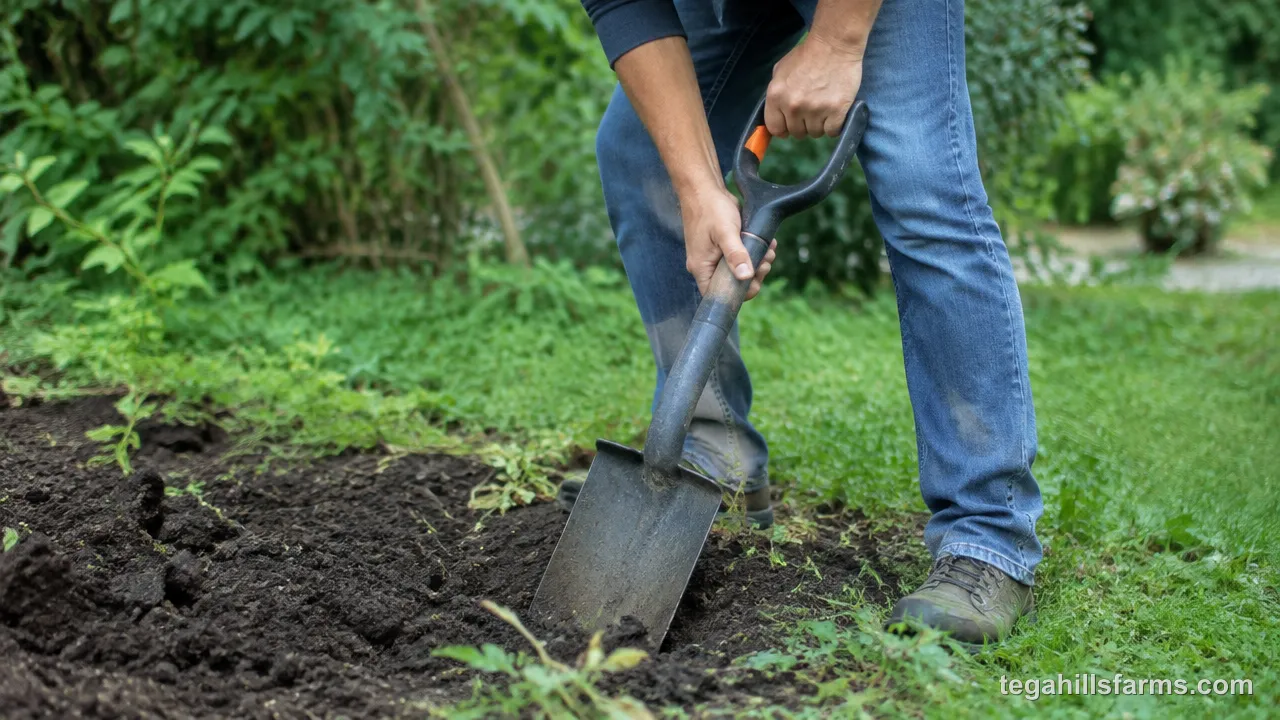
With less shaft to absorb and multiply your effort, small build differences show up quickly. They decide whether your palms are sore after a long session, whether the blade bites into hard ground or skids off it, and whether the tool is still tight and rust-free after several seasons. A spade can feel fine for the first few pushes in a store aisle. Its flaws only show once the soil is hard and your hands are tired.
Which Handle Length and Grip Style Fit Your Body?
A D-handle suits most short spade work, because your fingers close inside the loop and you can push, steer and lever with one hand while the other holds the shaft low. A T-handle gives you a wider bar to hold with both hands for prying and turning. A longer shaft lets you stand upright and use reach instead of bending.
Handle length relative to your height decides how far you bend. A short spade keeps you hunched or kneeling, which works for raised beds, containers and low work but punishes your back over a whole bed of holes in open ground. Foam or tape padding spreads pressure across your palm and reduces the friction that raises blisters, which matters most for smaller hands or weaker grips that have to squeeze harder.
If you are tall, dig many deep holes, or have a back that complains when you stoop, the best long handle spades will serve you better than any compact model.
Round Point, Square, or Spear Blade: Which Cuts Better?
A round or pointed blade cuts better in hard, rocky or root-filled soil, because the tip concentrates your push on a small area and opens a path for the rest of the blade. A flat square blade is better for clean work like edging, trenching and holes with straight sides, where a curved edge would leave a ragged line.
A spear-shaped blade takes the pointed design further. Its narrow tip tends to glance off stones and keep going, which helps you work through stony beds, though it moves less soil per lift.
Serrated edges help on small roots: as you rock the blade, the teeth saw through fibers that a smooth edge would only press down. A foot step or peg on top of the blade lets you stand on it and drive with your body weight instead of your arms, which is easier on your shoulders and wrists in tough ground.
Which Materials Hold Up Best on a Short Handle Spade?
Carbon or manganese steel makes the stronger blade for a spade that takes leverage, because it is hard, holds an edge well and resists bending, but it rusts if you put it away wet. Stainless steel resists rust and sheds sticky soil, though its edge is usually softer. If rust is your main worry, the best stainless steel spades are worth a look.
Powder coating seals carbon steel and keeps moisture off until the finish chips or wears through, and then rust starts at the bare spot. For the shaft, fiberglass is light and does not rot, but it can crack or splinter under hard prying or a crushing blow. Steel is stiff and strong but heavier. Wood absorbs shock and feels warm in the hand, yet it can split or rot if left outdoors.
Forged heads are denser and tougher than stamped sheet steel. The joint between blade and shaft is where a tool under leverage most often fails, so a solid, tight socket matters as much as the blade.
Which Short Handle Spade Is Right for Your Garden Task?
Pick by the ground you dig and the strength in your hands: pointed or serrated heads for hard, rooty soil, a square edge for neat lines, and a lighter build if your grip tires quickly.
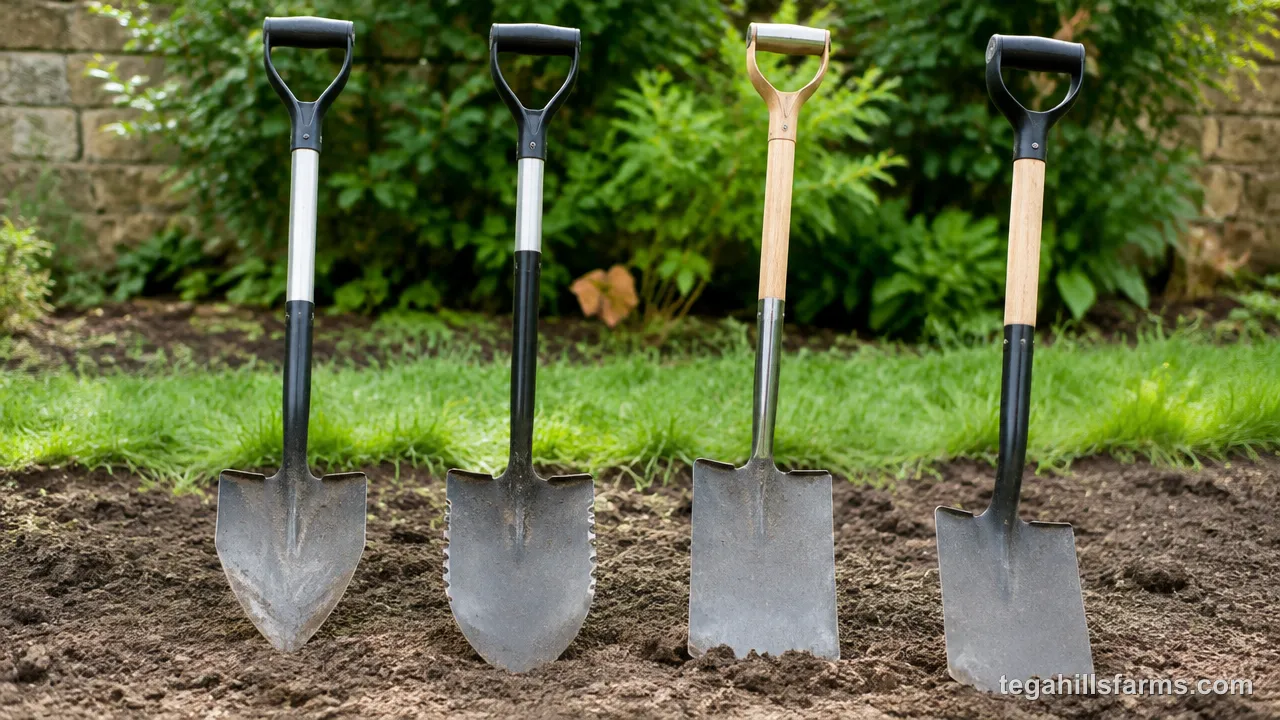
Raised beds and containers suit the Spear Head Spade SHMini 30in Mini Shovel, which is sized for confined work and slips past stones but moves little soil per lift. The HANTOP pair also fits tight vegetable rows, and both weigh the same as the Spear Head.
Compacted soil and tough roots call for a pointed or serrated head. The GSBLUNIE Garden Shovel 33in starts into hard, stony ground on its forged point, and the HANTOP Mini Round Digging Shovel 28in saws and scoops through root-filled spots. Neither gives you the straight edge of a square blade. If dense, sticky ground is what you fight every spring, compare the best garden spades for clay soil before you settle.
For tidy edging and trenching, choose the Feblomst Flat Square Spade 31in. Its straight edge and foot platform cut clean lines, though it enters rocky ground slowly. Its anti-rust powder coating also makes it my choice for a wet climate or a damp shed, although the Spear Head and DR.ÖTEK blades are powder-coated too.
If you have smaller hands or less strength, the HANTOP pair or the Spear Head will suit you better, since they weigh less than the rest, while the all-metal DR.ÖTEK tires your arms sooner. For a spade that lives in a car trunk or backpack, the DIOVPLX Garden Shovel 31in packs small and has no fiberglass to crack, though it is a little heavier than the HANTOPs.
If you also want standing reach, the DR.ÖTEK Spade Shovel T Handle 31in switches to a long handle so one tool covers both heights. The trade-off is more weight and a stop to reset the lock nuts each time. When cost decides, the GSBLUNIE is the budget-friendly pick, and the garden spades under $50 give you a wider field to choose from.
A short shaft puts your hands low and close to the blade, so when the soil resists, the natural move is to lean in and twist the handle instead of stepping on the blade. Do that bed after bed and the strain lands in your lower back and wrists, and the soreness shows up the next morning rather than while you dig.
How Do You Dig With a Short Handle Spade Without Straining Your Back?
Keep the blade close to your body, drive it with your foot rather than your arms, lift small loads slowly, and turn by moving your feet instead of twisting at the hips. Each of these keeps the load near your center, where your legs can carry it, instead of out at the end of a lever that your lower back has to resist.
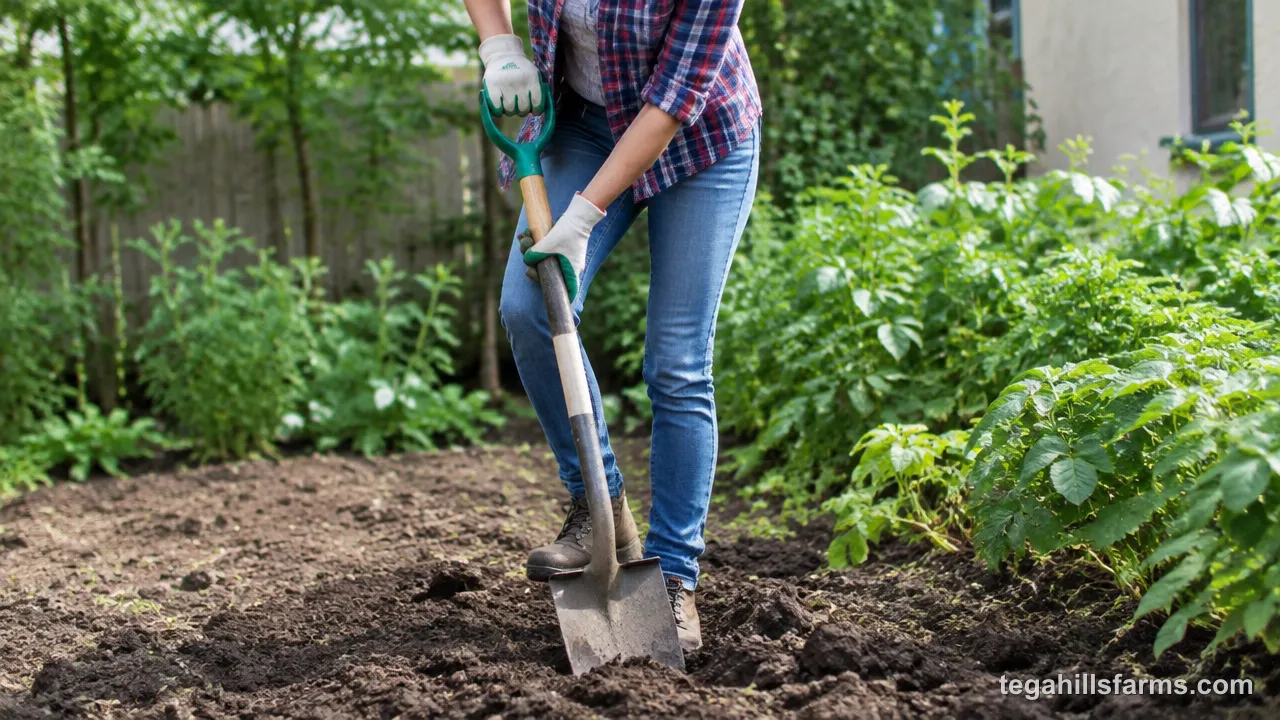
Set the spade upright in front of your toes, put your foot on the step or the top edge of the blade, and let your weight sink it. This matters more on a short spade, because your arms are already bent and have little extra force to give. When you lift, bend your knees, take a partial blade of soil, and raise it slowly so the weight never jerks against your wrists.
To move soil to the side, step around until you face where it is going, then tip it out. In raised beds and low borders, kneel or crouch on a pad beside the bed instead of stooping from standing. Your spine stays straighter, your knees are cushioned, and the short shaft works at the height it was made for.
How Can You Tell a Short Handle Spade Is About to Fail?
A spade is close to failing when the shaft cracks or splinters, the blade-to-handle joint loosens or flexes, rivets stand proud of the surface, the coating chips through to bare metal, or the edge dulls or bends. Each of these gets worse with use, so catching it early decides whether a quick fix will do or you need a replacement.
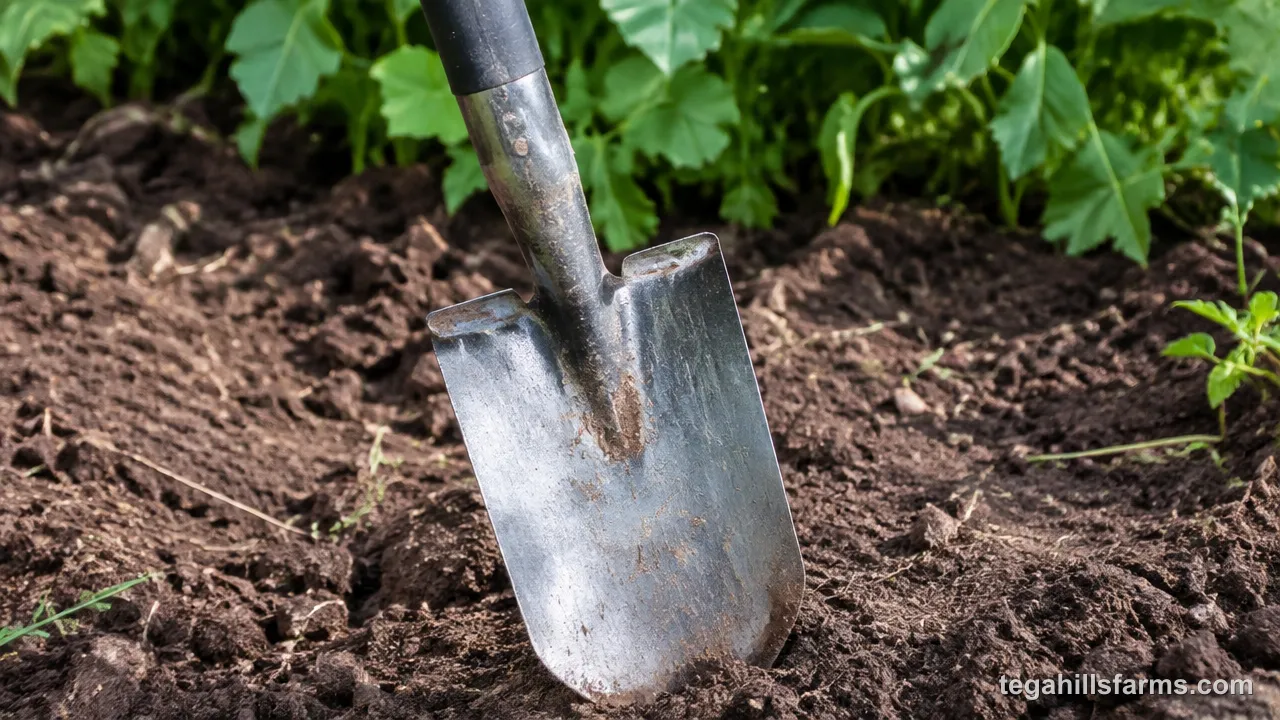
Cracks in fiberglass let water in, and when that water freezes it widens the split until the shaft splinters under load. A joint that rocks or flexes when you lever will keep working loose, and raised rivets that snag your gloves point to the same movement. Chipped powder coating exposes steel, where rust starts and spreads under the rest of the finish. A dull or bent edge makes you push harder for every cut.
Knocking off soil, drying the blade, wiping on a light coat of oil and storing the spade somewhere dry slows nearly all of this down. You can file a dull edge, and you can brush off surface rust and oil the steel. A cracked fiberglass shaft, a bent blade or a joint that keeps loosening means buying a new spade is safer than repairing the old one.
Write Your Review
No reviews yet. Be the first to share your experience!