

My picks for the best long handle spades are AshmanOnline Spade Shovel 41in (Best Overall), AshmanOnline Drain Spade Shovel 48in (Runner Up), VNIMTI Spade Shovel 45in D-Grip Wood Handle (Best Budget), Root Slayer Nomad Garden Spade 22311 (Best for Heavy Pruning), Spear Head Spade SHFD3 40in Garden Spade (Also Great), VNIMTI Spade Shovel D-Handle 45in (Best Rust-Resistant), Spear Head Spade SHLF2 58in Garden Spade (Also Great) and Bully Tools 12-Gauge Drain Spade 58in (Also Great). Between them they handle edging a bed, lifting a perennial, cutting through roots and running a drain trench across the yard.
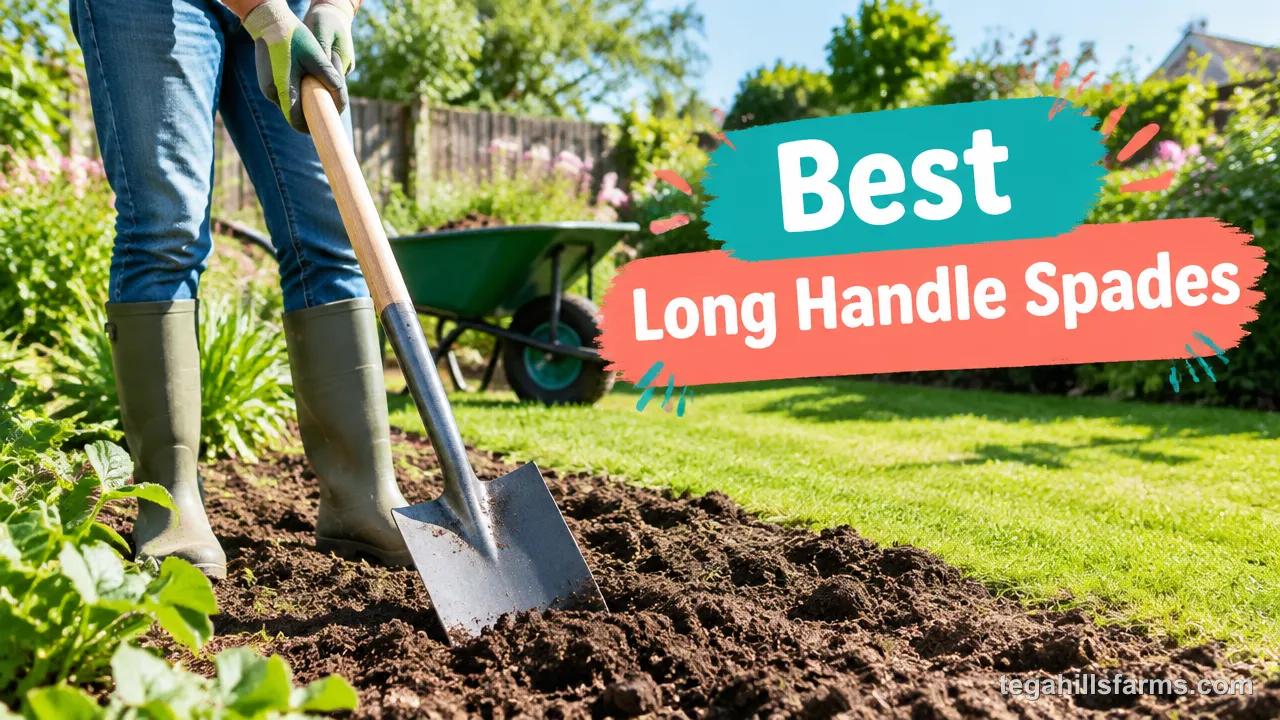
Build matters more than brand here. How long the shaft is for your height, whether the handle is wood or fiberglass, how the grip sits in your hands, and how the blade and foot step meet the ground decide how hard you push, how far you bend and how the tool holds up after seasons in wet soil.




When a spade goes wrong, you feel it in your body or see it at the joints of the tool. Your lower back aches after an afternoon of digging, the handle loosens or snaps at the socket when you pry, or the blade dulls and rusts by its second season. You can trace each of these to a part you can inspect before buying.
How Is a Long Handle Spade Different from a Shovel?
Blade shape sets them apart: a flat, narrow blade with a straight edge slices down into soil, while a curved, dished scoop is shaped to lift and throw loose material such as gravel or mulch.
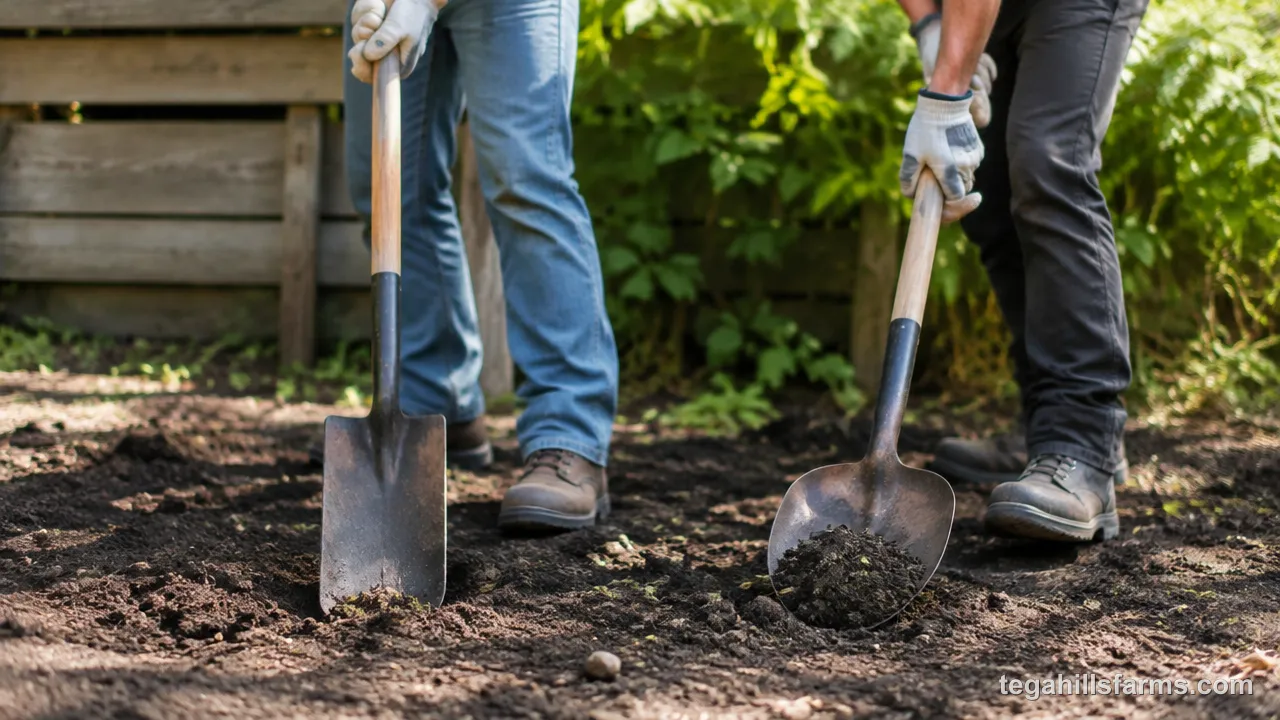
A flat blade enters the ground edge-first. That lets it cut a clean line along a bed, sever roots instead of tearing them, and lift a narrow plug of soil with the roots still inside. A scoop pushes soil aside as it goes in. That helps when you’re moving a pile, but it leaves a ragged hole and a torn edge.
The long handle adds reach and changes your posture. With more shaft between your hands and the blade, you can push the blade deeper and use the shaft as a lever to pop soil loose instead of lifting it with your back.
Blade shape also splits spades into working types. A border spade has a smaller blade for edging and planting in crowded beds, where a full blade would bump neighboring plants. A drain spade is the long, skinny spade used for narrow trenches, pipe runs and deep, tight holes. A transplanting spade has a long, slightly rounded blade that cuts around a root ball and lifts it in one piece.
To see how long handle models compare with every other type of spade, the guide to the best garden spades covers the full range.
What Should You Look for in a Long Handle Spade?
How comfortable a spade feels after an hour of digging, and how many seasons it lasts, come down to build details rather than the brand name printed on the blade.
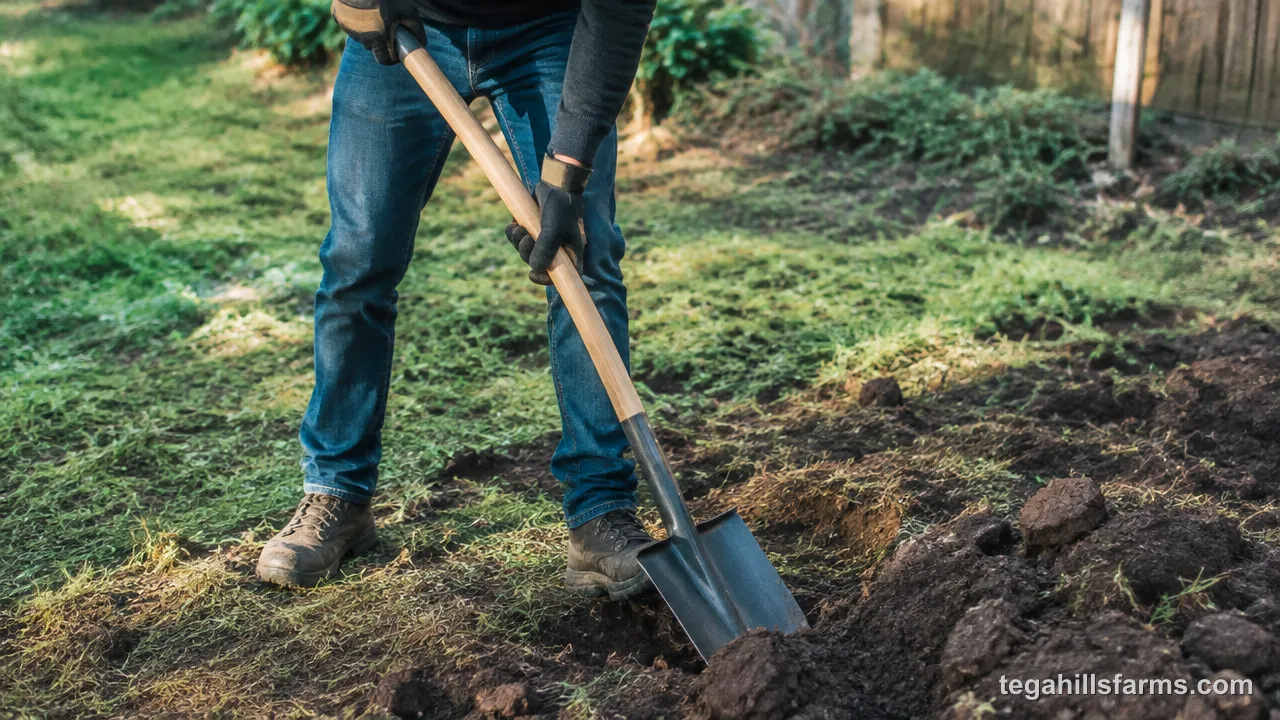
These are the parts that carry force between your body and the ground. When they fit you, your push goes into the soil instead of into your lower back and wrists. When they’re weak or wrong for you, your hands are sore by evening, and later the head works loose or the socket bends. Holding a spade and checking these parts tells you more than its color or its label.
How Long Should a Spade Handle Be for Your Height?
A shaft that matches your height lets you push and lever with a straight back. A longer shaft keeps a taller gardener upright over a deep hole, and a shorter one gives a smaller gardener control in tight beds.
To check the fit, hold the spade as you would to dig, with one hand on the grip and the other low on the shaft, and set the blade on the ground. If you have to hunch to keep the blade upright, the shaft is too short, and every bite of soil will load your lower back. If the grip ends up beside your chest and the blade wanders as you push, the shaft is too long for your reach. You lose control, and your shoulders tire.
Arm reach matters as much as height, because longer arms let you use more of a long shaft without leaning. Gardeners who work mostly in raised beds or containers may find the best short handle spades a better match than any long model.
Which Handle Material Holds Up Best: Wood, Fiberglass or Steel?
Steel resists snapping under hard prying better than wood or fiberglass. Fiberglass gives the lighter swing. Ash wood sits between them, and it is the easiest of the three to rehandle when it breaks.
Each material gives something up for its strengths, and you notice the differences in how the tool feels and how it ages:
| Trait | Ash wood | Fiberglass | Steel |
|---|---|---|---|
| Resistance to snapping | Moderate | Good | High |
| Weight in the swing | Moderate | Light | Heavy |
| Feel in cold or heat | Warm in hand | Neutral | Cold in winter, hot in sun |
| Splintering | Can splinter when dry or damaged | Fibers can fray after sun damage | Does not splinter |
| Weather resistance | Needs dry storage and oil | Resists rot and moisture | Can rust where paint wears |
| Replacing a broken handle | Easiest to rehandle | Possible, harder to fit | Usually replace the whole tool |
Ash flexes slightly and softens the jolt when the blade hits a stone, which is easy on your wrists. It softens and splinters if you leave it out wet. Fiberglass shrugs off moisture and keeps the tool light, but sunlight slowly breaks down its surface unless you store it indoors. Steel takes the hardest prying without snapping. The cost is extra weight in every lift and a handle that turns cold or hot with the weather.
Which Grip Style Gives You the Best Leverage?
A plain round shaft gives you more leverage because your top hand can sit far from the blade. A closed D-grip gives up a little of that reach in exchange for two-handed control when you lift soil out of a deep hole.
The closed loop of a D-grip gives your top hand something to pull against. You can twist the blade, pry and lift without the handle slipping, even in gloves. A T-grip is a single crossbar that suits a quick, sweeping push-and-throw motion with one hand on top. It gives less purchase when you lift a heavy load straight up. A Y-handle splits the top of a wooden shaft around a crosspiece. It works much like a D-grip and leaves more room for gloved hands.
Cushioned grips change comfort more than leverage. A soft, textured surface spreads pressure across your palm and stays put when your hands are damp or your gloves are muddy. Bare wood or metal can slip just as you pull hardest.
What Blade and Step Features Matter Most?
In hard or rocky ground, a thick, hardened blade with a sharp edge cuts in where a thin or dull one skates off. The socket and foot step decide how long the spade lasts and how hard you can push it.
Thicker steel bends less when you pry against a stone, but it adds weight. Steel thickness is often given as a gauge, and a lower number means thicker steel. Carbon steel is stiff under prying and easy to resharpen with a file. Bare carbon steel rusts, so it relies on a powder coat or paint and a light coat of oil. A coating protects the steel until it wears through at the edge, which is where rust shows first. Stainless steel resists rust and lets sticky clay slide off. At the same thickness, it is generally less stiff under hard prying than hardened carbon steel. If rust resistance comes first for you, look at the best stainless steel spades.
The socket, where the blade wraps around the end of the handle, is where cheap spades fail. A thin, open socket flexes under prying and lets the handle work loose. A closed socket or a reinforced joint holds the head in line. A wide, textured or forward-bent foot step gives your boot a flat surface to push against. The force then goes straight down the blade, and the thin edge of the steel doesn’t press into your arch.
The 8 Best Long Handle Spades of 2026
You can choose among AshmanOnline Spade Shovel 41in, AshmanOnline Drain Spade Shovel 48in, VNIMTI Spade Shovel 45in D-Grip Wood Handle, Root Slayer Nomad Garden Spade 22311, Spear Head Spade SHFD3 40in Garden Spade, VNIMTI Spade Shovel D-Handle 45in, Spear Head Spade SHLF2 58in Garden Spade and Bully Tools 12-Gauge Drain Spade 58in. The wood handles on the AshmanOnline Spade Shovel 41in and both VNIMTI spades end in D-grips for two-handed control. The fiberglass shafts on the Root Slayer, Spear Head Spade and Bully Tools spades stay light and stand up to weather. The Spear Head Spade SHLF2 58in Garden Spade has two cushioned grips instead of a D-grip. Narrow trench heads suit drain runs and transplanting, while spear-shaped and serrated blades work into rocky soil and heavy roots. That spread takes you from light edging and transplanting to long trench runs.
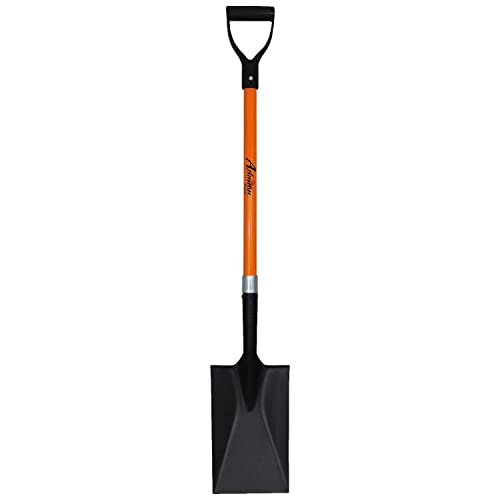
#1 AshmanOnline Spade Shovel 41in — Best Overall
If you want one spade for edging beds, cutting a trench and slicing through thick turf, this one’s hardened, sharpened blade and wooden D-handle cover all three with steady two-handed control. It is light enough to hold through a long session of edging.
Key Specs:
- Overall length: 41 inches
- Weight: 2.2 pounds
- Handle: wood with a D-handle grip
- Blade: hardened and finely sharpened
- Model: SpadeShovel
- Color: orange
Detailed Review:
The blade is hardened and finely sharpened, so it goes into hard soil edge-first and you don’t have to stomp it in. With that edge you can cut a clean line along a walkway or follow a curved bed while shaping its edge. It also slices through thick turf instead of tearing it.
The wooden D-handle gives your top hand a closed loop to pull against. That keeps the blade steady when you lever soil out of a trench or press sideways along an edge. The handle and blade are toughened to resist damage from hard, fast use.
Compared with the AshmanOnline Drain Spade Shovel 48in, this spade has a shorter shaft and a much lighter build. That suits edging and turf work, where you make many short cuts and lift the tool often. A tall gardener digging deep holes will bend more over the shorter shaft. I’d reach for it first in a yard with many different jobs, because a sharp edge and easy handling are useful for almost all of them.
Pros:
- Hardened, sharpened blade cuts turf and edges cleanly.
- D-handle gives two-handed control when levering soil.
- Light build keeps edging work easy on your arms.
- Handles trenching, digging and shaping curved beds.
Cons:
- Shorter shaft makes tall gardeners bend over deep holes.
- Wooden handle needs dry storage to avoid weathering.
Who It’s For:
Homeowners who edge walkways, shape curved beds and cut the odd trench will find this spade covers those jobs well. Its sharp blade and light build make frequent short cuts easy. Taller gardeners who dig deep planting holes may prefer the AshmanOnline Drain Spade Shovel 48in for its longer shaft.
Editor’s Verdict:
A sharp hardened blade, a steady D-handle and a light build make this an easy spade to live with for everyday edging, turf and trench work.
#2 AshmanOnline Drain Spade Shovel 48in — Runner Up
For narrow trenches, ditch cleaning and lifting a plant without tearing up its neighbors, this drain spade’s toughened, sharpened blade cuts roots cleanly while the D-handle keeps both hands in control. Its handle also resists heat and cold transfer.
Key Specs:
- Overall length: 48 inches
- Weight: 4 pounds
- Grip: D-handle
- Blade: hardened, thick metal
- Handle: resists heat and cold transfer
Detailed Review:
The blade is hardened and finely sharpened, and it is toughened enough to cut through roots as you dig around a plant. You can lift a shrub or perennial with its roots intact and move it without disturbing the root systems beside it. That matters in a crowded border.
The spade is built for tight spaces: narrow trenches, clearing ditches and working between established plants. The D-handle gives a firm two-handed grip, so you can drive the blade down and lever against the shaft with steady control.
The handle resists heat and cold transfer and stays at a steady temperature in your hands, whether you’re working on a frosty morning or in summer sun. Next to the AshmanOnline Spade Shovel 41in, this spade has a longer shaft and a heavier build. That gives a taller gardener more reach and leverage in a deep trench, but it asks more of your arms on long edging runs.
Pros:
- Toughened blade cuts roots for clean transplanting.
- Longer shaft gives more reach in deep trenches.
- Handle stays at a steady temperature in cold or heat.
- D-handle allows firm two-handed control.
Cons:
- Heavier build tires your arms on long edging runs.
- Longer shaft is harder to control in very small beds.
Who It’s For:
If you move shrubs and perennials around a mature border, or clear ditches and dig narrow trenches, you’ll appreciate how this spade lifts plants without disturbing the roots around them. Gardeners with smaller hands who mostly edge beds will find the AshmanOnline Spade Shovel 41in lighter to handle.
Editor’s Verdict:
Dependable for transplanting and narrow trench work, this drain spade cuts roots cleanly and feels steady in the hand in cold or heat.
#3 VNIMTI Spade Shovel 45in D-Grip Wood Handle — Best Budget
Transplanting perennials and setting small plants into tight spaces is where this spade does its best work, because its long, narrow blade cuts a round plug without damaging the plants next to it. Its light build keeps it manageable for older gardeners.
Key Specs:
- Overall length: 45 inches
- Weight: 3 pounds
- Handle: solid wood with a steel D-grip
- Blade: long and narrow
- Foot plates: corrugated
Detailed Review:
The long, narrow blade plunges below most root systems, and its narrow width concentrates the pressure of your push on a small patch of ground. That helps it break into clay-like soil, hard soil and thick grass without heavy stomping on the step.
When you transplant, the narrow width lets you cut a round plug around a perennial and lift it without slicing into the plants beside it. The D-handle gives plenty of leverage for lifting soil out of deep holes. The corrugated foot plates at the top of the blade are a bit longer, so your boot slips less when you push.
The pure solid wood handle feels warm and natural in the hand. The VNIMTI Spade Shovel D-Handle 45in has the same length and a wood handle. This spade swaps its flat, square head for a narrow blade and a lighter build, so it plants and transplants well but cuts a less crisp straight edge along turf. It’s an affordable way to get a dedicated transplanting spade that keeps the D-grip.
Pros:
- Narrow blade cuts round plugs without harming nearby plants.
- Corrugated foot plates reduce boot slippage.
- D-handle gives leverage for lifting soil from deep holes.
- Light build suits older gardeners and smaller frames.
Cons:
- Narrow blade moves less soil with each scoop.
- Narrow blade is meant for light and medium daily work.
Who It’s For:
Older gardeners, and anyone with smaller hands who spends spring dividing and moving perennials, will find this a comfortable, affordable choice. The narrow blade does the cutting with less force. If your main jobs are edging turf and squaring off beds, a flat-headed spade will serve you better.
Editor’s Verdict:
For transplanting perennials and planting in tight beds, this light, narrow-bladed spade does precise work at a modest cost.
#4 Root Slayer Nomad Garden Spade 22311 — Best for Heavy Pruning
Raised beds and narrow planting areas full of old roots suit this compact spade, because its ripsaw-style serrated blade and sharpened inverted V tip cut through roots and dense soil instead of bouncing off. The fiberglass shaft keeps it steady.
Key Specs:
- Model: 22311
- Weight: 2.7 pounds
- Blade: powder-coated carbon steel with a serrated edge and inverted V tip
- Shaft: fiberglass
- Grips: non-latex
- Color: red
Detailed Review:
The ripsaw-style teeth along the blade saw through roots as you work the spade. The sharpened V-shaped tip bites into compact ground where a flat edge would skid. You can clear a bed of stubborn roots and weeds, then dig a planting hole in the same spot without switching tools.
The compact build makes it easy to maneuver in raised beds, small plots and narrow planting areas, where a full-size spade would bump the frame or neighboring plants. The carbon steel blade carries a powder coat, which gives it strength for demanding digging and resistance to corrosion.
The fiberglass shaft and non-latex grips give you stability and control when you lever out a root ball or pull a deep weed. The non-latex grips also matter if latex bothers your skin. I’d choose this spade for renovating an older garden, where roots are the main obstacle and space between plants is tight.
Pros:
- Serrated teeth saw through roots while you dig.
- Inverted V tip bites into compact soil.
- Compact size maneuvers easily in raised beds.
- Powder-coated carbon steel resists corrosion.
- Non-latex grips suit gardeners avoiding latex.
Cons:
- Compact blade moves less soil with each scoop.
- Serrated edges demand care when carrying and cleaning.
Who It’s For:
Raised-bed growers, and anyone renovating a bed choked with old roots, will get real use from this spade, since the teeth and pointed tip cut and dig with one tool. If you need reach for deep holes or long trenches, a full-length drain spade suits that work better.
Editor’s Verdict:
In a bed tangled with old roots, this compact spade handles both the cutting and the digging, and it still fits between raised-bed frames.
#5 Spear Head Spade SHFD3 40in Garden Spade — Also Great
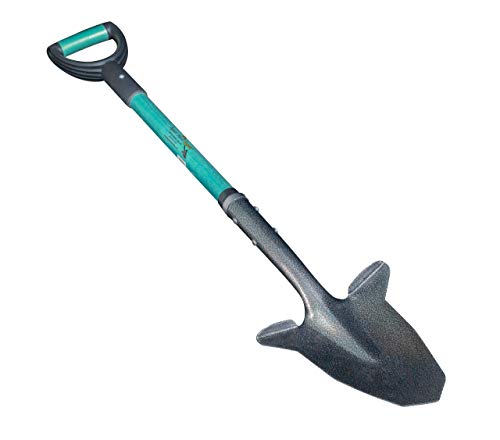
Rocky soil and clumps of perennials that need dividing are this spade’s territory, since the spear-shaped carbon manganese blade finds the path of least resistance between stones. The cushioned D-grip and forward-bent footrests keep each push stable.
Key Specs:
- Overall length: 40 inches
- Blade: 9 x 11 inches, beveled, carbon manganese steel
- Handle: steel-reinforced fiberglass
- Grip: cushioned, UV-resistant D-grip
- Footrests: forward-bent
- Finish: powder coat with epoxy resin over a pre-sharpened edge
Detailed Review:
The spear-shaped blade slips its point past stones and roots instead of hitting them square on, which makes a real difference in rocky soil. The carbon manganese steel is thicker and harder than a standard digging shovel’s, so the blade resists bending when you pry a rock loose.
The powder-coated blade is finished with an epoxy resin that wears away with use and gradually exposes the pre-sharpened edge underneath. The coating protects the steel early on, and the blade comes into its full cutting edge as you dig.
The steel-reinforced fiberglass handle is light and weather-resistant. The UV-resistant D-grip and forward-bent footrests give your hand and boot a stable hold, which lets the blade carry more soil with each scoop. Compared with the Spear Head Spade SHLF2 58in Garden Spade, which has the same blade, this spade has a much shorter shaft and a D-grip instead of two cushioned grips. It gives closer control for dividing perennials and less reach for deep holes.
Pros:
- Spear-shaped blade slides past stones in rocky soil.
- Thick carbon manganese steel resists bending under prying.
- Self-sharpening coating exposes a pre-sharpened edge with use.
- Weather-resistant fiberglass handle stays light.
Cons:
- Shorter shaft means more bending for tall gardeners.
- Spear point cuts a less straight edge along turf.
Who It’s For:
When your beds sit on stony ground or your perennials need regular dividing, this spade gives you a point that works between rocks and a grip that stays steady. Tall gardeners who dig deep holes will get more reach from the Spear Head Spade SHLF2 58in Garden Spade.
Editor’s Verdict:
Built for stony beds, this spade pairs a hard spear-shaped blade with a weather-resistant handle sized for close, controlled digging.
#6 VNIMTI Spade Shovel D-Handle 45in — Best Rust-Resistant
Edging a lawn, cutting turf and digging in wet soil call for a blade that stays sharp, and this flat-head spade’s rust-resistant coating keeps its high-strength steel from corroding in damp ground. The solid wood handle stands up to heavy loads.
Key Specs:
- Overall length: 45 inches
- Weight: 3.74 pounds
- Blade: flat square head, high-strength steel with a rust-resistant coating
- Handle: solid wood with an ergonomic D-handle
- Treads: non-slip, on the blade head
- Model: HT_004
Detailed Review:
The flat, square head is made for digging, edging and cutting turf. Its straight edge leaves a clean line along a bed or walkway. The blade is high-strength steel with a rust-resistant coating, so it resists rust and corrosion in wet soil and stays sharp after heavy use.
The solid wood handle is built not to break when you dig or move heavy loads, and it resists corrosion over years of use. The overall length suits adults and reduces back stress, so you stand straighter while you cut a long edge.
The ergonomic D-handle gives you a stronger grip as you lever, and the non-slip treads on the head steady your boot while you push. I’d pick this spade for a yard where the soil stays wet into spring, since the coated blade holds up in conditions that pit bare steel.
Pros:
- Rust-resistant coating protects the blade in wet soil.
- Flat square head cuts clean edges and turf.
- Non-slip treads steady your boot while digging.
- Solid wood handle stands up to heavy loads.
Cons:
- Flat head is slower to penetrate rocky ground.
- Square head is less suited to cutting around root balls.
Who It’s For:
Lawn owners who keep crisp edges along beds and walks, or who dig in soil that stays damp, will value a blade that resists rust and a handle sized for adults. If your ground is stony, a spear-shaped blade will break in with less effort.
Editor’s Verdict:
Choose this spade when wet soil and frequent edging are your routine; its coated blade and solid wood handle are built for exactly that combination.
#7 Spear Head Spade SHLF2 58in Garden Spade — Also Great
Taller gardeners who want to dig deep or remove larger plants with less bending will appreciate the reach and leverage of this long steel-reinforced fiberglass shaft. Its spear-shaped blade works through rocky soil.
Key Specs:
- Overall length: 58 inches
- Weight: 4 pounds
- Blade: 9 x 11 inches, beveled, carbon manganese steel
- Handle: steel-reinforced fiberglass
- Grips: two UV-resistant cushioned grips
- Footrests: forward-bent
Detailed Review:
With this much shaft between your hands and the blade, you can dig deep or pry out a larger plant while standing straighter. The extra length also adds leverage against stubborn roots. The two cushioned grips give each hand its own padded place on the long shaft, which spreads the effort across both arms.
It has the same spear-shaped carbon manganese blade and self-sharpening epoxy finish as the Spear Head Spade SHFD3 40in Garden Spade, so it handles rocky soil the same way. The steel-reinforced fiberglass handle is lightweight and weather-resistant.
The forward-bent footrests give your boot a stable push, and the blade carries more soil with each scoop. The Bully Tools 12-Gauge Drain Spade 58in has the same overall length. This spade’s wider spear-shaped blade suits planting holes and lifting shrubs, while the Bully Tools head is narrow and made for trenches.
Pros:
- Long shaft lets you dig deep while standing straighter.
- Two cushioned grips spread effort across both hands.
- Spear-shaped blade handles rocky soil.
- Fiberglass handle resists weather.
Cons:
- Long shaft is awkward in tight beds and small spaces.
- Wide blade is too broad for narrow trench work.
Who It’s For:
If you stand tall or want to bend less while digging planting holes and moving shrubs, this spade gives you reach and leverage so your back does less of the work. Gardeners working mainly in compact raised beds will find the Spear Head Spade SHFD3 40in Garden Spade easier to control.
Editor’s Verdict:
Pick this spade if you’re tall or tired of stooping, since its long fiberglass shaft and hard spear-shaped blade let you dig deep in rocky ground.
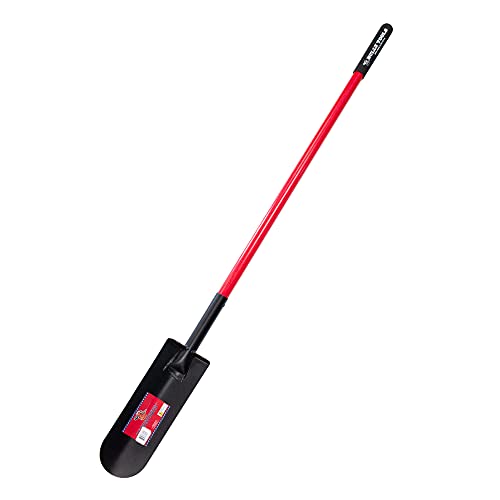
#8 Bully Tools 12-Gauge Drain Spade 58in — Also Great
Long trench runs for irrigation pipe, French drains or wire suit this drain spade, because its narrow, closed-back head of heat-treated 12-gauge steel cuts a slot with minimal disruption to the soil on either side. The long fiberglass handle keeps you upright.
Key Specs:
- Overall length: 58 inches
- Spade head: 14 x 5 x 2 inches, closed back
- Steel: 12-gauge, heat treated and tempered
- Handle: fiberglass with polyester veil, rubber grip
- Model: 82530
- Warranty: limited lifetime
Detailed Review:
The narrow head, rounded blade and curved edges cut a slot for pipe or wire while disturbing little of the soil on either side, so the trench walls stay clean. The closed back keeps soil from building up inside the head and adds strength. The same narrow head works for transplanting and for deep, narrow post holes.
The steel is 12-gauge, heat treated and tempered. A reinforced head-to-handle connection resists flex when you pry at the bottom of a deep cut. If you dig trench after trench, that joint takes the most stress, so the reinforcement matters.
The fiberglass handle has a polyester veil that prevents splintering, and the rubber grip adds comfort during long stretches of trenching. The long handle keeps you more upright and takes some strain off your back. The tool assembles in under a minute with a Phillips screwdriver. It is made in the USA by Bully Tools and backed by a limited lifetime warranty.
Pros:
- Narrow closed-back head cuts trenches with minimal soil disruption.
- Reinforced head-to-handle connection resists flex.
- Polyester-veiled fiberglass handle resists splintering.
- Rubber grip eases long trenching sessions.
- Made in USA with a limited lifetime warranty.
Cons:
- Narrow head moves little soil when digging wide holes.
- Long handle is unwieldy in small, crowded beds.
Who It’s For:
Landscapers, contractors and homeowners laying irrigation lines or French drains across a large yard will get steady service from this spade’s reinforced build. For wide planting holes or lifting shrubs, the Spear Head Spade SHLF2 58in Garden Spade has the broader blade for that work.
Editor’s Verdict:
Trench work is where this spade earns its keep, with tempered 12-gauge steel, a closed-back head and a reinforced joint that resists flex.
Which Long Handle Spade Fits Your Digging Job?
Match the blade to the ground first: a spear-shaped or serrated blade for rocks and roots, a narrow trench head for drain runs and transplanting, and a flat edging blade for turf and bed lines.
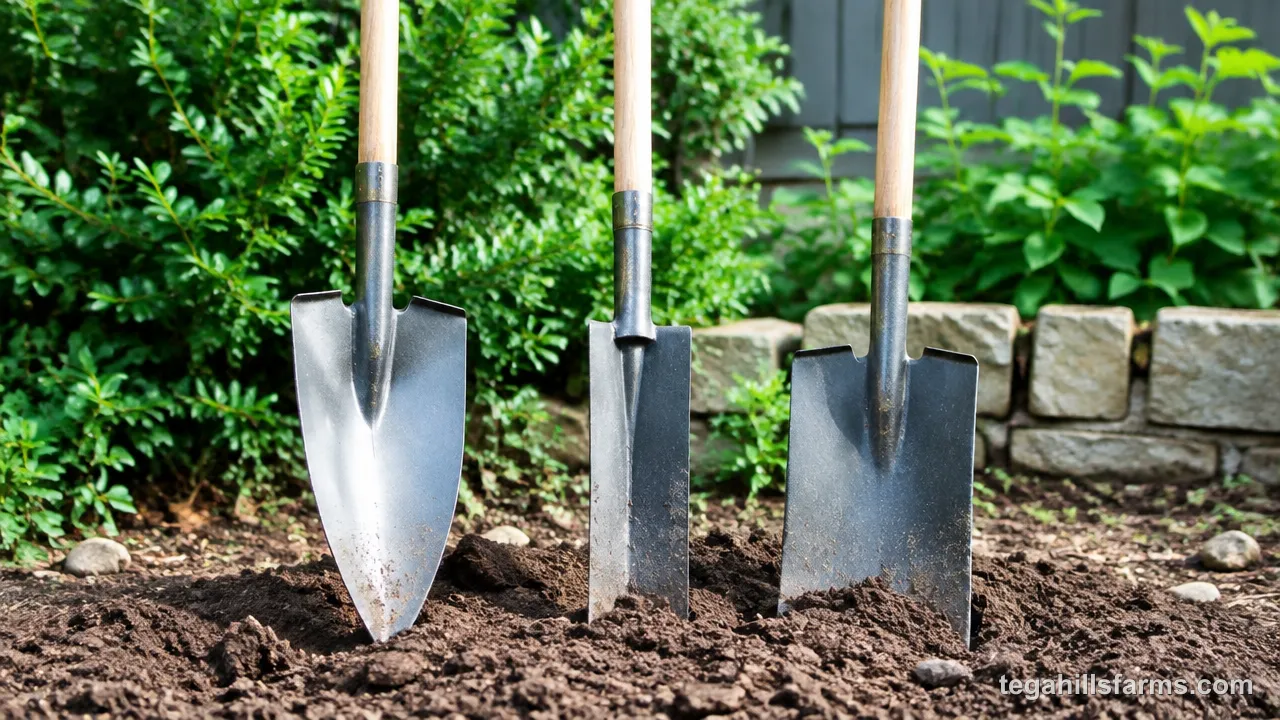
Each shape concentrates force in a different way. A point or a row of teeth puts your weight on a small area, so it slips between stones or saws through roots. A narrow head lifts a deep, slim column of soil without disturbing the sides. A flat blade spreads your push along a straight edge, so the cut stays clean.
Each common situation calls for a different build:
| Situation | Spade | Build feature that helps |
|---|---|---|
| Rocky or compacted ground | Spear Head Spade SHFD3 40in Garden Spade, Spear Head Spade SHLF2 58in Garden Spade | Spear-shaped carbon manganese blade |
| Dense roots | Root Slayer Nomad Garden Spade 22311 | Serrated teeth and inverted V tip |
| Transplanting and dividing perennials | VNIMTI Spade Shovel 45in D-Grip Wood Handle, AshmanOnline Drain Spade Shovel 48in | Narrow blade that cuts a plug, toughened blade that cuts roots |
| Narrow trenches and drain runs | Bully Tools 12-Gauge Drain Spade 58in | Narrow closed-back head |
| Edging and turf in wet soil | VNIMTI Spade Shovel D-Handle 45in, AshmanOnline Spade Shovel 41in | Coated flat head, sharpened blade |
| Tall gardeners who want to bend less | Spear Head Spade SHLF2 58in Garden Spade, Bully Tools 12-Gauge Drain Spade 58in | Extra-long fiberglass shaft |
| Older or smaller hands | AshmanOnline Spade Shovel 41in, VNIMTI Spade Shovel 45in D-Grip Wood Handle | Light build with a D-grip |
I’d settle the blade first and the handle second, because a comfortable grip can’t make up for a blade that skates off your soil. If your yard sits on dense, sticky clay, compare the best garden spades for clay soil before you choose a blade shape. Gardeners on a tight budget can narrow the field with garden spades under $50.
A long shaft gives you extra leverage, but it also moves the strain to wherever your stance is weakest, and with a poor stance that place is your lower back. Lifting a full blade of wet soil with straight knees and the load held far from your body can leave your back stiff long after the bed is planted.
How Do You Dig with a Long Handle Spade Without Straining Your Back?
Let your foot and the shaft do the work your back would otherwise do. Set the blade upright, drive it in by stepping on the tread, pull the handle back to lever the soil loose, and only then lift a smaller load close to your body.
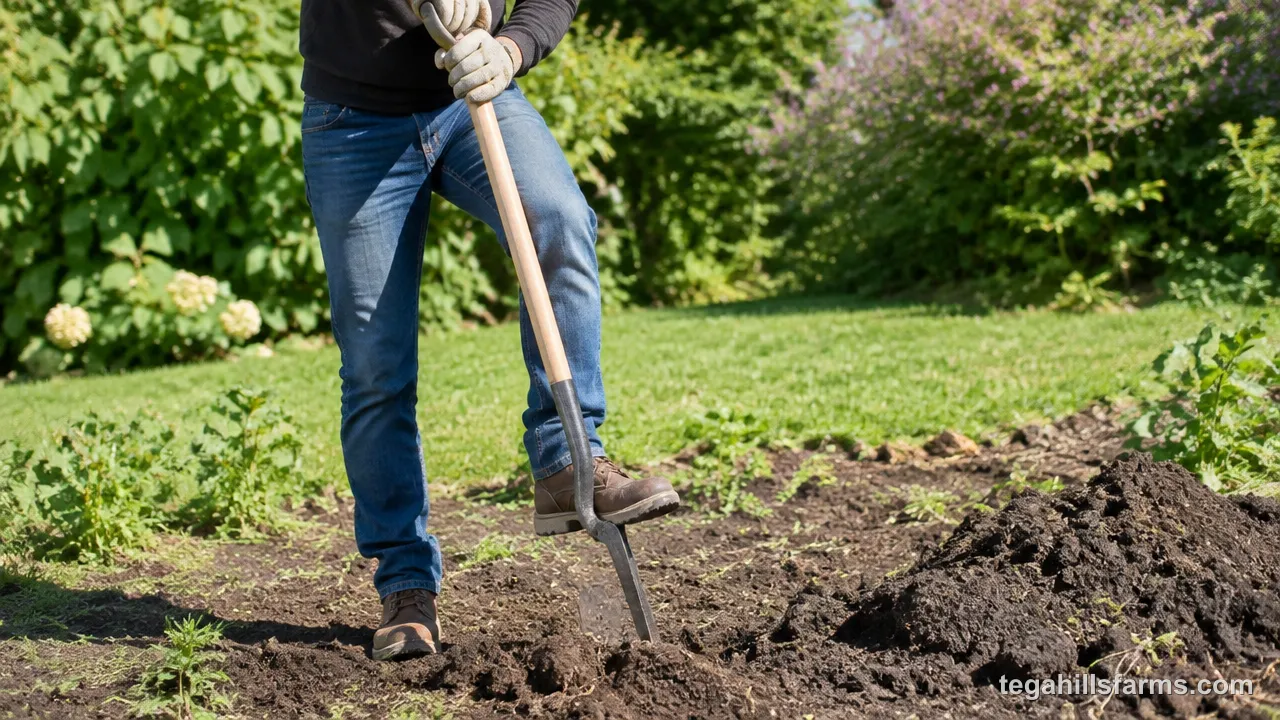
A vertical blade cuts straight down with little resistance, while an angled one slides along the soil and makes you push harder. Pushing with your boot on the step uses the strength in your legs, so your arms only guide the shaft. Once the blade is in, pulling back on the handle turns the long shaft into a lever that cracks the soil free. That takes far less effort than hauling a full blade straight up.
When you do lift, bend your knees, keep the load close to your shins, and turn with your feet instead of twisting at the waist.
A shaft that’s too short for you makes you stoop to reach. A dull edge makes you jump on the step to get the blade into the ground. Smaller bites end up faster over a whole bed, because each scoop goes in on the first push and your wrists never take the jolt of a stalled blade.
How Do You Keep a Spade Sharp, Rust-Free and Worth Replacing Late?
Clean the soil off the blade after every use and dry it before you hang it up. Wipe carbon steel with a light coat of oil, and file the edge whenever it starts to bounce off roots instead of slicing them.
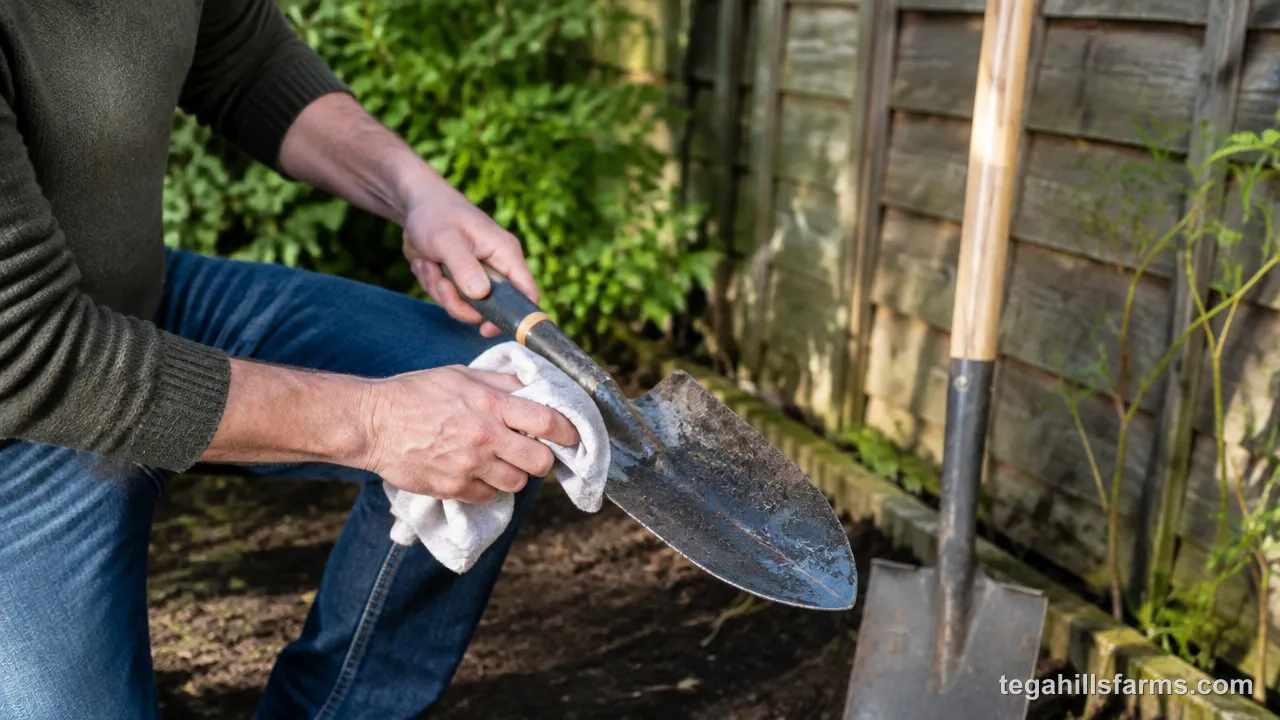
Wet soil left on the blade holds moisture against the steel, which is how rust starts under a worn coating. A stiff brush or putty knife takes off caked clay, and an oily rag seals bare carbon steel through the winter. To sharpen, follow the existing bevel with a flat mill file, pushing it toward the cutting edge until you feel a slight burr.
Wood handles last longer when you store them dry and wipe them now and then with linseed oil, which keeps the grain from drying out and splintering. Fiberglass doesn’t rot, but sunlight breaks down its surface over time, so store it out of direct sun.
A spade has reached the end of its life when:
- the socket is bent or cracked
- the head wobbles on the handle even after you tighten the rivet or screw
- the blade is pitted deep enough to snag soil
- the handle splinters or flexes under a normal push
A loose joint or a broken wood handle is usually a repair, because a new handle or rivet restores the tool. A cracked socket or a bent blade means replacing the spade, since the steel can no longer hold its shape.
Write Your Review
No reviews yet. Be the first to share your experience!