

My picks for garden spades under $50 in 2026 are the HANTOP Flat Spade (Best Overall), VNIMTI Spade Shovel 45in D-Grip Wood Handle (Best for Containers & Patios), VNIMTI Spade Shovel D-Handle 45in (Best Rust-Resistant), HANTOP Drain Spade Root Saw 44in (Best for Heavy Pruning), Fiskars 46in Transplanting Spade (Best for Limited Hand Strength), Berry&Bird Garden Digging Spade 41in (Best Durability) and Truper TruPro Garden Spade 48in (Also Great). Each one pairs a steel blade with a handle and foot platform shaped for a particular kind of digging, from cutting through roots to lifting a single perennial out of a crowded bed.
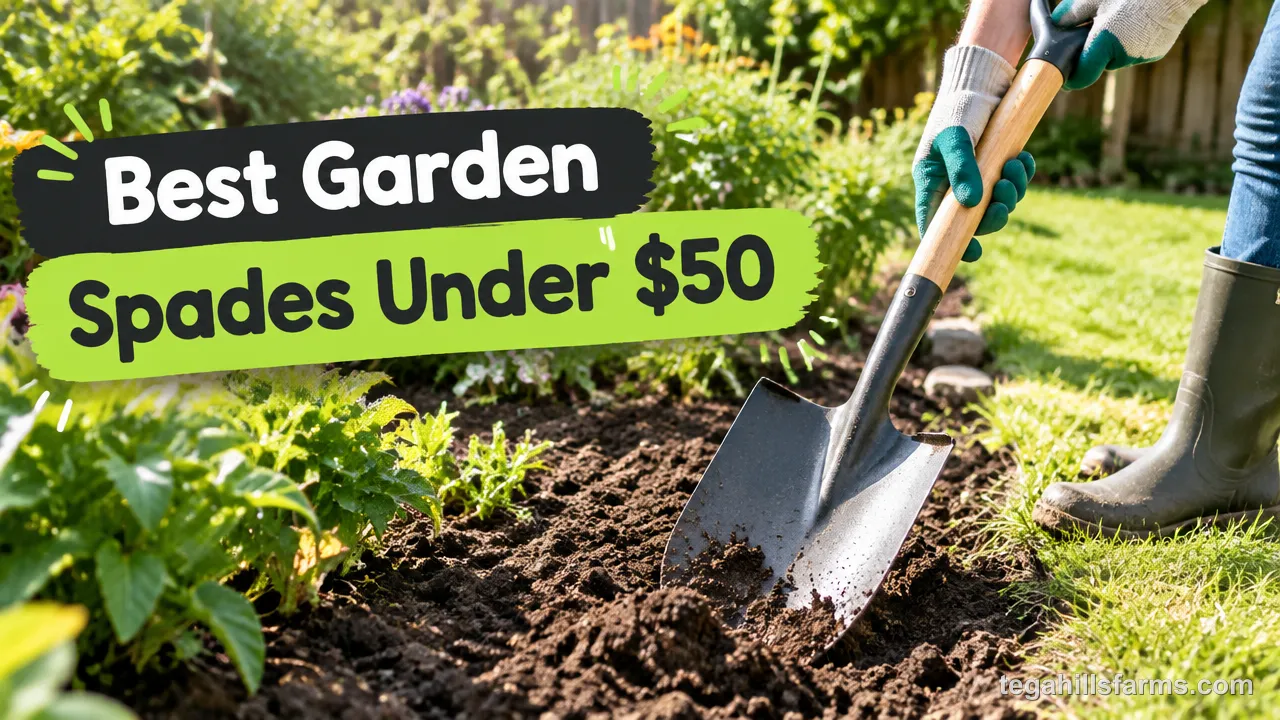
At this price, how a spade is built matters more than the name on the handle. The blade steel and its finish decide how long the edge stays keen and whether rust starts after a wet week. The handle material and grip decide how your hands, wrists and back feel an hour into the job.



The real worry with a budget spade is that the shaft bends, or the joint between blade and handle loosens, the first time you lean into compacted soil. A wide or corrugated foot platform, a serrated edge for hard ground and a narrow blade for tight beds all change how much force you need. Less force means less strain on the tool and on your body.
How Is a Garden Spade Different From a Shovel?
A flat blade with a straight cutting edge slices, edges and lifts soil in clean blocks, while a rounded, dished scoop is made to carry loose material such as mulch, gravel or compost. The first is a spade and the second a shovel. A spade’s flat face enters the ground at a steep angle and leaves a clean wall, so you can edge a lawn, slice turf or lift a plant with its root ball intact. A shovel’s curved bowl is angled to scoop, which suits moving a pile but tears the soil when you try to cut a precise line.
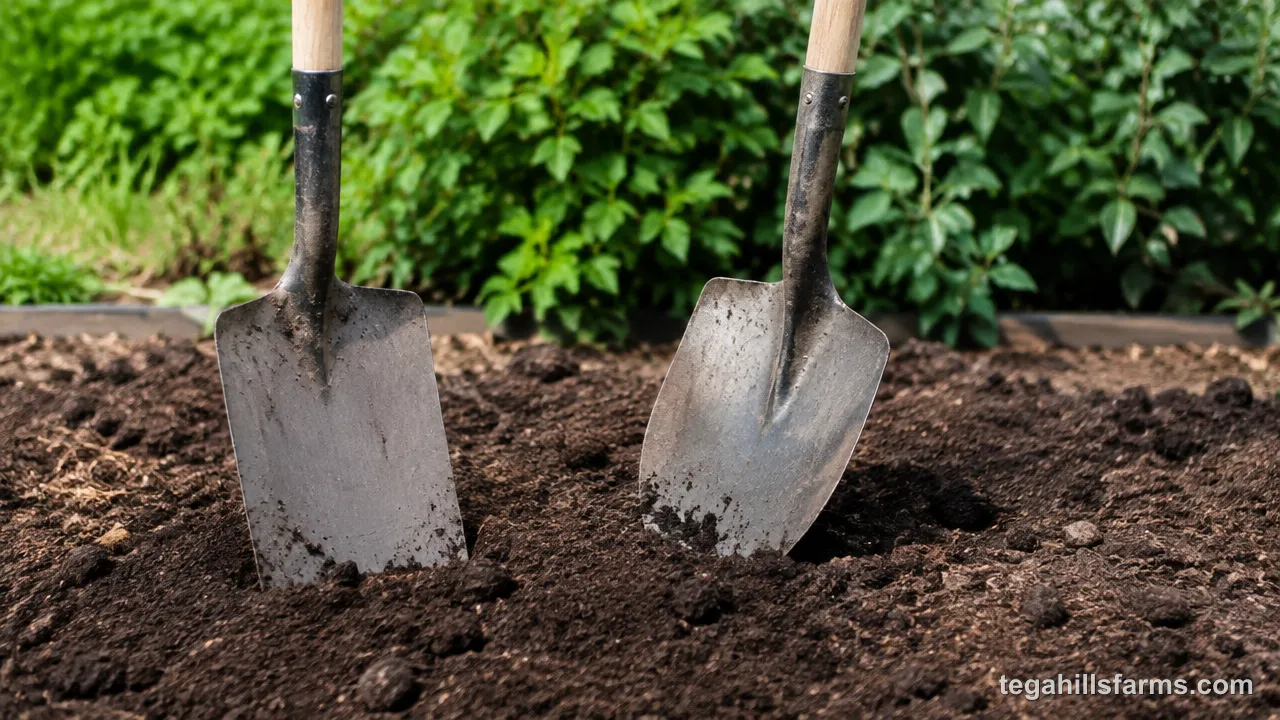
The handle changes how each tool feels too. Spades usually end in a D-grip or T-grip that lets you steer the edge with both hands. Shovels often have a long straight handle for swinging a load to one side. A shorter spade shaft keeps the blade close for precise work, and longer-handled spades give up some of that control for reach and leverage.
That control is what you want around plants and in compacted soil. A spade cuts through a hard crust and stops where you aim it, instead of throwing soil over the next plant or bouncing off packed ground. To explore other spade styles and see how they handle different jobs, our guide to the best garden spades is a good next stop.
What Should You Look for in a Garden Spade Under $50?
Below this price line, how the parts are made and joined decides whether a spade digs for many seasons or bends and works loose in its first hard summer. Budget makers save money on the steel, the finish, the shaft and the platform under your foot, and those are the places a cheap tool shows its weakness. The same choices also set your comfort. A well-matched blade and handle let your body weight do the work, so your wrists and back carry less of the load over a long session.
Which Blade Material Holds Up Best: Carbon Steel, Stainless Steel or Coated Steel?
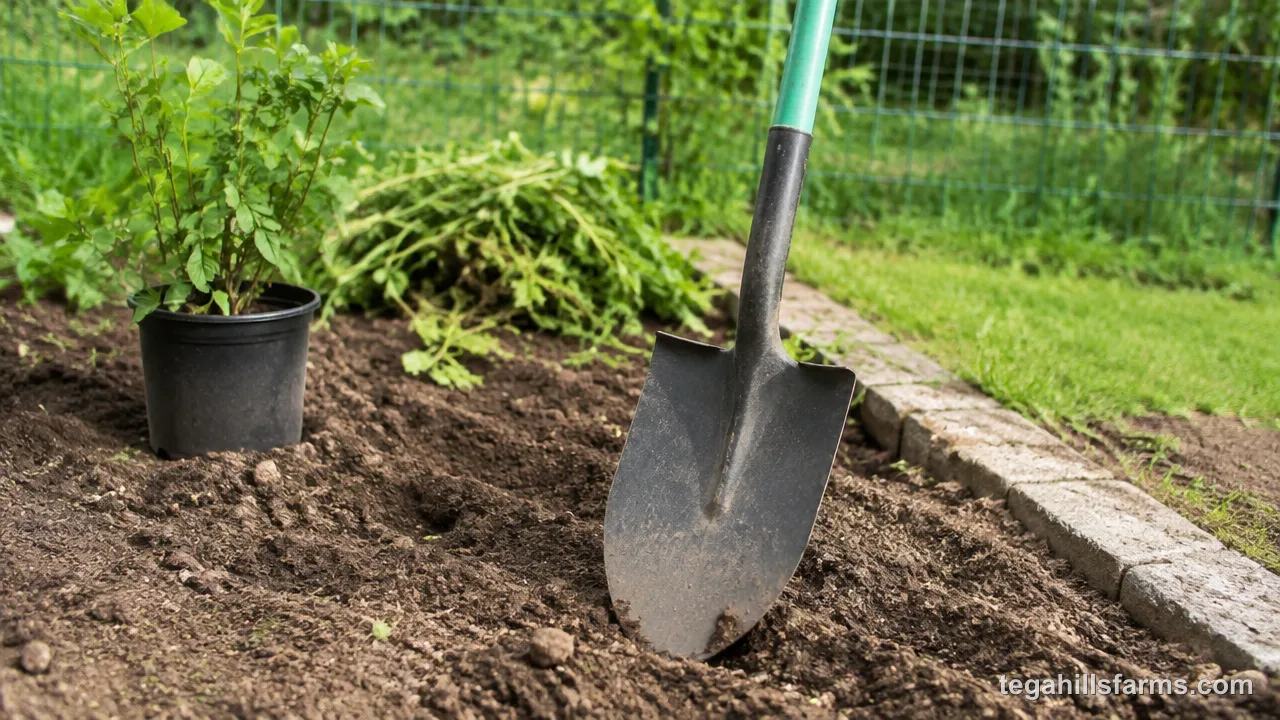
Hardened high-carbon steel holds its edge and shape under heavy prying in hard soil. Stainless steel cleans more easily and does not rust. A coated blade protects plain steel only as long as the coating stays intact. Which one lasts for you depends on whether your soil is hard, sticky or wet, and on how much care you are willing to give the blade.
A hardened high-carbon blade takes a keen edge and keeps it, so it goes on slicing through compacted ground and roots after a softer blade has rounded over. Carbon steel put away with damp soil on it rusts, though, so it needs wiping and a light coat of oil after use.
Polished stainless steel releases sticky clay, so each lift empties cleanly, and it can sit in a wet bed without rusting. Its strength depends on the build: a thin stainless blade can bend where a thicker one would not. If you have settled on this material, you can compare the best stainless steel spades.
A rust-resistant coating keeps moisture off the steel underneath. Over seasons of digging, the edge and face wear through, and the bare steel there then needs the same care as carbon steel.
Which Spade Type and Blade Shape Suit Your Digging Jobs?
A flat or square-point digging spade handles trenches, edging, turf cutting and moving compost. A border spade does the same work at a smaller size for established beds. A pointed spade starts more easily in hard ground. A narrow transplanting or drain spade lifts a plant with a tight root plug or cuts a slim trench.
A serrated or toothed edge works like a coarse saw. When you rock the blade, the teeth break a compacted crust and cut through roots that a plain edge would ride over. That is why toothed blades suit rooty borders and clay that has dried hard.
Blade width sets how your effort is spread. A narrow blade puts the same push from your foot into a smaller strip of soil, so it sinks deeper with less force and disturbs fewer roots of the plants beside it. A wide blade moves more soil per lift, which helps when you turn a bed or shift compost, but your legs have to work harder to drive it into firm ground.
How Do Handle Material, Length and Grip Affect Comfort?
Wood absorbs shock and feels good in the hand, fiberglass stays light and weatherproof, and steel gives a push that does not flex. A D-handle adds leverage and keeps your wrist straight. Handle length should match your height so you can dig without stooping.
A wood shaft softens the jolt when the blade hits a stone, but it can dry out and crack if left in sun and rain, so it needs oiling now and then. Fiberglass does not rot or swell and stays light, though it can flex slightly under heavy prying. A steel shaft sends your foot pressure straight to the blade, and it also passes more vibration into your hands.
A D-handle lets you wrap your whole hand around the grip and lift with your wrist in a neutral position, which helps when you pull soil out of a deep hole. A T-handle or straight grip turns more quickly but puts more load on the wrist during long lifts.
A longer handle lets a tall gardener stand more upright, which eases back strain over a long session. A shorter one is easier to steer in tight beds and on patios. Tall users who want extra reach can look at the best long handle spades.
Why Does the Foot Step Matter When Digging Hard Soil?
A foot step, or tread, is the flat or turned ledge along the top of the blade where your boot presses. It lets your body weight drive the blade instead of your arms.
Without one, the thin top edge of the blade presses into a narrow strip of your sole, which hurts through soft shoes and lets your foot slide off. A wide platform spreads that pressure across more of the sole. A turned step gives your boot a ledge to settle on, and corrugated plates add grip when the steel is wet or muddy. In compacted ground, secure footing means you can stand on the spade and rock it in with your weight, so your arms and lower back do less of the pushing. Work boots with a stiff sole pair well with a wide step, because the sole bridges the platform evenly.
The 7 Best Garden Spades Under $50 of 2026
I recommend the HANTOP Flat Spade, VNIMTI Spade Shovel 45in D-Grip Wood Handle, VNIMTI Spade Shovel D-Handle 45in, HANTOP Drain Spade Root Saw 44in, Fiskars 46in Transplanting Spade, Berry&Bird Garden Digging Spade 41in and Truper TruPro Garden Spade 48in. The head is what separates them. The serrated and toothed HANTOP blades break crusted, rooty ground, the transplanting blades of the VNIMTI D-Grip and the Fiskars lift single plants from containers and tight beds, and the coated or stainless flat heads stand up to wet soil. Handle choice separates them further, and the large Fiskars D-handle suits gardeners with limited hand strength. If your budget is tighter, look at the best garden spades under $30.
#1 HANTOP Flat Spade — Best Overall
If your beds mix hard clods, turf edges and compost moves, this square-point spade covers all of it with a sawtooth edge on a 1050MN steel head. Wide foot platforms put your weight behind each push.
Key Specs:
- Head: 1050MN steel with sawtooth edge
- Handle: fiberglass with PP grip
- Size: 7.5 x 2 x 43 in (L x W x H)
- Weight: 4.5 lb
- Footstep: widened foot platforms
- Blade style: square point
Detailed Review:
The sawtooth edge starts a cut in crusted soil or a dried clod where a straight edge would skid, so the blade bites with less force from your leg. Because the head is a square point, the same edge still squares off a trench wall or cuts a clean line along a bed.
The head is 1050MN steel, a medium-carbon grade with the strength to take hard foot pressure. It sits on a fiberglass handle with a PP grip, and fiberglass does not swell or rot when the spade is left out by a wet bed. Widened foot platforms give your boot a secure surface, so you can drive the blade with body weight rather than arm strength.
At 4.5 lb, it is heavier than the 3-lb VNIMTI Spade Shovel 45in D-Grip Wood Handle, and you feel that difference after a long stretch of lifting soil out of a trench. The extra mass helps when you chop through thick turf, because the head carries momentum into the cut. I lean toward this spade for gardeners whose work runs from edging to furrowing and who want one tool for most of it.
Pros:
- Sawtooth edge bites into crusted soil and dried clods.
- Widened foot platforms give your boot a secure push.
- Fiberglass handle won’t swell or rot in wet beds.
- Square point cuts clean trench walls and bed edges.
Cons:
- At 4.5 lb, it tires your arms during long lifting.
- Serrated edge needs a round file to resharpen.
Who It’s For:
Gardeners with mixed yard work, such as cutting turf, digging planting holes, shifting compost and edging beds, will use this spade’s full range, especially where soil dries into a hard crust. If lifting a heavy tool tires you quickly or you garden mostly in containers, the lighter VNIMTI Spade Shovel 45in D-Grip Wood Handle suits you better.
Editor’s Verdict:
A versatile square-point spade whose sawtooth 1050MN steel head and wide footing keep hard, mixed digging under control.
#2 VNIMTI Spade Shovel 45in D-Grip Wood Handle — Best for Containers & Patios
For transplanting perennials in tight beds and patio planters, the long, narrow blade cuts a round root plug without tearing into the plant next door. At 3 lb, it lifts easily.
Key Specs:
- Weight: 3 lb
- Overall length: 45 in
- Blade: long, narrow transplanting blade
- Handle: solid wood with steel D-grip
- Foot plates: corrugated
Detailed Review:
A narrow blade concentrates your push into a small strip of soil, so it slides into clay or thick grass without a hard stomp. The blade is long enough to reach below most perennial root systems, and you can work it around a plant in a tight circle to lift out a round plug while the neighboring roots stay in place.
The corrugated foot plates at the top are slightly longer, which keeps your sole from sliding off when the ground is damp. The D-handle gives you leverage to pry soil up and out of a deep, narrow hole, a job where a straight shaft leaves your wrist bent. The shaft is solid wood, and the D-grip is steel.
The light build helps when you lift the spade in and out of raised beds or carry it between pots on a patio. The trade-off is a small blade face, so moving compost or turning a whole bed takes many more passes. I would keep it for transplanting and spot digging rather than as your only spade.
Pros:
- Narrow blade lifts a round root plug cleanly.
- Light weight makes lifting into raised beds easy.
- Corrugated foot plates reduce slipping on damp soil.
- D-handle pries soil out of deep, narrow holes.
Cons:
- Narrow blade carries little soil per lift.
- Built for light and medium work, not all-day heavy digging.
Who It’s For:
Patio and container gardeners who divide perennials, set small plants into raised beds or dig between established shrubs will appreciate how little this blade disturbs the roots around it. Older gardeners and anyone who struggles with a heavy tool can lift and steer it without strain. Turning over a whole vegetable bed calls for a wider blade.
Editor’s Verdict:
Choose this spade when precise transplanting in cramped beds matters more than moving bulk soil; the narrow blade and light build make that work easy.
#3 VNIMTI Spade Shovel D-Handle 45in — Best Rust-Resistant
In beds that stay wet through spring, the rust-resistant coating on this high-strength steel head protects the blade every time you dig. The flat square edge also cuts turf.
Key Specs:
- Head: high-strength steel, square flat blade
- Finish: rust-resistant coating
- Handle: solid wood with ergonomic D-grip
- Overall length: 45 in
- Weight: 3.74 lb
- Model: HT_004
Detailed Review:
A rust-resistant coating covers the high-strength steel head, so wet soil does not start corrosion on the blade face between uses. That protection counts if your spade spends the season in a shed corner instead of being dried after every dig. Because the steel underneath stays free of pitting, the sharp edge holds up through heavy use.
The flat, square head is built for digging, edging and cutting turf, and non-slip treads on top of the head steady your foot as you push. The solid wood handle gives an adult enough length to work more upright, which takes strain off the lower back. The ergonomic D-handle gives both hands a firm hold when you lift a full blade of soil.
Compared with the narrow-bladed VNIMTI Spade Shovel 45in D-Grip Wood Handle, this flat head moves more soil per lift and cuts a straight edge, while the narrow model lifts out a single perennial with less disturbance. I’d pick this one for lawn edging and general bed work in soggy ground.
Pros:
- Rust-resistant coating protects the blade in wet soil.
- Flat square head cuts clean lawn edges.
- Non-slip treads steady your foot while pushing.
- Solid wood shaft lets you dig more upright.
Cons:
- Wide flat face takes more force in compacted soil.
- Wood handle needs drying after wet-soil work.
Who It’s For:
If your yard has low spots that stay soggy, or your tools spend the season in a damp shed, this coated spade stands up to that moisture. Gardeners who edge lawns and cut turf will like working upright with less back strain. For lifting single perennials out of a crowded bed, a narrow transplanting blade is the better match.
Editor’s Verdict:
Expect a dependable flat spade for wet ground: the coated high-strength steel head and wood D-handle take routine digging, edging and turf work in stride.
#4 HANTOP Drain Spade Root Saw 44in — Best for Heavy Pruning
When roots run through the spot you need to dig, the toothed, reinforced blade saws through them instead of bouncing off. Its narrow 1050MN steel head fits deep holes and slim trenches.
Key Specs:
- Head: 1050MN steel, reinforced toothed blade
- Handle: fiberglass with PP D-grip
- Size: 7 x 2 x 44 in (L x W x H)
- Weight: 4.4 lb
- Footsteps: wide
Detailed Review:
The teeth run along a reinforced blade and act like a coarse saw when you rock the spade against a root. That lets you cut through roots while transplanting a young tree or digging a trench past a hedge, where a plain edge tends to ride over the root. The narrow drain-spade profile puts your force into a small area, so the blade sinks deep without opening a wide hole.
The HANTOP Flat Spade shares the same 1050MN steel and fiberglass build, but this model trades its square cutting edge for a narrower, toothed head. You gain root cutting and deep-hole work, and you lose the clean straight line that edging a bed needs.
Wide footsteps give your boot a secure place to push, which counts when you lean your weight into a root that resists. The fiberglass handle and PP D-grip keep both hands in control as you work the blade back and forth. I’d point you to this spade when overgrown shrubs or tree roots stand between you and a planting hole.
Pros:
- Toothed blade saws through roots while digging.
- Narrow head digs deep holes in tight spaces.
- Wide footsteps help you push with body weight.
- Reinforced blade stays strong when prying against roots.
Cons:
- Narrow head moves little soil per lift.
- Toothed edge leaves ragged lines when edging beds.
Who It’s For:
Homeowners clearing overgrown shrub borders, moving young trees or digging trenches through root-filled ground will put this toothed spade to steady use. Landscaping work in tight gaps between plantings also suits its narrow head. Gardeners whose work is mostly lawn edging and squaring off beds are better served by a flat, straight-edged blade.
Editor’s Verdict:
Reach for it when roots are the problem: the toothed, reinforced 1050MN steel blade cuts and digs in one motion.
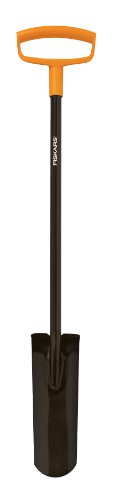
#5 Fiskars 46in Transplanting Spade — Best for Limited Hand Strength
If a slim handle leaves your fingers cramped, the extra-large D-handle and teardrop-shaped steel shaft give your hands more to hold, even in gloves. The blade is welded 14-gauge steel.
Key Specs:
- Blade: welded 14-gauge steel, sharpened
- Shaft: 18-gauge steel, teardrop-shaped profile
- Handle: extra-large D-handle
- Length: 46 in
- Model: 96546925J
Detailed Review:
The extra-large D-handle leaves room for both hands, gloves included, so you can hold the spade with an open, relaxed grip instead of squeezing. The teardrop-shaped shaft follows the natural shape of your hand, which keeps the spade from rolling as you push. For hands with arthritis or a weaker grip, a shaft that resists rolling means less clenching through a long session.
The 14-gauge blade and the 18-gauge shaft are both steel, joined by welding. Unlike the fiberglass handle on the HANTOP Drain Spade Root Saw 44in, this shaft does not flex, so the force from your foot reaches the blade instead of bending the handle. The cost is a stiffer feel, because a steel shaft passes more jolt into your hands when the blade strikes a rock.
The sharpened blade starts easily in tough soil and breaks up hardened clods. Its shape suits small, deep holes and digging up bulbs, so it fits planting work in beds better than turning large areas.
Pros:
- Extra-large D-handle fits two gloved hands.
- Teardrop shaft resists twisting in a light grip.
- Welded steel shaft won’t flex under foot pressure.
- Sharpened blade starts easily in tough soil.
Cons:
- Steel shaft passes more jolt from rocks into hands.
- Transplanting blade is slow for turning large beds.
Who It’s For:
Gardeners with arthritis, a weaker grip or sore wrists should look closely at this spade, because the oversized D-handle and shaped shaft let them guide it without a tight squeeze. Bulb planters and anyone digging small, deep holes will find it a good fit. If vibration bothers your hands, a wood shaft absorbs more of the shock.
Editor’s Verdict:
With its extra-large D-handle and teardrop-shaped steel shaft, this Fiskars spade lets weaker hands dig with control instead of force.
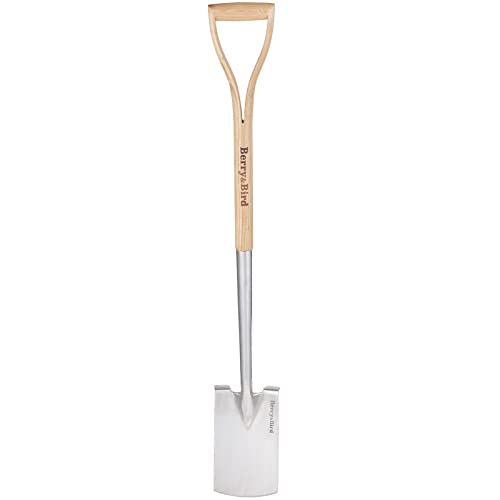
#6 Berry&Bird Garden Digging Spade 41in — Best Durability
Polished stainless steel lets sticky soil slide off this border spade, so cleaning up after a wet day takes a quick rinse. Its D-handle is ash hardwood.
Key Specs:
- Blade: polished stainless steel, border spade style
- Handle: ash hardwood from FSC-certified forests, D-grip
- Length: 41 in
- Model: 003
- Warranty: 2-year, plus 30-day free replacement
Detailed Review:
The blade is high-quality stainless steel built not to bend under hard work, and its polished surface reduces how much dirt sticks to it. In clay or wet loam, that means each lift empties cleanly, so you spend less time scraping between scoops.
The ash hardwood handle comes from FSC-certified forests and has a streamlined shape that sits easily in the hand. Ash is strong for its weight, and the non-slip D-grip keeps your wrist in a neutral position, which eases stress through a long session of slicing into hard ground.
As a traditional English-style border spade, it handles edging, transplanting and cutting thick turf as well as trenches, holes and furrows. It is shorter than the Truper TruPro Garden Spade 48in, which makes it easier to control in close quarters but makes a tall gardener bend more.
A 2-year warranty and 30-day free replacement back the build. I’d choose it for a gardener who wants one spade to keep for many seasons and doesn’t mind oiling an ash handle now and then.
Pros:
- Polished stainless blade sheds sticky soil easily.
- Stainless blade resists bending under hard work.
- Ash D-handle keeps your wrist in a neutral position.
- Backed by a 2-year warranty.
Cons:
- Ash handle needs occasional oiling to stay sound.
- Shorter shaft makes taller gardeners bend more.
Who It’s For:
Anyone who wants to buy a spade once and keep it for many seasons should consider this one, especially in sticky clay or wet beds where soil clings to plain steel. Its wrist-friendly D-grip helps through long sessions. Very tall gardeners who want extra reach may prefer a longer handle.
Editor’s Verdict:
Over many seasons, the polished stainless blade and ash D-handle make this a spade worth cleaning, oiling and keeping.
#7 Truper TruPro Garden Spade 48in — Also Great
The 48-inch hardwood handle gives you reach and leverage, keeping your back straighter while you transplant shrubs or cut a trench. Forward-turned steps steady your foot.
Key Specs:
- Handle: 48-inch hardwood
- Blade: 14 gauge
- Steps: extended, forward-turned
- Weight: 4 lb
- Model: 33174 (key PES-L-RBA)
Detailed Review:
The steps are extended and turned forward over the top of the blade, so your boot presses on a ledge instead of a bare steel edge. That gives you the control to press down steadily when cutting a trench or removing soil, and your foot stays put instead of slipping off to the side.
The long hardwood handle adds reach and leverage for everyday yard and garden work, which helps when you pry a shrub’s root ball loose during transplanting. The same reach lets you work into confined spaces between plants without stepping into the bed.
The 14-gauge blade is built for digging, edging and general garden bed work, and the TruPro series is designed for routine outdoor use in landscaping and property maintenance. Because the head is a garden spade rather than a scoop, it slices clean bed edges and lifts soil in neat blocks. I see it as a dependable choice for a tall gardener, or for anyone whose jobs lean toward trenching and moving shrubs.
Pros:
- 48-inch handle gives reach and leverage.
- Forward-turned steps give controlled foot pressure.
- 14-gauge blade handles trenching and bed work.
- Long reach gets between plants without stepping in beds.
Cons:
- Extra handle length makes it awkward for shorter gardeners.
- At 4 lb, it weighs more than narrow transplanting spades.
Who It’s For:
Taller gardeners, and anyone who wants to dig with a straighter back, will benefit from the long handle and the leverage it adds when lifting shrubs. It also suits routine trenching and edging around a property. Shorter gardeners working among tight planters may find a more compact spade easier to control.
Editor’s Verdict:
Count on this TruPro for steady trenching and transplanting, since the long hardwood handle and forward-turned steps give you leverage and sure footing.
Which Garden Spade Fits Your Yard and Your Hands?
Your soil and your grip decide it: toothed blades for rooty or crusted ground, narrow, light blades for containers and tight beds, a large D-handle for weaker hands, and a coated or stainless blade for wet soil.
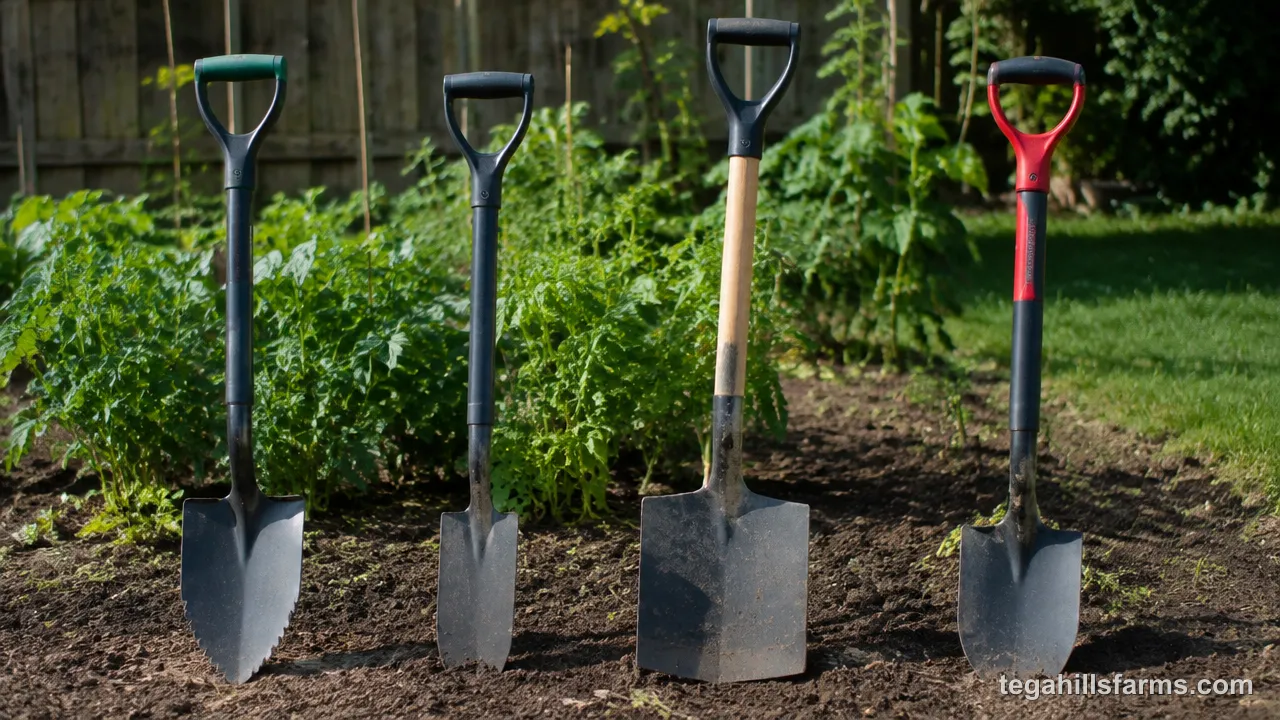
In compacted or rooty ground, the HANTOP Flat Spade and the HANTOP Drain Spade Root Saw 44in pair toothed 1050MN steel heads with wide footsteps, so your weight drives the teeth through the crust. The flat model covers general digging and edging, while the drain spade works deeper and narrower around roots. Soil type also changes the blade shape you want. Sticky clay favors a narrow or polished blade that releases cleanly, and the best garden spades for clay soil go further into that choice.
For containers, raised beds and narrow gaps, the light, narrow VNIMTI Spade Shovel 45in D-Grip Wood Handle lifts one plant without disturbing its neighbors. All of these picks have full-length handles, so for work between pots on a small patio, the best short handle spades are easier to steer.
Limited grip or wrist strength points to the Fiskars 46in Transplanting Spade, whose extra-large D-handle and teardrop-shaped shaft let you dig with a looser hand. For wet soil and long storage, the VNIMTI Spade Shovel D-Handle 45in has a rust-resistant coating and the Berry&Bird Garden Digging Spade 41in has polished stainless steel. Tall gardeners who want extra reach have the Truper TruPro Garden Spade 48in.
The last trade-off is shaft material. The wood handles on the VNIMTI, Berry&Bird and Truper spades absorb shock but need oiling. The fiberglass on both HANTOP models stands up to weather. The Fiskars steel shaft gives a push that does not flex, but more vibration reaches your hands.
| Need | Spade | Feature that matters |
|---|---|---|
| Compacted or crusted soil | HANTOP Flat Spade | Sawtooth 1050MN steel head, wide foot platforms |
| Rooty ground and narrow trenches | HANTOP Drain Spade Root Saw 44in | Toothed reinforced blade, narrow head |
| Containers and tight beds | VNIMTI Spade Shovel 45in D-Grip Wood Handle | Long, narrow blade, light weight |
| Wet soil and damp storage | VNIMTI Spade Shovel D-Handle 45in | Rust-resistant coated steel head |
| Limited hand strength | Fiskars 46in Transplanting Spade | Extra-large D-handle, teardrop-shaped shaft |
| Sticky soil and long service | Berry&Bird Garden Digging Spade 41in | Polished stainless steel, ash D-handle |
| Extra reach | Truper TruPro Garden Spade 48in | Long hardwood handle, turned steps |
Soil left drying on a steel blade holds moisture against the metal, and the edge dulls a little more with every stone it meets. A spade put away dirty in fall comes out in spring with a rusted face and a rounded edge that skids on hard ground, so every cut takes more force from your legs and back.
How Do You Clean, Sharpen and Store a Garden Spade?
After each use, scrape off the soil, wash and dry the blade, and wipe it with oil. File the edge when it starts to skid, oil a wood handle, and store the spade dry and off the ground. These habits keep a budget blade sharp and rust-free for more seasons.
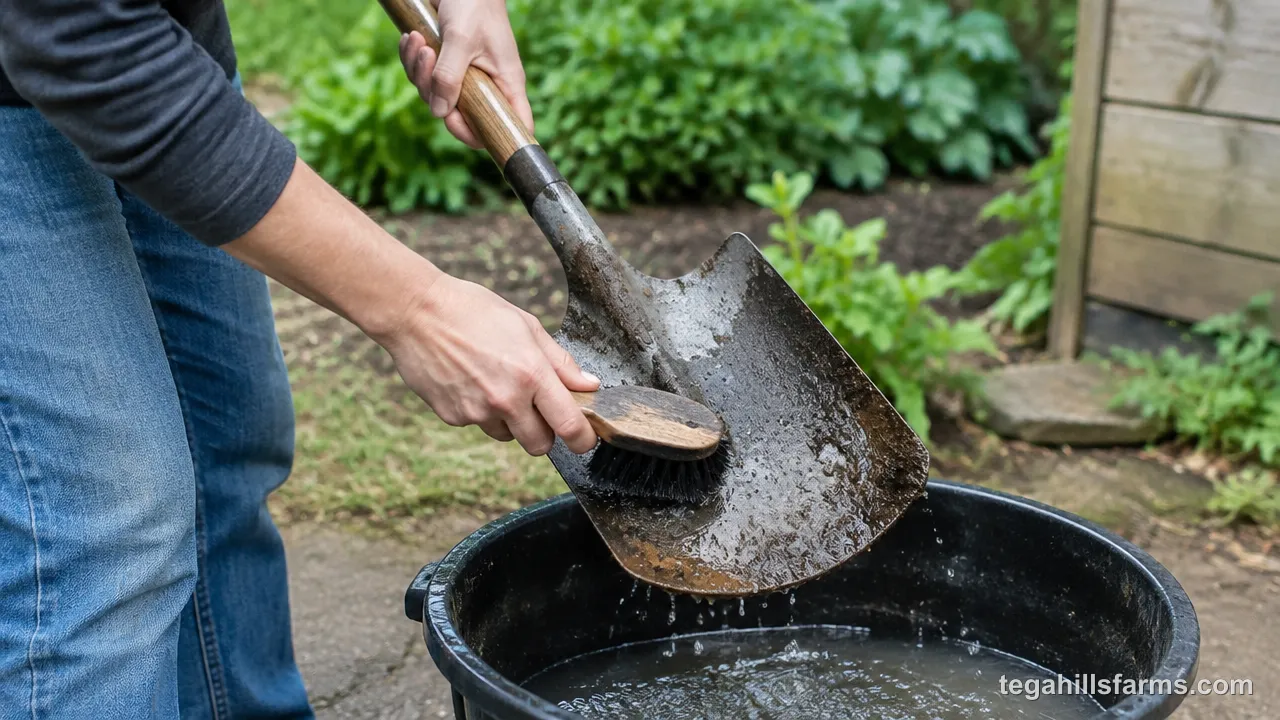
A stiff brush or a flat stick removes caked soil, and warm soapy water or a rag with rubbing alcohol lifts root sap that would otherwise trap moisture. Drying the blade completely matters most for plain carbon steel, because rust forms where water sits, and a light film of oil keeps air off the metal.
On a plain blade, a mill file pushed from the back of the edge toward the cutting line restores a clean bevel. Follow the existing angle and file in one direction. A serrated or toothed edge needs a round or tapered file worked into each gap between the teeth, because a flat file would grind the teeth away.
Rub boiled linseed oil into a wood handle once or twice a year so it does not dry out and split. Over winter, hang the spade or stand it on its handle in a dry shed rather than leaving the blade on damp concrete or soil. A clean, sharp, dry blade slides into the ground with less effort.
How Can You Tell a Budget Spade Will Wear Out Early?
A few signs give it away: a shaft that flexes when you lean on it, play where the blade meets the handle, coating that flakes at the edge, step plates that bend underfoot, and an edge that dulls after one session. Each sign points to a weak spot that gets worse with every hard dig.
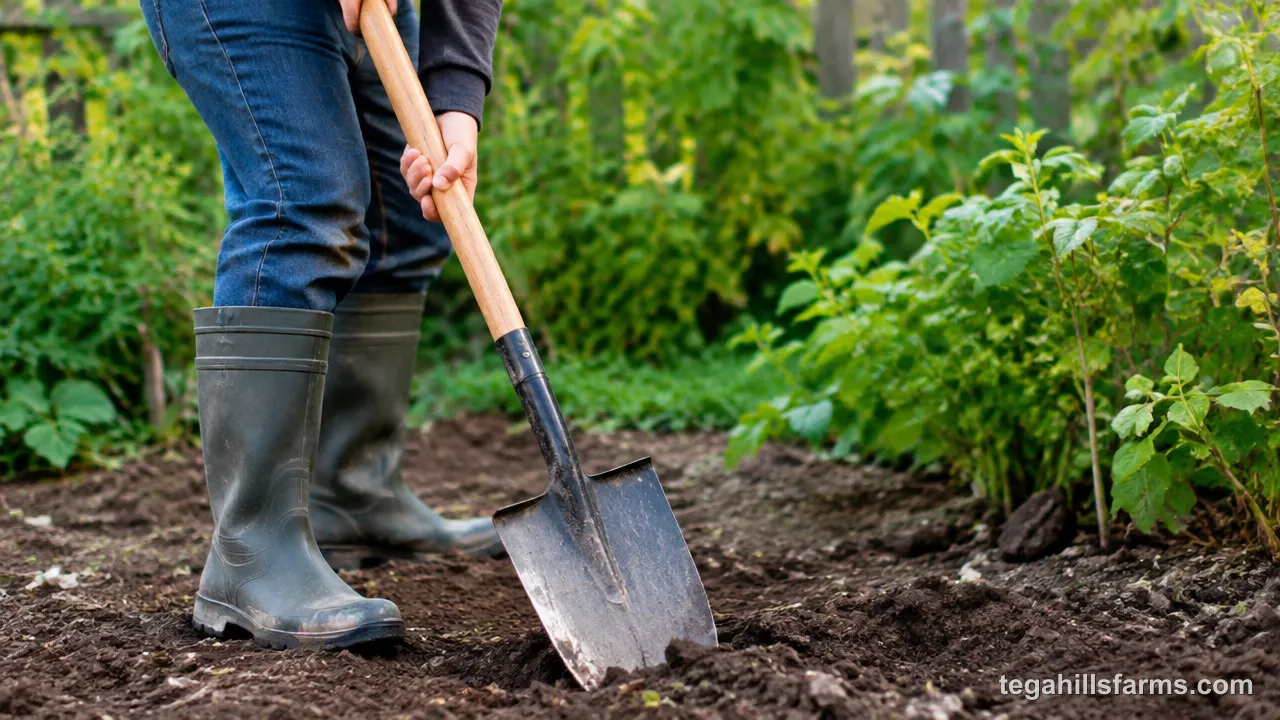
A bending shaft wastes your push and can snap under prying, which usually happens when you lever out a root or a rock. A loose joint at the ferrule, the metal collar that joins blade and handle, lets the blade wobble, so each lift loses control and the gap collects water that rots wood or rusts steel from the inside.
Coating that flakes at the edge exposes bare steel right where the blade meets wet soil, and rust spreads under the remaining coating from there. Thin step plates that flex under your boot spread pressure poorly and can fold over in hard ground. A blade that dulls quickly is usually soft or thin steel, so you will be filing it often.
Paying more makes sense if you dig compacted clay, cut roots often or garden most days of the week, because that work exposes every weakness in a cheap build. For that kind of use, compare the best garden spades under $100 before you buy.
Write Your Review
No reviews yet. Be the first to share your experience!