

Our top picks for the best lightweight pole saws in 2026 are Supstable Cordless Pole Saw 6in (Best Overall), Autubin 2-in-1 Pole Saw & Mini Chainsaw 16ft (Runner Up), Greenworks 40V 8in Pole Saw (Best Easy-Start), Fiskars 8-12ft Tree Pruner & Pole Saw (Also Great), TaskStar 2-in-1 Cordless Pole Saw 8in (Also Great), WEN 4019 Electric Pole Saw 8in (Also Great), AVADA 2-in-1 Pole Saw & Chainsaw 8in (Also Great), and BLACK+DECKER 20V Max Pole Saw LPP120B (Also Great). Between them they cover battery, corded and manual power, and several split into a handheld saw for limbs you can reach from the ground.
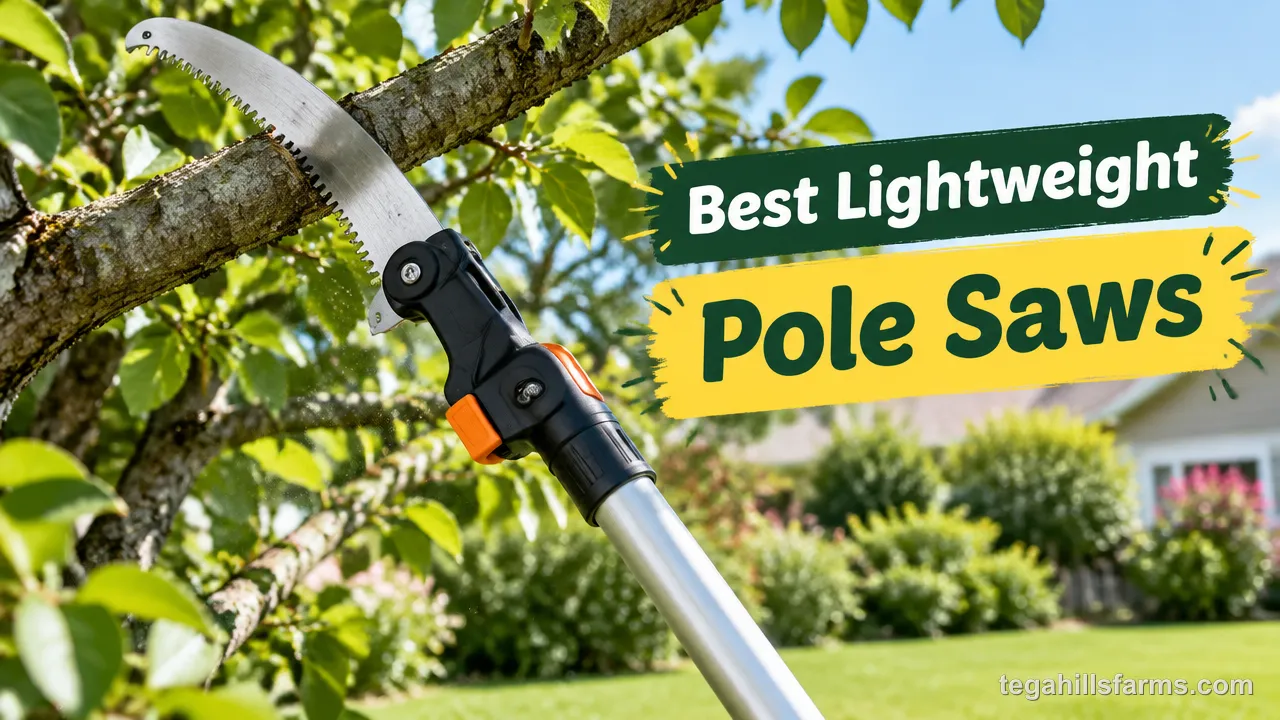
For a homeowner, the real differences are where the weight sits once the pole is extended, how the saw is powered, and how thick a branch the bar can take in one cut. The battery platform matters too. A bare-tool saw that runs on packs you already own means no new battery or charger to buy and store.




The real risk with a light saw is buying one that’s too small. A short bar on a small motor handles spring pruning without trouble, then stalls in the first storm limb. A heavier saw that could handle that limb wears out your shoulders on the routine trims that make up most of a season.
How Light Should a Pole Saw Be for Comfortable Overhead Cutting?
The number on the scale matters less than where that weight sits: a few pounds at the end of a long shaft act like a lever and tire your shoulders far faster than the same pounds held close.
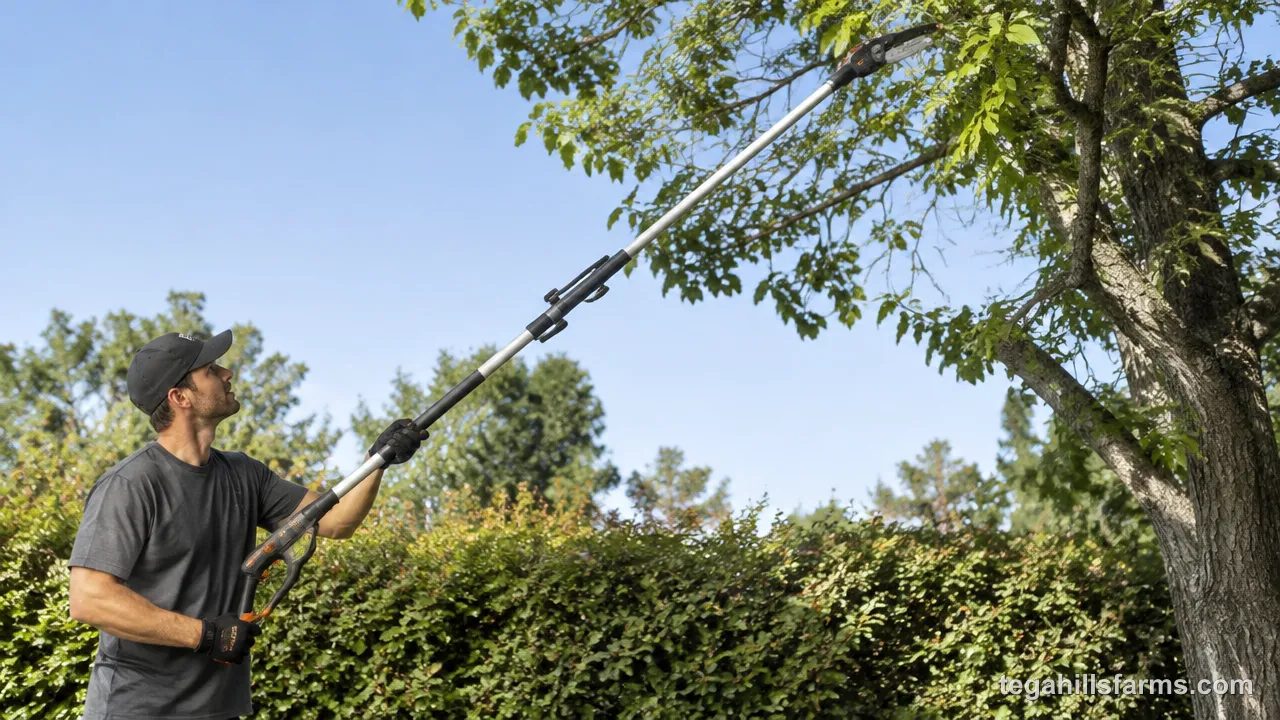
Two things set the real load. Total weight with the battery installed is what you lift on every cut. The powerhead’s position decides how much of that weight hangs at the tip, because a motor and bar mounted at the head put the heaviest part farthest from your hands. Weight near the grip barely registers by comparison.
This matters most if you trim a few small branches a season on a modest lot, or if your shoulders or back already give you trouble, because comfort decides whether the saw comes out of the shed at all. The lightest saws get there by carrying a shorter bar, a smaller motor or no motor at all, so they cut slower and top out on smaller limbs. If your trees need more than light trimming, the best pole saws for homeowners balance weight and capacity more evenly. For the wider field beyond featherweight models, our guide to the best pole saws covers every power type.
The 8 Best Lightweight Pole Saws of 2026
The saws I’d put on a homeowner’s shortlist for light overhead work are Supstable Cordless Pole Saw 6in, Autubin 2-in-1 Pole Saw & Mini Chainsaw 16ft, Greenworks 40V 8in Pole Saw, Fiskars 8-12ft Tree Pruner & Pole Saw, TaskStar 2-in-1 Cordless Pole Saw 8in, WEN 4019 Electric Pole Saw 8in, AVADA 2-in-1 Pole Saw & Chainsaw 8in, and BLACK+DECKER 20V Max Pole Saw LPP120B. Weight at the tip and cutting capacity rise together across them. The manual Fiskars has no motor to hold up, and the Supstable keeps a small motor unit on a short bar, while the 8-inch battery saws carry a heavier head in return for thicker cuts per pass. Several split into a handheld chainsaw for low limbs. The AVADA and LPP120B run on DeWALT or BLACK+DECKER 20V MAX packs you may already own, and the WEN plugs into an outlet instead. When height matters more than a light head, the best pole saws for tall branches and the best telescoping pole saws put reach first.
#1 Supstable Cordless Pole Saw 6in — Best Overall
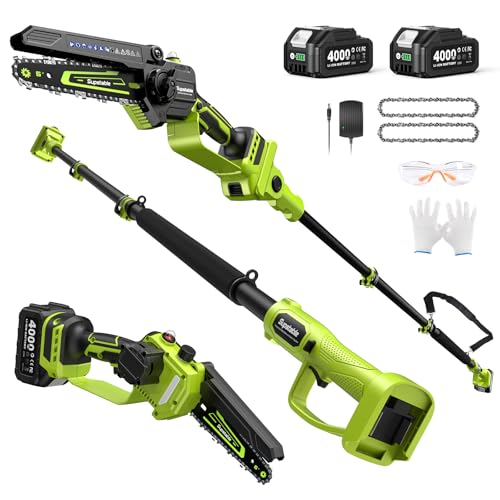
For occasional pruning when you also want a saw for the woodpile, this one makes sense because its motor unit comes off the pole and runs as a handheld mini chainsaw. Chain tension sets with a tool-free knob.
Key Specs:
- Bar length: 6 in
- Max reach: up to 16 ft
- Handheld weight: 3.4 lb
- Batteries: 2 × 4.0Ah (4000mAh), charger included
- Runtime: up to 100 minutes of cutting
- Chain oiling: manual pump, 1 fl oz (30 ml) tank
Detailed Review:
The motor unit rides at the top of the pole, and as a handheld it’s light enough to steer with one hand, so your shoulders take a modest load on high cuts. Detached from the pole, the same unit shapes shrubs and cuts low limbs and firewood without a second saw in the shed.
The short bar is sized for pruning. Green limbs and small deadwood go through cleanly, but thick storm wood belongs to a bigger saw. Against the longer bar on the Autubin 2-in-1 Pole Saw & Mini Chainsaw 16ft, this saw takes a narrower bite per pass but leaves less bar to thread through a crowded canopy.
Both batteries ship in the kit, so swapping to the second pack keeps you cutting without waiting on the charger. Oiling is manual: you press the pump two or three times before the first cut and check lubrication every five to ten minutes, because a chain run dry heats up, dulls and cuts slower. Extra chains, gloves and safety goggles come in the box, backed by a 2-year warranty.
Pros:
- Motor unit detaches to work as a handheld mini chainsaw.
- Tool-free knob makes chain tension adjustments quick.
- Spare battery keeps you cutting through longer jobs.
- Kit includes extra chains, gloves and safety goggles.
Cons:
- Manual oil pump needs pressing every few minutes.
- Short bar limits it to pruning-size limbs.
Who It’s For:
Homeowners who prune a few trees each season and also want a saw for firewood and shrubs get the most from this design, since it splits into a pole saw and a handheld saw. It also suits buyers who want batteries and a charger included. It’s a poor match for anyone likely to forget the oil pump mid-job.
Editor’s Verdict:
A practical first pole saw for light pruning and small firewood, as long as pumping the oiler becomes part of every session.
#2 Autubin 2-in-1 Pole Saw & Mini Chainsaw 16ft — Runner Up
If your trees lean over a fence or a roofline, this saw’s angle-adjustable head lets you square the bar to the limb from where you stand, and a brushless motor drives the chain. It also converts to a handheld chainsaw.
Key Specs:
- Bar length: 8 in
- Weight: 6.9 lb
- Pole length: 4 to 9 ft; max reach 16 ft for a 6 ft user
- Cutting head: 0–180° angle adjustment
- Batteries: 2 × 21V 4.0Ah, up to 120 minutes alternating
- Motor: 1200W brushless; chain speed up to 26.2 ft/s
Detailed Review:
The adjustable head changes how high work feels. Instead of bending your wrists to match a limb’s angle, you set the bar to the cut and keep the pole in a comfortable line, which helps most along fences and over sheds, where you can’t stand directly under the branch.
The chain is a small 1/4-inch pitch, .043-inch gauge loop of 46 links, which takes a narrow bite and leaves a clean face on green limbs. Paired with the brushless motor, the longer bar gives you room for branches thicker than routine pruning cuts.
Alternating the kit’s batteries stretches a session well past what one pack covers, and an LED gauge shows the charge left before you commit to a cut. At full extension, though, the motor unit sits at the far end of the pole, so long stretches of high cutting load your shoulders more than work at a shorter setting. I’d collapse the pole to the height of the branch rather than run it fully extended by habit.
Pros:
- Head pivots to match limbs along fences and rooflines.
- Brushless motor and fast chain handle green limbs cleanly.
- LED gauge shows remaining charge before you start a cut.
- Detaches into a handheld chainsaw for low branches.
Cons:
- Motor unit at the pole tip tires shoulders at full reach.
- Longer bar is harder to steer through dense canopy.
Who It’s For:
Yards where branches hang over fences, sheds or the house need a saw that angles to the cut, and this one does that while doubling as a handheld chainsaw.
Editor’s Verdict:
Worth choosing when your limbs grow at odd angles over structures and you want a handheld chainsaw in the same kit.
#3 Greenworks 40V 8in Pole Saw — Best Easy-Start
Anyone new to saws gets a 2-step trigger start with no pull cord and no fuel to mix, plus an automatic oiler that keeps the chain lubricated while it runs. The battery charges in about an hour.
Key Specs:
- Battery: 40V 2.0Ah, 2A charger included
- Bar length: 8 in
- Chain speed: 31.2 ft/s
- Max reach: 11 ft
- Runtime: up to 15 minutes continuous
- Weight: 7.8 lb
Detailed Review:
There’s no choke, primer or pull cord, so the saw starts cutting as soon as you raise it to the branch. The built-in oiler sets it apart from the Supstable Cordless Pole Saw 6in, which lets you meter oil by hand but depends on you to pump it. Here the chain gets oil on its own, so a lapse in attention doesn’t leave you cutting with a dry chain.
The included pack gives a short window of continuous cutting. Real trimming has pauses between cuts, so a session lasts longer than that figure, but a long list of limbs still calls for a spare battery. The fast chain gets through green wood quickly, which keeps each cut short.
The 3-piece aluminum shaft pulls apart for storage, which suits a tight shed or a garage wall. A balanced body and a large sponge grip spread the load across your hands, and the saw is much lighter than gas pole saws. Tool and battery are both covered by a 3-year warranty.
Pros:
- Trigger start needs no pull cord, primer or fuel mix.
- Automatic oiler removes the pump step from every session.
- Shaft breaks into sections for compact storage.
- Sponge grip and balanced body ease hand fatigue.
Cons:
- Single small battery runs short on continuous cutting.
- Sectional shaft reaches lower than the Autubin’s telescoping pole.
Who It’s For:
First-time saw owners who want something they can start without practice get a simple routine here: press the trigger, cut, and let the oiler look after the chain. A garage where tools hang in pieces suits its take-apart shaft too. Anyone facing a full day of limb work needs more battery than the kit carries.
Editor’s Verdict:
Easy to live with for a beginner, provided you plan short sessions around the single battery or add a spare.
#4 Fiskars 8-12ft Tree Pruner & Pole Saw — Also Great
For fruit trees and shrubs with limbs small enough to saw by hand, this pruner needs no battery, cord or oil, and its chain-drive gearing adds force to the pruner cut. There is nothing to charge.
Key Specs:
- Power: manual
- Weight: 4.8 lb
- Pole length: 7.9 to 12 ft
- Saw blade: 15 in, double-grind steel
- Pole: aluminum, double-locking
- Warranty: lifetime
Detailed Review:
With no motor at the head, most of what you lift is the aluminum pole itself, so holding the tool up between cuts tires you far less than a powered head would. Beside the AVADA 2-in-1 Pole Saw & Chainsaw 8in it’s lighter to carry, but on the AVADA a motor does the cutting that your arms do here.
The long double-grind blade holds its edge through heavy use. Its low-friction coating keeps sap and debris from gumming the teeth, which matters on pines and sticky fruitwood. Branch size sets the effort: thin limbs go quickly, while thicker ones take many strokes with the pole held steady overhead.
The pruner head uses chain-drive gearing to multiply your pull, which clears small growth faster than sawing it. The double-locking system keeps the extended pole from sliding shut under sawing pressure, and the same length lets you make low cuts without kneeling. A rotating head turns the blade to the limb so you don’t have to twist the pole.
Pros:
- No battery, cord or fuel to manage.
- Double-locking pole holds its length under sawing pressure.
- Low-friction coating resists sap buildup on the blade.
- Geared pruner head clears small growth without sawing.
Cons:
- Every cut runs on your own arm strength.
- Thick limbs take many strokes and steady effort.
Who It’s For:
Gardeners tending fruit trees, ornamental trees and tall shrubs who mostly cut small growth will like a tool that’s ready the moment it comes down from its hook. It’s a poor match for storm cleanup or thick limbs, where a motor should do the work.
Editor’s Verdict:
Simple, quiet and always ready for light pruning, with nothing to charge, fuel or oil between seasons.
#5 TaskStar 2-in-1 Cordless Pole Saw 8in — Also Great
Owners who want automatic oiling on a convertible pole saw get it here, along with tool-free chain tension adjustment, so the chain stays lubricated and snug without a pump or wrench. The handheld unit weighs 3.6 lb.
Key Specs:
- Bar length: 8 in
- Motor: 1000W brushless
- Weight as a pole saw: 7.2 lb
- Pole length: 4.6 to 8 ft; max reach 15 ft
- Batteries: 2 × 4.0Ah, 80–120 minutes total runtime
- Cutting head: 180° rotating
Detailed Review:
Switching modes changes the load. The handheld unit is easy to work at waist height on hedges and low limbs, while pole mode adds the shaft and the reach that make high cuts harder on the arms. The rotating head lets you angle the bar into a crotch or along a fence without twisting your wrists.
Oiling runs automatically while the chain turns, which cuts chain wear without a pump to remember, and tension adjusts by hand in seconds. Next to the AVADA 2-in-1 Pole Saw & Chainsaw 8in, the pole here extends less, so your highest branches sit nearer the limit of its reach. In return, this kit arrives ready to run with its own batteries and charger.
Each battery charges fairly quickly, so the second pack is what carries a long session: swap it in when the first runs down. A safety switch guards against accidental starts, and the kit adds a spare chain, a blade sheath, goggles and gloves, with a 3-year warranty behind it.
Pros:
- Automatic oiler keeps the chain lubricated during cuts.
- Tool-free tension adjustment takes seconds.
- Rotating head angles the bar without twisting wrists.
- Kit includes a spare chain and blade sheath.
Cons:
- Pole extends less than the AVADA’s telescoping shaft.
- Each battery spends hours on the charger.
Who It’s For:
Homeowners juggling hedges, low limbs and overhead branches in the same afternoon get both kinds of work from a single kit, with automatic oiling looking after the chain. Buyers who need to reach the very top of tall trees will be better served by a saw with a longer pole.
Editor’s Verdict:
A solid all-round choice for mixed yard work, especially if you want automatic oiling and batteries included rather than bought later.
#6 WEN 4019 Electric Pole Saw 8in — Also Great
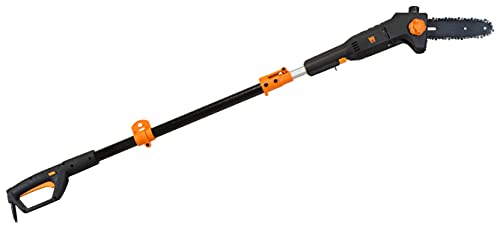
With an outdoor outlet near your trees, this corded saw cuts as long as you keep working, with no battery to charge or store over winter. A shoulder strap carries part of the load.
Key Specs:
- Power: corded, 6-amp motor
- Bar length: 8 in
- Weight: 6.7 lb
- Pole length: 5.3 to 7.3 ft; overhead reach up to 12 ft
Detailed Review:
Running on a cord takes runtime out of the decision. The saw never slows because a pack is fading, and nothing needs charging the night before. The cord sets your working radius instead, and you have to keep it clear of the pole and the cut as you move from tree to tree.
Against the Greenworks 40V 8in Pole Saw, this saw weighs less and spins its chain faster, so high cuts go quicker with less load on your arms. The Greenworks keeps the freedom to walk anywhere on the property without an extension cord trailing behind.
The telescoping pole adjusts within its range, so you can shorten it for lower limbs and keep the head close. Chain adjustments are tool-free, there are no exhaust emissions, and a blade cover comes in the box. I’d clip on the shoulder strap for any job longer than a few cuts, since it moves part of the weight from your arms to your torso.
Pros:
- Runs without a time limit while plugged in.
- No battery to charge, store or replace.
- Tool-free chain adjustment keeps tension simple.
- Shoulder strap moves weight from your arms to your torso.
Cons:
- Cord limits how far from an outlet you can work.
- Cord can snag on shrubs, fence posts and branches.
Who It’s For:
Suburban lots with trees close to the house and an outdoor outlet suit a corded saw well, especially for owners who would rather not store batteries over winter. Anyone pruning trees at the far edge of a large property will spend more time managing cord than cutting.
Editor’s Verdict:
Plug it in and it keeps cutting; how far your extension cord reaches is the real limit.
#7 AVADA 2-in-1 Pole Saw & Chainsaw 8in — Also Great
DeWALT 20V MAX battery owners can run this saw on packs already on the shelf, since it ships as a bare tool without a battery or charger. Both 8-inch and 6-inch bars come with it.
Key Specs:
- Battery: DeWALT 20V MAX compatible (battery and charger sold separately)
- Weight: 5.7 lb
- Motor: 1200W brushless; chain speed up to 38 ft/s
- Pole length: 5.6 to 9.9 ft; reach up to 15.9 ft
- Cutting head: 0–180° adjustable
Detailed Review:
If DeWALT packs already charge in your garage, this saw adds no new battery type or charger to store, which keeps the setup simple. Compared with the Autubin 2-in-1 Pole Saw & Mini Chainsaw 16ft, its chain runs faster, which speeds each cut. The Autubin ships with its own batteries, though, while this one depends on yours.
The kit’s pair of bars covers different jobs. The shorter one steers easily through shrubs and tight canopy, and the longer one takes thicker limbs. Bars and chains swap without tools, and the automatic tensioner and built-in auto-lube system mean fewer stops to adjust or oil the chain. The oil bottle ships empty, so fill it with bar and chain oil before the first cut.
The adjustable head lets you set the bar square to branches along fences and in tight corners without bending your wrists, which eases strain on your arms and back. A shoulder strap, gloves and goggles round out the kit.
Pros:
- Runs on DeWALT 20V MAX batteries you may already own.
- Swappable bars match the chain to the job.
- Automatic tensioner and oiler reduce routine upkeep.
- Angle-adjustable head eases cuts along fences.
Cons:
- No battery or charger comes in the box.
- Oil bottle ships empty, so buy bar oil first.
Who It’s For:
Households running DeWALT 20V MAX tools get a pole saw that shares their batteries and charger, plus a spare bar for close work in shrubs. Without DeWALT packs at home, buying into the platform for this saw alone makes less sense than choosing a kit with batteries included.
Editor’s Verdict:
If your shelf already holds DeWALT packs, this is an easy add: light, fast-cutting and set up for angled overhead work.
#8 BLACK+DECKER 20V Max Pole Saw LPP120B — Also Great
Owners of BLACK+DECKER 20V MAX batteries get a saw that shares packs with their other lawn and power tools, and its in-line powerhead gives a clear view between branches. The battery and charger are sold separately.
Key Specs:
- Battery: 20V MAX (sold separately)
- Bar length: 8 in
- Max cutting diameter: 6 in
- Usable length: 6.5 or 10 ft; overhead reach up to 14 ft
- Weight: 6.3 lb
- Cutting capacity: up to 100 cuts of 1 1/2 in pine branches per charge
Detailed Review:
The in-line powerhead keeps the motor aligned with the shaft, so the saw threads between limbs easily and you can see the cut as it happens. That clear view helps you start the chain exactly where the cut should go. The center extension sets a short or long working length, and the short setting keeps the head closer on lower branches, which lightens the leverage load.
The rated cut count per charge comes from small pine branches, so thicker or harder wood draws the battery down sooner. Within its cutting diameter, the bar handles typical pruning limbs, and anything thicker belongs to a larger saw.
Compared with the AVADA 2-in-1 Pole Saw & Chainsaw 8in, this saw weighs a little more and doesn’t reach as high, so the choice between them comes down to battery platform: BLACK+DECKER 20V MAX here, DeWALT 20V MAX there. The unit disassembles for storage and transport, and a 2-year limited warranty covers it.
Pros:
- In-line powerhead keeps sightlines open between branches.
- Shares 20V MAX packs with other BLACK+DECKER tools.
- Breaks down for compact storage and transport.
- Center extension gives a short or long working length.
Cons:
- Battery and charger are sold separately.
- Center extension has fewer length settings than a telescoping pole.
Who It’s For:
Anyone who already runs BLACK+DECKER 20V MAX yard or power tools gets a pole saw that adds nothing new to charge, and it breaks down small enough to fit in a car trunk. Gardeners without those batteries would do better with a kit that includes its own.
Editor’s Verdict:
A tidy, easy-to-steer saw for BLACK+DECKER battery households who want clear sightlines and simple storage.
What Should You Look for in a Lightweight Pole Saw?
Every feature that makes a tool easier to hold up costs some cutting power, so the right pick puts its compromises on work you rarely do.
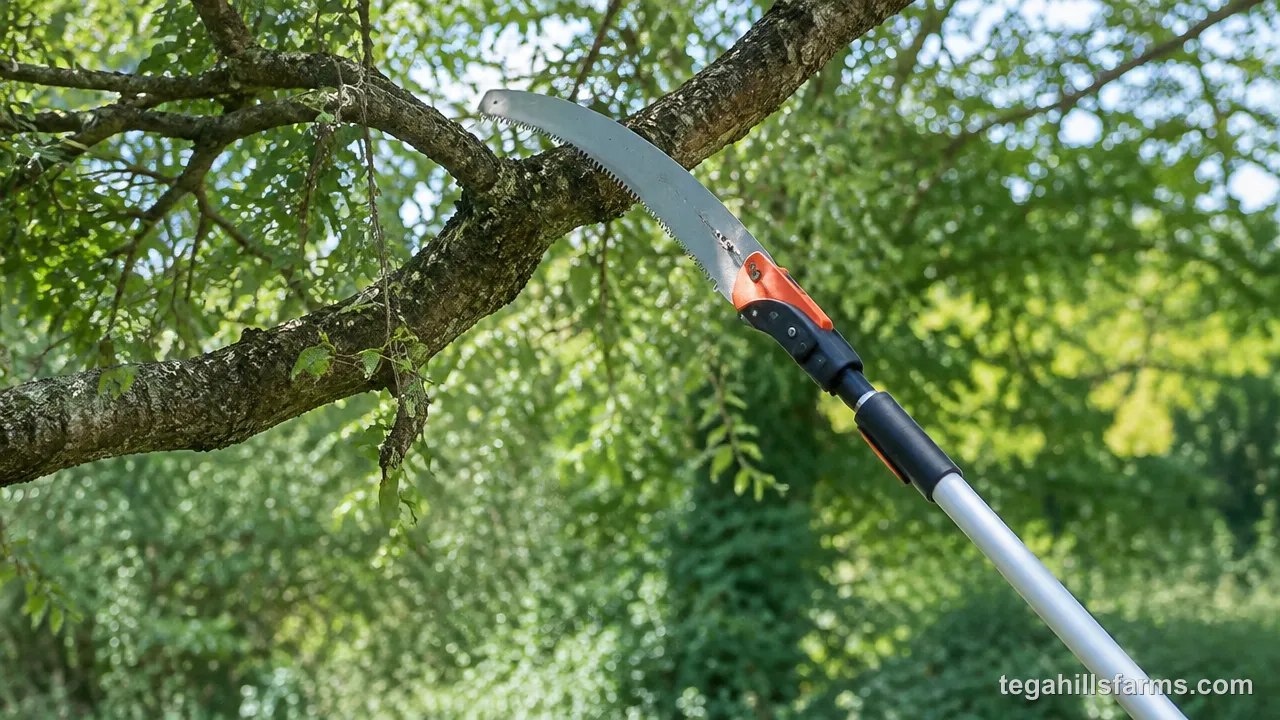
A machine sized for your thickest storm limb will feel heavy on every routine trim, and one sized for routine trims will stall in that limb. So the decision starts with the branches you cut most often and how far you have to reach to get to them. Weight that feels fine at waist height feels different after a stretch held above your head, and the factors that change that feel also cap cutting capacity.
Which Power Source Is Best for a Lightweight Pole Saw: Battery, Corded or Manual?
Battery power fits most homeowners because it pairs a motor with freedom to walk the whole lot. Corded power gives a motorized saw with no runtime limit as long as your trees stand near an outlet. A manual saw carries the least weight but asks your arms to do the cutting. Gas pole saws handle thicker wood than any of these, but you take on a heavier engine, fuel mixing and pull starts.
The power types split like this on the points that shape daily use:
| Factor | Battery | Corded | Manual | Gas |
|---|---|---|---|---|
| Weight you hold | Motor plus battery | Motor only | Lightest | Heaviest |
| Runtime | Limited by battery | Unlimited near an outlet | Limited by your arms | Limited by fuel tank |
| Branch size | Small to medium | Small to medium | Small | Largest |
| Upkeep | Charging, chain oil | Cord care, chain oil | Blade cleaning | Fuel mix, spark plug, air filter |
A battery adds weight to the tool and sets a runtime clock: the pack rides on the saw, and when it runs down, cutting stops until you swap or recharge. A kit with two packs, or a saw on a platform you already own, eases both problems. If cordless is where you’re headed, compare the best battery pole saws side by side.
A corded saw drops the battery weight and never runs down. The cord limits you to the reach of an outdoor-rated extension cord, though, and you have to keep it clear of the cut. Plug it into a GFCI-protected outdoor outlet. For trees close to the house, the best corded pole saws give you a motor without the battery bulk.
A manual saw has nothing to charge, plug in or fuel, but every stroke comes from your arms. That suits small branches and occasional pruning, not a backlog of thick limbs.
How Do Pole Length and Balance Change How Heavy a Pole Saw Feels?
Every extra foot of shaft moves the cutting head farther from your hands, so a saw at full extension loads your shoulders far more than the same saw collapsed. The joints of a telescoping shaft can also flex or wobble when stretched to the end, which makes the bar harder to hold on the cut line.
Where the powerhead sits changes the feel too. A motor at the head puts the heaviest part at the far end of the lever, while a manual saw, or a design that keeps weight near the grip, keeps the tip light and easier to aim.
Set the working height by the branches, not by the maximum reach printed on the box. If a limb is within reach of a shorter setting, collapsing the shaft cuts the load and steadies the bar. A rotating or angle-adjustable head helps the same way, because it lets you meet a branch at the right angle without cocking your wrists or leaning back under the saw.
How Thick a Branch Can a Lightweight Pole Saw Cut?
Wood thicker than the bar can’t be finished in one clean pass, because the chain needs to cross the full limb with bar to spare on both sides. The bar length sets the ceiling, and the practical limit sits a little below it.
That makes bar size a choice between handling and capability. A short bar is easier to steer through crowded growth and keeps less weight at the tip, which suits pruning. A longer bar takes thicker limbs per pass but adds weight and length you have to guide overhead.
Motor type and chain speed decide how quickly the cut happens. A brushless motor holds its speed better when the chain loads up in dense wood, and it wastes less battery as heat. A higher chain speed passes more cutters through the wood each second, so the bar clears the cut faster and the saw is less likely to bog down. On a manual saw, the blade length and your stroke do that job instead.
Which Battery Platform and Runtime Should You Choose?
Start with the packs already in your garage. A bare-tool saw that runs on them needs no new charger or batteries, which lowers the buy-in and keeps your shelf from filling with chargers that fit only one tool.
Bare tools and kits suit different situations. A bare tool makes sense only when you own the matching packs. A kit with batteries and a charger works on day one, which matters if this is your first cordless yard tool.
Runtime follows battery capacity in amp-hours (Ah): a higher Ah rating stores more energy, so the saw cuts longer between charges. Manufacturers quote runtime in different ways, as continuous cutting on one pack or total time across two, so compare battery count and capacity rather than the headline minutes. A kit with two packs covers a longer job because swapping in the second keeps you cutting when the first runs down. A larger pack also adds weight, and on a pole saw that weight is part of what you hold up on every cut.
Which Lightweight Pole Saw Should You Choose for Your Yard?
Start with the batteries already on your shelf: DeWALT 20V MAX owners fit the AVADA, BLACK+DECKER 20V MAX owners fit the LPP120B, and everyone else picks by branch size and power type. Each of those bare tools makes sense only with the matching packs at home. Without them, a kit with its own batteries is the cleaner start.
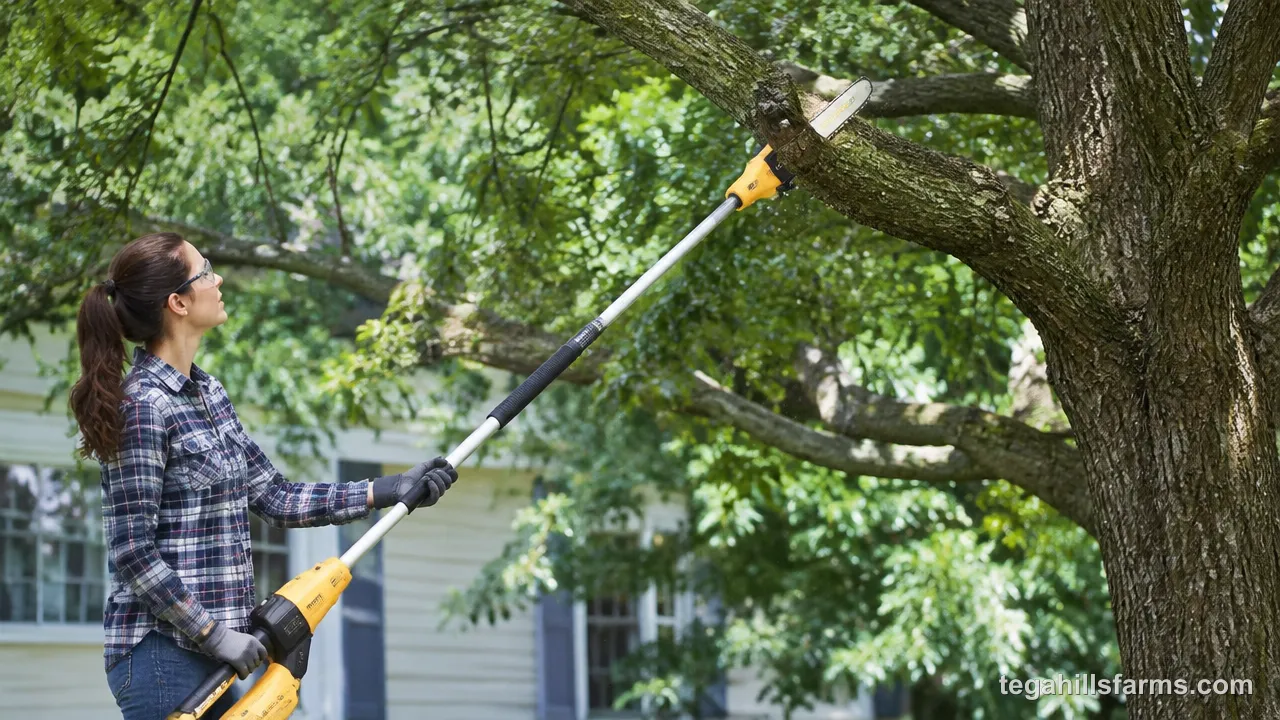
For everyone else, it comes down to your situation:
- First-time owners who want a start with no learning curve fit the Greenworks 40V 8in Pole Saw, since a trigger start and automatic oiler leave little to get wrong. Its single battery makes it a poor fit for long cleanup days.
- Occasional pruners who also cut firewood or shape shrubs get a pole saw and a handheld saw from the Supstable Cordless Pole Saw 6in, with batteries in the box. The Autubin 2-in-1 Pole Saw & Mini Chainsaw 16ft and TaskStar 2-in-1 Cordless Pole Saw 8in convert the same way, with a longer bar for thicker limbs.
- If you want no battery or fuel at all, there are two routes: the Fiskars 8-12ft Tree Pruner & Pole Saw for small growth and fruit trees, or the WEN 4019 Electric Pole Saw 8in when the trees stand within extension-cord distance of an outlet. Neither belongs in thick storm wood.
- On a tight budget, a price ceiling narrows the field faster than any feature, so start with the pole saws under $100 or the best pole saws under $200.
If you own no batteries yet and cut mostly pruning-size limbs, I’d start with the Supstable for its complete kit and handheld mode. Take the Greenworks instead if pumping oil every few minutes sounds like a chore. Neither is the right buy for a yard where storms bring down big limbs every year.
A limb brought down by a storm is often thicker at the break than anything you trimmed in spring, and it lies twisted and under tension, so a short bar on a small motor slows to a crawl halfway through while the wood pinches the chain. Keep forcing that cut and the chain heats and dulls while the motor strains, which can wear out a saw that handled routine pruning without complaint in a single cleanup weekend.
When Is a Lightweight Pole Saw the Wrong Tool?
Storm-downed limbs, large orchard or overgrown trees, and long days of continuous cutting all push a small saw past what its bar and motor were built for. Downed wood is often thicker than the bar and pinched under its own weight, which stalls a short chain. For that work, the best pole saws for storm cleanup carry the bar length and power the job needs.
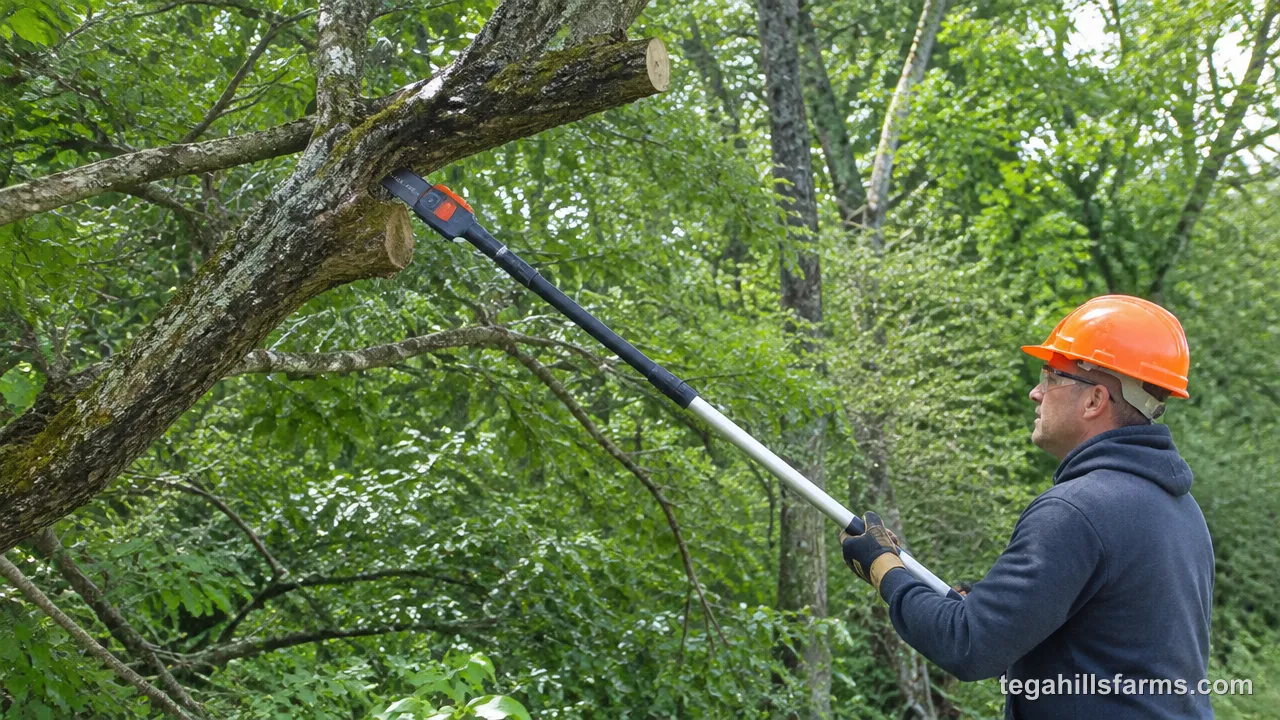
Large fruit trees and neglected canopies bring a different problem: a long run of thick cuts at full extension, where a light shaft starts to wobble and every cut runs slow. If you manage a home orchard, the best pole saws for orchard care are built for that volume.
The warning signs show up in the cut. The chain slows or stops in the wood, cuts take noticeably longer than they did on smaller limbs, the head wobbles at full extension, or the motor bogs down mid-cut. Pushing through those signs wears the chain and strains the motor, and a heavier, higher-capacity saw finishes the same job in fewer passes with less effort from you.
How Do You Keep a Lightweight Pole Saw Cutting Smoothly?
Chain tension, oiling, sharpness and battery storage decide how well a small motor holds up. A chain stretches and loosens as it heats up in use, so check tension before each session and again after the first few cuts. It should sit snug against the bottom of the bar yet still pull around by hand with gloves on. A sagging chain can jump the bar, and an overtight one drags on the motor.
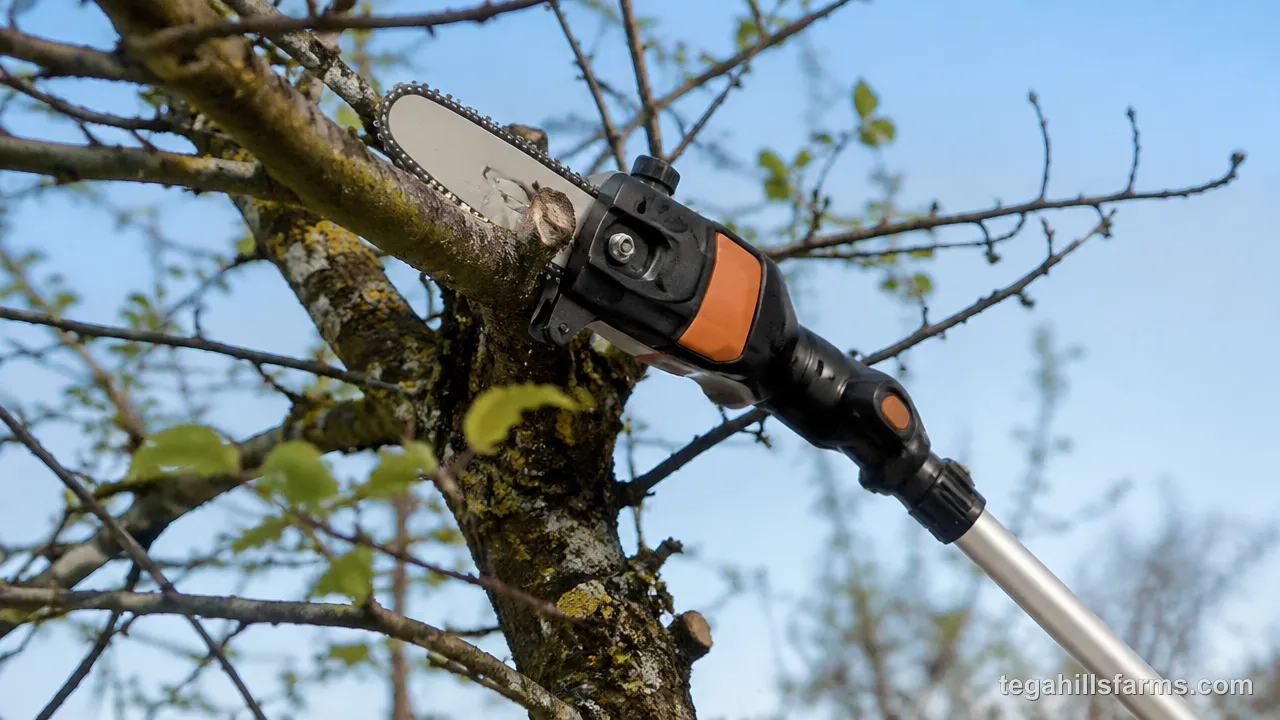
Oil keeps the chain from grinding against the bar. Saws with an automatic oiler feed oil while the chain turns, so your job is keeping the reservoir full of bar and chain oil. Saws with a manual pump need a few presses before cutting and regular checks during the job. A dry chain heats, stretches and dulls quickly.
A dull chain makes fine dust instead of chips, needs you to push, and wanders from a straight line. Sharpen it with a file sized to the chain, or replace it once the cutters are worn back. A sharp chain cuts faster and uses less battery per cut.
Before winter, store batteries partly charged rather than full or empty, indoors in a cool, dry spot that doesn’t freeze, and follow the manufacturer’s storage guidance.
How Do You Use a Pole Saw Safely Overhead?
Stay on the ground, stand to the side of the branch rather than under it, and wear eye, head and hand protection, because the falling limb is as dangerous as the chain itself.
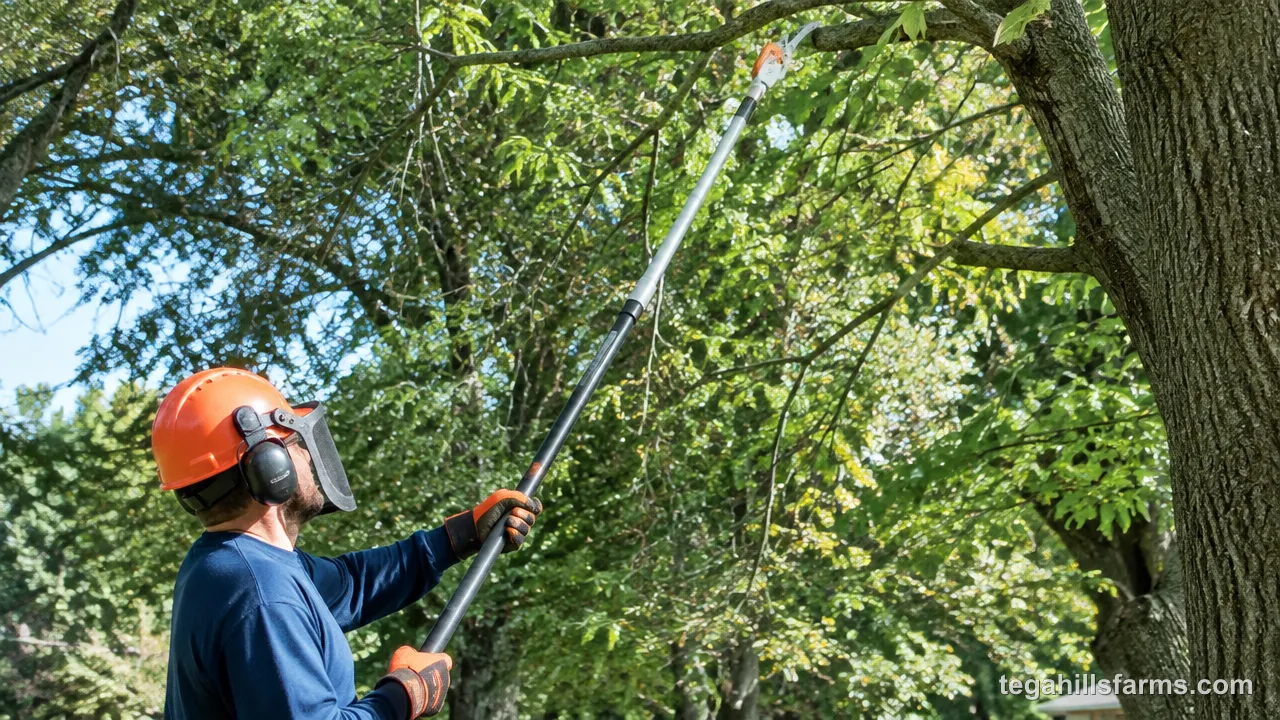
A ladder takes away your footing just as the branch drops and the saw jerks in your hands. Keeping you on the ground is the whole reason the pole exists. If a limb is out of reach from the ground, it’s a job for a tree service.
Stand at an angle to the limb so it falls away from you, and keep people and pets well clear of the drop zone. Never cut near power lines; call your utility about branches anywhere close to them.
On larger limbs, work in stages. Make a shallow undercut first so the bark doesn’t tear down the trunk, then finish from the top. Remove long limbs in shorter sections so each piece falls small and predictably.
Safety glasses keep sawdust and bark out of your eyes as you look up, and a hard hat protects against deadwood shaken loose. Gloves improve your grip on the shaft and protect your hands from the chain.




Write Your Review
No reviews yet. Be the first to share your experience!