

Our top picks for the best 2×4 raised garden beds in 2026 are Tegarbed Galvanized Oval Raised Bed 4ft 2-Pack (Best Overall), Eclaron Galvanized Raised Bed 4x2x1ft 2-Pack (Best Ergonomic Design), Plant & Plot Galvanized Raised Bed 4x2x1ft (Best Budget), Amazon Basics Galvanized Raised Bed 48x24in (Best Easy Assembly), Best Choice Products Raised Garden Bed 4x2x2ft (Best Large Capacity), ZFHgarden Galvanized Raised Bed 4x2x1ft (Best for Raised Beds) and zizin Galvanized Oval Raised Bed 2-Pack (Best Rust-Resistant).
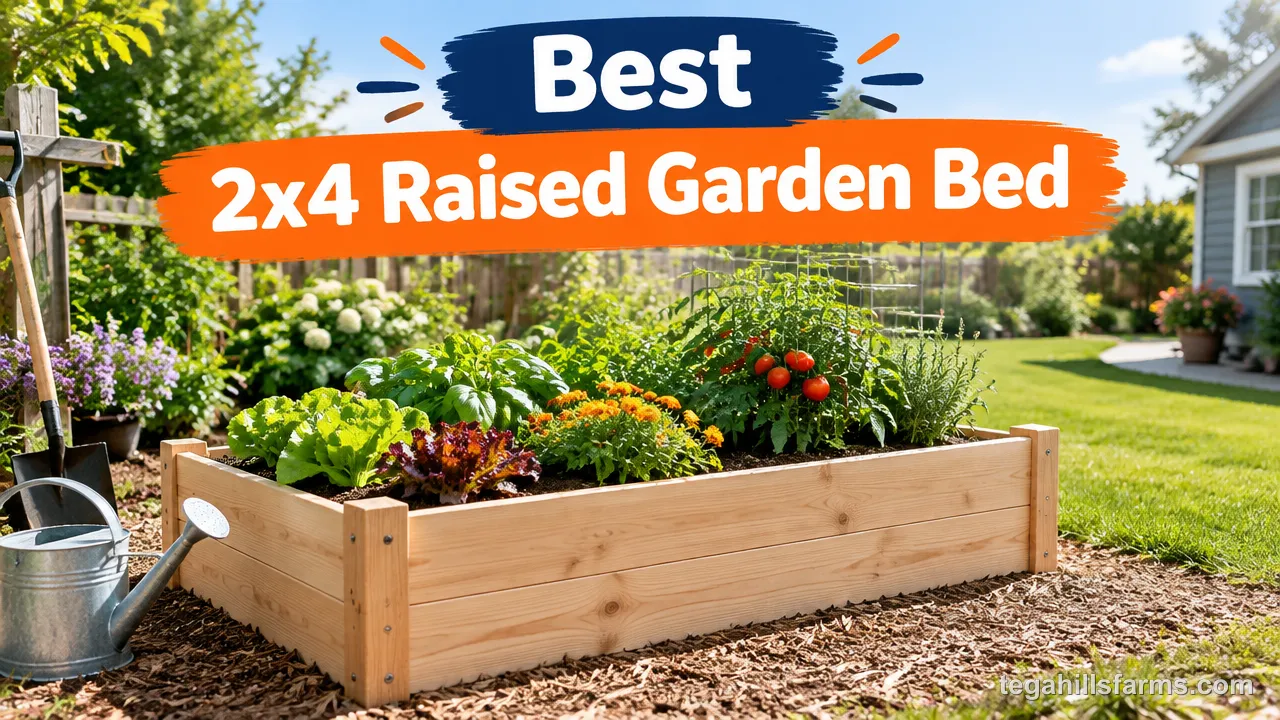
The differences that matter sit mostly below the soil line and inside the steel: how deep a root zone each bed gives your crops, whether the open bottom lets water move into the ground, how thick and well protected the panels are, and how simply they go together and stay straight once they’re full.
If you’re growing food, the bigger questions are whether the metal is comfortable sitting against your vegetables’ soil and how long it will hold up through rain, frost and summer sun. All of these beds are coated steel, either galvanized or powder-coated, and that coating keeps rust away for many seasons without any preservatives seeping into your root zone.

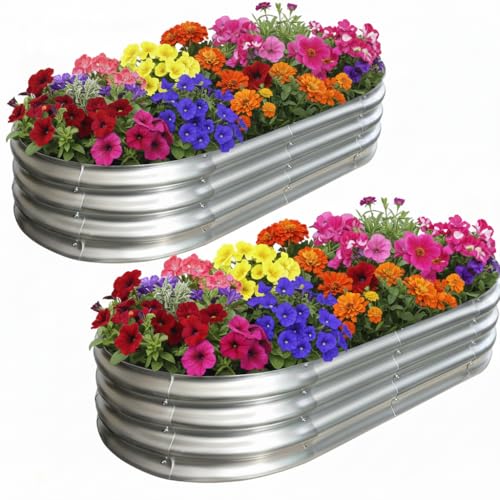


Before comparing finishes, I’d let your crop list settle the depth, since salad greens and herbs are content in a shallow bed while broccoli and long carrots want room to reach down.
What Is a 2×4 Raised Garden Bed?
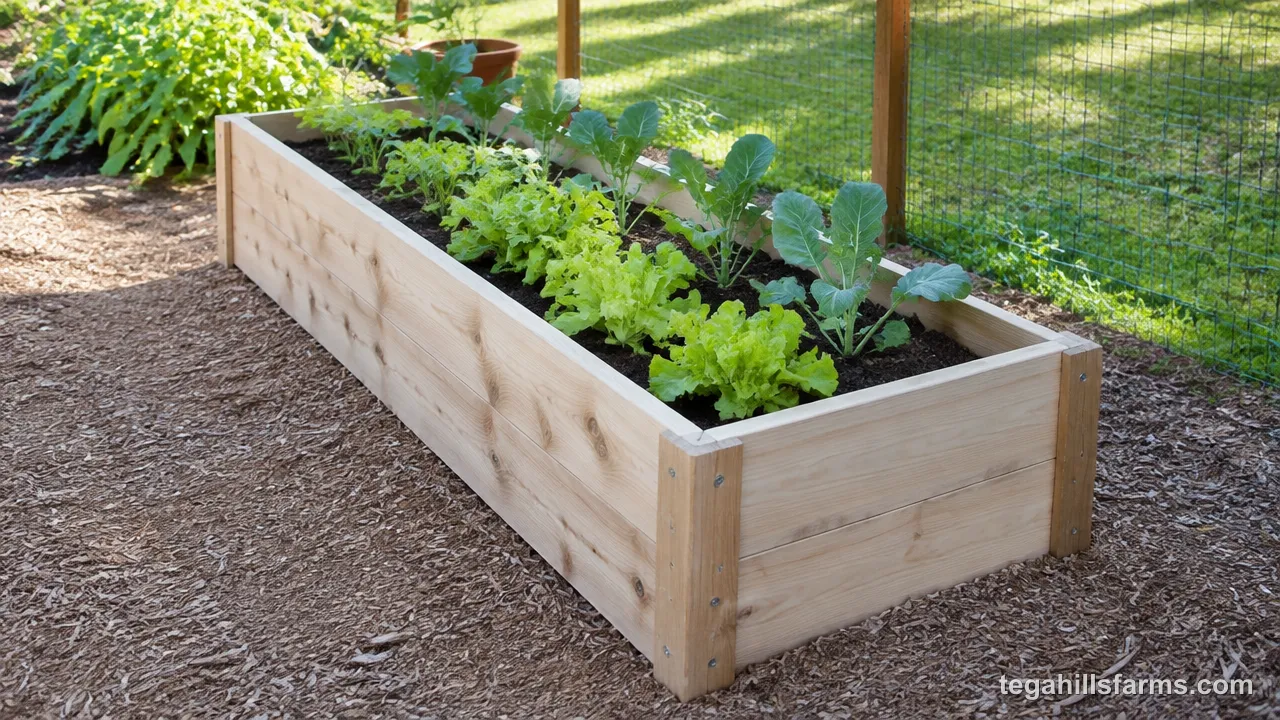
This size gives you a bed about 4 feet long and 2 feet wide, narrow enough that you can reach the middle from either long side without stepping into the soil. That reach matters because every footstep presses soil together and squeezes out the air pockets roots need for water and oxygen, while soil that’s never walked on stays loose and crumbly season after season. The small footprint tucks onto a patio, along a fence or into a corner of a small yard, which makes it a gentle start for a beginner and an easy home for herbs, salad greens and a few peppers near the kitchen door. If space is the real limit, the best raised garden beds for small spaces cover other compact layouts, and it’s worth reading up on how to choose a raised garden bed for sun and siting before you buy. If you’re still weighing sizes, shapes and materials across the whole category, the best raised garden beds guide shows where this compact footprint fits.
What Should You Look for in a 2×4 Raised Garden Bed?
Your harvest depends on the root zone below the soil line and on panels that stay straight once the bed is full of wet soil, even when two beds look identical in a photo. A bed that’s too shallow for your crops, or one that holds water against the roots, can’t be rescued with better fertilizer. A bed that bows outward under the weight of soil slowly pulls its joints apart. Both problems mean emptying the bed to correct them, which is heavy, muddy work, so it pays to check them before the first bag of soil goes in.
How Deep Should a 2×4 Raised Bed Be?
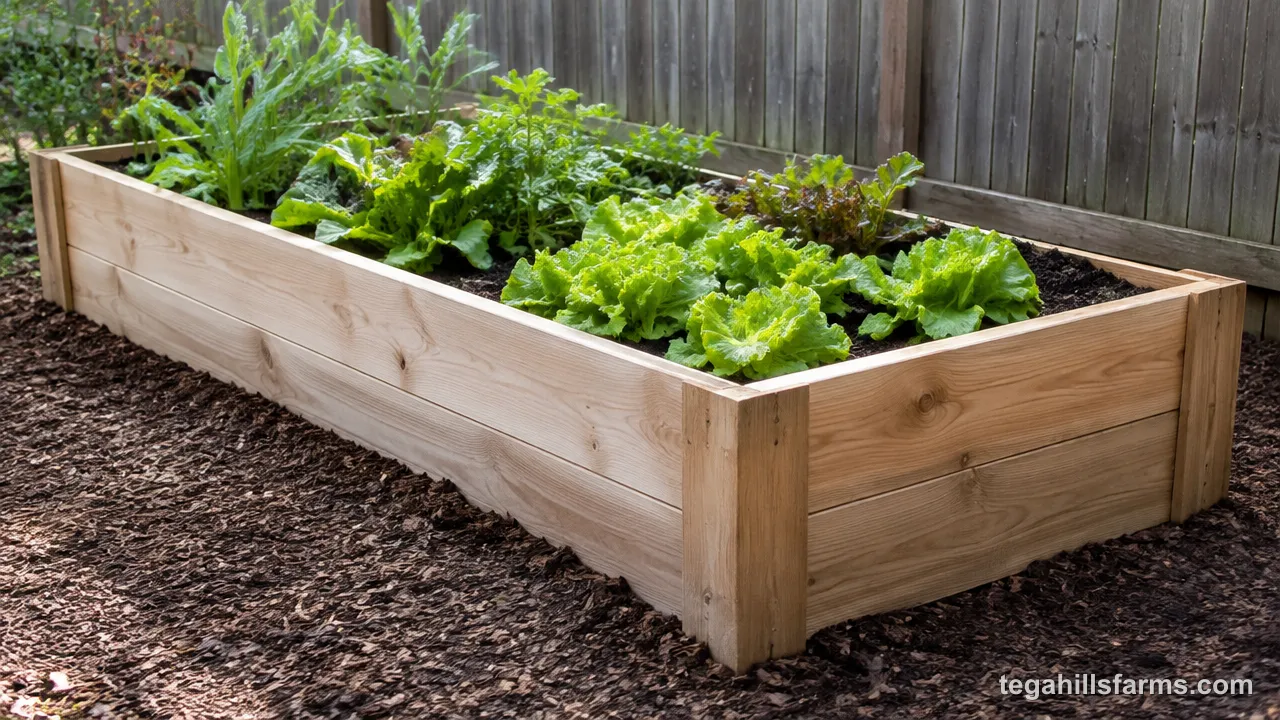
Lettuce, herbs, strawberries and peppers grow happily in about a foot of soil. Broccoli, beans, tomatoes and long carrots make better use of a bed closer to 2 feet, where their roots can keep reaching downward instead of hitting the bottom and spreading sideways.
A deeper bed takes far more bags of mix to fill. That larger root zone also holds moisture longer, so it dries out more slowly in a hot southern summer than a shallow bed sitting in the same sun.
Over lawn or garden soil, a 1-foot bed with an open bottom works like a deeper one, because roots grow straight through into the ground below. A deeper bed is worth the extra soil when your native ground is hard clay or rubble, or when you’d rather not bend so far to weed. If bending is your bigger concern, the best tall raised garden beds bring the soil up closer to your hands.
Does an Open Bottom Matter for Drainage?
Over lawn or garden soil, yes. Extra water seeps straight down into the ground, and roots can follow it into the native soil below, so they never sit in the soggy, oxygen-starved layer that collects at the bottom of a sealed container. Roots need air as much as water. Soil that stays saturated for days suffocates them, and you see it first as yellowing leaves and later as root rot.
An open bottom does far less over concrete, pavers or a deck, where water can only escape at the panel edges and roots stop at the hard surface. Match the bed to the spot where it will sit before you count on an open bottom for drainage, because the same bed that drains well over a lawn behaves like a big pot on a patio.
Which Material Is Best for a Raised Bed Growing Food?
For vegetables, the comfortable choices are untreated cedar or redwood and coated steel, either galvanized or powder-coated. Each resists rot or rust for many seasons without preservatives soaked into the frame that touches your soil. Pine works too, but it doesn’t last long. Pressure-treated lumber lasts well, but I’d line it or keep it for flower beds if you’d rather not have treated wood next to your carrots.
Common choices differ in what protects them, how comfortable they are around edible plants and how they age outdoors.
| Material | What protects it | Around edible plants | Over many seasons |
|---|---|---|---|
| Galvanized steel | Zinc coating against rust | Common choice for vegetable beds | Unaffected by frost; panels warm in full sun |
| Powder-coated steel | Baked-on finish against rust | Common choice for vegetable beds | Holds its color; chips expose bare steel |
| Cedar | Natural oils against rot | Untreated, comfortable for vegetables | Weathers to gray and slowly softens |
| Redwood | Natural oils against rot | Untreated, comfortable for vegetables | Ages much like cedar |
| Pine | Little natural rot resistance | Untreated, comfortable but short-lived | Rots within a few seasons in damp soil |
| Pressure-treated lumber | Chemical preservatives against rot | Often lined or kept for flower beds | Long-lasting outdoors |
Steel handles frost well because it doesn’t absorb water. The freeze-thaw cycles that open the grain in wood and loosen screws leave coated panels unchanged. Wood swells in wet springs and shrinks in dry summers, and that movement slowly works joints loose, though cedar and redwood hold out against the decay that usually follows. If a slim, long-lasting metal frame suits your yard, the best steel raised bed planters come in this style in sizes beyond this one.
What Makes a Raised Bed Easy to Assemble and Stable?
A filled bed stays square instead of bowing outward under wet soil when it has corrugated or reinforced panels, a rolled top edge, solid fasteners and some bracing, either support rods across the middle or stakes in the ground. Soil pushes hardest at the middle of the long sides, so that’s where a weak bed bulges first.
- Ridges pressed into corrugated panels stiffen the steel the way folds stiffen cardboard, so the panel resists bulging far better than a flat sheet.
- A rolled top edge adds a stiff rim and leaves no raw metal where your forearm rests while you weed.
- Bolts with wing nuts tighten by hand and hold firmly, so the corners stay snug through seasons of soil pressure.
- Support rods tie the long sides together across the middle, and ground stakes stop the whole frame from creeping on soft or sloping ground.
Tool-free setup is a real kindness for a first-season gardener, since the only skill it takes is lining up holes and tightening by hand. A bed that goes together without a drill also comes apart without one if you decide to move it. Smooth edges keep mattering after assembly, because you handle every panel while building and reach over the rim each time you pull weeds or harvest.
The 7 Best 2×4 Raised Garden Beds of 2026
For 2026, the beds worth filling with soil are Tegarbed Galvanized Oval Raised Bed 4ft 2-Pack, Eclaron Galvanized Raised Bed 4x2x1ft 2-Pack, Plant & Plot Galvanized Raised Bed 4x2x1ft, Amazon Basics Galvanized Raised Bed 48x24in, Best Choice Products Raised Garden Bed 4x2x2ft, ZFHgarden Galvanized Raised Bed 4x2x1ft and zizin Galvanized Oval Raised Bed 2-Pack. Most of them have about a foot of growing depth, so the Best Choice Products bed stands apart for broccoli and beans. Among the rest, the deciding details are steel thickness and bracing, whether you get one bed or a pair, and how the panels go together. Those details decide which bed suits your plants, whether you’re putting herbs and flowers on a patio, growing salad and peppers in a small yard, or setting beds over open ground for drainage.
#1 Tegarbed Galvanized Oval Raised Bed 4ft 2-Pack — Best Overall
If you want your first vegetable beds to stay straight and sturdy through several seasons, this pair is where I’d start, because its reinforced corrugated panels are galvanized steel finished with smooth rolled edges. Setup needs no tools at all.
Key Specs:
- Size: 4 x 2 x 1 ft oval, 2-pack
- Growing space: 7+ cu ft
- Steel: galvanized, about 0.04 in (1 mm) on average, with reinforced corrugated panels
- Base: open bottom
- Assembly: tool-free with included fasteners, about 20 minutes
- Weight: 17.2 lb
Detailed Review:
The thick galvanized sheet and the reinforced corrugations along each panel work together, so the long sides keep their line instead of slowly bellying outward once the bed is packed with wet soil. The oval ends help as well, spreading soil pressure around a curve instead of loading it onto square corners.
A foot of growing depth gives lettuce, peppers, strawberries and carrots enough root room. Because the bottom is open, roots that want more can keep going into the lawn or garden soil underneath. Tomatoes and cucumbers do well here too once you set a separate trellis or stake beside them, since vines that vigorous need something to climb.
Assembly takes nothing more than the included fasteners and the illustrated instructions, which suits a beginner who doesn’t own a drill. The smooth rolled edges keep your hands clear of raw metal while you build, and again later when you reach in to thin seedlings or pull weeds.
For a beginner, I like that the pack gives you matching beds, so you can keep salad greens in one and peppers or tomatoes in the other and water each to suit its crop. That split also makes rotating crops next spring a simple swap.
Pros:
- Reinforced corrugated panels keep the long sides straight.
- Smooth rolled edges protect your hands while building and weeding.
- Tool-free assembly uses only the included fasteners.
- Matching beds make separating and rotating crops easy.
- Open bottom lets roots grow into native soil.
Cons:
- A foot of soil crowds long-rooted crops like parsnips.
- Vining crops need a separate trellis or stake.
- Thick steel makes the pack more work to carry.
Who It’s For:
Beginners starting a vegetable garden over lawn or garden soil will find this a forgiving setup, with panels that hold their shape and edges that won’t nick your fingers. It also suits gardeners who like keeping greens and fruiting crops apart. If you’re set on deep root crops, you’ll need a deeper bed than this one.
Editor’s Verdict:
Sturdy, easy on the hands and quick to build, this pair gives a new vegetable garden a solid footing without asking for tools or experience.
#2 Eclaron Galvanized Raised Bed 4x2x1ft 2-Pack — Best Ergonomic Design
For beginners, seniors or anyone who dislikes fiddly setup, this oval pair clamps together with bolts and wing nuts in about 15 minutes, and its thickened Q195 galvanized steel is built to stand up to rust and weather. The light panels carry easily.
Key Specs:
- Size: 4 x 2 x 1 ft oval, 2-pack
- Steel: thickened Q195 galvanized
- Soil volume: about 7 cu ft
- Assembly: clamp-and-bolt system with bolts and wing nuts
- Base: open bottom
- Weight: 10 lb
Detailed Review:
Rounded ends make these beds comfortable to work around. There are no square corners to lean across or knock a hip against, and you can kneel anywhere along the curve and still reach the middle. The softer outline also looks good on a patio, balcony or rooftop where the bed is part of the view.
The pack is noticeably lighter than the Tegarbed pair, so carrying panels up a flight of stairs or across a balcony is far less of a chore. The thickened Q195 galvanized steel is still made for rust resistance and daily outdoor use, so the beds can stay out in the weather.
Bolts and wing nuts tighten with your fingers, so even hands that tire quickly with a screwdriver can get each joint snug, and the clamp-and-bolt system keeps the job short enough to finish in one sitting. I’d steer a gardener with stiff knees or tired wrists toward these for that reason.
Each bed holds a generous amount of soil for its footprint, enough for salad greens, herbs, peppers and flowers to root well. Set over lawn or garden soil, the open base lets roots continue into the ground below.
Pros:
- Rounded oval ends let you reach in from any side.
- Bolts and wing nuts tighten by hand.
- Light panels carry easily to balconies and rooftops.
- Q195 galvanized steel stands up to rust and weather.
Cons:
- Oval ends give up some corner planting space.
- Ground-level height still means kneeling or bending to weed.
Who It’s For:
Seniors, beginners and city gardeners working on a balcony or rooftop will appreciate how easily these panels carry and tighten by hand. Busy families who want a garden planted without a long project are a good fit too. If kneeling is hard on you, a taller bed will spare your back more than this one does.
Editor’s Verdict:
Light, rounded and hand-tightened, these beds take the strain out of setup for anyone who finds heavy steel and tools a struggle.
#3 Plant & Plot Galvanized Raised Bed 4x2x1ft — Best Budget
Keeping costs gentle on a first bed is easy here, and the patented tool-free design means you can have it built and filling with soil the same afternoon. A zinc coating guards the sheets against rust.
Key Specs:
- Size: 4 x 2 x 1 ft
- Steel: galvanized sheets about 0.024 in (0.6 mm) thick, zinc coated
- Base: open
- Assembly: patented tool-free design, about 20 minutes
- Warranty: 3 years
Detailed Review:
This is an affordable way to learn what a raised bed can do, and what you give up is in the steel. Its sheets are thinner than the Tegarbed’s, so the long sides have less stiffness to resist the outward push of wet soil. Set it on level, firm ground and fill it evenly from end to end, and the panels will hold their shape over time.
The durable zinc coating protects that thinner steel, keeping rust and corrosion away through heavy rain and summer heat. Because a thin sheet has less metal to lose, I’d keep soil from piling above the rim and check the corners each spring.
The patented tool-free design joins the panels without a single turn of a screwdriver, which makes assembly a quick, unhurried job for a beginner. The warranty adds reassurance on a first purchase while you find out whether raised-bed growing suits your yard.
Plant & Plot is a small, family-owned business that puts a portion of every purchase toward garden beds for schools and communities, which may matter to you if you like knowing where your garden spending goes. Set over lawn or garden soil, the open base drains straight into the ground below.
Pros:
- Patented tool-free design goes together quickly.
- Durable zinc coating guards the sheets against rust.
- A 3-year warranty backs the bed.
- Open base drains into the ground below.
- Purchases help fund garden beds for schools.
Cons:
- Thinner sheets flex more under heavy, wet soil.
- Sold as a single bed rather than a pack.
Who It’s For:
New gardeners who want to try growing vegetables before investing in a bigger setup will find this a low-risk start, and it suits anyone who likes supporting a small family business. If your ground is uneven or you want panels that resist bowing, the thicker Tegarbed beds are the steadier choice.
Editor’s Verdict:
Quick to build and backed by a warranty, this bed lets a cautious beginner discover what a raised bed can grow without a large commitment.
#4 Amazon Basics Galvanized Raised Bed 48x24in — Best Easy Assembly
Where your yard soil is too compacted, rocky or tired to plant in, this galvanized steel bed gives herbs, vegetables and flowers a fresh root zone that you fill yourself. All the hardware comes in the box.
Key Specs:
- Dimensions: 47.95 x 24 x 12.28 in (L x W x D)
- Material: galvanized steel
- Base: open, for water drainage
- Hardware: all components included
- Finish: silver
- Weight: 9.7 lb
Detailed Review:
Setup is simple, with every bolt and component packed alongside the panels, so you won’t make a last-minute trip to the hardware store before you can start. That makes it a calm weekend project, even if you’ve never put garden equipment together.
The bed brings its own soil to ground that can’t grow much, which is what you need over packed clay, builder’s fill or a rocky corner. Slightly more than a foot of depth gives herbs, salad greens, peppers and flowers a full root zone of fresh mix, and the open base still lets extra water drain through instead of pooling at the bottom.
It’s much lighter to position than the Best Choice Products bed, so you can try it in a few sunny spots before filling. That deeper bed gives long-rooted crops room this one can’t, so let your crop list decide between them.
The silver galvanized finish has a classic farmhouse look that suits a cottage garden or a row of beds along a fence. I’d loosen the ground underneath with a garden fork before setting it down, so roots that reach the bottom find softer soil to push into.
Pros:
- All hardware and components come included.
- Galvanized steel holds up to outdoor weather.
- Open base lets extra water drain through.
- Light frame is easy to position before filling.
- Silver finish brings a classic farmhouse look.
Cons:
- Root crops longer than the bed’s depth will struggle.
- One bed covers only a small planting area.
Who It’s For:
Homeowners stuck with compacted, rocky or tired ground will appreciate a bed they can fill with fresh mix and plant right away. It’s also a sensible pick for anyone who dreads assembly instructions. Gardeners hoping to grow deep-rooted crops will do better with the deeper Best Choice Products bed.
Editor’s Verdict:
Expect a straightforward galvanized bed that goes together without fuss and turns unworkable ground into a working herb or vegetable patch.
#5 Best Choice Products Raised Garden Bed 4x2x2ft — Best Large Capacity
Broccoli, beans and other deep-rooted vegetables get real room to stretch here, since this bed holds up to 119 gallons of soil. All that volume stays moist longer in summer heat.
Key Specs:
- Dimensions: 48 x 24 x 24 in (L x W x H)
- Soil capacity: 16 cu ft
- Material: beveled powder-coated steel panels
- Assembly: tool-free, wingnuts and bolts with rubber edging
- Stability: four ground stakes
- Safety: meets FHSA standards; free from heavy metals and phthalates; PFAS screened; California Proposition 65 compliant
Detailed Review:
This bed stands 24 inches deep, and that depth changes what you can grow, because broccoli, beans and other medium- to deep-rooting crops can send roots straight down instead of turning sideways at the bottom. The taller sides also bring the soil closer to your hands, so weeding and harvesting take less bending.
The large soil volume works in your favor during a hot summer, since a deeper root zone dries out more slowly and protects roots from sharp swings in temperature. Filling it, though, takes far more bags of mix than a foot-deep bed, and more water to soak through completely the first time.
The beveled powder-coated panels bolt together with the included wingnuts, and rubber edging covers the panel edges so you won’t catch your hands while assembling or reaching in. The ground stakes anchor the frame, which helps a bed this tall stay put on soft soil.
For a food garden, the independent testing to FHSA standards and the screening for heavy metals, phthalates and PFAS give real peace of mind about what touches your soil. There’s no bottom panel, so roots reach the ground below on lawn or garden soil, while a patio setup needs a lining.
Pros:
- Deep root zone fits broccoli, beans and other deep growers.
- Large soil volume holds moisture between waterings.
- Ground stakes keep the tall frame from shifting.
- Rubber edging covers the panel edges.
- Tested to FHSA standards and screened for PFAS.
Cons:
- Filling it takes many more bags of soil.
- Its heavier frame takes more effort to reposition.
- No bottom panel, so patio setups need a lining.
Who It’s For:
Vegetable growers planning deep-rooted crops, or anyone who’d rather not bend as far to weed, will feel the difference this extra height makes. It also suits a gardener building a self-contained spot for unusual plants that need their own soil. On a balcony with a strict weight limit, a lighter, shallower bed makes more sense.
Editor’s Verdict:
Choose this bed when your crop list leans toward deep roots and you’re happy to fill a generous root zone in exchange for steadier moisture.
#6 ZFHgarden Galvanized Raised Bed 4x2x1ft — Best for Raised Beds
If you like to reshape your garden as plans change, this lightweight galvanized bed carries easily to a new spot before you fill it, and you can choose a color to match your garden. Its finish has no sharp edges.
Key Specs:
- Size: 4 x 2 x 1 ft
- Material: galvanized metal
- Build: lightweight, easy to carry and move
- Edges: no sharp edges
- Base: open
- Colors: several options, including black
Detailed Review:
Because the frame is light, you can carry it empty to wherever the sun falls best and try a new layout without dragging heavy steel across the lawn. Once it’s full of soil it stays put like any filled bed, so plan your moves for early spring or the gap between plantings.
With no sharp edges on the finish, it’s a comfortable bed to work beside, and a safe one when children are helping you sow seeds or pick strawberries. The smooth finish counts at the rim too, where your forearms rest each time you reach in to weed.
The color choices let the bed blend into your planting instead of standing out as bare metal, which helps in a front-yard flower border or beside a painted fence. A shade that matches your fence or patio furniture makes the bed feel like part of the garden.
The open base is designed to keep roots from sitting in excess moisture, which matters on heavy soils that hold water after rain. Set over lawn or garden soil, the bed lets roots move down into the ground as they grow.
Pros:
- Light build carries easily to a new spot.
- Smooth finish has no sharp edges to catch hands.
- Several color choices suit different garden themes.
- Open base keeps roots from sitting waterlogged.
Cons:
- Light build helps only before filling; full beds stay put.
- Shallow root zone rules out parsnips and long carrots.
Who It’s For:
Gardeners still learning where the sun falls in their yard, or who like to rearrange beds as plans change, will get good use from a bed this easy to carry. Families with children helping in the garden will value the smooth finish too.
Editor’s Verdict:
Pick this bed if flexibility matters more to you than heft, since it moves easily and treats your hands kindly while you plant.
#7 zizin Galvanized Oval Raised Bed 2-Pack — Best Rust-Resistant
For a garden that sees wet springs and soggy falls, this pair’s galvanized anti-corrosion finish over multi-corrugated metal sheets helps the steel hold out against moisture for a long time. Both beds go together with included hardware.
Key Specs:
- Size: 4 x 2 x 1 ft oval, 2-pack
- Panels: multi-corrugated metal sheets
- Finish: galvanized anti-corrosion coating
- Bracing: support rods connecting the middle of the long sides (large model)
- Base: open bottom
- Weight: 14.9 lb
Detailed Review:
The anti-corrosion galvanized finish is the reason to choose these beds in a damp climate, because it shields the steel through long stretches of rain, melting snow and soil that rarely dries out. The multi-corrugated pattern pressed into each sheet adds stiffness, so the panels hold their shape season after season instead of flexing at the joints.
On the large model, support rods tie the middle of the long sides together, bracing the spot where soil pressure pushes hardest so the bed stays straight and stable. That bracing helps most after a long wet spell, when saturated soil weighs heavily against the sides.
The open bottom drains excess water while the soil above keeps its moisture, so roots get both air and a steady drink. Assembly comes with comprehensive hardware and clear instructions, so putting both beds together is a straightforward job.
I like a matched pair like this for crop rotation, since you can move tomatoes and their relatives into the other bed next year and give the first bed’s soil a rest from the same pests and diseases. Both beds share the same finish and build, so they age at the same pace.
Pros:
- Galvanized anti-corrosion finish resists rust in damp weather.
- Multi-corrugated panels add stiffness to the sides.
- Comprehensive hardware and clear instructions come included.
- Matching beds make yearly crop rotation simple.
Cons:
- A foot of soil keeps root crops on the short side.
- Oval ends trim space for square planting grids.
Who It’s For:
Anyone gardening where springs run wet and falls stay damp will appreciate steel built to resist rust season after season. It also suits growers who rotate crops from bed to bed each year. If you garden on a balcony and need beds that are easy to carry, the lighter Eclaron beds suit that better.
Editor’s Verdict:
Built to shrug at damp weather, these beds suit a gardener who wants steel that keeps its finish and shape across many seasons.
Filling and Planting Your 2×4 Raised Bed
Your harvest now depends less on the steel than on the soil mix you fill it with and how closely you plant, because a narrow bed holds a limited root zone and every plant shares it. A bed filled short or with heavy, airless soil leaves roots fighting for water and oxygen. A bed planted too tightly turns that same space into a contest that the weakest seedlings lose. Getting both right in your first spring gives you a bed you only need to top up with compost each season.
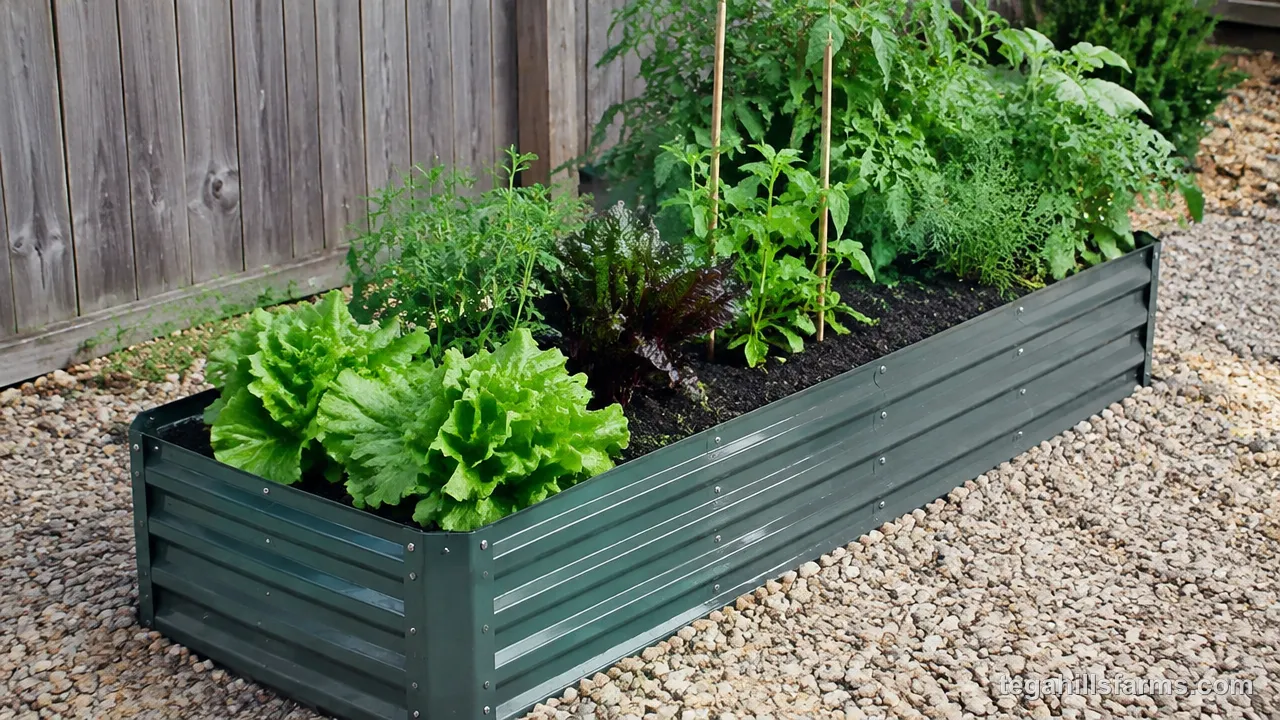
How Many Bags of Soil Does a 2×4 Raised Bed Need?
Divide the bed’s volume in cubic feet by the cubic feet printed on each bag of raised bed mix, then add a bag or two. Fresh soil settles noticeably after the first deep watering and leaves the bed looking short. Volume comes straight from the footprint and the depth, so two beds with the same length and width need very different numbers of bags once one of them is deeper. Some bags list quarts instead of cubic feet, so compare the bed and the bag in the same unit before you load the cart.
For the fill itself, blend topsoil for body, compost for nutrients and moisture, and a lighter ingredient such as perlite or fine pine bark to keep air in the root zone. Bagged raised bed mix already combines these, and working in extra compost helps it last through the season. Bring the soil up to within an inch or two of the rim, which leaves room for a layer of mulch and lets water soak in instead of spilling over the edge.
How Many Plants Can You Fit in a 2×4 Raised Bed?
Leafy greens, herbs, radishes and strawberries pack in at several plants to each square foot, while a single tomato, pepper or cucumber needs a square foot or more to itself, so the count in a bed this size varies widely with what you grow. A salad bed can hold dozens of small plants, while a tomato bed may hold only a handful with some basil tucked between them.
Tall crops belong along the north edge, where they won’t shade shorter plants as the sun crosses the southern sky. Tomatoes and cucumbers climb happily up a trellis set along that back edge, and the best raised bed trellis turns a narrow strip into vertical growing room so the vines don’t sprawl across the path. In a foot of soil, skip crops that spread wide or root deep, like winter squash, pumpkins, corn and long parsnips. If your list leans that way, the best raised bed planters for vegetables include deeper and roomier options.
When plants are crowded, leaves overlap and air stops moving between them, so foliage stays damp after watering and invites mildew and leaf spot. Roots squeezed into the same soil compete for water and nutrients, and every plant ends up smaller than it should be.
Which 2×4 Raised Bed Should You Pick?
For most vegetable gardeners working over open ground, the Tegarbed pair is the dependable all-round choice, while the Best Choice Products bed is the one to buy once deep-rooted crops are on your list.
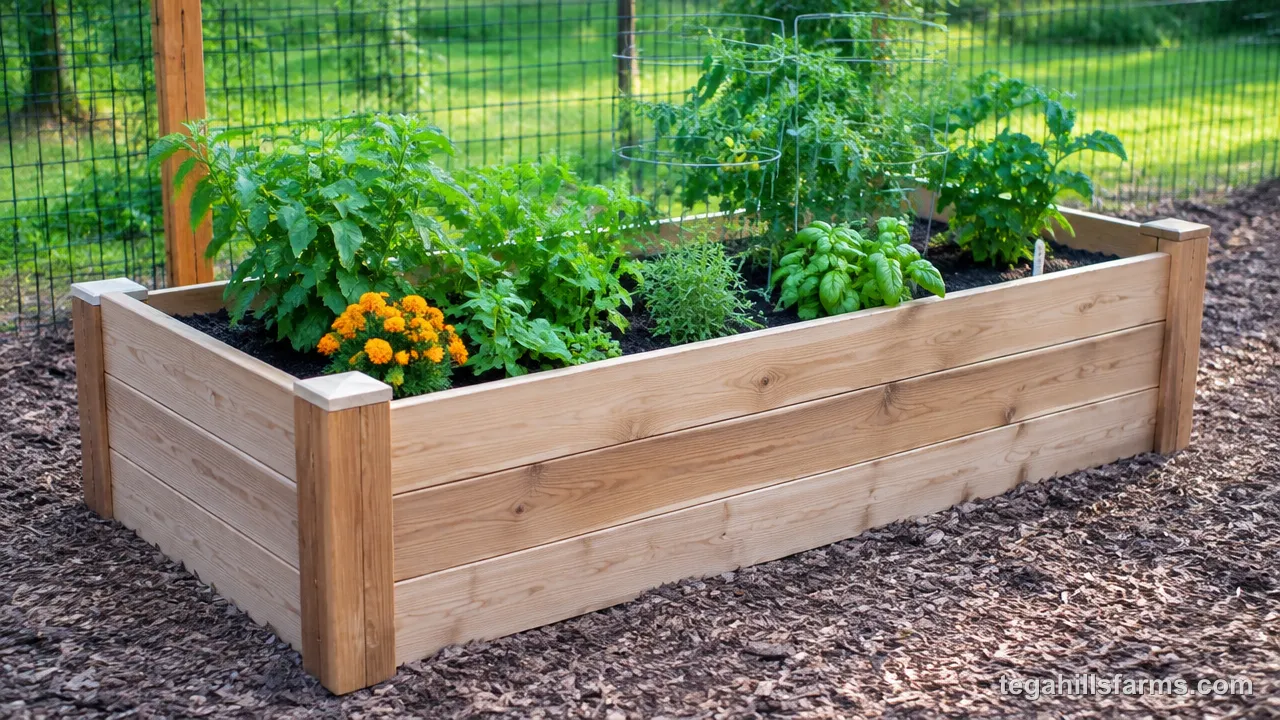
- Choose the Tegarbed or zizin pair if you want more planting area and room to rotate crops. Pack count decides this one, and the zizin’s anti-corrosion finish makes it the better pick in a wet climate.
- Choose the Best Choice Products bed if broccoli, beans or long carrots are on your list. Depth decides whether those roots thrive, even though the bed takes far more soil to fill.
- Choose the Eclaron pair or the ZFHgarden bed if easy handling matters to you, whether you’re carrying panels up to a balcony or rearranging the garden. If you expect to move a bed after it’s planted, the best raised bed kits with wheels solve what no ground-sitting frame can.
- Choose the Plant & Plot bed if you want a first bed that keeps costs gentle. Choose the Amazon Basics bed if you want every piece of hardware in the box and your ground is too poor to plant in.
The zinc layer on galvanized steel wears thinnest where the metal was cut or punched, so the edges and bolt holes of a bed show the first change long before the flat panels do. A small orange freckle at a bolt hole keeps spreading under the coating if it’s left alone, and by the time it shows on the outside face, the panel around it has already started to weaken.
How Do You Know a Galvanized Raised Bed Is Wearing Out?
Dull gray patches and a chalky white film across the panels are normal weathering, since that’s the zinc doing its job as it slowly reacts with air and rain. Orange or brown rust that starts at cut edges, bolt holes or the soil line and keeps spreading means the coating has worn through and the steel itself is wearing.
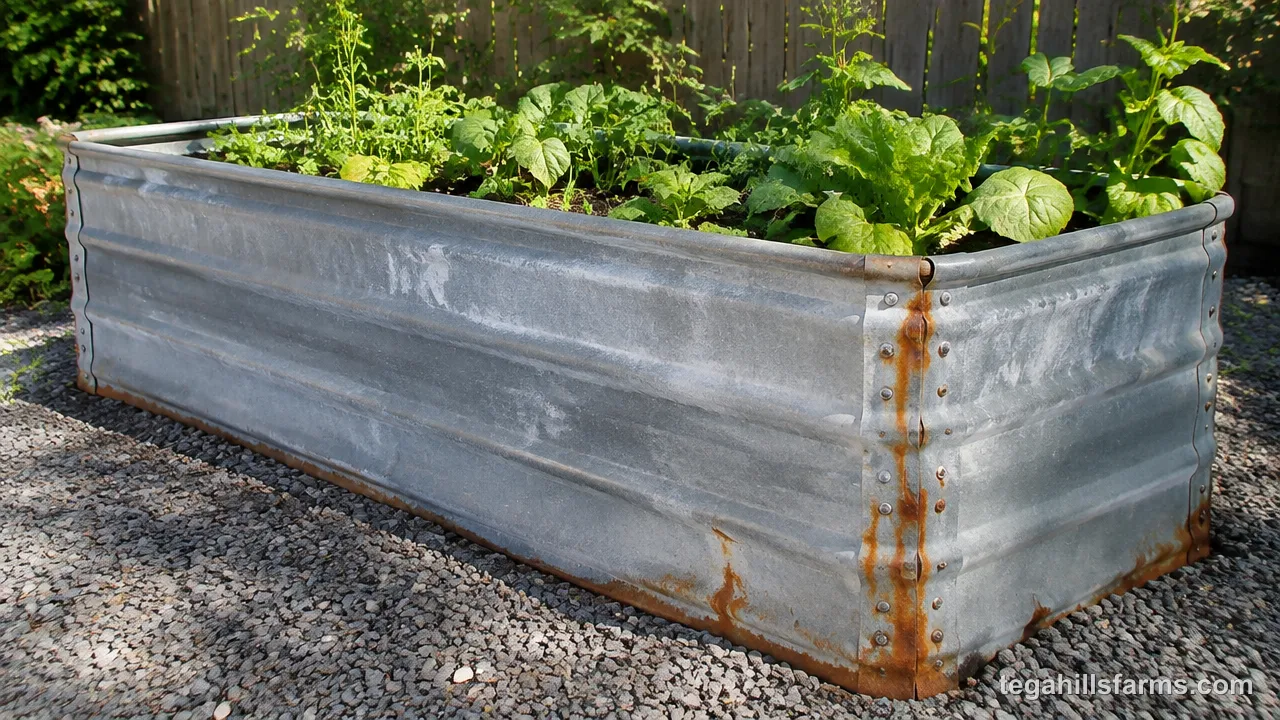
The soil line takes the most punishment, because damp soil holds water against the metal all season. You can slow that wear by keeping soil and mulch from piling above the inside rim and by brushing loose rust from a damaged spot and sealing it with a zinc-rich cold galvanizing spray. Check the bolts each spring as well, so loose joints don’t rub the coating thin.
Replace a panel when rust has eaten pinholes through it, when it bulges or flexes under your hand where it once felt firm, or when bolt holes have stretched into ragged tears. At that point the panel can no longer hold back the soil’s weight, and a sudden split in the middle of the season spills your root zone across the path.
Does a Metal Raised Bed Get Too Hot for Roots?
In strong afternoon sun, steel panels warm the soil along the inside edges and dry that outer band faster, which can stress shallow roots there, while the center of a well-filled bed stays noticeably cooler. The effect matters most for lettuce, spinach and strawberries in a hot southern summer. In a cooler northern zone, that same warmth helps the soil wake up sooner in spring.
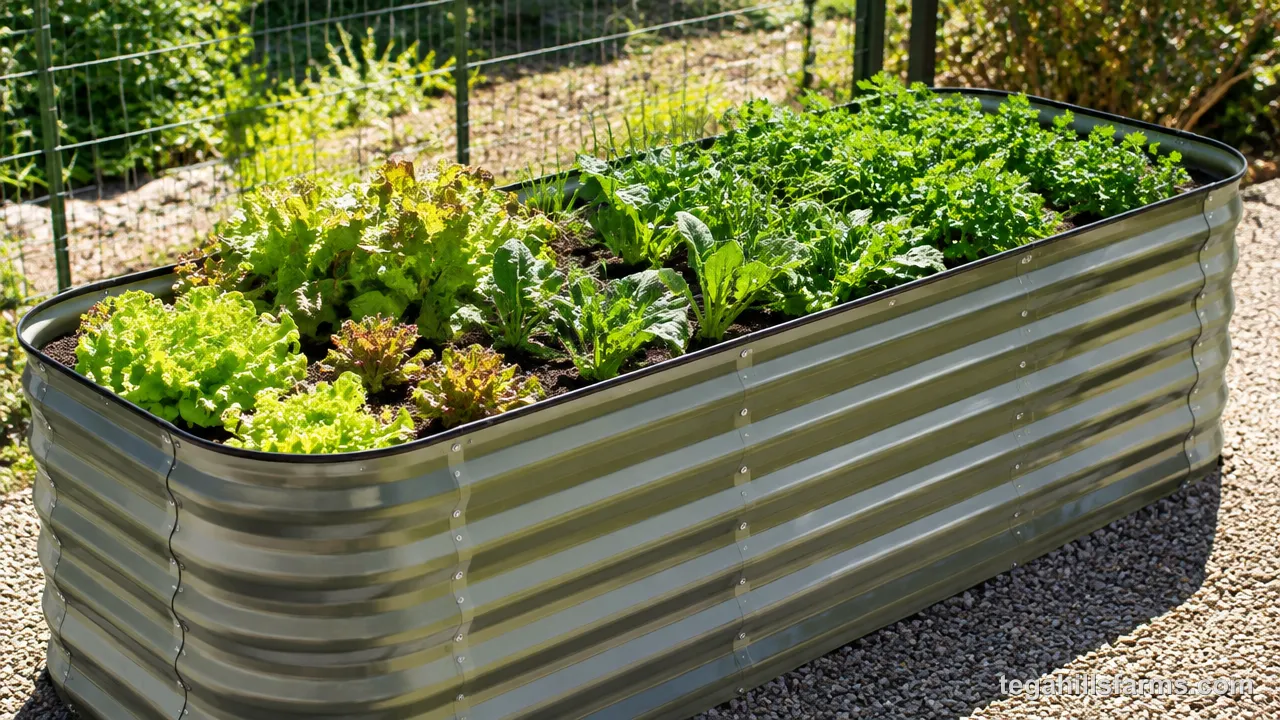
A thick layer of straw or shredded leaves over the soil keeps the surface cooler and slows moisture loss. Setting the bed where it gets morning sun and some afternoon shade spares the panels the hottest hours. Plant heat-lovers such as peppers, basil and okra along the sunny edges, and keep tender greens toward the middle. Moist soil also warms more slowly than dry soil, so steady watering through a heat wave keeps the root zone both cooler and better watered.
How Do You Set Up an Open-Bottom Bed Over Grass, Gravel or Pavement?
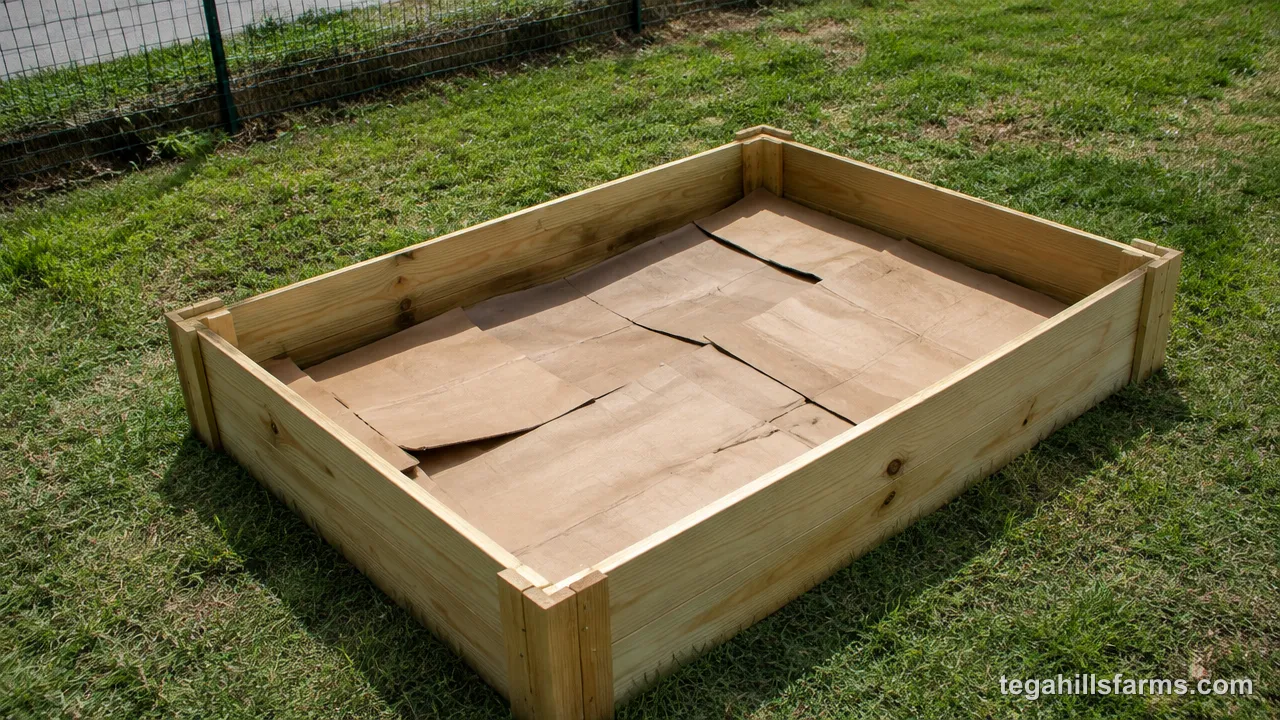
Cardboard laid in overlapping sheets inside the frame smothers turf and weeds when the bed sits on lawn. It softens into the soil within a season, so roots and earthworms can move freely between the bed and the ground below. If gophers or voles tunnel through your yard, staple galvanized hardware cloth across the bottom first, bending it a few inches up the inside walls so nothing can slip around the edges. Over gravel, landscape fabric keeps the stones from working up into your soil while still letting water pass through.
On pavement, roots stop at the concrete and the bed works like a large container, so it dries faster and needs more frequent watering. Lining the base with landscape fabric or one of the raised bed liners made for open-bottom frames keeps fine soil from washing out under the panels and staining the surface.
An unlined bed over soil keeps roots and soil life connected to the ground, which builds richer soil over the years. A lined bed protects whatever lies beneath and blocks burrowers, but your plants then live only on the soil you added, so fill it generously and feed it with compost each season.
Can You Use 2×4 Lumber to Build a Raised Garden Bed?
Yes, but these boards work best as corner posts and internal braces rather than sidewalls. Each one is only about 3½ inches tall once milled, so a foot of depth means stacking several courses with a seam at every layer. Wet soil pushes outward at each of those seams, and boards can cup or twist as they dry, so a steadier frame uses wider boards for the walls, held at the corners by 2×4 posts.
A DIY build asks for cutting, drilling, squaring corners and driving screws, while a tool-free steel kit goes together by lining up panels and tightening bolts. The bigger difference shows up on the soil side over time. Damp soil sits against the inside face of a wood wall all season and starts its decay there, while coated steel resists that steady moisture. Wood does keep the root zone cooler in summer sun, which is a fair reason to build your own if you’re handy and patient.

Write Your Review
No reviews yet. Be the first to share your experience!