

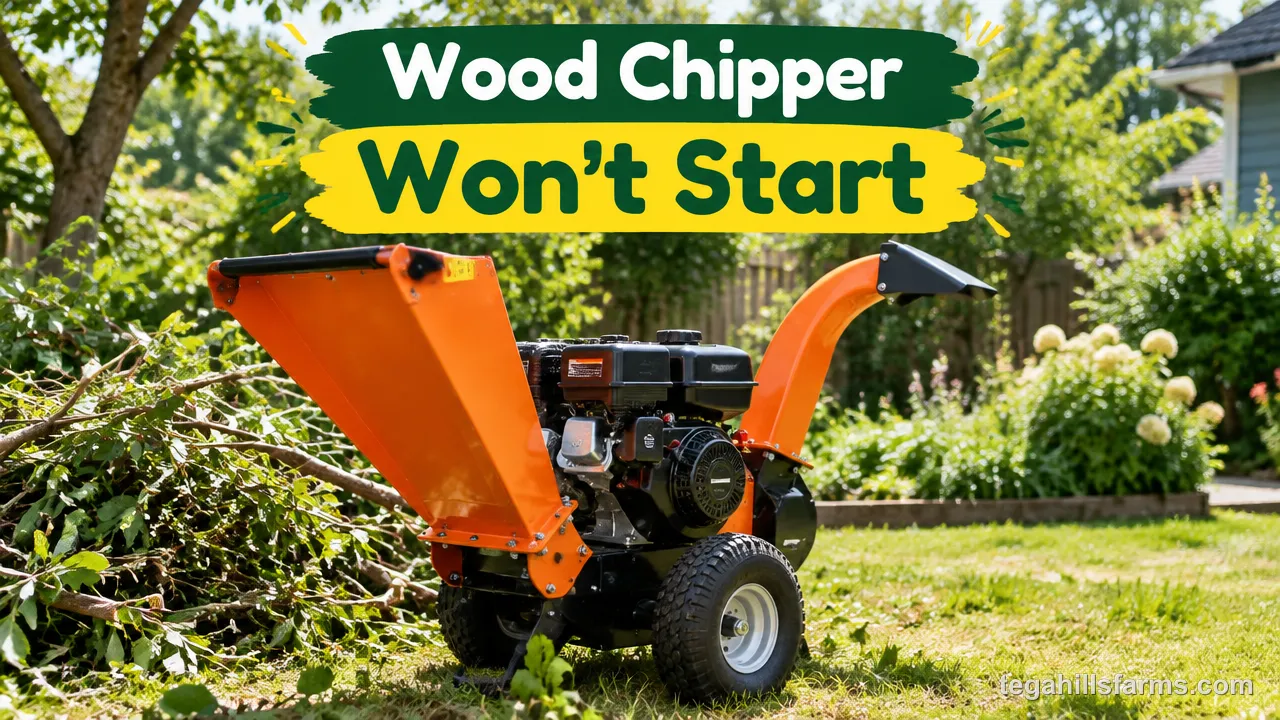
A gas wood chipper that sat for months usually won’t start because the old fuel has gone stale and left sticky residue in the carburetor. In most cases the fix is to drain the bad gas, refill with fresh fuel, and clean the carburetor if fresh fuel alone doesn’t do it. The low-oil level, the spark plug and the air filter come first, because each takes minutes and can mimic a fuel fault.
The right fix depends on what the machine does when you pull the cord. A cord that won’t move, an engine that fires and dies, and an engine that runs while the rotor sits still each come from a different part of the machine. Matching the symptom to its cause keeps you from tearing down a carburetor that was never the problem.
The bigger concern for most owners is safety and cost. A chipper can catch and spin its rotor the moment the engine fires, so the plug wire comes off before your hands go anywhere near the engine. Some faults are cheap home repairs, and others mean the engine needs a shop or the machine needs replacing.
Why Won’t a Wood Chipper Start After Sitting?
Stale gasoline is the usual reason. After months in the tank it loses the volatile parts that ignite easily and leaves gummy deposits in the carburetor jets, so the small engine can’t draw enough usable fuel to fire.
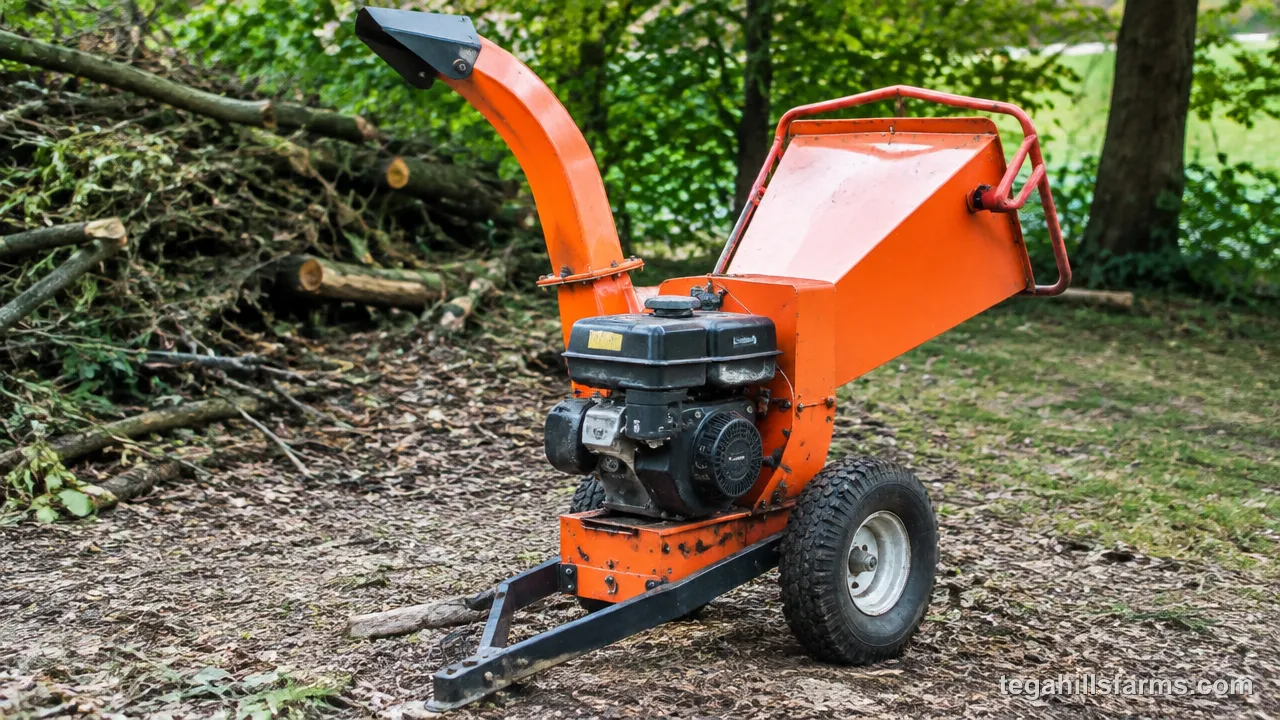
Ethanol gasoline makes this worse because the ethanol pulls moisture from the air while the machine sits. Fuel isn’t the only suspect, though. Low engine oil can trip a shutdown sensor. A fouled spark plug or a loose plug wire can kill ignition. A clogged air filter can choke off airflow. Wood jammed against the rotor can lock the pull cord so the engine never turns over.
If this is the second or third time an older machine has refused to start, the guide on how to choose a wood chipper can help you decide whether a different engine or build would be easier to keep reliable.
What Safety Steps Come Before You Troubleshoot a Chipper?
Disconnect the spark plug wire, let a hot engine cool, wear gloves, park on level ground, and keep your hands out of the chute and rotor. An engine that half-starts during a check can spin the cutting parts with no warning.
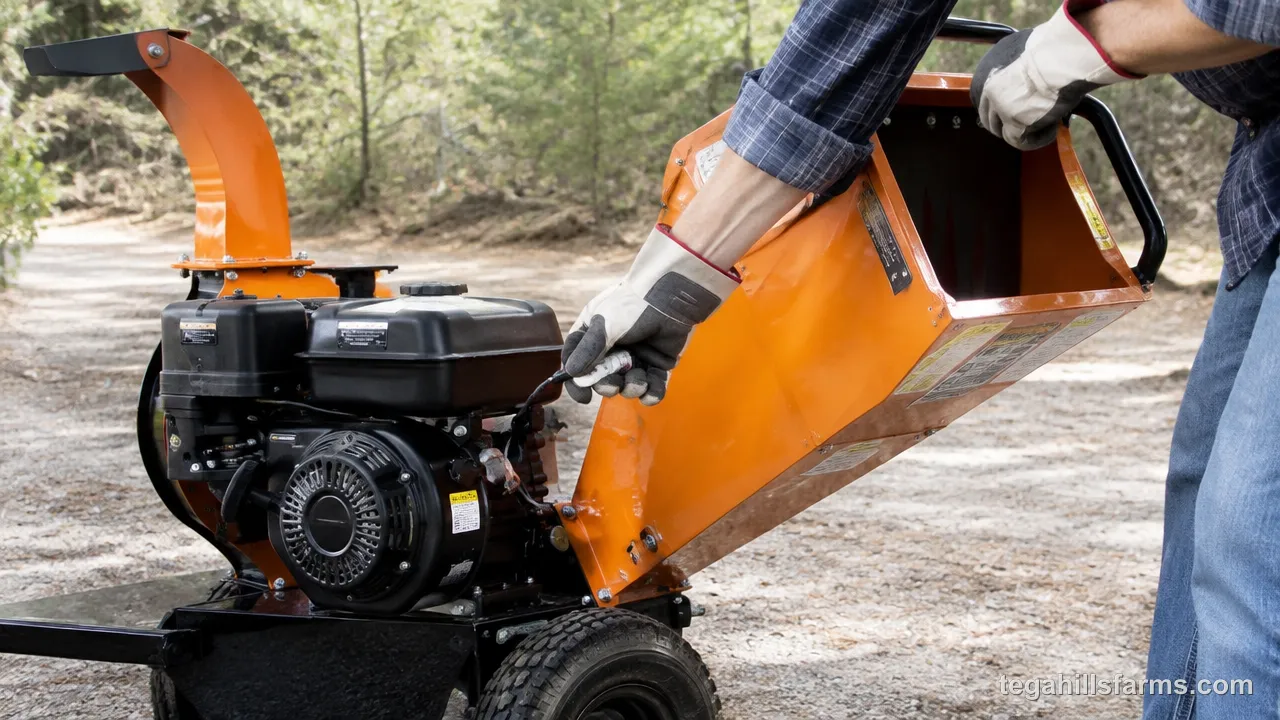
- Pull the plug wire. With the boot off, a stray pull on the cord can’t fire the engine while your fingers are near the rotor or flywheel.
- Let it cool. Give the engine and muffler at least 15–20 minutes after any running attempt, because both stay hot enough to burn skin through a thin glove.
- Wear gloves. Rotor blades and chipper knives stay sharp even when the machine is dead.
- Work on level ground. A chipper that rolls or tips can spill fuel or oil and pinch a hand.
The same habits carry over to normal operation, which is covered in more detail under how to use a wood chipper.
Which No-Start Symptom Are You Seeing?
What the pull cord does points to the fault. A locked cord means something mechanical is jammed. A cord that pulls freely with no fire points to spark or fuel. An engine that fires and dies usually means fuel starvation in the carburetor. If the engine runs but the rotor doesn’t turn, the problem is in the drive.
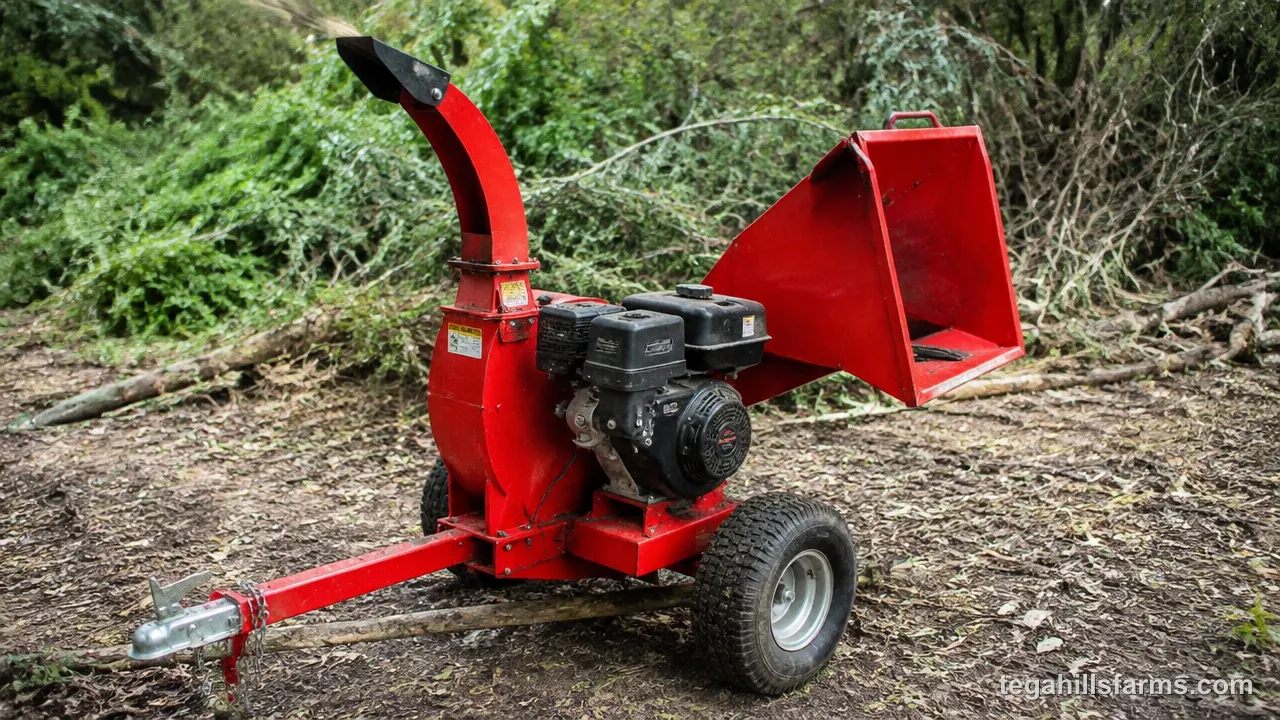
This table matches each symptom to its likely cause and where to start:
| Symptom | Likely cause family | Where to start |
|---|---|---|
| Cord won’t pull | Jammed rotor or flywheel, broken recoil starter, locked engine | Clear debris, then inspect the starter |
| Cord pulls, no fire | No spark, no fuel, low-oil shutdown, switch off | Oil, switches, spark plug, fuel |
| Fires, then dies | Fuel starvation, dirty carburetor, choke left on | Fresh fuel, then the carburetor |
| Runs, rotor still | Drive belt, centrifugal clutch, shear pin, PTO | Drivetrain, not the engine |
Each row has a different repair. A dead spark won’t respond to carburetor cleaner, and a slipping drive belt won’t respond to fresh fuel. The “pulls, no fire” row is the most common after storage. That case starts with quick checks, because they rule out simple causes before you pick up a wrench.
What Basic Checks Should You Make First?
Start with the checks that cost nothing and take minutes, because they rule out simple faults before you take anything apart. A carburetor teardown can eat an afternoon. Finding out afterward that the fuel valve was closed is a frustrating way to lose a Saturday.
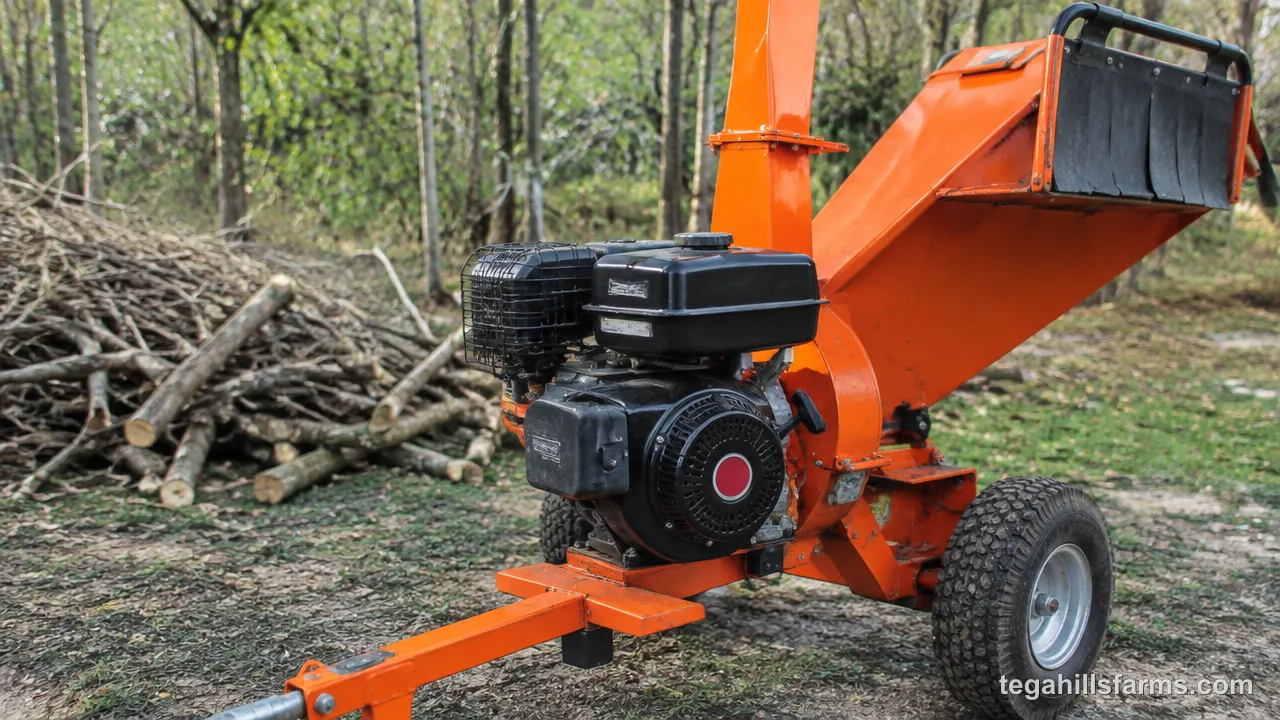
Is the Engine Oil Level Too Low?
Many small engines won’t start at all when the oil is low. A low-oil sensor, which some Briggs & Stratton engines and many others carry, cuts the ignition so the engine can’t run dry and score the cylinder. The engine acts dead even though the fuel and spark are fine.
To check the oil, set the chipper on level ground, pull the dipstick, wipe it clean, reinsert it fully, and read the level. A tilted machine gives a false reading. Take the oil type and capacity from the engine manual rather than a general chart, because engines differ. Overfilling can also block a start. Forest Master’s gas chipper, for example, calls for 20–22 fl oz (600–650 ml), and it cuts ignition if the oil is either above or below that range.
Are the On/Off Switch, Choke and Fuel Valve Set Correctly?
A switch left off or a closed fuel valve can look exactly like a dead engine. For a cold start, set the engine switch to ON and open the fuel shutoff valve so gas can reach the carburetor. Move the choke to its closed or full-choke position, and set the throttle where the manual specifies for starting.
If your engine has a primer bulb, press it the number of times the manual lists, and stop there. Once the engine fires, open the choke gradually, because a choke left closed floods a warm engine and stalls it.
These controls are easy to bump while the machine sits in a shed. A valve closed for storage is one of the most common “dead engine” calls that turns out to be nothing.
Is the Spark Plug Connected and Firing?
A plug that came loose, fouled or corroded during storage is the most common cheap fix. Pull the plug and look at the tip. Black soot points to a rich mixture. A wet, gas-smelling tip means the engine flooded. An oily tip suggests oil got into the cylinder.
To test for spark, clip an inline spark tester between the plug and the plug boot, then pull the cord. A bright flash means the ignition coil is working. No flash points to the plug, the boot or the coil.
If the plug is worn or fouled, replace it with the type listed for your engine model. Set the gap to manufacturer spec, which is typically around 0.025–0.030 inches, because a gap that’s too wide or too narrow weakens the spark. Thread the new plug in by hand so it doesn’t cross-thread, snug it with a plug socket, and press the boot on until it seats firmly. A loose boot can let the spark arc intermittently.
Could a Clogged Air Filter Be Blocking the Engine?
A dirty or oil-soaked air filter can starve the engine of air, and an engine with too little air won’t fire or will run only briefly. Open the air box and look at the element. A foam filter can be washed in warm soapy water, dried completely, and lightly re-oiled if the manual calls for it. A paper filter that’s dark, crushed or oily should be replaced, because cleaning won’t restore its airflow.
Check the intake behind the filter for nesting material or chips. Machines stored in barns attract mice. An oil-soaked filter usually means the chipper was laid on its side during moving or storage. That points to a separate cleanup before you try starting it again.
How Does Old Fuel Keep a Wood Chipper From Starting?
Gas that has sat for months loses its ability to ignite and turns into varnish inside the fuel system. That’s why a machine that ran fine last fall can be dead in spring. Understanding what happened in the tank tells you whether fresh fuel will be enough or whether the deposits have to come out.
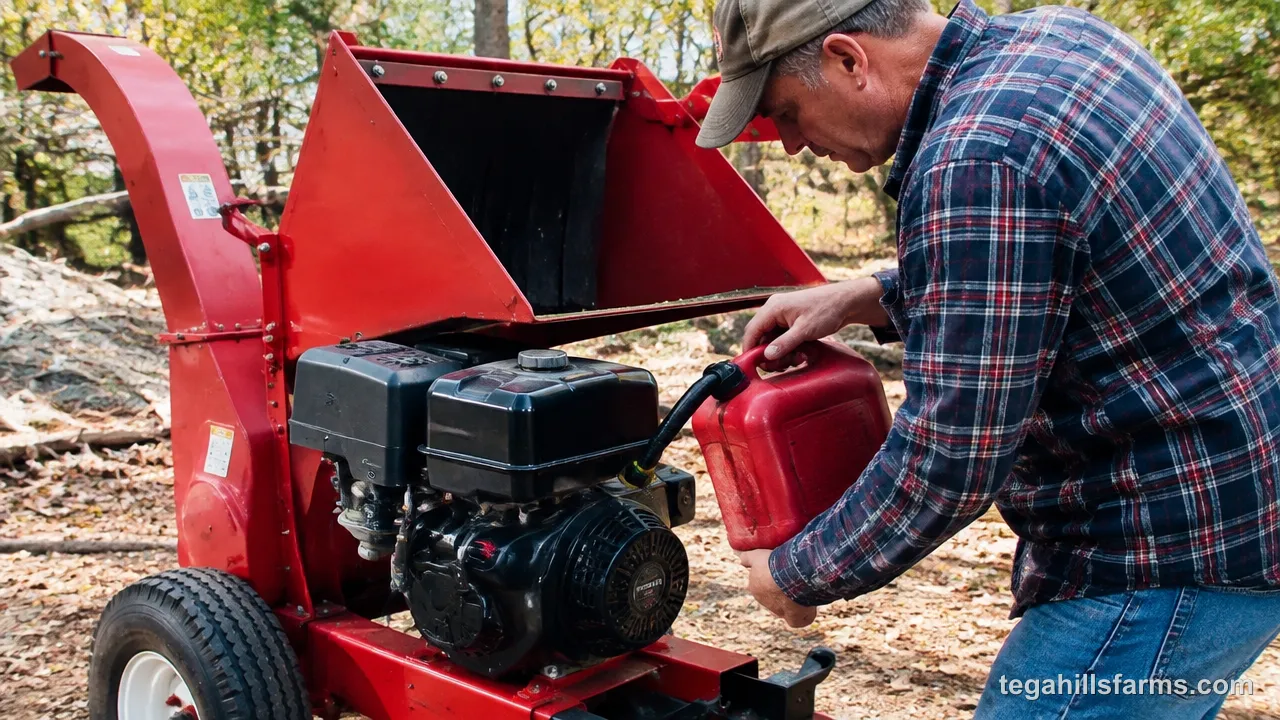
What Does Stale Gas Do Inside the Fuel System?
Stale gas fails in two ways. First, it loses the lighter, more volatile compounds that let it ignite easily, so a cold engine gets a vapor that’s too weak to fire. Second, ethanol blends absorb moisture from the air through the vented cap. Over time that water can separate and settle at the bottom of the tank, where the fuel line pulls it first.
As the gasoline breaks down, it leaves gummy deposits that harden into varnish. Those deposits collect in the tank, coat the fuel line, plug the fuel filter, and narrow the carburetor jets. The jets cause the most trouble because their openings are tiny, and a thin film is enough to block them.
This is why fresh fuel alone often fails. New gas can’t dissolve varnish that has already hardened in a jet, so the engine stays starved until the passages are cleared.
How Do You Drain Old Fuel and Refill Safely?
Work outdoors, away from flames and pilot lights, with the engine cool and the plug wire off. Drain the tank into an approved gas can by disconnecting the fuel line at the carburetor or by siphoning. Then open the carburetor bowl drain screw, if your carburetor has one, so the stale fuel in the bowl drains out too.
Old gas can’t go down a drain or onto the ground. Take it to a household hazardous waste collection site, and check your local rules for what they accept. If the fuel filter looks dark or clogged, replace it now while the line is off.
Refill with fresh gasoline, open the fuel valve, and prime the engine as the manual directs before the first pull. If the engine fires and runs smoothly, the varnish was light. If it fires and dies, or doesn’t fire at all, the carburetor needs cleaning.
How Do You Fix a Clogged Carburetor?
The carburetor is the usual culprit when fresh fuel and a good plug still won’t start the engine. Its jets and needle valve are small enough for a thin layer of varnish to block. Before you take it apart, confirm the carburetor is really the problem. Teardown takes time, and a worn unit may not be worth cleaning.
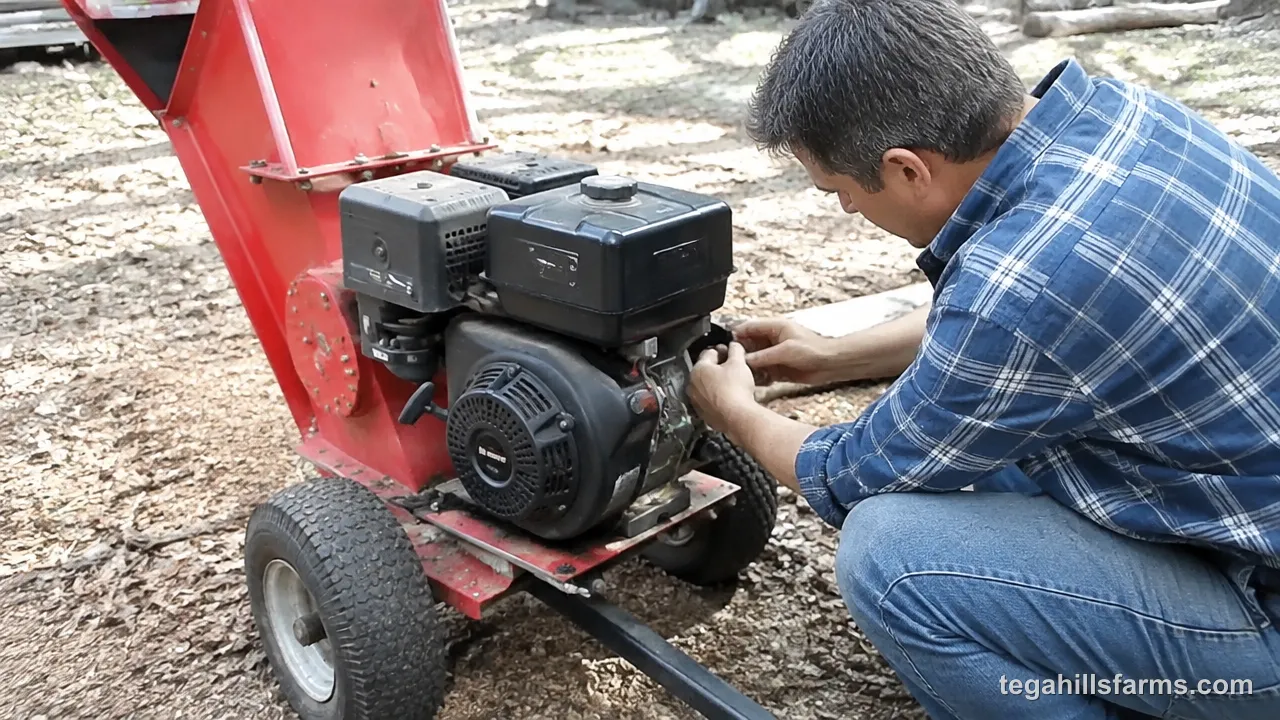
How Can You Tell the Carburetor Is the Problem?
The carburetor is the likely cause when the spark tester flashes, the tank holds fresh gas, and the engine still won’t start. Other signs are an engine that runs for a few seconds and then stalls, or one that surges up and down at a steady throttle. Both mean fuel is reaching the engine in uneven bursts through a partly blocked jet.
These signs separate a fuel problem from the other causes. An ignition fault gives no flash at the tester. An air restriction usually clears when you remove the filter. A quick test is to spray a short burst of starting fluid into the intake. If the engine fires and then dies once the spray burns off, it can’t draw fuel on its own, which points to the carburetor.
How Do You Clean the Carburetor Step by Step?
Shut the fuel valve, drain the bowl, and photograph the throttle and choke linkage before you remove anything. Those small rods are easy to reconnect in the wrong holes. Remove the carburetor from the engine and take off the float bowl, which is usually held by a single bolt at the bottom.
Spray carburetor cleaner through the main jet and every passage you can reach. Hold the jet up to the light to confirm it’s clear. A thin wire can loosen hardened varnish, but keep it out of the jet bore so you don’t enlarge the opening. Check the needle valve tip for wear or a groove, and inspect the gaskets for tears or flattening.
Use compressed air carefully and at low pressure, with eye protection. A strong blast can blow out small parts or damage the float. Reassemble in reverse order, use new gaskets if the old ones are damaged, reconnect the linkage to match your photos, and refill the tank before you try to start it.
When Is Replacing the Carburetor Better Than Cleaning It?
Replacement makes more sense once the carburetor body is corroded, warped, or worn past what cleaning can fix. White, crusty corrosion inside the bowl usually means water sat there long enough to pit the metal, and those pits keep trapping debris. A worn needle won’t seal, so the engine floods. A warped mounting flange leaks air no matter how clean the passages are.
The replacement part has to match the engine model, not just look similar. On Briggs & Stratton engines, the model, type and code numbers are stamped on the engine itself. Those numbers identify the correct carburetor. A near-match can have different jetting, which leaves the engine running too lean or too rich.
Why Won’t the Pull Cord Move?
A cord that’s stuck or very stiff means something is stopping the engine or rotor from turning. The cause is either debris on the cutting side or a fault in the starter or engine itself. Telling the two apart matters, because one is a ten-minute cleanout and the other can mean internal engine damage.
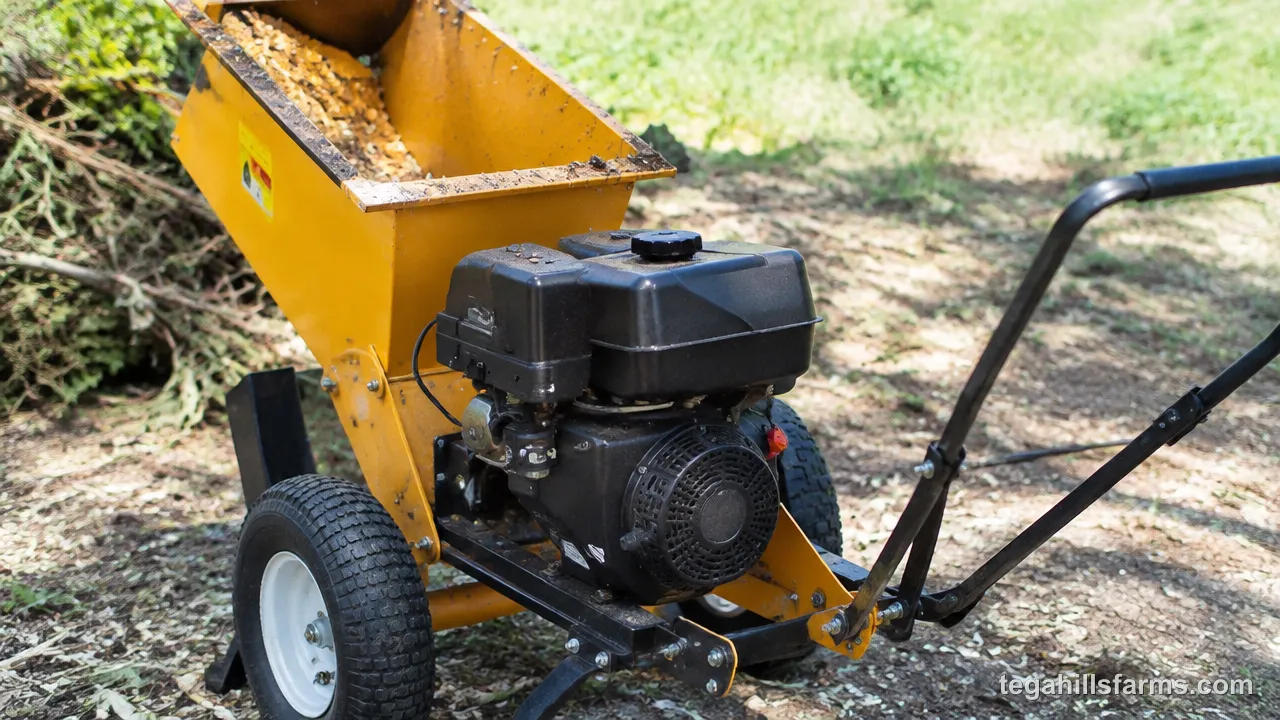
Is Debris Jamming the Rotor or Flywheel Area?
Wood wedged against the rotor is the most common reason the cord won’t pull. On many chippers the rotor turns with the engine, so a branch or chip packed into the cutting chamber stops the engine from turning over. Leaves and fine debris can also pack around the flywheel and lock it.
With the spark plug wire disconnected and gloves on, look into the chipper chute and the discharge area for wedged branches or packed chips. Clear them with a stick or pry bar, never with your hands near the knives. Then remove the flywheel housing cover, if needed, and clean out any packed material. When the cord pulls freely again, reconnect the plug wire and try to start the engine.
Is the Recoil Starter or Engine Itself at Fault?
The cord’s behavior tells the two apart. If the cord pulls out but retracts weakly, doesn’t catch the engine, or snaps, the recoil starter is at fault. A broken recoil spring or worn starter pawls can’t engage the flywheel, but the engine itself is fine.
If the cord won’t move at all and the rotor is clear, the engine may be locked. Remove the spark plug and try the cord again. If it now turns and fuel or oil sprays out of the plug hole, the cylinder was hydrolocked with liquid it couldn’t compress.
If the engine stays locked with the plug out, a technician will usually run a compression test next. A reading below roughly 60–90 psi, depending on the engine’s spec, points to internal repair.
Should You Fix It Yourself or Take It to a Repair Shop?
Yes for fuel, the spark plug, the air filter and a basic carburetor cleaning. A locked engine, internal damage, or repeated failure after cleaning belongs with a small-engine repair shop. The home repairs need basic hand tools and patience. The shop jobs need tools and engine knowledge most owners don’t have.
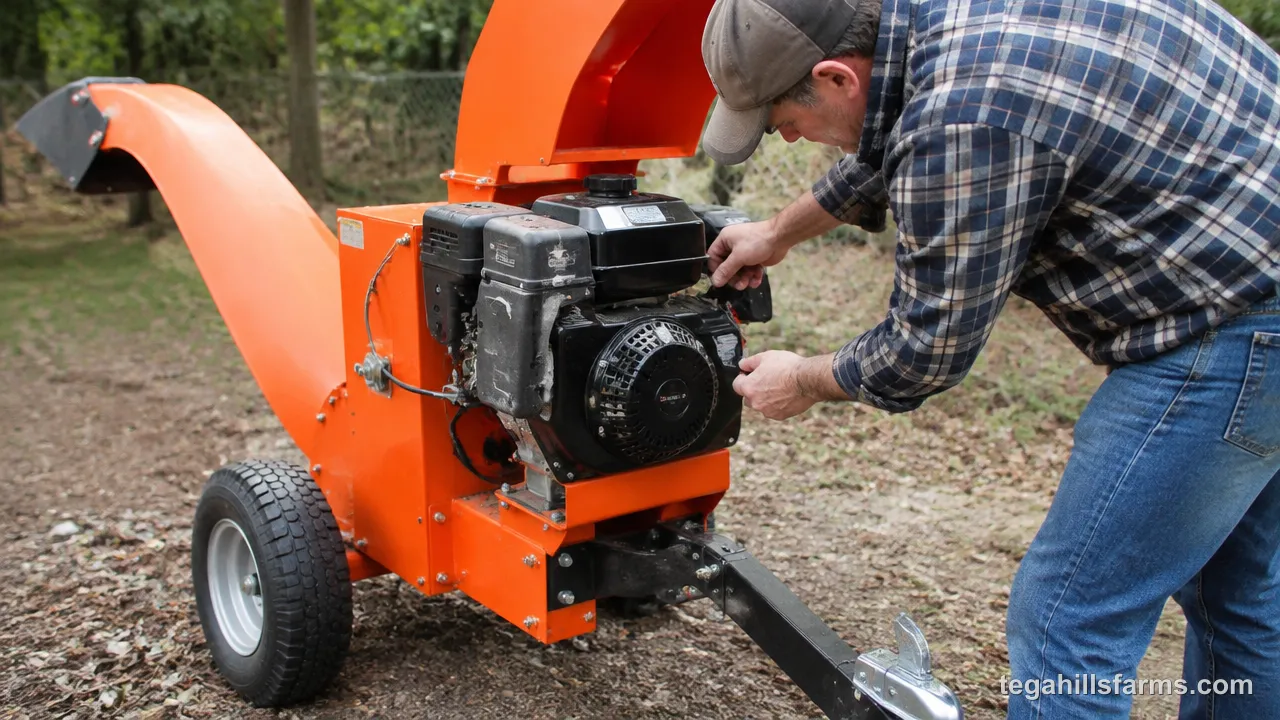
Repeated failure is the clearest signal. If the engine still won’t run after you’ve cleaned the carburetor, something else is wrong, such as a worn needle seat or low compression, and more guessing usually costs more parts.
I’d weigh the repair quote against the machine’s age and condition. On an older chipper with a tired engine, a major repair can approach the price of a new machine. Checking how much a wood chipper costs gives you a clear point of comparison before you approve the work.
A chipper that was laid on its side to fit in a truck bed or tucked under a bench often won’t start the next time out, even though the fuel and plug were fine when it was put away. Oil from the crankcase runs uphill into the air filter and the cylinder, and a few hard pulls on the cord can soak the new plug or lock the engine solid.
What Should You Do If the Chipper Was Tipped Over?
Tipping can push engine oil into the air filter, the carburetor or the cylinder. Pulling the cord right away tends to foul the plug or hydrolock the engine. Clean up in order before you try to start it again.
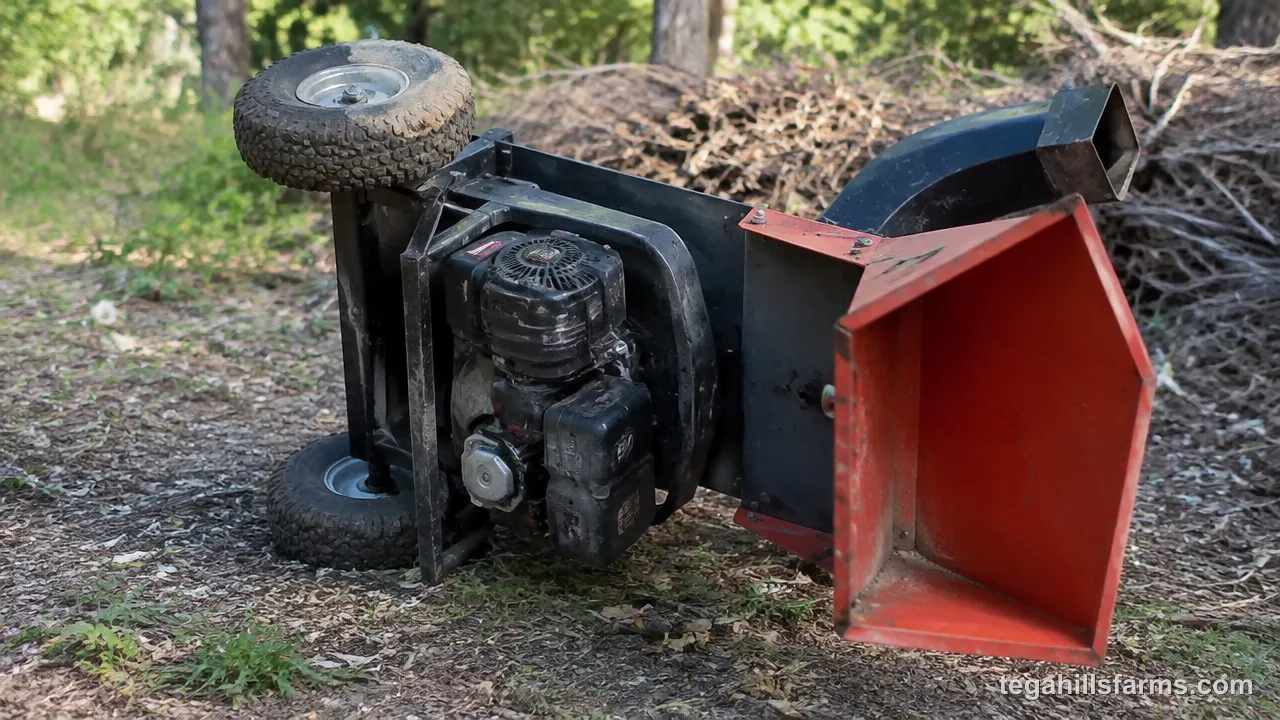
Start by setting the chipper upright on level ground and letting it sit so the oil drains back into the crankcase. Remove the air filter and replace it if it’s soaked. A paper element can’t be saved, and a foam one needs a full wash. Check the carburetor intake for oil as well.
Next, take out the spark plug and turn the engine over slowly by hand or with gentle pulls. Oil in the cylinder will blow out through the plug hole, so point it away from you and cover the hole with a rag. Wipe up the oil, check the dipstick, and install a fresh plug before the next start.
When you have to tip the machine, check the engine manual for which side may face down. Keep the air filter and carburetor side up. Oil that ends up in the muffler burns off as heavy white smoke on the next start.
Flooded Engine or Starved Engine: How Can You Tell?
The spark plug tells you. A wet, gas-smelling plug means the engine is flooded with too much fuel. A dry plug after several pulls means it’s starved and isn’t getting fuel at all. The two problems need opposite fixes, so guessing wrong makes things worse.
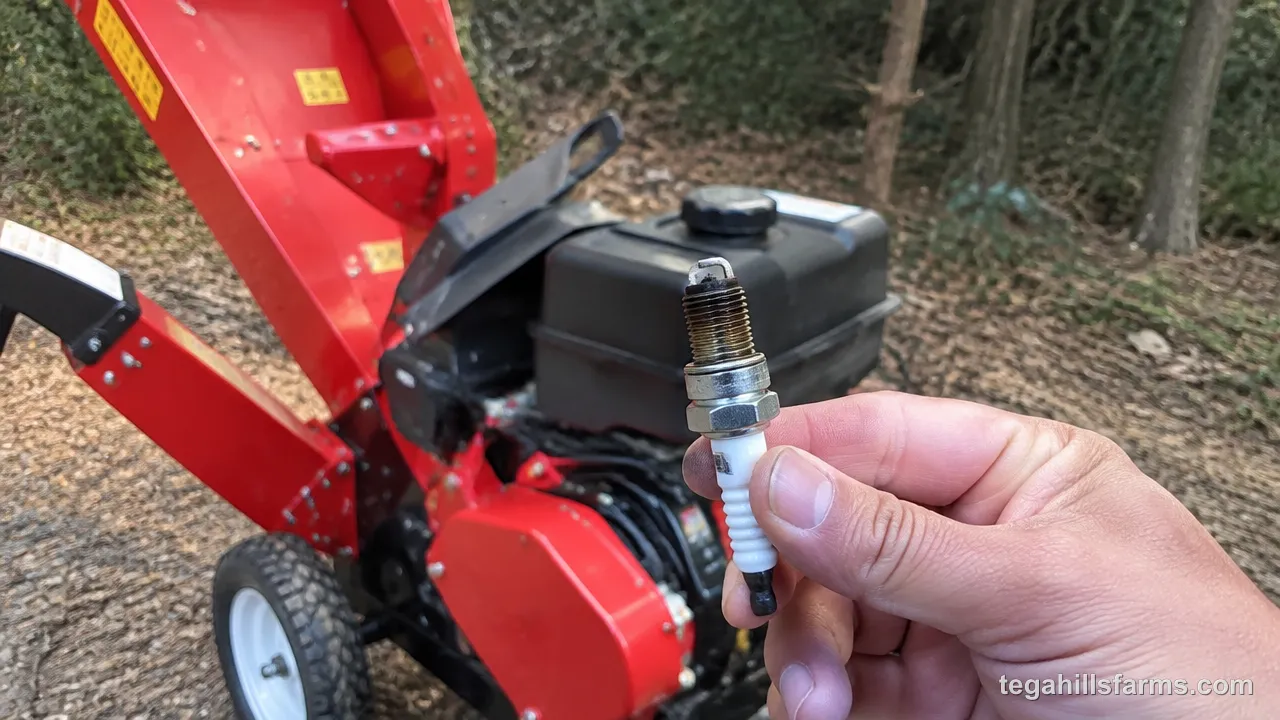
Flooding usually follows repeated priming, a choke left closed, or many pulls on a cold engine. A strong smell of raw gas around the machine is the giveaway. More choke only adds fuel to a cylinder that already has too much. To clear a flood, open the choke fully, set the throttle wide open, and let the engine rest for 10–15 minutes so the excess fuel evaporates before you pull again.
A starved engine has an empty tank, a closed valve, or a blocked fuel line, filter or carburetor jet somewhere between the tank and the cylinder. Priming and choking are what it needs. If those still produce a dry plug, the fuel path is blocked.
What If the Engine Starts but the Rotor Won’t Turn?
An engine that runs while the rotor stays still has a drivetrain problem, not a fuel or spark problem. Working on the carburetor or plug won’t help. Look at the drive belt, the centrifugal clutch, the shear pin, or the PTO shaft instead.
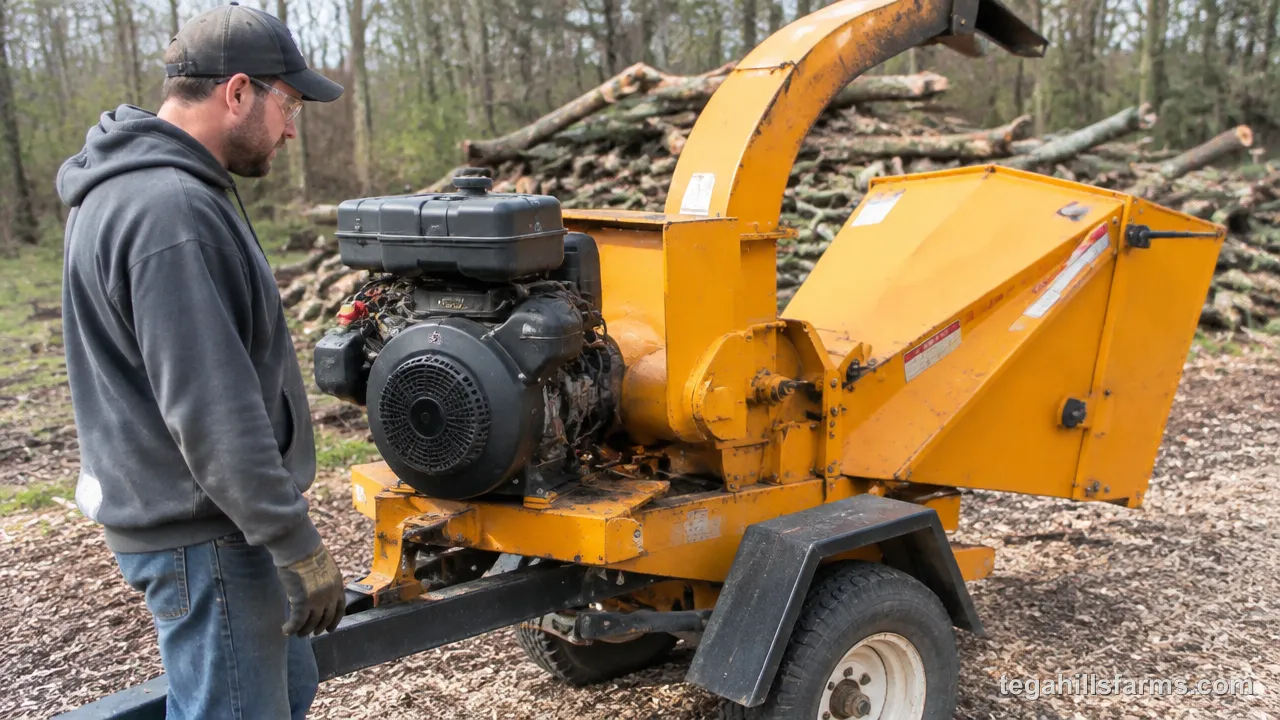
On belt-driven chipper shredders, including many MTD and Yard Machines units, a worn, stretched or broken belt is the usual cause. With the engine off and the plug wire disconnected, remove the belt guard and check for slack, glazing or cracks. A belt that slips under load spins against the pulley without driving the rotor. A centrifugal clutch that has stopped engaging does the same, even though the engine revs normally.
PTO-driven units, such as Merry Mac models that run off a tractor, have no engine of their own. A rotor that won’t turn there points to the PTO shaft or a sheared pin, which is designed to break when a hard object jams the rotor so the shaft and gearbox aren’t damaged. A replacement pin has to match the original rating. A stronger bolt defeats the protection.
How Do You Stop a Chipper From Failing to Start After Storage?
A machine that starts easily in spring was usually stored with clean fuel, fresh oil and a dry cover. A neglected one sat with old gas slowly turning to varnish in the carburetor. The storage routine is short, and it prevents most of the problems above.
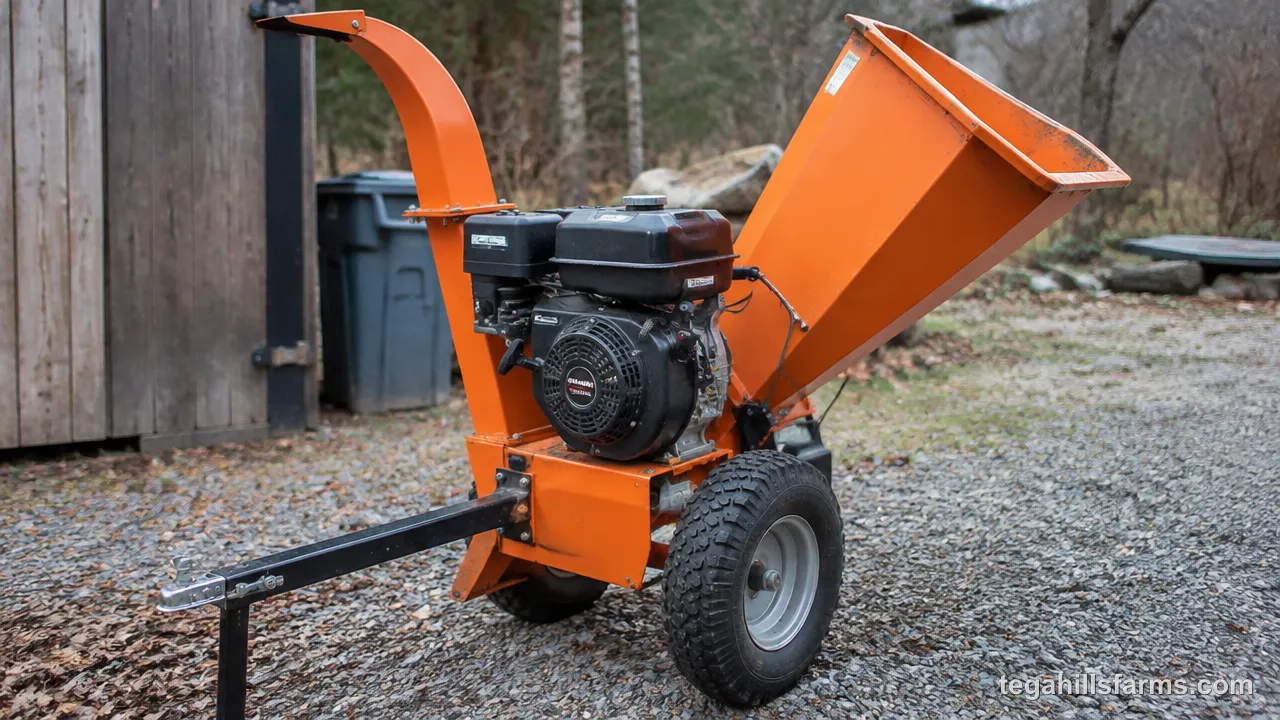
At the end of the season, either run the tank dry or add fuel stabilizer. Stabilizer is worth using any time fuel will sit longer than 30 days. Run the engine for a few minutes after adding it so the treated fuel reaches the carburetor. Change the oil while the engine is warm, since used oil carries acids and debris that sit on internal parts all winter. Clean or replace the air filter, and clear chips from the rotor and chute.
Store the chipper upright in a dry place under a breathable cover so moisture and rodents stay out. These habits cut down on stale-fuel no-starts and slow the wear that decides how long wood chippers last.
Wood Chipper Won’t Start: Common Questions
Can you add fresh gas on top of old gas?
Mixing dilutes the stale fuel, but it doesn’t remove water or dissolve varnish already in the carburetor. If the tank sat a few weeks, topping off may be enough. After a full season, drain the old gas completely, because the separated water and gum at the bottom reach the fuel line first.
Why does a chipper start and then die once warm?
An engine that dies as it warms is usually short on fuel. A partly blocked jet can supply enough for a choked cold start but not for a warm engine running with the choke open. A choke left closed can also flood it, and a failing ignition coil sometimes quits as it heats up.
Do most small engines have a low-oil shutoff?
Many do, though not all. The sensor stops the engine from starting or running when the oil is low, which protects the cylinder from damage. Check the engine manual to see whether yours has one. Either way, keep the oil at the level marked on the dipstick.
Does a hard pull always mean a broken starter?
No. A stiff or locked cord more often comes from debris jamming the rotor or flywheel, or from liquid trapped in the cylinder. Clear the chute and flywheel area first, then pull the spark plug and try again. A cord that turns freely but won’t catch the engine points to the recoil starter.


Write Your Review
No reviews yet. Be the first to share your experience!