

An above-ground sprinkler setup fits small or moderate yards, renters and tight budgets, while an in-ground system fits large, permanent lawns where you want watering to run without you. The first is hoses and sprinklers you can pick up and carry. The second is pipe and heads buried in the lawn for good.
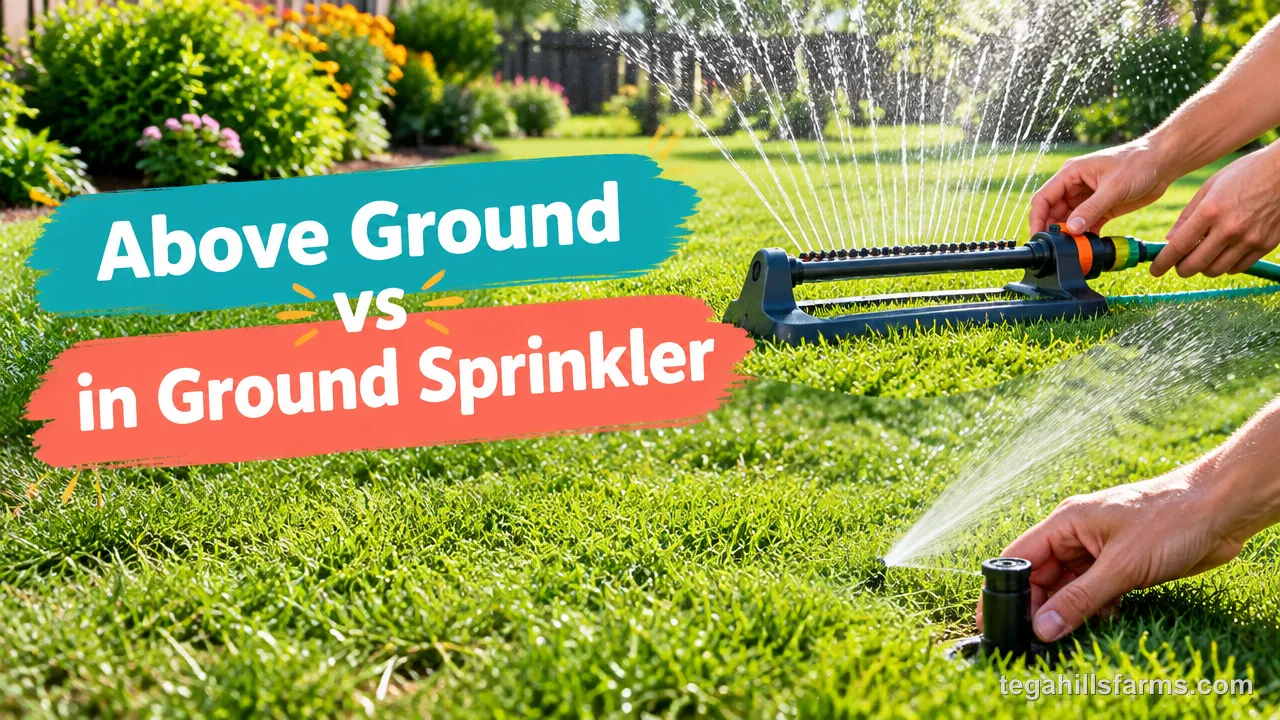
What separates them is practical: what you spend up front, how much digging installation takes, how evenly each one wets the grass, how much of the schedule runs on its own, and how the gear holds up through hot summers and freezing winters. Appearance matters too. One system disappears into the turf, and the other has to be moved every time you mow.
The real risk with either choice is paying for the wrong one. An in-ground system is hard to undo once the trenches are filled. An above-ground setup that has outgrown the yard becomes a weekly routine of dragging hoses and moving sprinklers across dry patches.
Before you price anything, walk the yard. Note where the outdoor faucet sits, which areas dry out first in summer, and how long you plan to stay in the home. A long-term home with a large lawn points toward buried pipe. A rental, or a yard made up mostly of beds and small patches, points toward the surface.
Which Is Better for Your Yard: Above-Ground or In-Ground Sprinklers?
Hoses and hose-end heads laid on the surface suit small or temporary setups and tight budgets, while buried pipe with pop-up heads pays off on large, permanent lawns where automation matters.
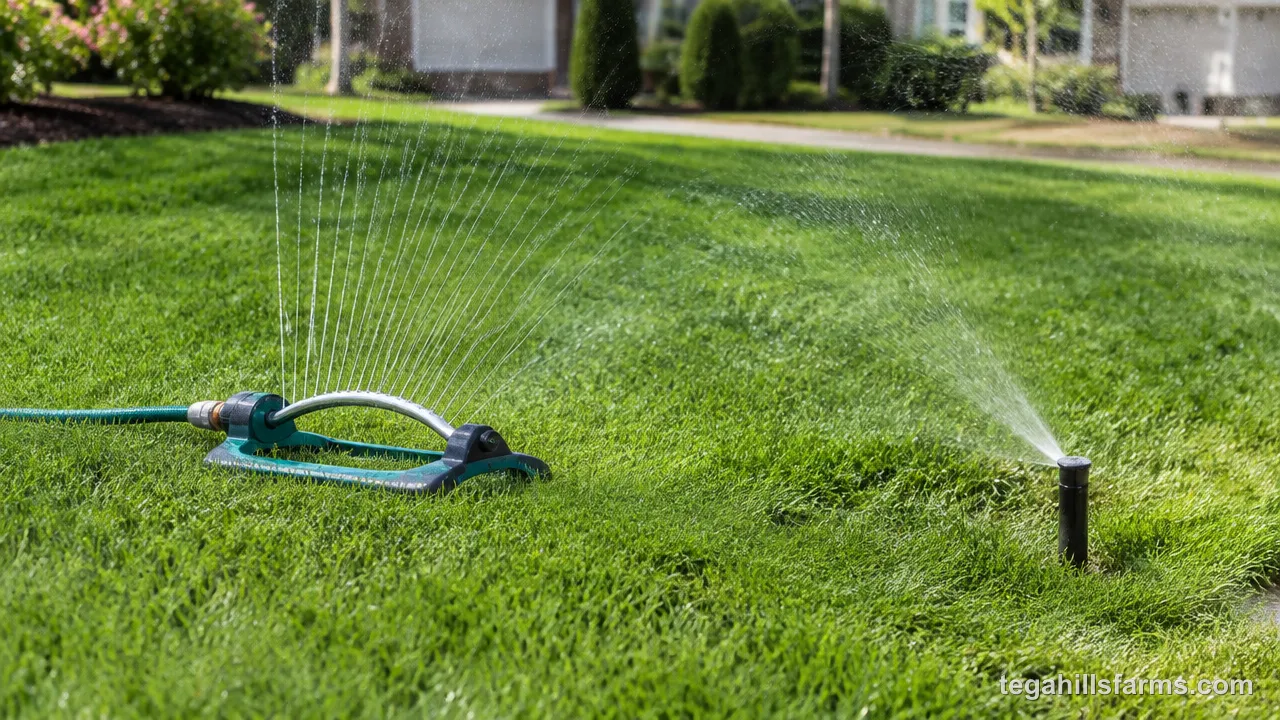
Above-ground means everything sits on top of the soil. That includes hose-end sprinklers set out on the grass, soaker hose that weeps water along its whole length, and drip lines that deliver water at the base of plants, all fed from an outdoor faucet through a garden hose. You can rearrange any of it in minutes and take it with you when you move.
In-ground means PVC or polyethylene pipe buried in shallow trenches, connected to pop-up spray heads and rotors. The heads rise when the water comes on and drop flush with the turf when it stops. Valves split the yard into zones, and a controller opens each zone in turn on a schedule.
The split between portable and permanent drives every other difference, from what you spend to how the lawn looks on a Saturday morning:
| Criteria | Above-Ground | In-Ground |
|---|---|---|
| Upfront investment | Low; hoses, sprinklers and fittings | High; pipe, valves, controller and labor |
| Installation effort | Connect and lay out in an afternoon, no digging | Trenching, buried pipe, valves and wiring; usually a contractor |
| Coverage evenness | Uneven unless you move the sprinklers | Even when heads overlap within each zone |
| Automation | One hose timer, one area at a time | Multi-zone controller with separate run times |
| Durability and repairs | Wears faster in sun; leaks visible and cheap to fix | Protected from sun and traffic; leaks hidden, repairs mean digging |
| Winterization | Disconnect, drain and store indoors | Drain or blow out lines where the ground freezes |
| Appearance and mowing | Visible; must be moved before mowing | Heads sit flush; nothing to move |
I lean toward starting above-ground whenever you are unsure, because the gear stays useful for beds and patches even if you add buried zones later. If you are still weighing sprinkler types beyond these two systems, our guide on how to choose a sprinkler covers the wider decision.
Which Is Easier to Install: Above-Ground or In-Ground?
An afternoon with a garden hose and a few fittings gets a surface setup running, while buried systems need trenching, valves and low-voltage wiring that usually call for a licensed irrigation contractor.
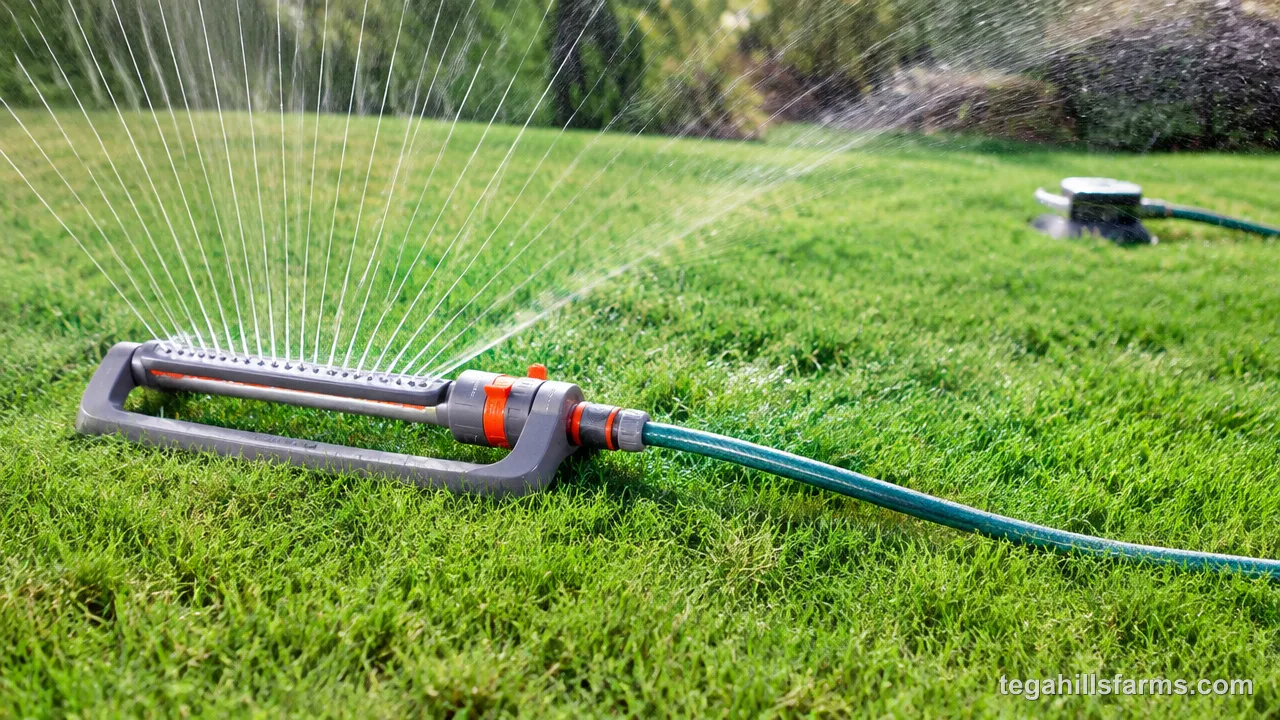
The above-ground job starts at the faucet. You thread on the hose, set the sprinkler or kit bases where you want coverage, and connect the heads. Soaker hose and drip lines lie along beds and borders, held in place with landscape staples every 3 to 4 feet along walkways or bed edges so the lines stay put when you brush past them. Nothing gets dug up, so a first-time DIYer can finish in one afternoon. Learning how to set up a sprinkler on a hose line comes down mostly to placement and tight fittings, not tools.
In-ground installation is construction work. Trenches run across the lawn for PVC or polyethylene pipe, zone valves sit together in a buried valve box, and a backflow preventer keeps irrigation water from flowing back into the household supply. Check local requirements for backflow devices and permits before you start. Wire then runs from each valve to the controller. A mistake in pipe depth, layout or valve wiring ends up underground where it is hard to correct, which is why this job usually goes to a contractor.
Labor makes up 50 to 60% of professional system pricing, so a DIY in-ground install sits in the middle. You rent a trencher, buy the parts and do the digging yourself. That saves the largest share of the bill, but you take on days of heavy physical work.
Without trenching or hired labor, above-ground installation typically costs 40 to 60% less than an underground system. A basic above-ground setup for a typical home yard runs about $100 to $500, and most individual above-ground sprinklers fall between $15 and $100. The full picture of how much a sprinkler costs changes with the number of heads, timers and zones you add.
Above-ground is easier to install in almost every case, and in-ground becomes manageable only if you hire a contractor or have the time and stamina to trench the lawn yourself.
Which Waters Your Lawn More Evenly and Saves More Water?
Zoned heads spaced head-to-head give more uniform coverage across open turf, and drip lines and rotary nozzles cut waste, while a single hose-end head leaves dry rings and soggy spots unless you move it.
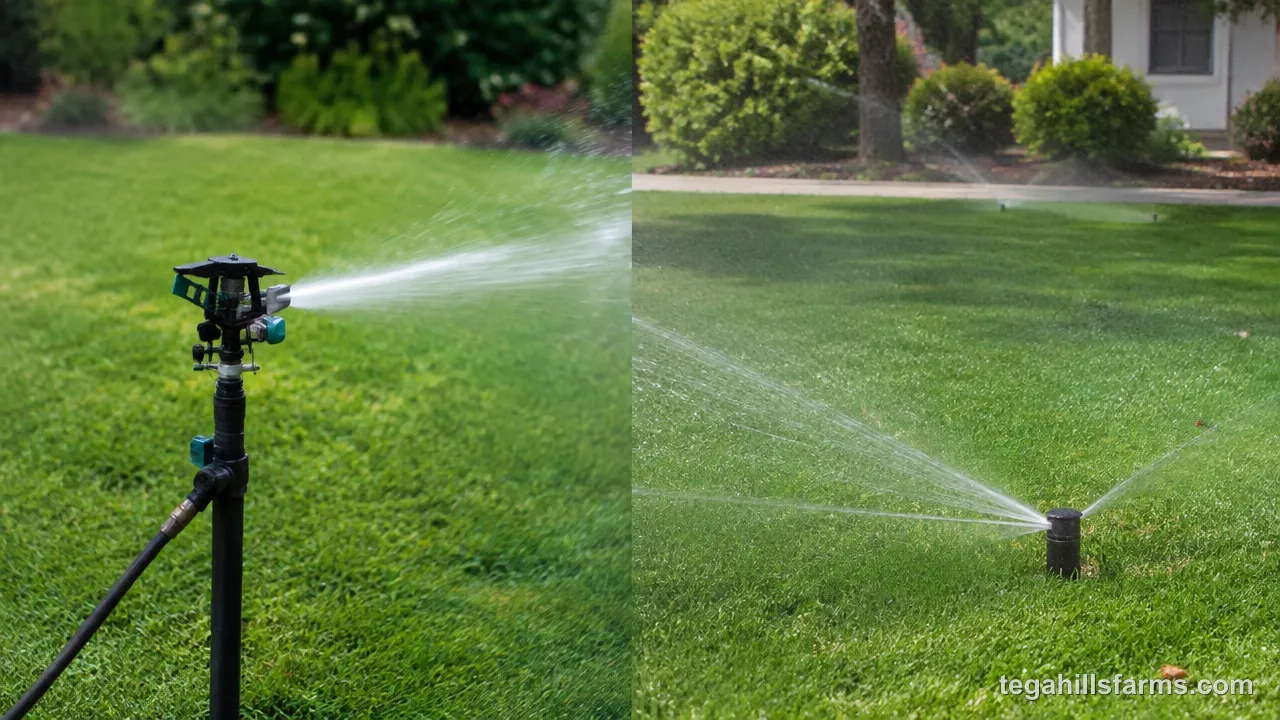
An in-ground layout groups heads into zones by area and sun exposure. With head-to-head spacing, each head throws water all the way to its neighbor. The thin outer edge of one pattern overlaps the stronger center of the next, so the whole lawn gets close to the same amount. Pop-up spray heads cover small areas and narrow strips. Rotors cover larger open lawns with slow, rotating streams that the soil absorbs before the water runs off.
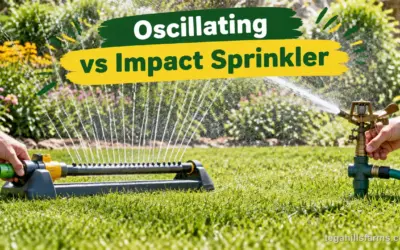
A hose-end sprinkler throws one pattern from one spot. The area near the head and the outer edge rarely get the same amount, so you have to move it by hand to fill the gaps. The difference between oscillating vs impact sprinklers shows up here: one sweeps a rectangle back and forth, the other throws a circle or arc from a pulsing stream. Kits are limited by their pattern too. Orbit’s all-in-one above-ground kit lists up to a 24-foot diameter per head, adjustable from full circle to partial, and anything beyond that reach stays dry.
Water pressure and flow set the limits for both systems. A single outdoor faucet supplies only so much water, so running several heads off one hose shortens how far each head throws. In-ground zones are sized to the available flow, so every head in a zone gets enough pressure. Matching flow to coverage also decides what size sprinkler you need for a given area.
Drip lines and rotary nozzles save 20 to 40% of the water used by inefficient hose-end sprinklers, because they apply water slowly and close to the soil, with less mist drifting away and less runoff.
In-ground waters more evenly across a large lawn, and that gap matters most on wide open turf; on beds and small patches, above-ground drip lines can match it on water use.
Which Is Easier to Automate: Hose Bib Timer or Multi-Zone Controller?
Buried zones can each run on their own schedule and pause when it rains with no one in the yard, while a faucet timer waters one area at a time on a single schedule.
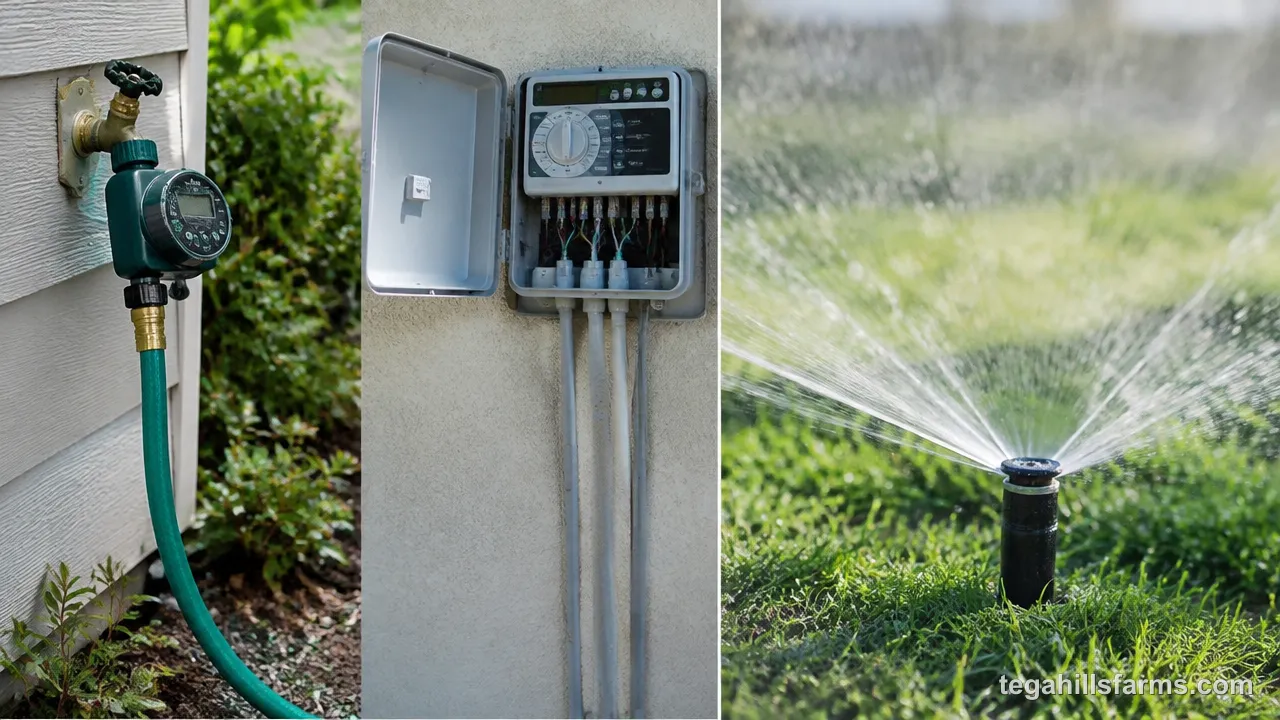
A hose bib timer screws onto the outdoor faucet and opens and closes it at set times. It drives one hose line, so it waters one area with one run time. Covering more ground means moving the sprinkler between runs or adding a splitter with several outlets. A splitter divides the same flow, so each line gets less pressure. Even so, an efficient above-ground setup on a timer uses 30 to 40% less water than hand watering, because it runs for the set time and shuts off instead of depending on your attention.
A multi-zone irrigation controller gives each zone its own run time. A shady bed zone can run briefly while a sunny stretch of lawn runs longer, all from the same panel. With a rain sensor connected, the controller skips a cycle after a storm instead of soaking ground that is already wet.
Run time per zone shapes lawn health. Longer, less frequent watering pushes roots deeper, while short daily runs keep roots shallow and the grass more sensitive to heat. The right settings for how long to run sprinklers depend on grass type, soil and sun.
Day to day, above-ground still means walking out to move heads or hold a hose during dry spells. In-ground is close to set and forget, apart from seasonal adjustments. If your knees and back already feel a long day of yard work, I would weigh that daily walk more heavily than the price.
In-ground suits a hands-off routine, while above-ground suits a hands-on gardener who is outside most days anyway and likes to adjust watering by eye.
Which Lasts Longer and Is Easier to Maintain and Repair?
Buried pipe and heads hold up well out of the sun and away from foot traffic, but surface hoses and fittings are quicker and cheaper to fix when something leaks.
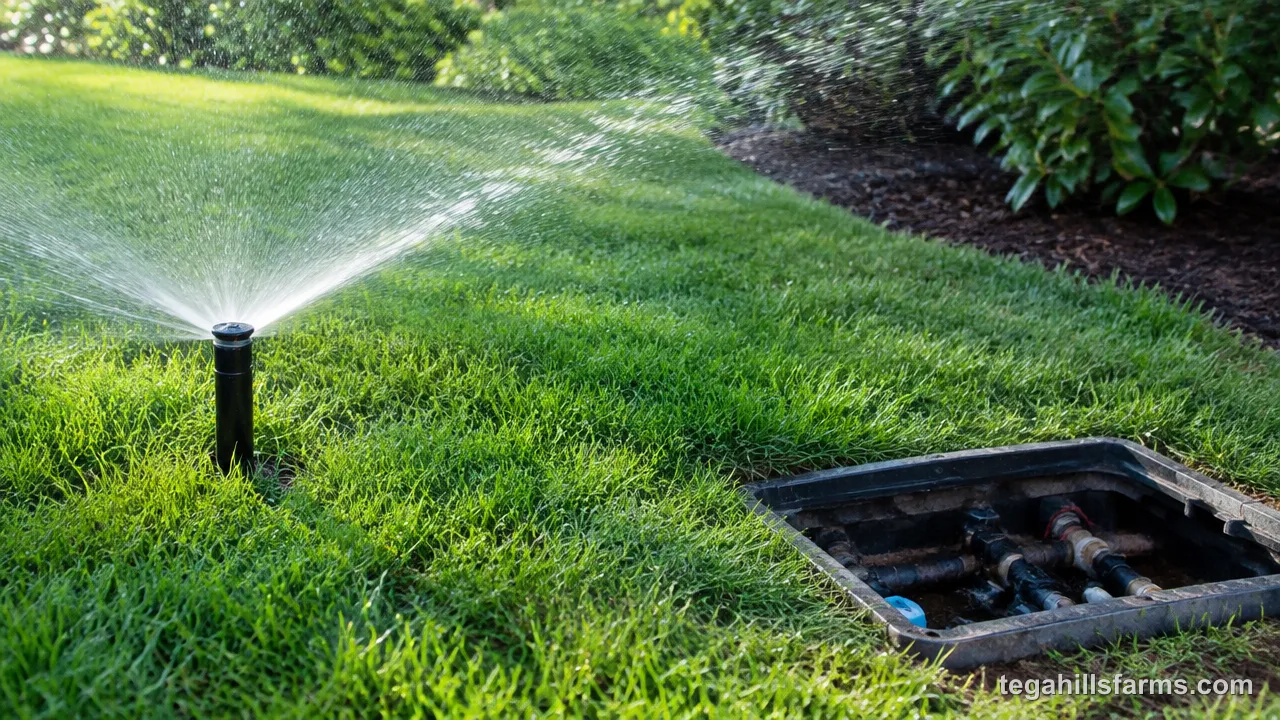
In-ground pipe sits away from ultraviolet light and away from feet, mowers and kids, so it ages slowly. The trouble is what you cannot see. An underground leak shows up only as a soggy spot, weak pressure in one zone or a higher water bill. Rodents and insects can chew through lines, and every repair means cutting into the turf around the break. Where winters freeze, the lines have to be drained or blown out with compressed air before the first hard freeze, and many owners book that service every fall.
Above-ground gear lives in the sun and gets dragged across the yard. Ultraviolet light stiffens hose walls, rubber washers dry out, and plastic couplings crack sooner than brass ones. A leak is easy to spot as a spray at the fitting, and you fix it by swapping a washer, a coupling or a section of hose. Winterizing is just as simple: disconnect everything, drain it, coil it and store it indoors.
Because exposed gear wears out faster, expect to replace hoses and heads over several seasons. Each replacement is small and something you can do yourself. With in-ground, repairs come less often, but each one involves a shovel or a service call. Sun exposure, freeze damage and care decide how long sprinklers last on either system.
Above-ground is easier to keep running if you store the gear each winter and swap worn parts, while in-ground is easier over the long run when you pay for seasonal service and leaks stay rare.
Which Looks Better and Is Safer Around Mowing and Foot Traffic?
Retracted heads sitting flush with the turf leave nothing to trip over or catch with a blade, while hoses and surface sprinklers stay visible and have to be cleared before each cut.
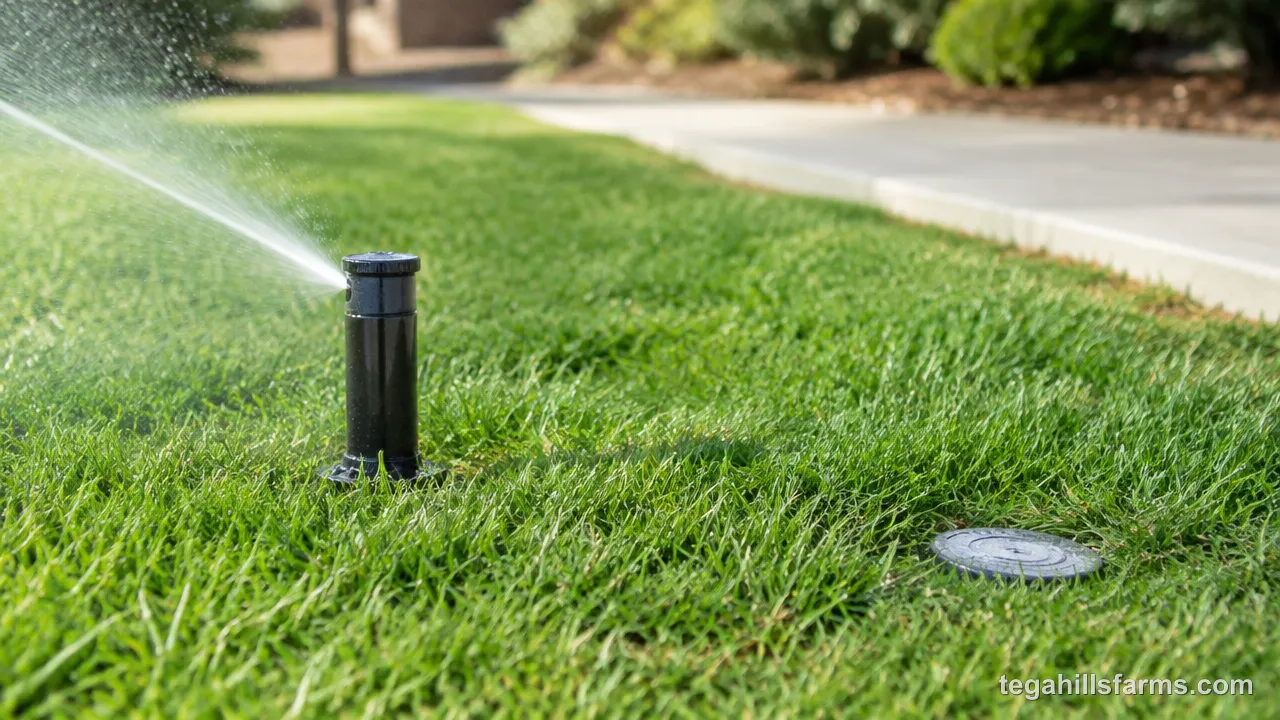
An in-ground system is invisible when it is off. The heads drop below the grass line, the valve box sits under a flush green lid, and the front lawn looks clean from the street. That finish carries real weight when you sell: in-ground irrigation can raise home value by up to 15%.
Above-ground gear changes the weekly routine. Before every mow, the sprinklers come off the lawn and the hoses get pulled aside, or the mower blade can cut them. A hose across a walkway is a trip hazard, especially for older family members and children running across the yard, and it is plain to see from the street. The upside is that the lawn itself is never dug up. Hoses can follow bed edges, a hose reel keeps the main line coiled near the faucet, and drip lines can hide under mulch.
For a backyard or a lawn behind a fence, visible gear matters much less than it does on the front lawn. If you mow yourself, consider whether that extra round of moving equipment each week is something you can live with through a full season.
In-ground fits better for a front lawn you want clean from the street and mowed without detours, while above-ground tidiness is good enough for backyards, beds and rentals where the gear can live along the edges.
Should You Choose Above-Ground or In-Ground Sprinklers?
Go above-ground for a modest yard, a limited budget or a rental, and go in-ground for a large permanent lawn you want watered on schedule without you.
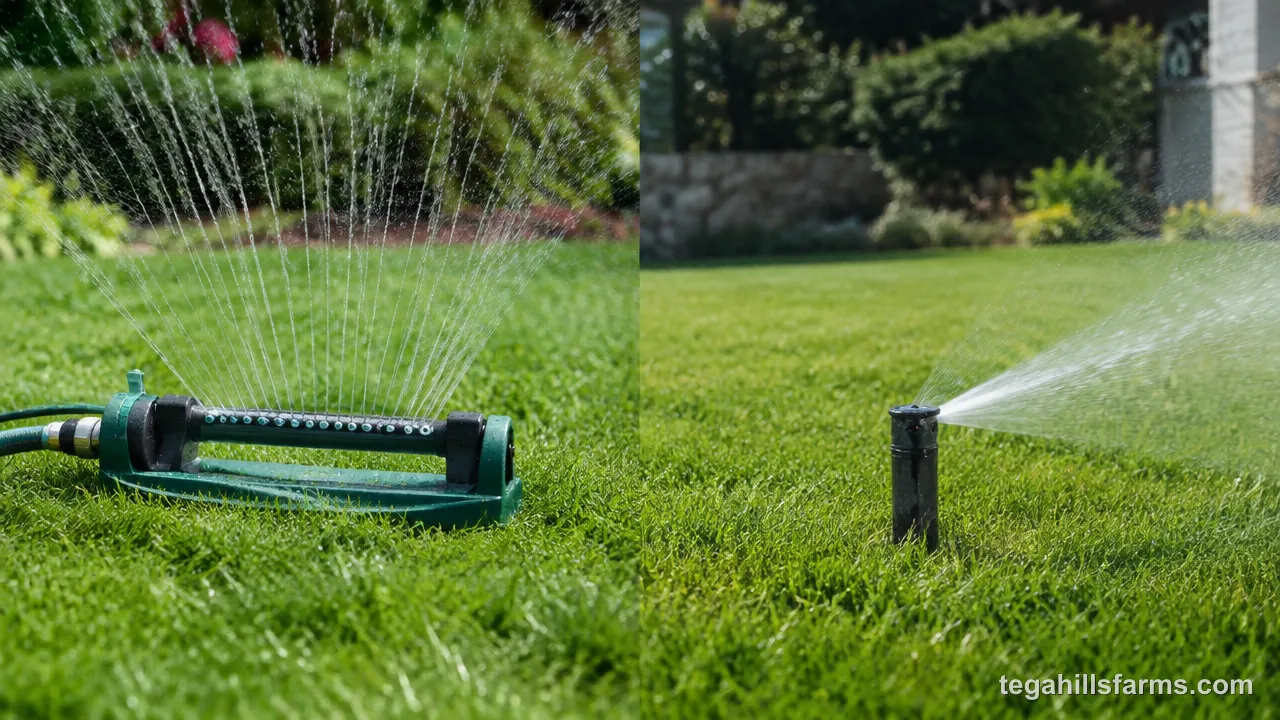
- Choose above-ground if your yard is small or moderate and one hose reaches most of it.
- Choose above-ground if your budget is limited and you would rather spend on plants and soil than on trenching.
- Choose above-ground if you rent, or you need a temporary or flexible setup you can take with you.
- Choose above-ground if you want to set everything up yourself in one day.
- Choose above-ground if you are watering newly seeded patches, flower beds or a vegetable garden that need targeted water.
- Choose in-ground if your lawn is large and open enough that moving hoses would take over your watering days.
- Choose in-ground if you want automatic multi-zone schedules with separate run times and rain shutoff.
- Choose in-ground if the home is a long-term residence where curb appeal and easy mowing matter to you.
- Choose in-ground if you accept a higher upfront investment and professional installation in exchange for less work later.
Moving up from hose-end sprinklers makes sense when the setup starts running your week instead of serving it. That point comes when moving hoses has become a near-daily chore through summer, when dry patches stay dry even after you reposition heads, or when the lawn has grown past what a single hose line can reach. If none of those apply, I would keep the hoses and put the money into good fittings and a reliable timer.
A main lawn, a strip of perennial beds, a few patio containers and a patch of new seed can all sit within reach of the same faucet, yet each one dries out at a different pace. Grass does best with deep, infrequent soakings, while seedlings need light, frequent moisture and shrubs in beds want water at the soil rather than on their leaves. Put all of them on one system and one schedule, and the beds stay waterlogged while the new seed dries out between runs.
Can You Combine Above-Ground and In-Ground Sprinklers in One Yard?
Yes. In-ground zones can water the main lawn while soaker hose, drip emitters or a hose-end sprinkler serve flower beds, the vegetable garden and newly seeded areas, so each part of the yard gets water the way it uses it.
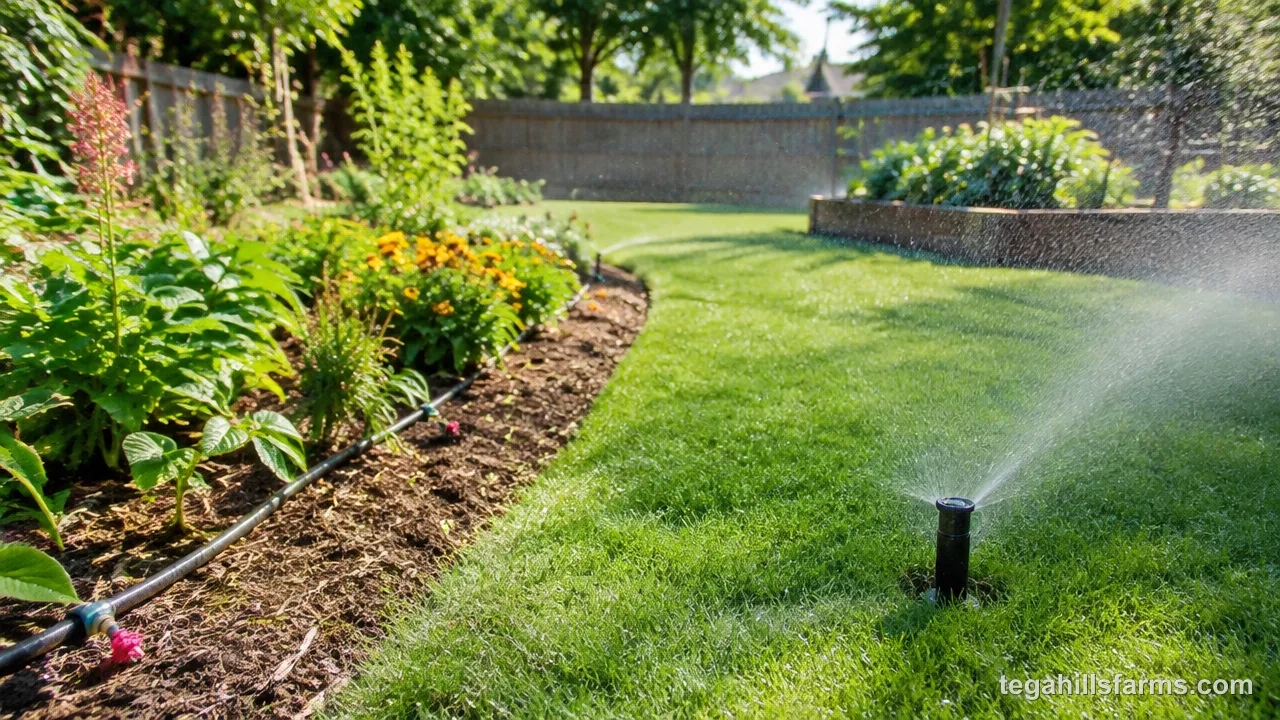
Beds and lawn should not share run times. A lawn zone sprays water over leaves and a wide area on a schedule set for turf. Perennials, shrubs and many vegetables need less water, so a turf schedule keeps their soil soggy and their foliage wet, which encourages root rot and leaf disease. Drip emitters and soaker hose deliver water slowly at the root zone instead, and a modern drip system saves up to 50% of the water a traditional sprinkler uses.
In practice, a bed line can run off its own hose bib timer, or it can become a dedicated drip zone on the in-ground controller, fitted with the pressure regulator and filter that drip lines need. A hose-end sprinkler stays useful for a new patch of seed, then goes back into storage once the grass fills in.
What Happens to Your Existing Lawn When You Install In-Ground Sprinklers?
Trenching cuts narrow strips through established turf along every pipe run, and those strips need reseeding or sod patches before the lawn looks whole again. Above-ground setups leave the grass untouched.
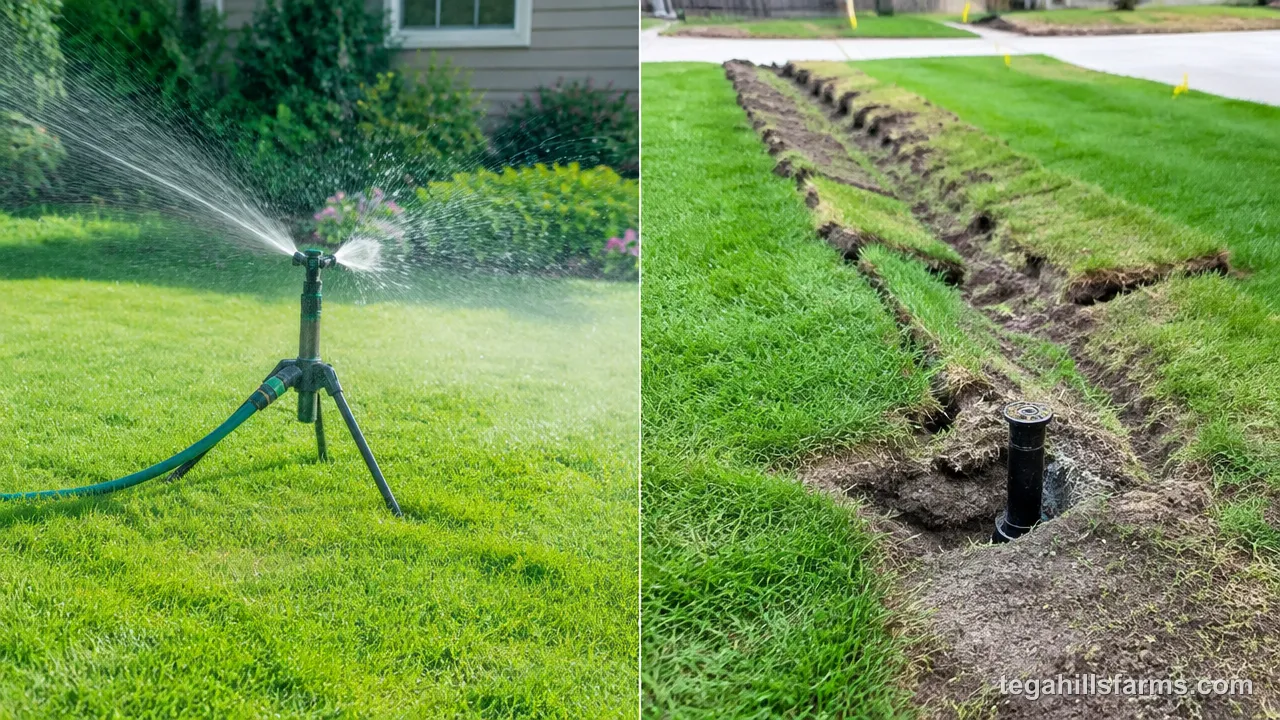
Soil in the trenches is loosened and then backfilled, so it settles over the following weeks and can leave shallow grooves across the lawn. Top up sunken strips with soil before you reseed or lay sod, or the mower will scalp the edges. Keep the patched strips moist, keep foot traffic off them, and hold off mowing until the new grass has rooted firmly enough not to pull up.
Timing reduces the damage. Installing just before you overseed means the trench repair and the overseeding happen in one pass. Installing while a lawn is being established from scratch avoids the scars altogether. The right season depends on your grass type and USDA Hardiness Zone, so plan the work for the time of year your grass grows strongly rather than during summer heat or a freeze.
Write Your Review
No reviews yet. Be the first to share your experience!