

The right sprinkler size depends on three things you can measure at home: the square footage you need to water, the water pressure at your outdoor faucet, and the flow rate your supply delivers in gallons per minute. A hose-end sprinkler only has to match the first two. An in-ground system has to match all three, along with pipe diameter and head spacing.
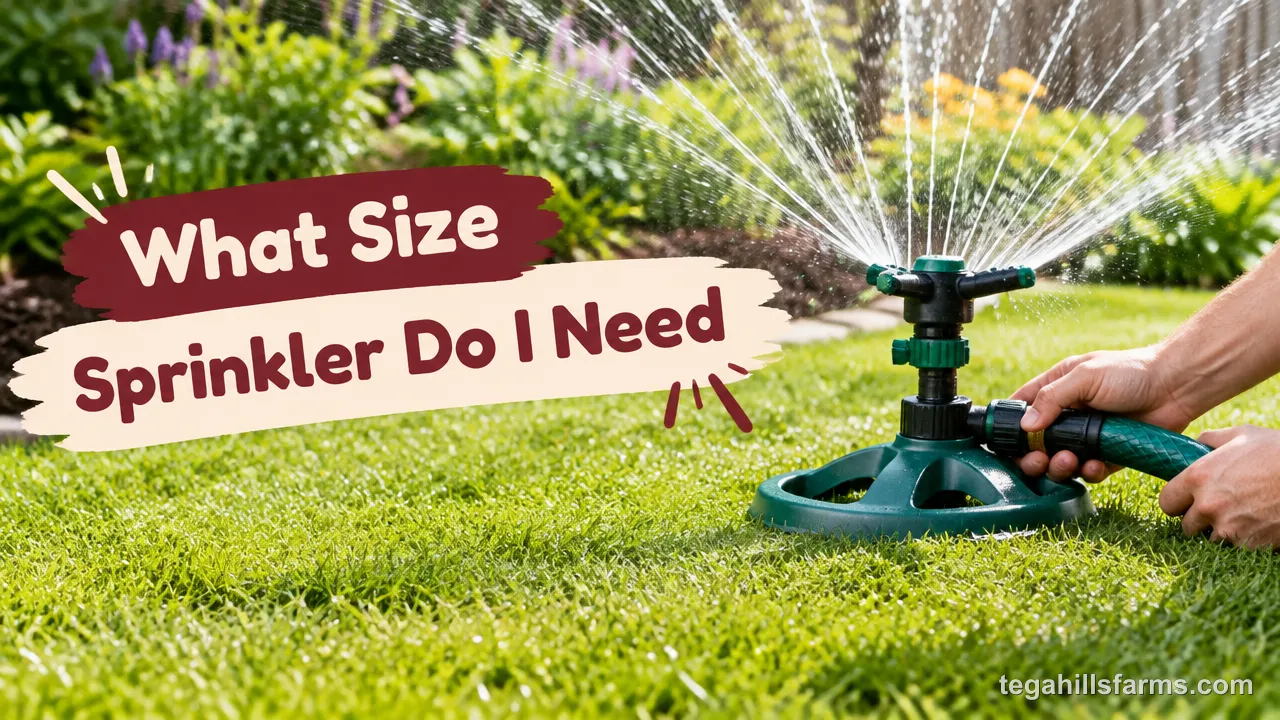
Choosing well means matching the spray pattern to the shape of the lawn, then confirming that your pressure can drive that sprinkler type to its full throw. A sprinkler rated for a large area waters only a fraction of it if the pressure behind it falls short.
The real worry for most homeowners is uneven water: dry patches at the edges, puddles near the head, or runoff across the driveway. Those problems usually come from a mismatch between sprinkler, yard and water supply, and the head itself is rarely to blame.
What Does Sprinkler Size Mean?
Four measurements work together here: the connection diameter that threads onto a hose or riser, the pipe diameter that feeds it, and the coverage area and flow rate it delivers at your pressure.
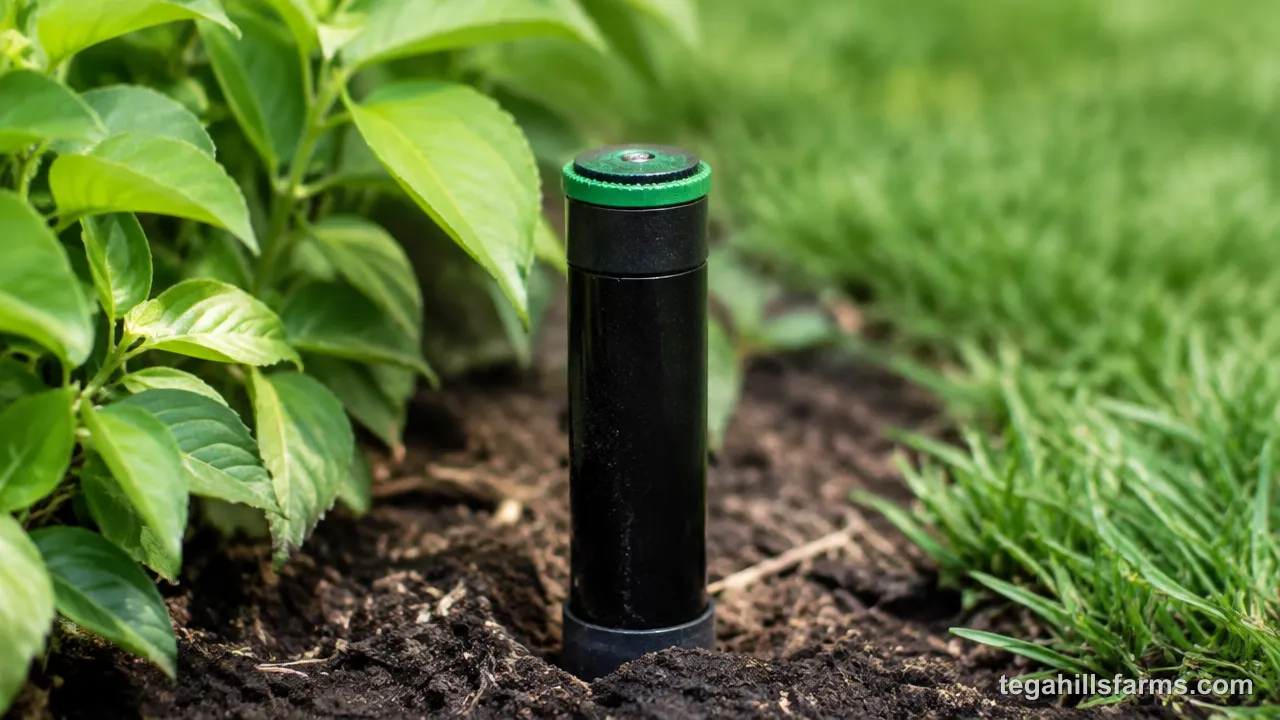
Connection diameter decides whether a head physically fits your hose, riser or fitting. Pipe diameter matters only for permanent systems, where it controls how much water can reach each head without losing pressure along the way. Coverage area, usually listed in square feet or as a throw radius, tells you how much lawn one head can water. Flow rate, in gallons per minute, tells you how much water that head draws, which decides how many heads your supply can run at the same time.
Once you know what those measurements mean, the next step is learning how to choose a sprinkler that matches your yard’s shape and water pressure.
How Do You Calculate the Coverage Area You Need?
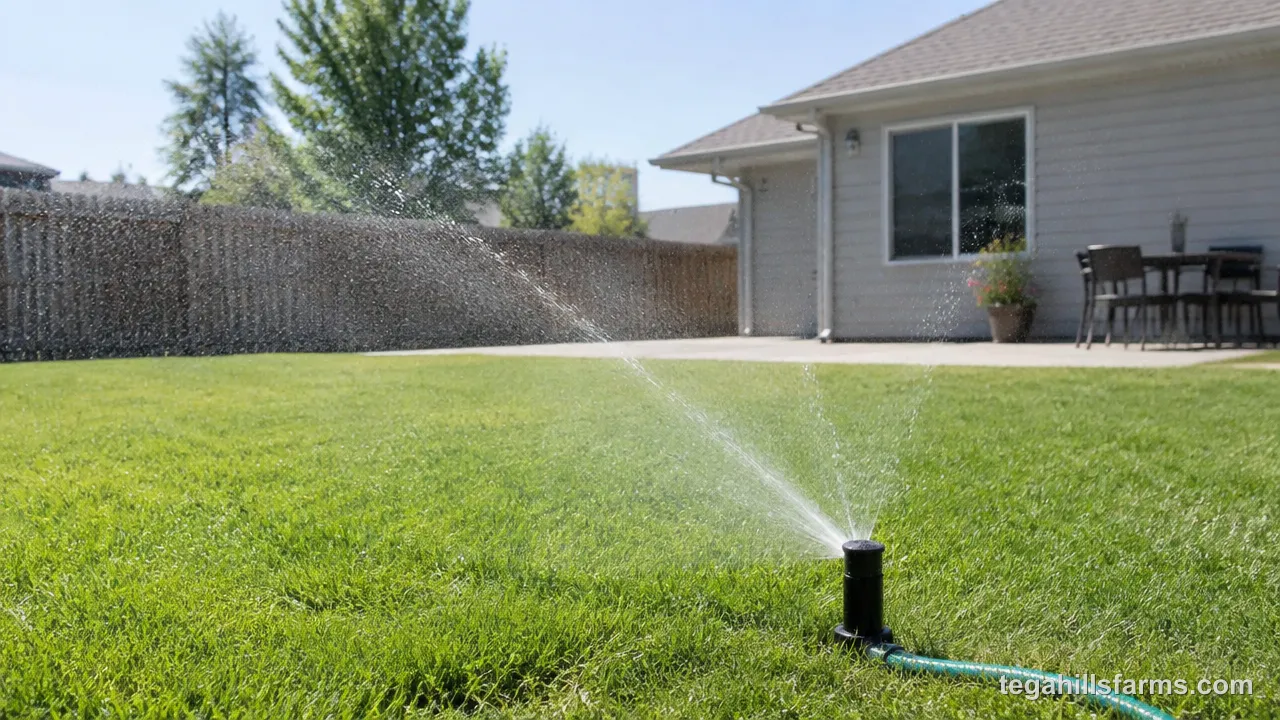
The square footage of turf you actually water, not the size of your lot, sets the coverage target. Houses, driveways, patios and planted beds all take space that a lawn sprinkler should skip, and counting them inflates the number you shop with. An inflated number pushes you toward a larger sprinkler type than the lawn needs, and a larger throw means more water landing on pavement and siding. Measuring takes a tape measure or a measuring wheel, a notepad and about half an hour for an average yard, and the result serves as the baseline for every sizing decision that follows.
Measuring Rectangular and Square Yards
A rectangular or square lawn needs just two measurements: length and width, both in feet. Multiply them, and the result is your coverage area in square feet.
Run the tape along the edge of the grass itself, not along the property line or fence, since a strip of mulch or gravel between the two adds area you won’t water. A measuring wheel is easier than a tape on longer runs because one person can push it without anyone holding the other end.
If the front and back lawns are separate rectangles, measure and record each one on its own. They often get different sun, and you may water them with different sprinklers or on different schedules.
Handling Irregular Shapes and Obstacles
Break an irregular lawn into simple shapes, calculate each one, and add them together. Rectangles use length times width. Triangles use half the base times the height. A circular section uses pi (about 3.14) times the radius squared, measured from the center to the edge.
Curved borders are easiest to handle by drawing a few rectangles that roughly fill the curve. Sketch the yard on graph paper first so you can see where each section begins and ends.
Then subtract anything inside those sections that won’t get lawn water: a shed footprint, a patio, a tree ring, or a flower bed you water by hand or with drip. The remaining figure is the true coverage target, and it’s often noticeably smaller than the first rough estimate.
Which Sprinkler Type Covers Your Yard Shape Best?
Spray pattern shape matters as much as rated coverage, because a sprinkler that throws a circle onto a narrow strip sends much of its water onto the driveway or the neighbor’s lawn. Each sprinkler type has a pattern it handles best and an area range it reaches comfortably. Matching that pattern to your yard’s outline keeps water on the grass and keeps the number of times you move a hose-end sprinkler, or the number of heads in a permanent system, to a minimum. Placement matters as well, and how to set up a sprinkler for overlap at the edges decides whether a well-matched type actually waters every corner.
Stationary and Bubbler Sprinklers
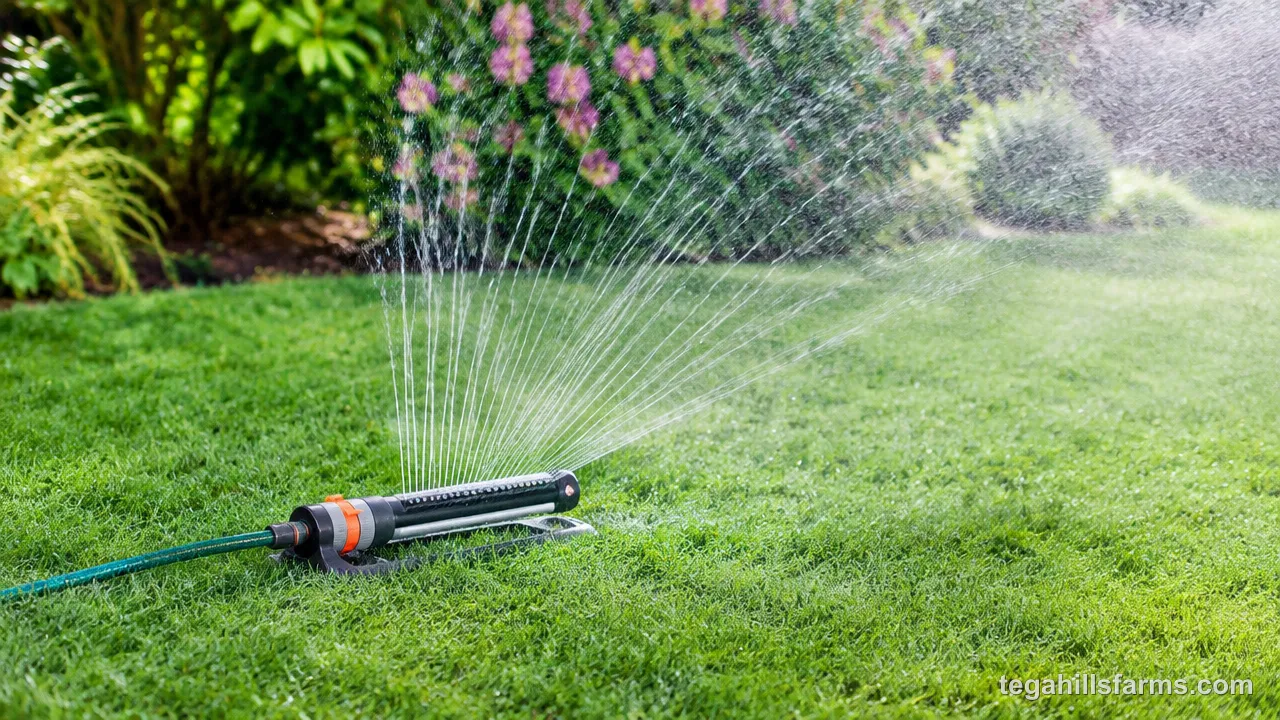
Stationary sprinklers have no moving parts and spray a fixed pattern, so they suit small lawns, side yards and patches between walkways. The most powerful models reach up to 1,800 sq. ft., but most cover far less, and the fixed pattern means the area right next to the head often gets more water than the outer ring.
Bubblers work at a much smaller scale. A bubbler covers about a 5-foot circle and releases up to 2 gallons per minute, adjustable, as a gentle flood rather than a spray. That makes it the right tool for trees, shrubs and individual planting beds, where water needs to soak into the root zone without wetting the foliage.
Oscillating and Rotary Sprinklers
Oscillating sprinklers sweep a bar of nozzles back and forth to lay down a rectangle, which matches the shape of most suburban front and back lawns. With higher water pressure they can cover up to 4,000 sq. ft., and most let you narrow the sweep so the spray stops at a walkway instead of crossing it.
Rotary sprinklers turn streams in a full circle or a set arc, covering up to 3,000 sq. ft. and throwing water up to 30 feet when pressure is adequate. The adjustable arc makes them useful in corners and square patches, where a half or quarter circle fits better than a rectangle. For a square lawn bordered by beds, I lean toward a rotary set to a partial arc, because the streams land heavier and drift less in a breeze than an oscillating fan.
Impact and Traveling Sprinklers
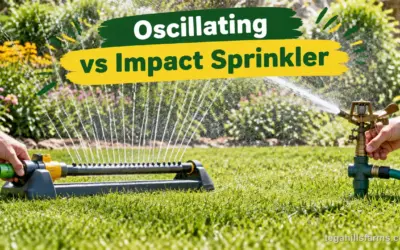
Impact sprinklers cover the largest area of any hose-end type, up to 6,000 sq. ft., by firing a single stream that a spring-loaded arm knocks around in steps. That long, low stream holds up well in wind, which makes impact heads a good fit for big open lawns and rural properties. Comparing oscillating vs impact sprinklers usually comes down to shape: rectangles favor the oscillating sweep, and wide open areas favor the impact’s reach.
Traveling sprinklers move on their own, following the garden hose you lay out as a track. They suit long, narrow yards and irregular paths that no single stationary head can reach. The hose path has to stay clear of steep slopes and obstacles, since the sprinkler stops wherever it gets stuck.
What Connection Size Do Residential Sprinklers Use?
Most residential sprinkler heads use a 1/2-inch connection, while hose-end sprinklers attach with standard garden hose threads.
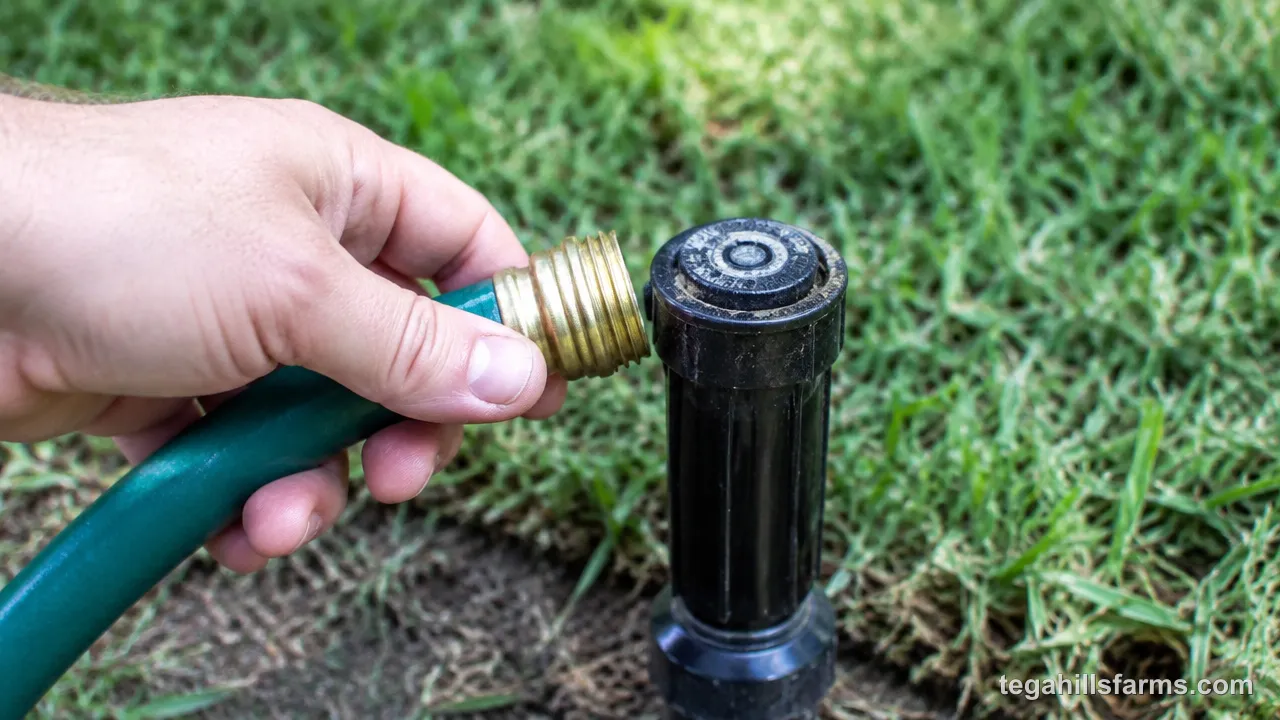
These two thread types are not interchangeable. In-ground heads use pipe threads, which taper and seal tightly when wrapped with plumber’s tape. Garden hose threads are straight and seal with a rubber washer. Forcing one onto the other strips the threads or leaks at the joint.
When a riser, valve or fitting doesn’t match a head you want to use, a threaded adapter bridges the difference. Check both the diameter and the thread type before buying, since a correct diameter with the wrong thread still won’t seal. Bring the old head or fitting to the store if the markings have worn off.
How Do You Size an In-Ground Sprinkler System?
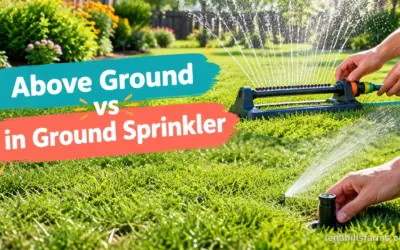
A permanent system is sized from the water supply outward, because the flow your supply delivers caps everything downstream, from pipe diameter to how many heads can run together. Unlike a hose-end setup, mistakes here are buried under the lawn, so correcting an undersized pipe means digging it back up. That cost is why the trade-offs between above ground vs in ground sprinklers deserve a look before you commit. Once you decide to go permanent, pipe and head choices have to account for velocity, throw distance and grass height together, since each one limits the others.
Choosing Pipe Diameter for Flow and Velocity
Pipe diameter has to be large enough to carry a zone’s total flow while keeping water speed below 5 ft/s, the standard safety limit for irrigation pipe. A narrower pipe forces the same volume of water to move faster, which raises friction loss and leaves less pressure at the heads. Faster water also slams harder against fittings when a valve shuts, wearing joints over time.
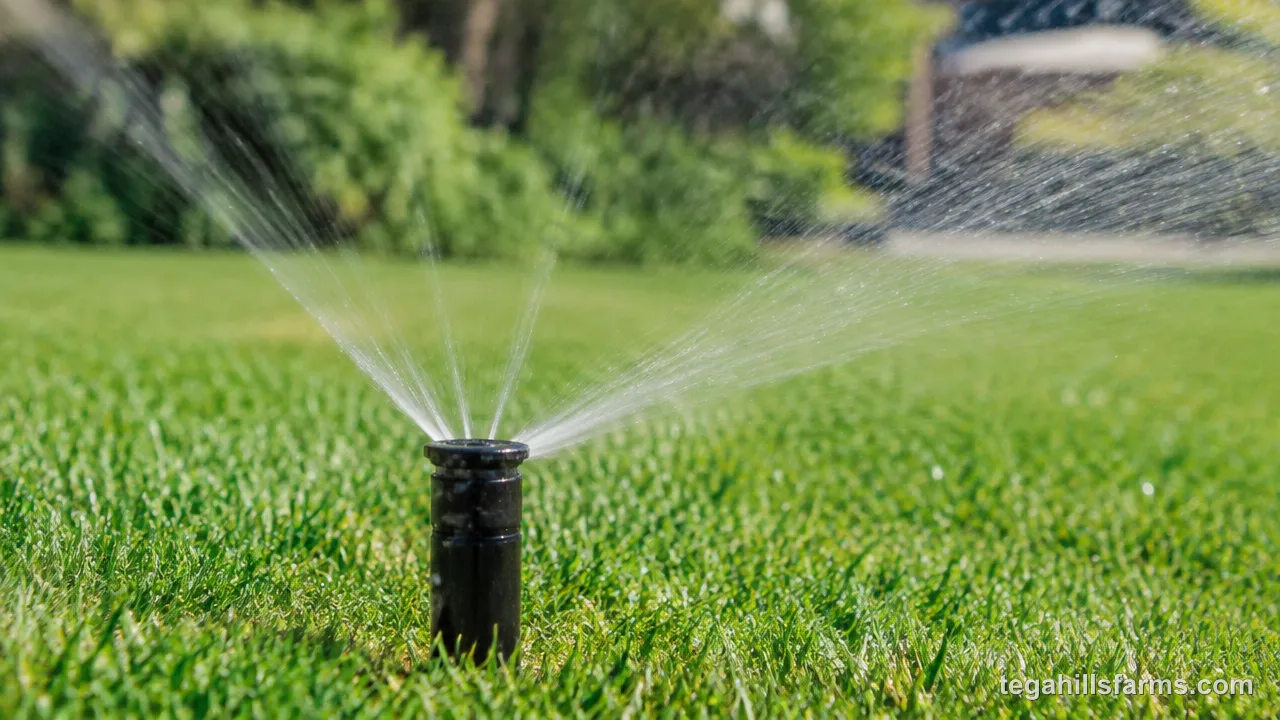
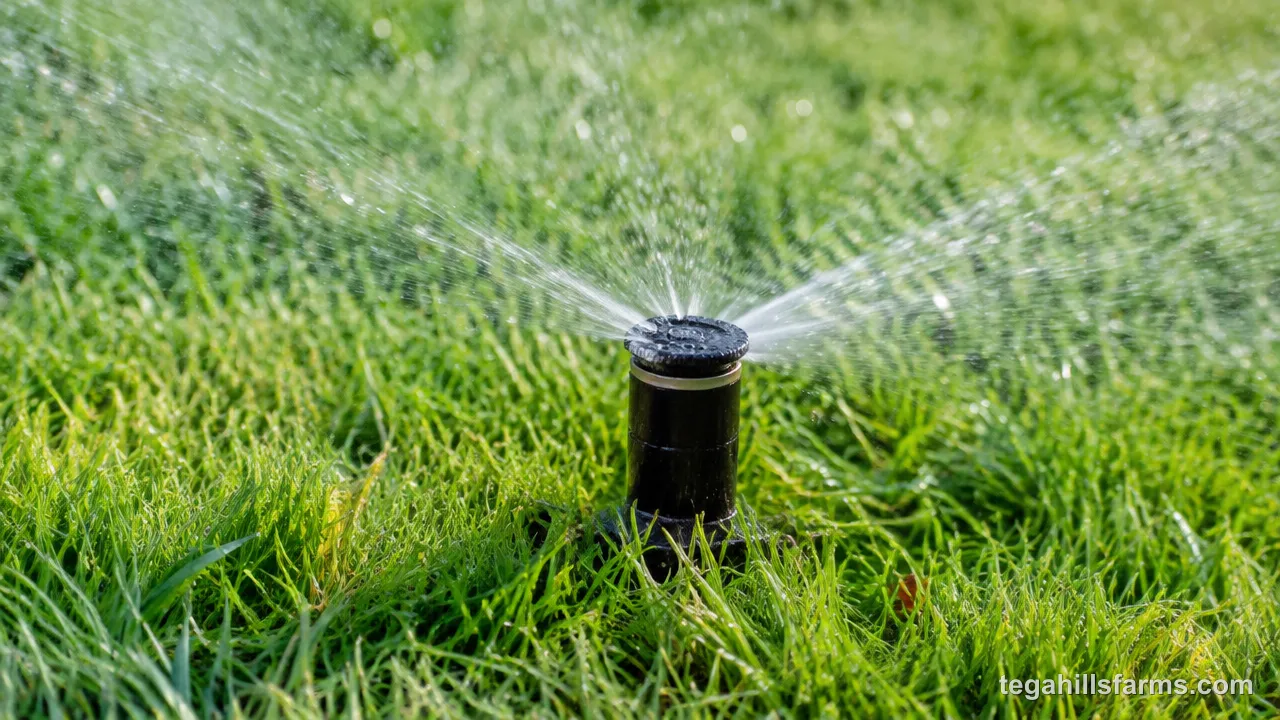
A 3/4-inch pipe handles flow up to 10 gpm. A medium-sized rotor pop-up sprinkler draws 9.8 gpm at 55 psi, so a single rotor fits within that pipe. Add a second rotor on the same line and the flow reaches 19.6 gpm, which calls for 1-1/4-inch pipe.
Size the main line for the zone with the highest flow, since every zone draws through it.
Spacing Rotor and Spray Heads by Throw Distance
Head-to-head spacing means each sprinkler throws water all the way to the next head, so every spot of lawn gets water from at least two directions. Spacing heads farther apart than their throw leaves dry rings between them, because the outer edge of any spray pattern gets the least water.
The medium rotor described above throws 47 ft at the same pressure, so heads of that size sit roughly that far from each other. Spray heads throw much shorter distances, so they sit closer together and suit smaller zones. Always check the manufacturer’s throw chart at your measured pressure, since throw shrinks as pressure drops.
Pop-up height matters too, because grass blocks a nozzle that doesn’t clear it:
- 2 inches: very short grass or ground cover
- 3 inches: lawns mowed at 2–3 inches
- 4 inches: the most versatile height for Bermuda, fescue and Zoysia at typical mowing heights
- 6 inches: taller grass, ground cover beds or shrub areas
What Water Pressure Does Each Sprinkler Type Need?
Your static water pressure in PSI decides which sprinkler types will work, because each design needs a minimum force to rotate, oscillate or reach its rated throw. A screw-on pressure gauge from a hardware store threads onto an outdoor faucet and gives you the reading in seconds; take it with no other water running in the house. Pressure also affects how much water a head puts out each minute, and that output feeds straight into how long to run sprinklers for an even soak. Below a type’s minimum, the head may still spray, but it won’t reach its full coverage area.
Sprinklers for Low to Moderate Pressure
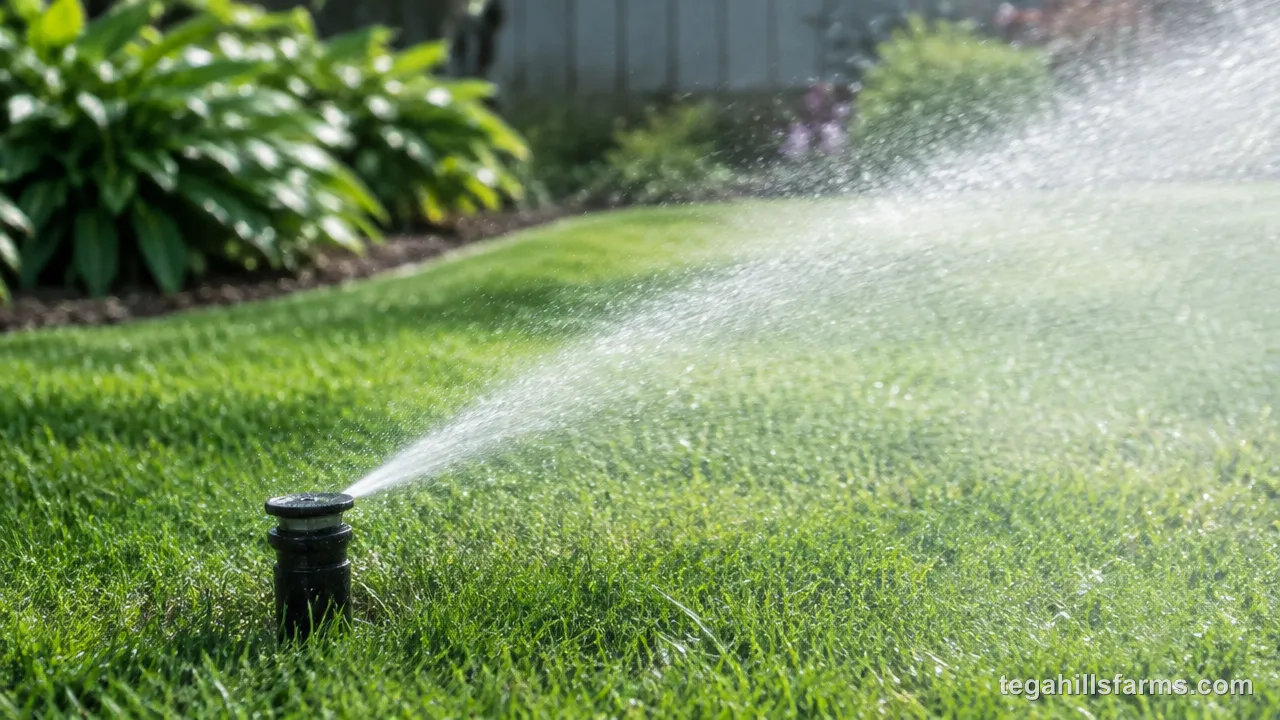
Bubblers, stationary sprinklers and rotary sprinklers all start working at modest pressure, so they’re the safe choice when your gauge reading is on the low side. Bubblers operate across the widest range, from 20 to 90 PSI, because they only need to push water out a short distance.
Stationary sprinklers run at 30 PSI, and their fixed nozzles have no mechanism to drive. Rotary sprinklers work at 30 to 40 PSI and tolerate pressure up to 80 PSI, so they stay usable across a broad range of home water supplies. If your reading sits near the bottom of these ranges, choose a model from these types before trying a sprinkler that relies on moving parts.
Sprinklers That Need Higher Pressure
Impact sprinklers need at least 50 PSI to rotate properly, because the stream has to strike the spring arm hard enough to drive each step. Below that, the head stalls or turns unevenly and soaks one spot.
Oscillating sprinklers run at 40 to 80 PSI, and their largest coverage depends on reaching the upper part of that range. At lower pressure the sweep still works, but the spray falls short of the rectangle’s far edges.
Traveling sprinklers list a 30 to 100 PSI window, because the same water flow that sprays the lawn also drives the wheels along the hose. Check that your gauge reading sits comfortably inside the range for any of these types rather than right at its edge.
A gauge can show strong pressure while the pipe behind it still can’t deliver enough gallons per minute to feed every head at once. That gap shows up as heads that pop up but fall short of one another, leaving brown crescents between them even when every head is the correct size and the runtime looks generous.
How Can You Measure Your Home’s Water Flow Rate?
A bucket and a timer give you your flow rate in gallons per minute. Fill a bucket of known volume from the outdoor faucet you plan to use, time how long it takes, then divide the gallons by the seconds and multiply by 60.
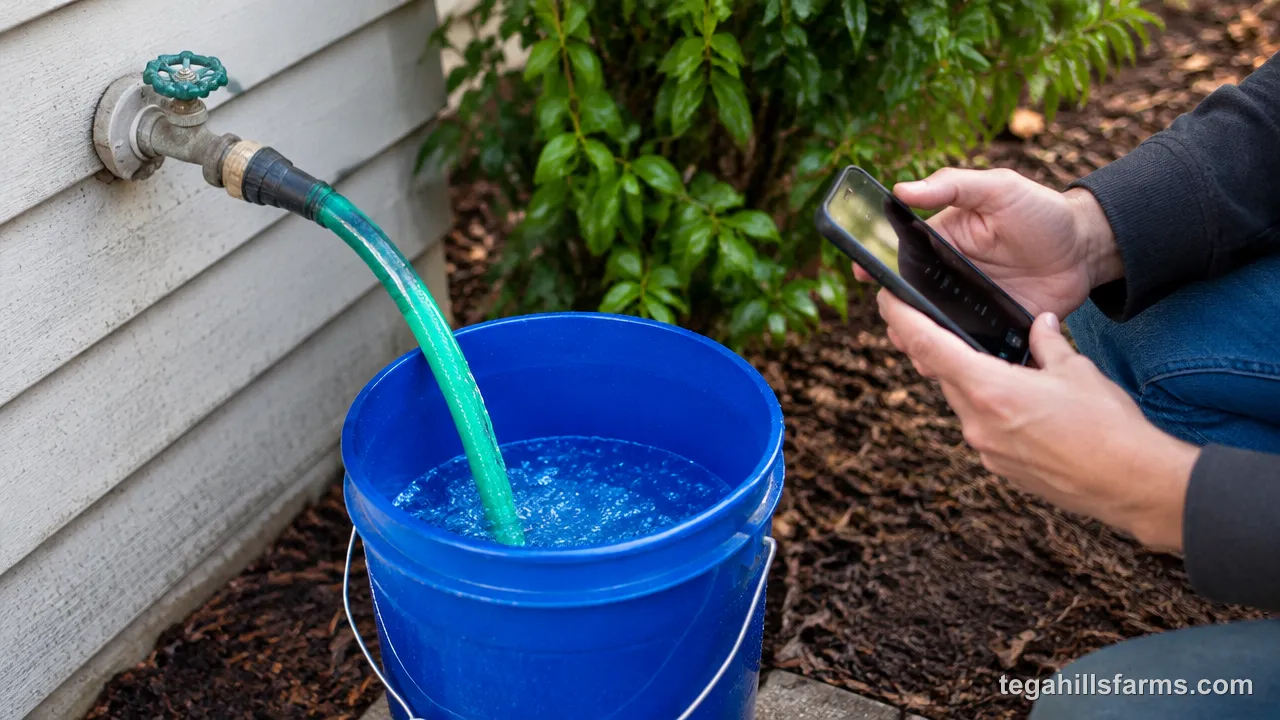
Turn off every other water use in the house before you start, including the dishwasher, washing machine and any toilet that might refill. Open the faucet all the way, and start the timer the moment water hits the bucket.
Run the test two or three times and average the results, since a slow start or an early stop throws off a single reading. A bucket with volume markings on the side gives a more accurate figure than guessing how full it is.
Write the result down next to your pressure reading. Together, those two numbers decide how many heads you can run at once and which sprinkler types will perform well on your supply.
How Many Zones Does Your System Need?
Divide your measured flow rate by the flow of one sprinkler head, and the result is the maximum number of heads one zone can run at once. Divide the total number of heads you need by that figure, round up, and you have the number of zones.
Round the heads-per-zone figure down rather than up. Running a zone right at the limit of your supply leaves no margin for a day when someone runs the kitchen tap or a neighbor’s demand lowers the street pressure.
Group heads by type and by conditions, not just by count. Rotors and spray heads put down water at different rates, and a sunny slope needs different runtimes than a shaded flat area, so each belongs on its own zone. A controller then runs the zones one after another, so the full supply goes to each zone in turn.
What Causes Low Pressure or Uneven Coverage?
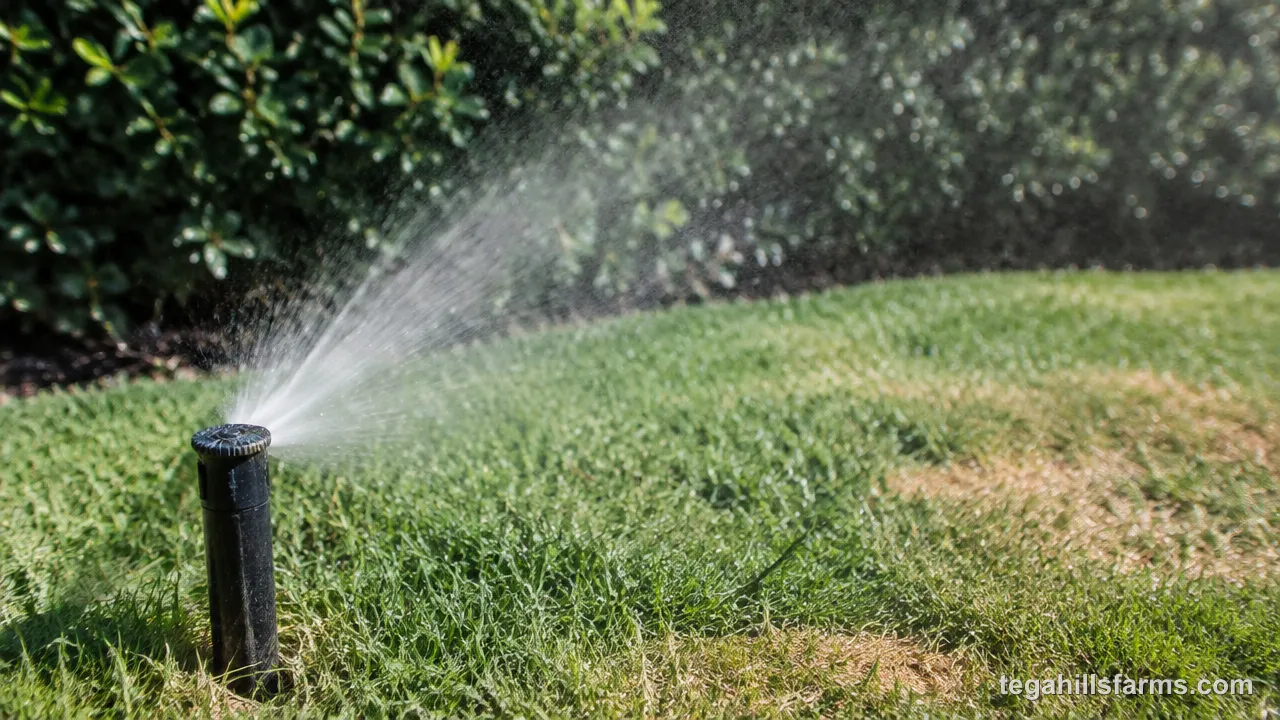
Weak spray and dry patches usually trace back to two sizing mistakes: pipe that’s too narrow for the flow, or a zone carrying more heads than the supply can feed. Both starve the heads farthest from the valve first, which is why dry spots tend to appear at the end of a line rather than near its start. Worn parts can produce similar symptoms, and knowing how long sprinklers last helps you tell an aging head from a sizing error.
Undersized Pipe and Velocity Issues
Pipe that’s too narrow pushes water faster than the safe velocity limit to move the required flow. Higher velocity means more friction against the pipe walls, and that friction eats into pressure along every foot of the run.
By the time water reaches the last heads, there may not be enough pressure left for them to pop up fully or reach their rated throw. The result is a zone where the first heads perform well and the last ones dribble.
Fast-moving water also strikes harder when a valve closes, which stresses glued joints and fittings over the seasons. The fixes are a larger main line or splitting the zone so each half carries less flow.
Too Many Heads on One Zone
Every head on a zone draws from the same supply, so adding heads beyond what the flow rate supports shrinks the share each one receives. The heads still turn on, but their spray shortens and loses force.
Shorter throw breaks head-to-head coverage. Gaps open between neighboring heads, and those gaps turn into brown rings or crescents that no amount of extra runtime fully fixes, since the edges still get less water than the center.
The cure is to move some heads to a new zone. Recheck your flow rate against the per-head flow before deciding how many to shift.
Common Questions About Sprinkler Sizing
Can I use an adapter to fit a sprinkler to a different connection?
Yes, a threaded adapter connects heads and fittings with different diameters or thread types. Match both the diameter and the thread style on each end, since pipe threads and garden hose threads won’t seal against each other. Wrap pipe threads with plumber’s tape and use a fresh rubber washer on hose threads.
Does hose diameter change sprinkler performance?
It does. A wider garden hose loses less pressure over the same length than a narrow one, so more force reaches the sprinkler. The effect grows with hose length, which matters most for impact and oscillating sprinklers that need higher pressure. Keep runs as short as practical and avoid kinks.
Can I mix rotors and spray heads on the same zone?
Avoid it. Spray heads put down water much faster than rotors, so a zone running both overwaters the spray areas while the rotor areas stay dry. Keep each head type on its own zone, and run each zone for the length of time its head type needs.
Do I need a rain sensor on an automatic system?
A rain sensor stops scheduled watering when rain has already done the job, which saves water and keeps the lawn from staying soggy. Some communities require them on new automatic systems, so check local rules before installing. Smart controllers that pull weather data offer a similar shutoff without a separate sensor.
Does a larger sprinkler cost more?
Generally, sprinkler types with longer throw and moving mechanisms cost more than small fixed-pattern heads, and an in-ground system adds pipe, valves and a controller on top. Checking how much a sprinkler costs for your chosen type before buying helps you weigh one large head against several smaller ones.
Write Your Review
No reviews yet. Be the first to share your experience!