

Safe hedge trimming comes down to protective gear, a pre-use check, a two-handed grip below shoulder height and a full shutdown, whether your trimmer is corded electric, battery or gas. Skip one and the blades make you pay for it.
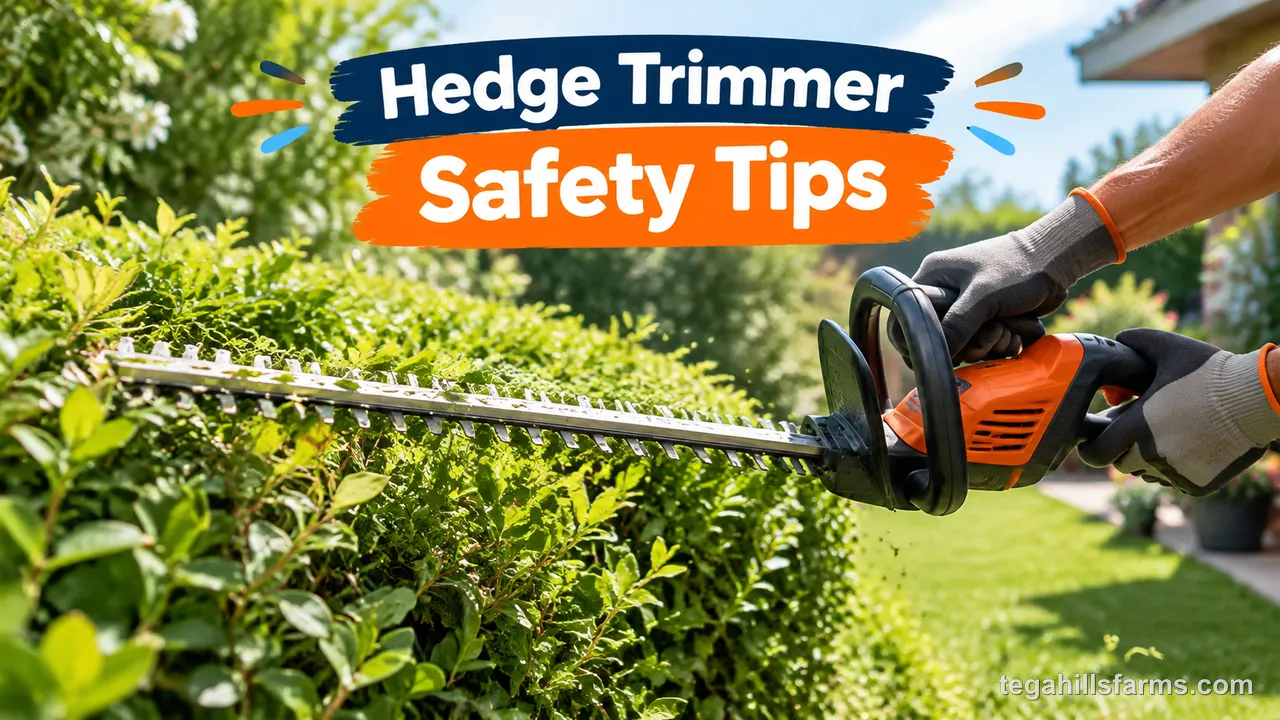
Each power type adds its own risk. Corded models bring shock and cord-cutting hazards, battery models can start without a sound, and gas models add fuel, exhaust and noise. The right precautions depend on which one is in your hands.
What worries most people is the blade itself. Dual-action blades have two moving edges, a hidden wire can jam them instantly, and a thick branch can twist the tool right out of your grip.
Before the first cut, put on glasses and gloves, then walk the hedge line looking for wire, fencing and anything else the blades shouldn’t meet. That short walk costs nothing and saves a lot of chipped blades.
Why Does Hedge Trimmer Safety Matter?
Hedge trimmer safety is a set of habits that cover gear, setup, technique and shutdown, built to keep you clear of exposed reciprocating blades, sudden jams, electric shock, fuel hazards and noise.
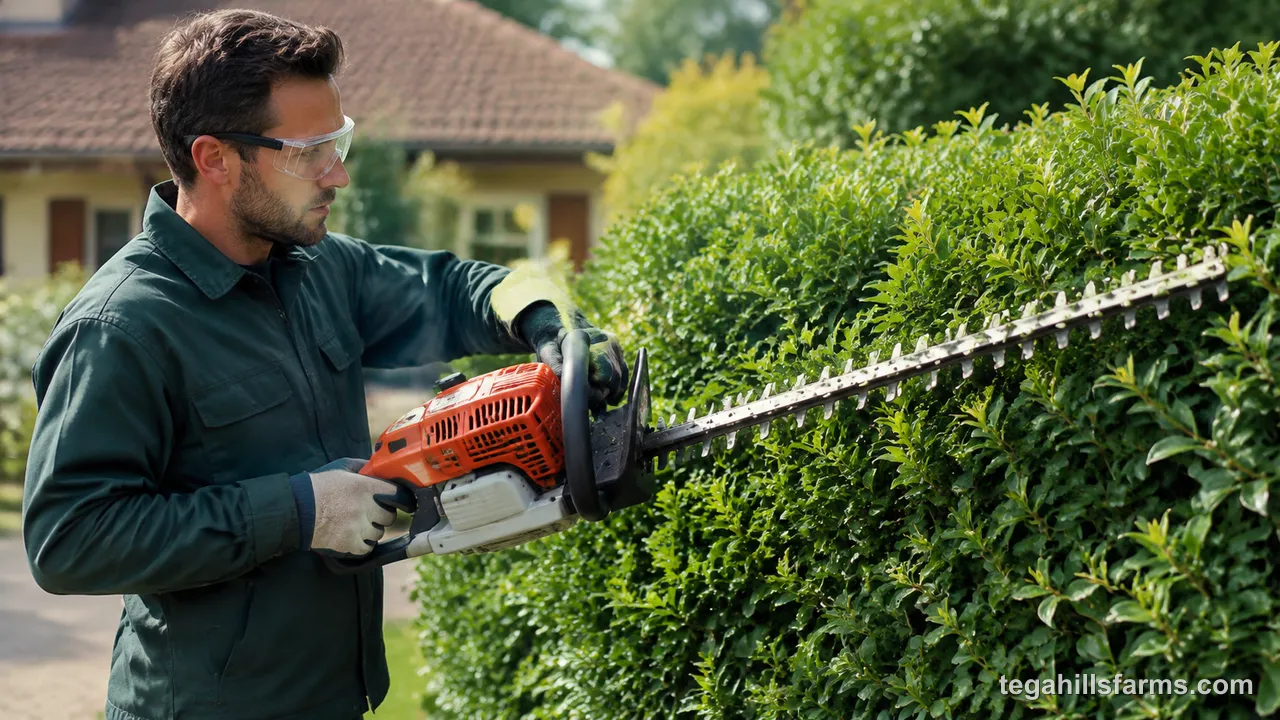
The blades are the obvious danger. They cut on both edges, and a blade jam can snatch the whole tool sideways. Corded users face electric shock if they cut their own cable, gas models add fuel and exhaust, and noise exposure builds over a long session even when nothing goes wrong.
A safe job also starts with the right machine, so it helps to read up on how to choose a hedge trimmer, since blade length, weight and guard design all affect how much control you have.
What Protective Gear Should You Wear When Trimming a Hedge?
A solid kit protects your eyes and ears, your hands, feet and body, and adds extra gear for tall hedges and long sessions. Build it around the job rather than grabbing a generic pile of equipment.
Eye and Ear Protection
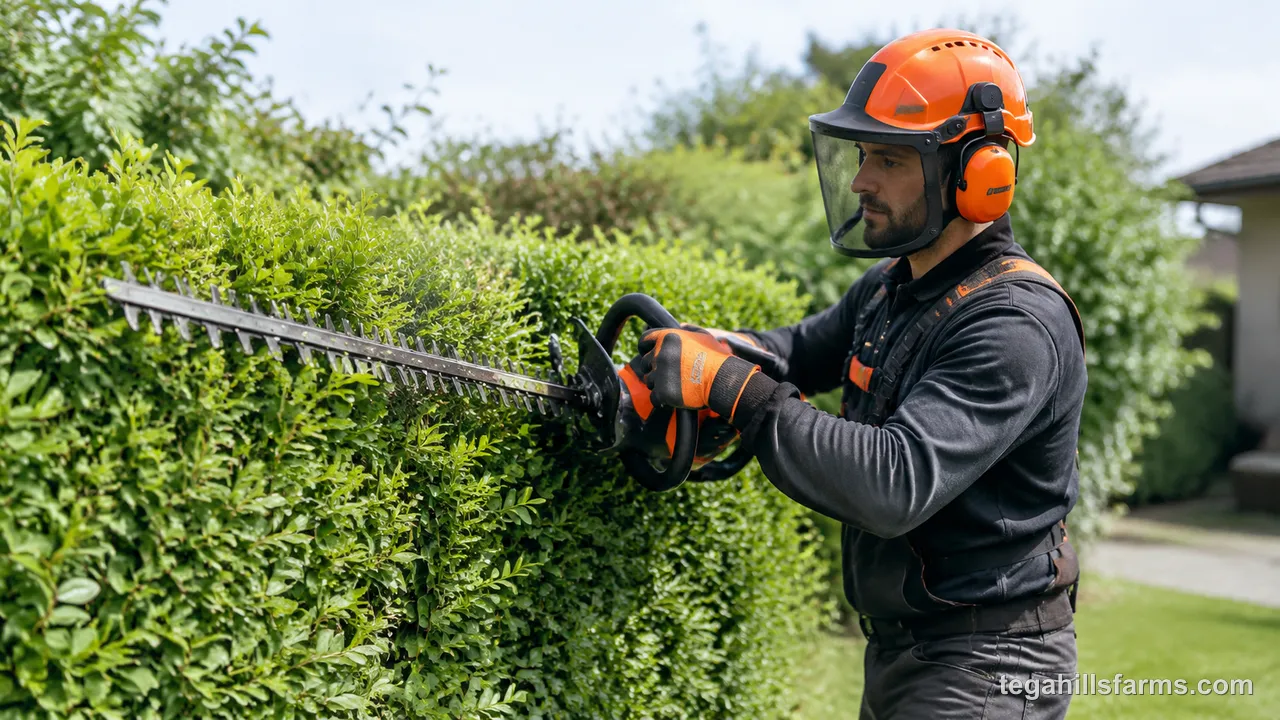
Wear safety glasses or goggles every time you trim, and add ear protection with gas models and long sessions.
Blades throw clippings and splintered twigs at face height, and one stray twig is enough to cause a serious eye injury. Goggles seal better than glasses when the hedge is dusty or the cuttings are fine and dry.
Gas engines are loud enough to wear on your hearing, and the damage adds up over a season of weekend trims. Electric and battery trimmers are quieter, but a couple of hours of high-pitched blade noise still tires your ears. Earmuffs or foam plugs both work, so pick whichever you will actually keep on.
Gloves, Footwear and Clothing
Pick cut-resistant gloves for grip and blade protection, non-slip, closed-toe shoes for footing, and fitted long sleeves and pants to cover your skin without snagging.
Gloves should be snug enough that you can feel the trigger and safety lock. Bulky or loose gloves slip on the handles, and that is exactly when control gets lost.
Shoes matter more than most people think. Clippings on the ground make a slick carpet, and sandals leave your toes in the blade’s reach if you stumble.
Loose cuffs, dangling drawstrings and baggy sleeves can catch in moving blades. Close-fitting clothing stays out of the way and still shields your arms from scratches and flying twigs.
Extra Protection for Tall Hedges and Long Sessions
For tall hedges and long sessions, add a face shield and a hard hat over your safety glasses.
When you cut upward, debris falls toward your face instead of away from it. Heavy cuttings can also drop from above, which is where a hard hat earns its place. The face shield catches what slips past glasses, though it never replaces them.
Fatigue is the quieter risk. Tired arms drift, and a drifting blade is a hazard. Stop for a break when your grip loosens or your aim wanders, and switch to a pole tool if a cut would reach above shoulder height.
How Do You Check the Trimmer and the Work Area Before You Start?
Before every start, check the trimmer itself and the hedge and ground around it. A damaged guard or a hidden wire is where trouble usually begins, and both checks take only a few minutes.
What Should You Inspect on the Trimmer Itself?
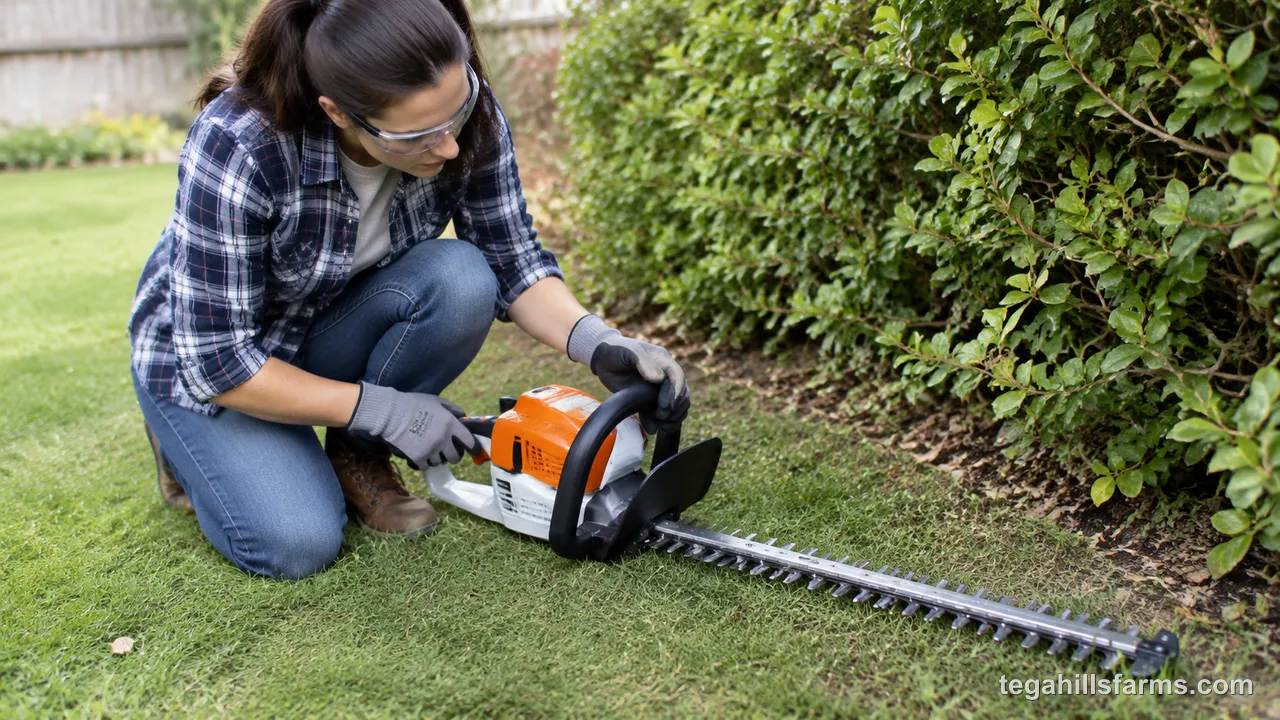
Look over the blades, hand guard, blade tip protector, safety lock and trigger, and handles and fasteners before every start.
Run a gloved finger along the blades, with the power source disconnected, and look for chips, bends or dull spots. Confirm the hand guard sits firmly in place and the blade tip protector is intact. The safety lock should engage and release cleanly, and the trigger should spring back when you let go.
Then shake the tool gently and listen for loose screws or rattling parts. A loose handle or guard shifts under vibration and can fail mid-cut. If you are shopping for a replacement, what to look for in a hedge trimmer includes these same guard and lock features working as designed.
How Do You Prepare the Hedge and the Area Around It?
Scan the hedge for hidden wire, fencing, rocks and garden stakes, and keep people and pets well clear of the cutting zone.
Blades buried in a hedge hit what you cannot see. Old wire, a chain-link fence woven through the branches or a forgotten stake can jam the bar in an instant and kick the tool toward you. Part the foliage and look before you cut.
Check your footing too. Clear tools, hoses and fallen branches from where you will be standing, and walk out the full length of your route. Bystanders and pets should stay out of reach of flying clippings and moving blades, and a gate or a quick word before you start keeps them there.
How Do Safety Risks Differ Between Electric, Battery and Gas Hedge Trimmers?
Each power type has one main hazard: cord and shock risk on corded electric models, silent accidental starts on battery models, and fuel, exhaust and blade stop on gas models.
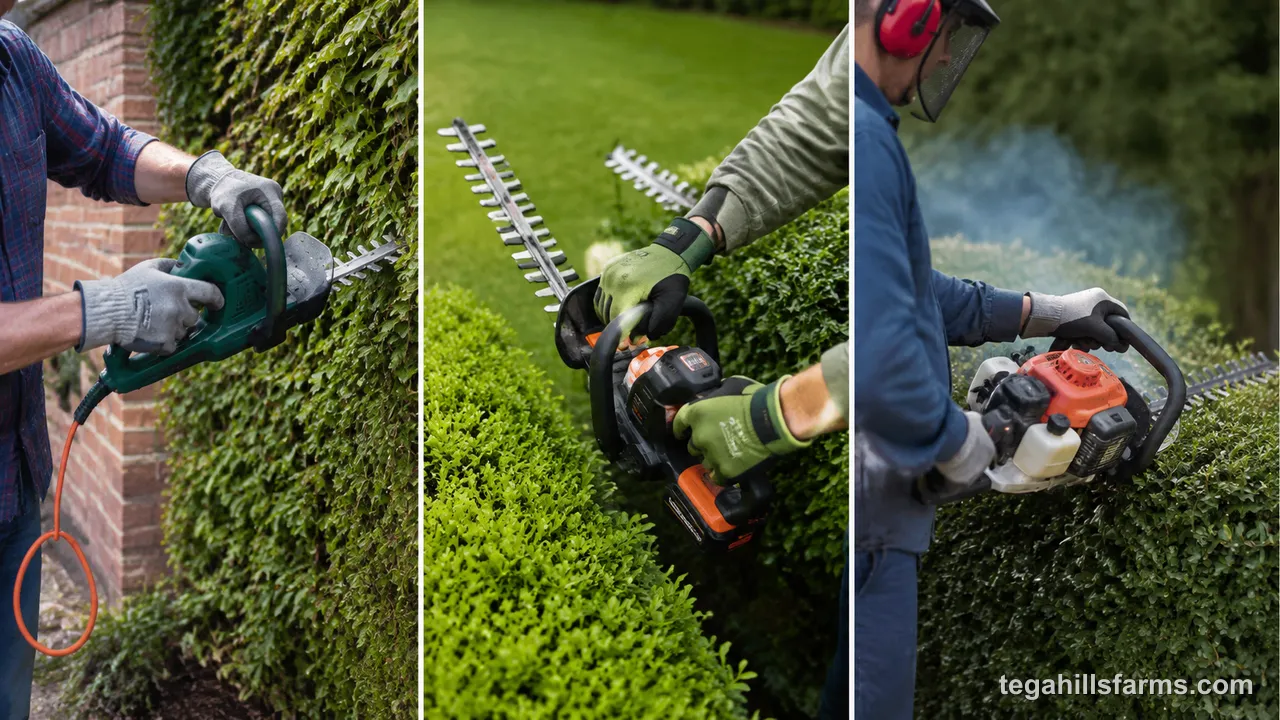
Corded Electric Models: Cords, Outlets and Wet Conditions
Corded models carry shock and cord-cutting risk, so use an outdoor-rated extension cord plugged into a GFCI-protected outlet.
Keep the cord behind you and away from the blades at all times, and route it over your shoulder or well to the side as you move. Before each session, run your hand along the cord and extension cord looking for nicks and exposed wire.
Never trim in rain or when the hedge is soaked. Water and live power are a bad combination, and wet leaves also make footing slippery. Unplug the trimmer before you clear a jam or set it down.
The motor’s watt rating tells you how much power it has, and more watts help it handle thicker growth. It does nothing to make wet conditions or damaged cords any safer.
Battery Models: Quiet Start-Up and Battery Handling
A quiet battery trimmer has blades just as sharp and fast as any other, so remove the battery for any blade work.
With no engine roar, it is easy to forget the tool is live. Accidental starts happen when you carry it with a finger near the trigger or set it down with the battery installed. Engage the safety lock whenever you pause, and pull the battery before you clean, adjust or clear a jam.
Charge batteries on a hard, dry surface away from clutter, and store them somewhere cool and dry. Retire any pack that is swollen, cracked or hot to the touch. A higher amp-hour rating gives you longer runtime, but it also tempts you into longer sessions, so stop when you get tired.
Gas Models: Fuel, Starting, Exhaust and Blade Stop
Gas models add fuel, exhaust, vibration and noise hazards, so refuel a cool engine away from sparks and start it on stable, level ground.
Mix fuel the way your manual says, and wipe up any spill before you start the engine. Never smoke or work near open flame while handling gas. Run the trimmer outdoors only, since exhaust fumes build up quickly in enclosed spaces.
The blades keep moving for a moment after you release the throttle, so wait for a full stop before you set the tool down. Vibration also tires your hands over time.
If the engine will not fire, resist risky workarounds. Learn why a hedge trimmer won’t start before you pull the cord again, because flooding or a fouled plug is usually the cause and neither calls for shortcuts.
How Should You Stand and Hold a Hedge Trimmer?
Safe handling means a balanced two-handed stance, cutting no higher than shoulder height, and using a pole trimmer when the hedge is taller.
Stance, Footing and a Two-Handed Grip
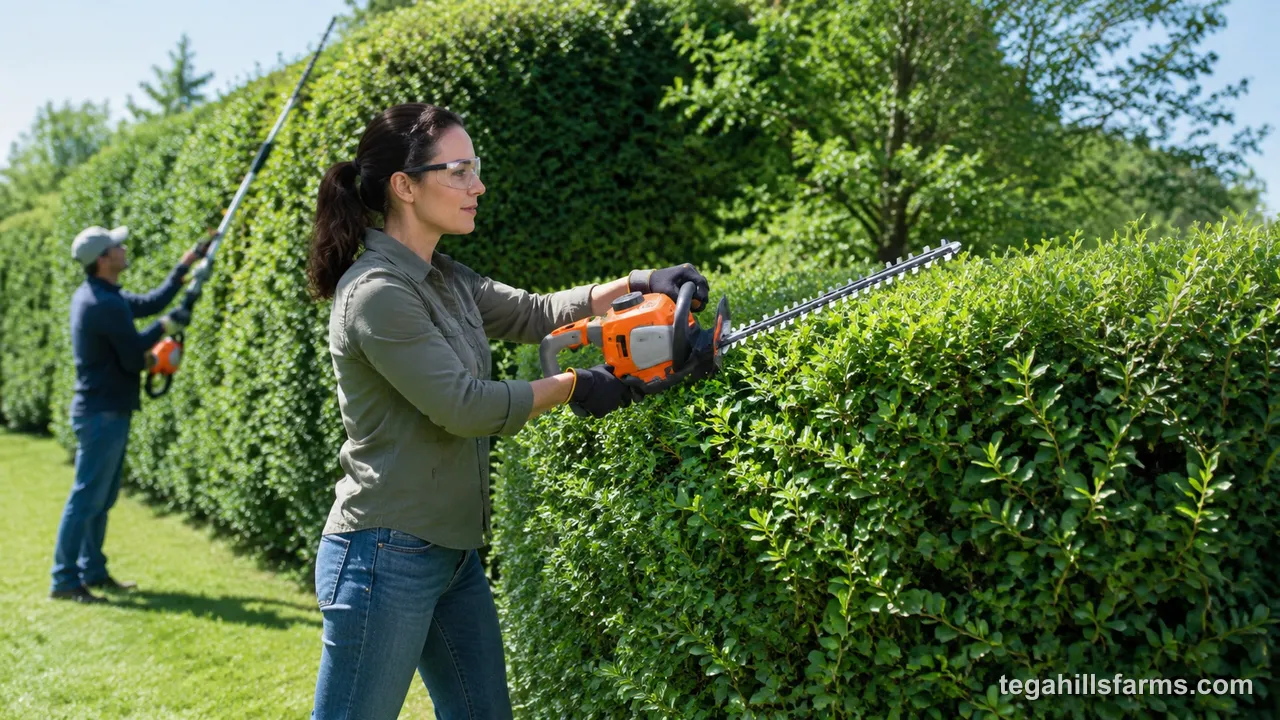
Keep both hands on the handles at all times, with your feet apart and planted for balance.
Hold the front handle with your off hand behind the hand guard and the rear handle on the trigger side. One-handed cutting is how trimmers get away from people. The blades swing toward your legs the moment your grip slips.
Stand with your weight even and your knees slightly bent, and move your feet instead of leaning. Reaching out over your toes shifts your balance forward. Keep the blades pointed away from your body, and let go of the trigger before you adjust your footing.
Why Stay Below Shoulder Height and Off Ladders?
Never cut above shoulder height, and stay off ladders. Control drops fast once your arms are overhead.
Raised arms tire quickly, and a heavy trimmer starts to wander. Debris also falls straight toward your face. A ladder adds a fall risk on top of a running blade, which turns a small slip into a serious one.
For tall sections, work from a stable platform at a safe height or switch tools. A pole trimmer or a different method for the high growth beats stretching with a live blade every time.
Pole Hedge Trimmers and Overhead Hazards
A pole hedge trimmer keeps your feet on the ground, but the weight sits at the far end of the shaft, so use a shoulder strap and keep your balance.
That end-heavy balance makes the tool tiring and awkward at full reach. Short, controlled cuts work better than long sweeps. Keep both hands on the shaft and let the strap carry some of the load.
Look up before you raise the head. Overhead power lines are a deadly hazard around extended shafts, so never raise any trimmer toward or near them. If a branch hangs near a line, leave that cut to a professional.
How Do You Cut a Hedge Safely and Handle Thick Branches?
Two habits keep cutting predictable: a steady blade motion in a set order, and knowing when branches are too thick for the trimmer.
Cutting Motion and Order: Top or Sides First?
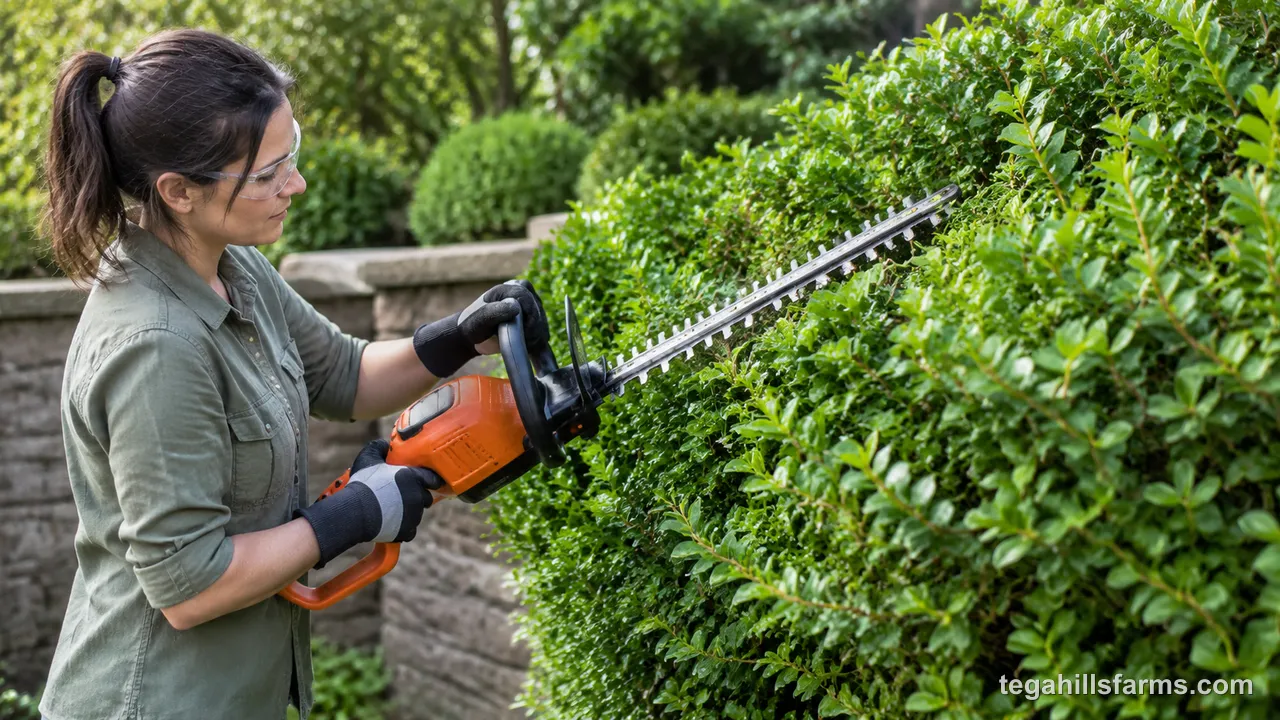
Work the sides first, bottom to top, then finish with the top. Use a steady sweeping motion with the blade slightly angled.
Cutting the sides first keeps the top line in view and lets clippings fall clear of your next pass. Angling the blade slightly makes the hedge a touch wider at the base, which keeps the lower growth healthy. Some people reverse the order for a flat-topped hedge, and that works as long as you can see the blades and your footing is clear.
Move smoothly and never force the bar through dense growth. Let the blades do the cutting, and keep your sightline on the cutting line. For a fuller walk-through of technique, see how to use a hedge trimmer.
What Do You Do With Thick Branches and Blade Jams?
Hedge trimmer blades are built for soft, leafy growth, so cut thick branches with loppers or a pruning saw.
Reach for loppers any time a stem is thicker than the leafy growth the blades were made for. Forcing wood through the bar stalls the blades and can kick the tool back toward you. A higher watt or amp-hour rating gives the motor more muscle, but the blades are still not made for thick wood.
When a blade jams, release the trigger and shut the trimmer off. Then disconnect the power: unplug it, remove the battery, or stop the gas engine and wait for the blades to settle. Only then clear the obstruction with gloves on, never by reaching in while there is any chance of movement.
How Do You Shut Down, Clean, Store and Transport a Hedge Trimmer Safely?
End every job with a full stop and cleanup, then safe storage and transport with the blade covered.
Shutting Down and Cleaning the Blades
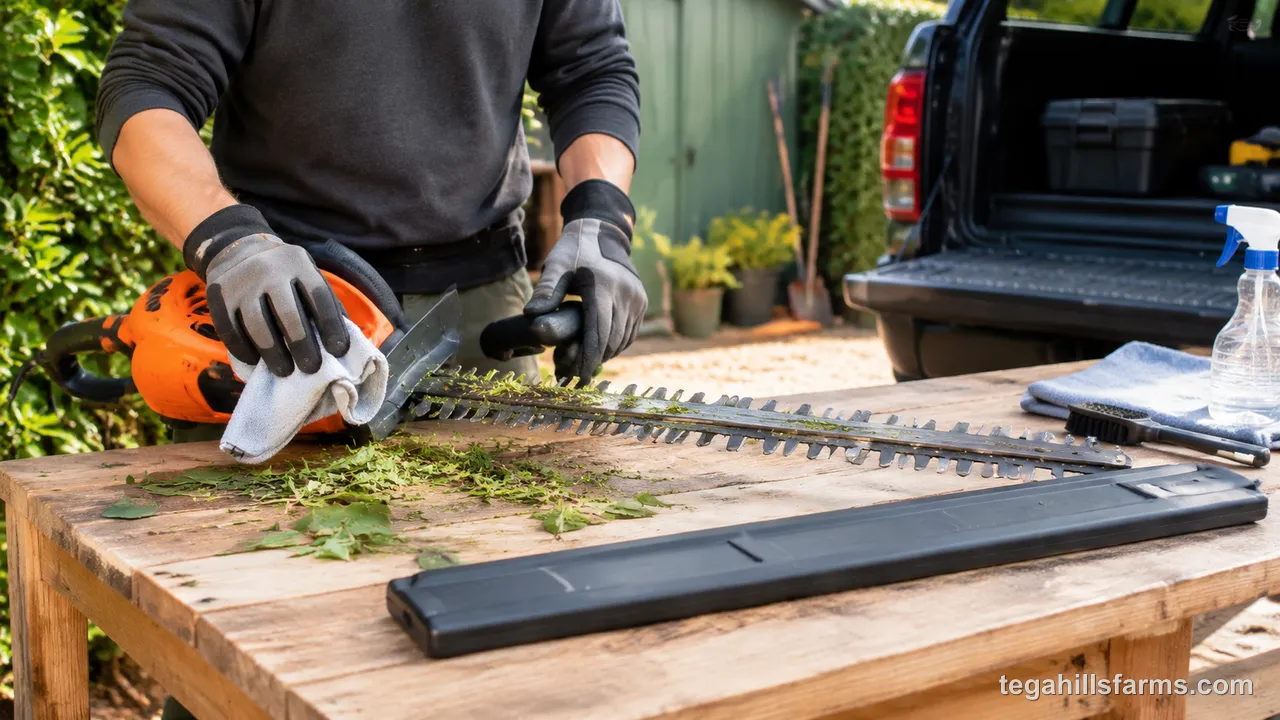
Let the blades stop completely, then unplug the cord, remove the battery or pull the spark plug wire before you touch them.
Never reach for a blade that might still be moving or live. On a gas model, shut the engine off and wait for everything to stop before you set it down. Once it is disconnected, wear gloves and wipe off sap and clippings with a rag or brush.
Clear the vents and housing too, since packed clippings trap heat and hide damage. A clean tool also makes your next pre-use check faster, because chips and cracks show up clearly.
Storing and Transporting the Trimmer
Fit the blade cover, store the trimmer out of children’s reach, and keep fuel and batteries stored separately.
Hang the tool or lay it flat on a shelf where nobody can knock it down. Keep gas in an approved container away from heat and ignition sources, and store batteries somewhere cool and dry, away from metal objects.
In a vehicle, make sure the blade cover is on and the trimmer cannot slide around. Secure fuel cans upright so they cannot tip. A covered, strapped-down tool protects your passengers as well as the blades.
A dense hedge can look like solid green until the first pass shakes loose a wasp nest or flushes a bird at face height. Flinching with a live blade in your hands is how a routine trim turns into an injury. So how do you know what is inside before the blades start moving?
When Should You Avoid Trimming a Hedge, and What Might Be Inside?
Avoid trimming while birds or insects are actively nesting, which falls at different times depending on your region and climate.
Hedges also have a seasonal growth cycle, so the best window for a trim varies by plant and by area. Check local wildlife guidance and any local rules rather than relying on a calendar date.
Before cutting, walk the length of the hedge slowly. Look for bird traffic going in and out, listen for chirping or buzzing, and watch for wasps hovering near one spot. Use a flashlight in dense sections if you need to.
If you find an active nest, leave that section alone until the occupants are gone. Trimming around it with blades running risks startling insects into a sting while you are holding a live tool.
What Should You Do If a Hedge Trimmer Cuts You?
Right after a blade injury, shut off and disconnect the trimmer, then control the bleeding and call 911 if the injury is serious.
This is general safety guidance, not medical advice. Once the tool is off and unplugged or the battery is out, press firmly on the wound with a clean cloth and keep pressure on it. Do not remove the cloth to check; add more on top if it soaks through.
Keep a first aid kit within reach of where you work, and carry your phone. For deep cuts, heavy bleeding or any injury involving fingers or the eyes, call emergency services and follow the dispatcher’s instructions.
How Can You Tell a Hedge Trimmer Is No Longer Safe to Use?
A trimmer is no longer safe when it shows dull or chipped blades, a frayed cord, a cracked housing, a loose guard, a damaged battery or a sticky trigger.
Dull or chipped blades tear branches instead of cutting them and tend to jam. A frayed cord exposes live wire, and a cracked housing can do the same near the motor. A guard that wobbles no longer protects your hand.
Swollen, cracked or overheating batteries should be retired, not charged again. A trigger or safety lock that sticks can start the blades when you do not expect it.
Some of these are cheap fixes, like sharpening or replacing a blade. Others, like a damaged cord or battery, are not worth the risk. The question people often search, how long do hedge trimmers last, has no fixed answer, because condition and upkeep matter more than age.
Do Safety Rules Change by Brand or Model?
Yes. Check the owner’s manual and the labels on the tool first, because model-specific warnings, start procedures and blade stop behavior can differ.
Manufacturers such as Stihl publish safety guidance for each model, and general tips cannot replace it. Starting steps, fuel instructions, battery handling and how long the blades keep moving after release are the kind of details that vary from one tool to the next.
Read the manual before the first use, and reread the warning labels any time you borrow or buy a different model. If a label has worn off or the manual is lost, look for the manufacturer’s current version before you trim.
Hedge Trimmer Safety FAQs
Can you use WD-40 on hedge trimmer blades?
Light lubrication is normal blade upkeep, and many owners use a spray lubricant or blade oil. Disconnect the power and wear gloves first, then wipe off the excess so clippings do not stick. Follow your manual for the product the manufacturer recommends.
Is it safe to trim a wet hedge?
Avoid it. With a corded trimmer, water and live power are a shock risk, and wet leaves make footing slippery with any model. Wet growth also clumps and jams blades. Wait for the hedge and the ground to dry before you start.
Is it safe to trim a hedge in low light?
It is not worth the risk. In dim light you cannot spot hidden wire, fencing, nests or uneven ground, and tired eyes make mistakes more likely. Finish in daylight, and stop when fatigue sets in rather than rushing to beat sunset.
Should teenagers use a hedge trimmer?
Check the manufacturer’s age guidance and your local rules first. If a teen does use one, make sure they have supervision, hands-on training and full protective gear. Start with a lighter tool and a low hedge, and keep them off ladders and away from gas models until they are ready.







Write Your Review
No reviews yet. Be the first to share your experience!