

Choosing between gas and battery often comes down to how much wood you cut and how often you want to deal with maintenance. A battery chainsaw trades some raw endurance for quiet, push-button convenience, while a gas chainsaw trades convenience for sustained power and all-day runtime.
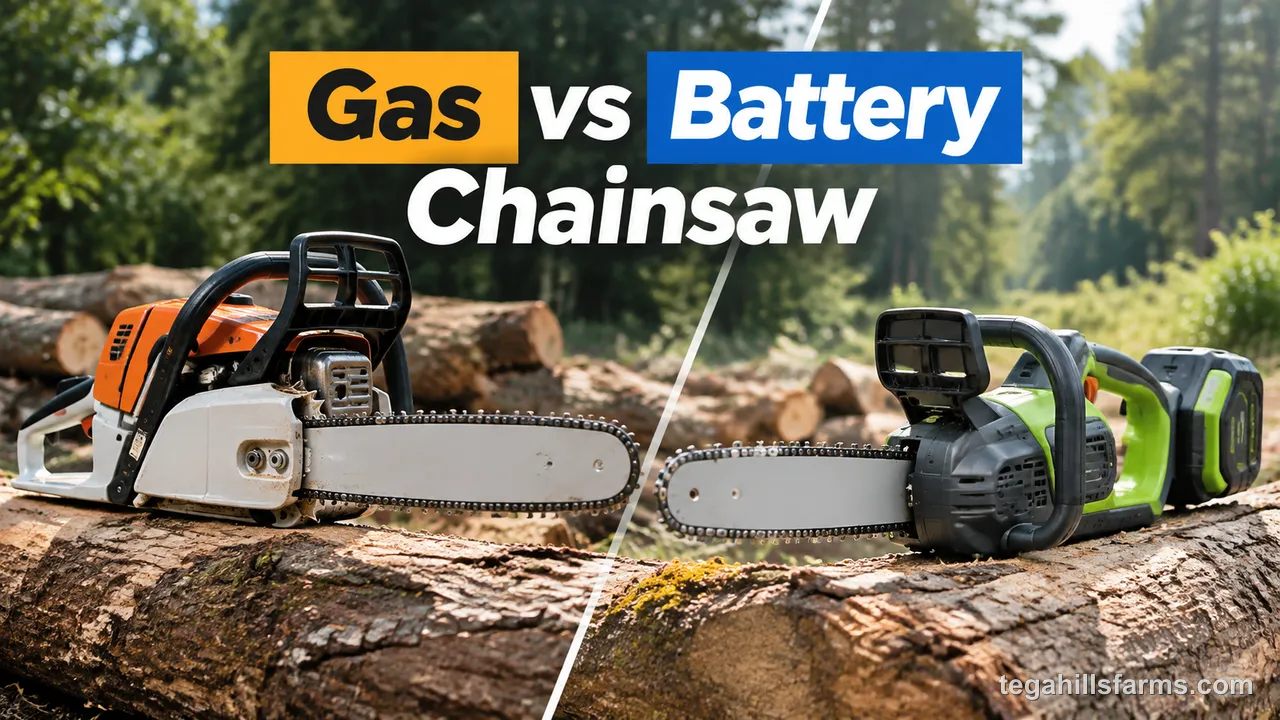
Below, the decision breaks down by real yard work: cutting performance on small limbs versus large hardwood, daily ease of use, runtime per session, and total cost to own. You will see where each power type pulls ahead and where neither is perfect.
The other thing homeowners underestimate is weight, noise, and upkeep over a season — not just the first cut. If your saw sits for weeks then has to start for storm cleanup, how it starts and what it needs between jobs matters as much as power.
Below is a head-to-head comparison to help you match power type to your lot, wood pile, and tolerance for maintenance.
What Does Gas vs Battery Actually Mean for a Chainsaw?
A gas chainsaw is a combustion-powered saw that burns mixed fuel to drive the chain, while a battery chainsaw is a cordless electric saw powered by a rechargeable lithium-ion pack and motor.
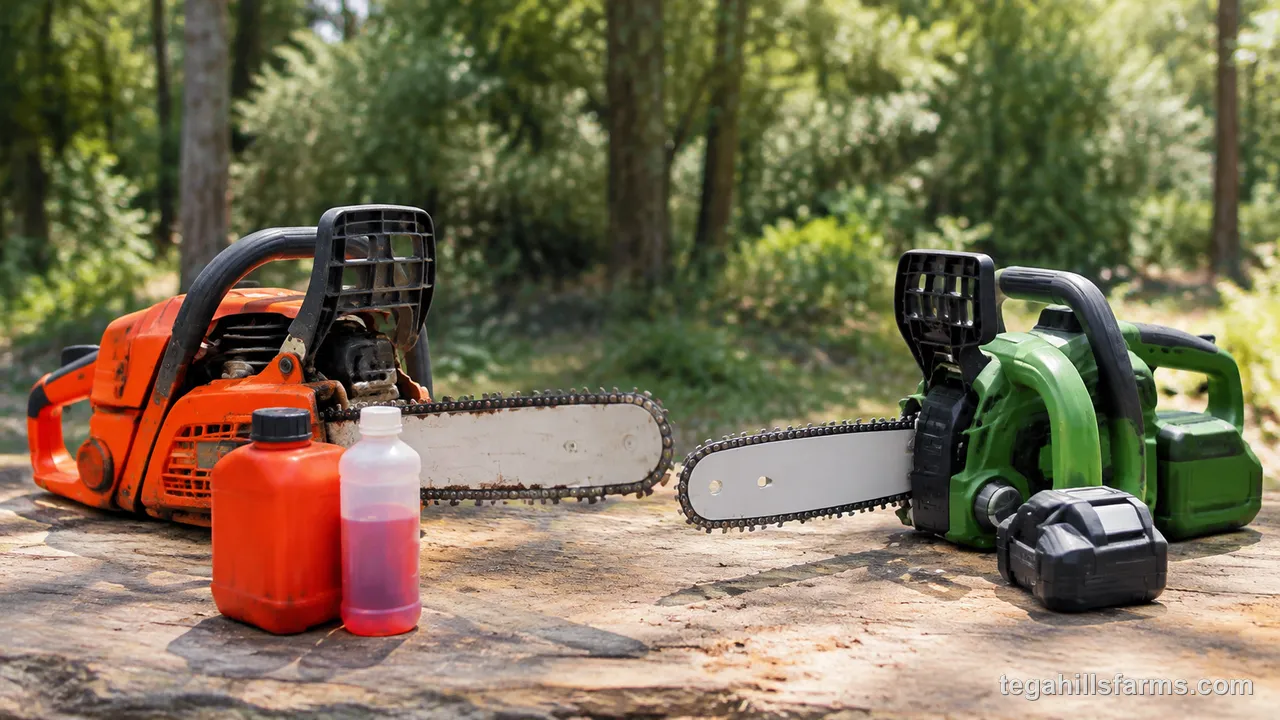
Gas models use a two-stroke engine fed by gasoline mixed with two-cycle oil. You pull-start the engine, manage fuel, and maintain ignition and exhaust parts. Battery models use a brushless motor and one or two battery packs; you press a button, the chain spins, and most maintenance is limited to bar and chain care. Power delivery feels different — gas builds torque through engine RPM, battery delivers instant torque but is limited by voltage and amp-hours.
If you’re still mapping power type to yard size and job frequency, this gas vs battery breakdown works as part of how to choose a chainsaw for your specific lot. For a closer look at deck-style specs like bar length, chain pitch, and safety features, see our guide on what to look for in a chainsaw before you narrow to a fuel type.
How Does Power and Cutting Performance Compare?
A battery chainsaw matches gas on 3- to 6-inch limbs, gas wins on felling and bucking large hardwood, and chain speed under load is where the power systems feel most different.
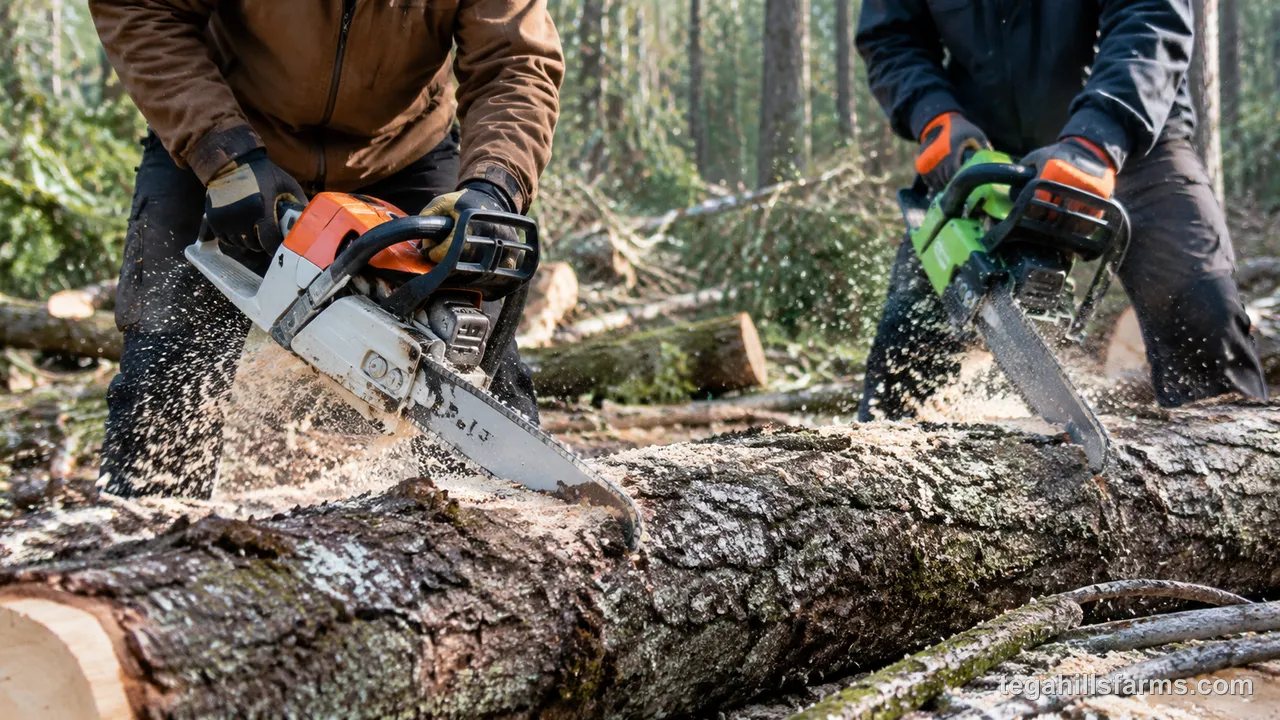
That split matters because most homeowners cut a mix of light pruning and occasional big wood. Battery models have closed the gap on small wood, but sustained cuts in dense hardwood and long sessions still favor gas. Below is how each scenario plays out.
Do Battery Chainsaws Keep Up on 3- to 6-Inch Limbs?
Yes, a battery chainsaw keeps pace with gas on 3- to 6-inch green limbs and storm cleanup for most homeowners.
On small-diameter wood, modern 40V to 80V battery saws spin fast enough that cut times are close to comparable gas saws with a 14- to 16-inch bar. Branches, small trees, and brush clear quickly, and the instant-on trigger helps with stop-start pruning. You also avoid warm-up and throttle feathering, which makes overhead limbing smoother. For pruning where you make many short cuts, the lighter powerhead and lower vibration reduce fatigue. For more detail on making clean cuts and controlling the bar on live limbs, see our guide on how to sharpen a chainsaw — a sharp chain matters more than voltage at this size.
What About Felling and Bucking Large Logs?
No, battery saws fall behind gas for felling and bucking large logs and extended hardwood cuts.
Felling a 14-inch-plus hardwood trunk or bucking a full cord of oak asks for sustained torque over minutes, not seconds. Gas engines in the 40cc to 60cc range hold chain speed when the bar is buried and let you refuel in seconds to keep going. Battery saws can make the same cuts, but you will feel slower chip ejection, more pauses to let the battery recover, and the need to swap packs. If you plan to learn felling cuts and wedging, see our guide on how to cut down a tree with a chainsaw to understand why steady power and longer bars matter for safe control.
Does Chain Speed Drop Under Load?
Yes, chain speed drops under load on both types, but gas recovers faster while battery fades as charge depletes.
When you bury the bar in hardwood, chain speed on any saw dips as the motor fights resistance. Gas engines can rev back into their power band and hold speed if you keep the chain sharp and avoid forcing the cut. Battery motors deliver strong initial torque, but voltage sag under continuous load gradually lowers speed, and that drop accelerates as the pack drains. Dull chains, low bar oil, or pinching worsen the effect on either type. In practice, steady feed pressure and a sharp chain keep speed up longer than trying to muscle through the cut.
Which Is Easier to Live With Day to Day?
A battery chainsaw is lighter and quieter, starts more reliably, and needs less upkeep than a typical gas saw for occasional home use.
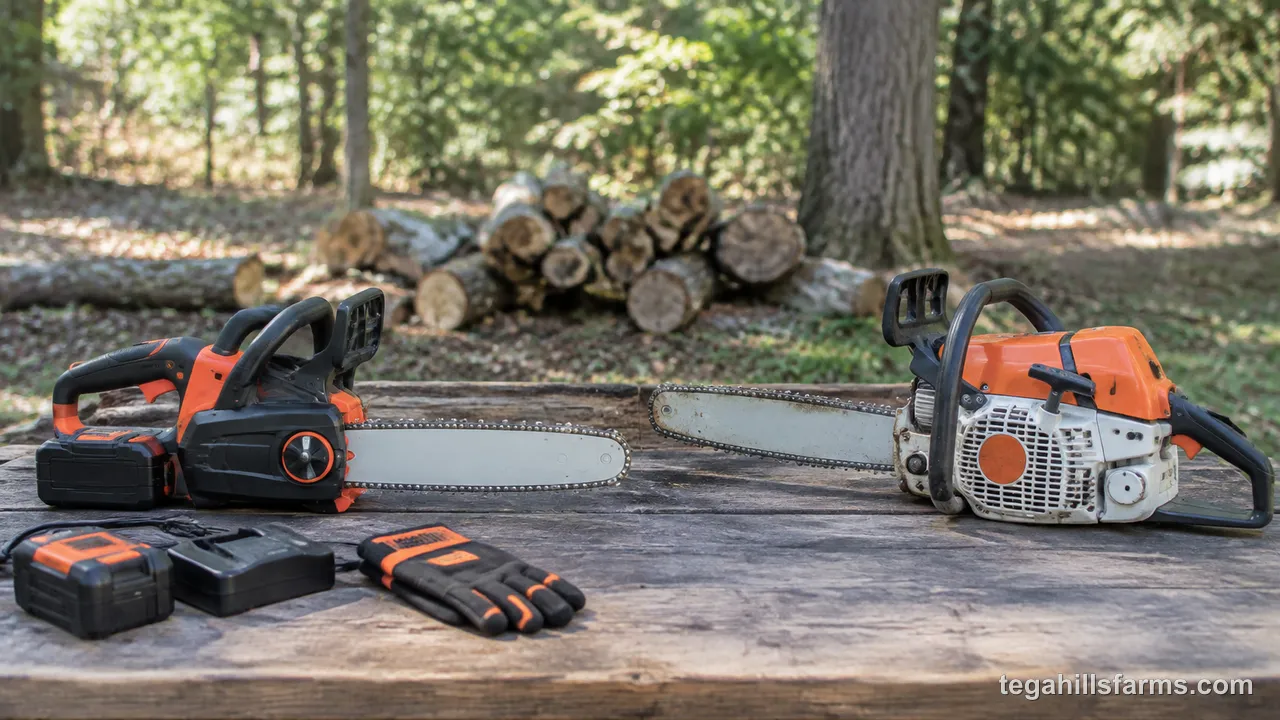
That combination is why many suburban owners switch, even if they give up some raw power. Gas still rewards owners who maintain it, but the daily friction is higher. Here is how weight, starting, and upkeep compare.
How Do Weight, Noise and Vibration Compare?
Battery saws are noticeably lighter, quieter, and lower-vibration than comparable gas saws for the same bar length.
A battery powerhead without fuel, muffler, and clutch assembly typically weighs less and balances closer to the handle, which helps during pruning or carrying to a brush pile. Noise is lower by a wide margin — no exhaust blast — so short morning cuts bother neighbors less. Vibration is also lower because there is no combustion pulsation. Gas saws counter with better power-to-weight when you need a longer bar for big trunks, but your arms and ears will feel the difference after 30 minutes.
For handling and safe stance habits that reduce fatigue regardless of power type, see our guide on chainsaw safety tips before you run longer sessions.
Which Starts More Reliably When You Need It?
A battery chainsaw starts more reliably with push-button starting, while gas depends on pull-start and tune.
Battery starting is simple: insert a charged pack, set the chain brake, press the safety and trigger. Cold mornings, stale fuel, or a flooded engine do not enter the picture. Gas starting requires choke, purge, and a firm pull, and after storage you may face hard starts from old fuel mix or a fouled plug. Well-maintained gas saws start consistently, but they demand fresh fuel, correct mix ratio, and periodic attention. If you only cut every few weeks, battery saves the frustration of troubleshooting when you need the saw most. For gas owners, our guide on how to start a chainsaw walks through cold-start steps that prevent flooding.
How Much Upkeep Does Each Type Demand?
Battery upkeep is mainly bar and chain care, while gas adds fuel mix, air filter, spark plug, and carburetor care.
Both types need chain tension checks, bar-oil topping, chain sharpening, and cleaning chips from the bar groove. Battery adds battery health — keep packs charged to about 40-60% for storage and avoid extreme heat — but no oil changes or fuel mixing. Gas adds mixing 50:1 fuel, draining or stabilizing fuel for storage, cleaning air filters, replacing spark plugs, and occasional carburetor adjustment. Over a season, gas takes more bench time, while battery trades that for managing packs and keeping contacts clean.
How Do Runtime and Operating Costs Compare?
Battery runtime is limited by amp-hours and pack count, while gas refuels in seconds, and long-term cost depends more on batteries versus fuel and tune-ups.
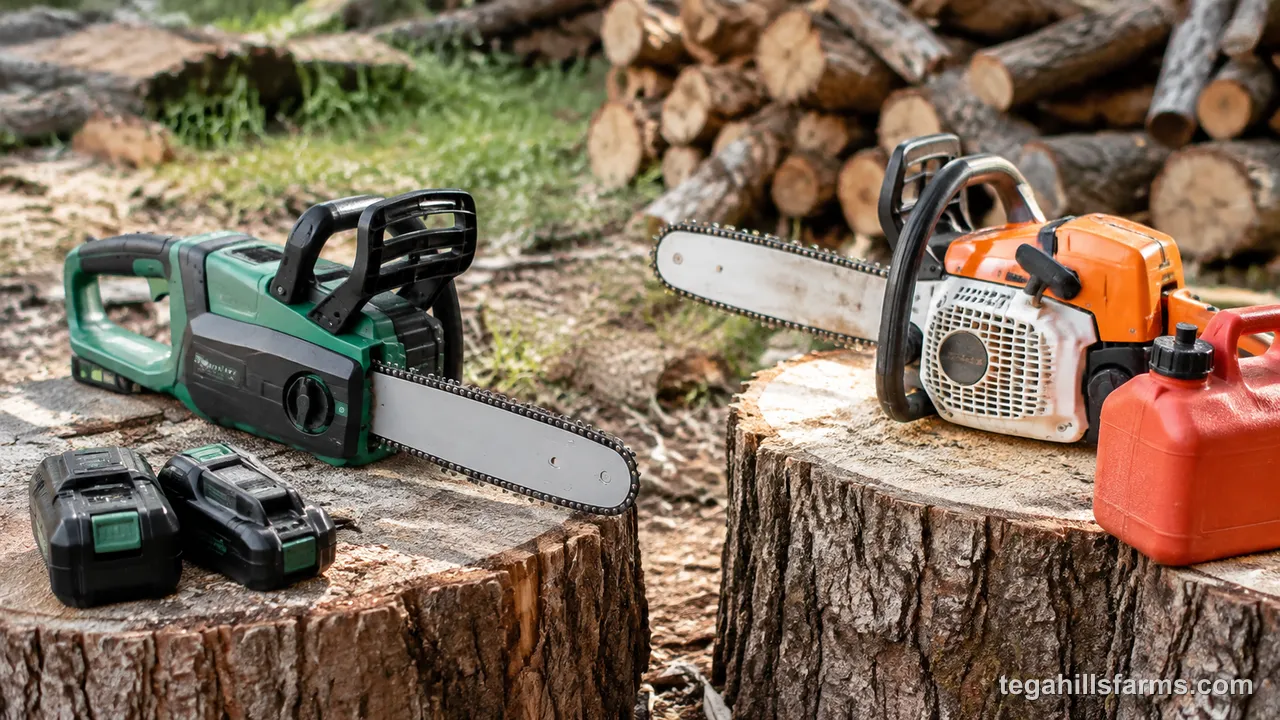
For quick jobs the difference is small; for all-day firewood, it is decisive. Your cutting pattern — short bursts or continuous bucking — determines which cost hurts more.
How Long Can You Actually Cut Before Recharging or Refueling?
A single battery pack gives 30 to 60 minutes of intermittent cutting, while a tank of gas runs about 30 to 45 minutes but refuels instantly for continuous work.
Battery runtime depends on pack size, wood density, and bar length. Light pruning yields more cuts per charge; burying a 16-inch bar in hardwood drains a pack faster. Most homeowners get through a trimming or storm-cleanup session on one or two packs. Gas tanks hold less energy timewise, but a fuel can lets you refill in seconds and keep cutting for hours — a real advantage if you want to buck a truckload without waiting on a charger. And when we talk about 6 to 8 hours of continuous cutting, only gas lets you sustain that pace without a stack of packs and a fast charger. When the job ends, both types last longer if you follow proper seasonal practices in our guide on how to store a chainsaw.
Which Costs More to Own Over Time?
Neither type is clearly cheaper; gas costs more in fuel and service, battery costs more in packs and chargers over time.
Gas ongoing costs include pre-mixed fuel or gas plus two-cycle oil, bar oil, air filters, spark plugs, and occasional shop tune-ups if you do not do them yourself. Battery ongoing costs are mostly bar oil and chain upkeep, but packs degrade over charge cycles and cold exposure, and a spare high-capacity pack plus charger is a mid-range expense up front. If you already own other outdoor tools on the same battery platform, sharing packs lowers the battery cost. If you cut firewood all season, fuel adds up but stays cheaper than replacing packs. For the upfront side of that math, see our guide on how much does a chainsaw cost to set a realistic budget tier before adding packs or fuel to the total.
Which Is Right for Your Yard?
A battery chainsaw fits suburban lots and occasional pruning, while gas fits acreage, firewood, and felling work that demands all-day power.
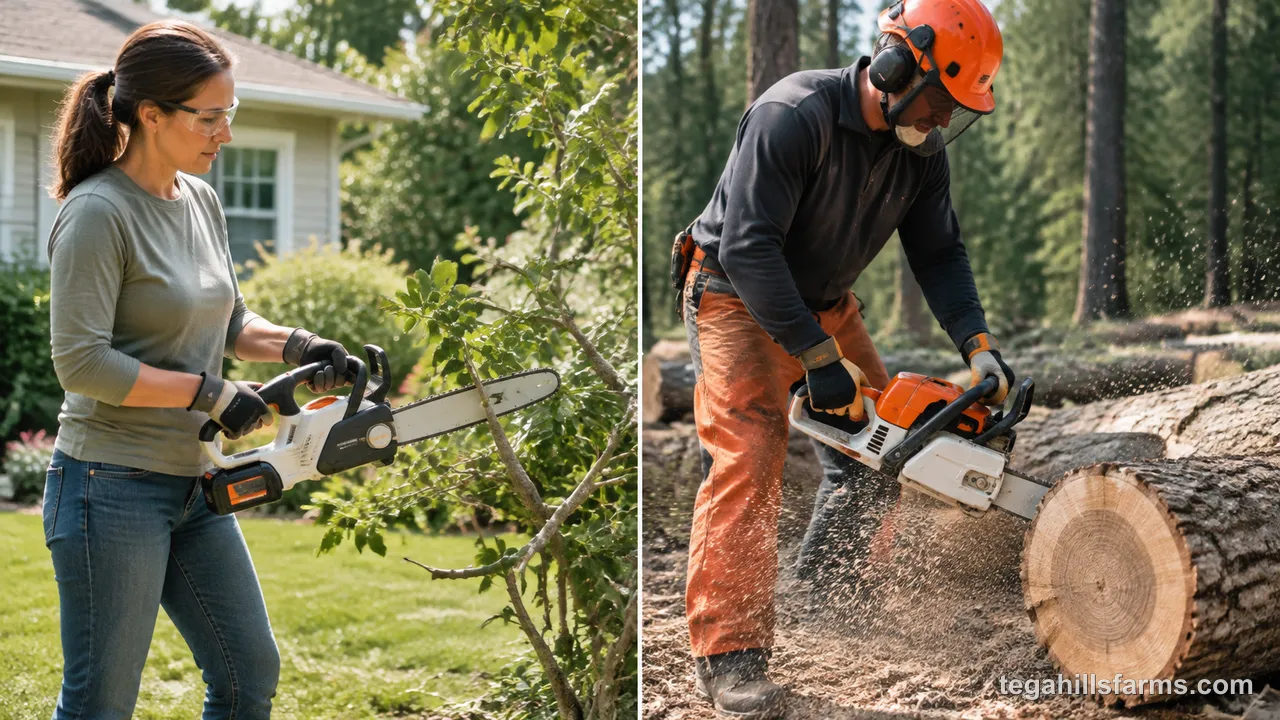
Your yard size, tree density, and job frequency matter more than brand. Use the two use cases below as a quick filter, then match bar length and safety features to the wood you actually cut.
When Is a Battery Chainsaw the Smarter Pick?
A battery chainsaw is the smarter pick for suburban lots, occasional pruning, and light storm cleanup.
If you maintain a quarter- to half-acre lot, trim branches a few times a year, and clear limbs under about 12 inches, battery keeps the job simple. You get quiet operation for neighborhood-friendly hours, no fuel to mix or stale gas to dump, and enough runtime on one or two packs for those sessions. Sharing batteries with your trimmer or blower stretches value. Battery saws also tend to need less seasonal service, which helps them stay ready, a point we cover in how long do chainsaws last when storage and maintenance habits are factored in. Choose this path if convenience and low upkeep outweigh the need for continuous bucking.
When Does Gas Still Win?
Gas still wins for acreage, firewood, and felling where sustained power and long bars matter.
If you heat with wood, clear multiple large trees a year, or maintain several acres with mixed hardwood, gas delivers the torque and refuel speed to work for hours. Longer bars from 18 to 20 inches and larger engines handle big trunks without pausing for pack swaps, and you can carry extra fuel instead of extra packs. Gas also gives you more options in the mid-range and premium tiers where pro-style features live. If you are weighing whether that step-up makes sense for infrequent big jobs, see our take on are expensive chainsaws worth it. Pick gas when all-day endurance and big-wood authority outweigh quiet convenience.
You have seen how gas and battery models compare on power, daily ease, runtime and which yard each fits best in the sections above.
Choosing the right power type solves the cutting job, but owning it long-term comes down to the small details most comparisons skip.
The notes below zoom into those micro-experiences — cold storage, battery care and safety habits that decide whether your pick stays reliable season after season.
What Battery Owners Often Learn Too Late
Battery saws are simple to run, but cold storage, pack cycling, and transport habits decide whether that simplicity lasts.
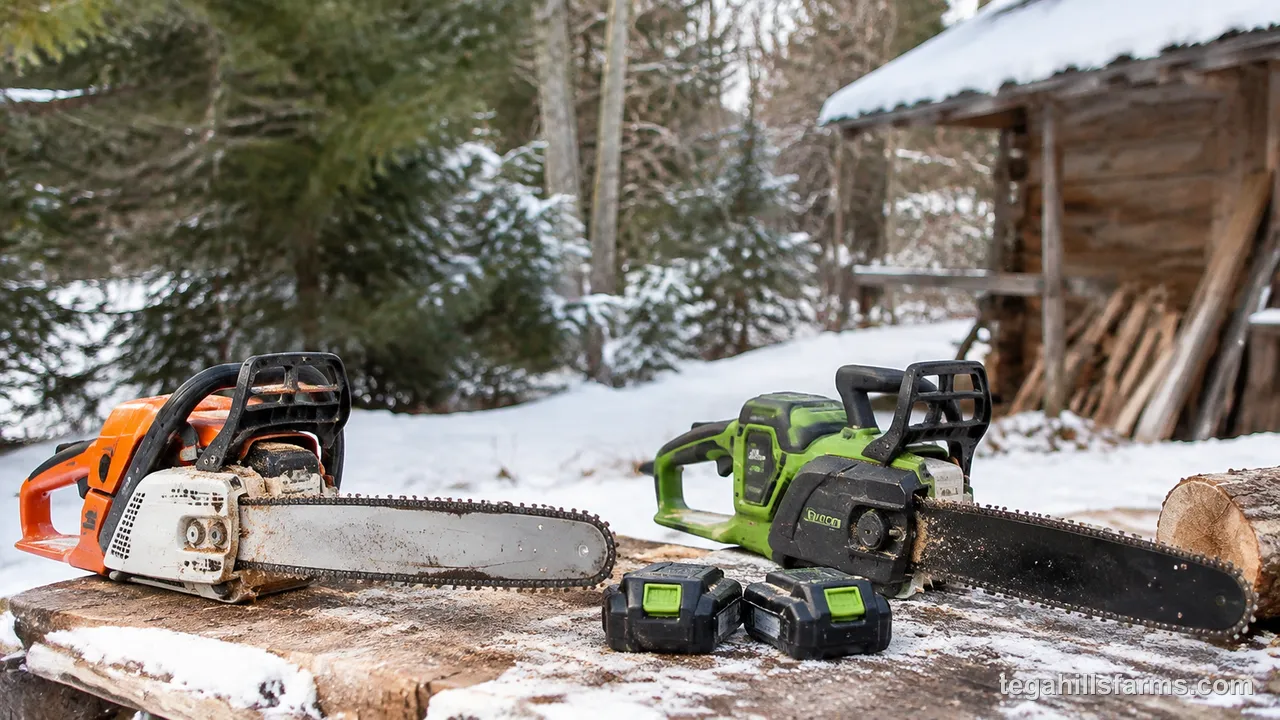
Lithium-ion packs lose capacity faster when stored fully charged in a hot garage or fully drained over winter. Keep packs at a partial charge, store them indoors where temperatures stay moderate, and avoid leaving them on the charger for weeks. In freezing weather, warm the pack to room temperature before heavy cuts — cold packs sag under load and cut slower. For seasonal shutdown, follow the same steps we outline in our guide on how to winterize a chainsaw, adapted for batteries: clean the bar groove, loosen chain tension slightly, empty bar oil if it will sit for months, and store packs separately. When you head to a second property or job site, protect the saw with a scabbard, remove the pack, and secure the saw so the bar and chain stay true — see our guide on how to transport a chainsaw for safe loading and vibration tips.
Safety and Upkeep Details That Change the Decision
Both power types cut the same way, so kickback control and bar care matter more than fuel type to long-term safety.
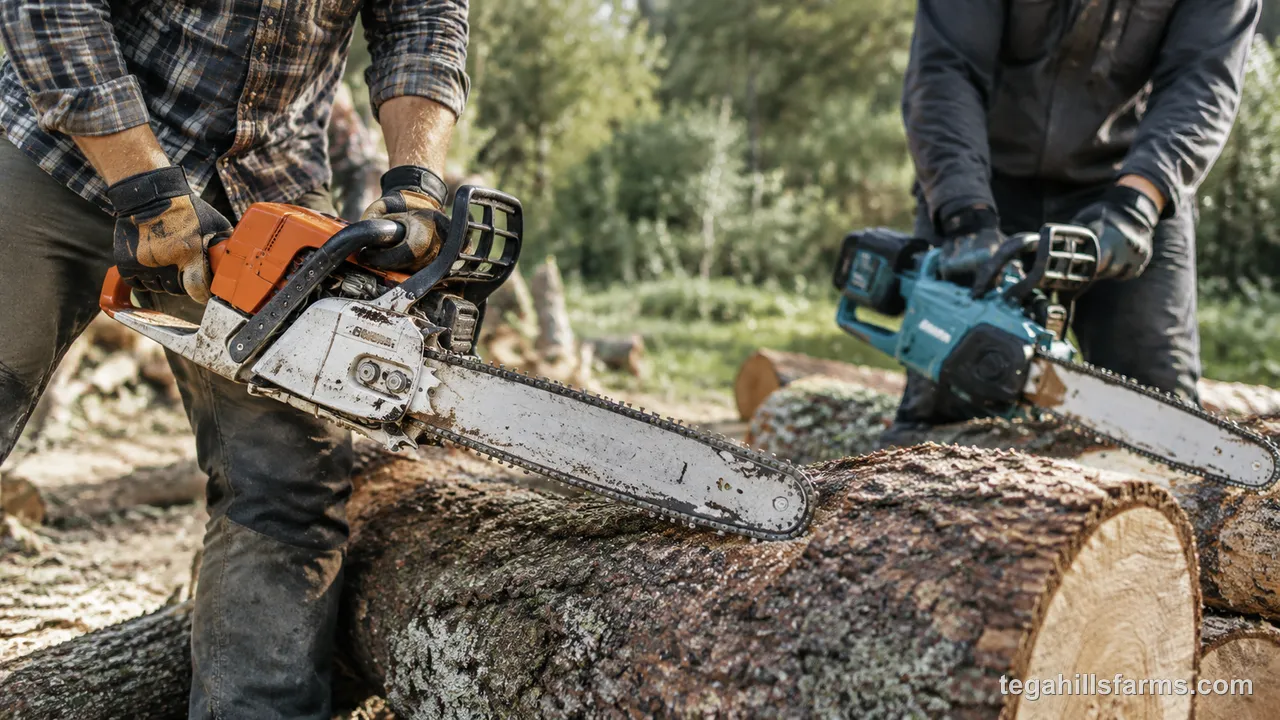
Every chainsaw needs proper chainsaw safety equipment — eye and hearing protection, gloves, cut-resistant chaps or pants, and sturdy boots — regardless of noise level. A quieter battery saw does not make the chain less dangerous, and chaps stop a chain the same way on either type. Keep the chain sharp and correctly tensioned, confirm the chain brake snaps on, and keep the bar oil reservoir full; running dry overheats the bar and stretches the chain fast. For oil type and why tacky bar oil matters for bar life, see our guide on chainsaw bar oil before you substitute motor oil. A few minutes of bar and chain care after each session prevents most kickback surprises and keeps either power system cutting true.
Write Your Review
No reviews yet. Be the first to share your experience!