
Best Generators Brands: Honda vs Generac vs Champion Compared
Honda leads quiet inverter power, Generac leads permanently installed home standby, and Champion is the value pick for homeowners who want dual-fuel flexibility without a premium price. Behind them, Westinghouse, WEN, Pulsar and Firman fill the budget portable shelf, and Kohler is the name Generac most often goes up against for whole-home backup.
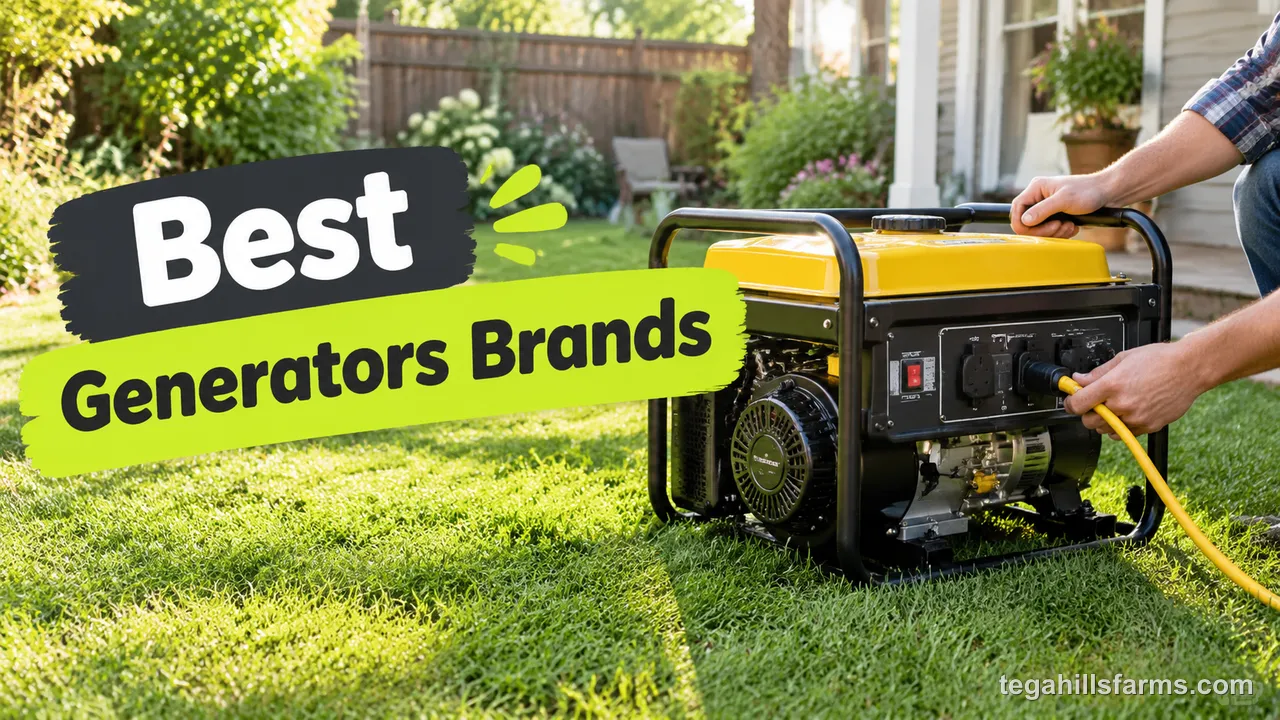
Four things decide which brand fits you. The first is whether you need a machine you wheel out or one bolted beside the house. The others are how much noise your neighbors or campground will tolerate, which fuel you can store safely, and whether anyone nearby can fix the machine when it fails.
The real risk is a mismatch that only shows up during an outage. A generator that starts fine in the driveway can stall the moment a refrigerator compressor or sump pump kicks on. A unit with no local parts support can sit dead for weeks over one clogged carburetor.
Before you look at any brand, list the loads you can’t live without. That list settles whether you’re shopping portable, inverter or standby, and the brand choice gets much shorter from there.
What Makes a Generator Brand Worth Buying?
A dependable starting record, parts and service close to home, and a lineup matched to portable or standby use separate a good buy from a costly mistake.
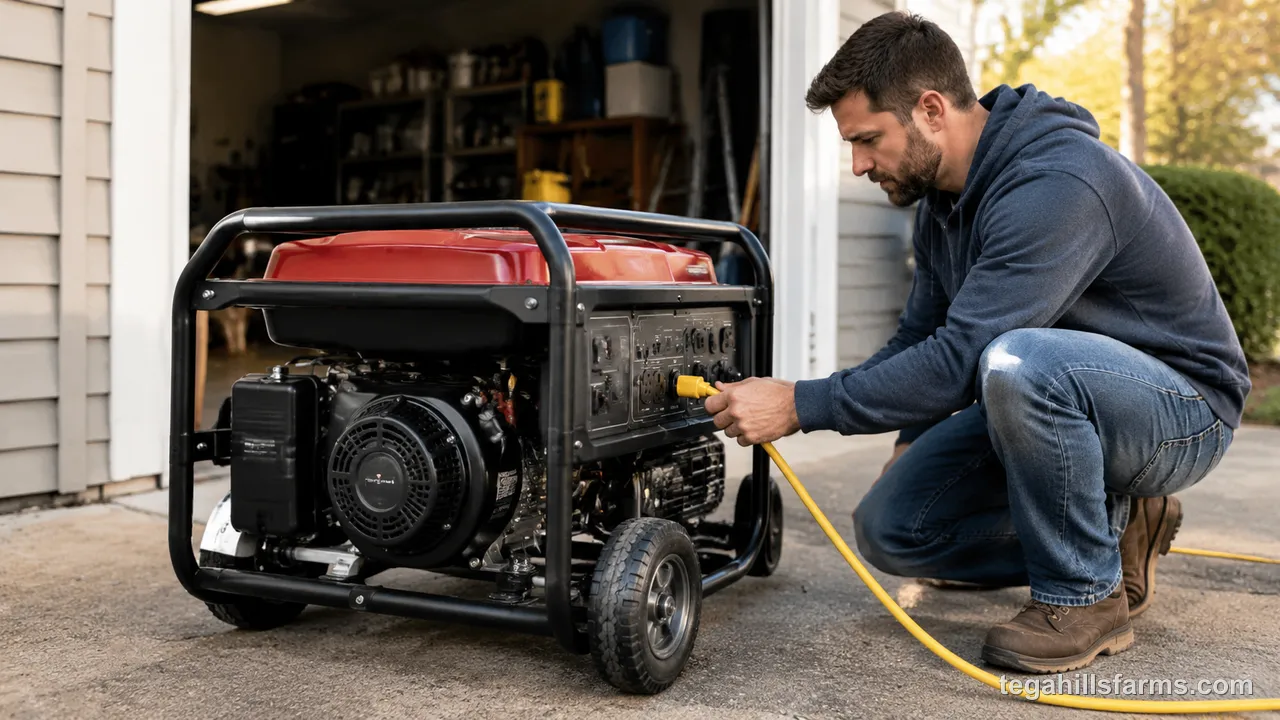
Reliability comes first because a generator spends most of its life parked. Carbureted engines are sensitive to stale fuel, so how well a brand’s machines start after months in storage counts for more than their peak wattage.
Noise matters next if you camp, live close to neighbors or run power overnight. Inverter designs slow the engine to match the load, so at light draw they run quieter than open-frame units that hold one fixed speed.
Service reach and warranty support decide how painful a failure gets. A brand with local dealers and stocked parts turns a dead unit into a short repair instead of a replacement. Fit is the last test, because a brand that’s strong in portables may not build the permanent standby system your house needs.
Sizing and features have their own process, covered step by step in how to choose a generator. If you would rather start from the job you need done, our roundup of the best generators sorts picks by use case.
Which Generator Brands Lead Each Category?
The split follows what each company builds best, and matching that strength to your power need narrows a long list quickly. A brand that leads one class can be ordinary in another, so a strong standby reputation says little about how the same company’s portables compare. Sorting by category first keeps you from paying for engineering you won’t use.
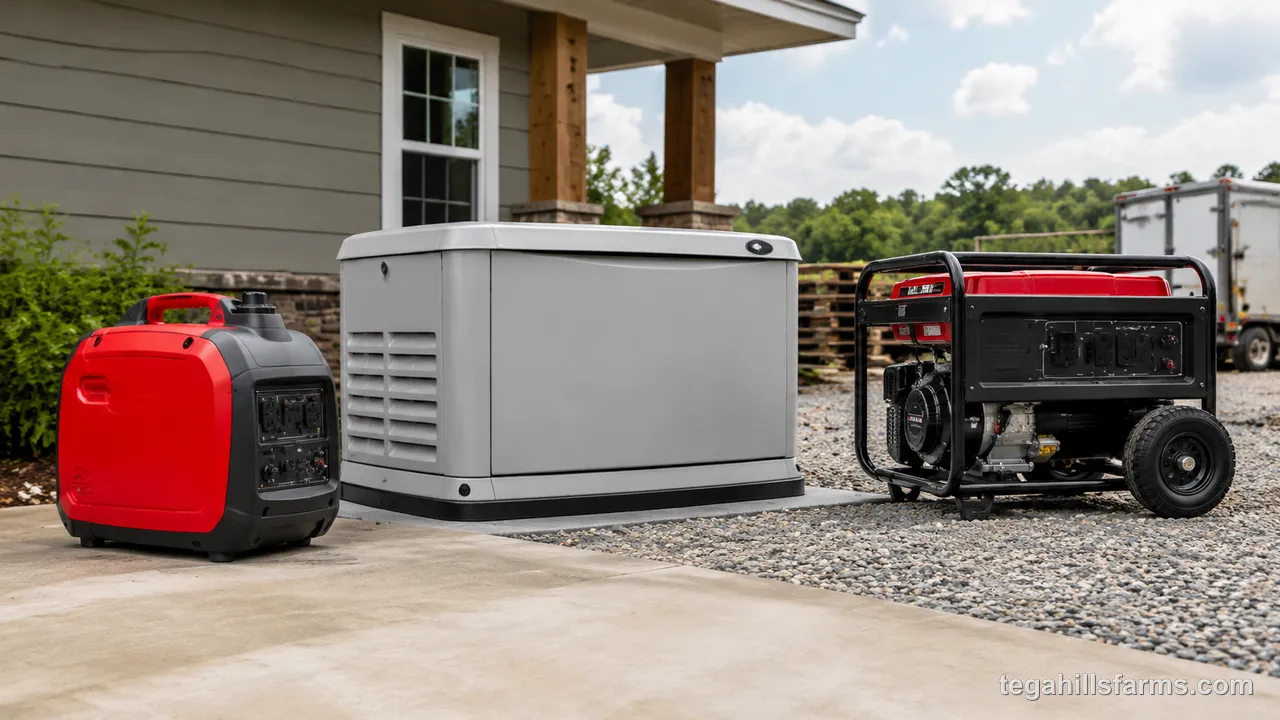
Which Brands Lead Premium Inverter Power?
Honda anchors this tier because its inverters pair quiet running with stable, clean power that laptops, phones, TVs and medical devices can use safely. An inverter converts the engine’s raw output to DC and then back to smooth AC. It also throttles the engine to match demand, which cuts noise and fuel use at light load.
A standard open-frame portable runs at full speed whether it’s charging a phone or running a saw. That makes it louder, and its power is rougher on sensitive electronics. Campers, RV owners, people running electronics and anyone living close to neighbors gain the most from the premium. Inverters as a class span 900 to 7,600 watts and roughly $300 to $5,000, and Honda prices toward the upper end of that range for its output.
Who Leads Home Standby and Heavy-Duty Power?
Generac and Kohler lead residential standby. Cummins builds residential standby as well as commercial power, and Kubota’s diesel units are aimed at farms, businesses and sites with long, continuous loads.
What separates this class from portables is permanence. A standby unit is installed rather than stored, it switches on by itself, and it’s sized to carry large household circuits instead of a few extension cords. That changes the buying process too: you’re hiring an installer, not just picking a machine off a shelf.
Some homeowners can’t go without power at all, such as those running medical equipment, a well pump, or a sump pump in a basement that floods. They are the ones who need this class. Everyone else can usually get through outages with a well-sized portable.
Which Brands Focus on Value Portables?
Champion, Westinghouse, WEN, Pulsar, Firman, Briggs & Stratton and Ryobi compete on output and features for the money. They give up some refinement to reach a lower entry cost. What you keep is the substance: solid running output, dual-fuel versions across several of these lineups, and electric start on many of the larger models.
What you usually trade away is noise and polish. Open-frame portables from these brands run louder than premium inverters, and their controls and finish are simpler. Service often runs through retailers or regional service centers rather than a dealer down the road. That’s a fair trade for storm backup a few days a year, and it’s why this is the group to start with when you’re shopping generators under $1000.
Is Honda Worth the Premium for Inverter Generators?
Yes, for buyers who need quiet running or clean power for electronics. If you only need occasional backup for a refrigerator and a few lights, a value brand covers that job for less money.
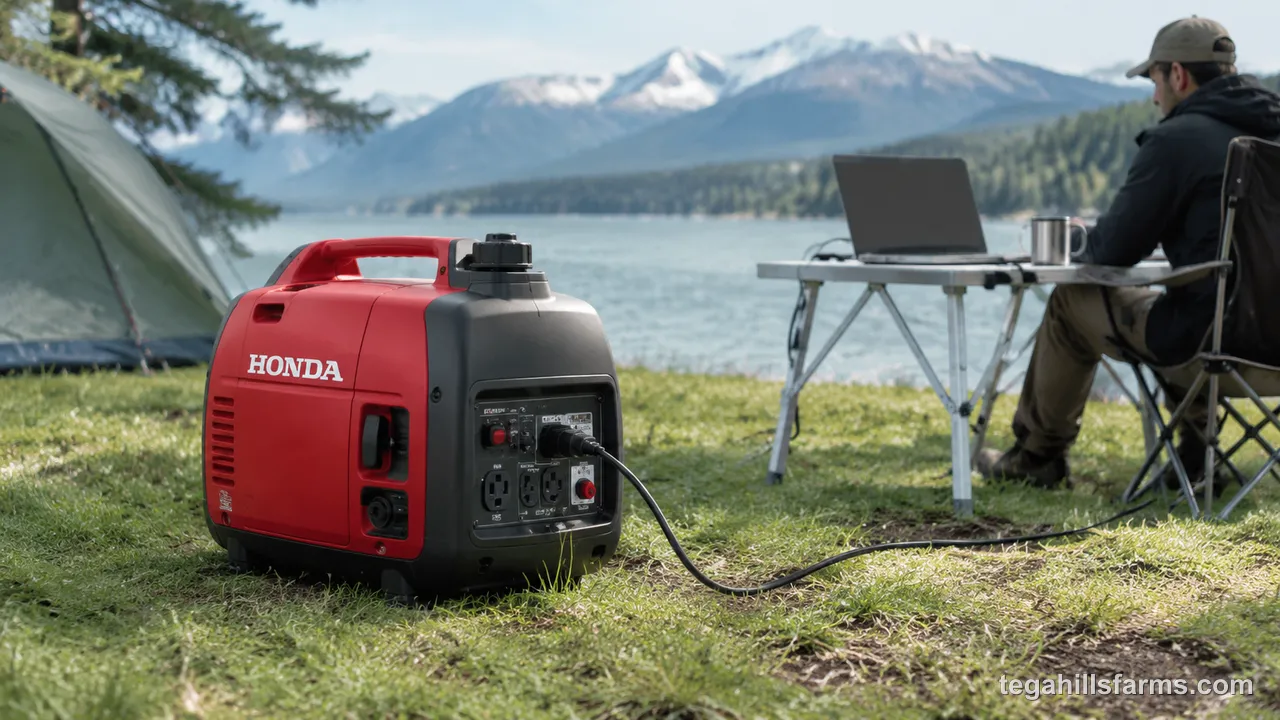
The EU2200i shows what the premium buys. It delivers 1,800 running watts and 2,200 starting watts, enough for modest loads like a refrigerator, lights and chargers. It’s rated at 59.9 dB measured from 25 feet away. That distance matters, because ratings taken closer to the machine or at full load read higher and can’t be compared directly against Honda’s figure.
At 47.4 lb, the EU2200i is light enough for one person to lift into a truck bed or carry to a campsite. The trade-off is the 0.95 gal tank. It keeps the machine compact, but you’ll refuel more often during a long outage. With a parallel kit and a second EU2200i, output rises to 3,600 running and 4,400 starting watts. That lets you start small and add capacity later instead of replacing the first machine.
I’d pay for the Honda when it will run near tents, RVs or a neighbor’s bedroom window, or when it powers laptops and medical devices. For a storm-backup machine that runs a few days a year, the WEN DF360iX in the budget tier delivers more running power at nearly the same weight. If you’ve already settled on the brand, the best Honda generators break down the lineup by size.
Is Generac the Right Pick for Standby and Portable Power?
Generac’s real strength is home standby, and its portables are a sound but less distinctive choice next to brands that specialize in portable power. The two lines solve different problems. One is a permanent system that switches on by itself, and the other is a machine you store, start and refuel. If you’re weighing the brand across both, the best Generac generators cover models from each line.
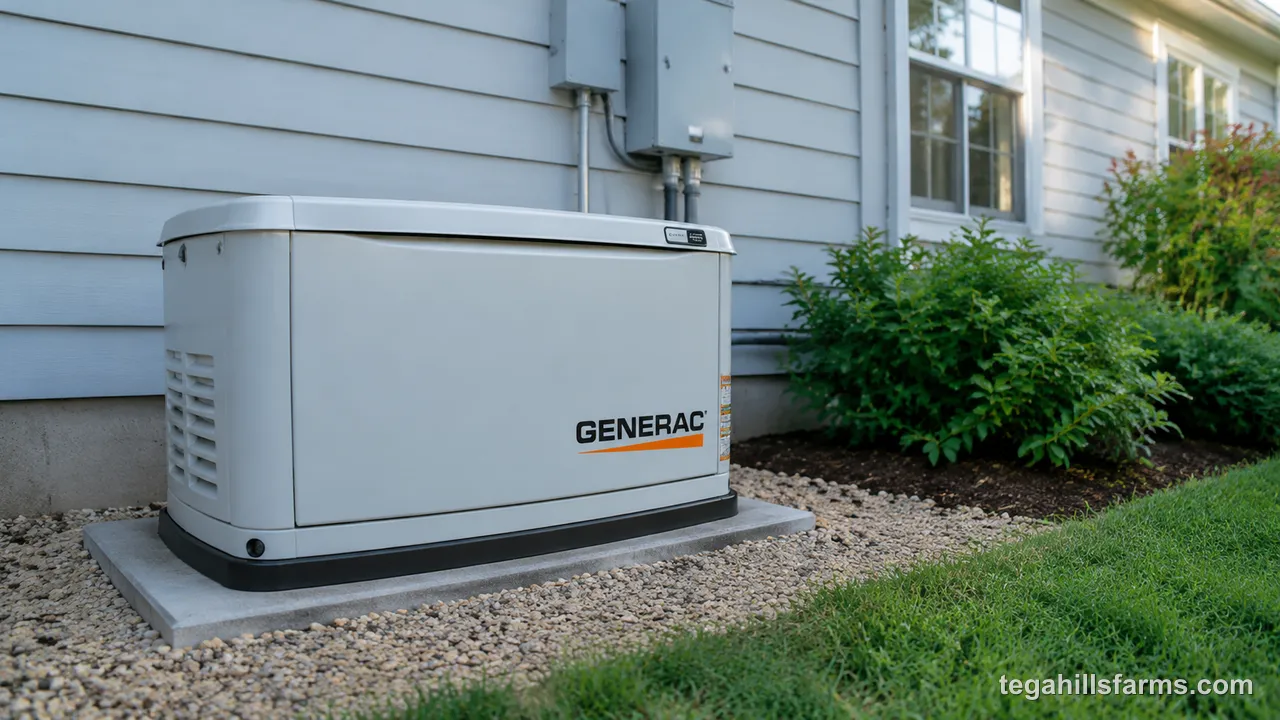
What Does Generac’s Home Standby Line Offer?
A standby unit is wired into your electrical panel through an automatic transfer switch. When the grid drops, it starts on its own, takes over the circuits it’s sized for, and shuts down once utility power returns. It draws from a natural gas line or a propane tank, so nobody has to drag it out, run extension cords or refuel it at midnight.
Generac built its name on this class, which is why other standby brands are measured against it. Installation is a real project. The unit sits on a pad outside, an electrician installs the transfer switch, and a gas line or propane hookup has to be run. Most towns require a permit and minimum clearances, so check your local codes before choosing a spot.
Home standby generators typically cost $3,500 to $7,000 before installation, and installation can more than double the total. Budget for the whole job, not just the machine.
Where Do Generac Portables Fit?
Generac’s portables sit in the middle. They’re full-size, open-frame machines from a familiar name, but they don’t run as quietly as Honda’s inverters or pack in the features the value brands offer. Portable generators as a class run from 3,000 to 8,500 watts and $400 to $2,000, and Generac’s portables compete inside that class rather than defining it.
A Generac portable makes the most sense if a local Generac dealer already services your equipment, or if you want an established name for occasional backup. If the machine will run near campsites or power sensitive electronics, an inverter brand fits better. If dual-fuel capability and maximum output for the money are your priorities, the value brands usually deliver more for the same spend.
Is Champion the Value Pick Among Major Brands?
Yes, Champion is the value pick among the three for homeowners who want dual-fuel flexibility and generous output without paying for a premium nameplate.
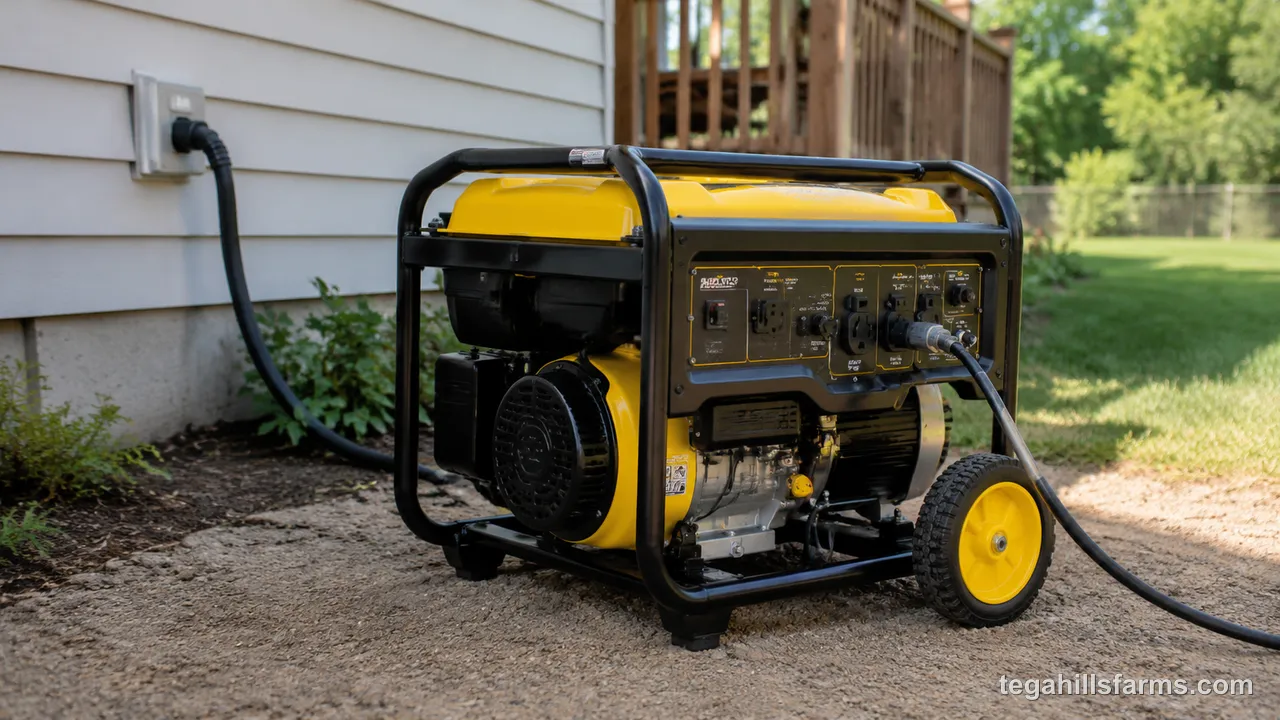
Its dual-fuel portables run on gasoline or propane, which matters most during a multi-day outage. Propane stays usable in a sealed tank for years, while gasoline left in a tank degrades and gums up the carburetor. Output drops on propane because it carries less energy per gallon than gasoline. If propane is the fuel you plan to rely on, size the machine on its propane rating.
Champion also sells inverter models, and they fix the open-frame line’s biggest drawback. Open-frame dual-fuel units hold a constant engine speed, so they run louder and rougher at light load. The inverters throttle down to match demand and put out cleaner power for electronics.
The lower entry cost shows up in refinement. Champion doesn’t match Honda’s reputation for polish, and its open-frame models make noisy neighbors on a quiet street. For a household that already keeps propane on hand, I think Champion is the easiest recommendation of the big three. You can compare the best Champion generators across both the dual-fuel and inverter lines.
How Do Honda, Generac and Champion Compare?
Honda wins on quiet, clean power, Generac wins on permanent whole-home backup, and Champion wins on fuel flexibility for the money. The right one depends on whether noise, automation or fuel choice matters most to you.
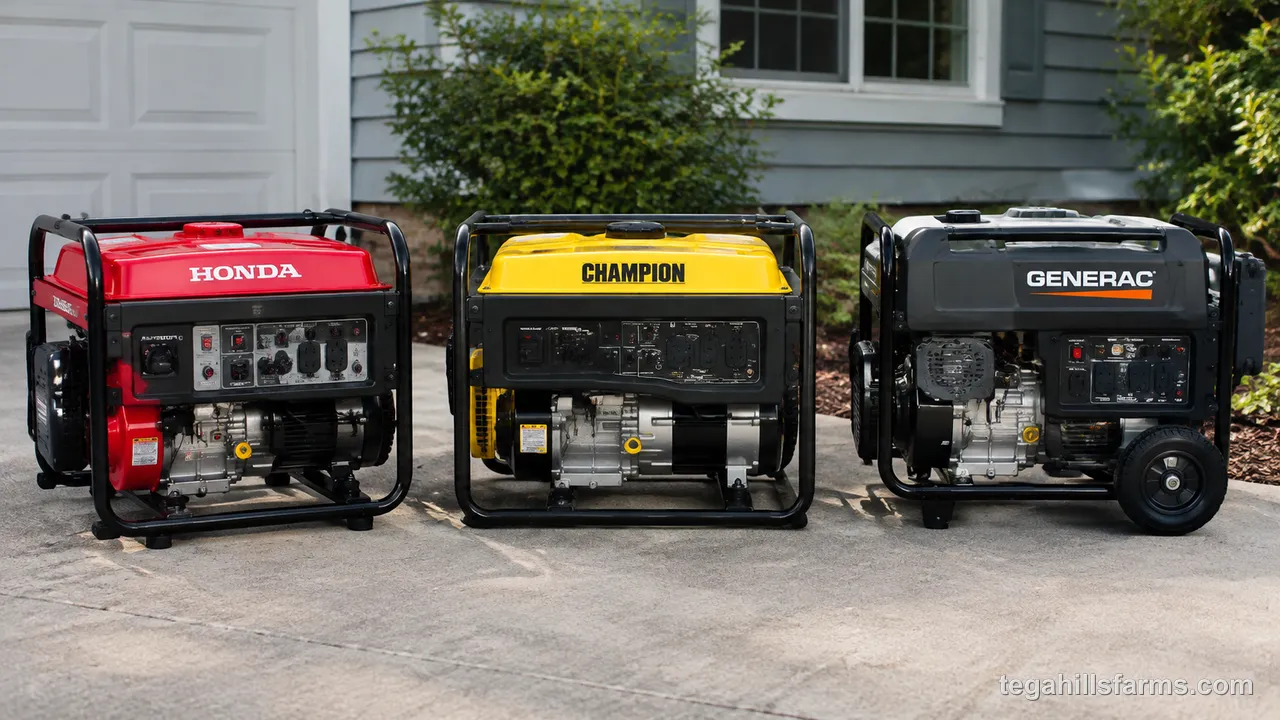
The three line up like this on the traits that settle most purchases:
| Attribute | Honda | Generac | Champion |
|---|---|---|---|
| Core strength | Quiet inverter portables | Home standby systems | Value portables and dual fuel |
| Best-suited buyer | Campers, RV owners, electronics users | Homeowners wanting automatic backup | Budget-minded backup and job-site users |
| Noise character | Low on inverter models | Depends on product line | Inverters quieter than open-frame models |
| Fuel options | Gasoline | Natural gas or propane on standby units | Gasoline or propane on dual-fuel models |
| Service model | Power equipment dealers | Installing dealers | Retail plus authorized service centers |
Which Brand Runs Quietest?
Honda holds the quiet edge among the three because its reputation rests on inverter models that throttle down at light load. Champion’s inverters work on the same principle and run noticeably quieter than its open-frame dual-fuel units. Generac’s standby systems are a different case. They sit outside the house and run whenever the power is out, plus short scheduled runs that keep the engine ready.
Decibel ratings only compare fairly when both were measured at the same load and distance. A rating taken at full load reads higher than one taken at light load, and a reading close to the machine reads higher than one from across the yard. Decibels are logarithmic, so even a gap of a few points is something your ears will notice.
Noise decides more than comfort. Many campgrounds enforce quiet hours, close neighbors can hear an open-frame unit through closed windows, and a machine running all night beside a bedroom wall wears on a household. If any of those limits apply, start with the best quiet generators and size from there.
Which Brand Offers the Most Fuel Flexibility?
Champion’s dual-fuel portables let you choose between gasoline and propane. Generac’s standby units draw from natural gas or propane without refueling. Honda’s inverters run on gasoline.
Fuel choice matters because long outages strain the gasoline supply. Gas stations need electricity to pump, so after a widespread storm many close or form long lines. Gasoline stored at home goes stale over months unless you treat it with stabilizer.
A natural gas standby unit avoids that problem entirely for as long as gas service holds, which is why it suits households that can’t tolerate interruptions. A dual-fuel portable is the next-best hedge, since you can switch to stored propane once the gasoline runs out and keep the fridge cold through the second and third day. If fuel choice is your deciding factor, the best dual fuel generators narrow the field across brands.
Whose Parts and Service Network Is Easier to Live With?
A generator that sits from one storm season to the next tends to fail in predictable ways. Typical problems after storage are a gummed carburetor, a dead starter battery on electric-start models and a fouled spark plug. Each is a quick fix only if parts and a technician are close by.
Honda sells and services its power equipment through a dealer network, so parts are easy to track down. Generac standby units are installed and serviced through dealers, and many of those dealers offer scheduled maintenance. Champion sells mainly through big-box retailers and online, with support through the company and authorized service centers. A repair may mean a longer drive or shipping the unit.
Warranty terms vary by model and by residential versus commercial use. Standby coverage can also depend on registration and professional installation. Read the written terms for the exact model you’re considering, and look up the nearest authorized service center before you buy.
How Do Westinghouse, WEN, Pulsar and Firman Stack Up?
Output and features for the money are where these brands compete, and they give up some of Honda’s polish and Generac’s dealer depth to reach a lower entry cost. That trade is easy to accept for occasional backup or job-site work, and harder to accept beside a quiet campsite. Within the group, the real differences are fuel options, starting convenience and how close the nearest service center sits.
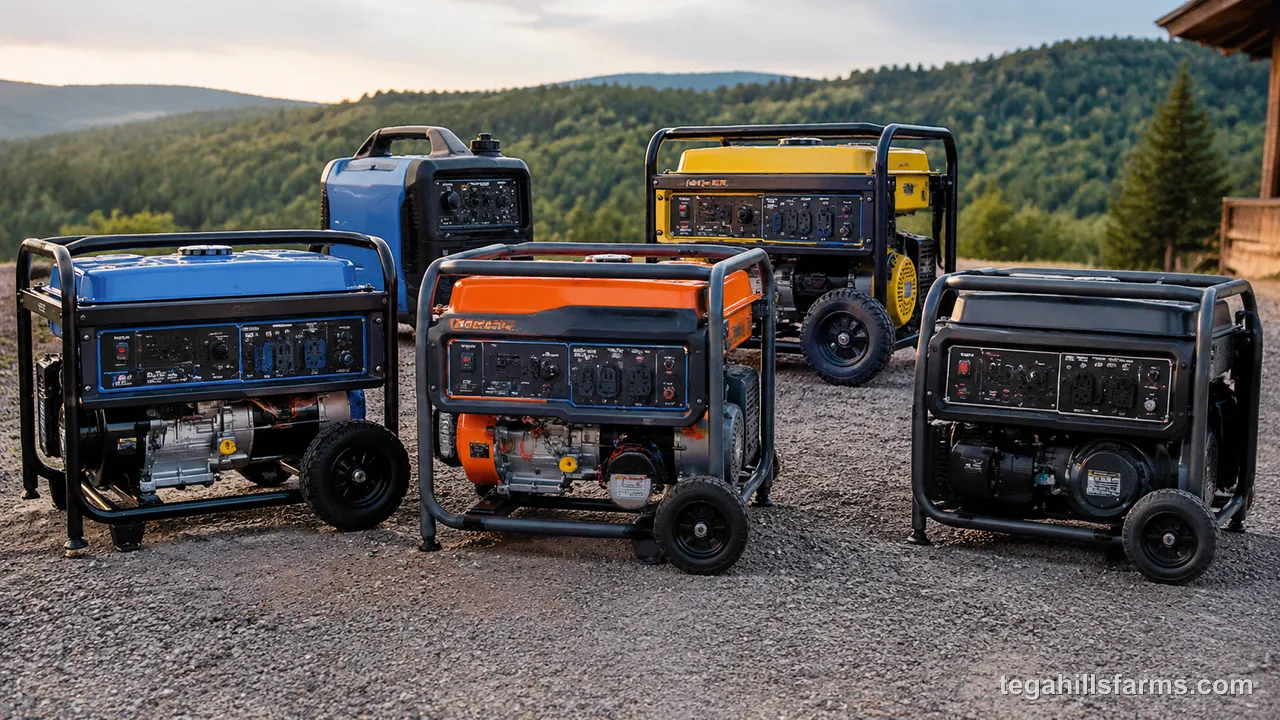
Westinghouse, Firman and Briggs & Stratton: Familiar Portable Names
These three cover the full-size portable space with familiar names rather than one standout specialty, so the right pick depends on which feature you’ll use most.
Westinghouse offers a wide range of open-frame and inverter portables, and electric and remote start are common on its larger models. That matters if pull-starting a big engine on a cold morning is a struggle.
Firman builds open-frame and inverter units, including dual-fuel versions. Its lineup suits homeowners who want backup power and job-site power from the same machine.
Briggs & Stratton has a long history in small engines, so replacement parts and repair know-how are easy to find. It sells both portable and home standby units, which helps if you expect to move up to a permanent system later.
Pick among the three based on starting convenience, fuel choice, and the service center closest to your house. Model-level picks for one of these names are in the best Westinghouse generators, sorted by size and fuel.
WEN and Pulsar: Budget-Friendly Dual-Fuel and Inverter Picks
Both are dual-fuel machines in the budget tier, and the choice comes down to output versus time between refills. The Pulsar GD400BN puts out more power on either fuel, while the WEN DF360iX carries a larger tank at nearly the same weight. Side by side, their ratings look like this:
| Spec | WEN DF360iX | Pulsar GD400BN |
|---|---|---|
| Running watts (gasoline) | 2,900 W | 3,200 W |
| Starting watts (gasoline) | 3,600 W | 4,000 W |
| Running watts (propane) | 2,600 W | 3,000 W |
| Starting watts (propane) | 3,500 W | 3,700 W |
| Weight | 49 lb | 47 lb |
| Fuel tank | 1.5 gal | 1.1 gal |
| Noise rating | 65 dB | 68 dB at full load |
For a camper, the WEN fits better. It’s an inverter design, and its bigger tank stretches the time between refills overnight. Pulsar’s noise figure reflects the machine under full load, so the gap between the two ratings is only approximate.
For home backup, the Pulsar’s extra starting watts help when a sump pump or refrigerator compressor kicks on. The lower price tier usually means fewer nearby repair options and less polished controls than the premium names. If you lean toward WEN, the best WEN generators compare its lineup by output.
Generac or Kohler: Which Is Better for Whole-Home Standby?
Generac fits most homeowners because of its broad dealer network and wide model range, while Kohler suits buyers who want commercial-style build quality and have a Kohler dealer within reach.
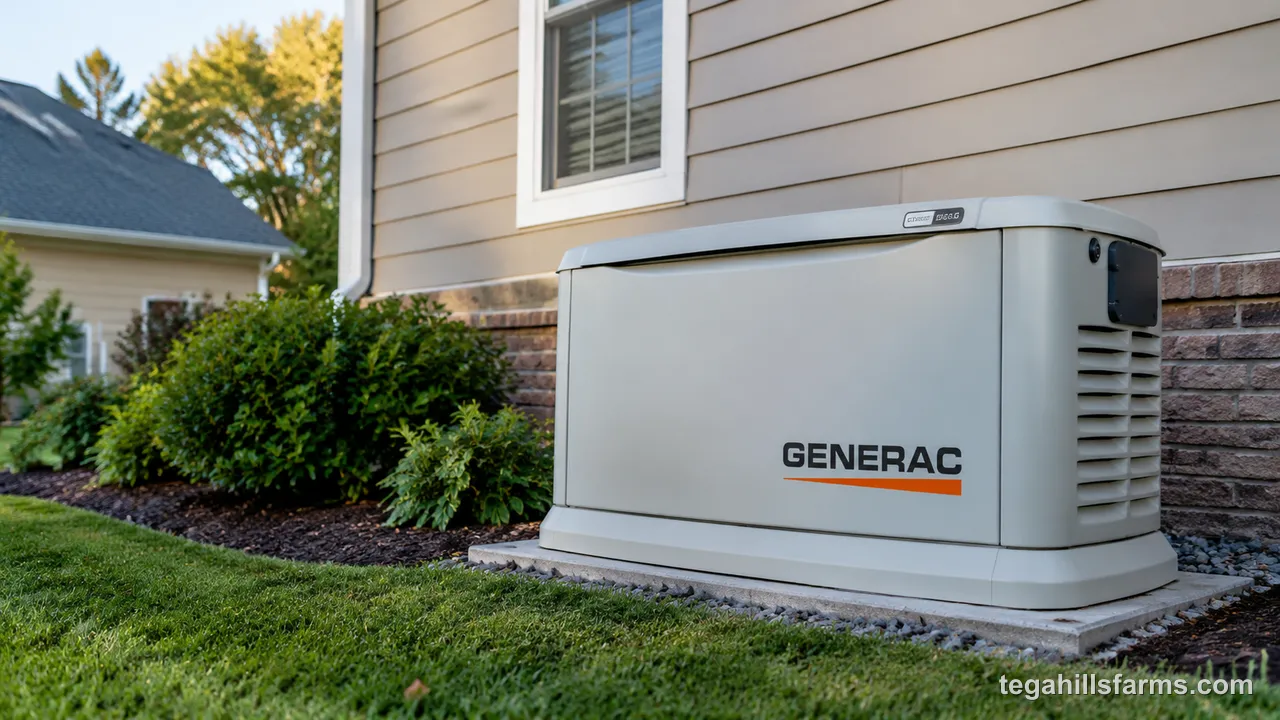
Both brands build home standby units across the class’s typical range of 5,000 to 20,000 watts, so output alone rarely settles the choice. Either can cover essential circuits or a whole house, depending on the model. Installation is the same project with either brand: a pad, an automatic transfer switch, a natural gas or propane connection, a licensed installer and a local permit.
The differences show up after installation. Generac’s larger dealer footprint makes it easier to find an installer and schedule maintenance in many areas. Kohler draws on a long history in industrial and commercial power, which appeals to buyers who care more about engine build than convenience. Noise during outages and exercise runs varies by model within each brand, so compare ratings taken under the same conditions. Read each warranty for its length, what it covers and its registration requirements.
Choose Generac if you want the easiest path to installation and service near you. Choose Kohler if you have a trusted local Kohler dealer and engine build is your priority. The best standby generators narrow specific models by size. If your home can’t fit a permanent unit, the best generators for home backup include portable options.
Which Brand Fits Your Situation?
Your main use, not brand loyalty, decides the shortlist, because the brands that excel at quiet camping power are rarely the ones built for whole-house backup. Start from where the machine will run and what it has to power, then match the brand to that job.
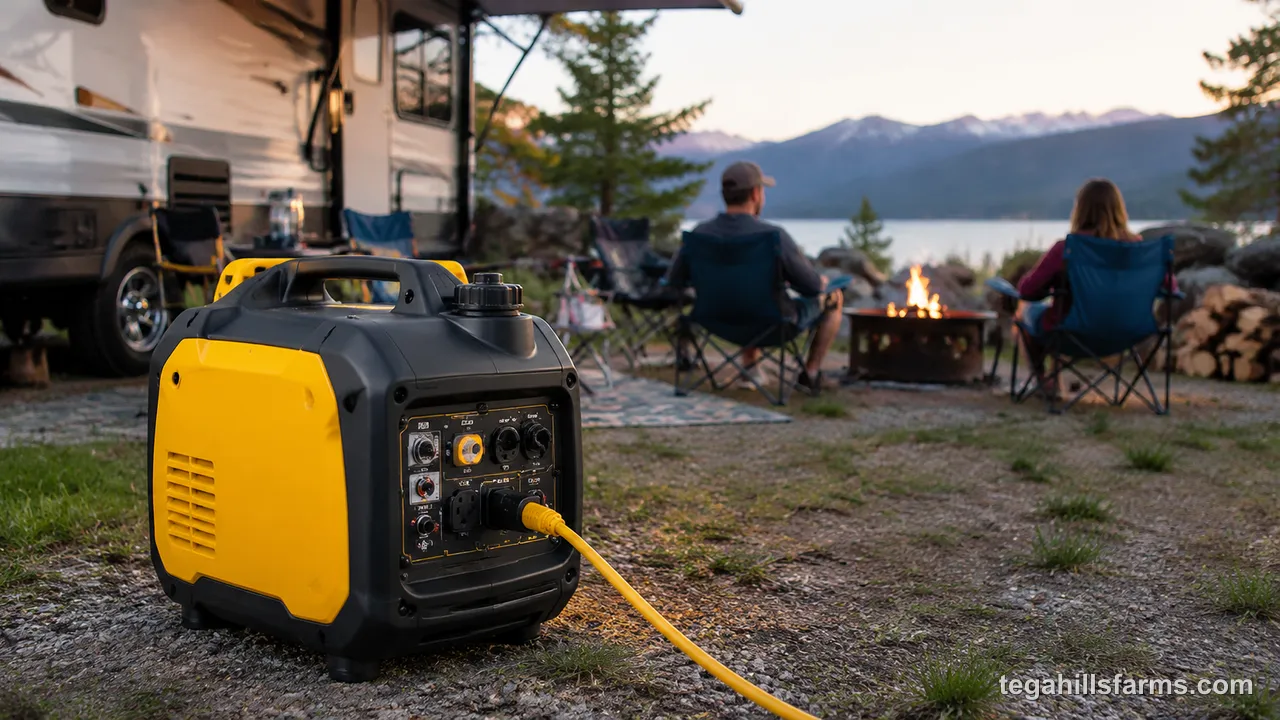
Camping, RV and Tailgating
Weight and noise matter most here, because you’ll carry the machine to a site and run it near other people. Inverters are the right type for this use. The smallest models weigh around 30 pounds, while large inverters of 5,000 watts and up weigh more than 250 pounds and stop being something you carry.
- Pick Honda if you stay at shared campgrounds with quiet hours or need to power laptops and other sensitive electronics.
- Pick a WEN or Champion inverter if you want dual-fuel convenience and more output for the money.
- Pick a parallel-capable inverter if you expect your power needs to grow, so a second unit can add capacity later.
Home Backup and Power Outages
In an outage, a portable generator needs someone to roll it out, start it, run extension cords or connect it to a transfer switch, and keep it fueled. A standby system handles all of that automatically. Which one you need depends on the household loads you can’t drop. A refrigerator and lights are easy for a portable, while a well pump, a sump pump in a wet basement or central air pushes many homes toward standby.
- Pick Generac or Kohler if you want automatic backup for the whole house or large circuits.
- Pick a Champion, Pulsar or WEN dual-fuel portable if powering essential circuits from stored fuel is enough.
You’ll find more model picks for this job in the best generators for power outages.
Job Sites and Heavy Loads
Job sites demand long runs at heavy loads, and that’s where typical portables run out of room. Units in the 2,000 to 5,000 watt range are easy to lift in and out of a truck bed. Once a generator passes about 100 pounds, though, it stops being truly portable even with wheels, and higher-output machines cross that line quickly.
- Pick full-size open-frame models from Champion, Westinghouse, Generac or Briggs & Stratton for saws, compressors and similar tools.
- Look at commercial-oriented brands such as Cummins and Kubota when a site needs long, continuous runs at high output.
For wet or outdoor work, choose models with GFCI-protected outlets.
A generator running in an attached garage or a few feet from an open window can push carbon monoxide into the house faster than anyone inside notices, because the gas has no smell or color. Park even the most reliable brand in the wrong spot during an outage, and the machine meant to protect your household becomes the biggest danger in it.
How Do You Place and Run a Generator Safely?
Run a generator outdoors only, at least 20 feet from the house, with the exhaust pointed away from doors, windows and vents. Inside a garage, carport or basement, a running unit can fill your living space with carbon monoxide even with the door open.
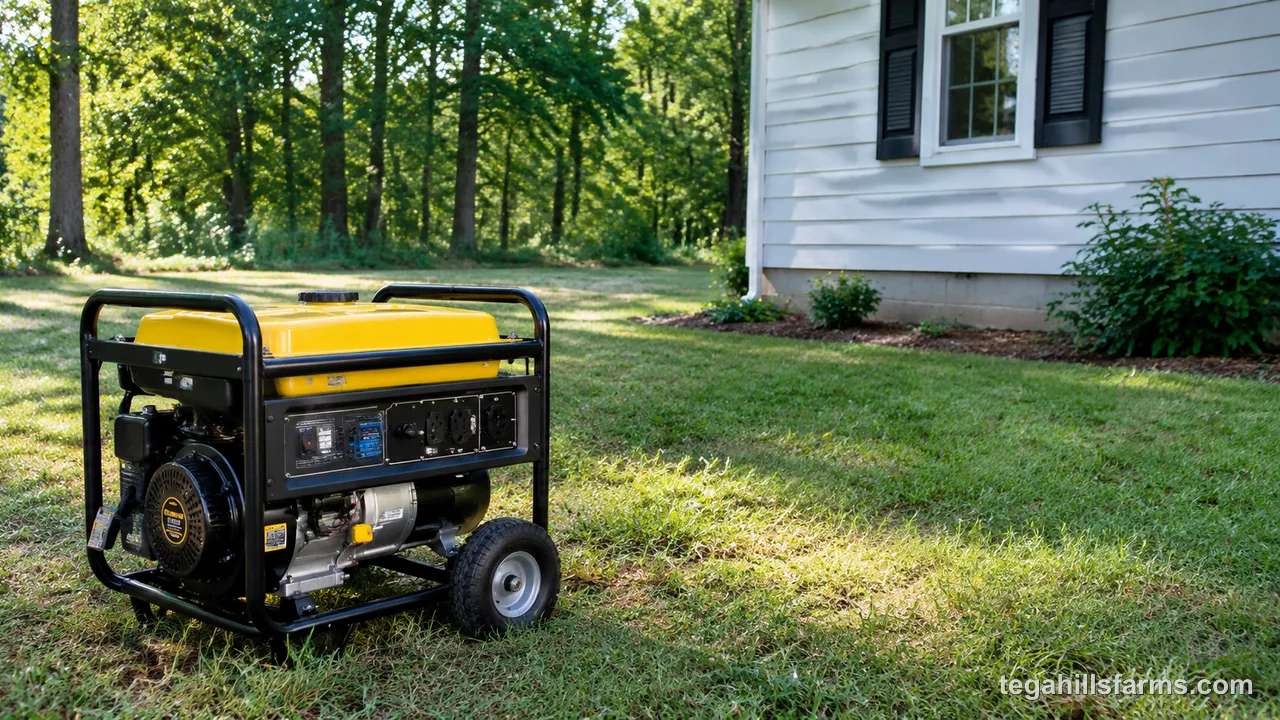
Set the machine on dry, level ground with open air on every side. A canopy designed for generators keeps rain off without trapping exhaust. Install battery-backed CO alarms on each floor of the house, since wind can push fumes back toward the walls even when the unit is placed correctly.
Built-in CO protection adds a second layer of safety. A sensor in the generator shuts the engine down when carbon monoxide builds up around it, which covers mistakes like a unit parked too close to a door. Buyers who want that safeguard can compare the best generators with CO sensors.
Let the engine cool before refueling. Connect to the house only through a transfer switch or inlet installed by an electrician. Backfeeding through a dryer outlet can energize utility lines and endanger line workers.
How Can You Spot a Generator Brand That Isn’t Worth the Money?
A brand that isn’t worth the money usually gives itself away before you buy, through vague specs, missing support or warranty terms you can’t pin down.
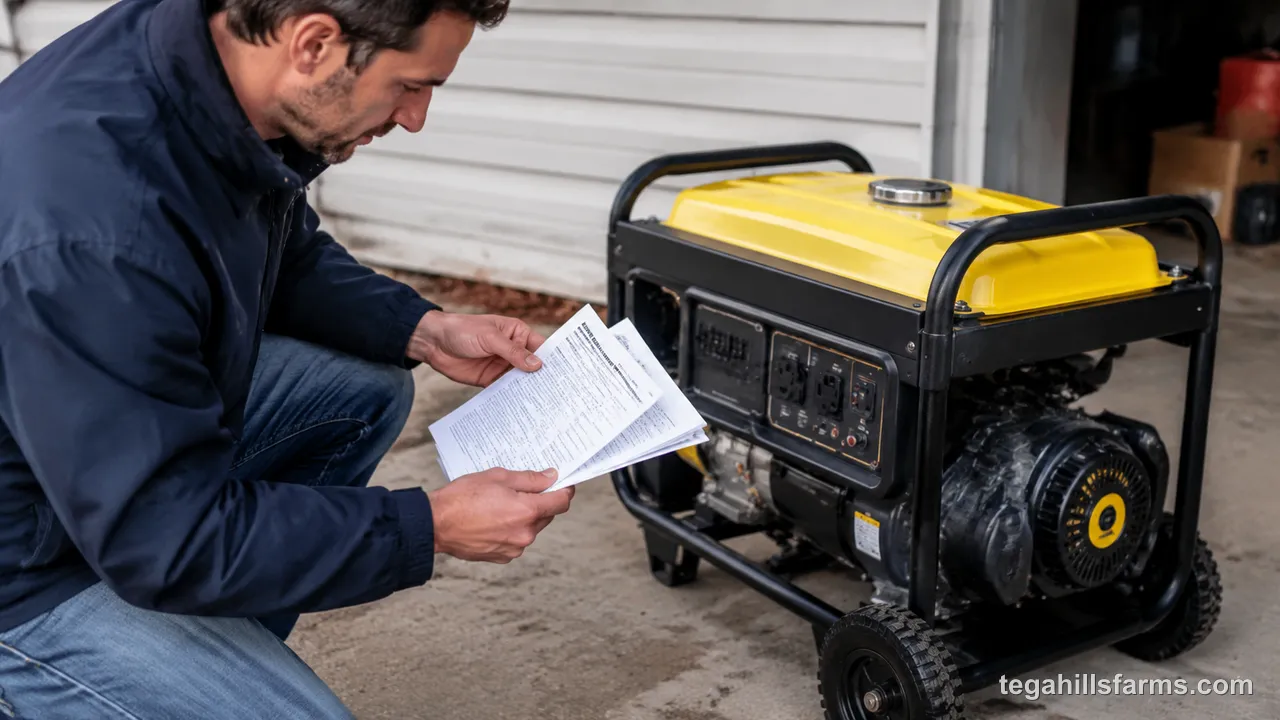
The first red flag is a spec sheet that leads with a big peak figure and buries or leaves out running watts. Running watts decide what the machine can carry for hours, so a brand that blurs the two leaves you guessing whether it can hold your load.
The second is thin parts and service support. Before you buy, search for the brand’s replacement carburetor, air filter and pull-start assembly. If those parts aren’t listed and there’s no authorized service center within driving distance, a small failure becomes a total loss.
The third is a vague warranty. Watch for terms with no stated length, no clear line between residential and commercial use, or a claims process that runs through a reseller instead of the manufacturer. A brand name that changes often or appears only on marketplace listings raises the risk further, because nobody may be around to support the machine once it breaks.
Why Do Starting Watts Matter More Than the Label?
Motor-driven appliances draw a short surge well above their running draw at startup. A generator sized only for the running total can stall or trip its breaker the moment a compressor kicks on.
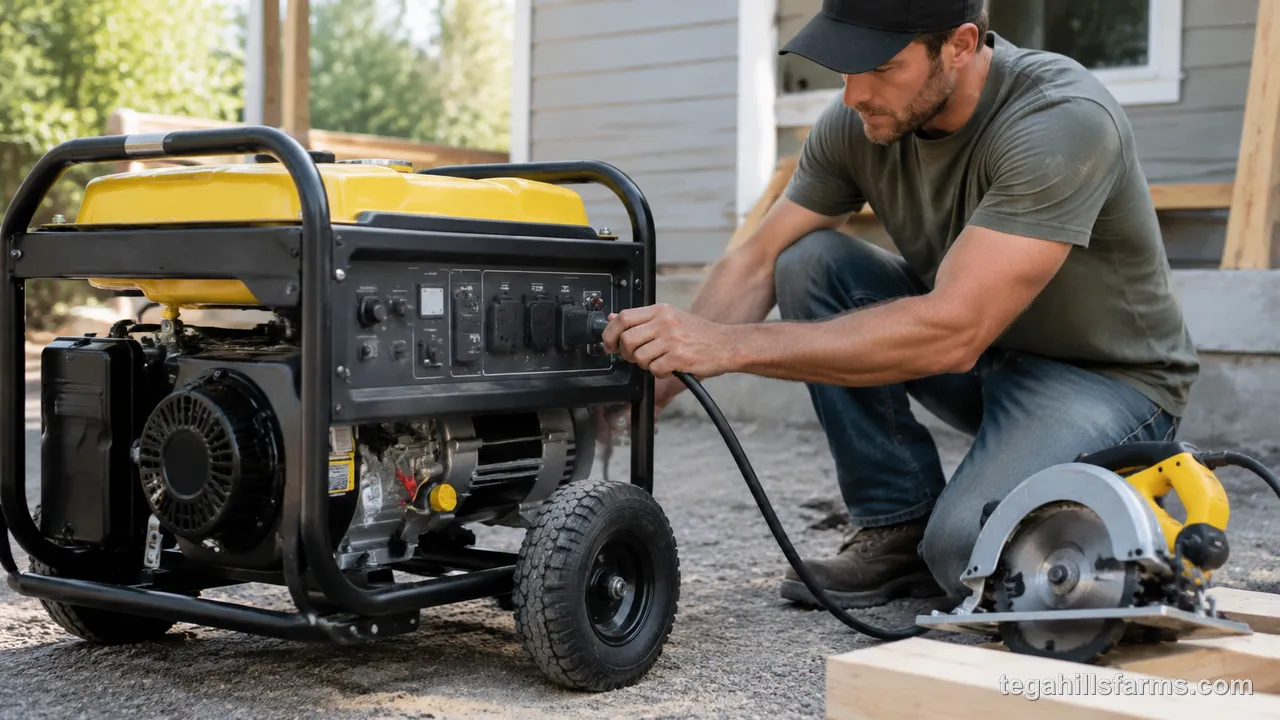
A refrigerator runs at about 300 to 800 watts, a sump pump at 750 to 1,500 watts, and a window air conditioner at about 1,000 watts. Each needs extra power for the moment its motor takes to spin up. A space heater draws 1,500 watts with no motor surge, so it loads the generator heavily but steadily.
To size a generator, add the running watts of everything you’ll use at once. Then add the extra starting demand of your largest motor, since motors rarely start at the same instant. Brands that publish both running and starting figures clearly make that math easy.
Homes with several motor loads usually fall in the range covered by the best 5000 watt generators. A central air system or deep well pump moves you toward the best 10000 watt generators or a standby unit.
When Is a Portable Power Station Better Than a Gas Generator?
A portable power station is the better fit when you need silent, fume-free power indoors for light loads like phones, laptops, a CPAP machine, a Wi-Fi router or LED lights. It runs on a battery, so it can sit in a bedroom or an RV, and it recharges from a wall outlet, a car or solar panels.
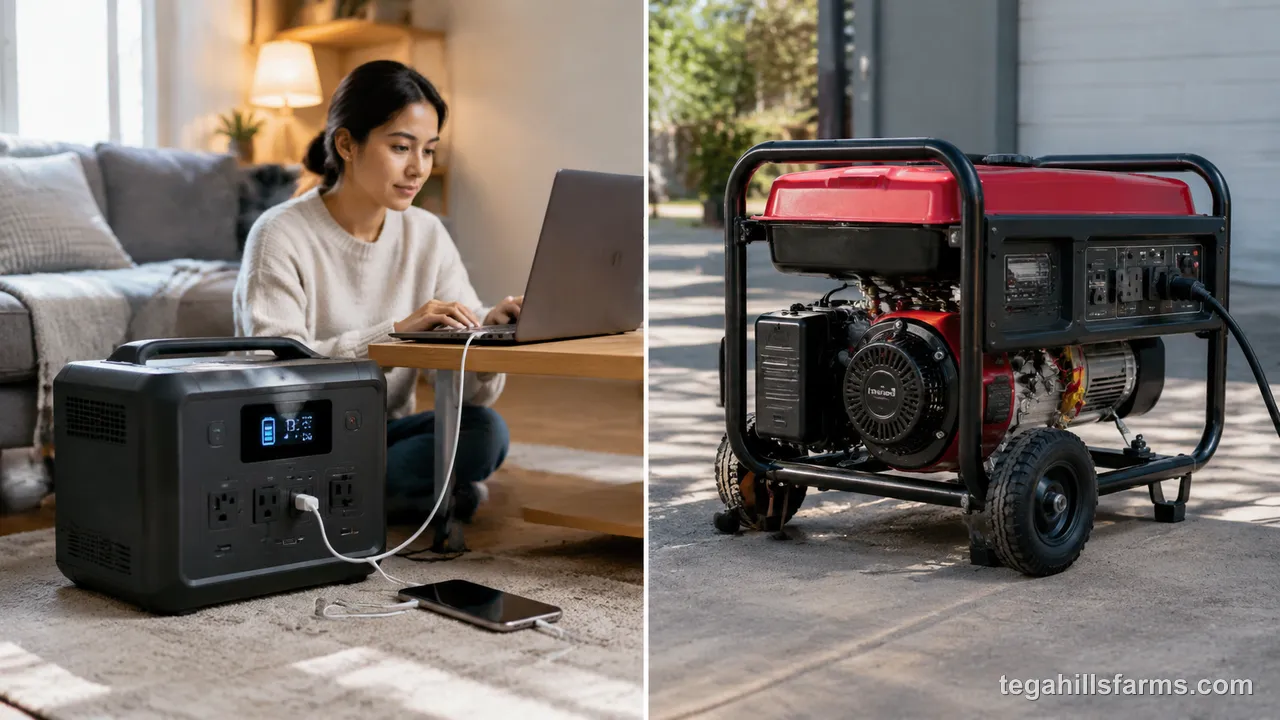
Its limit is stored energy. A refrigerator or space heater drains the battery steadily, and refilling it takes hours of sun or wall power. A multi-day outage can outlast it unless the panels keep up. Units sold as solar generators are power stations paired with panels. They make sense for short outages, apartments where running a gas engine isn’t an option, and campers who value quiet over capacity.
A fuel-burning generator is still the better choice for long outages, heavy motor loads like well pumps, and job sites, because refueling takes minutes instead of a day of sunshine.
Common Questions About Generator Brands
Which generator brand is the most reliable?
Honda has the strongest reliability reputation among portables, while Generac and Kohler lead the conversation for home standby. Upkeep matters as much as the brand, though: stale fuel, skipped oil changes and a dead starter battery can stop any machine. Run it monthly or drain the fuel before long storage.
Is Honda better than Generac?
They excel in different classes. Honda is the stronger choice for quiet, light inverter portables used for camping or powering sensitive electronics. Generac is the stronger choice for a permanently installed standby system that starts on its own. Compare them only within the same class, portable against portable or standby against standby.
Is a dual-fuel generator worth it?
For home backup, usually yes. Propane stores in sealed tanks without going stale, so you can keep fuel on hand between storms and switch fuels when gas stations close after a widespread outage. Expect somewhat lower output on propane, and size the generator on its propane rating if you’ll rely on that fuel.
What size generator does an average home need?
Around 5,000 watts is a typical size for home backup, enough to run several large appliances and a window air conditioner. Add up the running watts of everything you must keep on, then account for the largest motor’s startup surge. Whole-house backup with central air usually calls for a standby system.
Can a portable generator run a refrigerator?
Yes. Almost any portable generator can run a refrigerator, because its running draw is only a few hundred watts. The catch is the compressor’s startup surge, so check the generator’s starting watts, not just its running rating. Keep the generator outdoors and use a heavy-duty outdoor extension cord rated for the load.
More Guides on Best Generator Brands
- Best Briggs Stratton Generators
- Best Duromax Generators
- Best Firman Generators
- Best Pulsar Generators