
10 Best Gardening Axes: 2026 Top Picks Reviewed
Our top picks for the best gardening axes in 2026 are the Fiskars X27 Super Splitting Axe 36″ (Best Overall), Fiskars X25 Splitting Axe 28″ (Best Performance), Fiskars X14 Universal Axe 14″ (Best Ergonomic Design), Fiskars U14 Universal Hatchet 14″ (Best Premium), Purple Dragon Camping Hatchet 14″ (Best Durability), Fiskars X7 Hatchet 14″ (Best Lightweight), Fiskars X13 Ultralight Hiking Axe 13″ (Best Rust-Resistant), LEXIVON V14 Camping Hatchet, 14-Inch Axe (Best Budget), Estwing Sportsman’s Axe E14A 12″ (Best Compact), and Estwing Sportsman’s Axe E24ASEA 14″ (Best for Professionals).
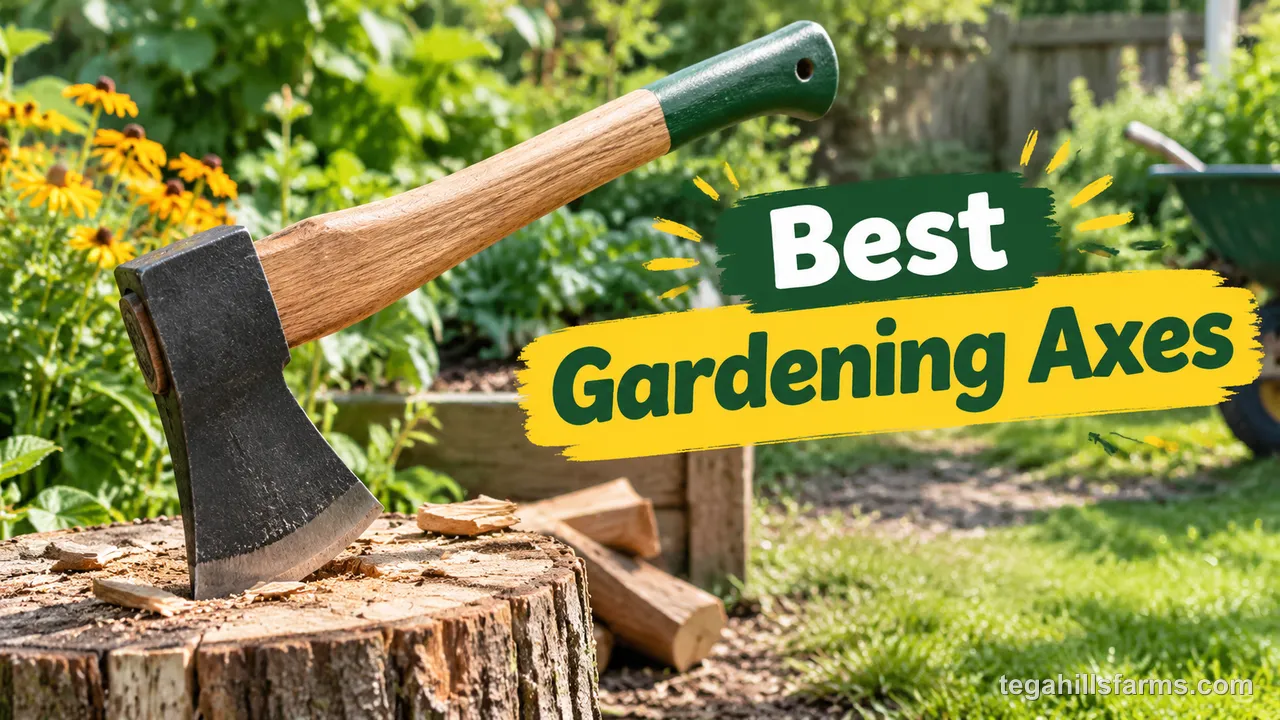
A good yard axe and a frustrating one usually differ in how the handle absorbs shock, how firmly the head is attached, and whether the blade stays sharp and rust-free after contact with damp wood and soil. Handle length matters as much as any of these, because a long splitting axe and a short hatchet are built for different jobs.


Hand and wrist fatigue is what sends an axe to the back of the shed. A tool that jars the hands on every strike or slips in a gloved grip gets swapped for loppers, even on wood loppers can’t cut. Grip texture, handle shape and shock absorption keep the work comfortable long enough to finish the pile.
What Is a Gardening Axe and How Does It Differ From a Hatchet?
Any wedge-headed chopping tool used for yard jobs such as limbing, cutting exposed roots and splitting storm wood qualifies, and handle length plus head weight separate the full-size, two-handed versions from the compact, one-hand models.
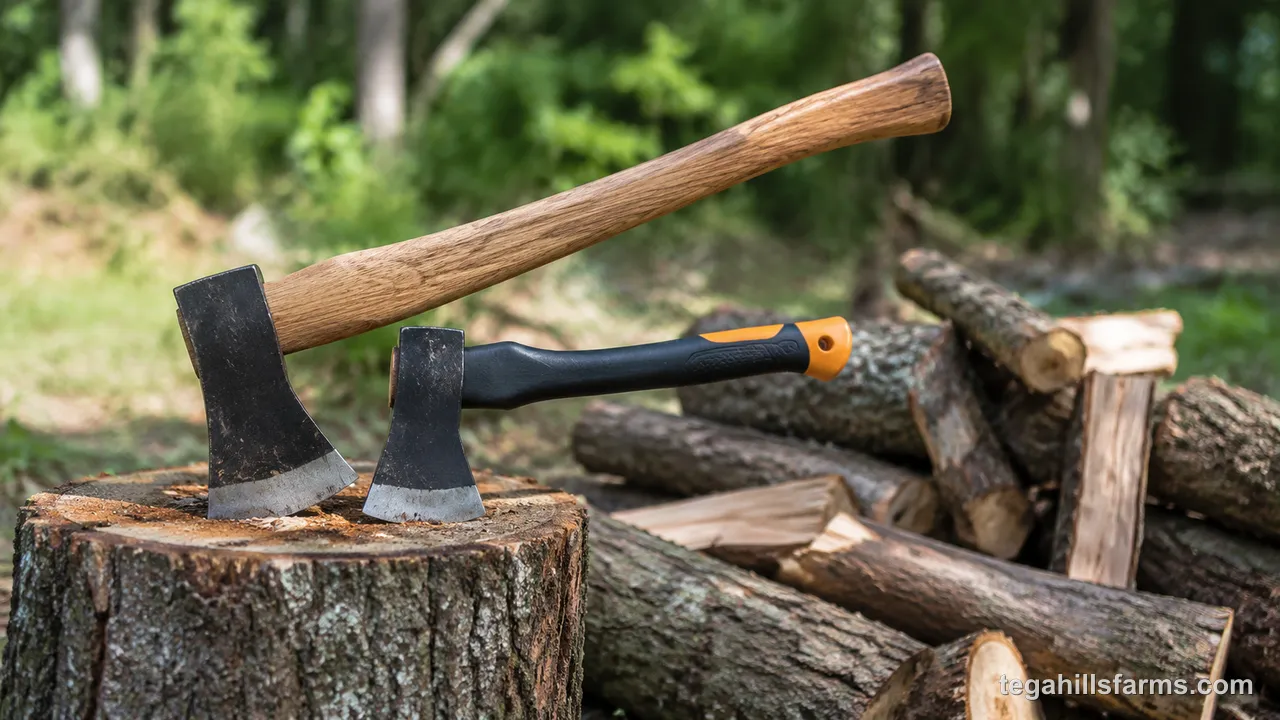
A full-size axe has a long handle and a heavier head, so it is swung with both hands and suits splitting rounds or cutting through thick limbs on the ground. A hatchet is the short version: light enough to control with one hand, which makes it the practical choice for kindling, trimming downed branches and working between shrubs. A splitting maul sits at the heavy end, with a blunt wedge head that pushes wood fibers apart instead of slicing them, so it splits well but cuts branches poorly.
Head shape tells you the intended job. A thin, wide blade slices cleanly across branches, while a fat, convex wedge drives through end grain.
The logic behind how to choose garden tools applies here too: match the tool’s size and weight to the task and to your own strength. If you are still building your kit, our guide to the best garden hand tools covers the other tools that pair well with an axe.
Is an Axe the Right Tool, or Should You Use Loppers or a Saw?
Wood thickness and what surrounds the cut decide it: an axe pays off on thick, woody material with open space to swing, while finer cuts near living plants favor loppers or a pruning saw.
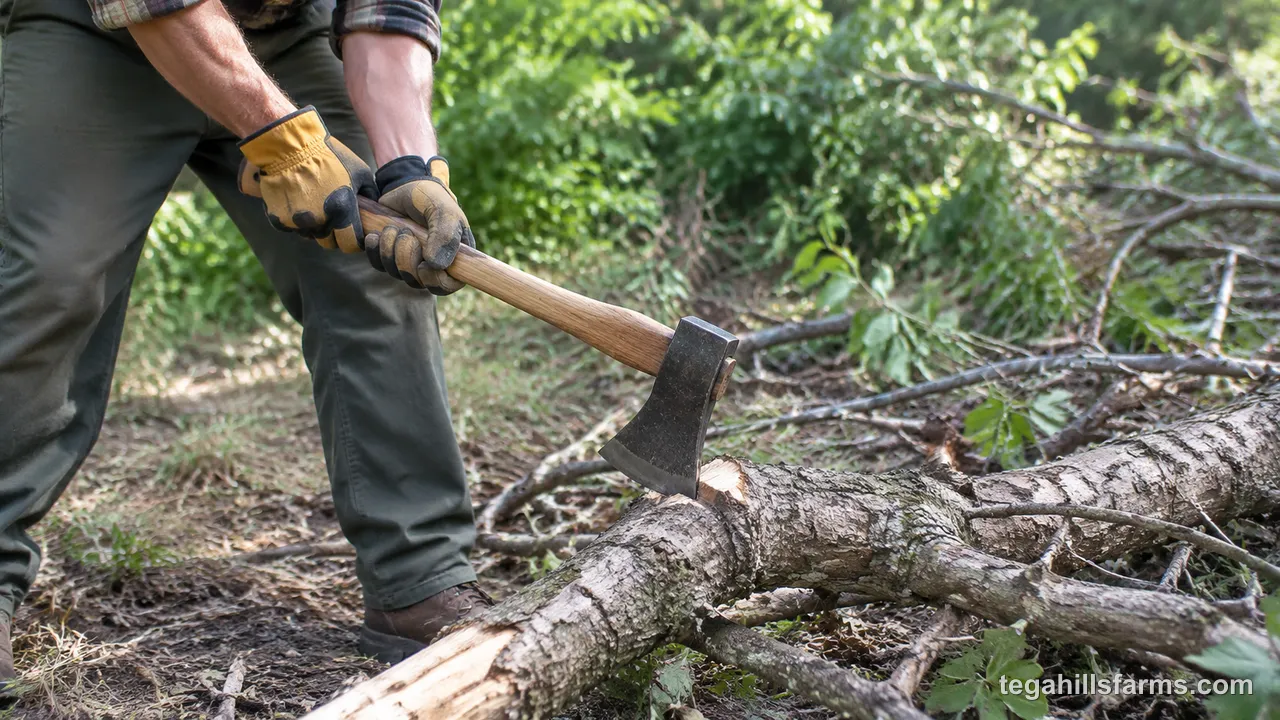
Choosing wrong has real consequences beyond lost time. An axe swung at a live shrub tears bark that heals slowly, and an axe driven into soil loses its edge within a few strikes. A saw forced through a stump that an axe would split in one blow wears out your shoulders instead. Getting the tool right keeps your wrists comfortable and the cuts clean.
Which Tool Handles Roots and Buried Wood?
A mattock or grub axe handles roots in the ground better than a standard axe, and a pruning saw makes the cleaner cut once a root is fully exposed. The mattock’s adze blade is built to chop into soil, so grit and small stones don’t ruin it the way they ruin a fine axe edge.
A standard axe edge is ground thin to slice wood. When it passes through a root and hits dirt or gravel, the soil acts like an abrasive and stones can chip the steel, so the next swing glances instead of biting.
An axe still has a place on roots: dig and scrape the soil away first, prop the root above the ground if you can, and chop only into clean wood. For thin roots near a foundation or path, the saw gives more control.
Which Tool Suits Branches and Small Limbs?
For live branches on shrubs and trees, loppers and a pruning saw give cleaner cuts with far less strain than an axe or hatchet. A bypass lopper slices close to the collar so the wound seals well, and a saw takes thicker limbs with controlled, steady strokes.
An axe chops by impact, and every strike sends a jolt into the hands and wrists. On a live branch that impact also crushes and tears bark. That makes axes and hatchets the wrong choice for pruning but the right one for limbing a tree or branch that is already down, where a few clean chops strip side shoots faster than sawing each one.
For live shrubs and fruit trees, compare the best loppers before reaching for an axe.
When Does an Axe Beat the Alternatives for Brush Clearing?
An axe or hatchet wins on thick, woody brush: saplings, old vine trunks, overgrown shrub stems and the kindling you cut from them. A heavy wedge head severs dense wood in a few strikes that would stall a machete.
Soft, fast-growing brush is different. Tall weeds, thin canes and green vines bend away from a short hatchet swing, so each cut takes several chops. A machete’s long, thin blade clears that growth with sweeping cuts and much less effort.
For grassy or vine-heavy ground, the best garden machetes clear ground faster, and the axe stays reserved for the woody stems underneath.
How Do You Choose a Gardening Axe?
How the tool feels after an hour of work decides the choice, because an axe that is too heavy, too long or too hard on the hands gets left in the shed while a pruning saw struggles through the job.
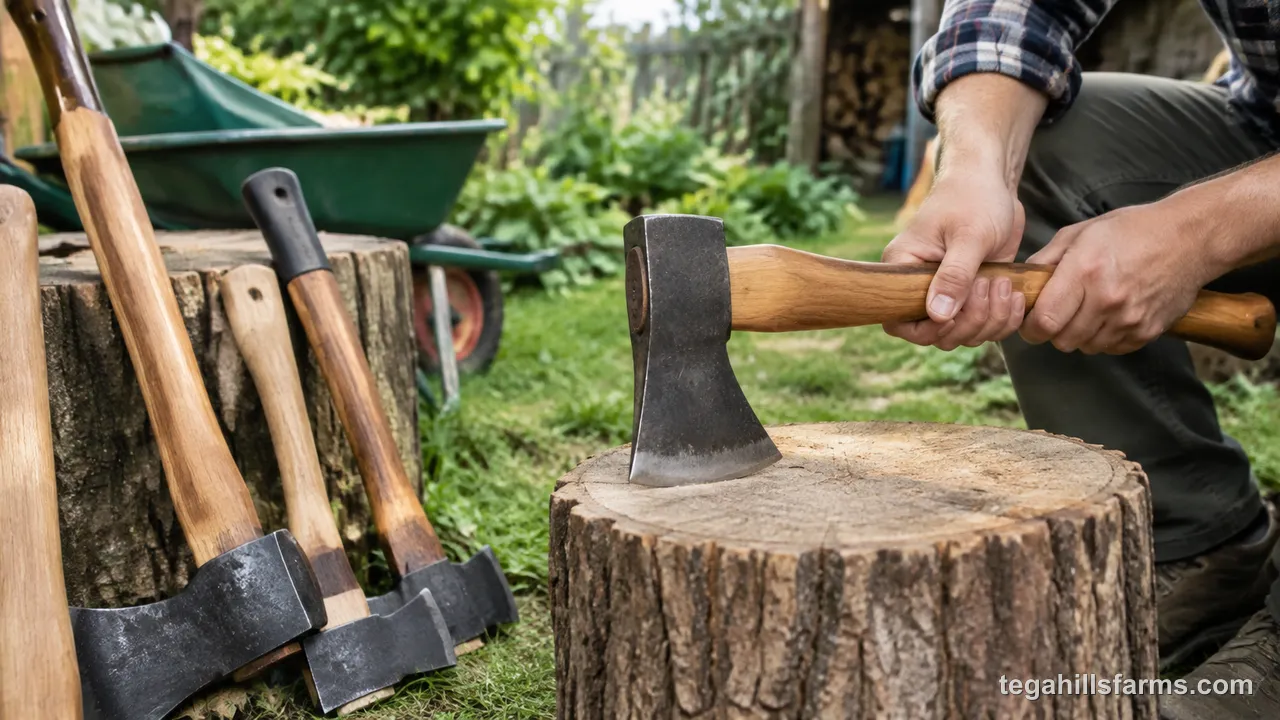
Fatigue also affects safety. Tired arms swing less accurately, and an off-target strike glances off wood toward legs or feet. Upkeep belongs in the decision as well: a head that loosens or a blade that rusts loses its edge long before the steel wears out, so the build details matter as much as the first swing in the store.
Which Handle Holds Up Better: FiberComp or Wood?
Composite handles such as Fiskars FiberComp hold up better for most yard work, because they absorb shock, ignore rain and humidity, and survive overstrikes that crack wood. Wood still suits gardeners who like its feel and don’t mind regular oiling.
An overstrike happens when the handle, not the blade, hits the log. Wood splinters at that spot, while a composite shaft built for overstrike protection shrugs it off. Wood also swells and shrinks with moisture in a damp shed, which can loosen the head over time.
Wood has advantages: it dampens some vibration naturally, and a broken wood handle can often be replaced. A third option, one-piece forged steel with a leather grip, removes the head joint entirely but transmits the feel of each strike more directly.
How Do Head Weight and Handle Length Affect Control?
A longer handle and heavier head put more force into each strike and extend your reach, but they cost precision and tire the arms sooner; a short, light tool gives control in tight spaces at the cost of power.
Handle length works as a lever. The longer the handle, the faster the head travels at the end of a full swing, which is why splitting axes have long shafts. Taller gardeners also need that length so they can strike a chopping block without bending at the waist.
Head weight does the cutting. A heavy head drives deeper and needs fewer strokes, but you lift that weight on every backswing. For limbing among beds and shrubs, a short hatchet lets you choke up and place cuts precisely with one hand. Gardeners with limited grip strength should favor a light head, since control matters more than force on small wood.
What Blade Features Matter for Roots and Branches?
Hardened forged steel, an edge shape matched to the job, a protective coating and a head that can’t loosen matter most, because they decide how long the edge stays sharp and how well the axe survives damp storage.
Edge geometry splits the field. A thin, wide edge slices across branch fibers cleanly, while a convex wedge pushes split wood apart and pops free without prying. Hardened steel holds its edge longer, which helps when roots drag grit across it. High carbon steel takes a fine edge but rusts if stored wet.
Low-friction coatings stop sap from gripping the blade and add rust protection. Head attachment matters for safety: insert-molded, over-molded, riveted full-tang and one-piece forged heads all resist loosening. A sheath with a secure closure protects the edge, and your hands, in storage.
How Often Will You Use It?
Frequency sets the build quality worth buying. A gardener who chops kindling a few times a season gets full value from a budget hatchet with a composite handle and a sheath, since the tool spends most of its life on a hook.
Regular weekend use justifies a mid-range tool with a coated blade, a shock-absorbing handle and a secure head, because those features reduce fatigue and upkeep every session. Daily or heavy use, such as clearing storm damage or working a woodpile, is where premium forged construction and long warranties pay for themselves.
For occasional chores, axes under $50 cover the basics. If you work an axe most weekends, the best axes under $100 add sturdier handles and better edge retention.
10 Best Gardening Axes for Yard Work
Our top picks for the best gardening axes in 2026 are the Fiskars X27 Super Splitting Axe 36″, Fiskars X25 Splitting Axe 28″, Fiskars X14 Universal Axe 14″, Fiskars U14 Universal Hatchet 14″, Purple Dragon Camping Hatchet 14″, Fiskars X7 Hatchet 14″, Fiskars X13 Ultralight Hiking Axe 13″, LEXIVON V14 Camping Hatchet, 14-Inch Axe, Estwing Sportsman’s Axe E14A 12″ and Estwing Sportsman’s Axe E24ASEA 14″. The long-handled Fiskars splitters belong at a chopping block with a pile of storm wood, while the compact hatchets work among shrubs and beds, where grip comfort, blade coating and how the head is attached separate one from another.
#1 Fiskars X27 Super Splitting Axe 36″ — Best Overall
Taller gardeners who split medium to large logs after yard cleanup will appreciate the 36″ handle, because the extra length turns a full swing into splitting force without bending over the round. It is a heavy tool built for the chopping block.
Key Specs:
- Handle length: 36 in
- Weight: 6.28 lb
- Head: insert-molded forged steel with hardened blade
- Blade geometry: advanced bevel convex
- Grip: shock-absorbing handle with textured non-slip grip
- Included: protective sheath; lifetime warranty
Detailed Review:
The convex bevel is why this axe works so well on rounds from a downed tree. Its curved cheeks push the wood apart instead of wedging into it, so more logs split on the first strike and the blade pulls free without prying. The hardened forged steel stays sharper longer than a traditional axe head, which means fewer stops for the file during a long afternoon.
Weight is the trade-off. At 6.28 lb, the X27 asks for a two-handed swing at a block and is a poor fit for trimming branches in a flower bed. That mass is what lets gravity and handle length do most of the splitting, so the effort goes into lifting rather than forcing the blade.
The shock-absorbing handle and textured grip ease the jolt that travels into the hands on each strike. The handle also protects against overstrike damage when a tired swing lands short, a common way splitting axes fail.
Gardeners who like this handle design can compare the best Fiskars gardening axes for shorter options built on the same approach.
Pros:
- Long handle builds splitting force on medium to large logs.
- Convex bevel releases from wood without heavy prying.
- Hardened forged blade holds its edge through long sessions.
- Shock-absorbing grip reduces hand strain at the block.
- Lifetime warranty and protective sheath come included.
Cons:
- Long handle is awkward in tight beds and around shrubs.
- Weight demands a two-handed swing, ruling out quick limbing.
- Wedge-shaped splitting head cuts branches less cleanly than thin blades.
Who It’s For:
Tall gardeners with a woodpile to process after storm cleanup or tree removal will get full use from this axe, especially if they split rounds at a chopping block. Anyone pruning shrubs or working between raised beds should look for a short hatchet instead, since the long handle needs open space to swing safely.
Editor’s Verdict:
A dependable splitting axe for taller users, pairing a long, shock-absorbing handle with a convex blade that frees itself from the wood after each strike.
#2 Fiskars X25 Splitting Axe 28″ — Best Performance
The X25 suits gardeners who want splitting power from a shorter, faster swing, since its balanced power-to-weight ratio raises head speed much like an aluminum baseball bat. Medium and large logs are its target.
Key Specs:
- Handle length: 28 in
- Handle: shock-absorbing FiberComp
- Head: insert-molded forged steel
- Blade geometry: advanced bevel convex
- Included: protective sheath; lifetime warranty
Detailed Review:
Speed is where this axe earns its place in a yard-cleanup kit. The head and FiberComp handle are balanced so the tool accelerates quickly, and a faster head delivers more force into the round without muscling every stroke. The convex bevel adds to that force and makes the blade easier to pull from the wood.
Against the Fiskars X27 Super Splitting Axe 36″, the X25’s 28-inch handle trades reach for control. Gardeners of average height usually aim a shorter shaft more accurately, while taller users give up some leverage and may find themselves bending toward the block.
The FiberComp handle is lightweight yet stronger than steel, and it absorbs shock and resists overstrike damage. That matters at the end of a session, when tired arms are more likely to land the handle on the log instead of the blade.
I’d lean toward this one for a gardener who splits a modest woodpile in short sessions between other yard chores. It covers medium to large logs without the bulk of a full-length splitter.
Pros:
- Balanced head and handle raise swing speed for strong splits.
- Convex bevel adds splitting power and frees easily.
- FiberComp handle absorbs shock and resists overstrikes.
- Shorter handle is easier to aim than full-length splitters.
- Sheath and lifetime warranty are included.
Cons:
- Splitting head is too blunt for clean branch cuts.
- Handle still needs open space and a two-handed swing.
Who It’s For:
Gardeners of average height who split firewood from yard cleanup, and want speed rather than sheer reach, will find this axe easier to control than a full-length splitter. If most of your cutting happens in shrubs and flower beds, a compact hatchet with a thin blade makes cleaner, safer cuts.
Editor’s Verdict:
Expect quick, powerful splits from a handle length that is easy to aim, backed by a FiberComp shaft that shrugs off missed strikes.
#3 Fiskars X14 Universal Axe 14″ — Best Ergonomic Design
Gardeners who feel wrist strain after limbing will notice how the curved handle keeps the wrist in a comfortable, natural position, while the textured SoftGrip zone holds securely without a hard squeeze. Fresh pine and spruce cut cleanly too.
Key Specs:
- Length: 14 in
- Blade: double-hardened forged steel with low-friction, rust-protective coating
- Edge: thin, wide blade with proprietary grinding
- Handle: curved, shock-absorbing FiberComp with textured SoftGrip zone
- Head: insert-molded
- Included: sheath; limited warranty
Detailed Review:
The curved handle changes how the tool feels by the end of a limbing session. Bending the shaft keeps the wrist straighter at impact, so less of each jolt pushes the joint sideways. The textured SoftGrip zone gives the fingers a secure hold without clenching, which matters for gardeners with limited hand strength, because a relaxed grip tires more slowly.
The thin, wide edge is ground for limbing, kindling and carpentry rather than splitting. That shape is why it slices cleanly through fresh, resinous spruce and pine instead of tearing the fibers. The double-hardened forged steel carries a low-friction coating that glides through sap and protects against rust.
The insert-molded head reduces loosening and breakage, and the FiberComp handle absorbs shock and offers overstrike protection. Both details keep the tool safe to swing after seasons of use, since a loose head is the most common reason a hatchet gets retired.
The included sheath protects the blade and your hands during storage or transport. It keeps the edge from knocking against shovels and rakes on a crowded shed wall.
Pros:
- Curved handle keeps the wrist in a natural position.
- SoftGrip zone holds securely without a hard squeeze.
- Thin, wide edge cuts fresh resinous wood cleanly.
- Low-friction coating glides through sap and resists rust.
Cons:
- Thin edge suits limbing more than splitting thick rounds.
- Short handle limits reach on higher limbs.
- Covered by a limited warranty rather than lifetime coverage.
Who It’s For:
Older gardeners, and anyone whose wrists or hands tire quickly, will appreciate the natural wrist angle during limbing and kindling work around the yard. For splitting a stack of large rounds, a long-handled splitting axe puts far more force behind each swing than this compact design.
Editor’s Verdict:
Choose this one for comfort-focused limbing: the curved FiberComp handle and SoftGrip zone keep hands and wrists relaxed while the coated blade slices fresh wood.
#4 Fiskars U14 Universal Hatchet 14″ — Best Premium
For a yard hatchet that handles chopping, kindling and path clearing equally well, the U14 pairs a precision-ground RazorEdge with ToughCoat plating that resists wear. It is a higher-priced tool built to last.
Key Specs:
- Length: 14 in
- Edge: precision-ground RazorEdge
- Blade: double-hardened forged steel with low-friction ToughCoat plating
- Handle: FiberComp shaft with textured SoftGrip and hooked end
- Head: insert-molded
- Included: protective sheath; lifetime warranty
Detailed Review:
The RazorEdge grind and double-hardened forged steel are designed to stay sharp through repeated chopping. That matters in a yard where one tool moves from kindling to clearing an overgrown path in the same afternoon. The ToughCoat plating reduces friction so the blade glides through wood, and it resists wear on the faces that rub through every cut.
The textured SoftGrip handle ends in a hook that keeps the hatchet from sliding out of a sweaty or gloved hand at the end of a swing. The insert-molded head reduces loosening and overstrike breakage, while the lightweight FiberComp shaft keeps control easy.
Next to the Fiskars X14 Universal Axe 14″, the U14 carries a lifetime warranty where the X14’s coverage is limited. For a tool meant to stay in service for years, that coverage is part of what the extra money buys.
Its price sits above the budget picks, so it pays off for gardeners who reach for a hatchet every week. Occasional users may find a simpler tool handles their chores just as well.
Pros:
- RazorEdge grind stays sharp through repeated chopping.
- ToughCoat plating glides through wood and resists wear.
- Hooked SoftGrip end keeps the hatchet secure in hand.
- Lifetime warranty backs the hatchet for years of regular use.
Cons:
- Higher price is hard to justify for occasional chores.
- Short handle gives limited reach for overhead limbs.
Who It’s For:
Weekend gardeners who use one hatchet for everything, from kindling to clearing overgrown paths, and who prefer paying once for a tool that holds its edge will get steady value here. If an axe comes out only occasionally, a simpler hatchet covers those chores just as well.
Editor’s Verdict:
Buy it if you want a do-everything yard hatchet with a sharp, plated edge and a grip that stays put; the lifetime warranty adds long-term peace of mind.
#5 Purple Dragon Camping Hatchet 14″ — Best Durability
Hand-forged high carbon steel and a riveted full tang give this hatchet a head that resists working loose under hard use, even when a branch-trimming session turns into splitting firewood. Branch trimming and light brush are its home ground.
Key Specs:
- Overall length: 13.9 in
- Head length: 5.7 in
- Cutting edge: 4.9 in
- Blade: hand-forged high carbon steel
- Construction: full tang reinforced with four rivets
- Handle: ergonomic wood; sheath included
Detailed Review:
Most hatchets join head and handle at a single point, and that joint is where they loosen. Here the steel runs through the handle as a full tang reinforced with four solid rivets, so head and grip move as one piece and the swing stays solid.
Hand forging from high carbon steel gives the head toughness and impact resistance. The 4.9-inch cutting edge is wider than the 4-inch edge on the Estwing Sportsman’s Axe E14A 12″, so each stroke bites across a broader section of branch. The cost of that steel is rust, so wipe and dry the blade after use and store it sheathed in a dry place.
The wood handle is shaped to fit the hand naturally, which reduces fatigue and helps accuracy during extended outdoor work. Wood also needs more attention than composite, since a dry, unoiled handle can check and split.
Keep it on wood. The blade is not made for metal, stone or concrete, so roots tangled in gravel are a job for a mattock.
Pros:
- Full tang with four rivets resists head loosening.
- Hand-forged high carbon steel withstands hard impacts.
- Wide cutting edge bites across thick branches.
- Shaped wood handle fits the hand naturally.
Cons:
- High carbon steel rusts if stored wet.
- Wood handle needs more upkeep than composite.
- Blade must stay away from stone, gravel and metal.
Who It’s For:
Anyone who is hard on tools and wants a hatchet that stays tight after seasons of branch trimming and light brush clearing will value the riveted full tang. People who leave tools outside or skip cleaning should consider a coated blade, because this steel needs drying after every use.
Editor’s Verdict:
Trust this hatchet for heavy branch work: the riveted full tang and hand-forged head hold together under impact, provided the high carbon blade is kept dry.
#6 Fiskars X7 Hatchet 14″ — Best Lightweight
At 1.4 lb, the X7 keeps hand and forearm fatigue low through a long session of removing branches or splitting kindling, because there is little mass to lift between swings. The coated blade resists sticking.
Key Specs:
- Length: 14 in
- Weight: 1.4 lb
- Head: insert-molded with proprietary blade grinding
- Blade: low-friction coating
- Handle: shock-absorbing FiberComp
- Included: sheath; lifetime warranty
Detailed Review:
Light weight pays off when the job is repetitive, such as cutting up a pile of small branches after pruning. The balance and power-to-weight ratio let the head carry speed, so a light swing still cuts deep into small to medium kindling.
Next to the Estwing Sportsman’s Axe E24ASEA 14″, which shares the same length, the X7 is noticeably lighter. That difference suits one-handed work at shoulder height, where the extra heft of a solid steel hatchet tires the arm quickly, though the heavier tool drives deeper into thick limbs.
Proprietary grinding keeps the edge sharp longer, and the low-friction coating stops the blade from sticking in green wood. The shock-absorbing FiberComp handle has an ergonomic design meant to reduce hand fatigue during extended use.
The trade-off is mass and reach. On thicker limbs, a light head needs more strokes than a heavier one, so this hatchet fits trimming and kindling better than clearing small trees.
Pros:
- Light build keeps hand and forearm fatigue low.
- Balanced head cuts deep for its size.
- Low-friction coating keeps the blade from sticking.
- FiberComp handle absorbs shock on each strike.
Cons:
- Light head needs extra strokes on thicker limbs.
- Short handle limits reach and leverage.
Who It’s For:
If lifting a heavy tool all afternoon leaves your hands sore, this hatchet keeps branch removal and kindling prep manageable, and it suits gardeners with limited grip strength. Those who regularly cut through thick limbs or small trees will want a heavier head that does more of the work per swing.
Editor’s Verdict:
Reach for it when comfort over a long session matters more than raw chopping force; the light, balanced build and coated blade make small branch work easy on the hands.
#7 Fiskars X13 Ultralight Hiking Axe 13″ — Best Rust-Resistant
Tools that get rinsed after work in damp soil and then hang in an open shed need a blade that handles moisture, and the X13’s low-friction coating protects against rust while it glides through wood. The orange handle is easy to find in mulch.
Key Specs:
- Length: 13 in
- Weight: 15% lighter than other compact X-series axes
- Blade: double-hardened forged steel with proprietary grinding and rust-protective, low-friction coating
- Handle: high-visibility orange FiberComp with striking end
- Head: insert-molded
- Included: sheath with belt loop and locking mechanism; limited warranty
Detailed Review:
Rust starts where bare steel holds a film of water, and a garden axe often comes back from root and brush work with wet soil on its faces. The low-friction coating on this double-hardened forged steel blade protects against rust and lets the head glide through wood, so sap has less chance to build up between cleanings.
The high-visibility orange FiberComp handle matters more in a garden than its hiking design suggests. A dark hatchet set down in leaf litter is easy to lose and easy to step near, while bright orange stands out. The striking end on the butt drives tent stakes, and it handles garden stakes the same way.
The handle is strong and absorbs shock, and the insert-molded head reduces loosening and overstrike breakage. The sheath’s belt loop and locking mechanism make it easy to carry around the yard without the blade slipping out.
I’d point anyone who stores tools in an outdoor shed toward this one. Its light, short build keeps it to kindling and small branches, so thicker wood turns into a series of chops.
Pros:
- Low-friction coating protects the blade against rust.
- Orange handle is easy to spot in mulch.
- Striking end drives garden stakes and edging pins.
- Belt-loop sheath locks securely for carrying.
Cons:
- Short handle limits it to small branches and kindling.
- Light build trades chopping force for portability.
- Covered by a limited warranty rather than lifetime coverage.
Who It’s For:
Damp climates, open sheds and gardeners who sometimes forget to wipe a blade dry all favor this hatchet, since the coating guards against rust between uses. For splitting firewood rounds, a long splitting axe with a convex bevel does the job with far less effort.
Editor’s Verdict:
Pick this hatchet for small cutting jobs around wet soil and outdoor storage, where its coated blade and easy-to-spot handle earn their keep.
#8 LEXIVON V14 Camping Hatchet, 14-Inch Axe — Best Budget
Occasional garden chores rarely justify an expensive hatchet, and the LEXIVON V14 covers them with a forged carbon steel blade over-molded onto a reinforced fiberglass handle. The price stays low.
Key Specs:
- Length: 14 in
- Weight: 1.46 lb
- Blade: forged, heat-treated Grade-A carbon steel with hardened cutting edges
- Handle: reinforced injected fiberglass with TPR anti-slip grip and reinforced back spine
- Balance: balance point close to the head
- Included: protective carrying sheath with handle and blade edge guard
Detailed Review:
The forged, heat-treated carbon steel blade has hardened cutting edges and aggressive angles designed for one-strike splits. That covers the kindling, small logs and branch work a home garden produces.
The fiberglass handle absorbs shock, resists weather and won’t bend the way steel can. The blade is fully encased and over-molded onto it, so there is no separate wedge to work loose. A reinforced back spine adds strength where overstrikes land, and the TPR grip resists slipping in damp gloves.
The balance point sits close to the head, which puts weight where it adds swing speed and power. That forward balance helps on a chopping block, though the head can feel heavy during precise trimming around shrubs.
Carbon steel needs drying after wet work to stay rust-free. The carrying sheath and blade edge guard keep the hatchet safe on a garage shelf, and the low price makes it an easy spare for a second shed.
Pros:
- Over-molded head has no wedge to work loose.
- Fiberglass handle resists weather and absorbs shock.
- TPR grip stays secure in damp gloves.
- Sheath and edge guard come included.
- Low price suits occasional garden chores.
Cons:
- Forward balance feels head-heavy in precise trimming.
- Carbon steel blade needs drying to prevent rust.
Who It’s For:
New homeowners stocking a shed, or anyone who chops kindling and trims branches only now and then, will find enough hatchet here without paying for extras they won’t use. Gardeners who work an axe hard every week should consider a higher-tier hatchet built for frequent use.
Editor’s Verdict:
Count on it for occasional kindling and branch work: the over-molded head and weather-resistant fiberglass handle give dependable service at a low price.
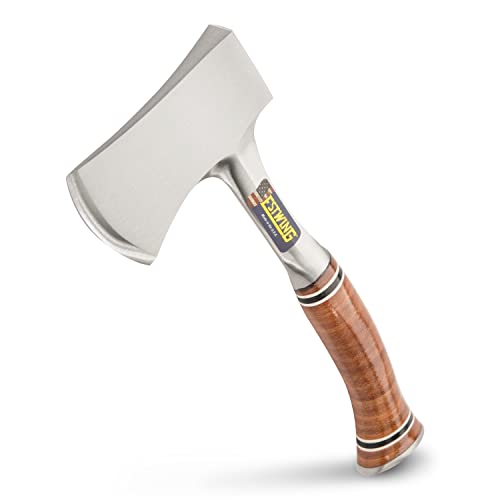
#9 Estwing Sportsman’s Axe E14A 12″ — Best Compact
Small cutting jobs in tight spaces call for a short tool, and this 12″ Estwing rides on a belt loop in its ballistic nylon sheath so it stays at hand between shrubs. It’s forged from one piece of steel.
Key Specs:
- Length: 12 in
- Weight: 1.4 lb
- Construction: forged in one piece of American steel
- Cutting edge: 4 in, hand-sharpened
- Grip: genuine leather, hand sanded and lacquered
- Sheath: ballistic nylon with belt loop
Detailed Review:
Forging head and handle from a single piece of solid American steel removes the castings and welds where weak points form. There is no head to loosen and no joint to crack, which suits gardeners who keep tools for the long haul.
Compared with the Estwing Sportsman’s Axe E24ASEA 14″, this model is shorter and lighter, while both carry the same hand-sharpened edge. The shorter length gives better control between shrubs and in raised beds, but it also shortens the swing arc, so thicker limbs take more strokes.
The genuine leather grip is hand sanded and lacquered for a durable, comfortable finish that feels warmer in the hand than bare steel. Leather does need occasional care, and a lacquered surface can feel slick with wet gloves.
Estwing has made its tools in Rockford, IL, since 1923. Gardeners drawn to this one-piece style can compare the best Estwing garden axes before settling on a length.
Pros:
- One-piece forged steel leaves no head to loosen.
- Short length controls well between shrubs and beds.
- Ballistic nylon sheath has a belt loop.
- Made in the USA from American steel.
Cons:
- Short handle limits power on thicker limbs.
- Leather grip needs occasional care to stay comfortable.
Who It’s For:
Gardeners working in small yards, patios and crowded beds who want a hatchet they can carry on a belt will like this compact one-piece design. Anyone splitting firewood or tackling heavier limbs needs more handle length and head weight than this tool offers.
Editor’s Verdict:
Keep this one-piece hatchet within reach for small cutting jobs; its forged steel build, leather grip and belt-loop sheath make it a durable, easy-to-carry companion.
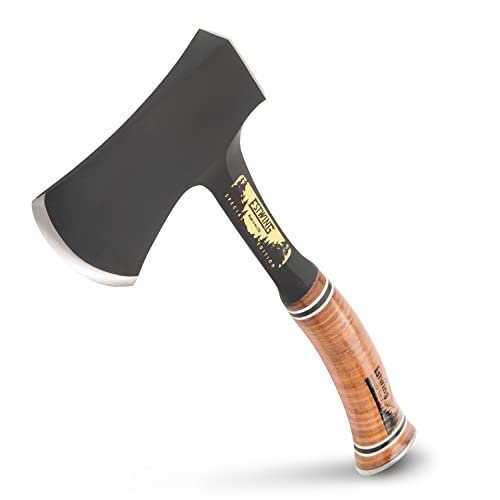
#10 Estwing Sportsman’s Axe E24ASEA 14″ — Best for Professionals
Landscapers and frequent users who chop limbs, small trees and branches need a hatchet without weak points, and this 14″ Estwing is forged in one piece from solid American steel. It doubles as a stake puller.
Key Specs:
- Length: 14 in
- Weight: 1.8 lb
- Construction: forged in one piece of American steel
- Cutting edge: 4 in, hand-sharpened
- Grip: black genuine leather, hand sanded and lacquered
- Sheath: ballistic nylon with belt loop
Detailed Review:
Limbs and small trees demand more than kindling does, and this model’s length and weight put real force behind each stroke. The one-piece steel build leaves no weld or casting to fail, which is why it tolerates the rigorous use a professional routine involves.
The hand-sharpened edge comes ready to work on limbs, branches, firewood and kindling. Because the head sees daily contact with wet wood, wiping off soil and sap after each job keeps the edge sharp and rust off the steel.
The black genuine leather grip is hand sanded and lacquered, giving a durable finish that stays comfortable over long days of cutting. The heavy-duty ballistic nylon sheath protects the edge and rides on a belt loop, so the hatchet stays at hand while you move between trees.
If you cut most weeks of the year, a solid steel tool shrugs off the knocks of constant use. That makes this hatchet worth carrying from job to job.
Pros:
- One-piece forged steel withstands rigorous daily use.
- Handles limbs, small trees, branches and kindling.
- Lacquered leather grip stays comfortable over long days.
- Belt-loop sheath keeps the hatchet within reach.
- Made in the USA from American steel.
Cons:
- Leather grip needs care after wet work.
- Added weight tires the arm faster than lighter hatchets.
Who It’s For:
Landscape crews, arborist helpers and homeowners who cut limbs most weeks need a tool that keeps working through rough handling, and this one-piece hatchet fits that routine. Occasional users who only split kindling will find a lighter, coated hatchet easier to live with.
Editor’s Verdict:
Rely on this hatchet when cutting is part of your regular routine; its single-piece steel build and protective sheath handle constant use without loosening.
Which Axe Fits Which Yard Job?
Long splitting axes belong at the woodpile, compact hatchets handle kindling and limbing, and one-piece forged models suit heavy, frequent cutting.
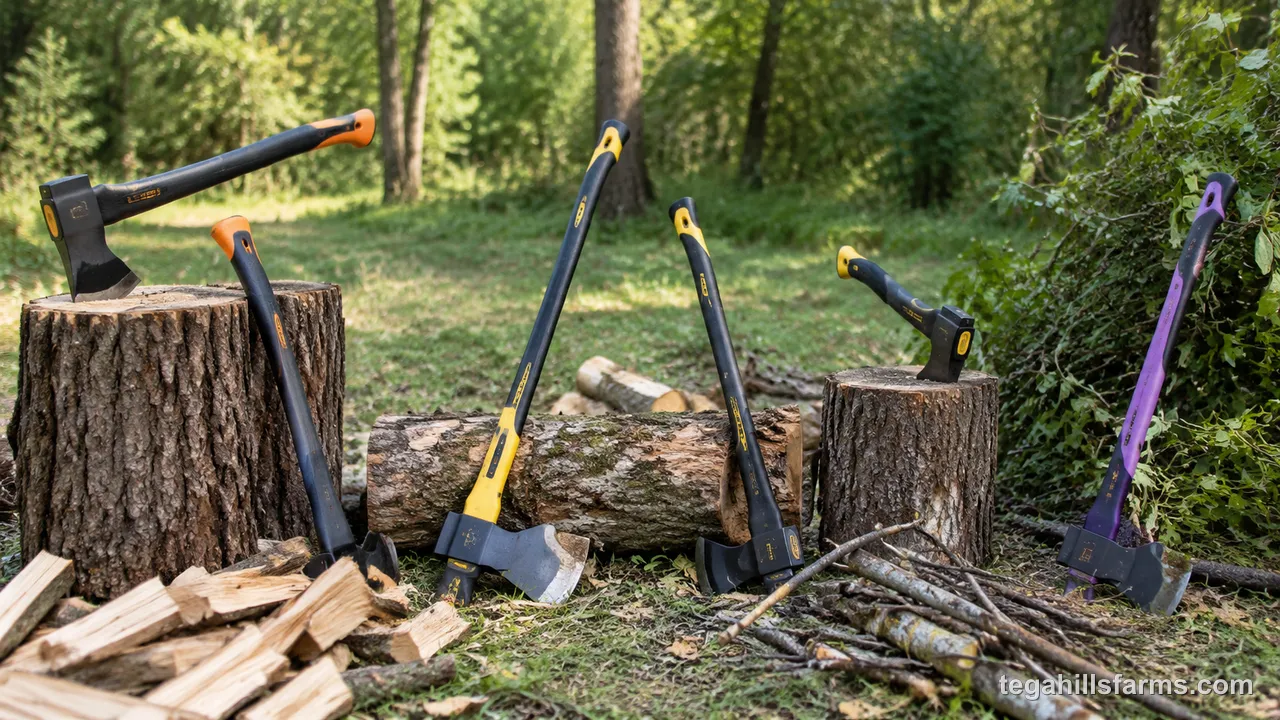
Matching the tool to your most common job saves effort and keeps the hands fresh:
- Splitting medium to large logs from storm cleanup: Fiskars X27 Super Splitting Axe 36″ for taller users, or Fiskars X25 Splitting Axe 28″ for a quicker, easier-to-aim swing.
- Limbing and kindling with tired hands or wrists: Fiskars X14 Universal Axe 14″ for its curved handle, or Fiskars X7 Hatchet 14″ for its light build.
- All-around chopping and path clearing: Fiskars U14 Universal Hatchet 14″.
- Work around damp soil and outdoor storage: Fiskars X13 Ultralight Hiking Axe 13″.
- Hard branch work with a traditional wood handle: Purple Dragon Camping Hatchet 14″.
- Occasional chores on a tight budget: LEXIVON V14 Camping Hatchet, 14-Inch Axe.
- Tight beds and belt carry: Estwing Sportsman’s Axe E14A 12″.
- Frequent limb and small-tree work: Estwing Sportsman’s Axe E24ASEA 14″.
Every strike that passes through a root and into the ground drags grit and small stones across the edge, and damp dirt left on the head can start rust before the next use. A dull or pitted edge then glances off the next root instead of biting, and that sideways skip is how a swing ends up close to a boot.
How Do You Use and Care for a Garden Axe?
Most axe trouble in a yard comes from the ground rather than the wood, because soil, stones and moisture are what dull an edge and make a swing unpredictable. Good habits during the work and a short routine afterward keep the tool cutting where you aim it.
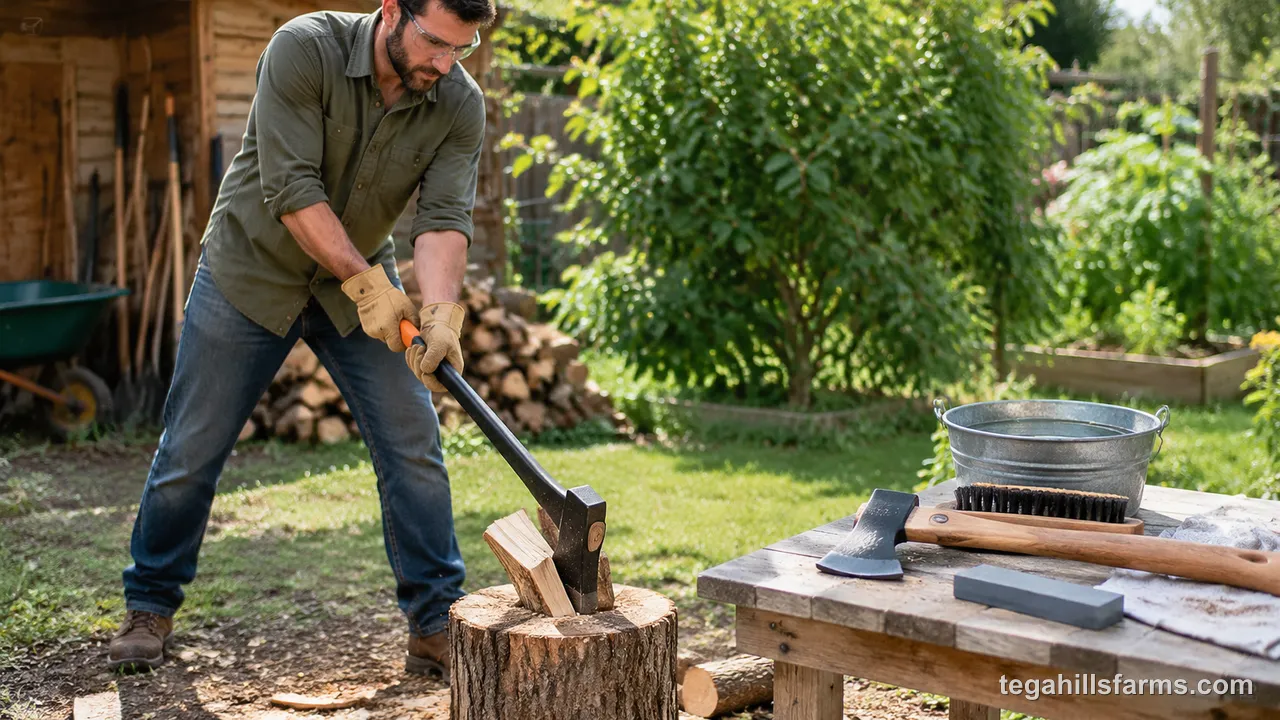
What Safety Habits Matter When Chopping Near Soil?
Keep the edge out of the dirt, keep people and pets out of the swing zone, and wear eye protection and sturdy boots. Those three habits prevent most yard axe injuries.
Stand with feet about shoulder-width apart and knees slightly bent, and chop on a block or with the wood raised so the blade’s follow-through ends in wood, not soil or your shin. When limbing a downed branch, stand on the opposite side of the trunk from the limb you’re cutting.
Clear the full arc of the swing before starting: overhead branches, clotheslines, fences and garden furniture can deflect an axe. Keep children and pets indoors or well beyond the reach of the tool plus your arm.
Scrape soil away from roots before chopping, and check that the head is tight. Wear safety glasses for flying chips and gloves with a firm grip, and stop when your arms tire.
How Do You Clean, Sharpen and Store It?
Brush off soil, dry the head completely, wipe on a light coat of oil, touch up the edge when it starts glancing, and store it sheathed in a dry place. That routine prevents both rust and edge damage.
Rinse caked mud with water and dry the head right away. Sap comes off with warm soapy water or mineral spirits. A thin film of light oil on the steel blocks moisture, and boiled linseed oil keeps wood handles from drying and cracking.
Sharpen with a file or an axe puck, following the existing bevel and stroking into the edge while wearing gloves. On convex blades, keep the curve rather than flattening it, and on coated blades, work only the edge so you don’t strip the coating from the faces.
Hang the axe or store it on a shelf in a dry shed or garage, off a damp concrete floor, with the sheath on.
Is a Camping Hatchet Wasted on Garden Work?
A camping hatchet is rarely wasted in a garden, because kindling, limbing downed branches and light brush are the same jobs on a trail and in a yard. The waste comes from paying for features you won’t use or buying a tool far bigger than your work.
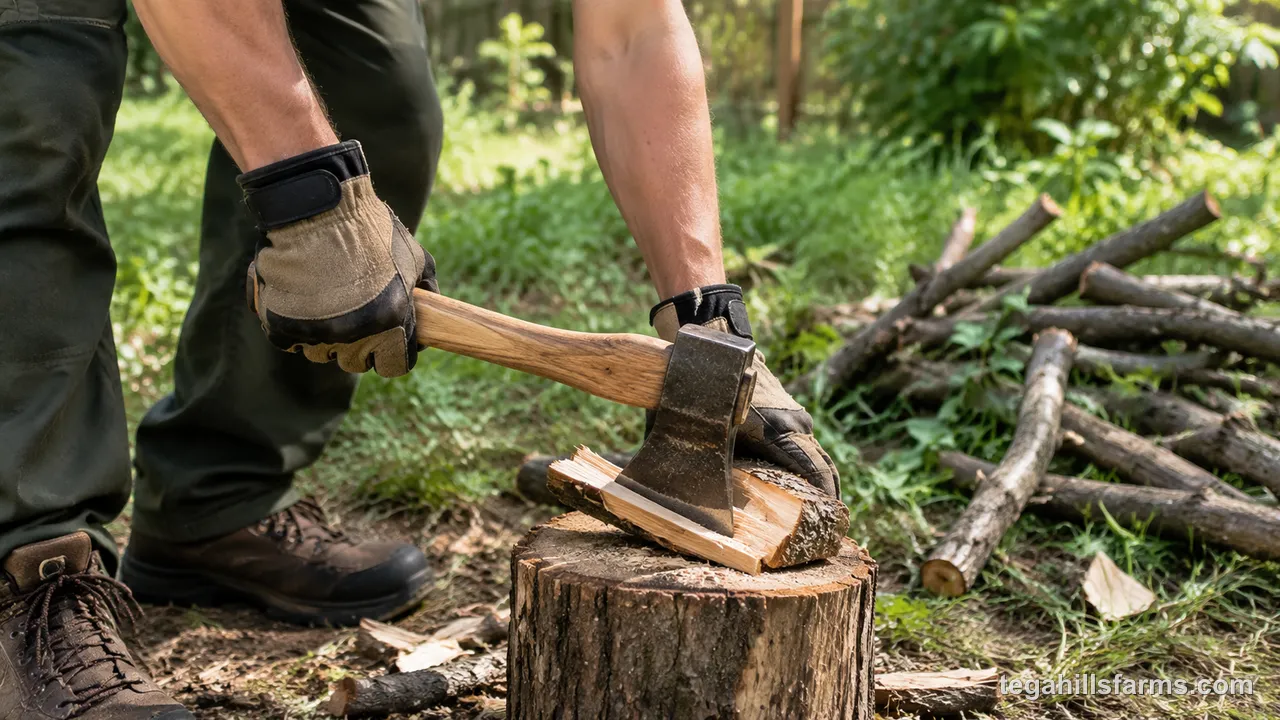
Belt-loop sheaths, bright handles and striking ends all earn their place in a yard: they keep the tool at hand, make it easy to find in mulch and drive garden stakes. Ultralight construction is a trail priority, but in a garden it still reduces hand fatigue, so it isn’t lost value.
Oversizing is the real mistake. A full splitting axe bought by a gardener without a woodpile ends up as a heavy tool that comes out once a year, while a hatchet would have handled every job.
Buy for the work you do most often. Gardeners who want a sturdier tool without paying for top-tier extras can browse axes under $150.
How Can You Tell When an Axe Needs Replacing?
A head that shifts on the handle, a cracked handle or deep damage to the edge or steel means replacement, while dullness, light rust and small nicks are fixed with sharpening and cleaning.
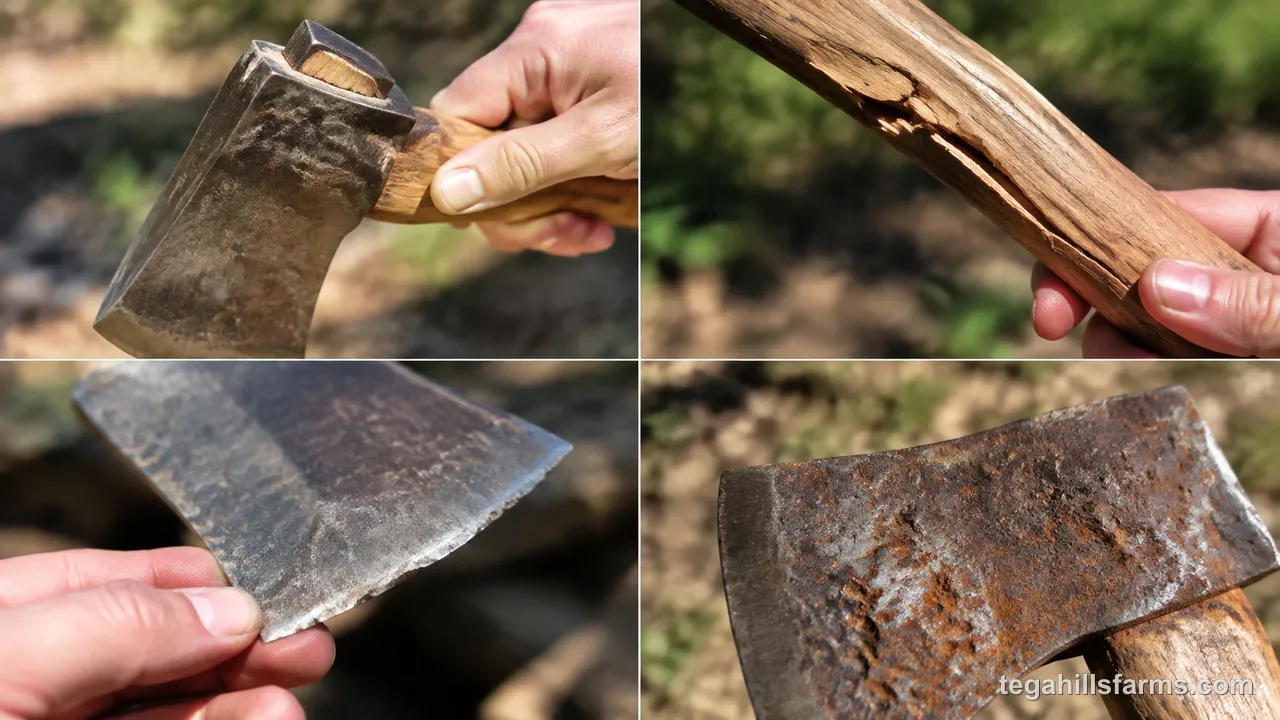
Dull or rolled edges come back with a file and some patience. Light surface rust scrubs off with steel wool and oil, and a small nick can be filed out by reshaping the edge slightly.
A loose head on a wood handle can sometimes be re-wedged, but movement in an insert-molded or over-molded head usually means the bond has failed, and the tool is no longer safe to swing. Cracks or splinters in a handle are serious: wood can be rehandled by someone skilled, but a cracked composite handle should be retired.
Deep chips that would require grinding away a large part of the edge, pitting that eats into the steel, and cracks in the head itself all mean a new axe. A torn sheath only needs replacing on its own.
Gardening Axe FAQs
Is an axe or a hatchet better for gardening?
A hatchet suits most home gardens, because limbing downed branches, cutting kindling and clearing woody brush are one-handed jobs in tight spaces. A full-size axe is worth adding only if you split firewood regularly or clear storm damage, where a long handle and heavier head do work a hatchet can’t.
Are composite handles better than wood handles?
Composite handles are better for most gardeners, because they absorb shock, resist weather and survive overstrikes that split wood. Wood offers a traditional feel and can be replaced when it breaks, but it needs oiling and dry storage. One-piece steel with a leather grip removes the head joint entirely.
Can you cut tree roots with an axe?
You can cut exposed roots with an axe, but soil and stones dull or chip the edge quickly. Dig the soil away first and chop only into clean wood. For roots still in the ground, a mattock or grub axe works better, and a pruning saw gives cleaner cuts near foundations.
How often should you sharpen a garden axe?
Sharpen when the blade starts glancing off wood or crushing fibers instead of slicing them. Root and brush work near soil dulls an edge faster than clean firewood, so a garden axe needs more frequent light touch-ups with a file or puck. Light, regular sharpening removes less steel than occasional heavy grinding.
Why does the same axe show up under different names or model numbers?
Manufacturers sometimes sell the same head under different series names, handle lengths or packaging, and models are updated over time. The model number, such as 378841-1002 for the Fiskars X27, is the reliable way to confirm you are getting the exact version you researched before buying.