

A new tiller costs roughly $100 to $3,000. Corded and cordless cultivators sit near the bottom of that range, gas front tine models fill the middle, and heavy gas rear tine machines take the top. Renting one usually costs about $50 to $150, depending on the rental period and the size of the machine.
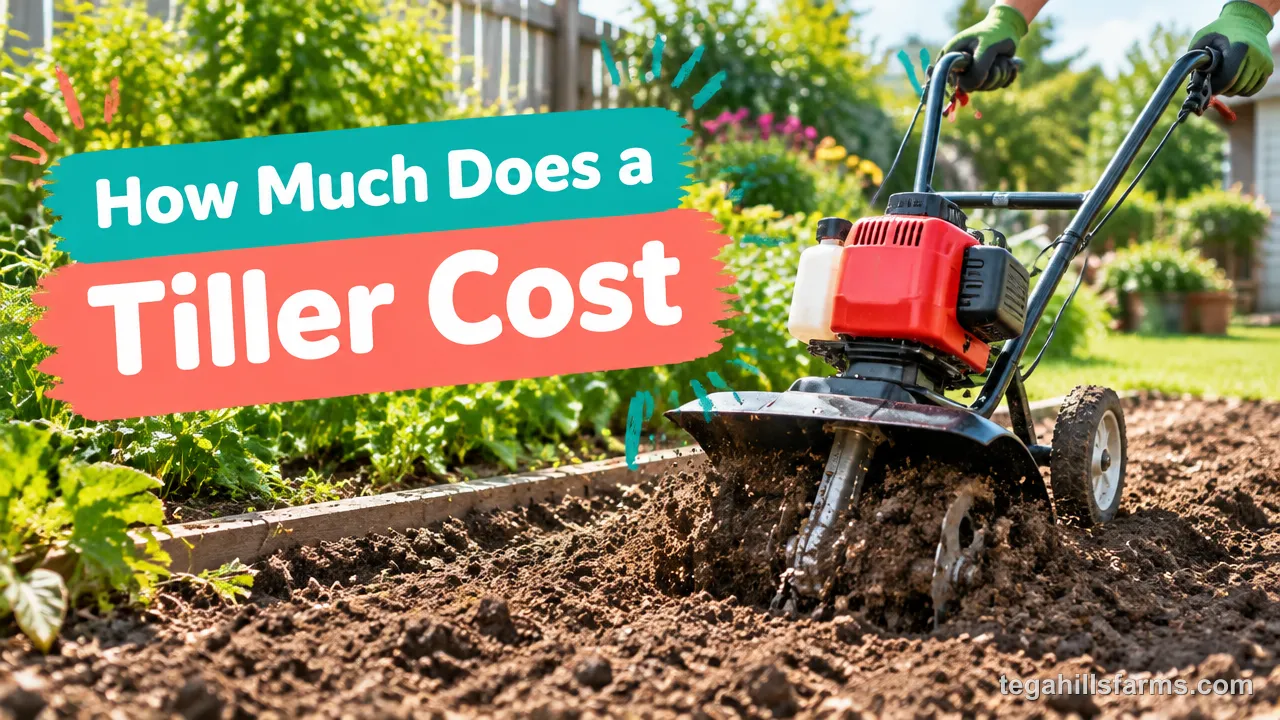
Four factors set the price of a tiller: the power source, where the tines sit, how strong the engine or motor is, and how wide a strip it tills. Whether buying or renting is the better deal depends on three other things: how big your garden is, how often the soil needs turning, and whether you have somewhere to keep a heavy machine.
Price matters less than fit. A buyer can pay for a machine that is far bigger than a few raised beds need. The opposite mistake costs just as much: a cheap, light tiller that bounces off clay or sod gets replaced in a season or two.
If the ground has never been broken, plan that first day around a heavy machine, even when the long-term plan is a small one. Turning lawn into a garden bed is the hardest job a home tiller does. After that, soil you work every year needs far less power.
How Much Does a Tiller Cost?
Expect to pay roughly $100 to $3,000 for a home-garden tiller, from light electric cultivators at the low end to heavy-duty gas rear tine models at the top.
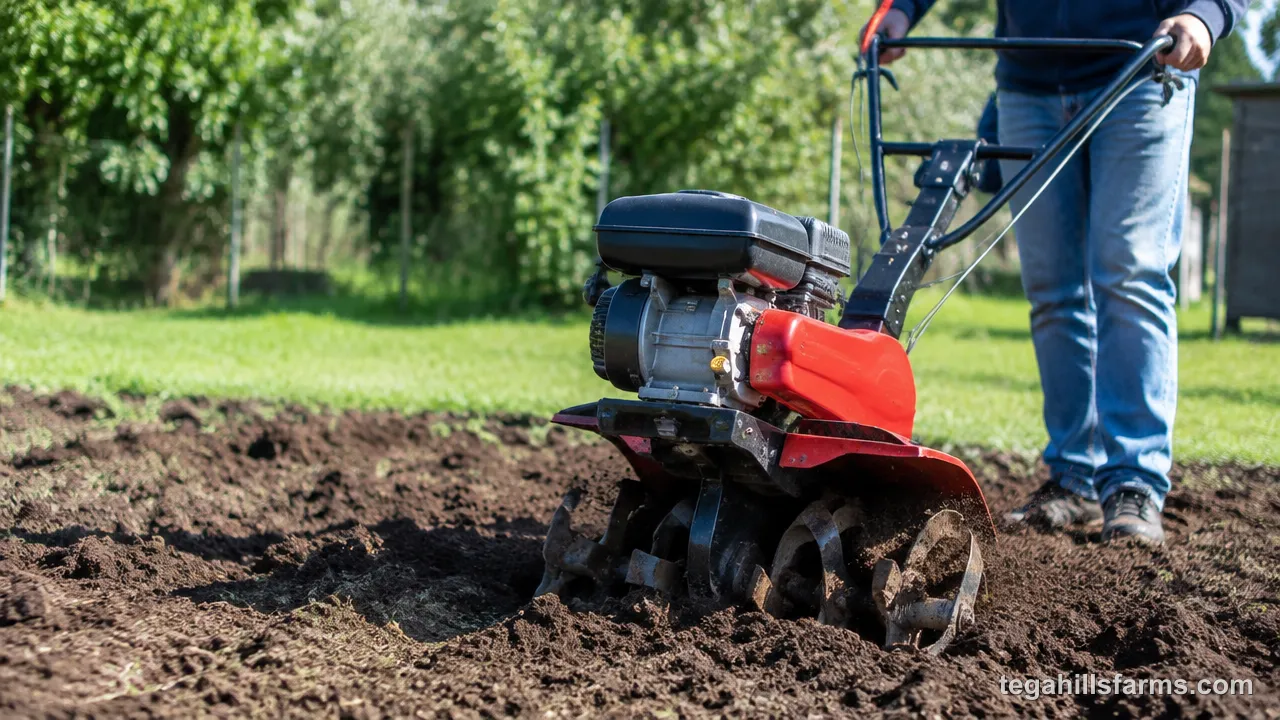
The power source sets the first price split. Electric motors are simpler and cheaper to build than gas engines, but they also deliver less torque when the tines hit hard ground.
Tine layout comes next. Rear tine machines need a transmission that drives both the tines and the wheels, and that drivetrain adds weight and cost.
Engine or motor strength and tilling width move the price within each type. A stronger engine keeps the tines turning in compacted soil. A wider tilling path covers a large plot in fewer passes. Both need a heavier frame to handle the extra load, so both raise the price.
To match a machine to your soil and garden size, start with how to choose a tiller.
How Much Does a Tiller Cost by Power Source?
Corded electric tillers cost the least, cordless tillers land in the middle once you include a battery, and gas tillers span the widest and highest price range. The power source does more than set the sticker price. It decides how much resistance the machine can push through, how long it runs, and how much upkeep comes with it.
What Does a Corded Electric Tiller Cost?
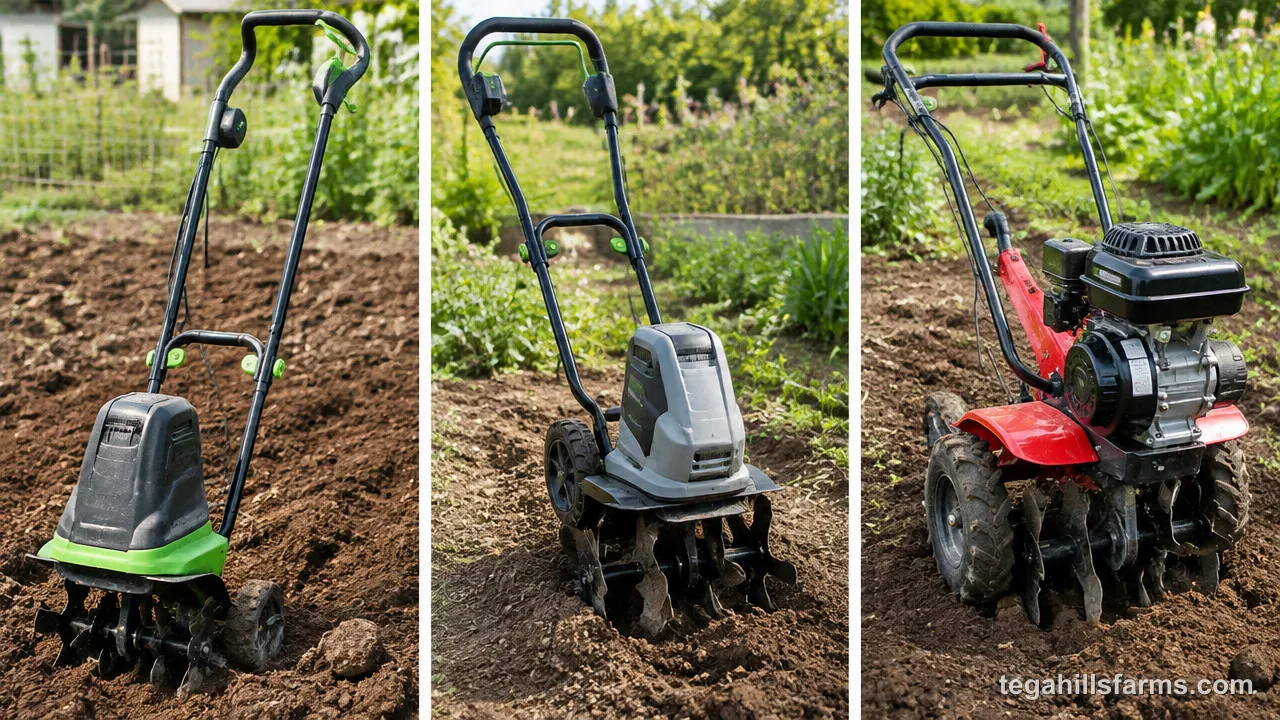
Most corded electric tillers and cultivators cost about $100 to $350. Sun Joe models usually sit toward the lower end. Mantis electric cultivators land toward the upper end.
Within that range, motor amperage and tilling width drive the price. A higher-amp motor holds its speed when the tines meet a clump of roots or packed soil, and a weaker motor bogs down. A wider tine assembly covers a bed in fewer passes, but it puts more load on the motor, so wider models pair it with a stronger motor that costs more.
The low price has practical limits. These machines suit small beds and soil that has already been worked, not sod or heavy clay. You also need an outdoor-rated extension cord and a GFCI outlet. The cord limits how far from the house you can till, and it has to be kept clear of the tines on every pass.
What Does a Cordless Tiller Cost?
A cordless tiller costs about $150 to $300 as a bare tool. A kit that includes a battery and charger costs roughly $250 to $550.
That gap is the main reason two similar cordless tillers can be priced so differently. The battery is often the most expensive part of the kit. If you already own batteries on a compatible platform, you can buy the bare tool and save the difference.
Battery size and platform explain most of the remaining spread. A higher-capacity battery runs longer between charges and holds power better in dense soil, and it costs more to buy or replace.
Platform choice also commits you to future spending. A Greenworks tiller makes sense for someone whose mower and blower already run on Greenworks batteries. A tiller that runs on DeWalt batteries suits someone with a garage full of DeWalt tools. Buying into an unfamiliar platform means paying full price for its batteries and charger.
What Does a Gas Tiller Cost?
Gas tillers run from about $300 for light mid-size models to $3,000 or more for heavy-duty machines from brands such as Troy-Bilt and DR Power. Front tine gas models usually stay under about $800. Rear tine models usually start near $1,000.
Engine displacement is the first factor. A larger engine produces more torque, which keeps the tines cutting in clay instead of stalling.
Drive type is the second. Powered wheels, reverse gears, and gear-driven transmissions all add parts and weight.
Build quality is the third. Heavier frames, sturdier tine shafts, and transmissions built for years of hard ground cost more to make.
That extra money pays off in hard or large plots. A heavier gas tiller digs deeper per pass and covers more ground before you tire out. It also holds its line instead of bucking across compacted soil. On a small bed of loose loam, those same strengths go mostly unused.
How Much Do Mini, Front Tine, and Rear Tine Tillers Cost?
Mini tillers cost the least, front tine tillers sit in the middle, and rear tine tillers cost the most. Each type sits in its price band because of its weight, where the tines are placed, how it is driven, and how hard a soil it can break. Tiller type is a separate price factor from the power source. A gas mini tiller and a corded mini tiller belong to the same type but carry different price tags.
What Does a Mini Tiller or Cultivator Cost?
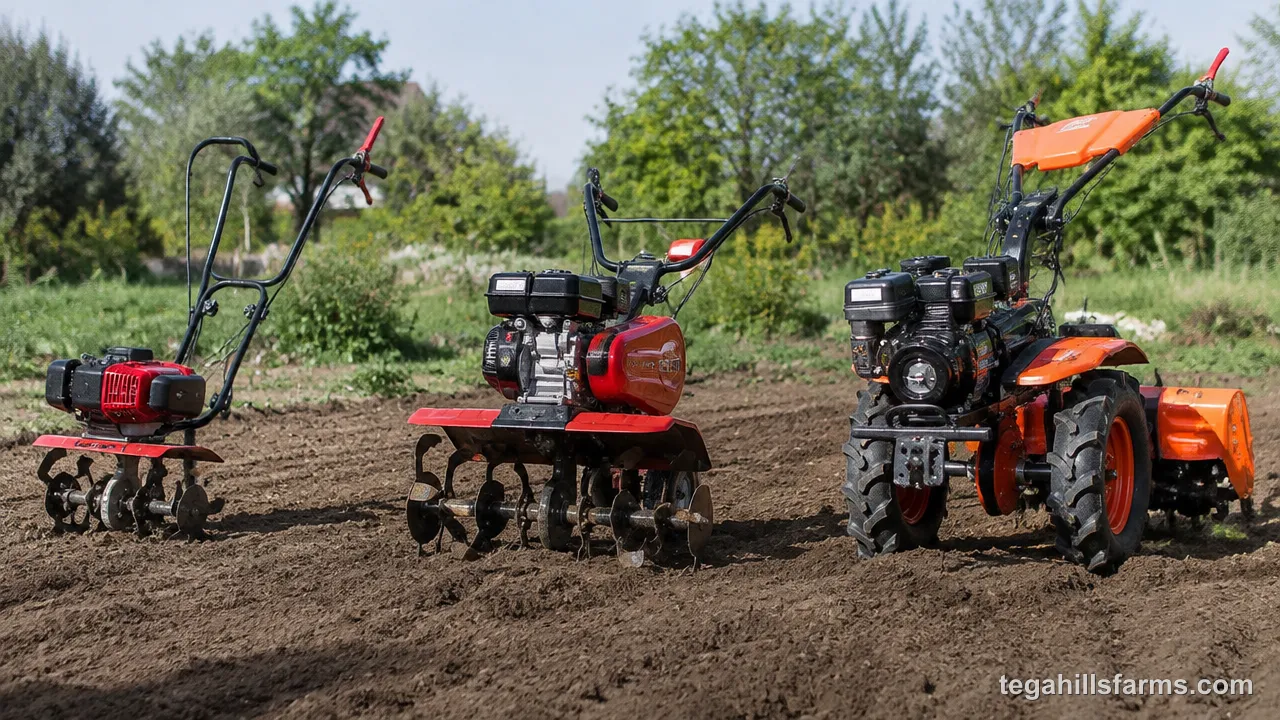
Mini tillers and cultivators cost about $100 to $500. Corded and cordless electric models fill the lower half of that range. Small gas cultivators, such as Mantis gas models, occupy the upper half.
Power source and tilling width set most of the price. A gas engine costs more than an electric motor and lets you work beyond cord reach. A wider path covers a bed faster, but it adds weight to a machine whose main appeal is being light.
These small machines are good at weeding between rows, loosening soil in established beds, and mixing compost into the top layer. Their low weight makes them easy to lift into raised beds and carry around the yard. The same light weight is their limit: they lack the mass and torque to break sod or dig deep into hard clay.
What Does a Front Tine Tiller Cost?
Front tine tillers cost about $300 to $800, and most of them are gas models. Engine size lifts the price within that range, because a larger engine keeps the tines biting in firmer soil. Tilling width does the same, especially on models with adjustable tine sets that let you narrow the path for rows.
These tillers suit established beds and soil of moderate hardness. The tines sit ahead of the wheels and pull the machine forward, so you steer and hold it back by hand. In loose garden soil, that design makes front tine models nimble and easy to turn at the end of a row. In hard or rocky ground, the tines can climb and jump instead of digging in.
When you are weighing a front tine vs a rear tine tiller, soil hardness usually matters more than the price gap.
What Does a Rear Tine Tiller Cost?
Rear tine tillers cost about $900 to $3,000 or more, the highest of the home-garden types. The Troy-Bilt Bronco CRT is a useful benchmark. It has a 208cc engine, tills a 14-inch path, and reaches up to 6 inches deep with its depth stake. It starts at just over $1,000 MSRP, which puts it at the entry point of the rear tine tier.
Three things drive the price in this tier:
- Engine: larger engines turn the tines through hard ground without stalling.
- Gear-driven tines: the transmission powers both the tines and the wheels, which adds cost and durability.
- Build weight: a heavy frame keeps the tines buried in hard ground instead of letting them ride up.
Because the wheels drive the machine and the tines trail behind, you guide it more than you fight it. That matters during long sessions in compacted soil.
This level of machine makes sense for large vegetable plots, for clay, and for breaking new ground. A gardener with a few loose beds would be paying for weight and power they never use.
How Much Does It Cost to Rent a Tiller?
Renting a tiller typically costs about $50 to $150, depending on whether you take it for a few hours or a full day and whether it is a front tine or rear tine model. Rental pricing works in time blocks, with larger machines priced higher in every block. Extra charges beyond the base rate can change the final bill as much as the choice of machine.
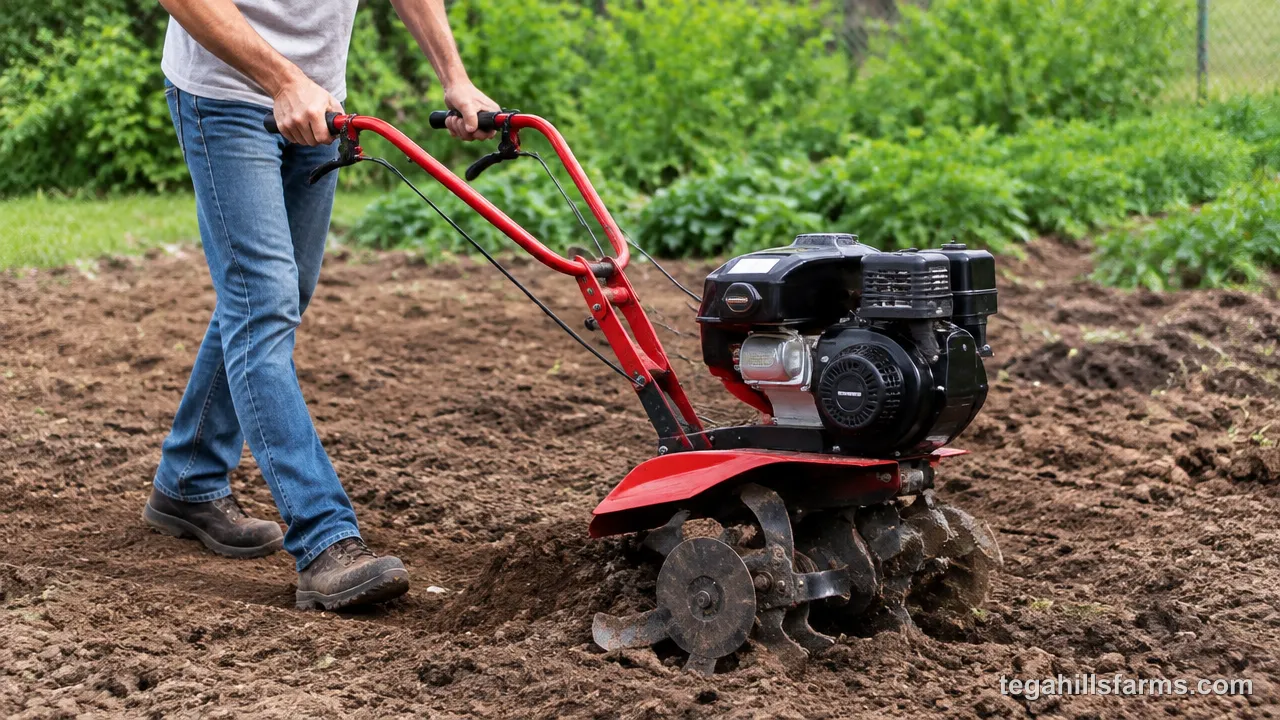
What Do Tiller Rentals Cost at Home Depot and Similar Stores?
At Home Depot and comparable rental counters, a front tine tiller usually rents for about $50 to $75 for a 4-hour period and about $75 to $110 for a full day. A rear tine tiller usually runs about $75 to $100 for 4 hours and $100 to $150 for a day. Weekly rates are often available for longer projects. True hourly rentals are uncommon, because the 4-hour block is usually the shortest period offered.
Lowe’s rental locations, independent rental yards, and some farm stores follow similar structures.
Three things push a rate up or down:
- Machine size: larger, heavier units cost more in every time block.
- Front tine versus rear tine: rear tine machines carry the higher rate.
- Store location: metro-area stores and stores in high-demand regions often charge more than rural ones.
Rates change by season and by store, so confirm the current price with the local rental desk before you plan the day around it.
What Else Adds to the Bill When You Rent a Tiller?
Several charges sit on top of the base rate:
- Deposit: most rental counters place a hold on your card, which ties up money until the machine comes back.
- Fuel: gas tillers usually go out with a full tank, and returning one low can bring a refueling charge.
- Transport: a rear tine machine is too heavy to lift into a car, so you need a pickup with a ramp, a trailer, a rented truck, or the store’s delivery service, which adds its own fee.
- Late returns: stores typically bill the next rental period when you return the machine late.
- Cleaning: a tiller returned caked in mud can draw a cleaning fee.
Since the clock starts at pickup, first-time renters get more out of the rental by reading up on how to use a tiller beforehand rather than learning the controls in the garden.
Is It Cheaper to Buy or Rent a Tiller?
Renting is cheaper for a one-time or occasional job, while buying pays off when you till every year or work several beds through the season. Garden size, how often the soil needs turning, and whether you have room to store a machine decide which way the math leans for your yard.
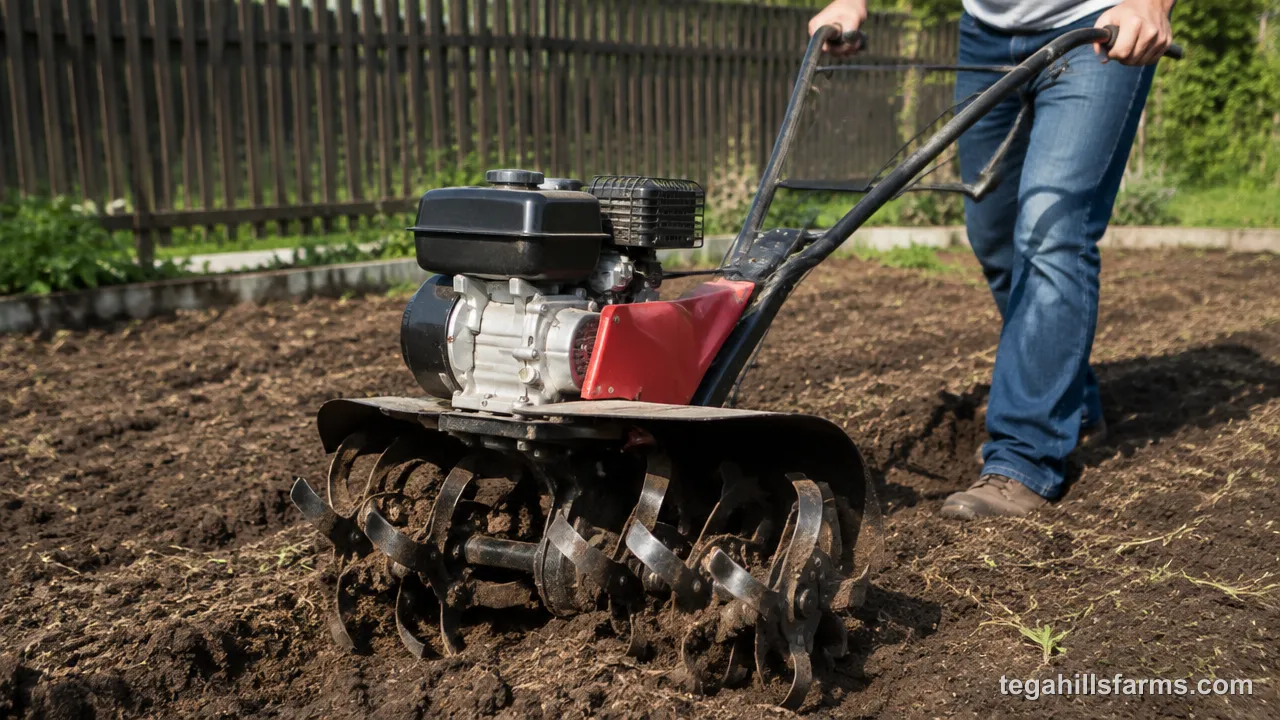
When Does Renting a Tiller Make More Sense?
Renting costs less when the job is a one-off. The clearest case is turning a patch of lawn into a new bed: you need a heavy rear tine machine once, and then never again at that power level. A day’s rental at roughly $100 to $150 compares with $1,000 or more to buy a rear tine tiller of that class. That gap is hard to justify for a single weekend.
Small plots point the same way. If a couple of beds only need loosening each spring, renting a front tine machine for a few hours handles the work without a machine sitting idle the rest of the year.
Limited storage settles the question for many homes. A gas tiller needs garage or shed space, plus winter fuel care. If you have neither the space nor the patience for that upkeep, I’d rent every time.
When Does Buying a Tiller Make More Sense?
Owning pays off when you till a large garden every year, keep several beds, or work the soil more than once a season. That might mean spring prep, a midseason pass to clear weeds, and a fall pass to turn in leaves and compost. Each rental means a trip, a deposit, transport, and a deadline. An owned machine is ready whenever the soil is.
Garden size points to the right tier:
- A few raised beds or small borders: a corded or cordless cultivator in the lower price tier covers the work.
- A mid-size vegetable garden in workable soil: a gas front tine tiller in the middle tier fits.
- A large plot, clay soil, or ground you expand each year: a rear tine machine in the top tier earns its price.
The value of owning also depends on how long tillers last with routine care. A machine that runs well for many seasons spreads its purchase price across far more tilling days than one replaced after a few years.
Where Can You Find a Tiller for Less?
Used tillers and end-of-season clearance are the two main routes to a lower price. Used front tine models often sell for a few hundred dollars instead of the higher price new. The machine’s condition, brand, and engine health set the discount on the used market. Timing and store stock decide how much you save on a new one.
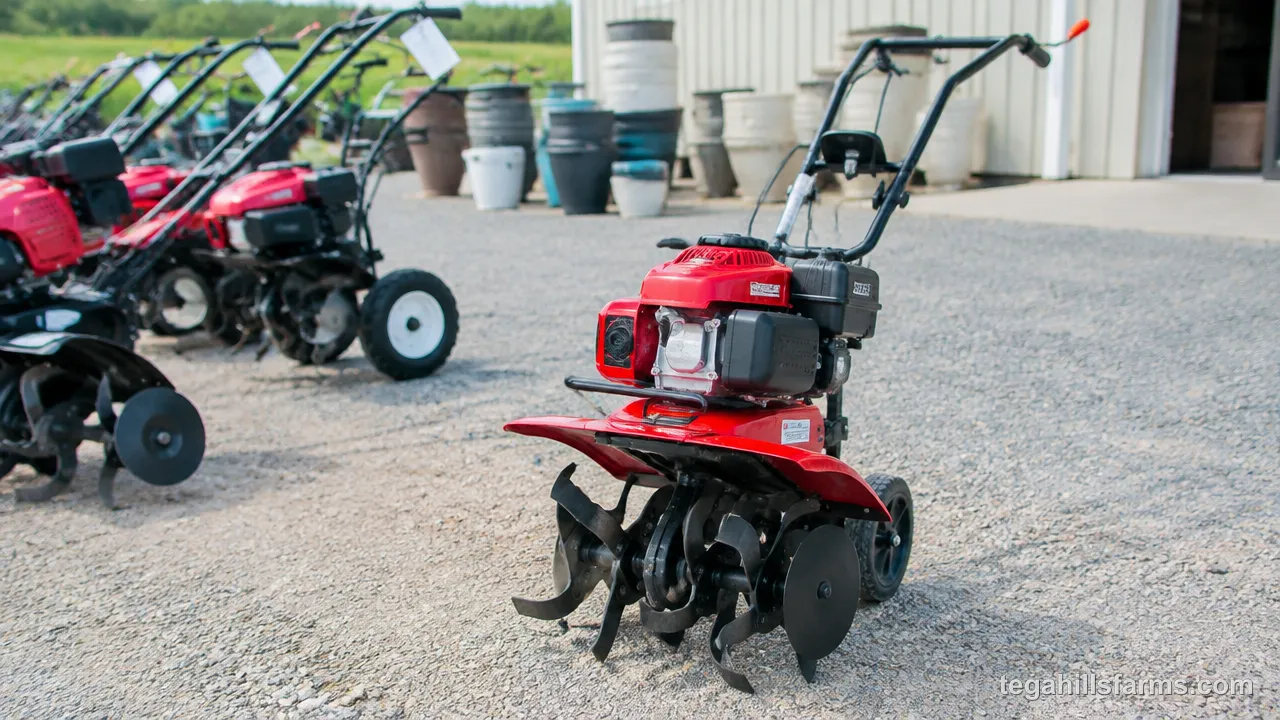
What Should You Know Before Buying a Used Tiller?
On eBay, Facebook Marketplace, Craigslist, and local classifieds, used tillers commonly list at these levels:
- Small cultivators: about $50 to $150
- Front tine models: about $150 to $400
- Rear tine models: about $400 to $1,200
Age, brand, engine condition, and tine wear move a listing within those ranges. A well-kept Troy-Bilt or Honda-powered machine holds its value better than an unknown brand. Worn or bent tines and a tired engine pull the price down.
Check these points before handing over cash:
- Cold start: ask the seller not to run the machine before you arrive, then start it yourself. If the seller’s tiller won’t start cold in front of you, expect carburetor or ignition work.
- Smoke and leaks: blue smoke or oil under the engine points to internal wear.
- Tines: look for bent, chipped, or rounded tine tips.
- Transmission: grinding or slipping when you engage the tines, or reverse on rear tine models, means expensive repairs.
When and Where Are New Tillers Cheapest?
New tillers are usually cheapest at the end of the gardening season. From late summer into fall, retailers clear floor space for snow equipment. Spring promotions also run at Home Depot, Lowe’s, Tractor Supply Co., Ace Hardware, and Blain’s Farm & Fleet, though the timing varies by region and growing season.
Before driving anywhere, use the retailer’s website or app to check stock at nearby stores by ZIP code. Clearance units are often limited to a few machines per location. Floor models and open-box returns also show up this way, sometimes with assembly already done.
Sale prices follow the same tiers as regular prices. Budget electric cultivators can drop to around $100 or a little less on clearance. Premium rear tine models still land above $1,000 even on sale, so seasonal timing trims the price without moving a machine into a lower tier.
What Other Costs Come With Owning a Tiller?
Beyond the purchase price, owners pay for fuel and oil, spare batteries or chargers, replacement tines and tune-up parts, and storage care. Each of these costs a modest amount at a time.
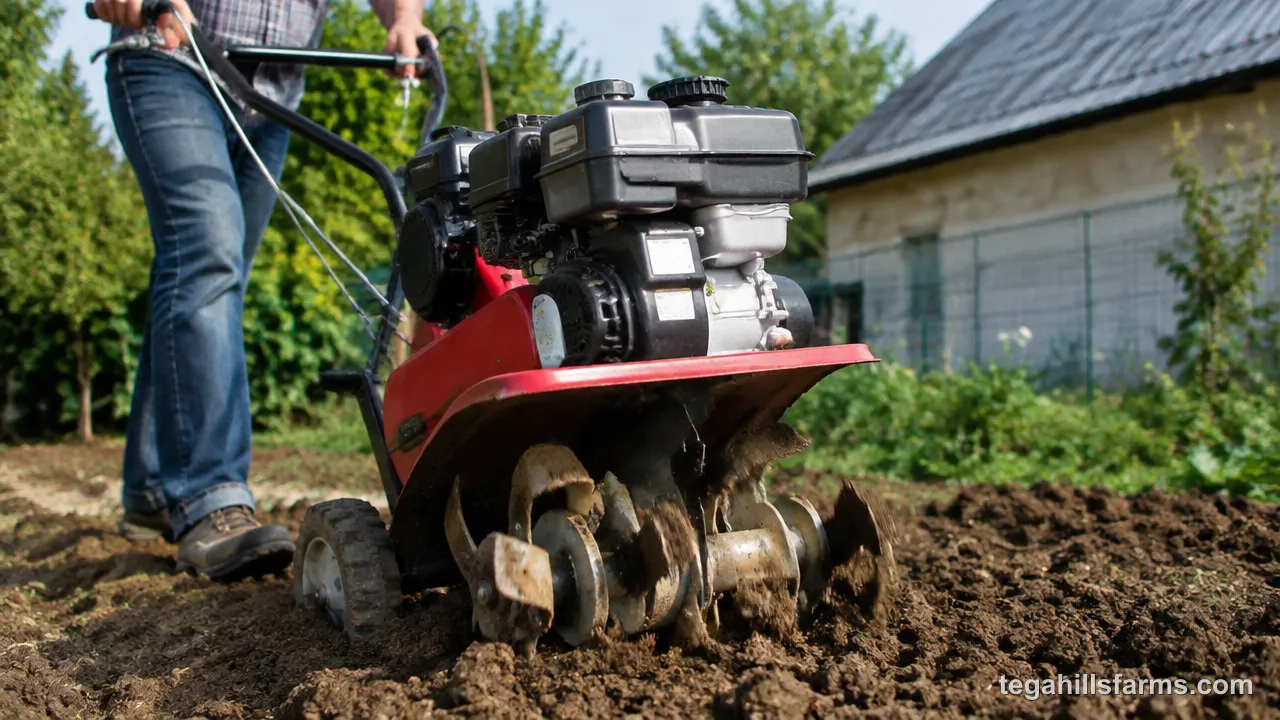
Gas models. A gas tiller burns fuel at local pump prices. Four-cycle engines need oil changes, at roughly $5 to $10 a quart. A spark plug runs about $5 to $10, and an air filter about $10 to $20.
Cordless models. A spare battery costs roughly $100 to $300, depending on capacity. A replacement charger runs about $50 to $100. Higher-capacity batteries sit at the top of that range.
Replacement tines. A tine set costs about $40 to $150. Rocky soil wears tines faster, so gardens with a lot of stone reach this cost sooner. Original manufacturer parts usually cost more than aftermarket ones.
Storage care. Fuel stabilizer costs around $10 a bottle. It keeps old gas from gumming up the carburetor over winter, which is cheaper than paying for a carburetor cleaning in spring. Batteries last longer when stored indoors away from freezing temperatures.
Cleaning dirt off the tines and housing before storage keeps rust from building up.
A new vegetable bed often starts as a strip of lawn, and matted turf with its roots knit together is tougher than any garden soil a tiller meets in later years. A light machine that skips across that sod sends you back to the rental counter for a heavier tiller, so you end up paying twice to break a single bed.
Can a Tiller Break Up Grass and Sod?
A rear tine tiller can break up grass and sod, and so can a heavier gas front tine model. Mini cultivators and most corded and cordless tillers struggle with it. The difference comes down to weight and torque. Turf roots form a dense mat that a light machine rides on top of, while a heavy rear tine tiller keeps its tines buried and chews through.
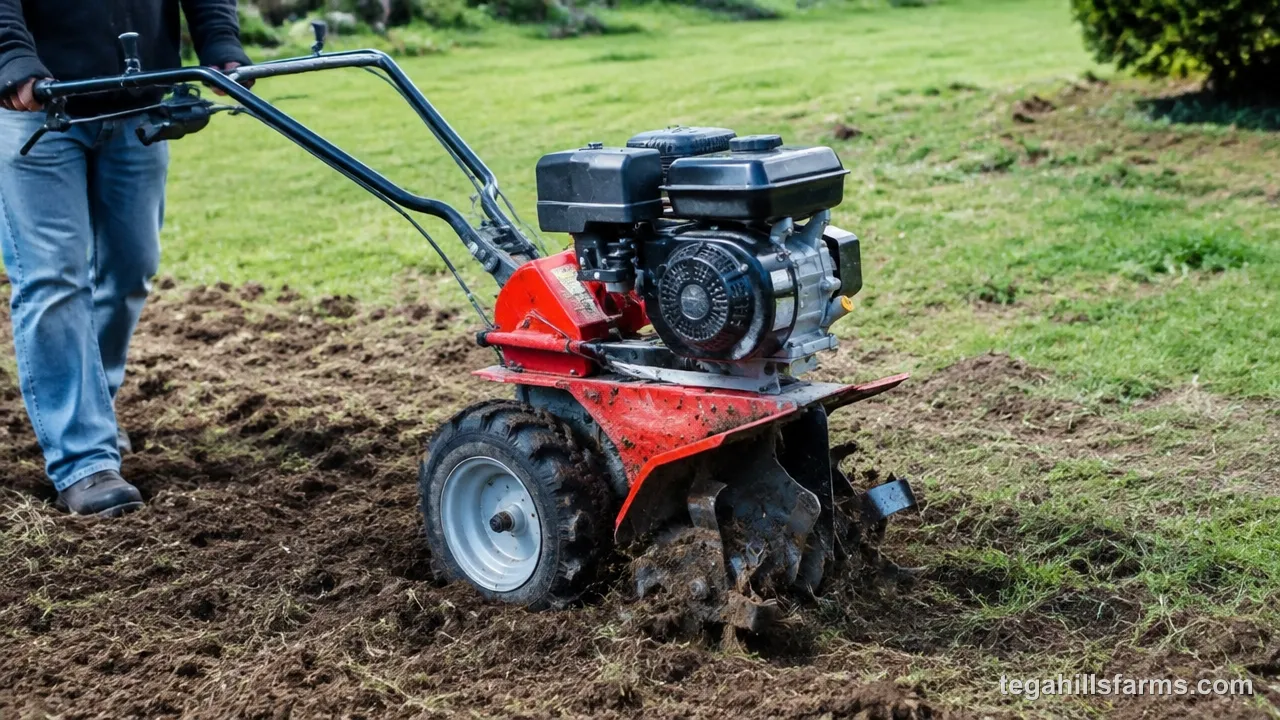
Even the right machine works better with some preparation. Mow the grass short first. Till when the soil is moist but not wet, and start with a shallow pass. Lower the depth on each later pass rather than trying to dig deep in one go.
A front tine machine can do the job in softer soils, but expect it to jump and pull more, which makes for a tiring day. Clumps of sod also tangle in the tines on any machine, so stop now and then to clear them.
The cost decision is simple. Renting a rear tine tiller for the conversion day costs far less than buying a light machine that stalls in turf and then renting the heavy one anyway.
Are a Tiller, Rototiller, and Cultivator the Same Thing?
“Tiller” and “rototiller” mean the same machine. “Rototiller” began as a brand name for a rotary tiller and became the everyday word for any powered tiller with rotating tines.
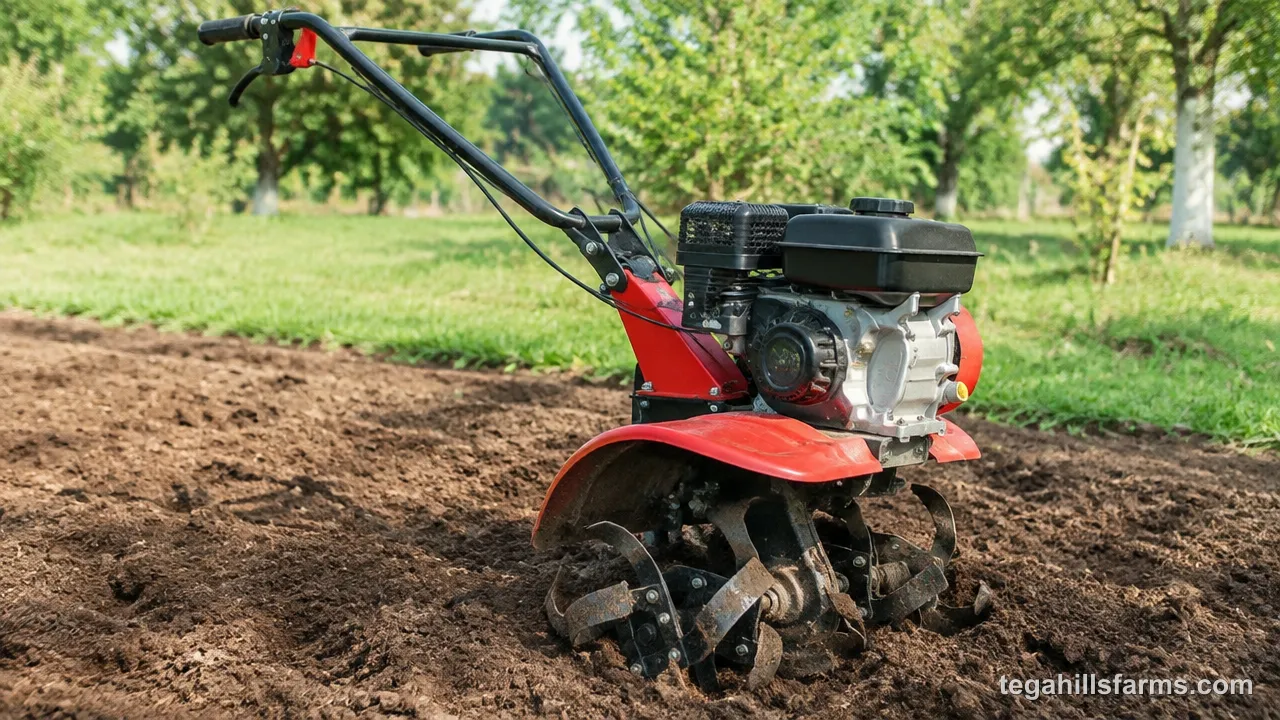
A cultivator is a different tool. It is a lighter machine with smaller tines, built for loosening and weeding soil that has already been worked. It is not meant for breaking new ground. The real difference between a tiller vs a cultivator is depth and power: tillers dig and turn soil, while cultivators stir its surface.
Product names do not always follow that line. Some brands sell small machines as “tiller/cultivators,” and a mini tiller may do little more than a cultivator. This is why names make poor price guides. A machine labeled a tiller can still sit in the lowest price tier.
Price follows weight, engine or motor strength, and tine layout. Comparing those specs tells you what a machine can handle better than the word on the box.
When Does a Bigger Tiller Waste Your Money?
A bigger tiller wastes money when the soil and garden ask for far less than it delivers. The most common case is a heavy rear tine machine bought for a few raised beds or soil that is already loose. You pay for engine size, tilling width, and weight that never get used.
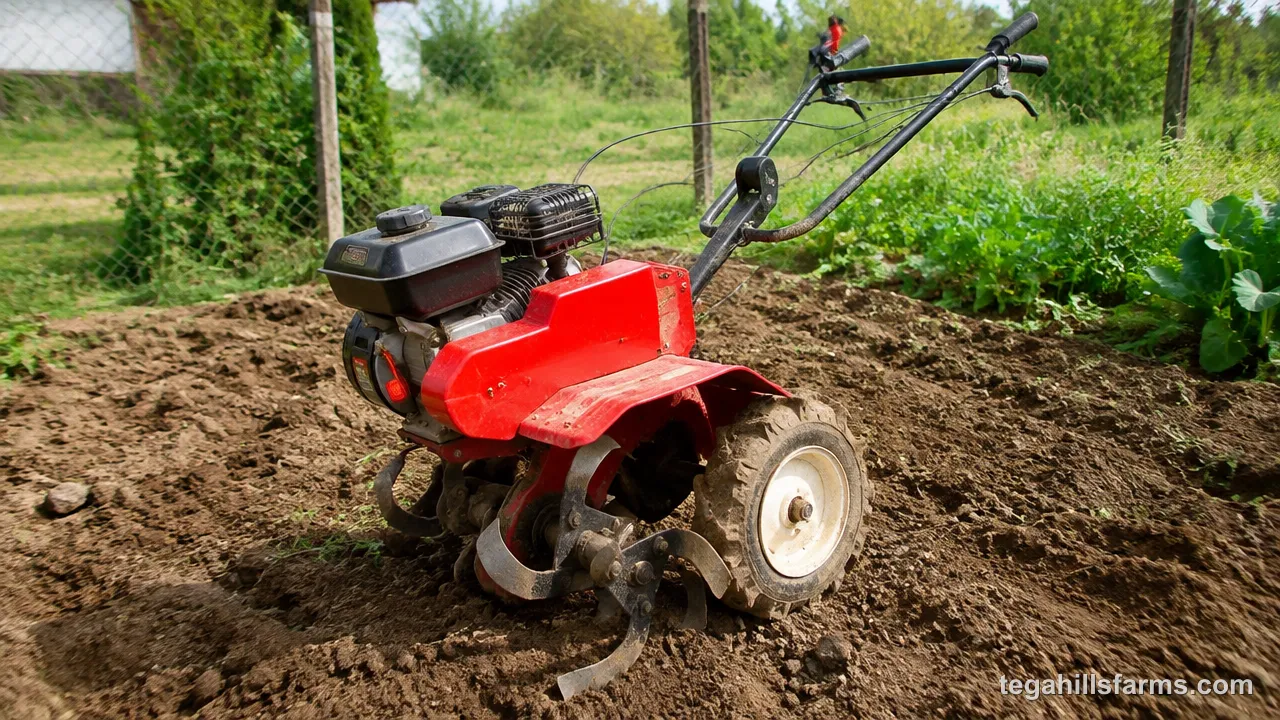
Several signs point to a smaller, cheaper machine:
- Soil already worked every year. Loose loam doesn’t need the torque that breaks clay.
- Raised beds or narrow rows. A wide, heavy tiller can’t fit inside the frames or turn between plantings.
- Tight access. Narrow gates, steps, or a small shed make a big machine hard to move and store.
- Light, occasional work. Mixing in compost or weeding twice a season suits a cultivator.
Underbuying wastes money too, in a different way. A light machine on clay or new ground bucks, stalls, and wears out quickly. It ends up replaced or supplemented with rentals, so the total spend climbs past what the right machine would have cost.
I’d size the purchase to the hardest soil you till every year, not to a one-time job. That one-time job can go to a rental.
Tiller Cost FAQs
Do rental tillers come with fuel?
Gas rental tillers usually leave the store with a full tank. Most counters expect you to return the machine full or pay a refueling charge, which is often priced above pump rates. Policies vary by store, so ask about fuel when you pick up the machine and keep a gas can on hand for a full-day rental.
Do you need a truck to move a rented tiller?
A light front tine tiller can fit in a pickup bed or a large SUV with the seats folded. A rear tine machine is too heavy to lift safely, so it needs a pickup with a loading ramp or a trailer. Home Depot and other rental counters rent trucks, and some offer delivery for a fee.
How can you check whether a rental tiller is available at the nearest store?
Use the retailer’s online rental page or app, select your local store by ZIP code, and look up tillers by type. Calling the rental desk directly gives the most current answer. On busy spring weekends, reserve ahead, because front tine and rear tine units often go out first thing in the morning.
Does buying a tiller online change shipping or assembly costs?
Many retailers offer free shipping or free in-store pickup on tillers. Heavy rear tine models may ship by freight, which can affect the delivery date and add a curbside drop fee. Most tillers arrive partly assembled, so you attach the handlebars and add oil. Some stores assemble machines for a fee.
Write Your Review
No reviews yet. Be the first to share your experience!