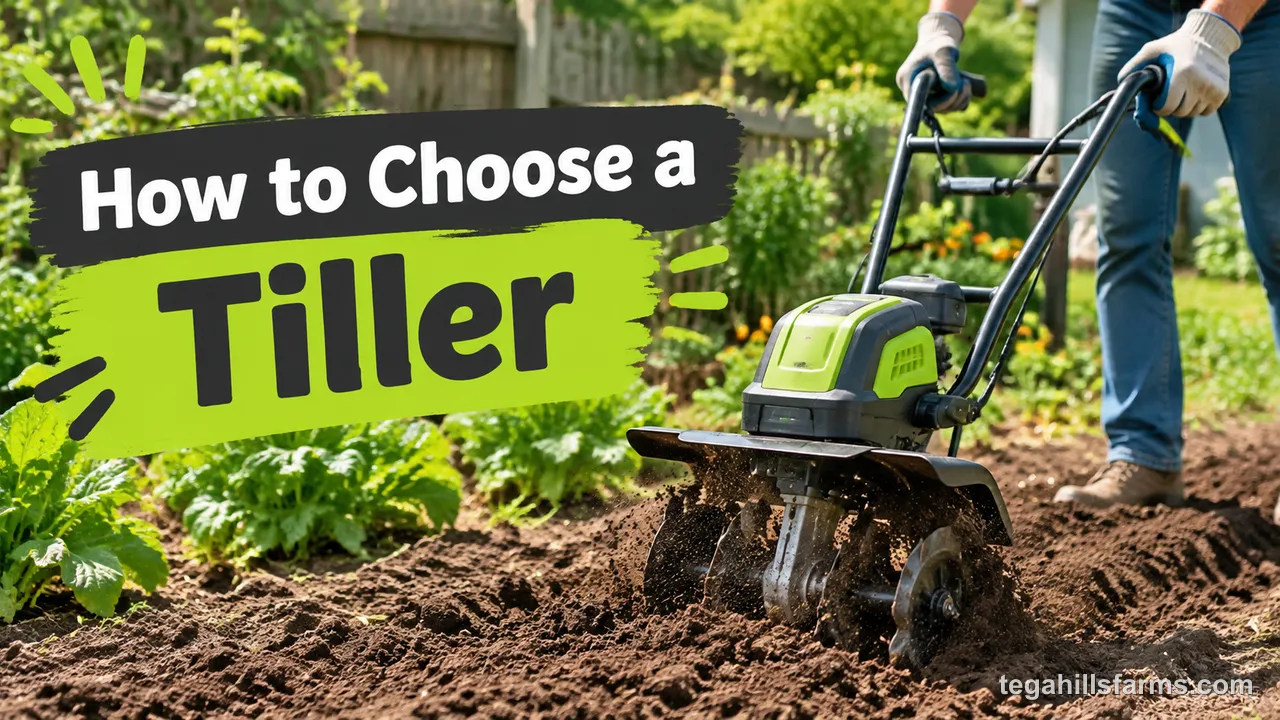
How to Choose a Tiller – Tine Types Compared & Explained
Pick a front-tine tiller for an established vegetable garden or flower bed of modest size. Pick a rear-tine tiller for breaking new ground, working hard clay, or tilling a large plot every spring. Front-tine machines are lighter and easier to store. Rear-tine machines give up that convenience for the weight and wheel drive that keep them from bucking out of compacted soil.
Four factors narrow the choice quickly: how much ground you till, what condition that soil is in, how often you will run the machine, and whether gas, corded or battery power suits your yard and storage space. Tine rotation and gearing come after that, because they decide how much the machine fights you on every pass.
The usual mistake is buying the wrong class. A light machine hops across sod and leaves your arms sore after one bed. A heavy rear-tine machine can sit in the garage most of the year taking up the floor space of a small riding mower, even though it only had one real job.
What Types of Tillers Can You Choose From?
Garden tillers come in four classes: cultivators and mini-tillers, front-tine tillers, and the heavier rear-tine and mid-tine tillers. Each class is defined by where the tines sit relative to the wheels and engine.
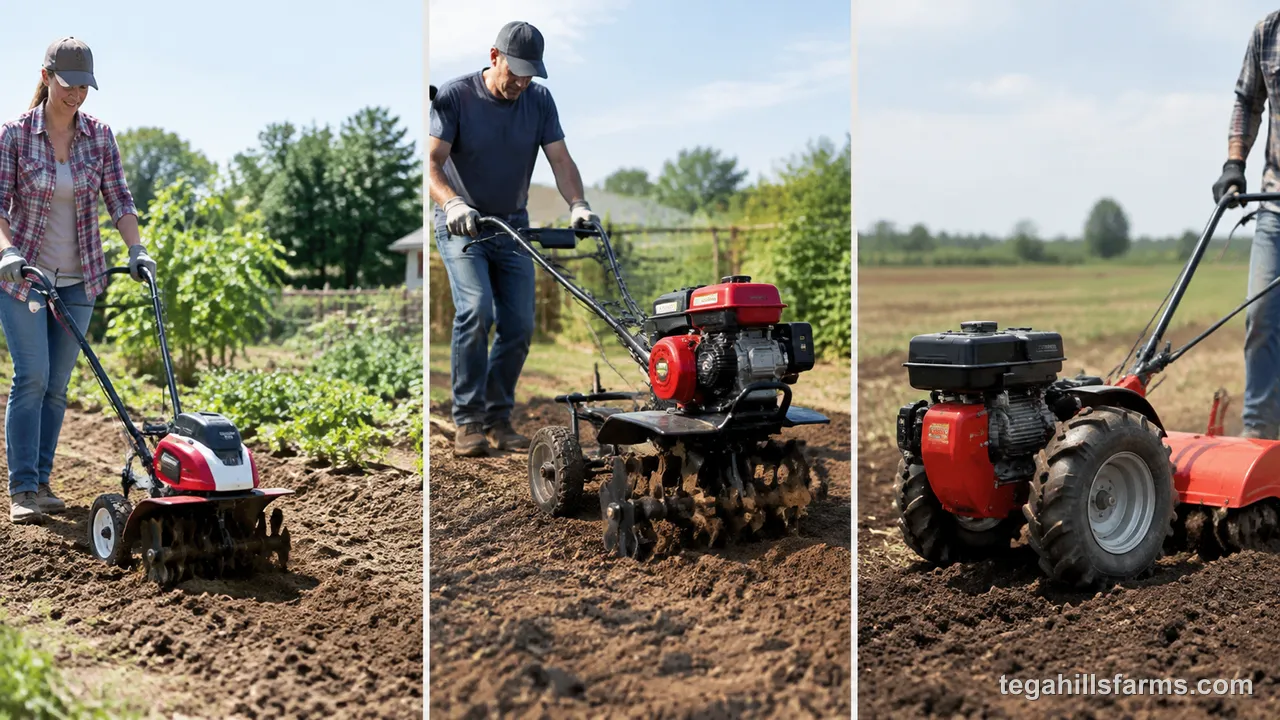
Tine position matters more than engine size. It decides whether the machine pulls itself forward, how deep it can bite, and how much of the work lands on your arms and back. If you want to see how these categories compare as complete machines before you narrow down, our roundup of the best tillers covers top picks by type and use case.
What Are Mini-Tillers and Cultivators Best For?
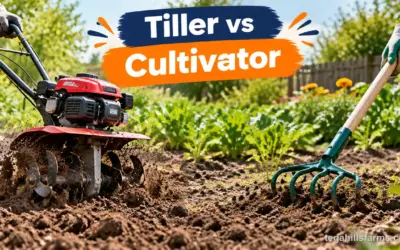
Cultivators and mini-tillers handle maintenance work in beds that are already broken. That means fluffing the top layer before planting, working compost into a raised bed, and knocking out weeds between rows. They are not built to turn sod or break up compacted ground.
Light weight explains both the strength and the limit. A machine you can lift into a raised bed or carry to the back of the yard does not have the mass to hold its tines down in hard soil, so it skips across the surface instead of digging in. Small gas engines, corded motors and battery packs all show up in this class. Most homeowners use one alongside a bigger machine rather than in place of it.
If your garden is already established and you mainly need weeding and bed prep, the best mini tillers handle that work with far less storage space and upkeep than a full-size tiller.
How Does a Front-Tine Tiller Work?
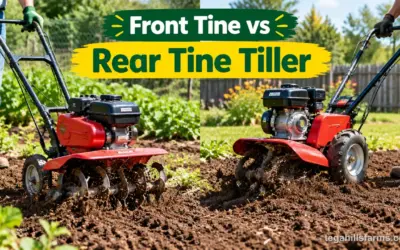
A front-tine tiller mounts its engine directly over tines at the front, ahead of the wheels, and those spinning tines both dig and pull the machine forward. The wheels usually are not powered. They carry the weight and let you roll the tiller out to the garden.
Because the tines do the driving, you set depth and speed by how hard you hold back on the handles and where you set the depth bar, sometimes called a drag stake. In loose, established soil this works well. The tiller cuts cleanly, and its light, short frame turns easily at the end of a row. In hard ground the same design lets the tines climb out of the soil and lurch forward, which is where most of the arm fatigue comes from.
Many front-tine models also let you narrow the tilling width by removing the outer tines, which helps between existing rows. Front-tine tillers fit established home vegetable gardens and flower beds that get worked each spring.
What Are Rear-Tine and Mid-Tine Tillers Built For?
Rear-tine tillers are built for breaking new ground and working large or compacted plots. Their tines sit behind powered wheels, so the wheels move the machine while the tines dig. Mid-tine tillers fall between the two classes. Their tines sit under the engine, which gives them balance in mid-size gardens.
The rear-tine layout separates driving from digging. The engine powers the wheels through a transmission, so the machine holds a steady pace no matter how hard the tines bite. Its weight sits over the tines and keeps them in the ground. That lets a rear-tine tiller turn sod and clay without bouncing, and it is also why these machines are heavy, long, and harder to turn in tight spaces.
Mid-tine tillers put the engine’s weight directly above the tines. That makes them easier to balance and steer than a rear-tine machine, and they dig more steadily than a front-tine model. They suit gardeners who have outgrown a front-tine tiller but do not need a full rear-tine machine.
Front-Tine vs Rear-Tine: Which Tiller Is Easier and More Powerful for You?
Rear-tine tillers dig deeper and stay steadier in hard ground. Front-tine tillers are lighter and simpler to steer in beds that are already worked.
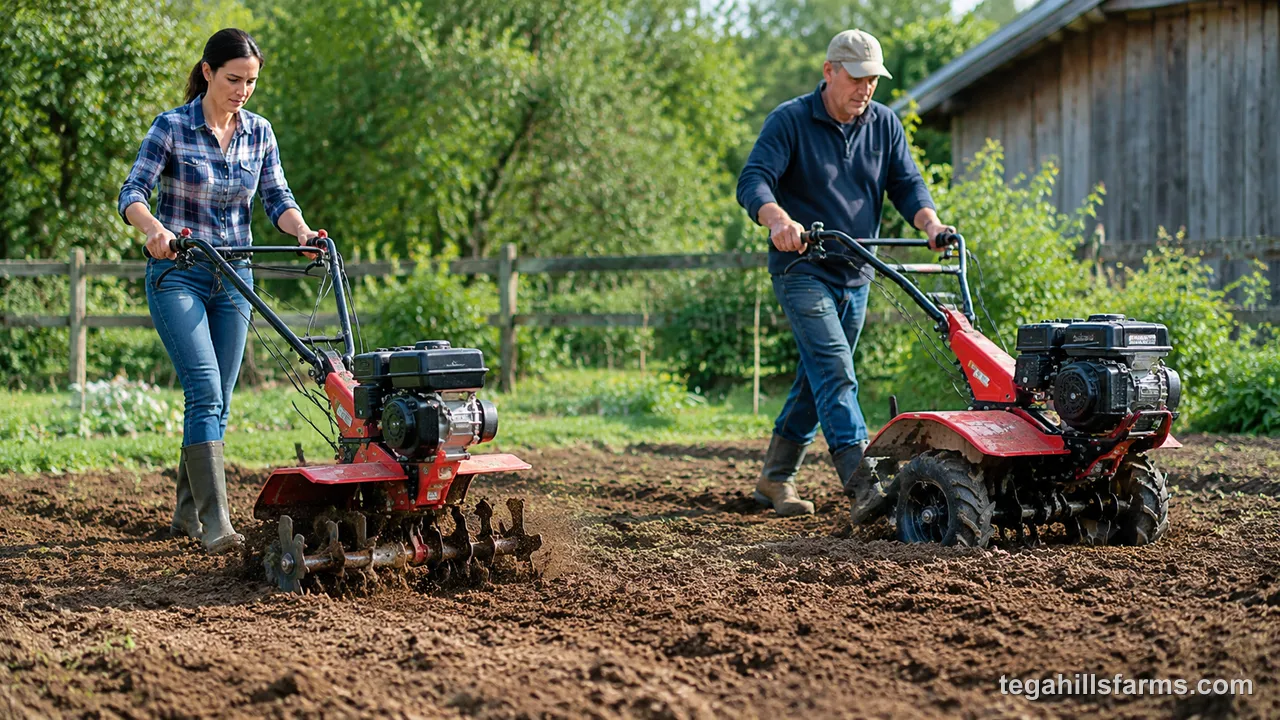
The split comes from one design question: whether the tines or the wheels move the machine. That one difference shapes how much effort you put in, how much depth you get per pass, and how much garage space the tiller takes. If you value easy handling over digging power, you will likely end up with one of the best front tine tillers. If the ground itself is the problem, the best rear tine tillers are where to look.
Here is how the two designs behave in the yard:
| Factor | Front-Tine Tiller | Rear-Tine Tiller |
|---|---|---|
| What moves the machine | Tines pull it forward | Powered wheels drive it |
| Digging in hard ground | Tends to bounce and climb out | Stays down and keeps cutting |
| Operator effort | High on tough soil | Lower; the machine sets the pace |
| Maneuverability | Turns easily in tight beds | Heavier and longer to turn |
| Best ground | Established, loose soil | New beds, sod, clay |
| Storage | Fits a shed corner | Needs garage floor space |
How Do They Differ in Power and How They Dig?
A rear-tine tiller turns more of its engine power into digging because its wheels, not its tines, carry it forward. On a front-tine tiller, the rotation that cuts the soil also has to propel the machine, so part of that force pushes the tiller ahead instead of down.
On a rear-tine machine, the transmission drives the wheels at a set pace while the tines spin on their own behind them. The tines stay in one spot long enough to chew through roots and clods, and the machine’s weight presses them down, so each pass goes deeper and leaves finer soil. Many rear-tine models also offer counter-rotating tines. These spin against the direction of travel and bite into compacted ground instead of riding over it.
A front-tine tiller usually runs forward-rotating tines, which work well in soil that is already loose. Push it into sod and the tines grab, pull and skip, so you need several shallow passes to reach the depth a rear-tine machine gets in fewer. On power and depth, the rear-tine design wins whenever the soil pushes back.
Which Is Harder to Control on Hard or Unbroken Ground?
On hard or unbroken ground, the front-tine tiller is the tougher machine to control. Every time its tines hit compacted soil, a root or a buried rock, they pull the machine forward and up, and you have to absorb that jolt through the handles.
The learning curve on a front-tine tiller is mostly about holding it back. You rock the handles, lean on the depth bar, and slow your pace so the tines sink in before the machine jumps ahead. On a large patch of sod, that ongoing tug-of-war wears out your shoulders and lower back long before the job is done.
A rear-tine tiller stays planted because the wheels set the pace and the weight sits over the tines. You guide it with light pressure instead of wrestling it. Its difficulty shows up in other places: turning a heavy machine at the end of each row, backing out of corners, and loading it for transport. A power-reverse gear eases most of that. On unbroken ground the rear-tine is the easier machine to run. In a finished bed, the front-tine’s lighter frame wins.
Which One Matches New Beds, Established Gardens, and Tight Spaces?
Breaking a new bed out of lawn is rear-tine work. Tilling an established garden each spring suits a front-tine tiller. Tight spaces such as narrow rows, fenced beds and borders favor a front-tine or mid-tine machine.
A new bed starts as sod held together by roots over soil that has been compacted for years. A rear-tine tiller’s weight and wheel drive cut through that layer in fewer passes, so the bed gets finished in one session instead of over a weekend of fighting the machine.
An established garden has loose, worked soil, so the extra mass of a rear-tine machine adds little except more effort at every turn. A front-tine tiller handles spring prep and mixing in compost with less storage burden. Where space is tight, the shorter frame of a front-tine or mid-tine tiller pivots between rows and along fence lines without trampling plants you want to keep.
How Do Garden Size and Soil Type Decide the Right Tiller?
The square footage you till sets the machine class, and how compacted the soil is sets how much weight and tine power that class needs.
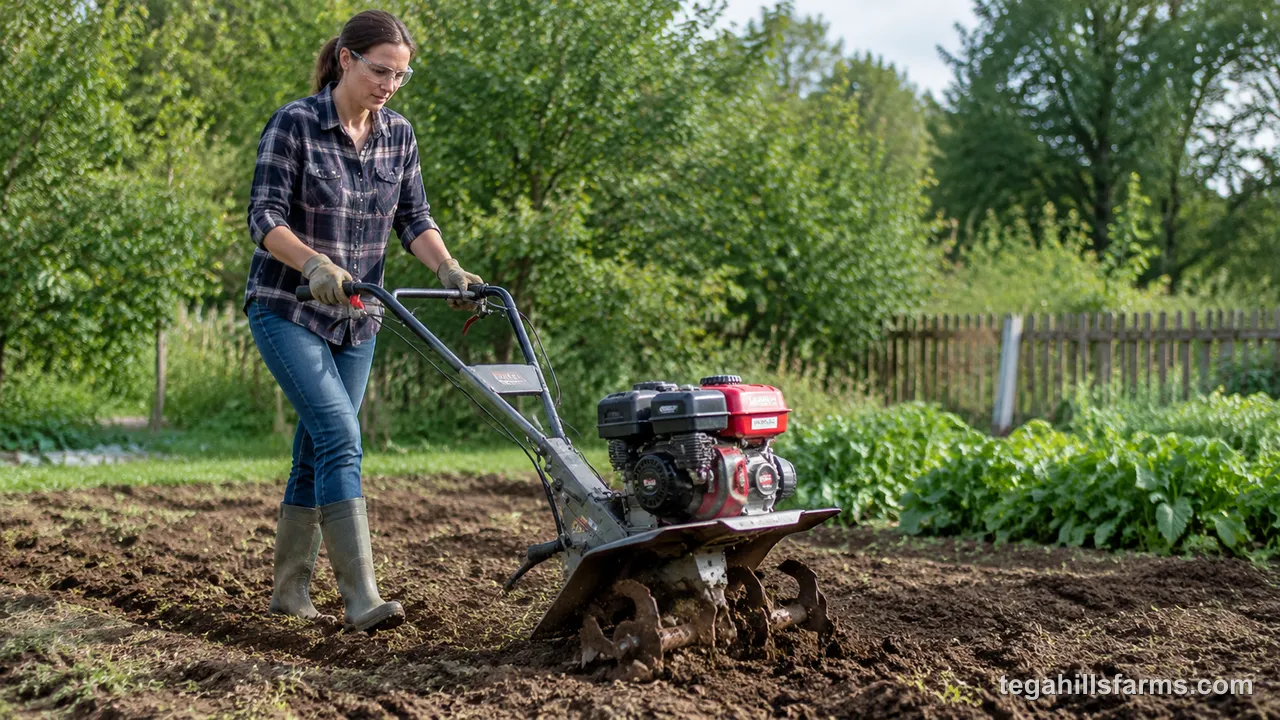
Get either one wrong and you pay in time or effort. A small machine on a big plot means many extra passes. A heavy machine in a small garden means awkward turns and a lot of storage space for occasional use. Soil condition can move you up a class even when the garden is small, because hard clay defeats a light tiller no matter how few square feet it covers.
What Tilling Width Fits a Small Yard vs a Large Plot?
Front-tine tillers fit gardens of roughly 500 to 5,000 square feet. Rear-tine tillers suit plots from about 5,000 to 10,000 square feet. Beds smaller than the front-tine range are cultivator territory, and plots larger than the rear-tine range usually call for a tractor-mounted rotary tiller.
Tilling width is what turns square footage into time. A wider machine covers more ground per pass, so a large plot gets finished sooner. Width also adds weight and length, though, and a wide tiller cannot fit between established rows or into a raised bed. In a small yard, a narrow tiller lets you work around existing plantings and still get the whole bed done in a short session.
If your space sits at the smaller end, the best tillers for small gardens favor narrow, light machines. At the upper end, the best tillers for large gardens lean on wider rear-tine models built to cover ground.
Which Tiller Handles Clay, Hard, or Sandy Soil Without Wearing You Out?
Clay and hard-packed soil call for a heavy rear-tine tiller with counter-rotating tines. Sandy or loamy soil tills easily with a front-tine machine or even a cultivator.
Clay is dense and sticky, so a light machine bounces off it when it is dry and clogs its tines when it is wet. A heavy rear-tine machine keeps its tines in the soil, and counter-rotating tines carve into the hard layer instead of climbing over it. Timing matters as much as the machine. Clay tills best when a squeezed handful crumbles apart rather than smearing into a ribbon, because working it wet leaves hard clods once it dries.
Sandy soil is the opposite case. It breaks up easily, so heavy tines add nothing but effort, and repeated passes can wreck what little structure the soil has. Ground full of roots or rocks is where heavier tines and a sturdier transmission start to pay off, even on a modest plot.
Which Power Source and Tine Features Should You Choose?
Gas still wins on raw power for breaking ground, battery and corded electric win on low noise and low upkeep, and counter-rotating tines matter most when the ground is hard.
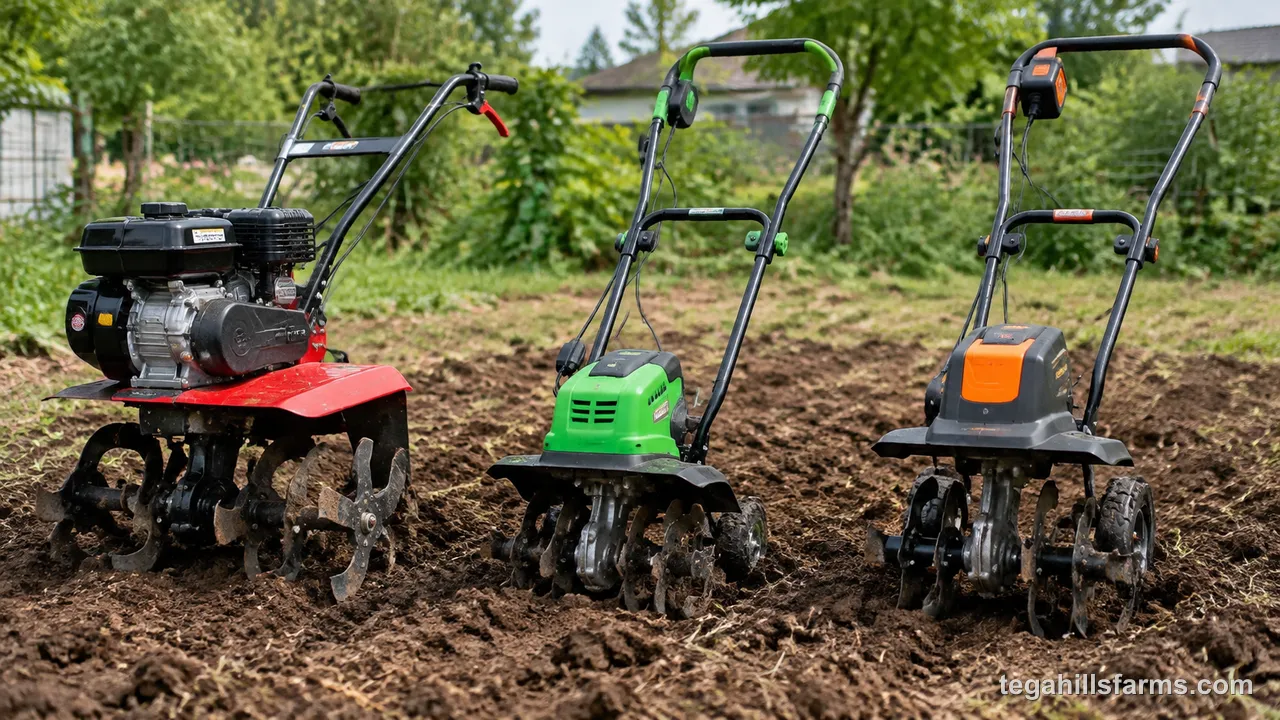
Power source sets what the machine can physically do and how much maintenance comes with it. Tine rotation and gearing decide how much of that power reaches the soil and how easily you can steer. A battery tiller with the right tines can handle a loose bed nicely and still stall in sod, so match both choices to your toughest job, not your easiest one.
Should You Choose Gas, Corded Electric, or Battery?
Gas gives you the most power and runs as long as you have fuel. Corded electric runs quietly for as long as you stay within reach of an outlet. Battery gives quiet, cord-free work for as long as the pack lasts.
Gas engines are the only realistic choice for breaking sod and running a rear-tine machine, and nearly every rear-tine tiller uses one. In exchange, you take on oil changes, spark plugs and stale fuel. Gas left in the tank over winter can gum up the carburetor unless you add stabilizer or run the tank dry. Gas tillers are also loud enough that hearing protection makes sense.
Corded models need a heavy-gauge extension cord and a GFCI outlet, and dragging the cord around the bed is the main annoyance. Battery models avoid the cord, but runtime depends on amp-hours, and a pack you already own for a trimmer or mower only helps if it fits the same platform.
For sod and large plots, the best gas tillers are the practical choice. For established beds near the house, the best electric tillers cut out fuel and engine upkeep entirely.
Do You Need Counter-Rotating Tines, Dual Rotation, or Extra Gears?
You need counter-rotating tines if you break new ground or till clay. Forward-rotating tines are enough for established, loose beds. Dual rotation suits gardeners who do both kinds of work.
Counter-rotating tines spin against the direction the wheels travel. They dig in and hold the machine back, so they go deeper in compacted soil and resist climbing out. Forward-rotating tines, also called standard-rotating, spin with the wheels and help push the machine along. That takes less effort in soft soil and leaves a good finish for cultivating. A dual-rotation tiller lets you switch between the two with a lever, which is useful if you break a new bed one spring and only maintain it after that.
Gearing changes how the machine handles. Power reverse lets a heavy rear-tine tiller back out of corners without you dragging it. More than one forward speed lets you slow down for tough ground and speed up for finishing passes. An adjustable depth bar and handlebar height round out the features that affect comfort over a long session.
Should You Buy or Rent, and What Will Ownership Really Cost?
Renting makes sense for a once-a-year groundbreaking job. Buying pays off when you till several times a season and have a dry place to store the machine.
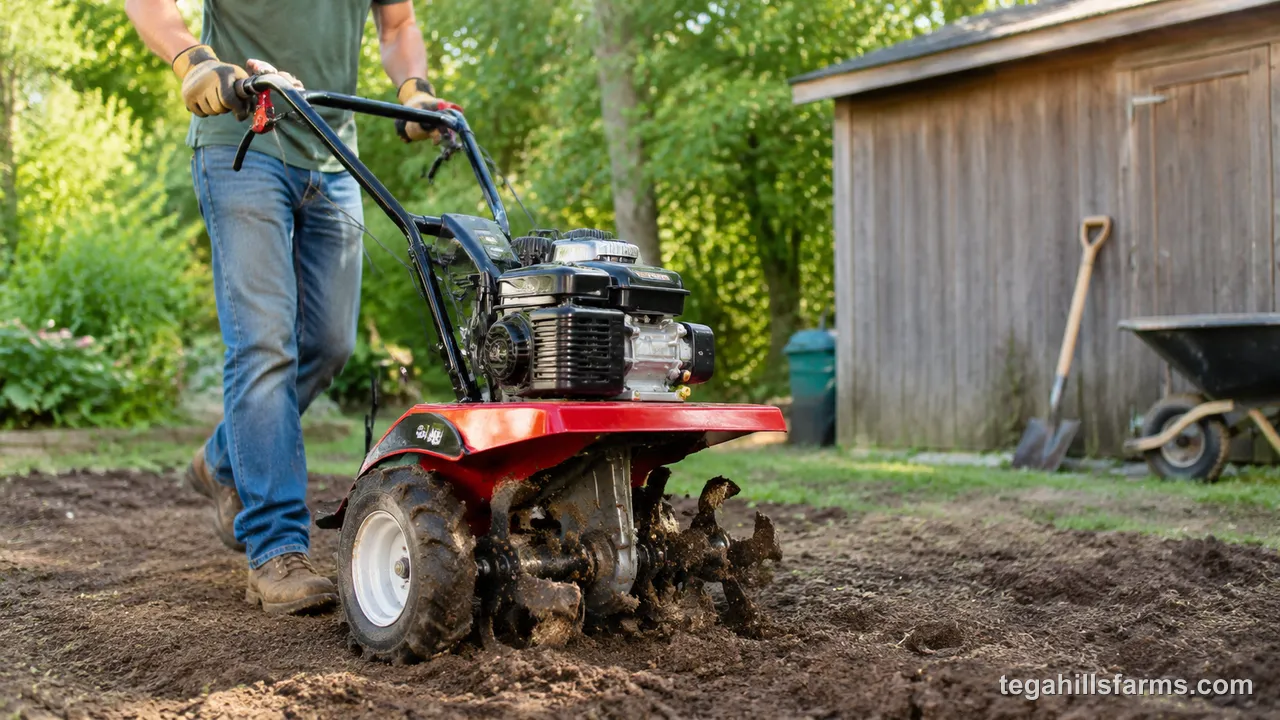
Ownership cost goes beyond the purchase price. It includes upkeep, storage space and the effort of getting the machine to the garden. Those costs depend on the tiller class, which is why the budget question and the maintenance question have to be answered together.
What Budget Tier Matches Your Needs, and When Does Renting Make More Sense?
Buying makes sense when the tiller’s class matches work you do every season, and renting makes more sense when the heavy work happens once. Typical price ranges by class look like this:
- Cultivators and mini-tillers: roughly $100 to $300
- Front-tine tillers: roughly $300 to $600
- Mid-tine tillers: roughly $400 to $800
- Rear-tine tillers: roughly $600 to $6,000, with the top of that range covering heavy-duty, commercial-grade machines
Most homeowners with an established garden get what they need from the front-tine or mid-tine tier. Rear-tine pricing climbs with engine size, transmission quality and features such as dual rotation.
Renting fits the groundbreaking year. You get a heavy rear-tine machine for a day without paying for it, storing it or maintaining it, though you will need a truck or trailer to haul it home. My own lean is to rent for the sod-busting job and own something lighter for spring prep. For a closer breakdown of how much a tiller costs by type and brand, a dedicated price guide goes further than these tiers.
What Maintenance and Storage Are You Signing Up For?
A gas tiller commits you to regular oil changes, air filter and spark plug checks, and a winter fuel plan. An electric or battery tiller mostly needs clean tines and a dry place to store it.
Follow the manufacturer’s schedule for engine oil, and on rear-tine machines, check the transmission or gear oil too. Before winter, add fuel stabilizer or run the tank dry so the carburetor does not gum up. Battery packs should winter indoors in a heated space, not in a freezing garage.
Tines on every type need attention. Roots, string and vines wrap around the shaft and strain the drive, and worn tines dig shallower until you replace them. Storage space is the other commitment. A cultivator hangs on a shed wall, while a rear-tine machine takes up a section of garage floor year-round. Steady upkeep is the biggest factor in how long tillers last, often more than the brand name on the engine cover.
A rotary tiller narrower than your tractor’s rear tires leaves wheel tracks pressed into the soil it just loosened, and a tine set built for loose loam bends and dulls quickly in rocky clay. Neither problem shows up on a product page, yet each one turns a clean single pass into two and adds to the replacement-parts bill. Mount the wrong width or tine type and you end up re-tilling compacted strips every season while the machine works exactly as designed.
What Rare Sizing and Tine Details Prevent a Mismatch?
Most mismatches happen when a tiller is fitted to the brochure instead of to the machine and ground it will actually meet. The cost shows up as compacted wheel tracks, strained drivelines and worn tines, even when the tiller itself is well built.
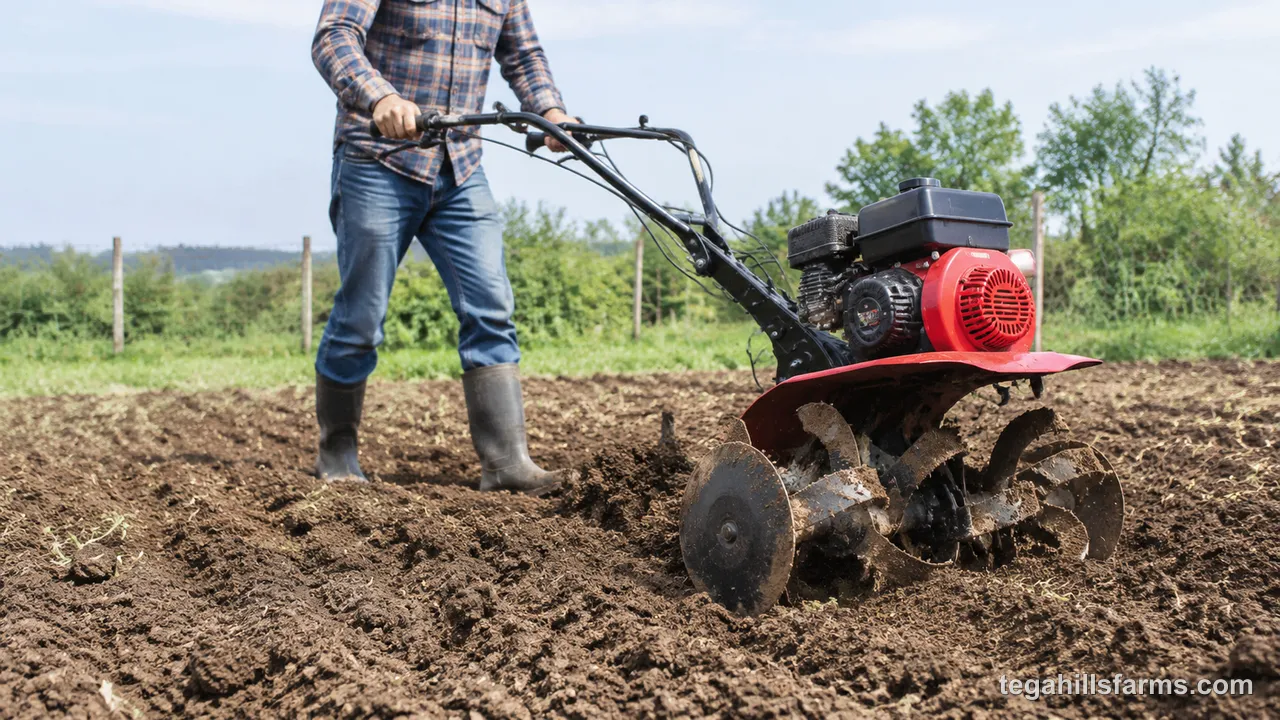
Both details matter most to buyers who till large plots or difficult soil. Those are the buyers putting the most hours on the machine, so small mismatches add up across a season.
How Do You Size a Rotary Tiller to Your Tractor?
Size a tractor rotary tiller so its working width covers the outside edges of your rear tires, and so your tractor’s PTO horsepower falls within the range the tiller maker lists.
Width matters because the tires pack down soil. If the tiller is narrower than the tire track, every pass leaves compacted strips that you have to till again. Offset tillers, which shift to one side of the hitch, let a narrower unit cover the tracks while working close to fences and bed edges.
Horsepower matters in both directions. A tiller too wide for the tractor bogs down in heavy soil and strains the driveline, which is why rotary tillers use a slip clutch or shear bolt to protect it. A tiller far below the tractor’s rating risks damage when that extra power hits a rock. The three-point hitch category also has to match, and the tiller’s weight must stay within what your tractor’s hitch can lift.
Which Tine Shape Suits Your Soil and Job?
Bolo tines are curved, general-purpose tines that suit sod and weedy ground. Slasher tines cut through heavy roots and vines. Pick-and-chisel tines are built for hard, rocky or compacted soil.
Bolo tines curve so they penetrate and lift soil while shedding grass and weeds instead of wrapping them, which makes them the default on many garden tillers. They handle a wide range of everyday tilling and breaking ground.
Slasher tines have sharp, angled edges that slice through thick roots, vines and heavy vegetation. They fit overgrown plots where a curved tine would just tangle.
Pick-and-chisel tines use pointed teeth that chip into hard clay and rocky ground instead of bouncing off. They leave a coarser finish, so they suit the first pass on tough ground better than finishing work in a vegetable bed. Matching the tine shape to your soil cuts down on passes and on how often you replace tines.
What Ownership Realities Do First-Time Buyers Overlook?
Weight, transport, noise and safety affect daily use more than first-time buyers expect.
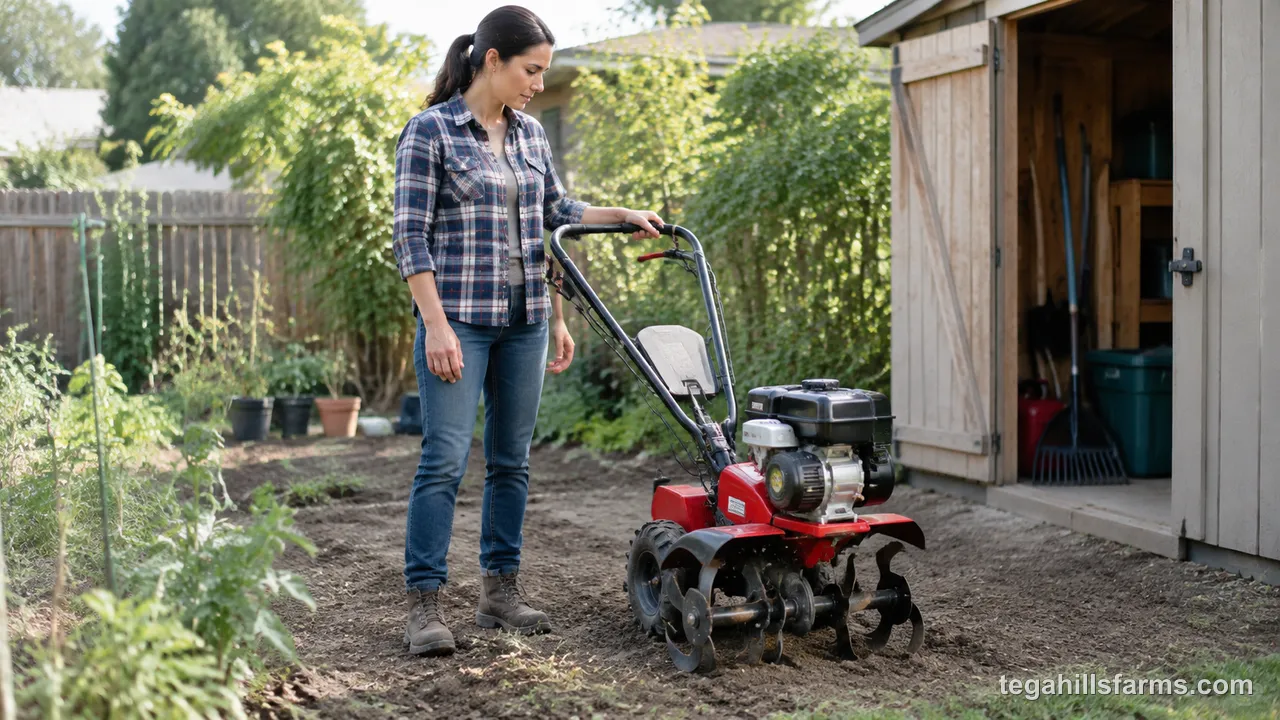
A rear-tine tiller is heavy enough that loading it into a pickup takes ramps and usually a second person, so a garden across town turns every tilling day into a hauling job. Even at home, rolling a heavy machine from the garage to the back of the yard over soft ground is real work. That is why many people with modest gardens end up preferring the best lightweight tillers.
Noise is a neighborhood issue as much as a comfort one. Gas tillers are loud enough to warrant hearing protection, and an early-morning start can strain relations next door. Battery and corded models are far quieter.
Safety habits matter because the tines do not stop for anything. Wear closed boots and long pants, skip loose clothing, keep children and pets out of the area, and watch your feet when using reverse. Before tilling a new bed near the house or street, call 811 to have buried utility lines marked.
Quick Answers for Choosing Between Front-Tine and Rear-Tine
Can a front-tine tiller break new sod?
Yes, but slowly and with real effort. Mow the grass short, wait for slightly moist soil, and make several shallow passes, lowering the depth bar each time. Expect the tines to bounce and pull. For a large patch of lawn, renting a rear-tine machine for a day saves your back.
Is a rear-tine tiller too much for a small garden?
Usually, yes. Its weight and length make turning at row ends awkward, and it takes up garage floor space all year for a few hours of use. A front-tine or mid-tine tiller handles a small, established garden well. Rear-tine machines only earn their place in small spaces with hard clay.
Should a first-time buyer start with front-tine or rear-tine?
Start with the type that matches your ground, not your experience level. A rear-tine machine is easier to control in hard soil, while a front-tine is easier in loose beds. Either way, learning how to use a tiller safely and setting the depth bar correctly matter more than the class.
Do you need to till an established garden every year?
No. Beds with good soil structure often just need loosening and compost worked into the top layer, which a cultivator handles well. Repeated deep tilling can break down soil structure and bring weed seeds to the surface. Save full tilling for compacted beds or new ground.
Can you till wet soil?
Avoid it. Tilling wet soil, especially clay, smears it into dense clumps that dry into hard clods and compacts the layer beneath the tines. Squeeze a handful first: if it crumbles, the soil is ready; if it forms a sticky ribbon, wait a few dry days before tilling.