

A tiller breaks and turns soil deep enough to open new ground or loosen packed earth, while a cultivator only stirs the loose surface of soil that has already been worked, mixing in fertilizer and cutting out young weeds. One builds a bed. The other keeps it in shape.
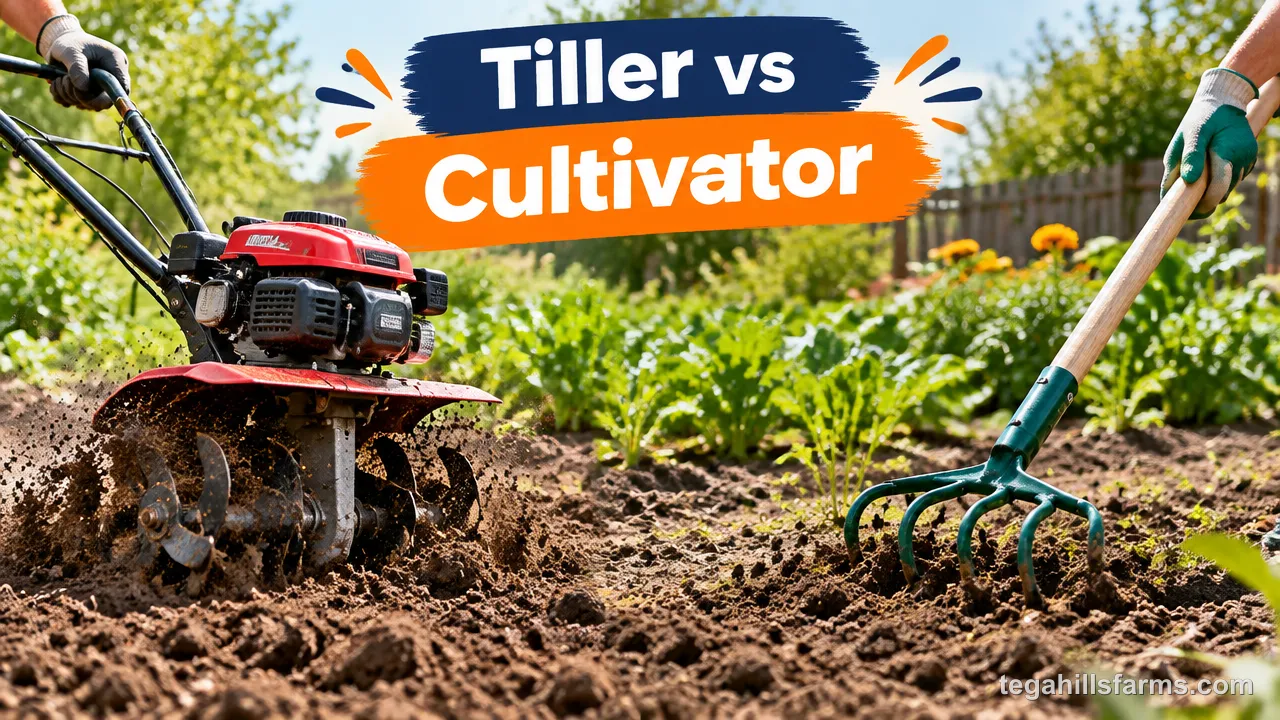
The right choice depends on where your garden is in its life: whether you’re starting from lawn or hard clay, or tending beds that are already planted. Plot size and soil texture matter almost as much, because a machine that suits a long vegetable patch can be awkward and destructive in a raised bed.
The common mistake is buying for the wrong job. A cultivator bounces off sod and compacted ground and leaves you fighting the handlebars. A tiller run through established beds all season grinds the soil into powder and damages roots you meant to protect.
What’s the Core Difference Between a Tiller and a Cultivator?
A tiller digs below the surface and turns soil over, while a cultivator stirs only the loose top layer without flipping it. They differ in tine design, machine weight and working depth.
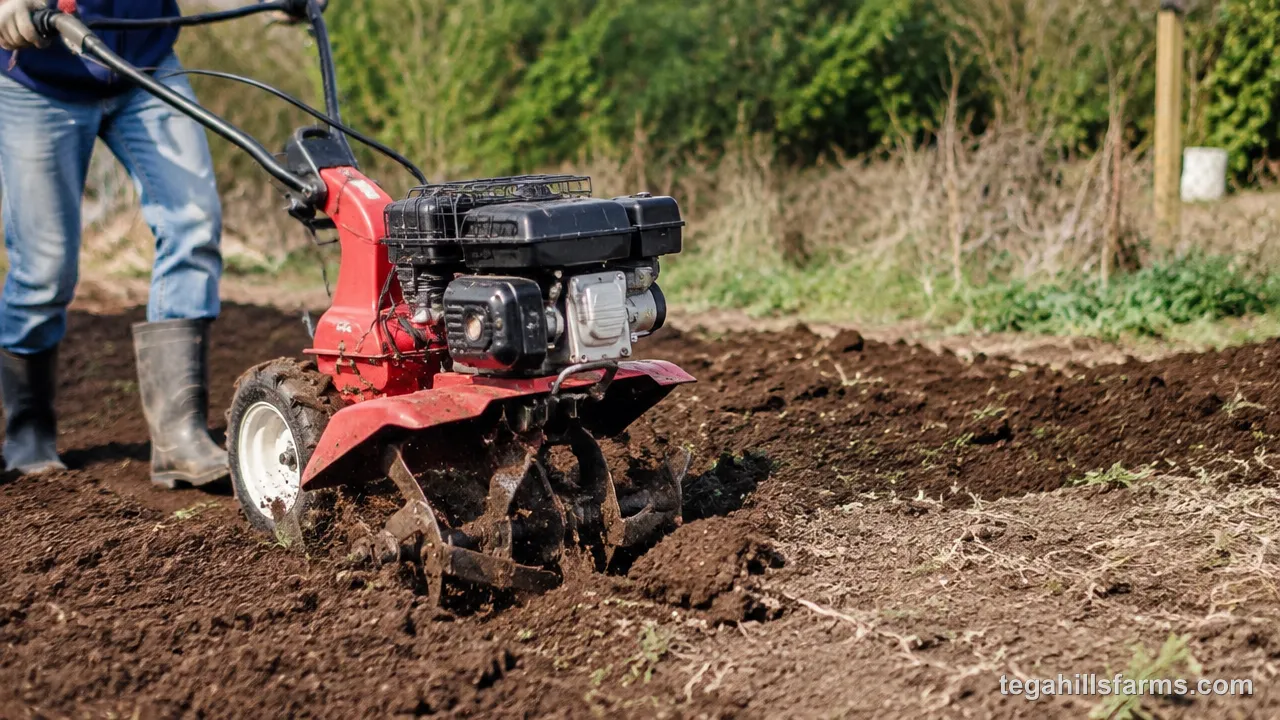
A tiller drives heavy tines into the ground with enough weight and engine power to chop through roots and compaction. It lifts soil and throws it back, burying surface material and breaking clods. A cultivator is lighter and has smaller tines. These scratch and churn the surface, so the soil underneath stays in place. That is why a tiller is a construction tool for beds and a cultivator is a maintenance tool for beds that already exist.
The two compare as follows:
| Criterion | Tiller | Cultivator |
|---|---|---|
| Main job | Breaking new or compacted ground | Weeding and mixing in established beds |
| Working depth | Into the packed layer below the surface | Top few inches of already loosened soil |
| Soil action | Turns and inverts soil layers | Stirs the surface without inverting it |
| Best timing | Before planting, or fall bed prep | During the growing season |
| Garden fit | Larger open plots and long beds | Small gardens, raised beds, between rows |
| Machine weight | Heavier, harder to steer | Lighter, easy to carry and turn |
Once the mechanical difference is clear, figuring out how to choose a tiller that suits your soil and plot size is the next practical step. Learning how to use a tiller without overworking the ground matters just as much, because the same depth that makes a tiller useful also lets it do damage.
When Should You Use a Tiller vs a Cultivator?
The condition of the soil when you start decides it. Ground that has never been worked needs a tiller to open it up. Beds that are already loose and planted need a cultivator to keep them that way.
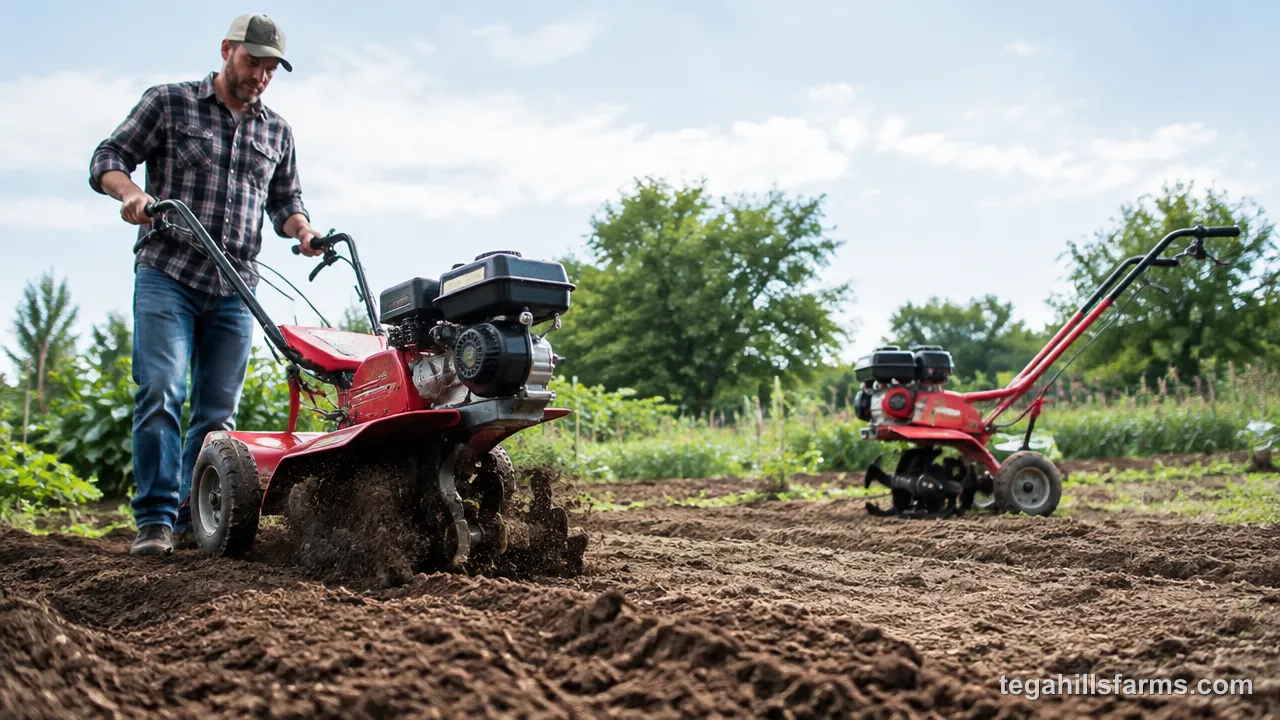
The calendar plays a part, because heavy work fits before planting and light work fits the growing season. Even so, a spring garden on old, loose soil may never need a tiller, and a fall project on fresh ground may need nothing else.
Breaking New Ground or Amending Compacted Soil
A tiller is the tool when the soil has never been worked or has packed hard. Typical cases are a new bed on bare ground, heavy clay that has settled into a dense mass, or a bed that needs several inches of compost blended deep before the season starts.
The tiller’s weight and tine depth do work a cultivator can’t. It cuts through the compacted layer roots can’t penetrate. It also turns compost and other amendments into the root zone instead of leaving them on top. In clay this matters a great deal, because organic matter worked deep is what gradually opens the soil to air and water.
Timing still counts. Till when a handful of soil crumbles after you squeeze it. If the soil holds a slick ball, it is too wet, and the tines will smear it into clods.
For breaking and deep amending, the tiller wins outright. A cultivator lacks the mass and reach to do this job.
Maintaining Existing Garden Beds During the Season
Once crops are planted, the cultivator does the work. It loosens the crust that forms after rain or watering, works side-dressed fertilizer into the surface, and uproots weeds while they are small.
Because it stays shallow, the cultivator leaves crop roots and the soil layering below intact. That lets you pass between rows of tomatoes or beans every week or two without setting the plants back. A tiller run between growing crops cuts through feeder roots and throws soil around the stems. On a lighter machine it can also lurch into the row.
Regular shallow passes also keep weeds from setting deep roots. A weed that would need a hoe and real effort in a month comes out in seconds now.
For in-season care of established beds, the cultivator wins. A tiller only belongs back in the bed after harvest.
Converting Lawn to Garden
Turning lawn into garden is a tiller job. Grass forms a dense mat of roots that a cultivator’s small tines can’t get through. They skate over the turf and bounce instead of digging.
A tiller chops through that mat and breaks up the soil beneath. It still takes several passes, adjusting the depth a little lower each time instead of forcing full depth on the first run. The chopped sod leaves chunks of grass with roots attached. Rake those out, or they will regrow as a weed problem in the new bed. Killing the grass first with a smothering layer of cardboard or plastic makes the tilling easier and cuts down on regrowth.
For sod removal and the first opening of a new bed, the tiller wins with no real competition. Once the bed is planted, the cultivator takes over.
How Do Tillers and Cultivators Work Differently?
The difference comes down to how deep the tines reach and whether they flip soil layers. Those two traits decide whether you end up with deeply loosened, inverted ground or a lightly stirred surface.
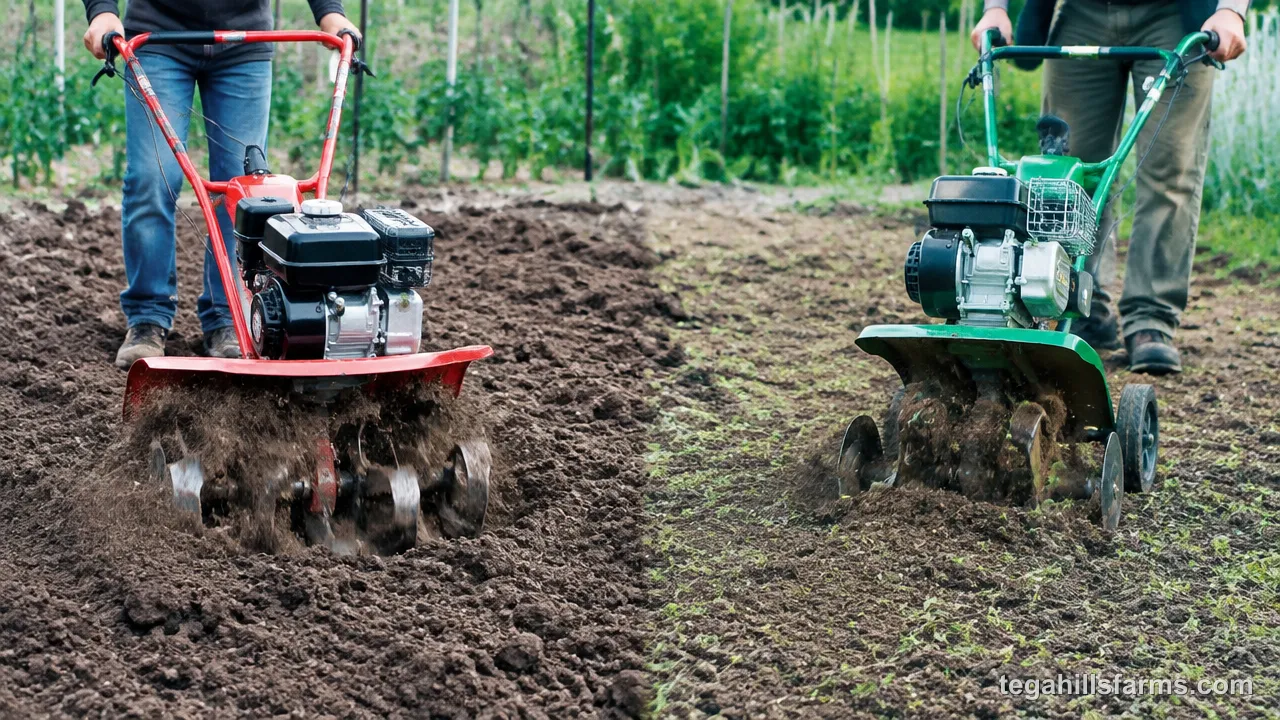
Tine shape, machine weight and drive power all feed into that outcome. That is why the two tools leave such different results even on the same patch of dirt.
Tiller Tines: Deep Rotation and Soil Turnover
Tiller tines are heavy, hooked or bolo-style blades mounted on a rotating shaft. They bite into the ground with the machine’s weight behind them. As they spin, they dig in, lift a slice of soil, and throw it back, so surface material ends up underneath and lower soil comes up.
That inversion is what buries old crop residue and blends amendments into the root zone. The repeated chopping also breaks hard clods into a workable seedbed. In compacted ground, the tines pull the machine forward or try to climb, so the operator holds it back to keep the tines digging instead of skipping.
All that force runs through a heavier engine and transmission, which means more parts to keep in order. Stale fuel, a fouled plug and a gummed carburetor are the usual reasons a tiller won’t start after winter storage.
For breaking ground and turning amendments under, the tiller’s tine design wins.
Cultivator Tines: Shallow Mixing Without Inversion
Cultivator tines are smaller, often curved or star-shaped, and mounted on a light machine that doesn’t push them deep. They scratch, stir and fluff the surface. Soil gets mixed in place instead of being lifted and turned over.
Because the layers stay put, earthworm channels, fungal networks and the soil’s crumb structure below the surface are mostly left alone. The tines also slice through young weed roots just under the surface, which kills small weeds without pulling up a lot of soil with them.
The light build is also why a cultivator handles so easily. You can lift it over a row, turn it in a narrow path, or work along a bed edge without fighting it. That same lightness is why it rides up on sod or hardpan instead of digging in.
For preserving soil structure while weeding and mixing, the cultivator’s tines win.
Depth and Aggression Comparison
A cultivator works the top few inches of soil that has already been loosened. A tiller reaches below that into the compacted layer, and most tillers have a depth bar or drag stake that sets how far the tines sink.
That depth gap sets how much each tool disturbs. A cultivator touches only the surface where weed seeds sprout and fertilizer gets mixed. A tiller reaches the root zone, so it damages roots around established plants and shrubs, and it can bring buried weed seeds up to the light.
Aggression also affects the machine. Forcing a tiller through rocky ground or deep roots strains the tines, belt and gearbox, and that hard use has a direct bearing on how long tillers last.
Use the tiller when you need depth. Use the cultivator when anything is already growing in the bed.
Which Tool Fits Your Garden Size and Soil Type?
Plot size and soil texture decide whether a tool’s power is an asset or a liability. Too little machine stalls in hard ground. Too much machine overworks small beds and loose soil.
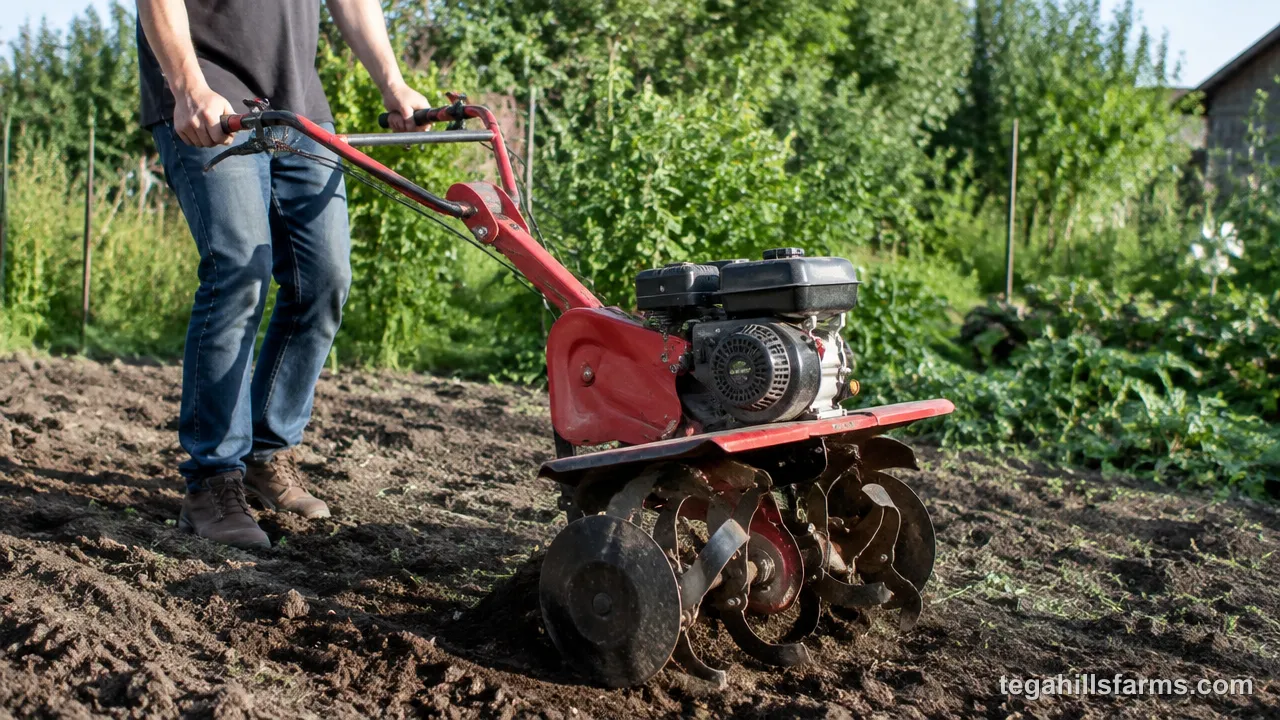
Matching the tool to the space also covers maneuvering, storage and how much work you will actually do each year.
Small Gardens and Raised Beds
A cultivator suits small gardens and raised beds. A tiller is too big and clumsy for any bed shorter than about 20 feet. Below that length you spend more time turning the machine than tilling.
Raised beds add walls, corners and a limited turning radius. A tiller can slam into those or throw soil over the sides. A narrow machine like Toro’s 2-cycle cultivator, at 10 inches wide, can work between rows and along edges where a tiller can’t fit.
Raised-bed soil is also usually loose already. Running a tiller through it every spring breaks the soil down into fine particles that crust and drain poorly. A cultivator’s light stirring is all that soil needs.
For compact spaces, the cultivator wins on fit and on soil health.
Medium to Large Gardens with Various Soil Conditions
Larger plots often justify both tools. The tiller handles the heavy prep, and the cultivator handles everything after planting. The order is simple. If the ground is new, compacted or due for a deep dose of compost, the tiller goes first. If the bed is already loose, start with the cultivator and leave the tiller parked.
Many owners use the tiller only a day or two a year. That makes renting a reasonable option for the deep work, especially when the cultivator covers the rest of the season. Whether to buy or rent comes down to how often you break ground each year and how much a tiller costs compared with a weekend rental.
I lean toward owning the cultivator outright in this situation, because it earns its keep every week. The tiller only has to justify its storage space.
For large plots, the tiller wins the prep work and the cultivator wins day-to-day care.
Compacted Clay vs Sandy Loam
Compacted clay needs a tiller’s power, at least the first time. Clay particles pack tightly, so a cultivator’s tines bounce instead of digging, while a tiller’s weight can break the mass and blend in organic matter. Clay also punishes bad timing. Tilled wet, it smears into slick layers and hard clods.
Sandy loam stays loose on its own, so a cultivator usually handles it from the start. Running a tiller through sand over and over breaks down its little structure and speeds the loss of organic matter you added.
Amended clay gradually behaves more like loam. Each season you build organic matter, the soil needs the tiller a little less.
For raw clay, the tiller wins. For sandy loam and well-amended clay, the cultivator wins.
Can You Use One in Place of the Other?
Only in a narrow overlap. A tiller set shallow can do light cultivating in open ground, but a cultivator can’t break sod or compacted soil no matter how many passes you make.
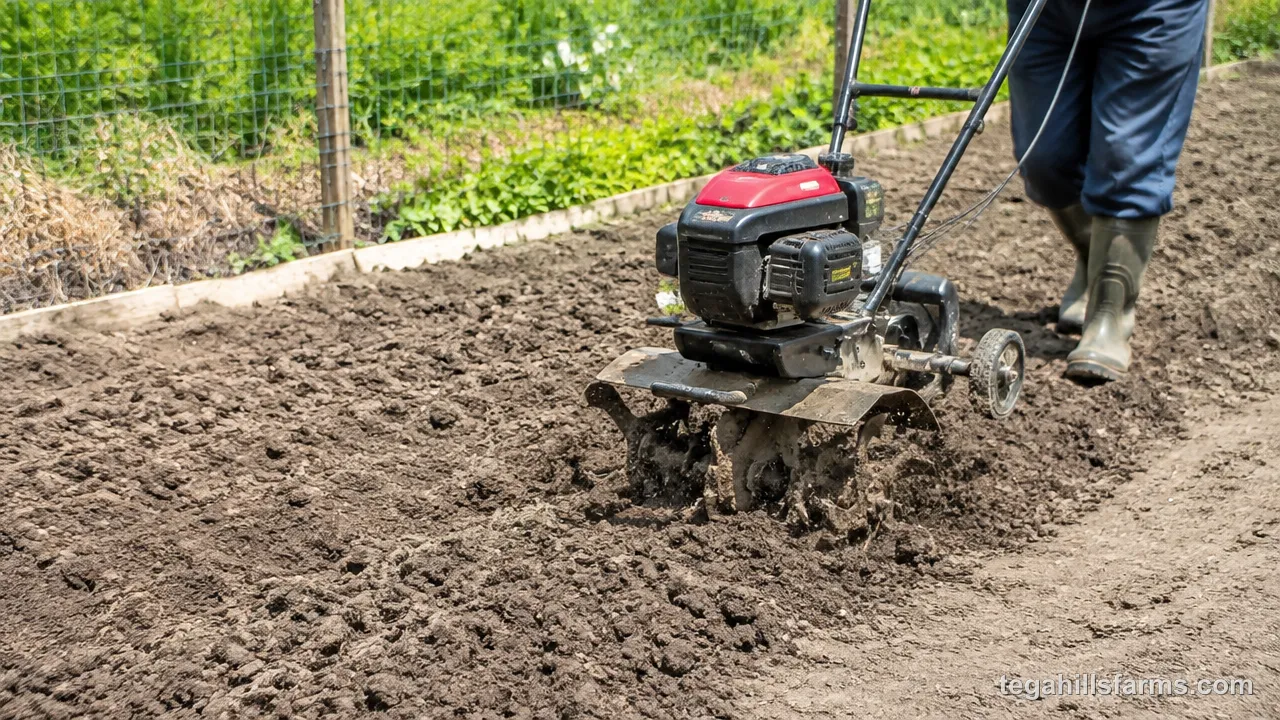
The substitution fails in both directions for physical reasons. A cultivator lacks the weight and tine size to dig into hard ground, so it skips across the surface and wears out the operator before the soil gives. A tiller can stir the surface in an empty bed, but its width, weight and pull make it a poor fit between planted rows, where it chews roots and throws soil onto stems.
Using a tiller as a cultivator all season also overworks the soil, which causes structure problems. If you can own only one, pick the tool for the job you face most often:
- Choose a tiller if you are opening new beds, converting lawn, or working heavy clay that needs deep amending.
- Choose a cultivator if your beds are already established, small or raised, and your main work is weeding and mixing in fertilizer.
Every pass of tines through the ground breaks apart the crumbs that hold air and water and tears through the fungal threads and worm channels that feed plant roots. A garden tilled hard each spring can look fluffy in April and then crust over, drain slowly, and grow weaker crops by midsummer, with a dense layer forming just below the reach of the tines.
What Happens If You Till Too Often or at the Wrong Time?
Too much tilling breaks the soil’s natural crumb structure into fine particles. Those seal over in rain, form a crust, and shed water instead of absorbing it. Repeated passes at the same depth also press a dense layer, called a hardpan, just below the tines, which blocks roots and drainage.
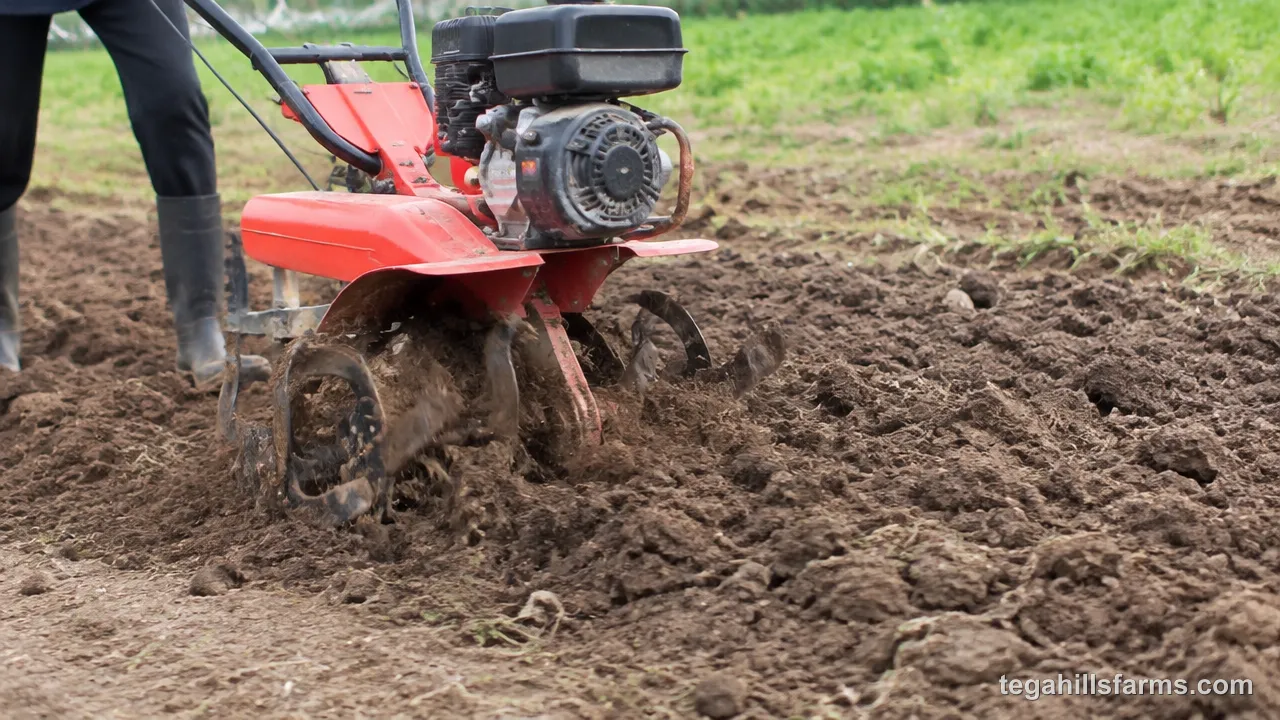
Tilling also disrupts the soil’s living network. It cuts fungal threads, destroys earthworm burrows, and speeds the breakdown of organic matter, so the soil loses fertility faster than you replace it.
Timing makes all of this worse. Wet soil compresses and smears under the tines and dries into hard clods. Work the ground only when a squeezed handful crumbles, and keep deep tilling to the jobs that truly need it.
Do Tillers and Cultivators Need Different Maintenance?
They do. A tiller carries a heavier engine and drivetrain that need regular attention. A cultivator’s upkeep is mostly the tines and a smaller power source.
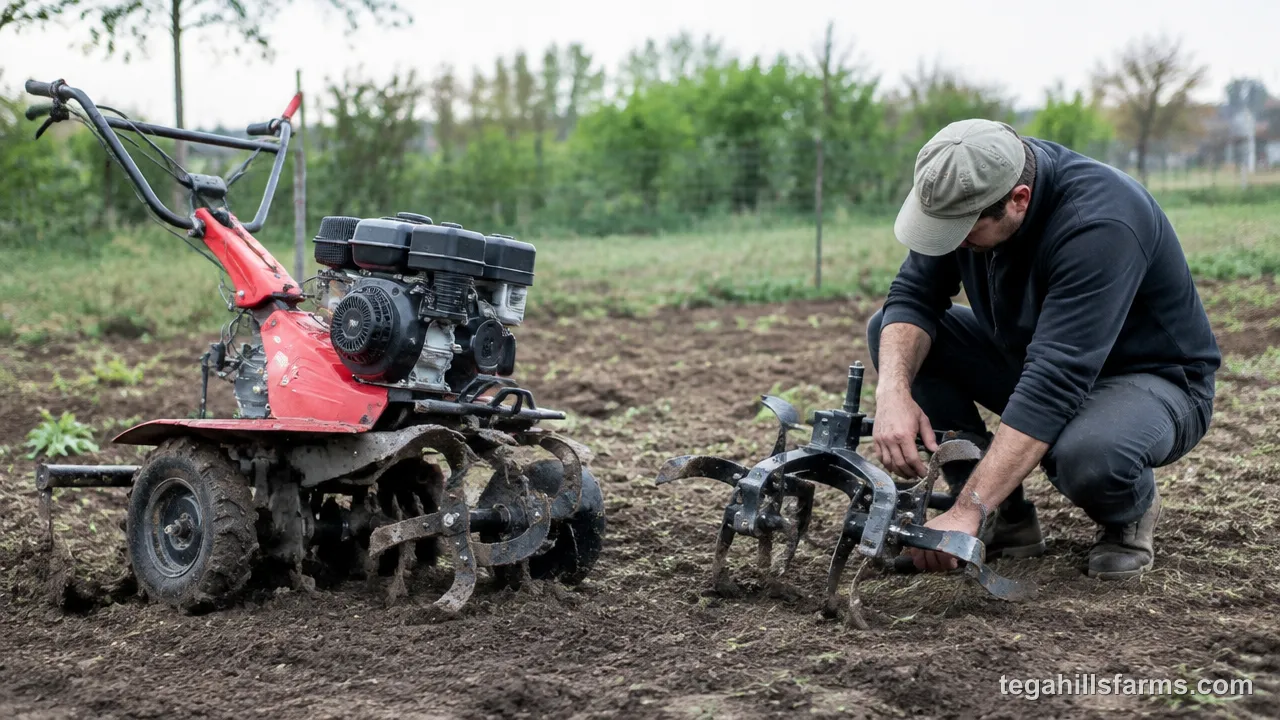
That difference affects how much time each machine takes from you and how easy it is to store over winter.
Tiller-Specific Upkeep
A tiller needs engine care plus drivetrain care. Change the engine oil on schedule, and clean or replace the air filter often, since tilling stirs up a lot of dust. Replace the spark plug when it fouls. Check the transmission or gearcase oil level, because the gears carry heavy loads. On belt-driven models, keep the drive belt properly tensioned so the tines don’t slip in hard ground.
Inspect the tines each season. Sharpen bent or dull ones, and replace them once they wear short. Before storage, add fuel stabilizer or run the tank dry so the carburetor doesn’t gum up. Follow the manufacturer’s intervals for each task.
Cultivator Maintenance Needs
Cultivator upkeep is lighter. The tines wear thinner and shorter with use, so replace them once they stop reaching the soil properly. A small gas model such as Toro’s 2-cycle cultivator needs fresh fuel mixed with oil at the manufacturer’s ratio, plus occasional air filter and spark plug checks.
Electric models need even less. A corded unit needs the cord checked for nicks, and the motor vents kept free of dirt. For a battery machine like the Greenworks 40V cultivator, store the pack indoors over winter, out of freezing temperatures and partly charged. Because cultivators are light, most can hang on a garage wall instead of taking up floor space.
Common Questions About Tillers and Cultivators
Is a front-tine or rear-tine tiller better for breaking new ground?
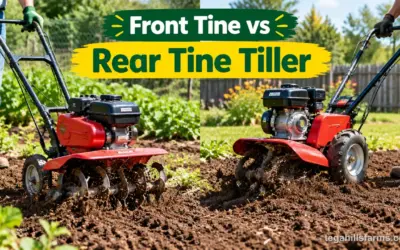
Rear-tine tillers handle new ground and sod better, because powered wheels drive the machine while the tines dig, so it doesn’t buck as much. Front-tine models are lighter and easier to steer but harder to control in compacted soil. Weighing a front tine vs a rear tine tiller comes down to how much hard ground you face.
Can an electric tiller handle a garden bed?
A corded model like the Earthwise 13.5-Amp tiller suits beds within reach of an outlet. Use an outdoor-rated extension cord and plug into a GFCI outlet. The cord limits how far you can roam, so corded tillers fit small to mid-size plots near the house better than distant or sprawling gardens.
Should I rent or buy a tiller?
Renting makes sense if you break ground only once a year or for a single lawn conversion. Buying pays off when you prep several beds each season, amend clay yearly, or want to work on your own schedule. Either way, a cultivator is usually worth owning for in-season weeding.
Is a cultivator a good first tool for a beginner?
Yes, if your beds are already established. A cultivator is light, easy to control, and hard to misuse, so there’s less risk of damaging plants or soil structure while you learn. If you’re starting from lawn or hard clay, you’ll still need a tiller, or a rental, for that first breaking pass.
Do I need to till my garden every spring?
No. Established beds with good structure usually need only a cultivator pass or a layer of compost on top. Tilling every year can damage soil structure and form a hardpan. Save the tiller for new beds, heavy amendments, or ground that has compacted again.
Write Your Review
No reviews yet. Be the first to share your experience!