

A solar pond pump runs free once it’s installed and needs no outlet, but it moves less water and slows or stops when clouds or shade cover its panel. An electric pond pump costs money to run every month, yet it delivers the same strong flow day and night. That steady flow is enough to run a filter, a waterfall and a fish pond.
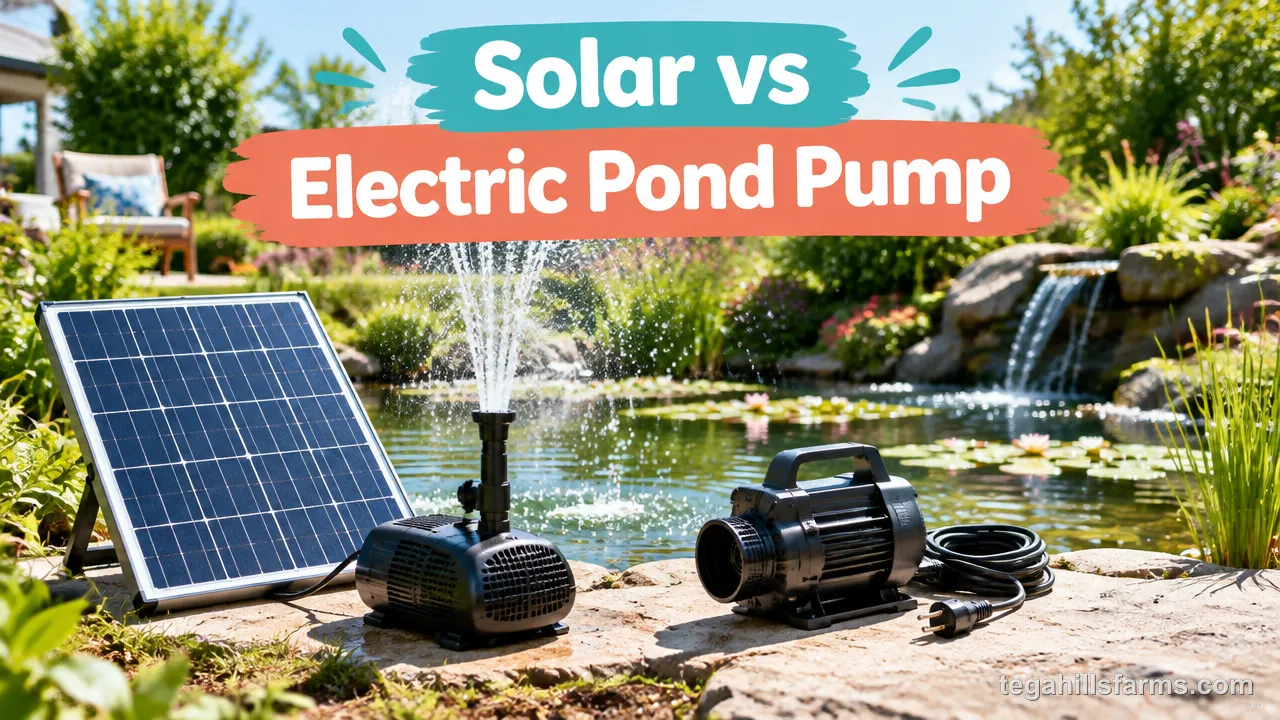
The choice comes down to a handful of practical factors: how much flow your pond needs, how much direct sun your yard gets, whether there’s a GFCI outlet within reach, and how much upkeep you’re willing to take on. Each factor favors one pump type over the other depending on the pond you’re building.
The worry for most owners is a pump that can’t do its job. A solar pump that sputters on gray days is a small annoyance in a birdbath and a real problem in a pond full of fish. An electric pump in the wrong spot can leave a cord running across the lawn or add a monthly cost you didn’t plan for.
Before you buy anything, check where the sun hits your yard at midday. A pond that sits in afternoon shade rules out most solar setups, whatever the box promises.
What Is the Difference Between a Solar and an Electric Pond Pump?
One draws low-voltage DC power from its own panel and runs only while sunlight reaches it. The other plugs into a household outlet and runs at full strength around the clock.
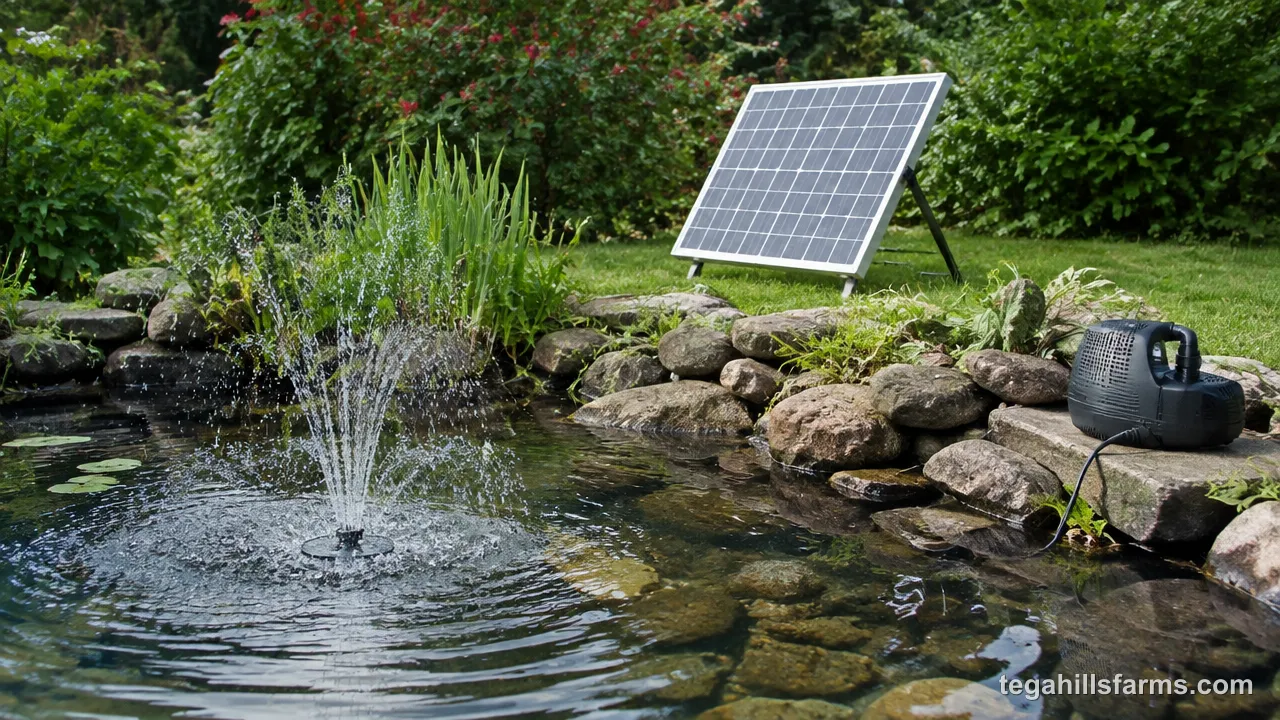
A solar pump pairs a small DC motor with a photovoltaic panel. Its speed tracks the light hitting that panel, so flow peaks at midday and fades toward evening unless a battery stores the extra energy. An electric pump runs on standard household current from a GFCI-protected outlet. Its motor turns at a fixed speed, so the water it moves at 3 a.m. matches what it moves at noon.
The core trade-off is placement freedom against output. Solar lets you put moving water anywhere the sun reaches, without trenching or cords. Electric ties you to an outlet but gives you the flow and reliability that filters and fish depend on.
| Factor | Solar | Electric Pumps |
|---|---|---|
| Power source | Own panel, low-voltage DC | Household outlet |
| Flow output | Lower, varies with sunlight | Steady, higher |
| Night operation | Only with battery backup | Yes |
| Weather dependence | High | None |
| Filter and waterfall support | Limited | Strong |
| Running cost | None | Monthly electric use |
| Installation | Sunny panel spot, short cable run | Outlet access, safe cord routing |
If the bigger question is which pump belongs in your pond at all, our guide on how to choose a pond pump walks through the full decision.
How Do Solar and Electric Pond Pumps Compare Side by Side?
Steady power separates them in daily use. An electric pump delivers the same flow whether it’s noon or midnight, while a solar pump’s output rises and falls with the light on its panel. Which one fits depends on how much of that swing your pond can tolerate, and the differences show up in flow, climate and setup work.
How Do Power Source and Flow Output Differ?
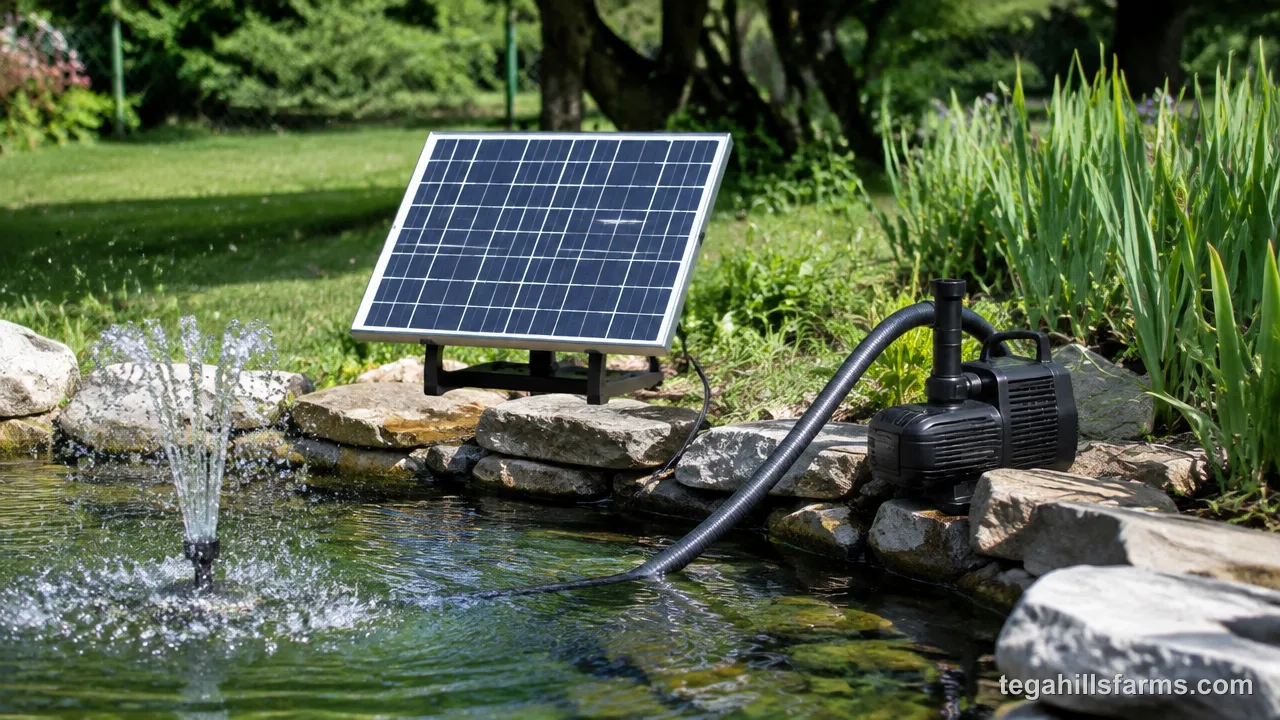
Solar fountain pumps cover a modest range. At the low end they move about 40 GPH (150 L/h), which pushes a jet roughly 8 inches high. The strongest models reach about 420 GPH (1,600 L/h) and a jet around 6 feet tall, but only on the brightest day, with a new pump and a clean intake. Any cloud, dirt on the panel or debris in the intake pulls the pump below that ceiling.
An electric pump gets constant power from the outlet, so its rated flow is the flow you actually get. That matters most when water has to work against resistance. A filter media bed, a length of tubing and the vertical climb to a waterfall lip all add head, the pressure a pump has to overcome. A solar motor running on partial sun loses flow quickly as head rises, while an electric pump sized for the job keeps the filter fed and the waterfall running.
Sizing the flow comes before choosing the power source, so work out what size pond pump you need first. Electric pumps win on flow and head whenever water must pass through a filter or climb a waterfall. Solar holds its own only for small fountains and light surface movement.
How Do Sunlight and Weather Change Performance by Region?
A solar pump does best where the sky stays clear. In Florida and the desert Southwest, long stretches of strong, direct sun keep a panel near its rated output for much of the day, and a solar fountain behaves close to how the box describes. In the Northeast and the Pacific Northwest, frequent cloud cover and lower winter sun cut panel output sharply. On an overcast day a direct-drive pump may barely trickle or stop altogether.
Shade does the same damage on a smaller scale. A tree that shadows the panel for a few afternoon hours removes those hours of pumping, even in a sunny state. The low sun angle in late fall and winter shortens the useful day further.
An electric pump ignores all of this because its power comes from the grid, not the sky. Both types face the same winter problem in freezing regions: ice can damage a pump left running in shallow water. Follow the manufacturer’s guidance on winter storage for either type.
Electric pumps win in cloudy or shaded yards. Solar is a fair match in reliably sunny regions where a fountain only needs to run during the day.
How Do Installation and Upkeep Compare?
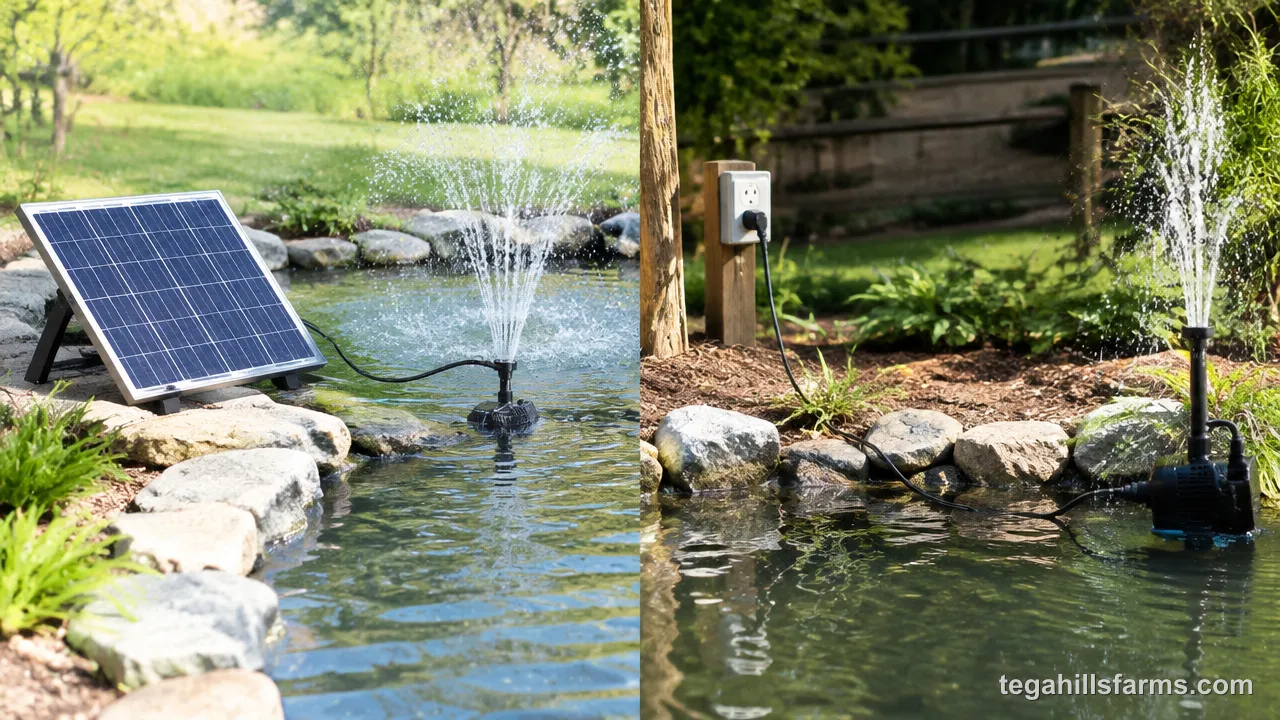
A solar pump needs a panel spot with clear midday sun and a cable that reaches the water. Detached rectangular panels typically sit beside the pond with up to about 16 feet (5 m) of cable between panel and pump. That short leash means the sunny spot has to be close to the water. An electric pump needs an outdoor GFCI outlet and a safe path for the cord. Running an extension cord across the lawn to a pond is a trip and shock hazard, so plan the cord route before you place the pond.
Routine upkeep overlaps. Both pumps need the pre-filter or intake screen rinsed and the impeller cleared of string algae and grit. A solar setup adds panel cleaning, because dust, pollen and bird droppings cut output. The full steps for placement and wiring are covered in how to set up a pond pump.
Solar wins on simple installation when the sunny spot is near the pond. Electric wins on lower upkeep, because there’s no panel to keep clean.
What Are the Pros and Cons of Each Pump Type?
Purchase cost against running cost frames most of this decision. A solar pump front-loads its expense into the hardware. An electric pump spreads its cost over every month it runs. Reliability and environmental impact sit on top of that money question, and they shift depending on what your pond has to keep alive.
What Are the Pros and Cons of a Solar Pond Pump?
A solar pump is worth it when you want moving water in a sunny spot with no outlet, and it falls short when the water has to keep moving through clouds and darkness.
Advantages:
- No electric bill, because the panel supplies all the power.
- No cord to an outlet, so the pump can sit anywhere the sun reaches.
- Low environmental footprint, with no grid electricity drawn.
- Low-voltage DC carries less shock risk around water than household current.
Drawbacks:
- Output depends on sunlight and drops with cloud cover or shade.
- Flow and fountain height are modest compared with an electric pump.
- Battery-backup models carry a lithium battery that loses capacity and eventually needs replacing.
The money question is upfront hardware against ongoing savings. A capable solar kit with a decent-sized panel and battery costs more at purchase than a basic electric pump of similar flow, and the savings come only from the electric bills you avoid. For a broader look at pricing across pump types, see how much a pond pump costs.
What Are the Pros and Cons of an Electric Pond Pump?
An electric pump is the reliable workhorse. It handles filtration and big water features without fuss, but you pay for its power every month and it stops when the grid does.
Advantages:
- Steady output day and night, unaffected by weather.
- Strong flow and head for filters and waterfalls.
- Wide choice of sizes, from small fountain pumps to high-flow filter pumps.
Drawbacks:
- Ongoing electric cost for as long as the pump runs.
- Needs an outdoor GFCI outlet and a safe cord route to the pond.
- Stops during a power outage, which matters in a stocked fish pond.
The running cost deserves attention because a pond pump often runs around the clock for months at a time. A small difference in wattage adds up over a season, so a pump sized to the job, not oversized, keeps the bill reasonable. The math behind that is laid out in how much electricity a pond pump uses. For a fish pond, I’d treat the power bill as part of the cost of keeping fish rather than a reason to cut corners on flow.
Which Pump Fits Your Pond Best?
What lives in the water decides more than anything else. Fish and filter bacteria need constant circulation, while decorative water only needs to look good while you’re watching it. Outlet access then narrows the choice further.
Which Pump Suits a Fish Pond?
An electric pump is the safer default for a fish pond, because fish and the biological filter both depend on circulation that never stops. Beneficial bacteria in the filter break down fish waste, and they need a steady supply of oxygenated water to survive. When flow stops for hours, those colonies start to die back, and ammonia can build up in the water.
Oxygen tells the same story. Plants and algae add dissolved oxygen during the day but consume it at night. That leaves overnight as the time fish most need the surface movement a pump provides. A direct-drive solar pump shuts off exactly when that need peaks, and a cloudy week can leave a stocked pond short of oxygen and prone to algae blooms.
Match circulation to pond volume so the whole pond turns over regularly. The pond pump gph calculator does that math for your pond’s dimensions. Choose electric if you keep fish. Add solar only as a supplemental fountain or aerator, never as the sole pump.
Which Pump Suits a Fountain, Birdbath or Waterfall?
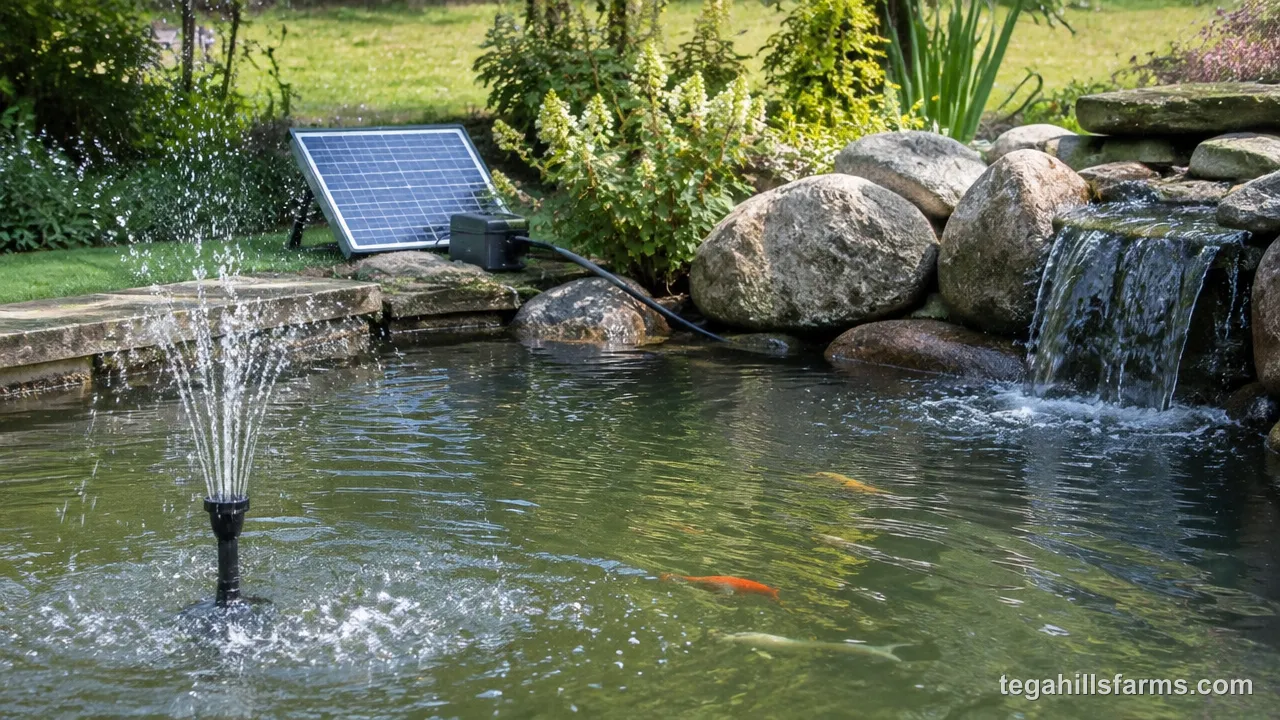
Solar works well for small decorative features that only need to run in daylight. A birdbath bubbler or a small tabletop or patio fountain needs low flow and a short jet, which falls well within what solar fountain pumps handle. Birds visit during the day, so a pump that rests at night costs you nothing.
A waterfall or a tall fountain head is different. Lifting water to a waterfall lip and keeping a full sheet of water spilling over it takes steady pressure. A solar pump on partial sun loses height first, so the waterfall thins to a trickle whenever a cloud passes.
Choose solar if the feature is small, sits in full sun and only needs to run during the day. Choose electric if you want a waterfall, a tall jet or water movement you can count on at any hour.
Which Pump Suits a Spot Without a Nearby Outlet?
Solar is the practical answer for a pond far from the house. It needs only a panel with strong midday sun and a cable that reaches the pump. The catch is that the sunny spot has to sit close to the water, since panel cables are short. A pond under trees with open lawn farther away won’t work without a longer cable than most kits include.
Extending power is the alternative. That usually means a buried outdoor line to a new GFCI outlet, which is a job for a licensed electrician and subject to local code, so check local requirements first. It’s worth the expense when the pond holds fish or will run a filter, because no solar kit replaces steady power there. For a decorative pond in full sun, solar avoids the trenching altogether.
How Many Hours a Day Should You Run a Pond Pump?
Fish ponds with a biological filter need the pump running 24 hours a day, while decorative features can run on a timer for the hours you’re around to enjoy them.
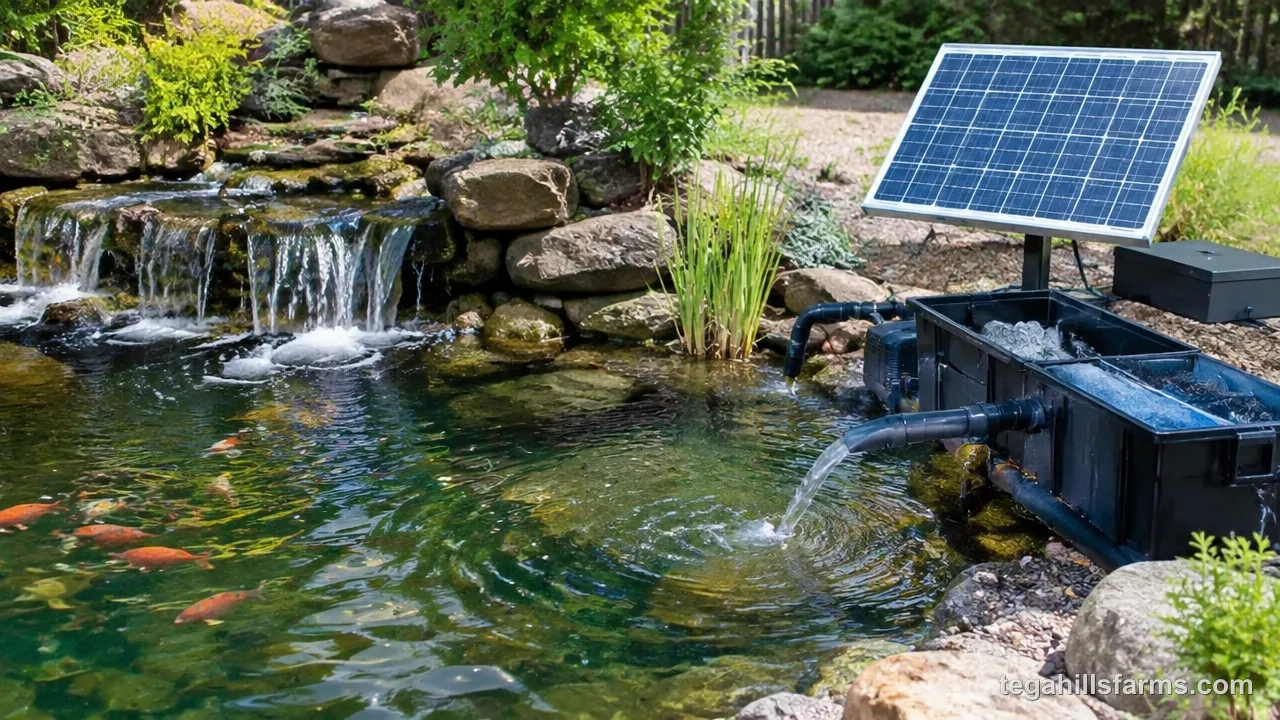
A filter’s bacteria and the fish both depend on constant oxygen and circulation. Shutting the pump off overnight saves some electricity but starves the filter and leaves fish short of oxygen during the hours they need it most. A fountain, birdbath or decorative waterfall with no fish has no such need. Running it during daylight or evening hours keeps the water moving when people are watching and cuts the power bill.
Solar pumps follow the sun whatever schedule you’d prefer. A direct-drive model runs only while its panel produces power. Getting water to move after sunset requires a battery backup that stores daytime energy.
A direct-drive solar fountain that sprays happily at lunchtime can stall the moment a cloud drifts over or the afternoon shade reaches its panel. Battery-backup models keep the water moving into the evening, but they bring a battery that slowly loses capacity, and buying the wrong design leaves you with a fountain that’s silent every time you sit outside to enjoy it.
What Is the Difference Between Direct-Drive and Battery-Backup Solar Pumps?
A direct-drive solar pump runs only while its panel produces power, and a battery-backup pump stores energy so it can keep running through clouds and into the evening. Direct-drive units wire the panel straight to the motor. Output tracks sunlight minute by minute, so the pump surges in full sun, slows in haze and stops in shade or at dusk. That simplicity means fewer parts to fail and a lower price.
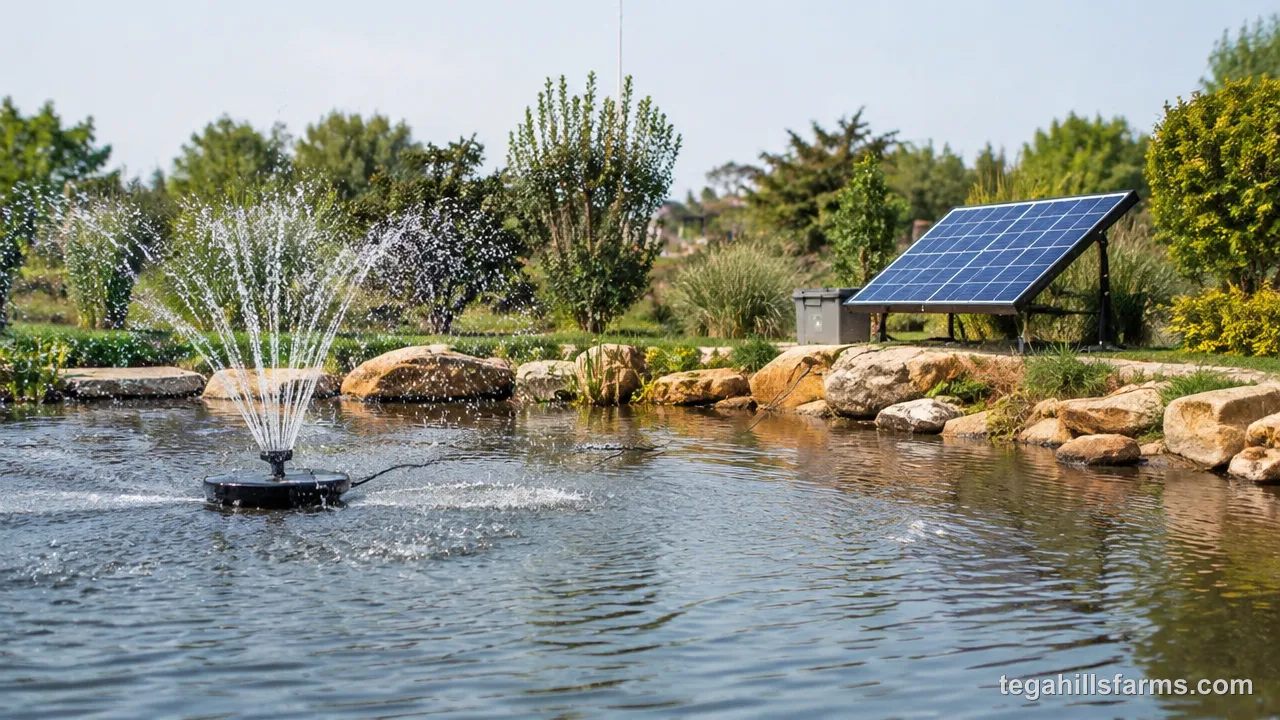
Battery-backup units add a lithium battery and a charge controller. During the day the panel runs the pump and charges the battery, and the battery takes over when light fades. Some models let you choose evening run times or a steady flow mode.
The trade-off is cost and eventual maintenance. The battery raises the purchase price and loses capacity with each charge cycle, so it eventually needs replacing. If you mainly want water movement during sunny afternoons, direct-drive is enough. If you sit outside in the evening or live where clouds are common, a battery-backup model is the one that keeps the fountain running when you’re actually there.
How Long Do Solar Pond Pump Parts Last Before They Need Replacing?
The battery usually wears out first on a battery-backup solar pump, followed by the impeller and intake, while the panel and motor tend to last longest when kept clean. Battery fade shows up as a fountain that stops earlier in the evening each season, even after full days of sun. Replacing just the battery makes sense when the rest of the pump still runs strongly in daylight.
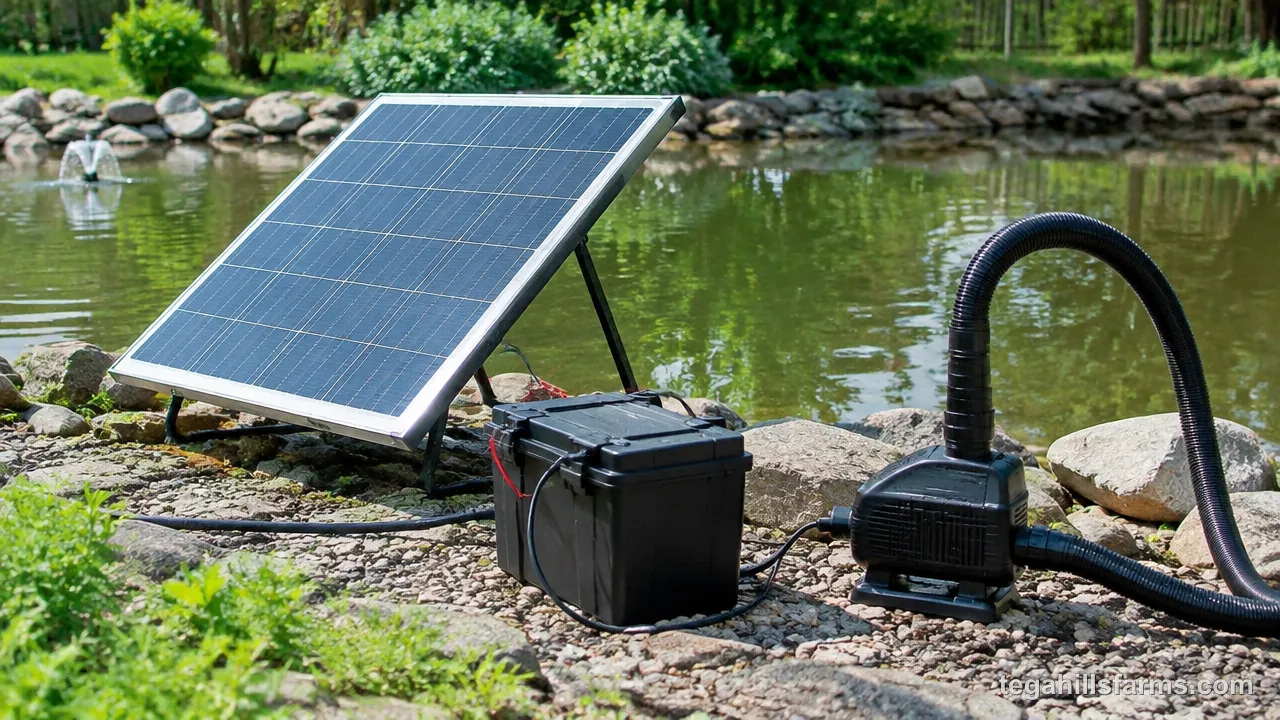
Panels lose output slowly with age, but grime is the more common culprit. A panel coated in dust or pollen behaves like an aging one, so clean it before blaming the hardware. A clogged intake screen and a worn or fouled impeller cut flow and make the motor strain or rattle. Clearing debris often restores performance. A cracked or chipped impeller needs replacing.
When the motor itself hums without turning, or several parts fail at once, replacing the whole pump usually beats ordering parts. The broader picture of wear and lifespan across pump types is in how long pond pumps last.
Can You Combine a Solar Fountain Pump With an Electric Filter Pump?
Yes, and a split-duty setup suits many pond owners who want reliable filtration plus a decorative feature without running more wiring. The electric pump handles the work that can’t stop: pushing water through the biological filter and circulating the whole pond day and night. The solar pump takes on the extras, such as a small fountain, a bubbler or a surface aerator, during sunny hours.
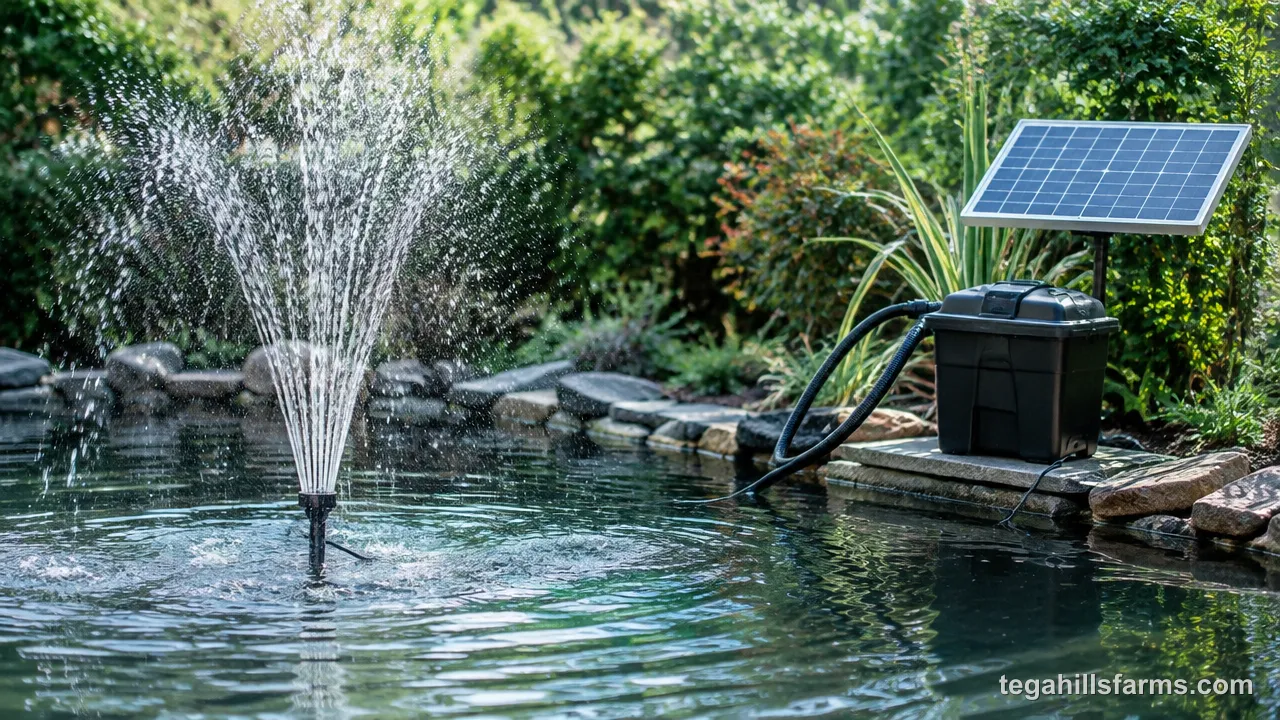
Each pump does what it does best in that arrangement. The electric filter pump supplies constant flow and the head that a filter and return line demand. The solar fountain pump adds surface agitation and visual interest without a second cord or added electric use, and its daytime-only schedule doesn’t matter because the filter pump keeps oxygen and circulation steady around the clock.
The setup also gives you some redundancy. If the solar unit stops on a cloudy day, fish and filter bacteria still get what they need. If the power goes out on a sunny afternoon, the solar unit keeps some surface movement going.
How Can You Avoid Buying a Solar Pond Pump That Underperforms?
Most disappointing solar pumps come from a mismatch between the pump and the site, not a defective unit. The most common mistake is a panel too small for the job. A small panel can barely turn the motor in perfect sun, so any haze stalls it. Look for a kit whose panel is sized for the pump’s rated flow, and treat the maximum flow on the box as a best case.
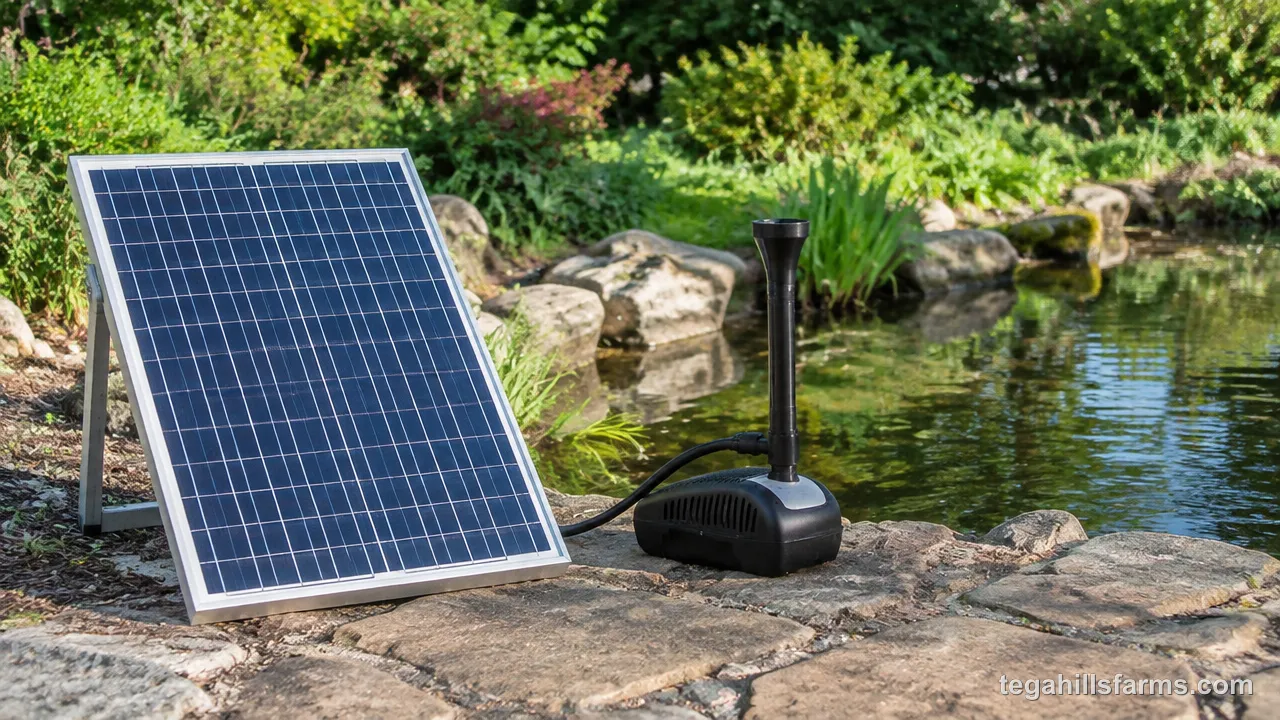
Fountain head is the next trap. Tall spray nozzles look impressive in product photos, but a solar pump loses height first as light fades. Choose a nozzle setting that still looks good at partial output.
Shade ruins more solar setups than anything else. Watch your intended panel spot across a full day before buying, and confirm it gets direct sun through midday and early afternoon.
Finally, expect weaker performance on overcast days. If your region sees long cloudy stretches, a battery-backup model or an electric pump will save you the frustration.
Solar vs Electric Pond Pump FAQs
Are solar pond pumps worth it?
They’re worth it for small fountains, birdbaths and decorative ponds in full sun, especially far from an outlet. You pay more for the hardware up front but nothing to run it. For fish ponds, filters or waterfalls, an electric pump gives better value because it delivers the steady flow those features demand.
Can a solar pump run a fish pond year-round?
Not on its own in most climates. Fish and filter bacteria need circulation day and night, and a solar pump slows or stops on cloudy days, at night and during short winter days. Use an electric pump for circulation and filtration, and add solar only as a supplemental fountain or aerator.
What are the main disadvantages of a solar water pump?
The main drawbacks are dependence on direct sunlight, lower flow and fountain height than electric pumps, and short panel cables that limit placement. Battery-backup models add a battery that loses capacity over time. Shade, cloud cover and a dirty panel all reduce output noticeably.
Does a solar pump work on cloudy days?
A direct-drive solar pump runs weakly or stops under heavy cloud cover, because its motor depends on live panel output. Light haze may only slow it down. A battery-backup model can keep running through cloudy spells using stored energy, but a long stretch of gray weather will eventually drain that battery.
Can a solar pump power a waterfall?
Only a very small, low waterfall in strong sun. Lifting water to a waterfall lip takes steady pressure, and a solar pump loses height first when light fades, so the flow thins whenever a cloud passes. For any waterfall you want running reliably, an electric pump sized for the climb is the better choice.
Write Your Review
No reviews yet. Be the first to share your experience!