

A small fountain pump barely registers on a utility bill, while a pump circulating a koi pond around the clock adds a line you will notice every month. The difference comes from how many watts the pump pulls, how many hours it runs and what your utility charges for each kilowatt-hour.
Three things set the real number: the wattage printed on the pump, the work your plumbing forces it to do, and the rate on your electric statement. The same pump can cost noticeably more in one yard than in another, because a tall waterfall, a long tubing run or a clogged filter all change what the motor pulls from the outlet.
The harder decisions come later: whether a fish pond can run on a timer, whether an older pump is quietly wasting power, and whether a variable-speed or solar model is worth the switch. Each of those choices affects your bill, and some also affect the health of your fish.
How Much Electricity Does a Pond Pump Actually Use?
Consumption comes down to wattage multiplied by run time. Small decorative pumps rated around 5 to 50 watts draw far less than the higher-wattage pumps koi ponds depend on.
Run time is the multiplier most owners underestimate. A pond pump rarely runs for an hour here and there like a mower or a trimmer. It usually runs every hour of every day for the whole season, so even a modest wattage builds into real kilowatt-hours by the end of a billing cycle. That is also why a 20-watt fountain pump and a pump several times its size end up so far apart on the bill. The meter counts every one of those hours at the pump’s full draw.
Wattage tracks the job the pump does. A fountain pump only needs to push water a few inches into the air. A koi pond pump has to move the full volume of the pond through a filter several times a day, often up a waterfall, and that larger flow takes a bigger motor. Once the running cost is clear, it becomes easier to learn how to choose a pond pump that moves the water your pond needs without burning extra power.
How Do You Calculate a Pond Pump’s Running Cost?
The dollar figure comes from converting watts into kilowatt-hours and pricing them at your utility’s rate. How accurate the estimate is depends on how close your wattage figure is to what the pump really pulls in your pond.
This matters because guessing tends to go wrong in both directions. If you overestimate the cost, you may hesitate to run a pump your fish need. If you underestimate it, you may keep a worn, oversized pump that costs more each season than a replacement would. A pond pump gph calculator settles how much flow the pond needs, and the wattage that comes with that flow is what turns into dollars.
Where Do You Find a Pump’s Wattage?
You will find the wattage on the pump’s label, which is usually a sticker on the motor housing or a tag near the plug. The same figure appears in the owner’s manual spec table. Some labels give amps and volts instead of watts. Multiplying the two gives a close approximation of watts on a standard 120-volt household circuit.
Treat that rating as the manufacturer’s test figure, not your pond’s figure. Manufacturers measure draw under controlled conditions, and most owners treat the label number as the ceiling. Once the pump is installed with real tubing, fittings, a filter and a lift to the outlet, its actual draw moves away from the label. Use the label figure as a starting point for a budget estimate, and adjust it once you know how the pump behaves in your setup.
How Do Watts Turn Into Dollars on Your Bill?
Divide the pump’s watts by 1,000 to get kilowatts, multiply by the hours it runs to get kilowatt-hours, and then multiply by the per-kilowatt-hour rate on your utility bill. A pump that runs all day logs 24 hours, so for a continuous pump the daily figure times the days in your billing cycle gives the monthly kilowatt-hours.
The rate is the part that changes from house to house. Your statement lists it as cents per kilowatt-hour, and many bills add delivery charges or tiered pricing on top of the base energy rate. Read the total per-kWh cost rather than only the headline number, or the estimate will come in low.
Local rates explain why two identical pumps cost different amounts. Utilities set prices by state and service area, and time-of-use plans charge more during peak afternoon hours. A pump running 24 hours on a time-of-use plan pays the peak rate for part of every day, so knowing your plan type matters as much as knowing the pump’s wattage.
How Can You Measure What Your Pump Really Draws?
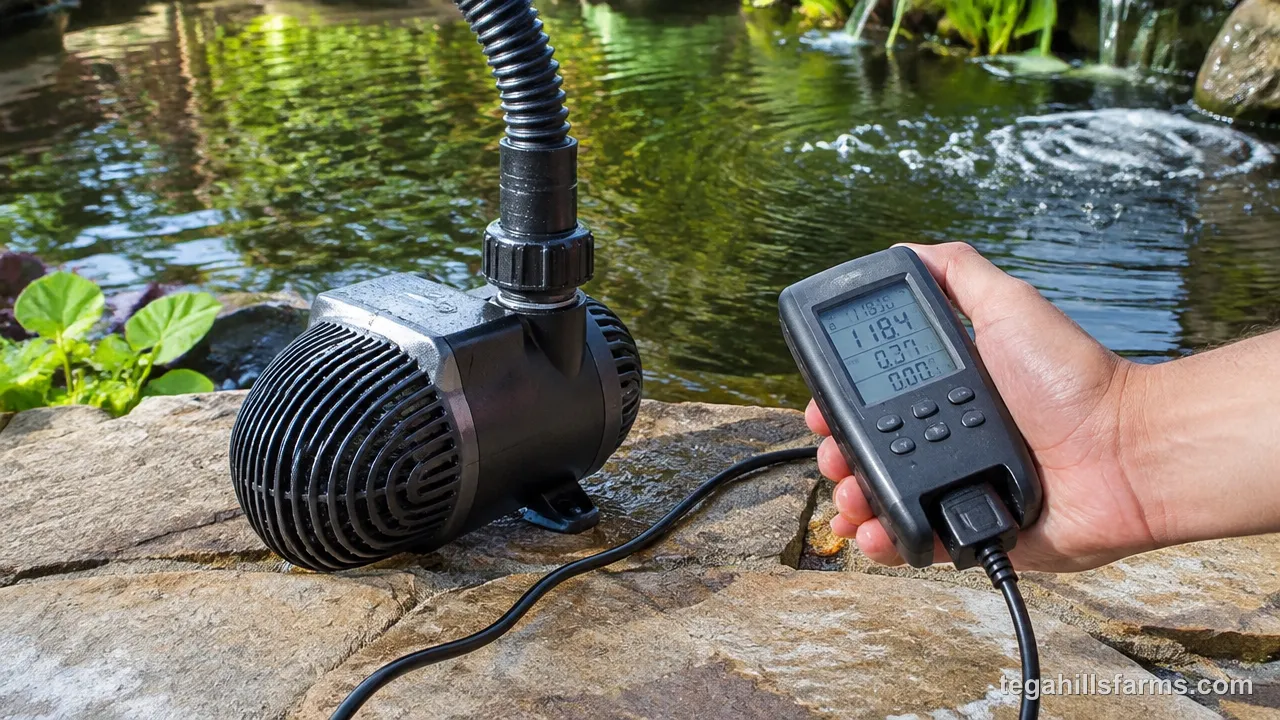
A plug-in watt meter such as a Kill A Watt shows the pump’s actual draw. You plug the meter into the outlet and the pump into the meter, and the display reads live watts and cumulative kilowatt-hours. Leave it in place for several days and the kWh total gives you a real average to multiply by your rate. The meter is an indoor device, so keep it dry and under cover, and keep the pump on its GFCI-protected outlet.
The reading often differs from the label because the plumbing changes the motor’s workload. Head height, meaning the vertical lift from the pond surface to the outlet, changes how hard the impeller works. Long or narrow tubing adds friction, and a clogged filter or intake screen chokes flow. All three shift real consumption away from the printed figure. Checking the meter once in spring and again in midsummer also shows whether a dirty filter is slowly pushing the draw upward.
What Does It Cost to Run a Pond Pump in Different Ponds?
The gap between pond types comes from how much water the pump must move and how high it has to lift it. That is why a fountain pump and a koi pond pump can differ several times over in monthly cost.
Pond type sets both numbers before you buy anything. A small decorative feature needs gentle circulation. A waterfall needs volume pushed uphill. A stocked koi pond needs high flow through filtration with no breaks. Running cost is also a separate question from how much a pond pump costs to buy, and for a pump that runs all season, electricity is the expense that keeps coming back every month.
How Much Power Does a Small Decorative Pond Use?
Small fountain and garden pond pumps are the cheapest to run, usually costing a few dollars a month or less on a typical residential rate. A front-yard pond pump moving about 660 gallons per hour (2,500 liters per hour) draws 45 watts, and many fountain pumps sit well below that.
They stay cheap because the job is light. A fountain or bubbler only lifts water a short distance, there is no fish load demanding constant filtration, and the pond volume is small. That makes leaving one running all day an easy decision. The bigger risk with a small decorative pump is buying more pump than the feature needs, which adds draw without making the fountain look any better.
What Do Waterfall and Mid-Size Garden Pond Pumps Cost to Run?
Medium pumps in the 60–80 watt range typically cost $6–10 a month to run, which puts most mid-size garden ponds with a modest waterfall in that range. They draw more than fountain pumps because a waterfall needs both volume, to form a full sheet of water across the spillway, and lift, to push that volume to the top of the falls.
Head height is the main thing that raises the bill. Every extra foot of rise means the pump must work harder to deliver the same flow at the top, so a taller waterfall often needs a larger pump just to look the same as a short one. This is also why figuring out what size pond pump you need starts with measuring the vertical lift to the top of the falls, not just the pond’s volume. A wider spillway raises flow demand in the same way, because more water has to cross it to avoid a thin, broken sheet.
Why Do Koi Ponds Cost So Much More to Run?
Koi pond setups using pumps in the 200–400 watt range typically cost $20–$50 or more a month to run, the highest of any common pond type. The costs are driven by the fish. Koi grow large and produce a heavy waste load, so the water has to pass through mechanical and biological filtration many times a day to keep ammonia in check.
That filtration only works with constant circulation. Beneficial bacteria in the filter need a steady supply of oxygenated water, and the fish depend on the same circulation for dissolved oxygen, especially on warm nights. A koi pond pump therefore runs at high flow for every hour of the season, multiplying a large wattage by the longest possible run time.
Several factors move a koi pond toward the low or high end of that range. Your utility rate, the head height of any waterfall or filter return, how clean the prefilter stays, and the efficiency of the pump motor all play a part. Season length matters too: ponds in the South and along the warmer coasts circulate for more months of the year than ponds in northern states.
Does a Pond Pump Need to Run 24/7?
Fish ponds need the pump running around the clock, while decorative water features with no fish can run on a timer without harm.
In a stocked pond, the pump supplies two things the fish cannot do without. Moving water picks up oxygen at the surface and carries it down, and the same flow keeps the beneficial bacteria in the biofilter alive. Shut the pump off overnight and dissolved oxygen falls just as fish are using it, which is most dangerous on warm summer nights when warm water already holds less oxygen.
The filter suffers too. Without flow, the bacteria colony starts to die within hours, and the water sitting in the filter turns stagnant and low in oxygen. Switching the pump back on then flushes that water into the pond, which can stress or kill fish faster than the shutdown itself.
A fountain, bubbler or fishless garden pond has none of those dependencies. Running it only during the hours you are outside to enjoy it cuts the bill directly with no downside to the water.
Which Pond Pump Types Use the Least Electricity?
Power use depends less on the pump category than on how efficiently its motor turns watts into flow, and variable-speed and solar designs offer the most room to reduce what the pump costs to run.
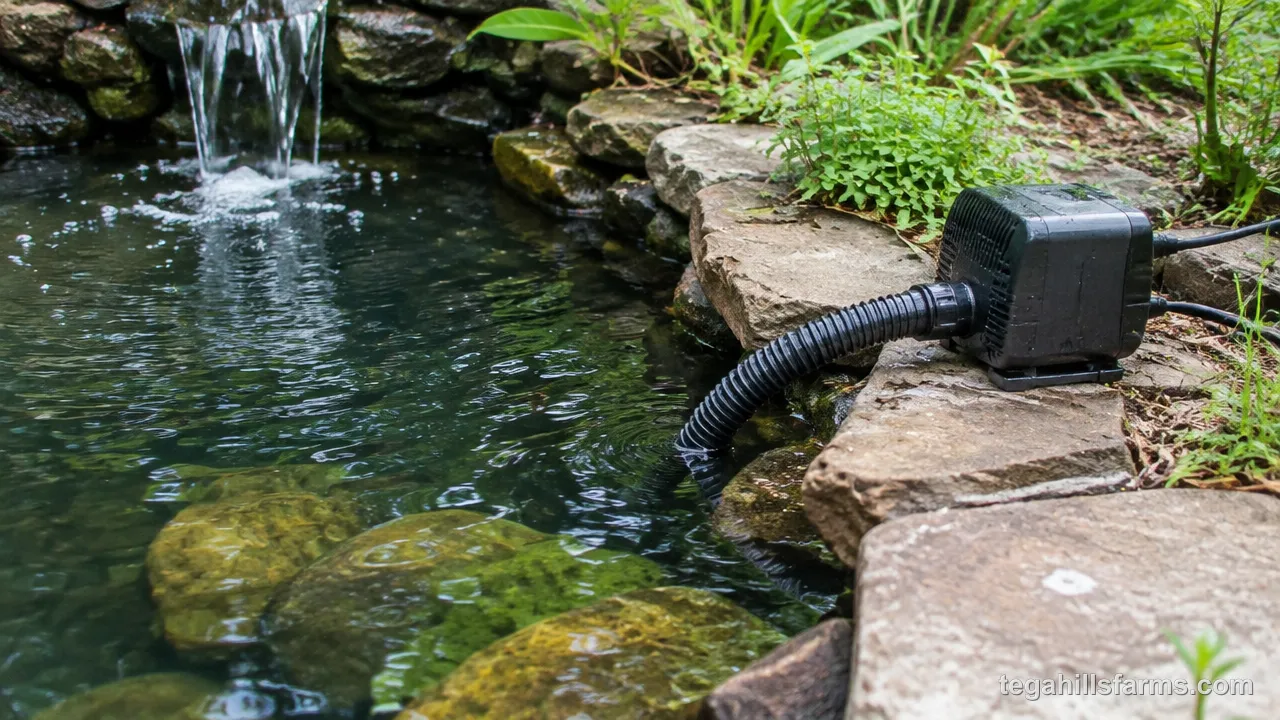
Choosing a type also means accepting its limits. Placement decides how hard the pump works for each gallon, speed control decides whether it can ease off when full flow isn’t needed, and solar power decides whether the pump runs on grid electricity at all. Each answer fits some ponds well and others poorly.
How Do Submersible and External Pumps Compare on Power Use?
Submersible pumps tend to be the more economical choice for small and mid-size ponds, while external pumps usually win on running cost in large ponds that need high flow. A submersible sits in the water, needs no priming and loses little efficiency at low head, which suits fountains, small waterfalls and garden ponds.
External pumps sit beside the pond in a dry spot and pull water through a plumbed intake. Their motors are typically built for continuous high-volume duty, so at the flow rates koi ponds demand, they often move more water per watt than a submersible of similar size. They also cost more to install and need protection from weather and flooding. Comparing submersible vs external pond pumps on running cost comes down to pond size: below the flow where an external pump pays off, the simpler submersible makes more sense.
Do Variable-Speed Pumps Really Save Electricity?
Yes. Running a pump slower cuts its draw sharply, because a pump’s power use falls faster than its flow when speed drops. A variable-speed pump can run at full output when the waterfall is on display and slow to gentle circulation overnight or during cool weather, when the pond needs less turnover.
Decorative or hybrid pond setups can save roughly 30–50% on energy with that kind of optimization. The savings depend on actually using the lower settings. A variable-speed pump left at maximum all season uses about as much as a fixed-speed pump of the same size.
For small ponds, the dollar savings shrink. A pump that already draws only a few dozen watts has little to save in absolute terms, so the higher purchase price may take many seasons to pay back. I’d put a variable-speed model at the top of the list for koi ponds and large waterfall builds, where the base draw is big enough for the percentage to matter.
Are Solar Pond Pumps a Practical Way to Cut Costs?
Solar pumps eliminate grid electricity for the pump entirely, but they only work well for decorative features that can stop when the sun does. Output follows sunlight, so flow weakens under clouds and stops at dusk unless the kit includes a battery, and short winter days cut run time across much of the country.
That makes them a good fit for birdbaths, small fountains and fishless garden ponds, where an afternoon of trickling water is the whole goal. They don’t suit koi or any stocked pond, because fish need circulation and oxygen through the night and on overcast days. When weighing solar vs electric pond pumps, the decision usually comes down to whether the pond can tolerate the pump stopping.
How Can You Lower Your Pond Pump’s Electricity Bill?
Every watt the pump draws goes toward pushing water against resistance, so cutting wasted work is what lowers the bill, and a lot of that waste starts with how the system is installed.
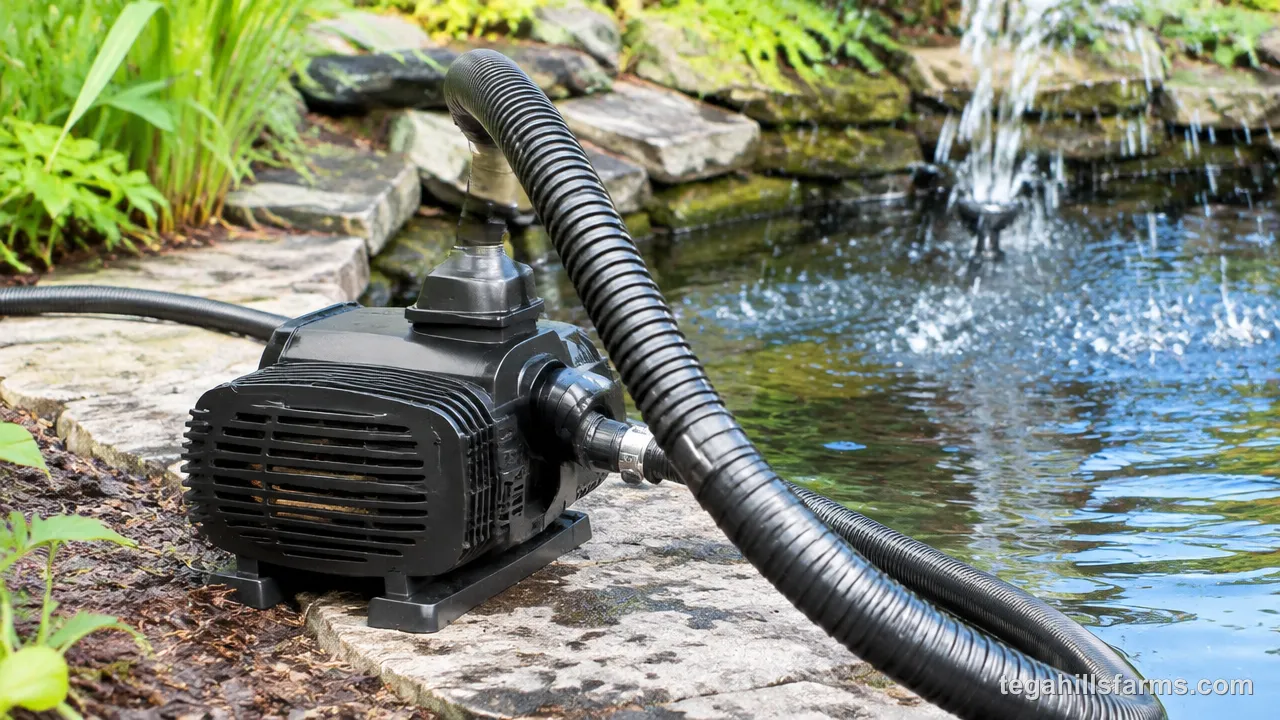
Short tubing runs, wide-diameter tubing and few elbows let the same pump deliver more water with less effort, which is why learning how to set up a pond pump properly pays off on every bill afterward. Beyond the installation, the pump’s size, its condition and its schedule each decide how much of its draw turns into useful flow.
Why Does an Oversized Pump Waste Electricity?
An oversized pump draws power for flow the pond never uses. Owners who buy too much pump often throttle it back with a valve or a narrow fitting to calm the water. The motor keeps drawing close to its full rating while it pushes against that restriction, so the bill reflects the big pump even though the pond only gets a small pump’s worth of flow.
The extra flow adds nothing to water quality. Water rushing through a filter too fast spends less time in contact with the filter media, and strong currents stir up sediment and push fish around. Matching the pump to the pond’s turnover needs and the head height delivers clearer water at a lower wattage.
How Does Pump Maintenance Affect Power Use?
A dirty pump works harder for less flow, and the meter shows it. A clogged intake screen or prefilter starves the impeller. A packed filter adds back pressure, and mineral scale or a worn impeller makes the motor work harder to move the same water. In many cases the draw creeps up while the flow drops off.
Routine cleaning keeps draw steady. Clear the intake screen whenever flow looks weak, rinse filter media in pond water so you don’t kill the bacteria, and pull the pump a few times a season to check the impeller for debris, string algae or scale. Keeping the impeller clean also bears on how long pond pumps last, since a motor that runs hot against a blockage wears faster.
When Do Timers and Upgrades Make Sense?
A timer makes sense for a decorative feature and does harm in a fish pond. On a fountain or fishless water garden, running the pump only during the hours you are outside cuts consumption in direct proportion to the hours removed. In a stocked pond, a timer on the main circulation pump cuts off the oxygen and filtration the fish depend on. A pond with a separate waterfall pump can put only that pump on a timer while the main pump keeps running.
An upgrade becomes worth considering when a watt meter shows an aging pump drawing more than a newer energy-efficient model would at the same flow. That is especially true for large pumps that run all season.
Once nights start freezing across the northern half of the country, the pump that circulated all summer begins pulling water that ice is trying to seal over, and a deicer often ends up sharing the same outlet. A pump left in a pond that freezes hard can crack its housing, while one shut off at the wrong time leaves fish under solid ice with no gas exchange.
Should You Keep Running a Pond Pump in Winter?
Whether to keep the pump running depends on your climate and whether the pond holds fish. In the South and along mild coasts where ponds rarely freeze, most pumps can keep running through winter, usually at reduced flow because cold fish eat little and produce less waste. In regions with hard freezes, fishless ponds are safest with the pump pulled, cleaned and stored indoors in a bucket of water so the seals don’t dry out.
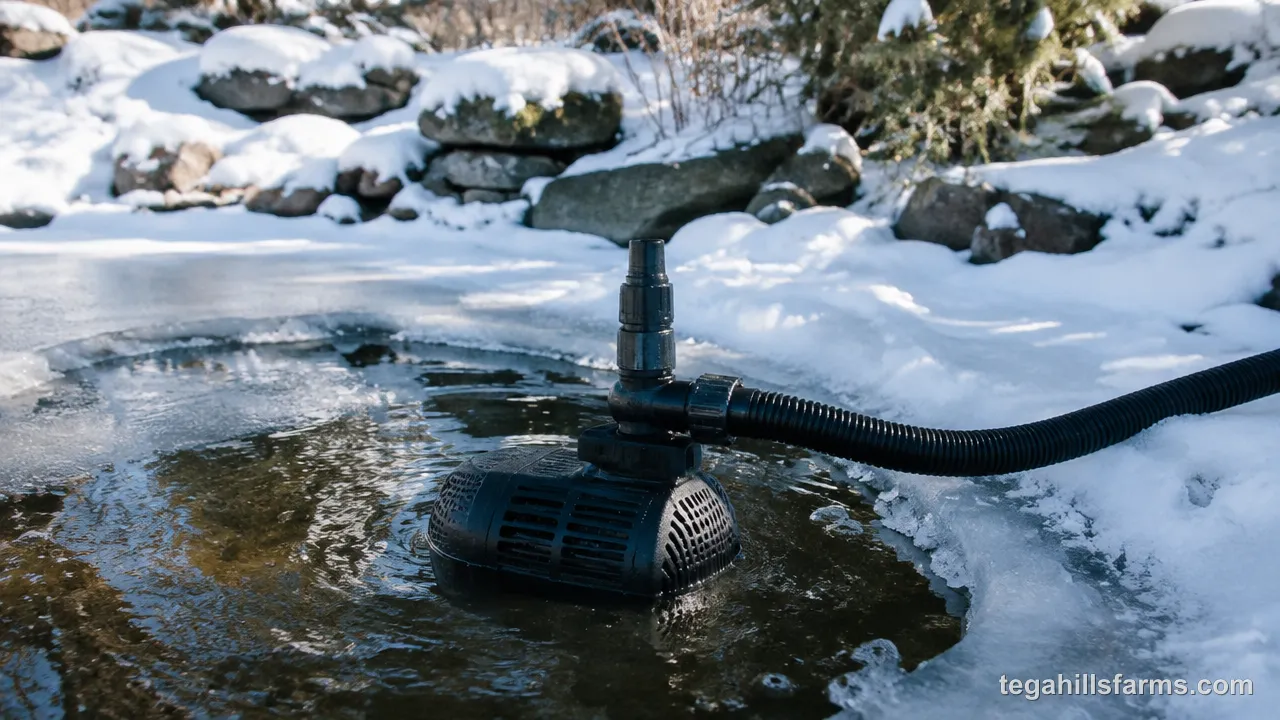
Fish ponds in cold regions need a different approach. Raising the pump off the bottom keeps it from mixing away the warmer layer of water the fish settle into. A floating deicer or pond heater keeps a hole open in the ice so gases can escape.
That heater is often the bigger electricity draw in winter, because it can outdraw the pump itself. Running a small bubbler near the surface alongside a deicer keeps the hole open with less heat. Check the outlet and cord before the first freeze, since GFCI outlets exposed to snow and meltwater trip more often.
How Do You Know an Old Pump Is Wasting Power?
The clearest sign is reduced flow that cleaning doesn’t fix. If you have cleared the intake, rinsed the filter and checked the impeller, and the waterfall still runs thin, the motor or impeller is wearing out while the pump keeps drawing power.
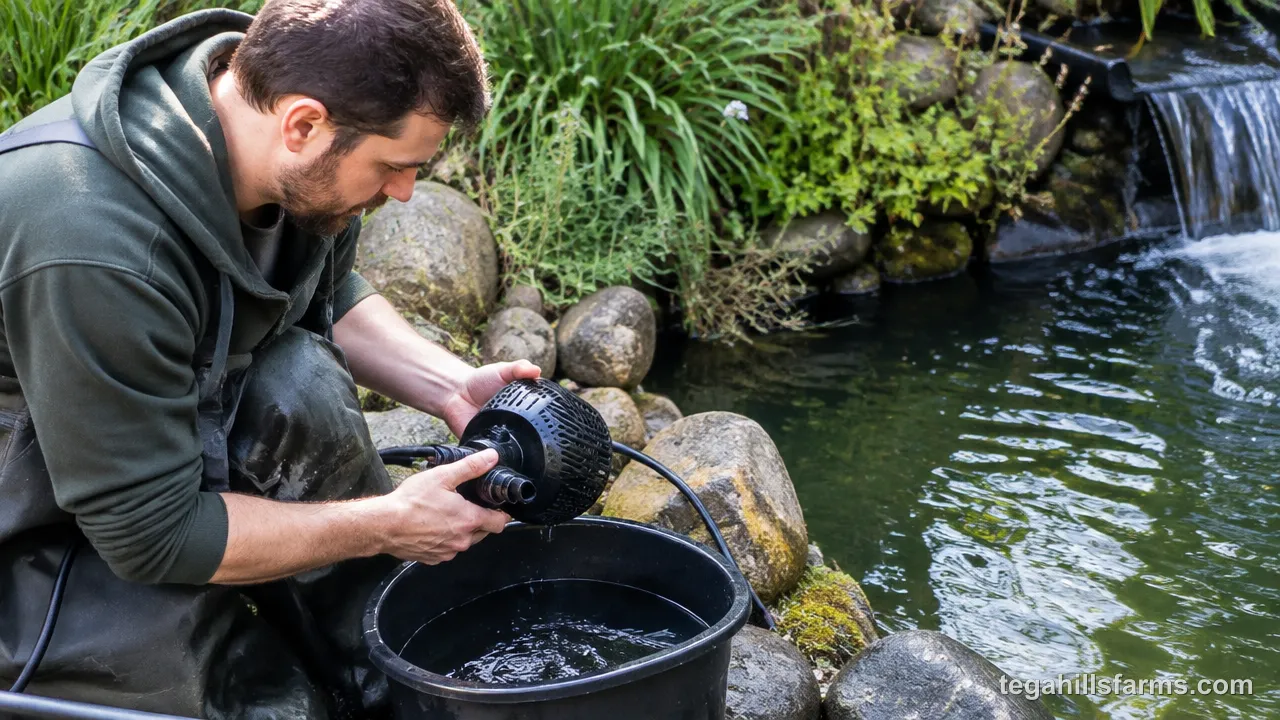
Noise and heat are the next signs. A pump that has gone from a steady hum to rattling or grinding usually has a worn impeller or failing bearings. A housing that feels hot to the touch means the motor is fighting resistance and turning more of its power into heat instead of flow. Repeated GFCI trips can point to failing insulation or seals, which is a safety problem as well as an efficiency one.
A watt meter confirms the suspicion. Compare its reading with the label or with an earlier measurement, and a rising draw paired with falling flow tells you the pump is costing more for less work.
Repair rarely beats replacement for sealed submersibles, because the impeller is often the only part you can replace. If a new impeller doesn’t bring flow and draw back in line, a new pump will usually cost less to run.
Are Low-Voltage Pumps Cheaper to Run Over the Long Term?
Low-voltage pumps usually aren’t cheaper to run, and some cost slightly more for the same flow. A 12- or 24-volt pump runs through a transformer that steps down standard 120-volt household power, and that transformer loses some energy as heat. The meter counts that loss along with the pump’s own draw.
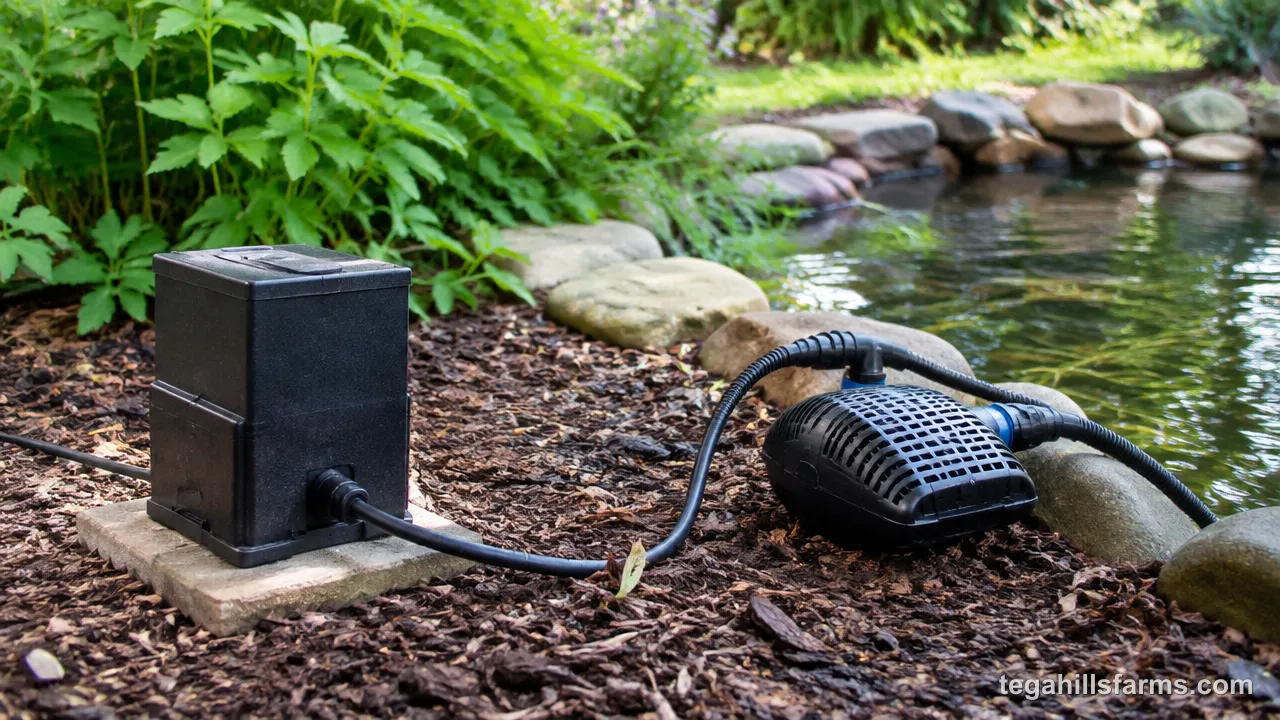
Their real advantage is safety and convenience. With only low voltage running into the water, the risk around kids and pets is lower. Many low-voltage kits also allow lighter cable runs from the transformer to the pond, which makes installation simpler in small gardens. The trade-off is limited flow: low-voltage pumps generally top out at the volumes small fountains and container ponds need.
Long-term cost also depends on lifespan. A low-voltage pump that needs replacing more often adds purchase costs that its modest wattage won’t offset. For small decorative features where safety near the water matters most, low voltage is a good fit. For mid-size garden ponds, waterfalls and anything holding koi, a standard 120-volt pump on a GFCI outlet delivers the flow at a better cost per gallon.
Pond Pump Electricity FAQs
Can I leave my pond pump on while I’m away on vacation?
Yes, and in a fish pond you should. Stopping circulation for a week risks low oxygen and a dying biofilter. Clean the intake and filter before you leave so flow stays strong, and ask a neighbor to check that the GFCI hasn’t tripped, since a tripped outlet stops the pump without warning.
Does a bigger pond pump always cost more to run?
Not always. A larger, efficient pump at the right size can move water with less wasted effort than a small, overworked pump fighting high head. Still, oversizing almost always costs more, because a pump throttled back with a valve keeps drawing close to its full rating while delivering only part of its flow.
Does a pond pump use electricity when it isn’t moving water?
Yes. A pump with a jammed impeller or a fully blocked intake keeps drawing power while delivering little or no flow, and the motor heats up in the process. A pump running dry also draws power and can burn out quickly. Low flow with a warm housing means you should unplug it and inspect it.
How can I tell if my pond pump is behind a high electric bill?
Plug the pump into a watt meter for several days and note the kilowatt-hours it logs. Scale that to your billing period and compare it with the total kWh on your statement. If the pump accounts for a large share, check for clogs, wear or oversizing before blaming other appliances.
Write Your Review
No reviews yet. Be the first to share your experience!