

A pond pump can cost a few dozen dollars or well over a thousand, and the pump type explains most of that gap. Small submersible mag drive pumps for fountains and container ponds sit at the bottom. Asynchronous pumps built for fish ponds fill the middle. High-volume submersible and external self-priming pumps for big waterfalls and streams take the top tier.
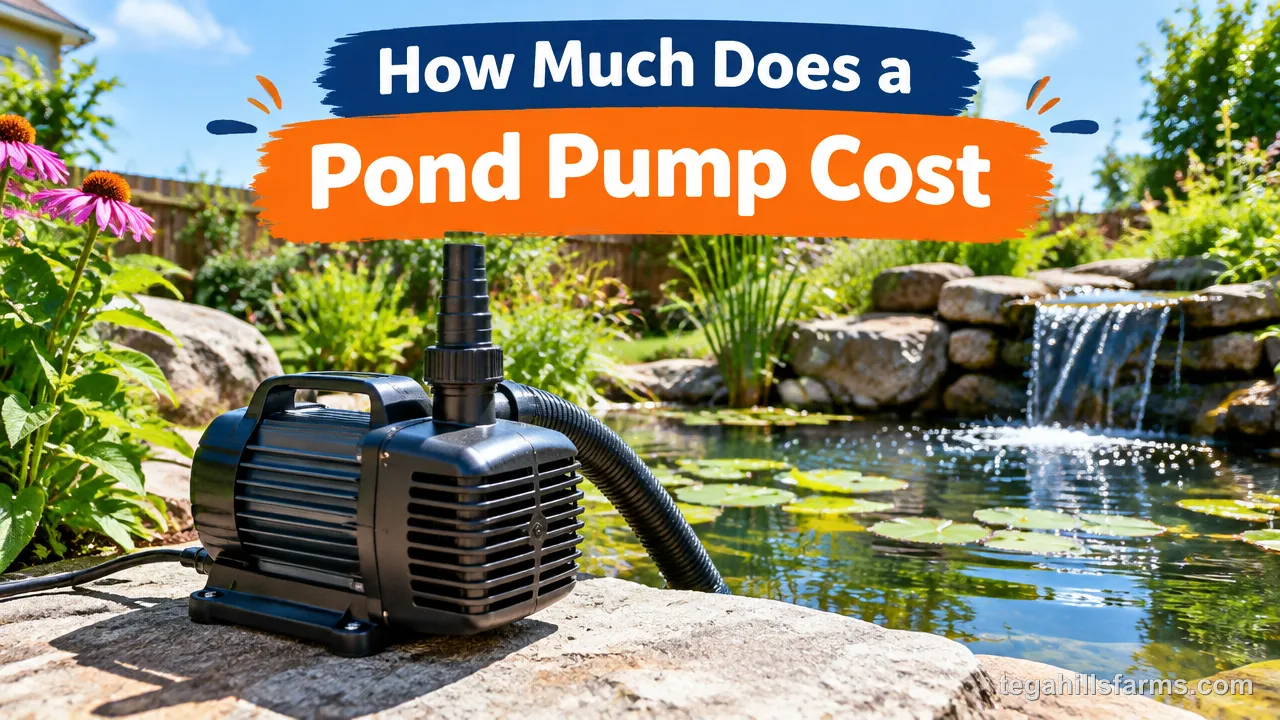
Within each tier, the price depends on flow rate in gallons per hour, the motor design, and how high the pump has to push water to reach a filter or waterfall. A pump sized to the pond keeps both the purchase price and the electric bill in check.
The purchase price is only the first cost. A pond pump usually runs around the clock, so a model that is cheap at the register can draw enough power to cost more each year than it did to buy.
What Is the Typical Price Range for a Pond Pump?
Most pond pumps cost roughly $35 to $300. The high-volume submersible and external self-priming pumps used on large waterfalls start above $1,200.
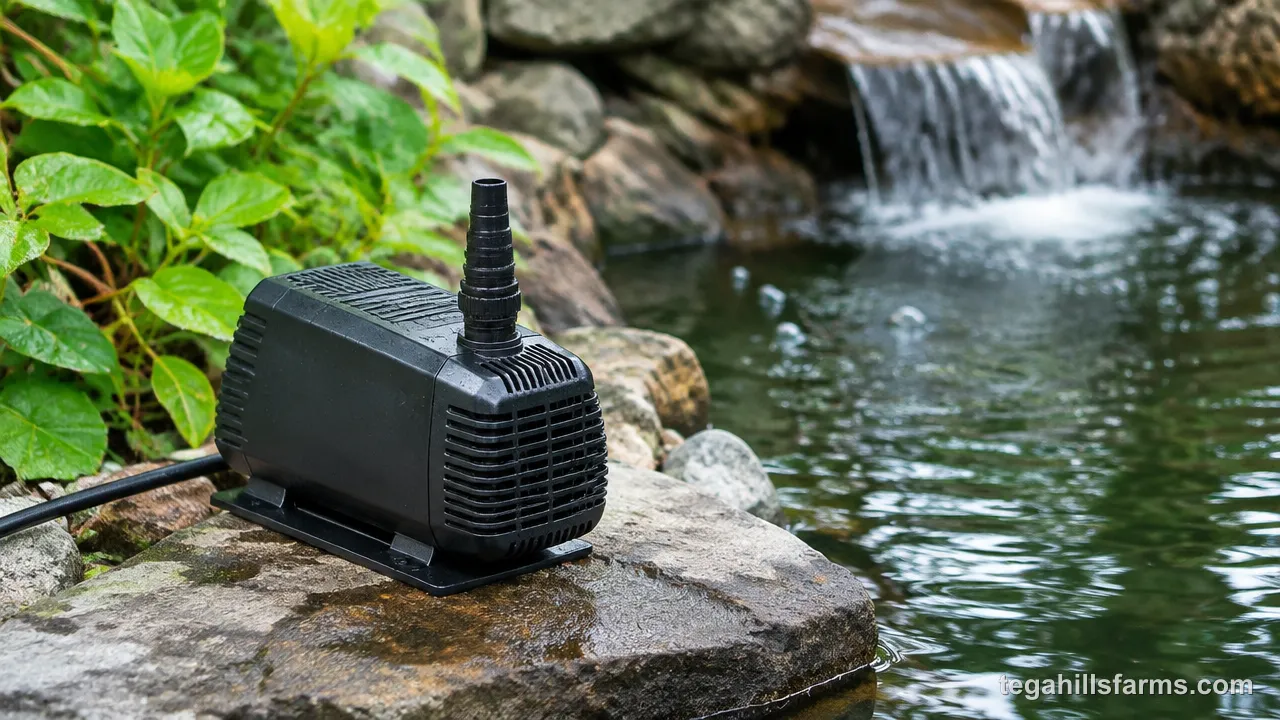
Flow rate moves the price the most. A pump that moves a few hundred gallons per hour needs only a small motor and housing. A pump that moves thousands needs a bigger motor, a heavier body and larger fittings.
Pump type comes next. An external pump is a standalone motor with its own self-priming chamber, and that costs more to build than a sealed submersible unit.
Drive design adds another layer. Asynchronous and hybrid-drive motors cost more up front than standard mag drive motors, but they draw less power.
Brand matters least. It mostly shows up as build quality and the fittings included in the box.
If you are still deciding what to buy, our guide on how to choose a pond pump explains how flow rate, head height and pump type shape the right pick.
How Much Does Each Type of Pond Pump Cost?
Pump type sets the price tier because it determines how the motor is built and how much water the pump can move. A sealed submersible pump on the pond floor is the simplest design to make. Pumps built for heavy continuous duty or very high flow need larger motors, sturdier housings and bigger plumbing connections. The same build differences also show up on the electric bill, so a pump’s tier tells you about both its purchase price and its running cost.
How Much Do Submersible Mag Drive Pumps Cost?
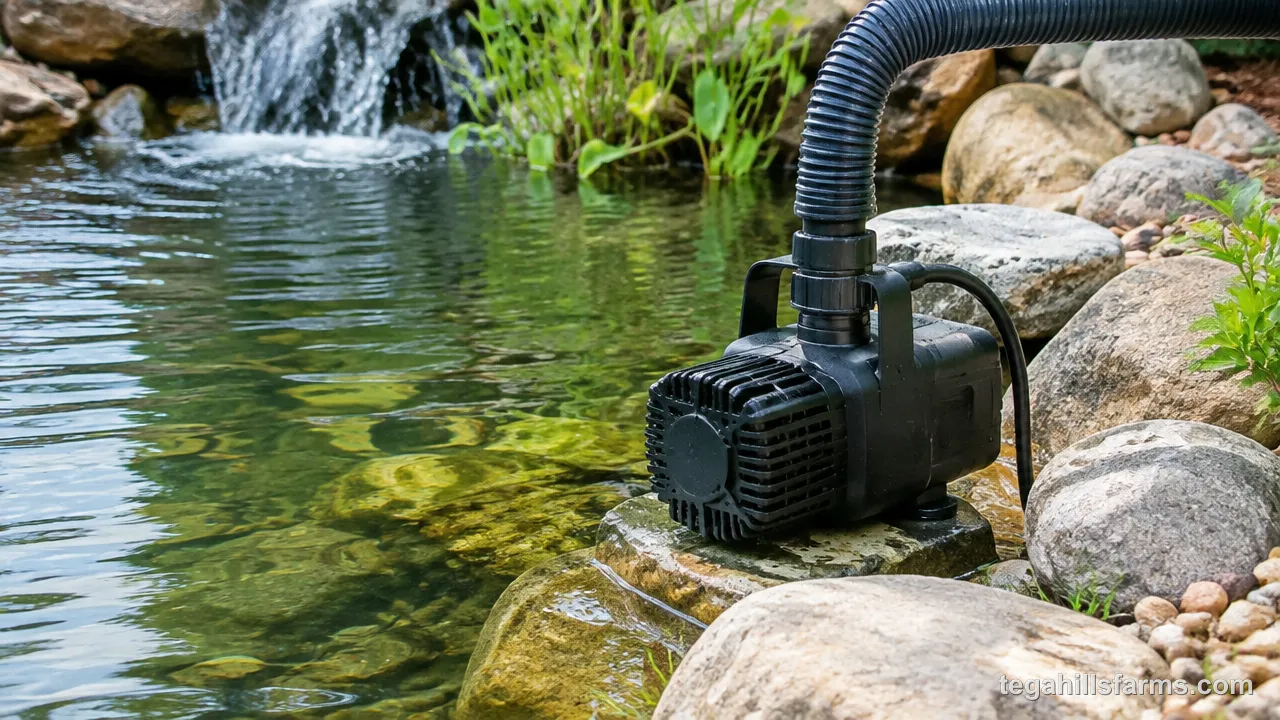
Submersible mag drive pumps are the least expensive pond pumps. They start in the mid-$30s for small decorative units and pass $100 for mid-size garden and koi pond models.
- EasyPro’s Tranquil Decor line starts at $33.99. It covers 230 to 1,000 GPH and has built-in flow adjustment.
- EasyPro’s EP Series starts at $50.25 and covers 200 to 3,200 GPH.
- Pondmaster’s Pond Mag pumps come in nine models and start at $118.99.
In a mag drive pump, a magnet spins the impeller, so there is no shaft seal to leak or wear. That simple design keeps the whole category affordable.
At the low end of this band, you get a small sealed motor sized for a fountain, a bubbler or a small preformed pond with little lift. Moving toward the upper end, you pay for more flow, the ability to push water higher to a filter or waterfall, larger outlet sizes and more fittings in the box.
Within the same flow range, brand and build quality account for the remaining difference. That includes housing thickness, cord length and how easily the pump comes apart for cleaning.
How Much Do Asynchronous and Hybrid-Drive Pumps Cost?
Asynchronous pumps start at roughly $120, and the price climbs as flow rises.
- Superior Pond’s asynchronous pump starts at $120.00 for the 1.5-inch outlet version.
- EasyPro’s asynchronous submersible line starts at $283.85 and covers 1,922 to 9,460 GPH.
These pumps cost more than standard mag drive pumps because the motor is built differently. It moves the same water with less electricity, and the body is built for nonstop duty on fish ponds and waterfalls.
Within this tier, higher flow capacity and larger outlets push the price up. Smaller models with simpler controls bring it down.
The premium pays off through power savings, which add up only on a pump that never shuts off. That is why asynchronous pumps make the most sense on koi ponds and waterfalls that run day and night.
How Much Do External and High-Volume Pumps Cost?
This top tier starts above $1,200.
- EasyPro’s TM Series high-volume submersible pumps, rated at 9,500 and 13,500 GPH, start at $1,205.81.
- EasyPro’s self-priming external pumps, from the EXP4000 to the EXP9500HP, start at $1,285.74.
The price rises with flow capacity, motor size and commercial-grade construction meant for years of continuous service.
This tier is for large ponds, long streams and tall waterfalls that need a high volume of water lifted a long way. An external pump also sits in a dry, ventilated spot beside the pond, which makes it easier to service on big systems.
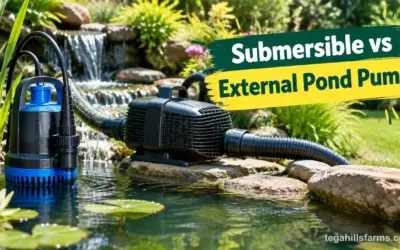
Most backyard garden and koi ponds are well served by the mid tier and never need this level of pump. Placement, noise and maintenance differ as much as price when you weigh submersible vs external pond pumps for a large build.
How Does Flow Rate (GPH) Change Pond Pump Price?
Higher gallons per hour (GPH) pushes a pump into a higher price bracket. Pumps up to about 3,000 GPH mostly cost under $150, efficient mid-to-high flow models cost a few hundred dollars, and pumps moving 9,500 GPH or more cross $1,200.
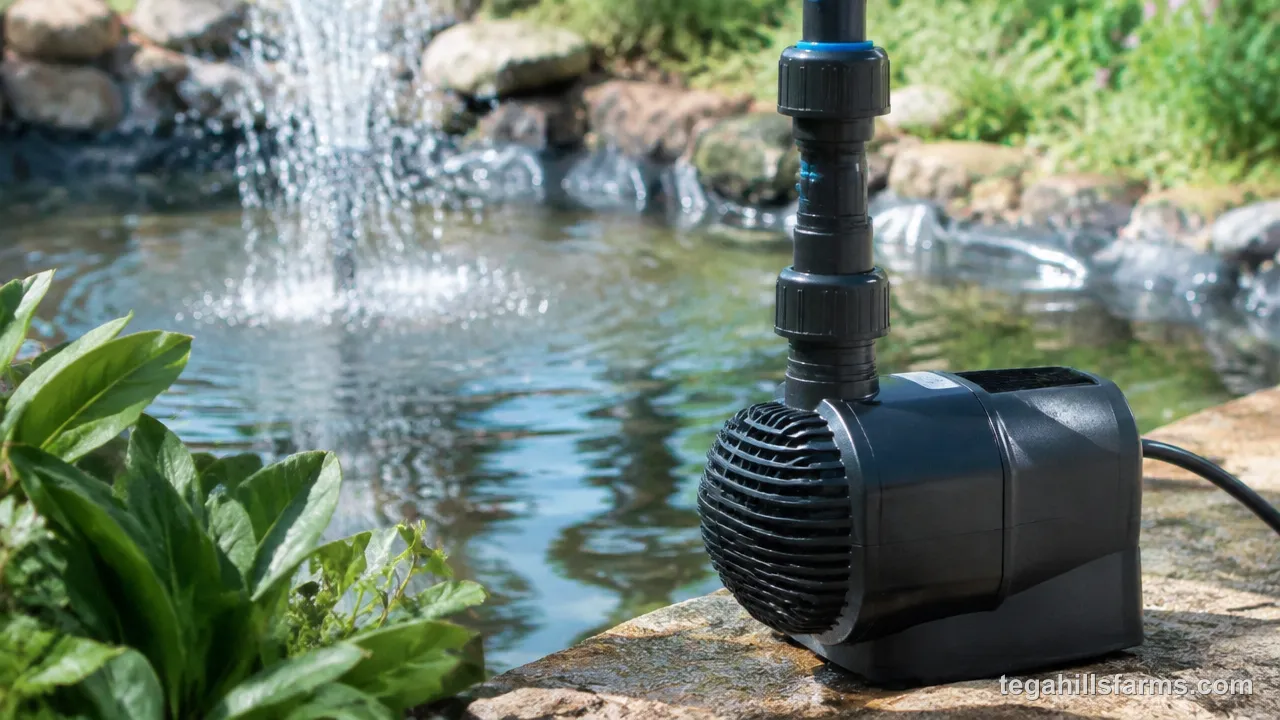
Pond pumps range from about 80 GPH for tabletop fountains to more than 10,000 GPH for large water features.
Within a bracket, three things move the price:
- Head height: a pump rated to lift water higher needs a stronger motor.
- Motor type: asynchronous motors cost more than standard mag drive motors.
- Brand: build quality and included fittings vary by maker.
Buying more flow than the pond needs costs you twice. You pay more at the register, and you pay for extra watts every hour the pump runs. A 1,000 GPH mag drive pump draws about 60 to 100 watts, while a 3,000 GPH model draws about 200 to 350 watts.
Working out what size pond pump you need before you shop keeps you in the right bracket. A pond pump gph calculator turns pond volume and waterfall height into a target flow rate.
How Much Does It Cost to Run a Pond Pump?
A pond pump’s electric bill depends on its wattage and your local electric rate, because most ponds keep the pump running 24/7. The beneficial bacteria in the filter need a constant flow of water, so the hours are fixed for any pond with a biological filter. That leaves wattage and rate to set the monthly cost. Converting a pump’s rating into kilowatt-hours shows how much electricity a pond pump uses before it ever goes in the water.
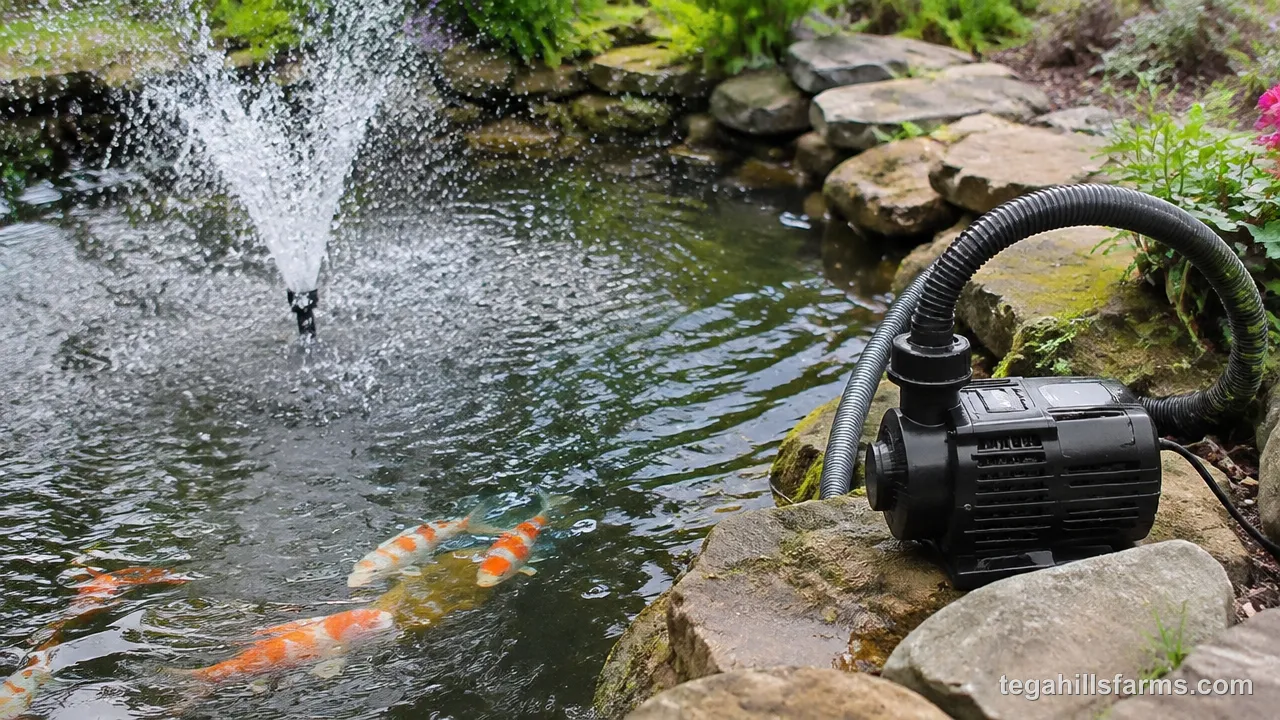
What Does a Small Fountain or Decorative Pump Cost to Run?
A small fountain or decorative pump drawing 40 to 100 watts costs about $5 to $13 a month to run continuously at the average US electric rate. At the top of that range, a 100-watt pump running 24/7 at the national average rate comes to just under $156 a year.
Three things raise or lower that figure: the pump’s wattage, your local rate and how many hours the pump runs. Tabletop fountain pumps cost pennies to run. For example, a 5-watt pump at 10 cents per kWh costs about $0.012 a day, or $4.38 a year.
A decorative feature with no fish and no biological filter doesn’t need to run all day. Putting it on an outdoor timer so it runs only when you’re outside cuts the hours, and the bill drops with them.
What Does a Koi or Garden Pond Pump Cost to Run?
A medium koi or garden pond pump drawing 200 to 400 watts costs about $26 to $52 a month to run continuously at the average US rate.
Fish need oxygenated water, and the filter bacteria that break down their waste need steady flow. That means this pump can’t go on a timer, and its electric bill is a fixed monthly expense.
Your state’s electric rate changes that expense more than most buyers expect. Here is the monthly cost of the same 300-watt pump at different rates:
| Location | Electric rate | Monthly cost (300-watt pump) |
|---|---|---|
| Louisiana | 12.44¢/kWh | $27 |
| Texas | 14.80¢/kWh | $32 |
| US average | 18.05¢/kWh | $39 |
| New York | 24.40¢/kWh | $53 |
| California | 31.01¢/kWh | $67 |
| Hawaii | 39.79¢/kWh | $86 |
Head height and plumbing resistance also matter. A pump that pushes water through a pressurized filter, a UV clarifier and long tubing needs a bigger, higher-wattage motor to deliver the same flow at the outlet.
What Does a Large Pond or Waterfall Pump Cost to Run?
A large pond or waterfall pump drawing 600 to 1,500 watts costs about $78 to $195 a month to run continuously at the average US rate. These are the biggest pond bills because wattage climbs with both flow and lift.
Several things push this cost toward the top of the range:
- A tall waterfall needs a more powerful pump.
- Long hose runs between the pump and the falls add friction the motor must overcome.
- Undersized tubing does the same, because narrow tubing creates extra resistance.
A high local electric rate multiplies all of this. The same state-to-state spread that adds a few dollars to a koi pond bill adds far more at these wattages.
Large systems are also where efficiency upgrades and right-sizing pay back fastest. Cutting a fraction of the draw on a high-wattage pump running nonstop saves more each month than the same fraction on a small fountain.
What Other Costs Come With a Pond Pump Setup?
Beyond the pump itself, budget for tubing and fittings, a pump sock or prefilter, and outdoor-rated electrical power, plus installation if you hire it out.
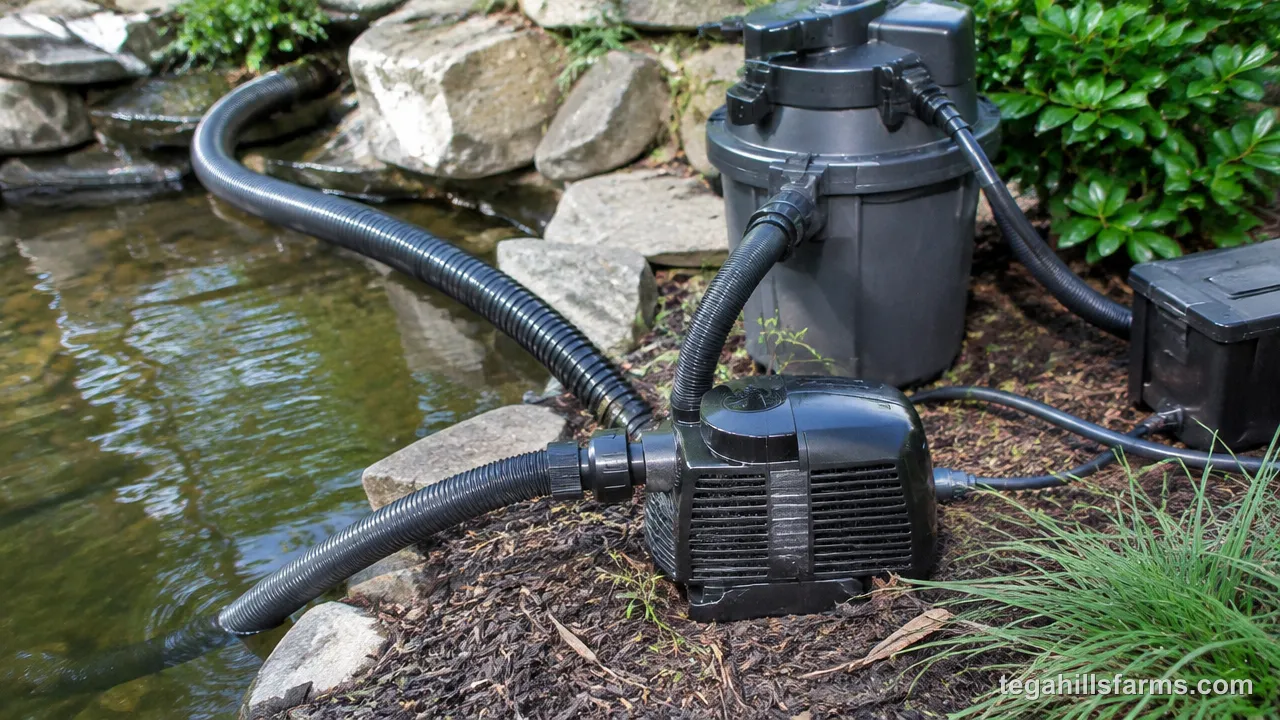
- Tubing and fittings: cost rises with diameter and length. A long run to a tall waterfall needs wider, more expensive tubing to avoid choking flow.
- Pump sock, screen or prefilter: a sock or screen is a small expense. A prefilter box or intake vault costs more but protects the pump on ponds with heavy leaf fall or fish waste.
- Electrical power: a pond pump should plug into a GFCI-protected outdoor outlet. If one is already near the pond, this costs nothing extra. If not, adding a circuit is the largest add-on for many owners and a job for a licensed electrician.
- Professional installation: pricing depends on how much digging, plumbing and electrical work the job involves.
Doing the work yourself removes the labor cost. Our walkthrough on how to set up a pond pump covers placement, tubing and power.
How Can You Lower Pond Pump Running Costs?
The biggest savings come from drawing fewer watts per gallon moved, and the pumps that do this best usually cost more to buy. Habits and sizing decisions matter too, and some of them cost nothing. Because a fish pond pump runs every hour of the year, the cheapest pump to buy is often not the cheapest to own.
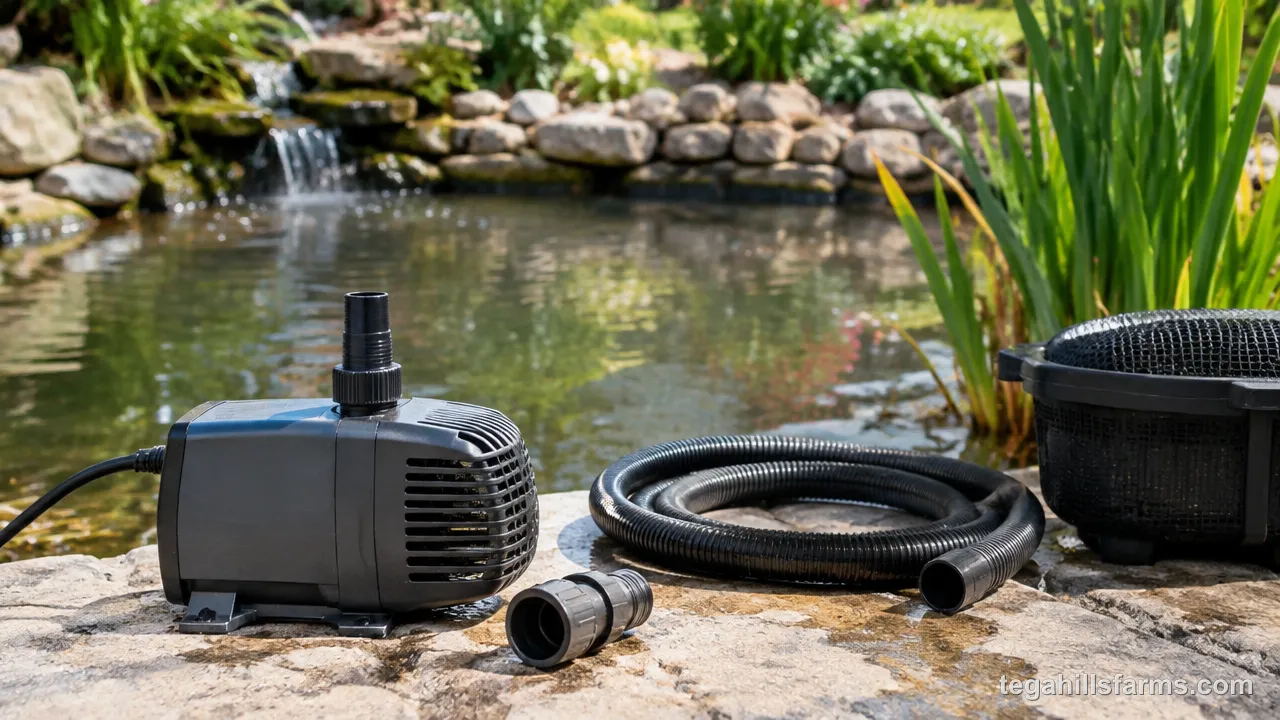
Do Variable Speed and Asynchronous Pumps Save Money?
Yes, on any pump that runs continuously.
- Variable speed pumps let you slow the pump down and run it longer to turn over the same water. That typically saves 50 to 70 percent, bringing a 300-watt pond at the average rate down to about $12 to $20 a month.
- Asynchronous and hybrid-drive pumps use 30 to 50 percent less power than older mag drive motors at the same flow. On a pond running nonstop at the average rate, that is about $35 to $70 a year (200 to 400 kWh).
The upfront premium over a comparable mag drive pump typically runs from about $100 to a few hundred dollars. It grows with flow capacity and built-in speed controls.
I’d pay that premium on any fish pond or waterfall pump that runs around the clock, because the savings repeat every month. On a small fountain that runs a few hours a day, the savings are too small to justify the higher price.
Do Right-Sizing and Seasonal Shutoff Cut Electric Bills?
Both cut wasted power, but seasonal shutoff only works on ponds without fish.
A pump matched to the pond’s volume and head height delivers the flow you need without charging you for flow you don’t. An oversized pump costs more at the register and draws extra watts every hour it runs. It can also churn the water harder than plants and fish like.
Shutting off a decorative fountain completely for the four to five coldest months cuts its yearly running cost by 33 to 40 percent. A fountain with no fish and no biological filter loses nothing by sitting idle.
Fish ponds are different. The filter bacteria die back without flow, and fish depend on circulation for oxygen. On these ponds, savings have to come from pump size and efficiency instead of switching off.
How Does Pump Maintenance Affect Running Cost?
A clogged pump sock, screen or impeller makes the pump move less water while it keeps drawing roughly its full wattage. You pay the same for less flow, and the motor runs hotter and wears faster.
A short routine prevents this:
- Rinse the pump sock or screen whenever flow drops, and more often during leaf season.
- Clear string algae and debris from the intake.
- Open the housing and check the impeller for wrapped debris or buildup.
- Keep the pump raised off bottom muck so it doesn’t pull sludge into the intake.
These tasks cost little beyond a garden hose and a few minutes. They protect both the monthly bill and the pump itself.
How Long Does a Pond Pump Last?
A pond pump’s service life depends mostly on drive type, how much debris reaches the impeller and routine upkeep, since most pumps run nonstop.
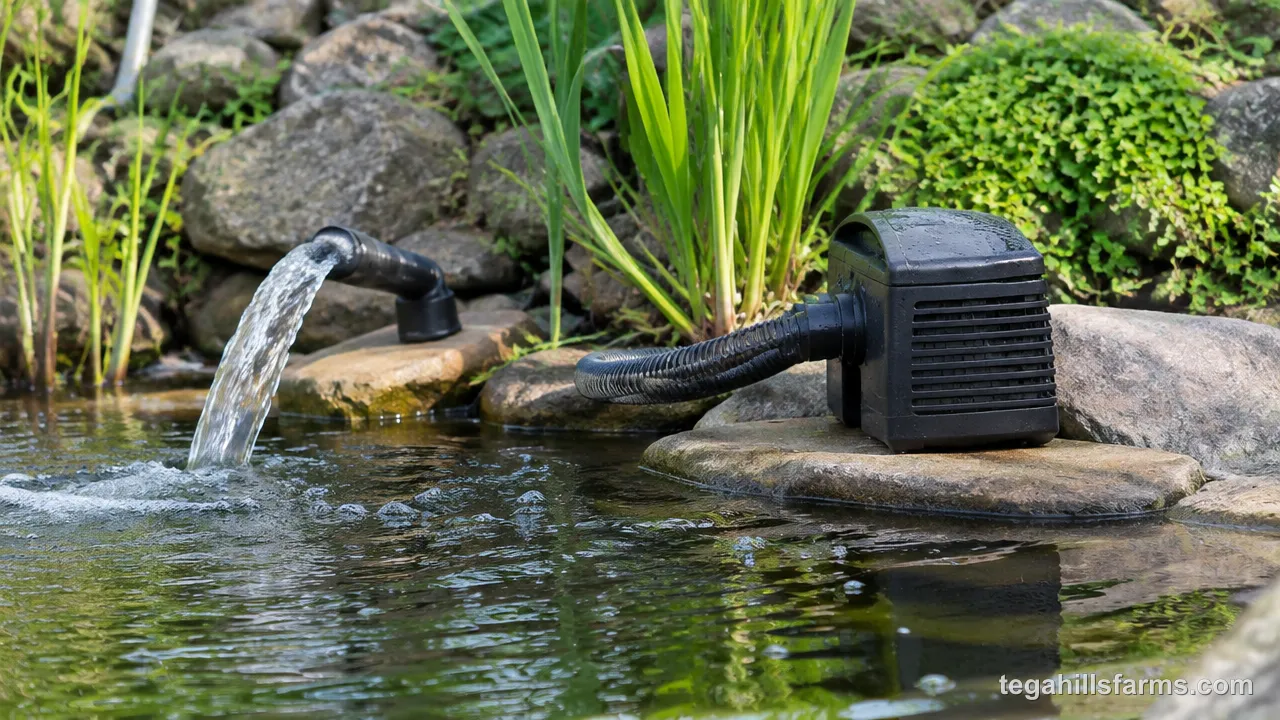
Mag drive pumps have few moving parts, but the impeller and its bearing wear with every hour of continuous use. Asynchronous and commercial-grade pumps are built for nonstop duty, with heavier components.
Debris speeds up wear in any design. A pump running in muck or without a screen grinds through its impeller faster than one drawing clean water.
Service life connects directly to price. A higher-priced pump that lasts more seasons spreads its cost over more years of use and can end up cheaper per year than a budget pump replaced repeatedly. Our breakdown of how long pond pumps last covers the warning signs that a pump is near the end.
Most pond pumps are sold on flow rate, with wattage left in the fine print, if it is stated at all. Two pumps rated for the same gallons per hour can draw very different amounts of power, and the cheaper one on the shelf is often the hungrier one on the meter. Buy on flow alone, and that gap shows up on every electric bill for as long as the pump runs.
When Does a Cheap Pond Pump Cost More Over Time?
A cheap pump becomes the expensive one in three situations:
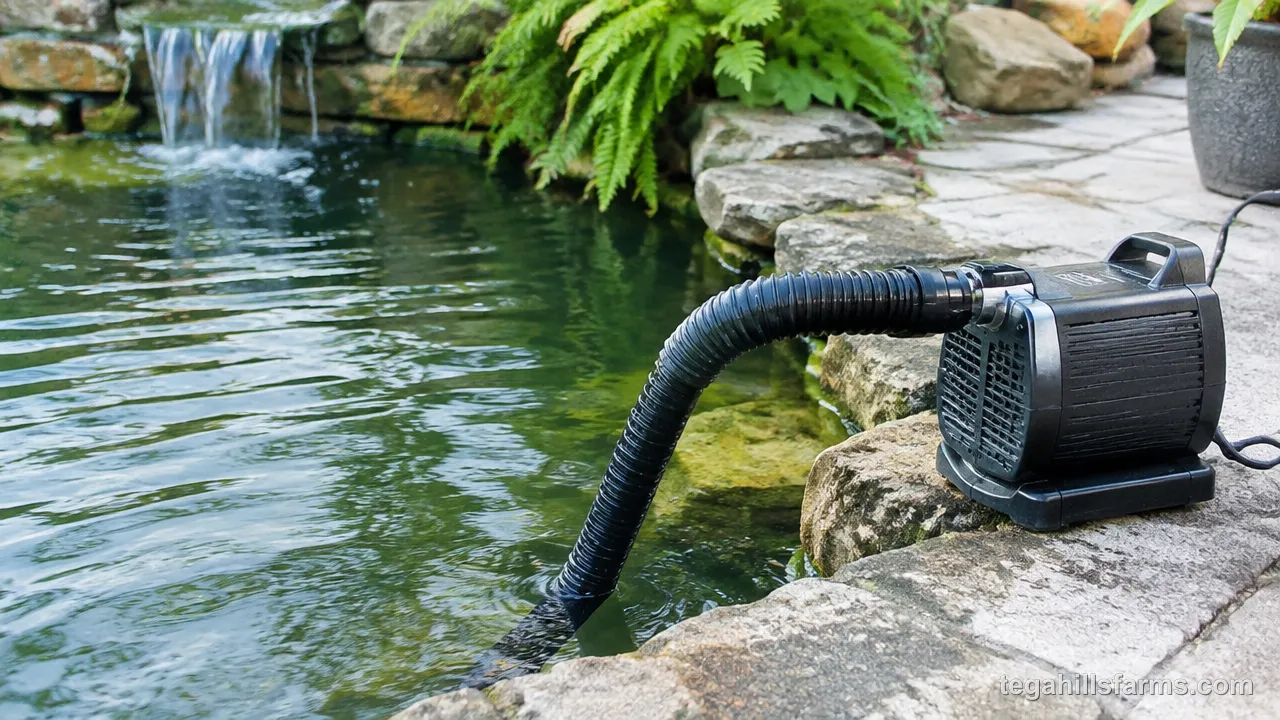
- It draws far more watts per gallon than an efficient model.
- It is undersized and strains against the pond’s head height.
- Its wattage isn’t listed, so you can’t judge its draw before buying.
Budget mag drive pumps commonly sell for under $100. Efficient asynchronous models of similar flow start in the low hundreds, and the price gap widens as flow rises.
The simplest way to compare two models is to put wattage next to flow. If a listing shows only amps, multiply amps by 120 to get watts on a standard US outlet. An efficient mag drive pump draws about 0.05 to 0.08 watts per GPH at low lift. A model well above that will cost more to run every month.
An undersized pump creates a different problem. It runs at its limit, delivers weak flow at the waterfall and often ends up replaced or paired with a second pump. A listing with no wattage or amp rating at all is a reason to keep shopping.
Are Solar Pond Pumps Cheaper to Own?
A solar pond pump has no electric bill, but it usually costs more to buy than a corded pump with the same flow. The purchase price rises with panel size and with battery backup, which keeps the pump running after the sun goes down or behind clouds.
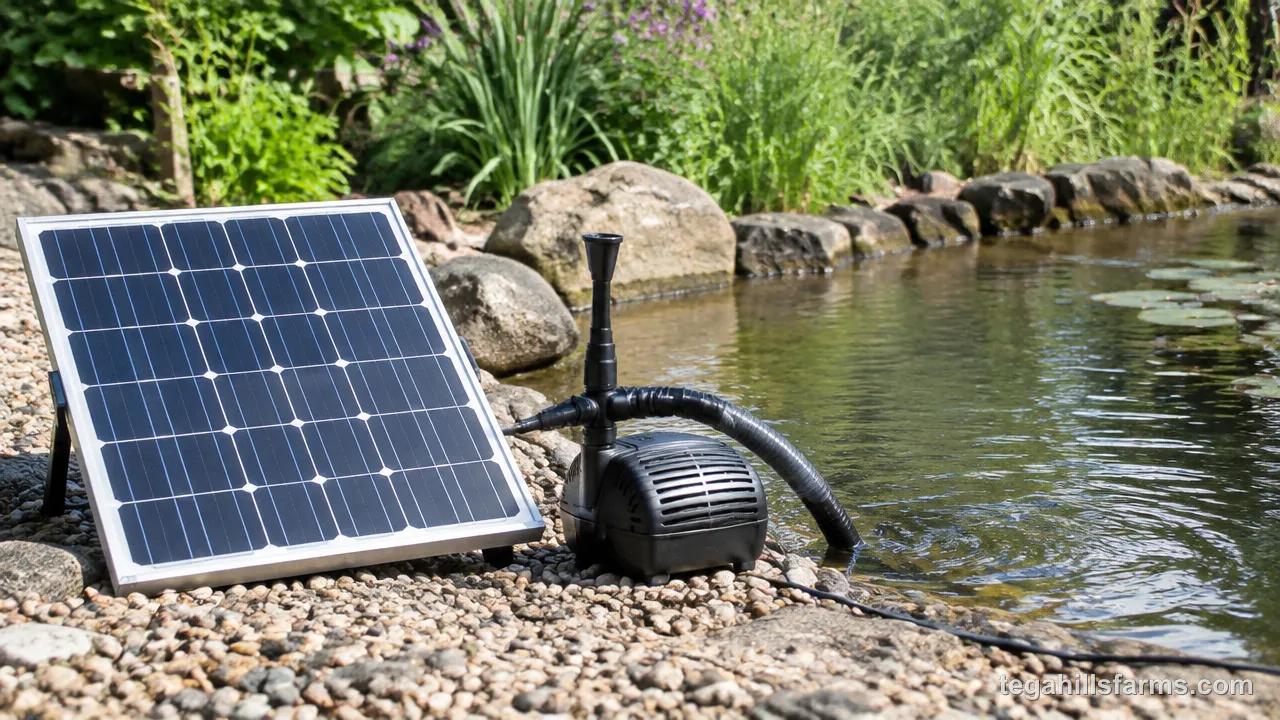
The tradeoff is performance. Solar pumps move less water and lift it a shorter distance than mains-powered pumps. Without a battery, they stop whenever the panel is shaded.
Solar works well for a small fountain, a birdbath or a feature far from any outlet, where running a new outdoor circuit would cost more than the pump. It rarely replaces a mains pump in a fish pond, because fish and filter bacteria need circulation day and night in every kind of weather. Comparing solar vs electric pond pumps comes down to whether your feature can tolerate stopping when the sun does.
Should You Keep Running a Pond Pump in Winter?
Decorative ponds and fountains without fish can usually shut down for winter. Pull the pump, clean it and store it, and you save on power while protecting the pump from ice.
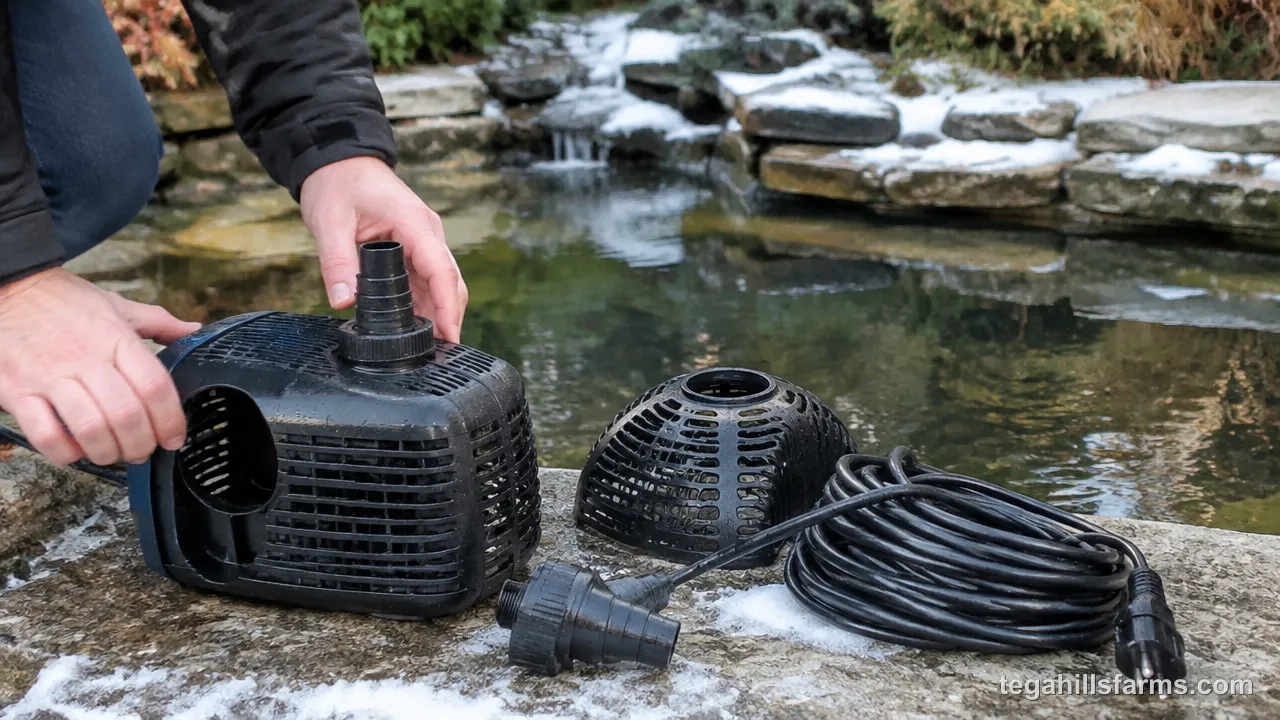
Koi ponds in cold regions are different. Fish overwinter in the deepest water, and they still need gas exchange through a hole in the ice. Some circulation or aeration keeps that opening clear, so going completely dark is a risk.
Winter running costs depend on how you set this up. Running the main pump at full flow costs the same as summer and mixes cold surface water into the warmer bottom layer where fish rest. Raising the pump to a shallower shelf avoids that mixing. Switching to a lower-wattage pump or an air pump for the cold months keeps the pond open and lowers the bill.
Winter conditions vary widely by region, so match the approach to how hard and how long your pond freezes.
Pond Pump Cost FAQs
Is it worth running a pond pump 24/7?
Yes, for any pond with fish or a biological filter. The bacteria that break down fish waste need constant flow, and fish need oxygen day and night. Stopping the pump to save power puts water quality at risk. A purely decorative fountain with no fish can run on a timer, which reduces its electric bill.
Where can you buy a pond pump?
Home Depot, Lowe’s, Amazon, Harbor Freight and specialty pond stores all sell pond pumps. Big-box stores focus on fountain pumps and small to mid-size submersible models for garden ponds. Specialty pond stores carry asynchronous, high-volume and external pumps, along with staff who can help match flow and head height to your pond.
How do big-box and specialty pond store selections differ?
Big-box stores stock pumps that move fast off the shelf, mostly entry-level submersible models and fountain kits. Specialty pond retailers carry full product lines with matching parts, efficient motor designs and larger pumps for waterfalls. If you need replacement impellers or a specific outlet size later, a dedicated pond supplier usually has them.
Is a more expensive pond pump worth buying?
It is worth it when the pump runs continuously on a fish pond or waterfall. A higher-priced efficient pump draws less power every month and is usually built for nonstop duty. For a small fountain that runs a few hours a day, a basic mag drive pump is the sensible buy.
Do you need an electrician to power a pond pump?
Not if a GFCI-protected outdoor outlet already sits within reach of the pond, since most pumps simply plug in. If no outlet is nearby, adding a new outdoor circuit is a job for a licensed electrician. Check your local code first, because outdoor wiring near water has specific requirements.
Write Your Review
No reviews yet. Be the first to share your experience!