

The right pond pump size is the flow, in gallons per hour (GPH), that a pump still delivers at your pond’s real lift. That flow has to be high enough to pass the whole pond through the filter about once an hour and, if you have a waterfall, to cover the full width of the spillway. You need three measurements to find it: pond volume in gallons, waterfall weir width in inches, and head height in feet.
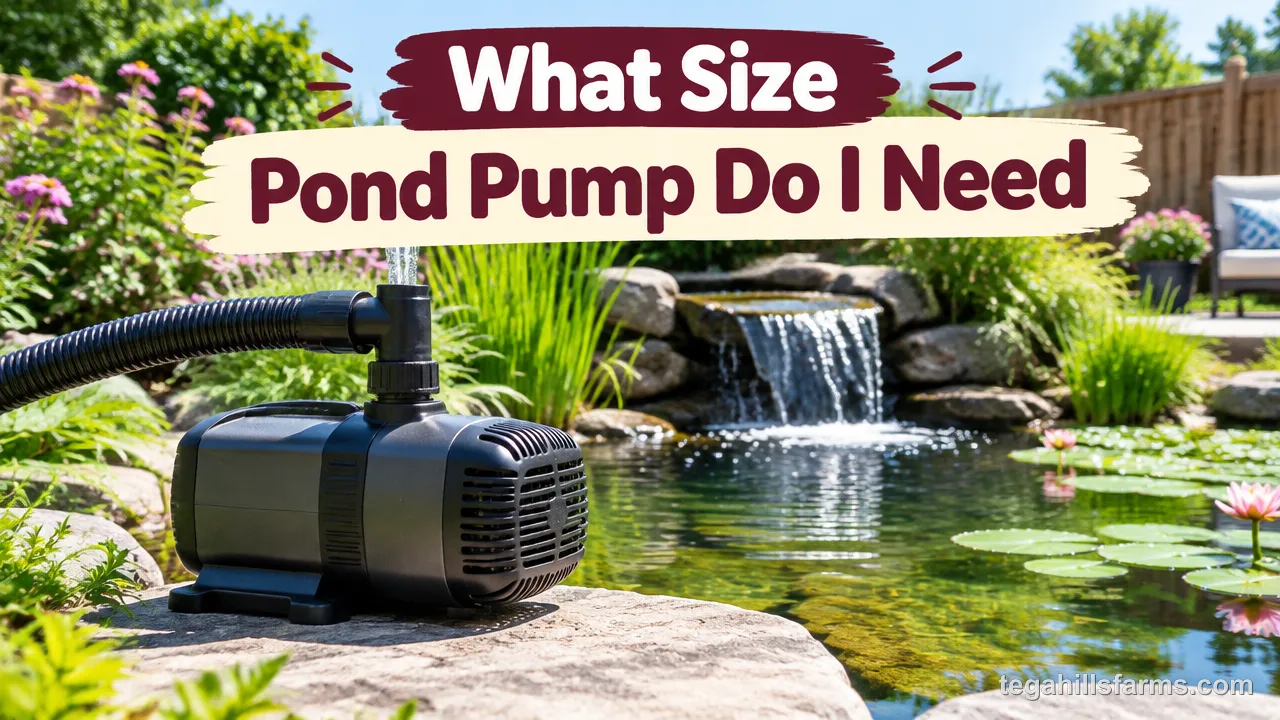
Volume sets the minimum flow for filtration. Weir width sets the flow the waterfall needs to look right. Head height determines how much of the pump’s advertised output is left once the water has climbed to the outlet and pushed through tubing and fittings.
The number printed largest on the box is measured with zero lift. Most buyers size from that figure, and then they find a thin waterfall and a filter that never clears the water. A pump only does the job if its output at your actual head height still meets your target.
What Does Pond Pump Size Actually Mean?
The figure that matters is flow rate in gallons per hour (GPH) at a stated head height, not the wattage or the size of the housing. Manufacturers usually print the maximum GPH, which is what the pump moves when the outlet sits level with the water surface and there is no tubing. In a real pond, water has to rise to a filter or a waterfall and travel through hose, so the delivered flow is always lower than that headline figure.
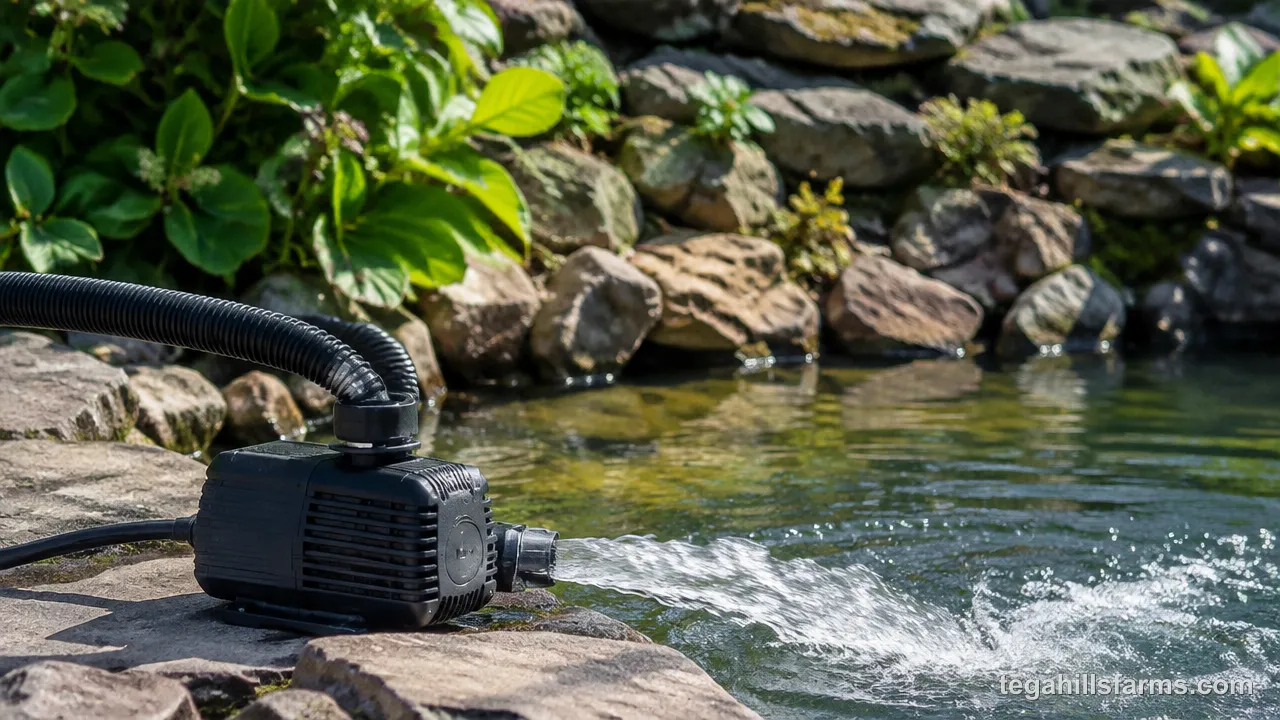
On the label or spec sheet, look for a flow chart or a short table that lists GPH at several heights, such as 3, 5 and 10 feet. That table tells you what the pond will receive. Once you know what flow rate means in practice, the rest of how to choose a pond pump comes down to matching that number to your pond, your waterfall and the lift your water has to travel.
How Do You Find Your Pond Volume in Gallons?
Multiply length × width × average depth in feet, then multiply the result by 7.48, the number of gallons in one cubic foot. That basic formula works for ponds with straight sides. Free-form and terraced ponds need correction factors, because their measured maximums overstate how much water they hold.
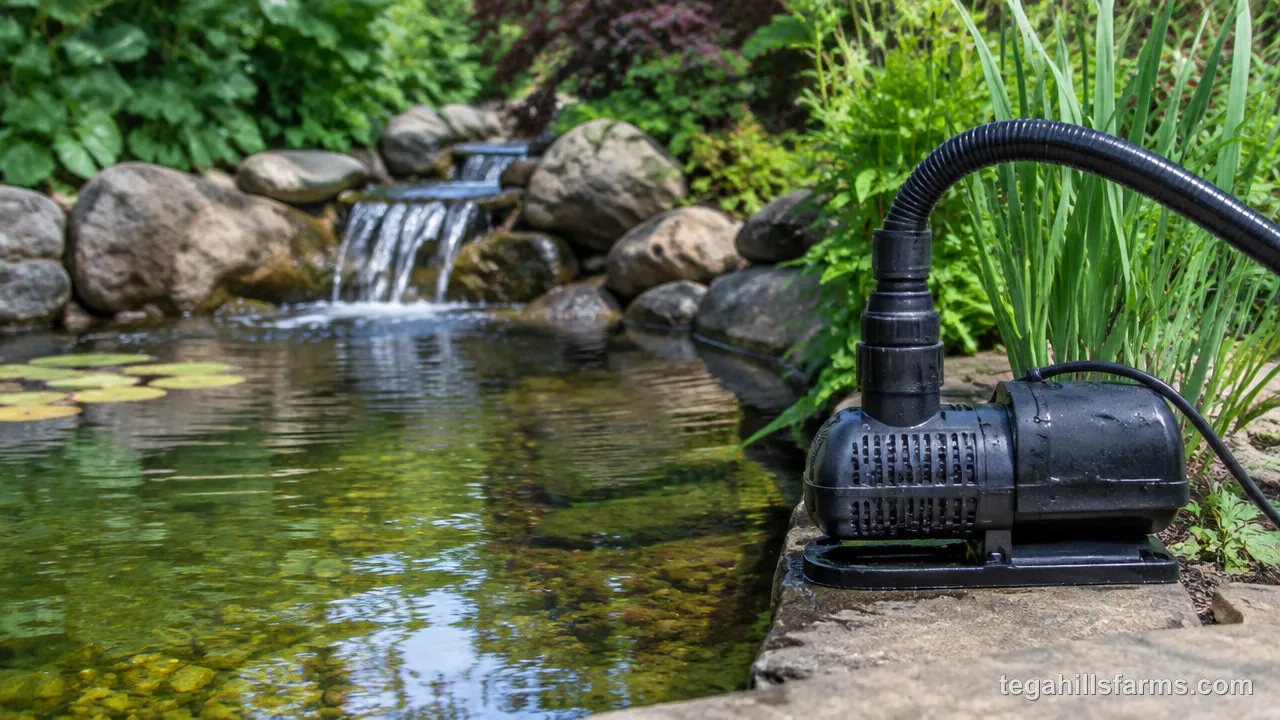
Volume is the baseline for every later step. If you overestimate gallons, you buy a pump that churns the pond and wastes electricity. If you underestimate, the filter falls behind and the water turns green by midsummer. A pond pump gph calculator runs the same arithmetic, but its answer is only as accurate as the measurements you enter, so take them with a tape measure rather than guessing.
How Do You Calculate Volume for Rectangular and Round Ponds?
For a rectangular pond, measure the length and width at the water line. Then take depth readings in several spots and average them, because few ponds have a perfectly flat bottom. Multiply length × width × average depth to get cubic feet, then multiply by 7.48 to get gallons.
Here is a worked example. A pond 10 feet long, 6 feet wide and 2 feet deep on average holds 10 × 6 × 2 = 120 cubic feet. Multiply 120 by 7.48 and you get about 898 gallons.
For a round pond, use 3.14 × radius × radius × average depth. The radius is half the diameter. An 8-foot-wide round pond that averages 2 feet deep works out to 3.14 × 4 × 4 × 2, or about 100 cubic feet. That converts to roughly 752 gallons.
The conversion to gallons is necessary because pumps and filters are rated in gallons per hour. A volume in cubic feet can’t be compared directly against either rating.
How Do You Measure an Irregular or Multi-Level Pond?
For a free-form pond, measure the longest length, the widest width and the deepest point. To estimate volume, multiply ⅔ × max length × max width × max depth, then multiply by 7.48. The ⅔ factor accounts for sloped sides and curves, since the pond doesn’t reach its maximum dimensions everywhere. For example, a kidney-shaped pond measuring 12 feet by 8 feet with a 3-foot deep point holds about ⅔ × 12 × 8 × 3 = 192 cubic feet, or roughly 1,436 gallons.
For surface area alone, use max length × max width × 0.85. Surface area is useful when you split a pond into zones.
Ponds with plant shelves and a separate deep zone are easier to measure in sections. Work out the shelf area and multiply it by the shelf depth. Then do the same for the deep zone, and add the two volumes together. If you used the deepest reading across the whole pond instead, you would inflate the total, because the shallow shelves don’t hold that much water. An inflated total pushes you toward a pump that is too large for the pond.
How Many GPH Does a Pond Need for Filtration?
Most ponds need flow that moves the entire volume through the filter once per hour, measured at your real head height. Koi or heavily stocked ponds need more than that. This turnover target decides the minimum size of pump you can buy, and it matters more than any waterfall effect because it controls water quality.
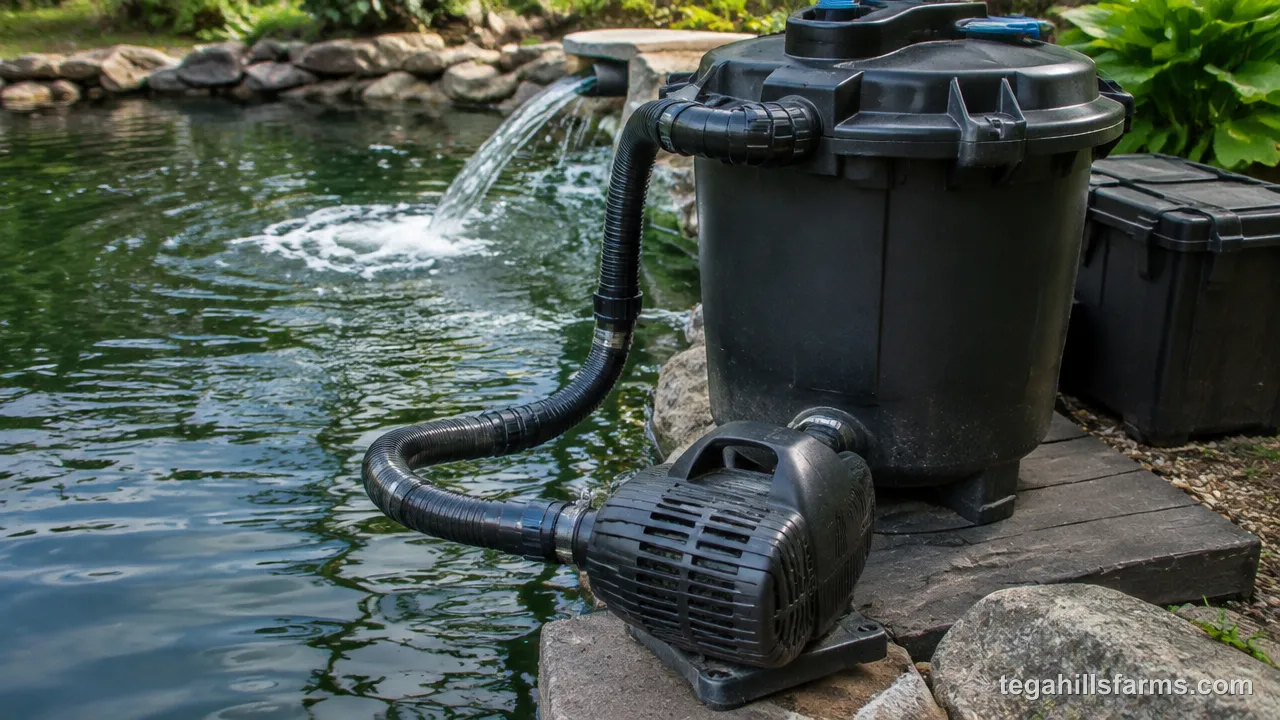
The once-per-hour baseline assumes a lightly stocked pond. Fish load changes the target, because waste builds up faster than a slow turnover can clear it. Before you shop, decide whether you’re sizing for the pond you have now or for the fish you plan to keep later. That choice moves the target figure.
How Often Should Pond Water Circulate?
For a typical decorative pond with a modest number of fish and good plant cover, the usual target is to circulate the full volume once every hour. A 600-gallon pond, by that guideline, needs about 600 GPH delivered at the filter or waterfall outlet.
The reason is mechanical. A filter only cleans the water that actually passes through it. If circulation is slow, debris settles in corners and dead zones, decomposes there and feeds algae. Circulation also helps oxygen. Moving water exchanges gas at the surface, and a waterfall or fountain adds more of that exchange, so fish get more oxygen on warm nights when dissolved oxygen drops.
Turnover once per hour is a minimum, not a ceiling. Ponds in full sun, ponds with few plants and ponds that collect leaves all benefit from somewhat faster circulation, because they produce more organic load than a shaded, well-planted pond.
How Many GPH Does a 1,000-Gallon Pond Need?
A lightly stocked 1,000-gallon pond needs about 1,000 GPH delivered at your actual head height. That last condition matters. A pump sold as “1,000 GPH” reaches that figure only at zero lift, so once water climbs to a filter or waterfall, it will fall short of the target. Read the flow chart and choose a pump whose output at your head height is at least 1,000 GPH.
Koi change the calculation. They grow large, eat heavily and produce far more waste than goldfish, so a koi pond should turn over more than once an hour. Use the filter manufacturer’s koi rating as your guide, and make sure the pump doesn’t exceed the filter’s maximum flow.
Around 1,000 gallons is also where external pumps start to make sense, especially if the filtration is complex. A pump that meets the target at your real head height with some margin, trimmed back with a valve, is a better buy than one that only reaches the target on paper.
How Much Flow Does a Waterfall Need?
Plan on 100 GPH per inch of weir width for a smooth sheet of water, about 50 GPH per inch for a gentle trickle and 200 GPH per inch for a heavy Niagara-style curtain. The width of the spillway decides the flow, so it is the one measurement to take before you choose a pump for a water feature.
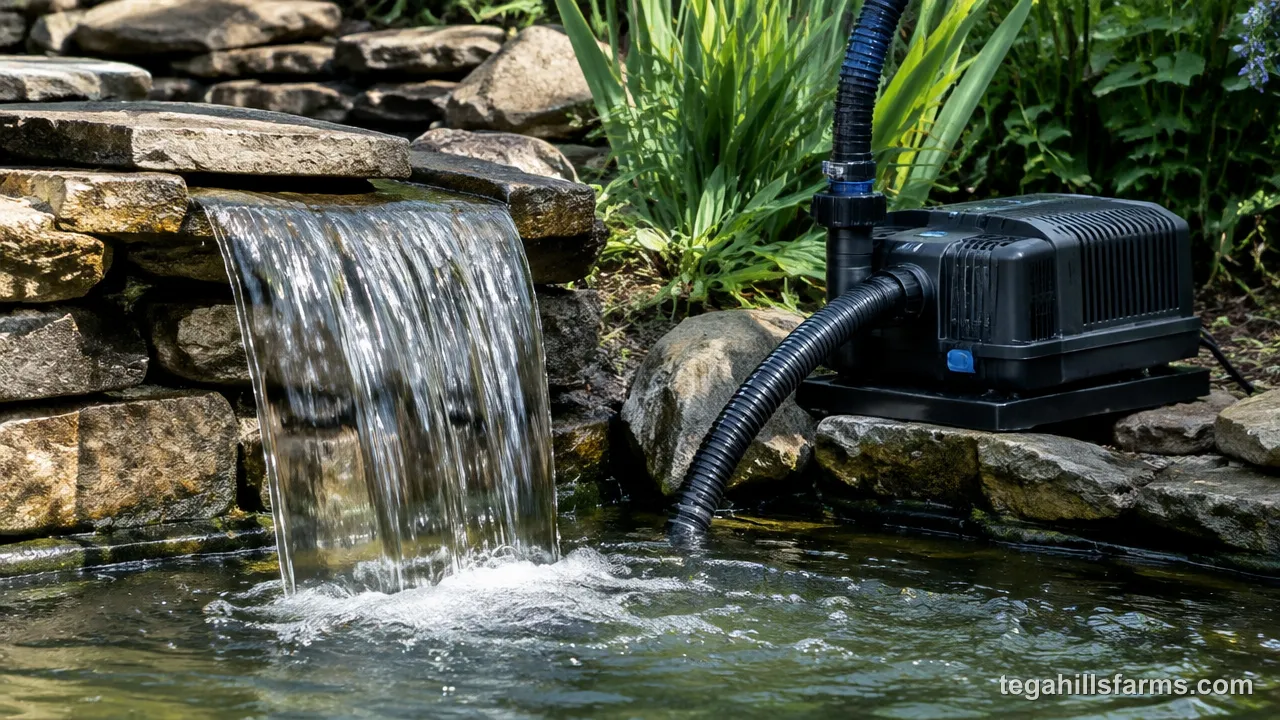
When the same pump also has to serve the filter, the waterfall figure and the filtration figure need to be reconciled. How you combine them depends on how the plumbing is routed.
How Does Weir Width Set Waterfall GPH?
Measure the inside width of the spillway lip, which is the edge the water pours over. Then multiply that width in inches by the flow rate for the look you want: 50 GPH per inch for a trickle, 100 for a full sheet and 200 for a Niagara-style flow. A 12-inch weir running a smooth sheet needs about 1,200 GPH.
Some sources quote waterfall flow per foot of width rather than per inch. Their figures can look higher, but they aren’t in conflict with the per-inch rates. Converted to feet, the same rates are 600 GPH per foot for a trickle, 1,200 for a sheet and 2,400 for a Niagara flow. Convert everything to one unit before you compare advice from different sources.
That GPH has to arrive at the top of the falls, not at the pump outlet. If you size from the zero-head rating, the result is a waterfall that breaks into separate streams instead of a clean sheet, because the lift up to the spillway takes a large share of the pump’s output.
Can One Pump Run Both a Waterfall and a Filter?
Yes, and in many ponds one pump runs both. Whether you add the two flow requirements together depends on the plumbing.
In a series setup, the pump feeds the filter and the filtered water returns over the waterfall. The same water does both jobs, so the pump only needs to meet the larger of the two figures. If the waterfall needs 1,200 GPH and the pond needs 900 GPH of filtration, a pump delivering 1,200 GPH at the waterfall height covers both. The filter must also be rated for that flow.
In a split setup, a tee divides the flow so part goes to the filter and part goes to the waterfall separately. In that case the needs add up, and the pump has to deliver the sum.
Two pumps make more sense when the waterfall needs far more flow than the filter can handle, or when you want to shut the falls off at night while filtration keeps running. In either situation, check each pump’s flow chart at its own head height.
How Does Head Height Change a Pump’s Real GPH?
Every foot of vertical lift plus tubing friction subtracts from flow, so a pump delivers less than its zero-head rating as soon as water climbs to a filter, waterfall or fountain. The combination of lift and friction is called total dynamic head, and it is the figure to look up on the pump’s chart.
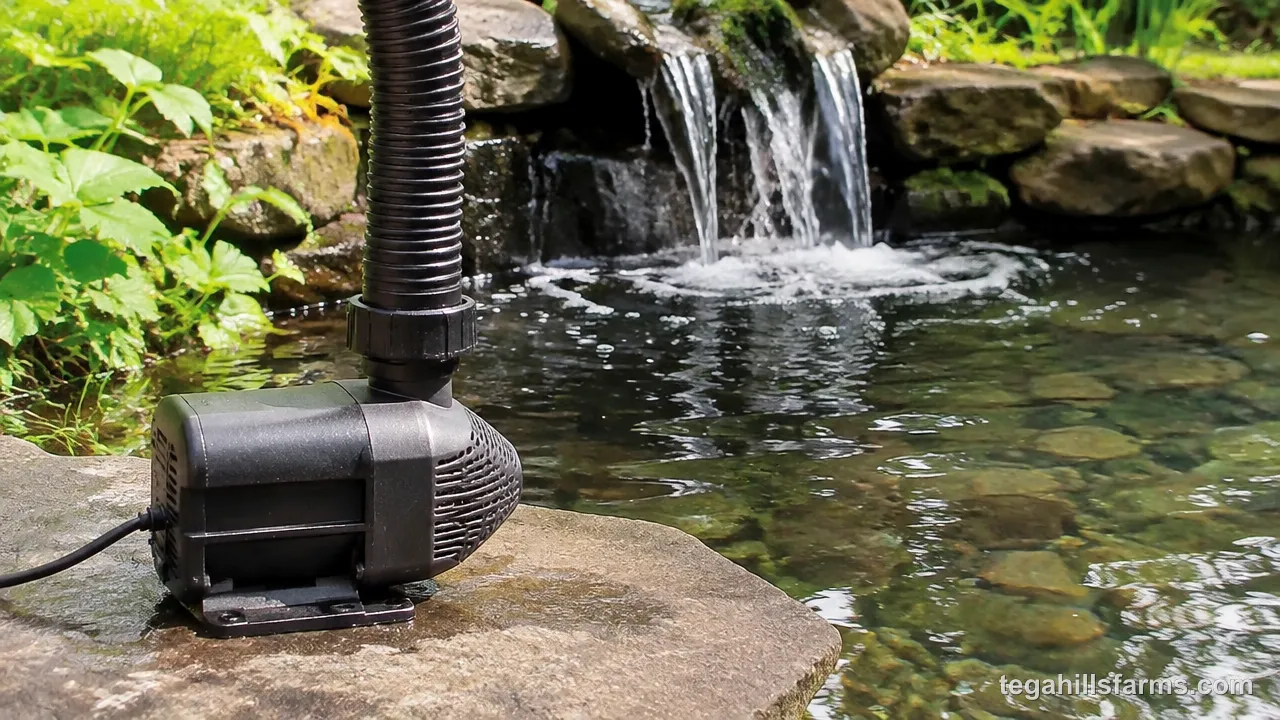
Most sizing mistakes happen at this step. A pump that matches your volume on the box can still underperform in the pond once lift, hose length and fittings take their share of the flow.
What Is Head Height and Why Does It Reduce Flow?
Head height is the vertical distance from the pond’s water surface to the highest point the water is discharged, such as the waterfall lip, the filter inlet or the fountain nozzle. For a submersible pump, measure from the water surface, not from the pump on the bottom, because the water above the pump balances the water inside the hose.
Lift reduces flow because the pump has to work against gravity. The higher it pushes, the less water it can move per hour. Friction makes this worse: every foot of hose and every fitting adds resistance, which acts like extra height.
As an example, a pump rated at 500 GPH at 0 feet of head might deliver only 200 GPH at 5 feet. That is less than half its rated output from a modest climb. Total dynamic head combines the vertical lift with the friction allowance, and that total is the height to use when reading any pump chart.
How Do Tubing Length, Diameter and Fittings Affect Output?
For long runs, add 1 foot of head for every 10 feet of tubing. A pump pushing through 30 feet of hose to a waterfall 3 feet above the water is working against about 6 feet of total head, not 3.
Diameter affects flow even more. Narrow tubing forces the same volume of water to move faster, and higher velocity creates much more friction. Use tubing at least as wide as the pump’s outlet. On long runs or high-flow koi systems, go up a size, because the extra width recovers flow that small hose would waste.
Fittings add resistance of their own. Each elbow, check valve, ball valve, UV clarifier and pressure filter in the line adds some. Where you can, use sweeping bends instead of sharp 90-degree elbows. Avoid stepping down to a smaller fitting partway through the line, and support flexible hose so it can’t kink. Each of these small losses adds to the total head and reduces the flow that reaches the outlet.
How Do You Read a Pump Flow Chart?
Start by calculating your total head: vertical lift plus 1 foot for every 10 feet of tubing. Find that height on the chart, which may be the vertical axis of a curve or a column in a table, and read the GPH beside it. That number is your realistic delivered flow.
Here is an example. A waterfall 3 feet above the water with 20 feet of tubing gives a total head of about 5 feet. For the example pump rated at 500 GPH at zero head, the chart would show about 200 GPH at 5 feet. If your target is 500 GPH, that pump is too small for the job.
Compare pumps only by their output at your head height, and make sure that number meets or slightly exceeds your target. Also check the maximum head, the height at which flow stops completely. If your total head sits near that limit, the pump moves very little water and leaves no margin for a clogged pre-filter.
Which Type of Pump Fits Your Pond Size?
Submersible pumps fit most small and mid-size ponds, while external pumps usually make sense once a pond passes 1,000 gallons or runs a complex filtration system that needs high flow. A submersible sits on the pond floor or in a skimmer. It is quiet, it needs no priming, and installation is simple: set it in the water and connect the hose.
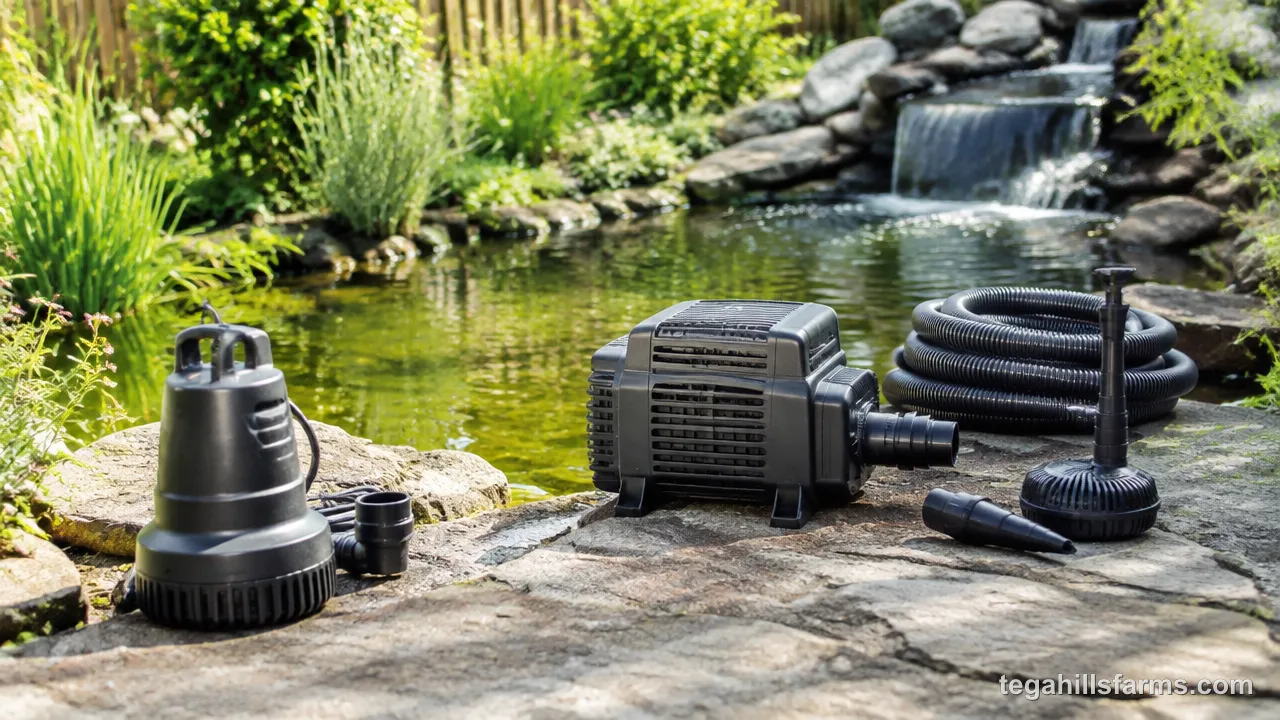
An external pump sits outside the pond in a dry, ventilated housing. It needs plumbing on both the intake and outlet sides. The tradeoff is that it is easier to service and well suited to high-flow systems.
Fountain pumps are small submersibles built to drive a spray head or a small feature. They aren’t designed to handle full filtration for a larger pond. The full tradeoffs between submersible vs external pond pumps go beyond size, including noise, heat in the water and access for repairs. For sizing purposes, though, gallons and required flow usually point clearly to one type or the other.
A pump rated well above what the pond needs looks like cheap insurance in the store, but in the water that extra flow scours the bottom and lifts settled sediment back into suspension. Fish forced to hold position against a strong current all day burn energy and show signs of stress, and the cloudy water that follows usually gets blamed on the filter rather than on the pump pushing water through it too fast.
Can a Pump Be Too Strong for a Pond?
Yes. Too much flow clouds the water, stresses fish and disturbs plants. It can also push water through the filter faster than the filter can handle. Filter media need contact time to trap fine debris and to give beneficial bacteria a chance to break down waste. When flow exceeds the filter’s rating, water passes through only partly cleaned. Strong currents also uproot marginal plants, tip over potted lilies and leave fish no calm water to rest in.
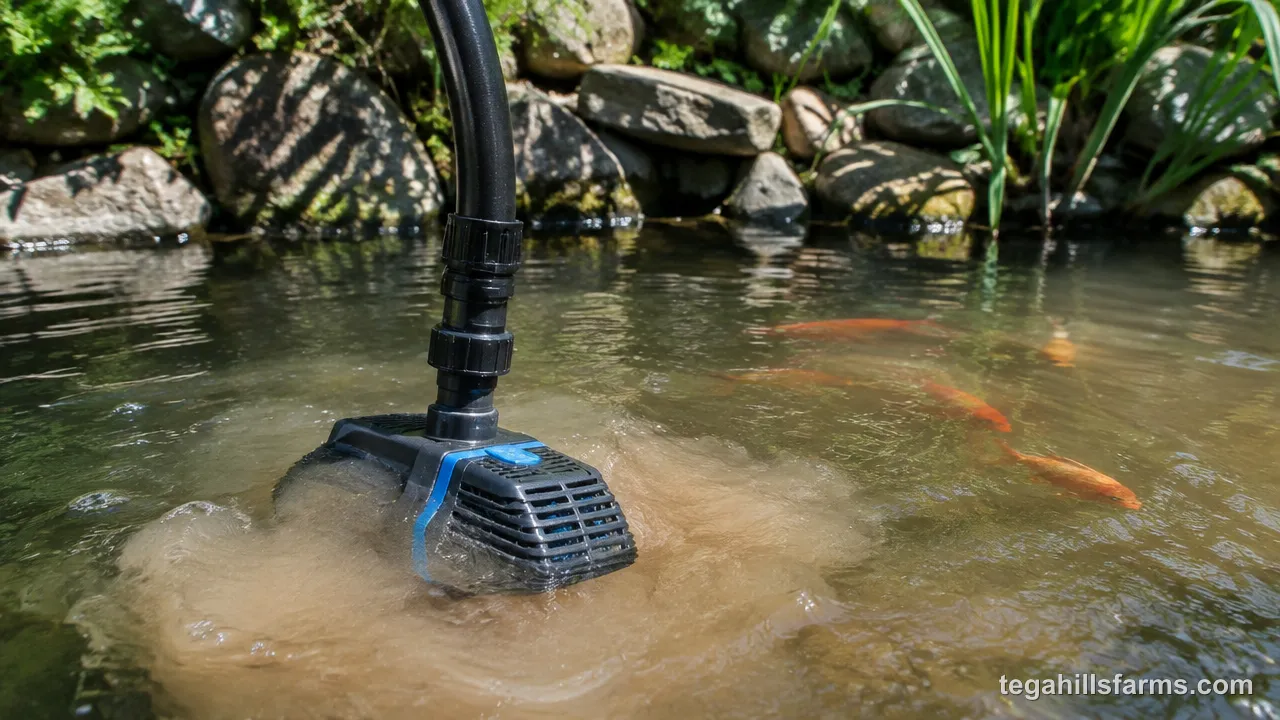
A right-sized pump keeps the surface moving and the filter working within its rating, and fish can cruise without fighting the current. An oversized pump does the opposite on every count.
If you already own a pump that is too strong, a flow control valve on the outlet line is the simplest fix, because it lets you reduce the flow until the water settles. A tee with a diverter can send the extra water back to the pond through a short return line. An adjustable-speed pump is the better long-term answer, because it lowers both the flow and the motor’s power draw. A valve only reduces the flow, while the motor keeps running at full speed.
How Do You Size a Pump for a Fountain Head?
A fountain pump has to meet the flow the nozzle needs at the height the jet must reach. Both depend on the spray pattern. A single tall jet or a multi-tier pattern needs more pressure and flow than a low bubbler or a bell. Each fountain head maker lists a recommended flow range for the nozzle, and that range is your target.
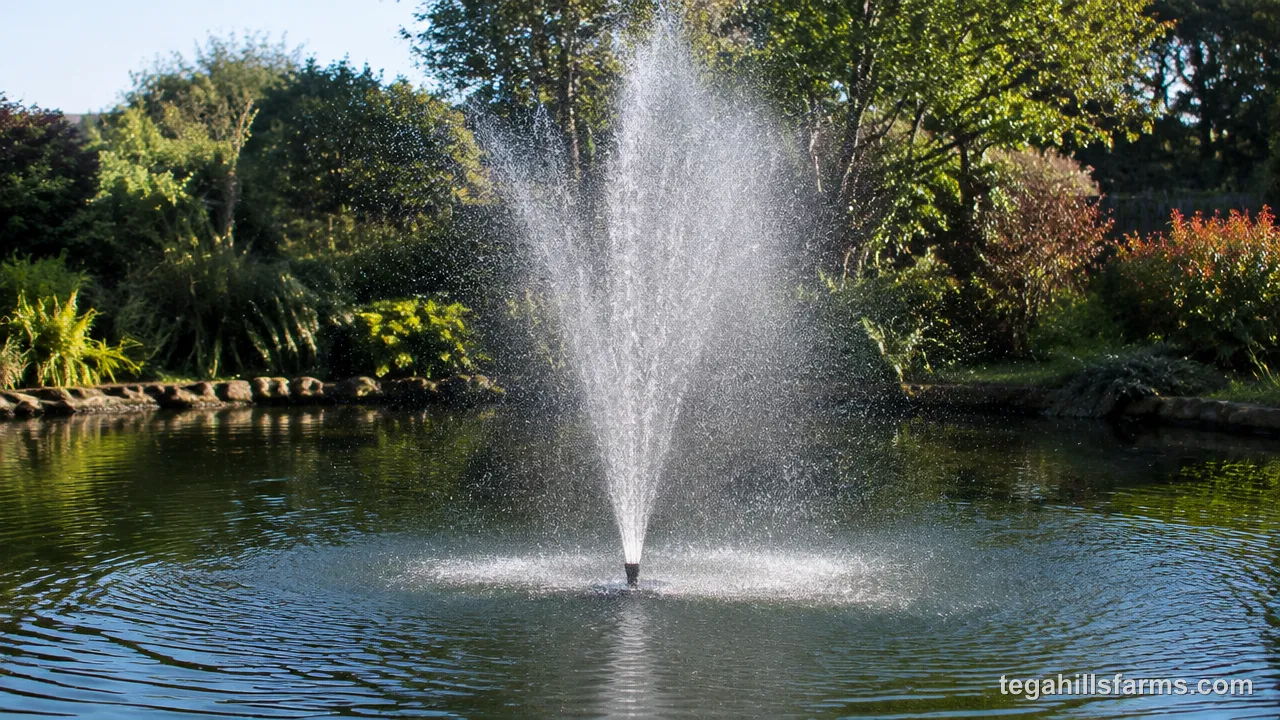
Spray height counts as head. Add the height of the jet above the water surface to any tubing allowance, then use that total on the pump’s flow chart. The nozzle also restricts flow, which is why a pump that seems strong enough on paper can produce a weak, short spray once the head is fitted.
Running a fountain off the main filtration pump splits the flow between the two. A diverter valve lets you balance them, but in practice the filter often gets less flow than it needs. For ponds where filtration matters, a dedicated fountain pump, sized only for the nozzle’s range at the spray height, keeps both systems working as intended.
How Do Pump Size and Power Draw Affect Running Costs and Lifespan?
Pond pumps usually run around the clock, so even a small difference in pump wattage repeats every hour of every day. An oversized pump draws more power than the pond needs. If you then restrict it with a valve to stop it churning the water, you pay for flow you’ve deliberately blocked.
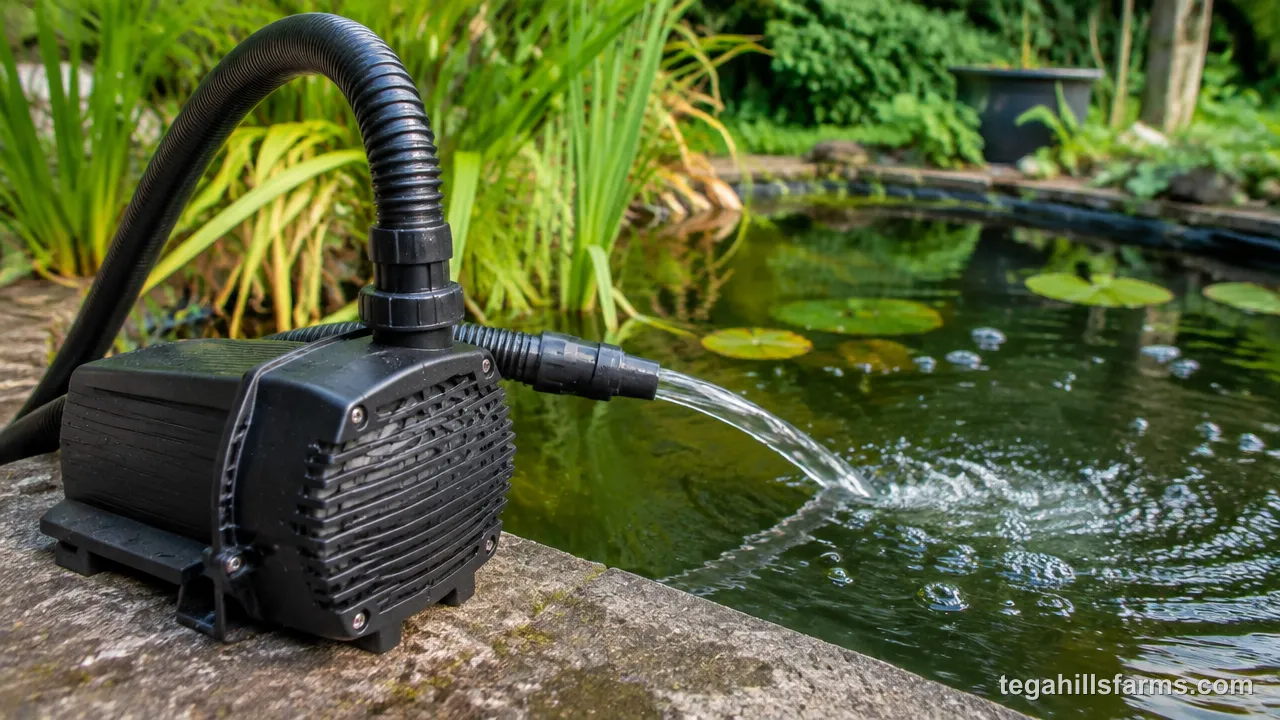
Mismatched sizing costs money in two ways. A pump that is too large wastes electricity. A pump that is too small runs near its maximum head, moves little water for the power it uses, and has no margin when the intake starts to clog.
A pump sized to deliver the target flow at your real head height runs in the middle of its chart. That is where it moves the most water for the power it draws. To compare models, divide each one’s GPH at your head height by its wattage. The pump with more delivered gallons per watt costs less to run. For the figures behind that comparison, see how much electricity a pond pump uses. Matching size to need also affects wear, because motors running under constant strain wear out sooner. Seals, impellers and maintenance habits all influence how long pond pumps last.
Pond Pump Sizing FAQ
Should I size up for fish I plan to add later?
Yes, if you know you’re adding koi or more fish within a season or two. Size for the stocking level you’re planning, then install a flow control valve and set the pump lower until the fish arrive. That way you avoid buying a second pump later, and the extra capacity doesn’t stir up the pond in the meantime.
Does a larger pond need more horsepower?
Large ponds often use pumps rated in horsepower rather than watts. A pond of about 1/4 acre commonly calls for a pump of around 1/2 horsepower. Horsepower still isn’t the spec to buy on, though. Check the GPH the pump delivers at your head height, because two pumps with the same horsepower can deliver very different flow.
When is an external pump worth it?
External pumps usually make sense for ponds larger than 1,000 gallons, or for systems with complex filtration that need high flow. They handle high flow well and are easy to reach for service. The tradeoff is more plumbing and a dry, ventilated housing outside the pond. Most smaller ponds are better served by a submersible.
Does where I place a submersible pump change its performance?
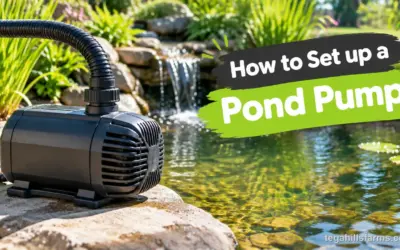
Placement affects circulation and clogging more than head height. Raise the pump slightly off the bottom so it doesn’t pull in sludge, and position it away from the waterfall or filter return so water crosses the whole pond. For step-by-step placement and hose routing, follow a guide on how to set up a pond pump.
Can I add a waterfall later without replacing my pump?
Only if your current pump can deliver the waterfall’s flow at the new head height. Measure the planned weir width, multiply it by the GPH per inch for the look you want, and check that figure against your pump’s chart at the spillway height. If the pump falls short, add a second pump for the waterfall.
Write Your Review
No reviews yet. Be the first to share your experience!