

A submersible pump is the better fit for small ponds, fountains and short waterfalls, because it costs less up front, hides underwater and installs in an afternoon. An external pump is the better fit for larger ponds, koi systems and tall waterfalls, because it moves more water against height, lasts years longer and usually costs less to own once replacements are counted.
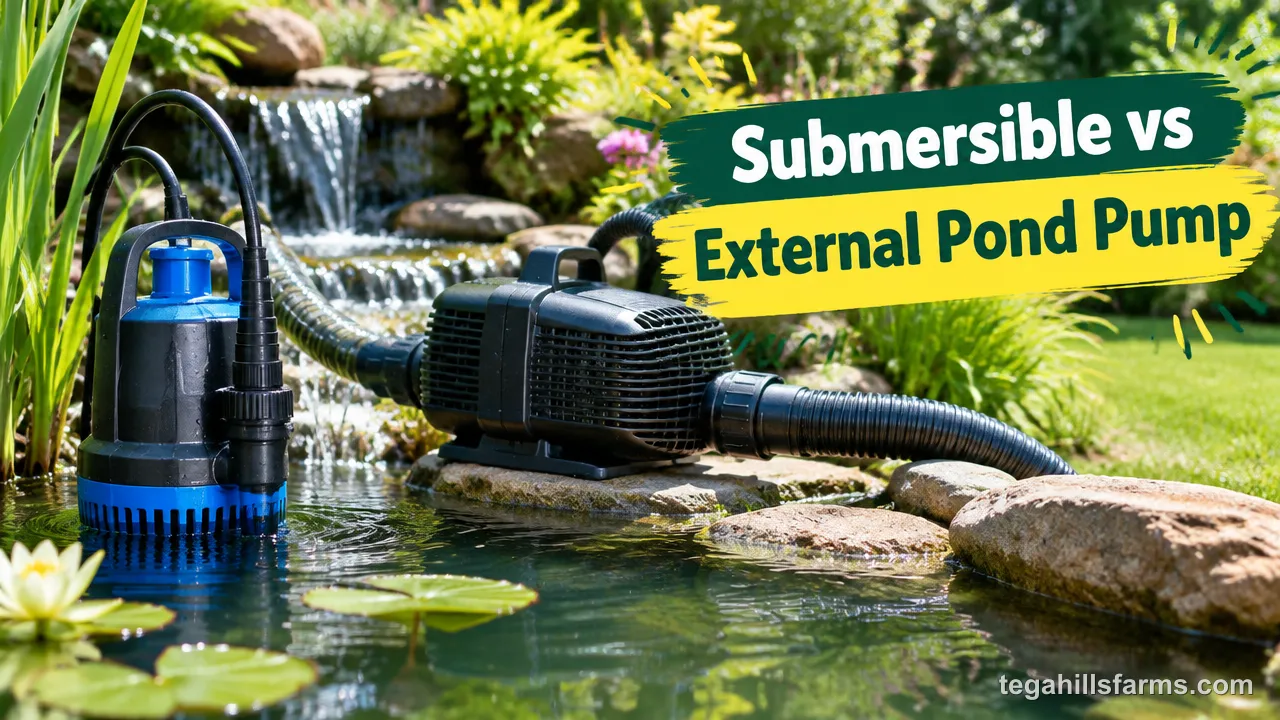
Five factors separate them in a real backyard: where the pump sits, how long it survives, what it costs to buy and run, how much water it actually delivers at your waterfall’s height, and how much work it takes to install and service. Your pond’s volume and the height of your water feature decide which of those factors matters most.
Most homeowners worry about two outcomes: a pump that quits in the middle of summer, and an electric bill that climbs because the pump runs around the clock. Both come down to matching the pump type to the job instead of buying on sticker price alone.
Before you shop, measure the vertical distance from the pond’s surface to the top of your waterfall or filter outlet. That one number rules out more pumps than any feature list.
What Are Submersible and External Pond Pumps?
A submersible pump runs fully underwater inside the pond, while an external pump sits dry beside it and draws water out through plumbing before sending it back. Settling on placement is the first call in how to choose a pond pump that fits your setup and your maintenance routine.
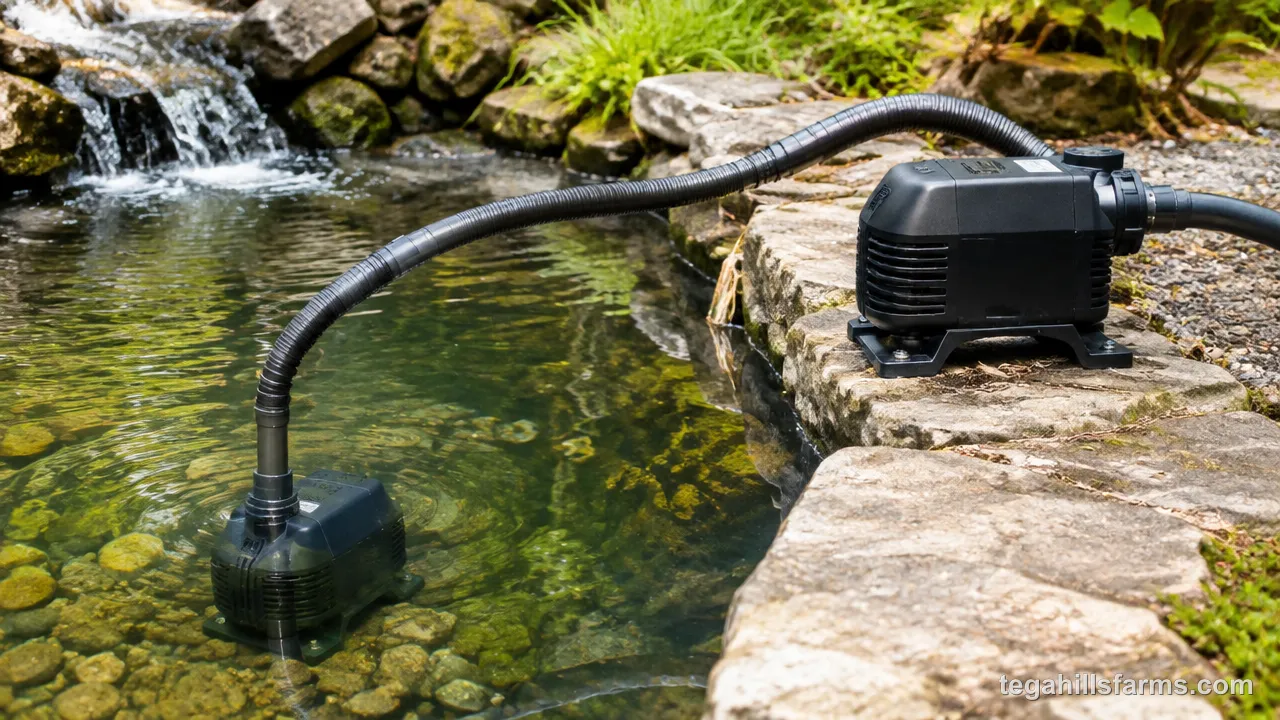
Most submersibles use a sealed magnetic-drive or direct-drive motor that sits on the pond floor or inside a skimmer box, with water flowing around the housing. External pumps are usually centrifugal pumps mounted on a pad or inside a pump vault. They connect to the pond through intake and return lines, often with a pre-filter, a skimmer or a bottom drain upstream.
The two types compare as follows on the criteria that shape the decision:
| Criteria | Submersible | External |
|---|---|---|
| Placement | In the pond or skimmer | Dry, beside the pond |
| Typical lifespan | Shorter | Longer |
| Purchase price | Lower upfront | Higher upfront |
| Ownership cost over several years | Higher | Lower |
| Performance at high head | Drops off quickly | Holds flow better |
| Installation | Drop in and plug in | Plumbing and priming |
| Noise | Muffled by water | Audible motor hum |
| Best fit | Small ponds, simple features | Large ponds, koi, tall waterfalls |
How Do Submersible and External Pumps Compare?
The deciding gap is time: an external pump costs more on day one but usually lasts longer and costs less to own, while a submersible wins on purchase price and simplicity. The height your water has to climb then decides whether either type delivers enough flow.
Operating Principle and Placement
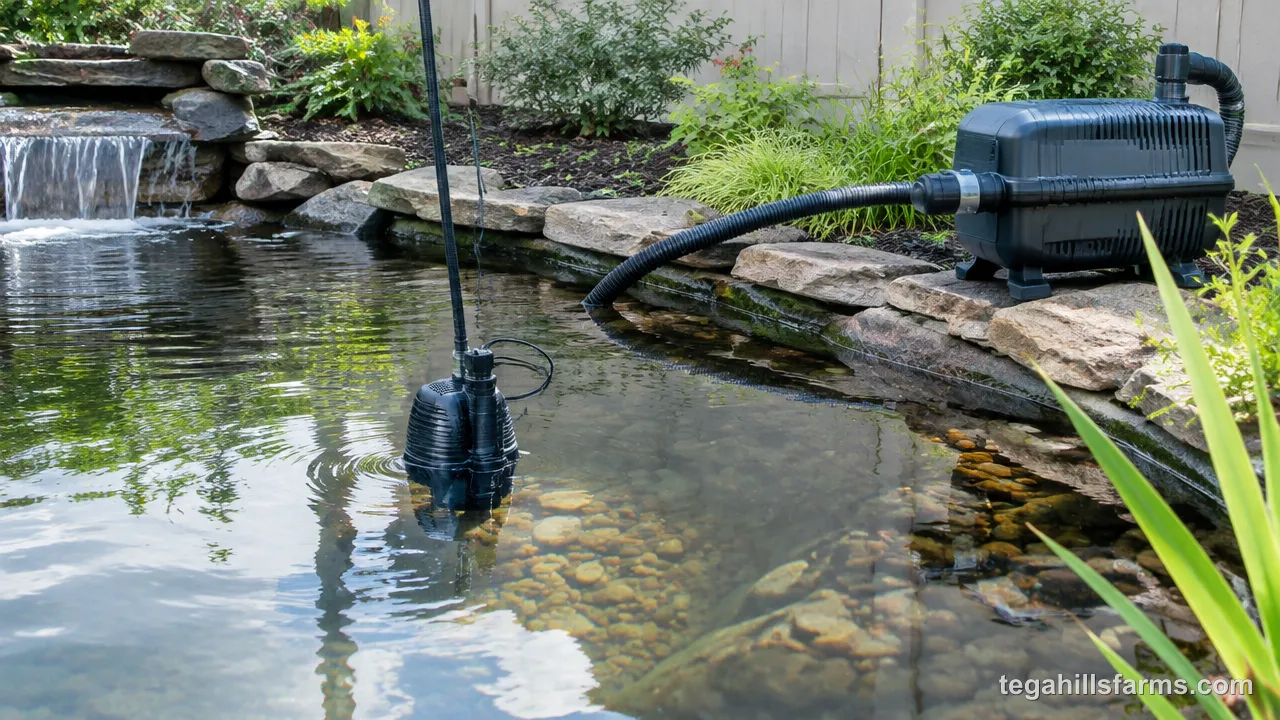
A submersible pump sits in the water it moves, and that water cools its sealed motor. Because the whole unit is underwater, you hear almost nothing and see only the power cord and discharge hose, which makes it easy to hide behind rocks or inside a skimmer.
An external pump pulls water out of the pond through an intake line, so the motor stays dry and cools in open air. It works best with flooded suction, meaning the pump sits below the pond’s water level so gravity fills the housing. If the pump has to sit higher than the water, you need a self-priming model that can lift water up the intake line on its own. The housing, motor and plumbing all sit in your yard, so they need a spot that’s level, drained and hidden from view.
Submersible wins when you want a hidden, simple setup; external wins when you want the motor out of the water where you can reach it.
Lifespan and Durability
A submersible pump typically lasts 2 to 5 years under normal operation and maintenance, while an external centrifugal pump typically lasts 10 to 15 years when properly installed and maintained. A quality external pump can run about twice as long as a comparable submersible.
The difference comes from where each motor lives. A submersible spends every operating hour underwater, so its seals are under constant pressure, and once water gets past a seal the motor usually fails for good. Many sealed mag-drive units aren’t designed to be opened, so a failure often means a new pump rather than a repair. An external pump keeps its motor dry, and its wear parts — shaft seals, bearings, impellers — are serviceable, so a rebuild can bring an aging pump back to full duty.
Run hours, debris load and how well the intake is screened also shape how long pond pumps last, whichever type you choose. External wins on durability for anyone planning to keep the pond running for many seasons.
Purchase Price and Ownership Cost
Submersible pumps generally sell for about $80 to $600 depending on flow capacity and features, while external pumps run roughly $400 to $3,500. That upfront gap is real, but replacements narrow it. A $200 submersible replaced four times over eight years costs $800, while one external pump that lasts the whole eight years can cost about $600.
Electricity is the other running cost. A 200-watt pump running 24 hours a day uses 4.8 kWh daily and 144 kWh over a 30-day month. Residential rates range from about $0.08 to $0.35 per kWh depending on where you live, so the same pump can be cheap to run in one state and expensive in another. Checking how much electricity a pond pump uses before buying keeps a low sticker price from turning into a high monthly bill.
External wins on ownership cost if you’ll keep the pond for years; submersible wins when the budget is tight or the pond is small.
Flow Rate and Head Pressure
External pumps hold their flow better as head height rises, which is why they handle tall waterfalls and long pipe runs that a submersible struggles with. Every pump loses flow as it pushes water higher and through more plumbing. One example: a pump rated at 4,000 GPH delivers only about 2,500 GPH when lifting water eight feet vertically through plumbing.
That loss is why the rated number on the box can mislead you. Total dynamic head combines the vertical lift with friction from pipe length, fittings and filters, and the pump’s flow curve shows how many gallons per hour remain at your actual head.
External pumps come in two broad styles. A low head external pump suits a 3- to 4-foot waterfall or a run to a pressurized filter. A high head external pump suits a 20-foot waterfall or a very long pipe run.
Submersible is enough for low head features close to the pond; external wins once height or pipe length climbs.
Which Pump Type Fits Different Pond Setups?
Pond volume, head height and filtration layout decide the pump type. Small ponds with short features work fine on a submersible, while larger koi ponds and systems with tall waterfalls or bottom drains need an external pump.
Small Ponds and Simple Water Features
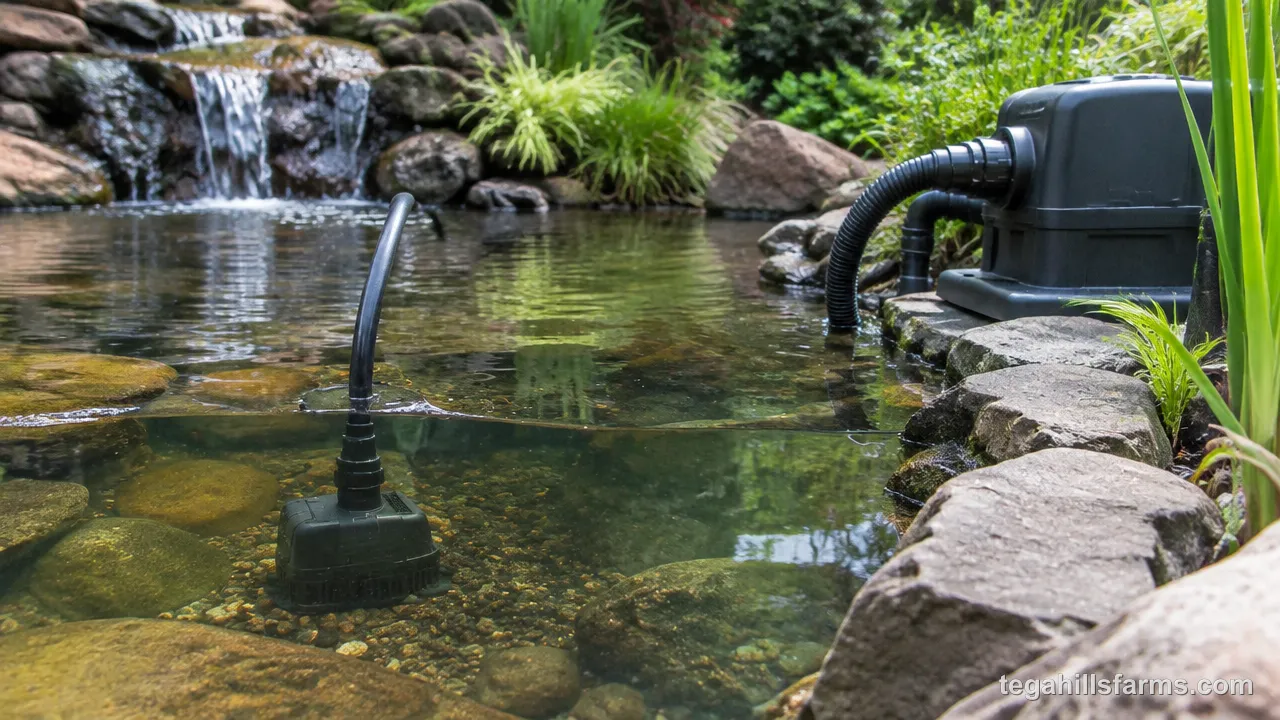
A submersible pump handles most small backyard ponds, fountains and short waterfalls well, because the water volume is modest and the head is low. You set it on the bottom or in a skimmer, run the hose to the waterfall, plug the cord into a GFCI outlet and the system is running.
Choose a submersible if your pond is small, your waterfall sits close to the water’s surface and you’d rather spend less up front than plan for decades of service. The shorter lifespan matters less here because a small replacement pump is inexpensive and easy to swap.
To size it, run your pond’s volume and waterfall height through a pond pump gph calculator so you’re buying for delivered flow, not the maximum on the label. I’d still lean toward a slightly larger submersible than the bare minimum, because debris on the intake cuts flow before you notice it.
Medium to Large Ponds and Koi Systems
External pumps suit larger ponds and koi systems because those ponds need high-volume circulation around the clock, and continuous duty is where a dry, serviceable motor pays off. Traditional centrifugal external pumps range from under 2,000 GPH at the low end to tens of thousands of GPH for large 3 HP models.
Koi produce heavy waste, so their ponds depend on external biological filters, UV clarifiers and pressurized filters that need steady flow to work. A pump failure in that system stalls filtration and lowers oxygen at the same time, which puts the fish at risk within hours on a warm day. An external pump’s longer service life and rebuildable parts lower the chance of that failure.
Choose an external pump if you keep koi or plan to run an external filter. Working out what size pond pump you need for a larger pond means accounting for every filter and fitting in the loop, since each one adds head that cuts delivered flow.
Ponds With Tall Waterfalls or Bottom Drains
Tall waterfalls and bottom-drain systems need external pumps, because they demand either high head capacity or the ability to pull water through a gravity-fed system. A high head pump like the Easy Pro EX8500 is rated at 8,500 GPH maximum and still delivers 6,960 GPH at 20 feet of head, which is the kind of lift a tall waterfall requires.
Bottom drains work on gravity flow: water drops from the pond floor into a settlement chamber or filter, and an external pump downstream sends it back. If that pump sits above the water level, it needs self-priming ability to restart without help.
Matching head type matters as much as choosing external. In one example installation needing 15 feet of total dynamic head and 5,000 GPH, the high head EX8500 drew 1,385 watts while the low head Easy Pro EX8800 drew 449 watts, adding about $616.85 a year in electricity at an average rate. The EX8800 is rated at 8,200 GPH maximum and 5,040 GPH at 15 feet, so it covered that job without the extra draw.
Choose a high head external pump only when your waterfall is genuinely tall or your pipe run is long; for moderate heads, a low head external pump moves the same water for far less power.
What Does Installation and Maintenance Look Like for Each Type?
A submersible installs in minutes but has to be lifted out of the pond for most service, while an external pump takes plumbing and priming up front but stays reachable on dry ground. That tradeoff shows up every time you clean or winterize the pond.
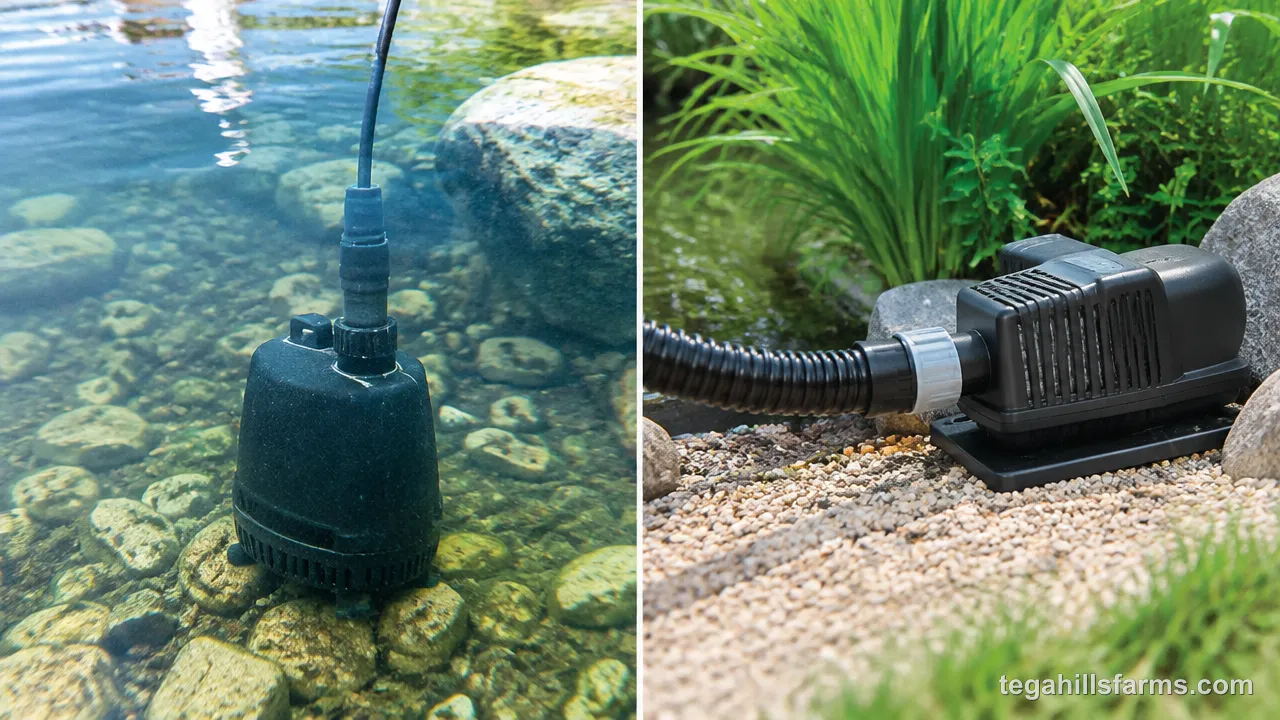
Installing a Submersible Pump
Setting up a submersible pump means placing it in the pond, connecting the discharge hose and plugging it into a GFCI-protected outlet. Raise it slightly off the bottom on a flat stone or brick so it doesn’t sit in settled muck, and put it inside a pump cage or debris cage if it isn’t going into a skimmer box. Route the power cord where it won’t be stepped on or chewed by a mower, and keep any connection to an extension cord out of standing water.
The catch comes later. Clearing a clogged intake, cleaning the impeller or inspecting the seals all start with pulling the pump out of the water, often from the deepest point in the pond. A pump sitting under several feet of water with a waterfall hose attached is awkward to lift, so leave enough slack in the hose and a pull cord on the pump.
The basic steps of how to set up a pond pump are simplest with this type, which is a big reason submersibles dominate small ponds.
Installing and Priming an External Pump
An external pump goes on a level, well-drained pad near the pond, ideally below the water line so the intake stays flooded. Plumb the intake from the skimmer, bottom drain or pre-filter, add a check valve so water doesn’t drain back when the pump stops, and run the return line to the filter or waterfall. A pump vault or ventilated enclosure protects the motor from rain and sun while letting heat escape.
Before the first start, prime the pump by filling the housing or strainer basket with water so the impeller isn’t spinning dry, which damages seals quickly.
Electrical planning matters more here than with a submersible. External pumps run on 115 or 230 volts, and wiring at 230 volts halves the current without changing the wattage: a pump drawing 4 amps at 115 volts draws 2 amps at 230, using 460 watts either way. A high head self-priming pump can pull 20 amps at 115 volts or 11 amps at 230, which may call for a dedicated circuit, so check with an electrician and your local code.
In regions with freezing winters, the pump housing and any exposed pipe need to be drained or insulated, because trapped water can crack them.
Ongoing Maintenance and Access
Submersible pumps need more frequent cleaning because they sit in the dirtiest part of the pond, and every cleaning means wading in or hauling the pump out. Leaves, string algae and fish waste collect on the intake, cutting flow and making the motor work harder. During peak season that can mean checking the intake every week or two.
External pumps usually have a strainer basket at the pump itself, so you open a lid, empty the basket and close it again without touching the pond. Impeller clogs are less common because the pre-filter or skimmer catches debris first. When seals or bearings wear out, rebuild parts are widely available for many external models.
Winter shutdown differs too. A submersible is pulled, cleaned and stored in a bucket of water so its seals don’t dry out. An external pump is drained, disconnected and either stored indoors or left protected in its vault, depending on how cold your area gets.
External wins on routine access; submersible wins on the simpler winter routine.
A submersible motor sheds its heat straight into the surrounding water, and in a small, shallow pond during a hot spell that warmth has nowhere to go. Overlook it and your fish can end up gasping at the surface on a summer afternoon while the pump meant to keep them healthy keeps adding heat to the water.
How Does Heat Affect Submersible Pump Performance?
A submersible pump transfers its motor heat into the pond water, which slightly warms small ponds and puts thermal stress on the motor itself. In a large, deep pond the effect is negligible, but in a small or shallow pond under full sun, the pump adds a little more heat on top of the summer air.
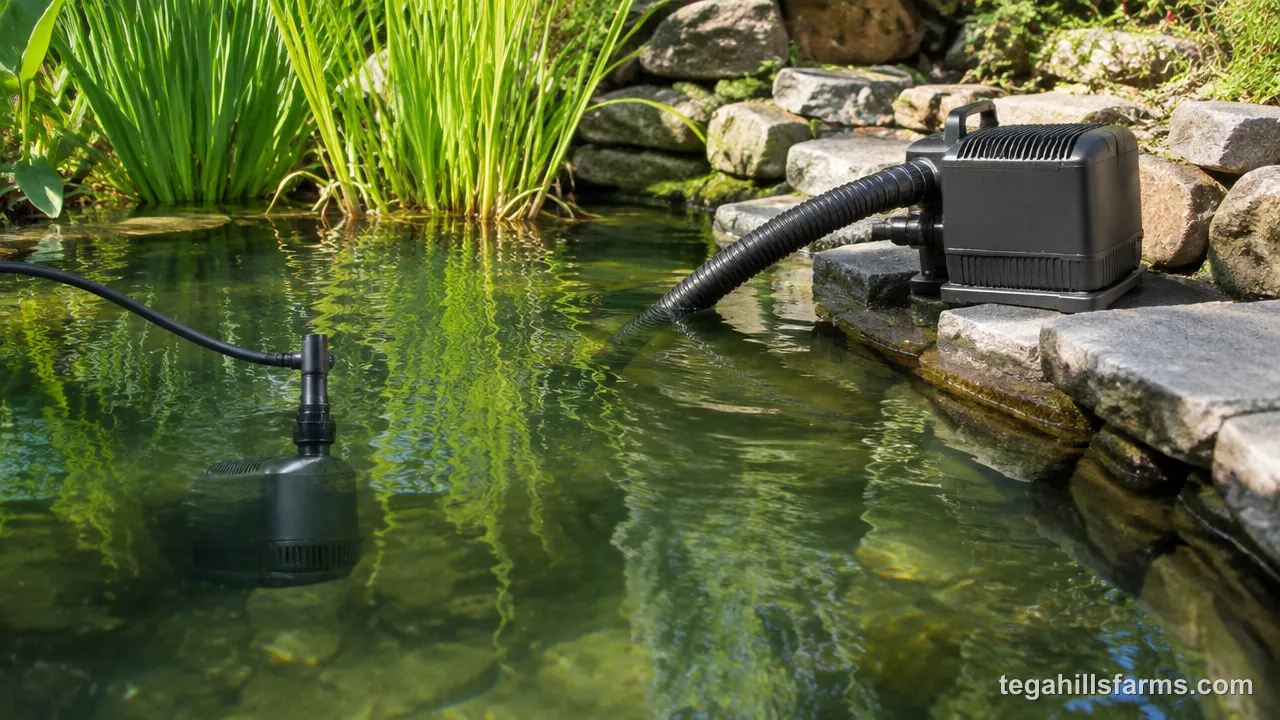
That matters for fish because warm water holds less dissolved oxygen. Koi and goldfish already slow down and stress in hot weather, so any extra warming narrows their margin, especially at night when plants stop producing oxygen.
Heat also shortens the pump’s life. A submersible relies on cool, moving water to carry heat away from its motor, so a clogged intake, low water level or warm shallow pond reduces cooling and speeds up wear on the windings and seals. Continuous operation compounds this, since the motor never gets a cool-down period.
An external pump releases its heat into the air instead, which is part of why larger fish ponds lean toward external setups.
Which Pump Type Runs Quieter in a Backyard Pond?
A submersible pump runs quieter because the water around it muffles the motor almost completely; beyond the splash of the waterfall, you rarely hear it. An external pump sits in open air, so its motor hum carries across the yard, which matters if the pump is near a patio, a bedroom window or a neighbor’s fence.
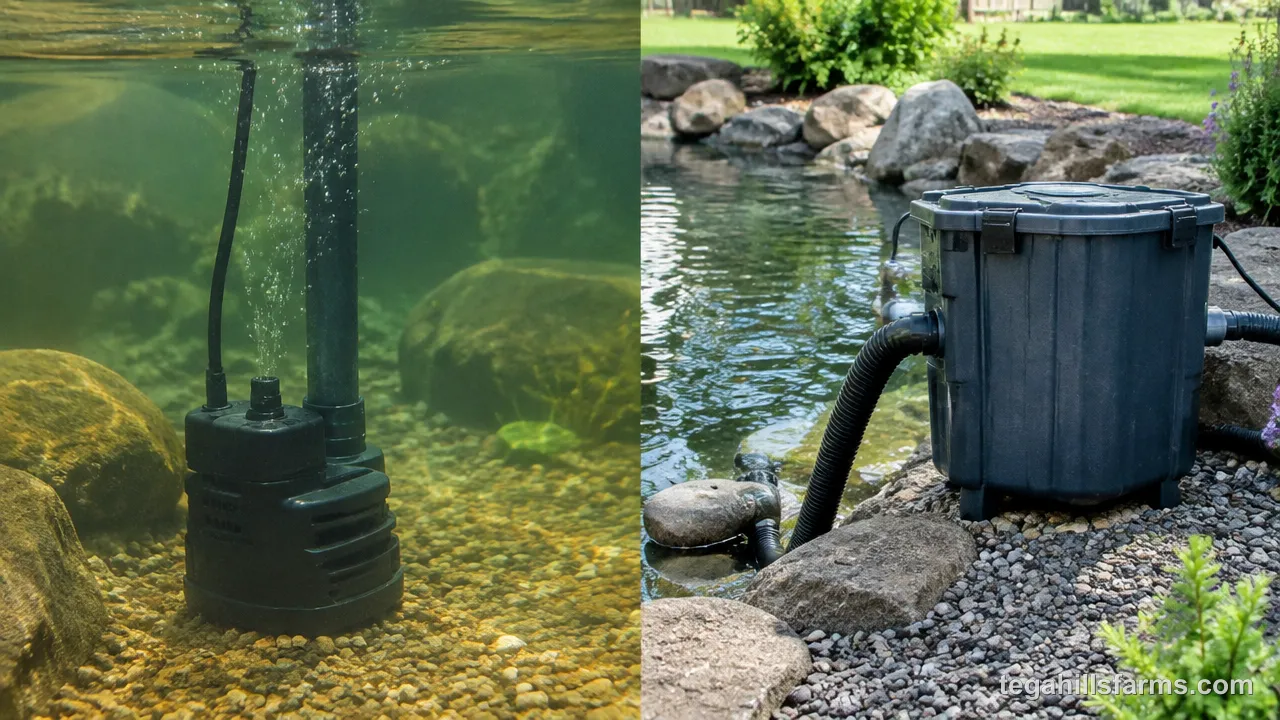
The noise from an external pump depends on its size and how it’s mounted. Larger motors and pumps bolted directly to hard surfaces transmit more vibration, which can turn into a low drone you notice most in the evening.
You can quiet an external pump considerably. Place it as far from seating areas as the plumbing allows, set it on a rubber pad to absorb vibration, use flexible connectors at the intake and outlet, and enclose it in a pump vault or insulated enclosure with enough ventilation to keep the motor cool. For a pond right beside the house, those steps often decide whether an external pump is livable.
When Should You Repair or Replace a Pond Pump?
Replace most submersible pumps once the motor or seals fail, but repair external pumps whenever the motor is still sound, since their seals, bearings and impellers are designed to be replaced. A submersible that loses flow may only need a new impeller, which is one of the few user-replaceable parts on many models. Water intrusion past the seals usually ends the pump’s life, because the motor is sealed and rarely serviceable.
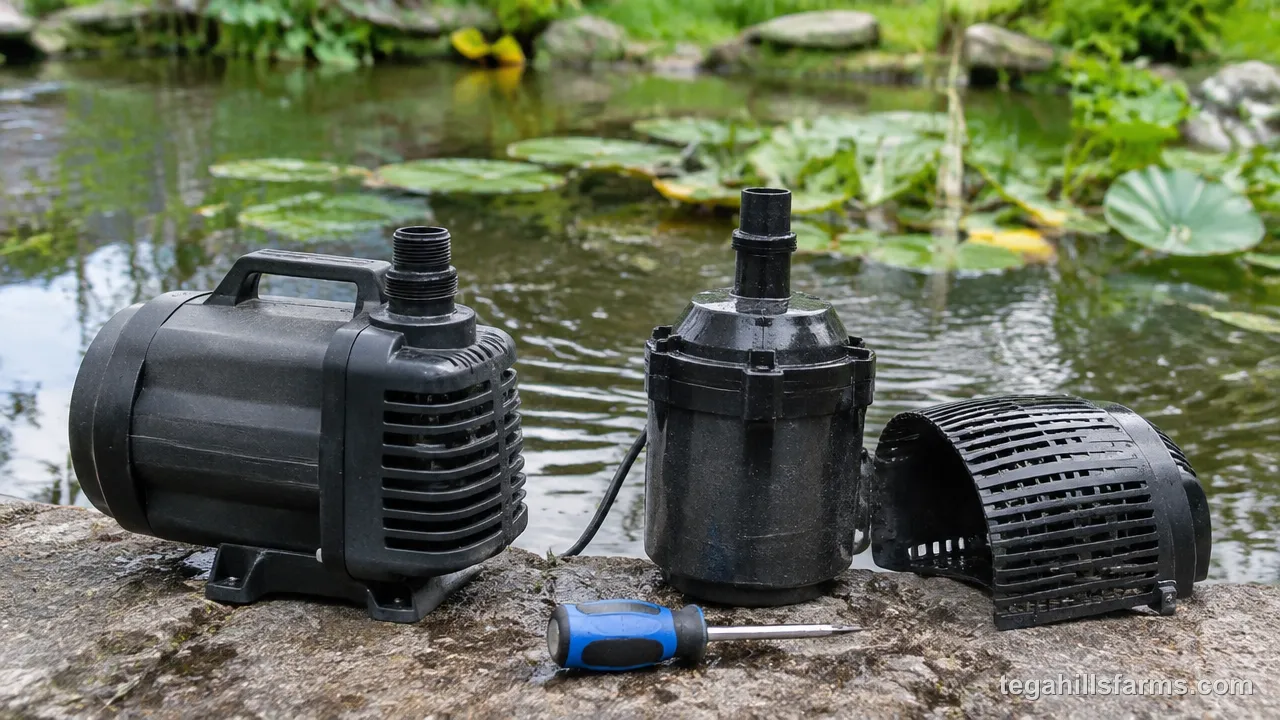
External pumps fail more gradually. Leaking shaft seals, noisy bearings or a worn impeller can all be fixed with a rebuild kit, often for a fraction of a new pump’s cost. A burned-out motor is the point where replacement usually makes more sense, unless the motor itself is available separately.
Check the warranty before you start any repair, since opening a pump can void coverage. When comparing repair against a new unit, weigh the quote against how much a pond pump costs in that size class. I’d avoid used pumps unless you can see them run, because worn seals and bearings rarely show from the outside.
Submersible vs External Pond Pump FAQ
How many GPH does a pond pump need per gallon of water?
A common rule is to circulate the full pond volume at least once every hour. A 1,000-gallon pond needs a pump that delivers about 1,000 GPH at your actual head height, not at zero head. Koi ponds and ponds with heavy filtration often benefit from more turnover than that minimum.
Can I use an external pump in a small pond?
Yes, but it rarely makes sense. An external pump’s strengths are durability, high head and serviceability, which small ponds with short waterfalls don’t need. The higher purchase price, plumbing and priming add cost and work, while a submersible handles the same low head job quietly and with far simpler installation.
Should a submersible pump stay in the pond over winter?
In regions where ponds freeze, pull the pump, clean it and store it in a bucket of water so the seals stay moist. In milder climates, some owners keep it running to maintain an air hole in the ice. Follow the manufacturer’s guidance on minimum water temperature for continuous operation.
Is an external pump worth it for a koi pond?
Usually, yes. Koi ponds need constant, high-volume circulation through biological filters and UV clarifiers, and a pump failure stops both filtration and aeration. An external pump’s dry motor, longer service life and rebuildable parts reduce that risk, which is why most serious koi keepers build their systems around one.
Does an external pump need to sit below the water level?
Not always, but it helps. Placing a standard external pump below the pond’s surface gives it flooded suction, so water fills the housing on its own. If the pump must sit higher than the water, choose a self-priming model that can draw water up the intake line without manual priming.
Write Your Review
No reviews yet. Be the first to share your experience!