

The right pump size comes from three inputs: the pond’s volume in gallons, the total head the pump has to push against, and the flow your waterfall or fountain needs where the water comes out. Volume sets the baseline flow. Head decides how much of the pump’s rated flow actually reaches the top. The water feature can raise the target well above what the pond alone would need.
Each input has its own method. Volume comes from simple shape factors applied to length, width, diameter and depth in feet. Head adds the vertical rise of your waterfall or outlet to the resistance from tubing, fittings and filters. Waterfall flow scales with spillway width, and fountain flow follows from spray height and pipe run.
The common mistake is trusting the big number on the box. That figure is measured with almost no lift, so a pump that looks right on paper can produce a thin trickle once it has to push water up a rock pile and through a pressurized filter.
What Is a Pond Pump GPH Calculator and What Inputs Does It Need?
GPH means gallons per hour, the volume of water a pump moves in an hour, and a sizing calculator combines pond volume, head height and the type of water feature into one target flow.
Volume tells you how much water needs to circulate, which sets the minimum flow for keeping the pond clean and oxygenated. Head height accounts for the work of lifting water, because every foot of rise reduces the flow a pump delivers. The feature type, whether a waterfall, a fountain or plain circulation, can push the target above the volume baseline, since a wide spillway or a tall spray needs more water than turnover alone. Once you have a GPH target, the broader guide on how to choose a pond pump covers the other factors that decide which model fits your pond.
How Do You Find Your Pond’s Volume in Gallons?
Everything starts from total gallons, and the pond’s shape decides which multiplier turns feet into gallons. An error here carries through every later step, because the baseline flow, the fish capacity and even the treatment doses all depend on volume. Measure in feet, use average depth rather than the deepest spot, and match the method to the outline of your pond.
How Do You Find the Volume of a Round or Oval Pond?
For a round pond, multiply diameter × diameter × depth × 5.9, with every measurement in feet, and the result is total gallons. The 5.9 factor already accounts for the circular shape and the conversion from cubic feet to gallons, so you skip the pi math entirely.
Depth is where most estimates go wrong. Few ponds have a flat bottom; most slope toward a deep zone or have plant shelves around the edge. Using the deepest point overstates the volume, which leads you to buy more pump than the water needs. Take several depth readings across the pond with a yardstick or a marked pole and average them, then plug that average into the formula.
An oval pond is not a perfect circle, so the formula needs one adjustment. Measure the longest and shortest widths, average the two, and use that number as the diameter. The result is an approximation, but it lands close enough for sizing a pump.
How Do You Find the Volume of a Rectangular or Irregular Pond?
For a rectangular or square pond, multiply length × width × depth × 7.5, again in feet, to get total gallons. The 7.5 factor is the number of gallons in one cubic foot, so the formula simply converts the box-shaped volume into gallons.
The same average-depth rule applies here. A preformed liner with shelves or a hand-dug pond with sloped walls holds less water than its full depth suggests, so measure in several spots and average them.
Kidney shapes and free-form ponds don’t fit either formula on their own. The most accurate approach is to split the outline into simpler sections, such as a rectangle for the main body and a circle for a rounded end, then calculate each section separately and add the results. If the shape is too irregular for that, measure the average length and average width at several points and run them through the rectangular formula. That method trades some precision for speed, which is usually fine for picking a pump.
How Many GPH Does a Pond Need for Its Volume?
Volume sets the minimum flow, and fish load decides how far above that minimum you should aim. A pond with only plants and a few small fish can run close to the baseline. A pond stocked with large fish produces more waste and uses more oxygen, so it needs more circulation and filtration to stay clear and healthy.
How Does Turnover Rate Set the Baseline GPH?
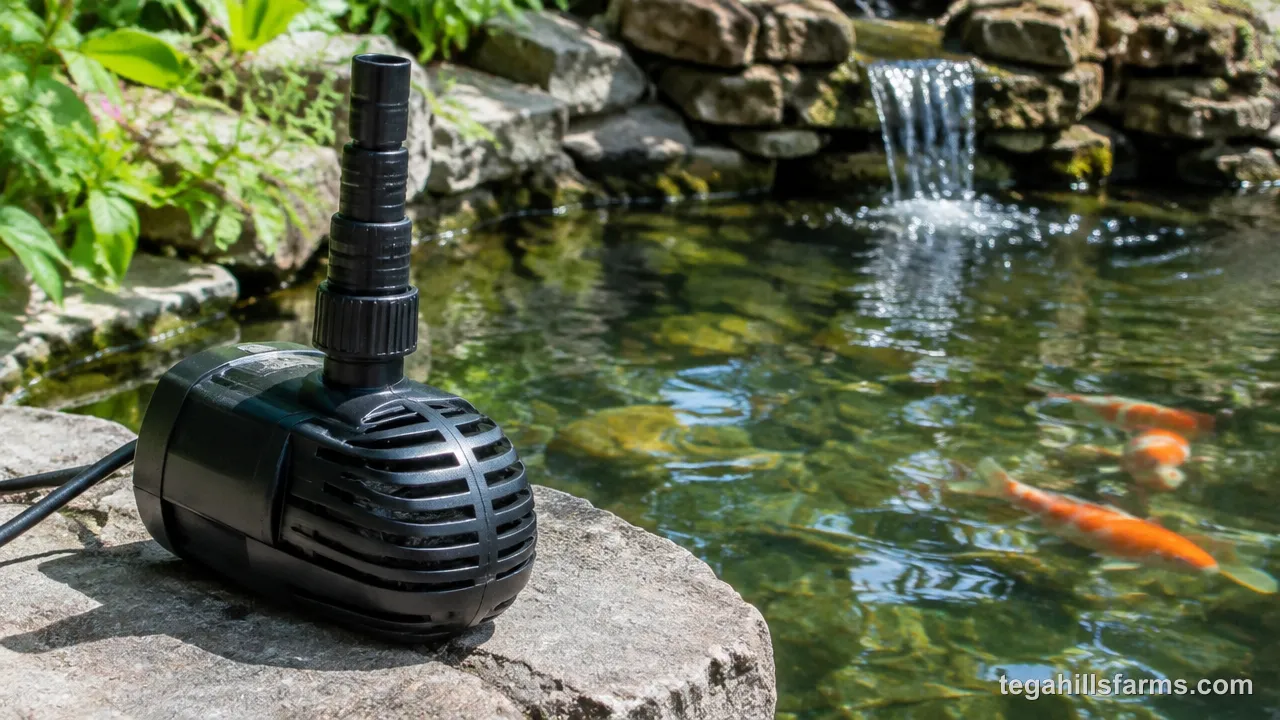
Turnover is how often the pump moves the pond’s full volume through the system, and a common rule is to circulate the entire volume at least once every hour or two. That rule makes the baseline easy: the pump’s real flow, at your head, should roughly match your pond’s gallons per hour, or at least half of it on the low end.
Turnover matters because circulation is what carries debris to the filter and mixes oxygen through the water. When water sits in dead zones, algae and sludge build up there first.
The pump also needs to run 24 hours a day to keep the pond’s ecosystem stable. Beneficial bacteria in the filter depend on a steady flow of oxygenated water, and shutting the pump off overnight starves them. That continuous duty cycle is why efficiency and durability matter as much as raw flow. For a quick shortcut that matches common pond sizes to pump ratings, see the breakdown of what size pond pump you need.
How Do Ornamental and Koi Ponds Differ in Flow Needs?
Koi ponds need noticeably more flow than plant-focused ornamental ponds because large fish produce far more waste and consume more oxygen. Fish load, not volume alone, sets how hard the pump and filter have to work.
An ornamental pond built around water lilies and marginal plants has a light biological load. The plants absorb nutrients, so circulating at the baseline turnover keeps the water moving and the filter fed. A small fish pond with goldfish adds waste, which makes the upper end of the turnover range a safer target.
Koi change the math. They grow large, eat heavily and produce a steady stream of ammonia, so a koi pond benefits from faster turnover and more filtration capacity than its volume alone suggests. The koi stocking rule ties fish to water: 5 gallons of water for every 1 inch of fish. Add up the length of every fish, multiply by five, and compare that figure with your pond’s volume. If the fish total is close to the pond’s capacity, size the pump toward the high end of your range.
How Do You Figure Out Head Height for Your Pond Pump?
Head is the resistance a pump pushes against, and it matters as much as pond volume because a pump’s flow drops as head rises. Two pumps with the same headline rating can deliver very different flow once each has to lift water to a waterfall and push it through a filter. Knowing your total head lets you read the rating that applies to your setup instead of the one printed on the box.
What Is Static Head and How Do You Read It From Your Layout?
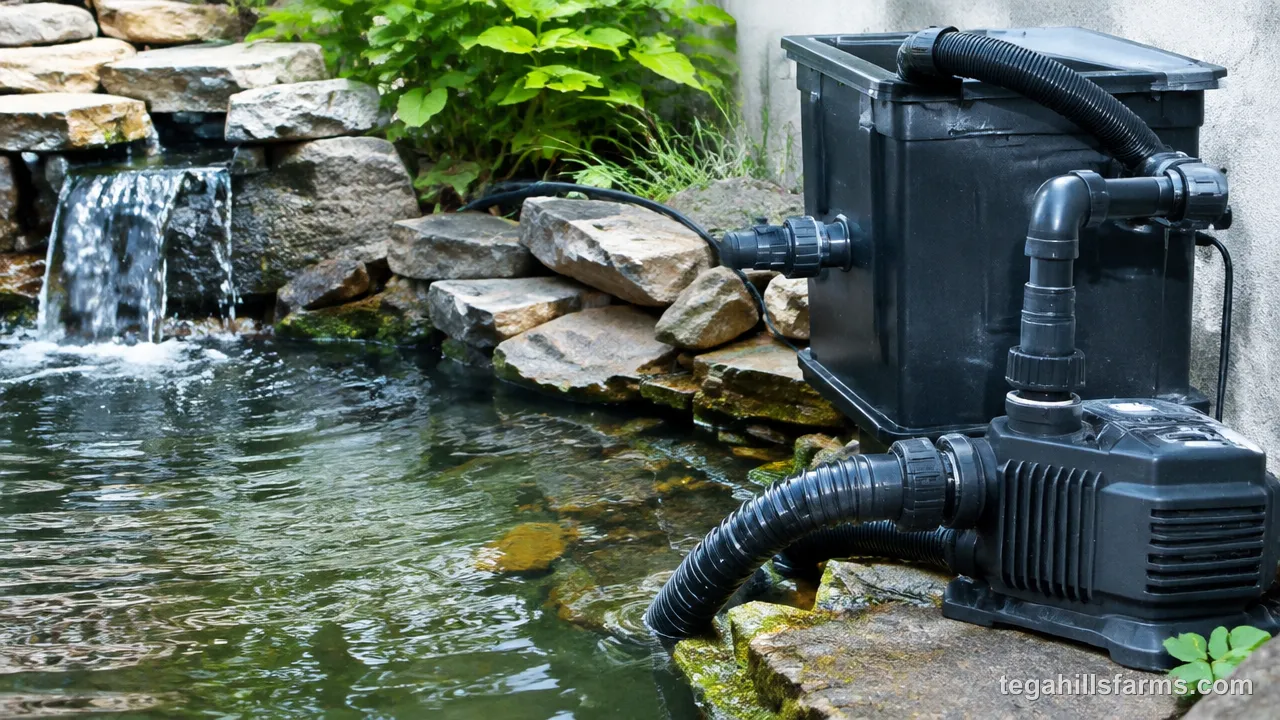
Static head is the vertical distance from the pond’s water surface to the point where the water leaves the plumbing. It is measured from the surface, not from the pump, because a submersible pump sitting deeper in the pond has water pressing down on it that balances the extra depth.
A waterfall makes the measurement simple. If the top of the waterfall sits 2 feet above the pond’s surface, the pump faces 2 feet of static head. If you pump water to a second pond that sits 10 feet higher, static head is 10 feet.
To read it from your own layout, run a level line or a string from the water surface to the discharge point, then measure the vertical gap with a tape. Horizontal distance does not count toward static head, though it does add friction, which is a separate part of total head.
How Do Pipe Length, Elbows, and Filters Add to Head?
Beyond static head, the pump fights friction from tubing, fittings and filters, and the filter type usually makes the biggest difference. A waterfall filter or an open-air filter adds no head at all, because water spills through it by gravity. A pressurized filter adds about 7 feet of head, and a large pressurized filter adds about 10 feet.
That gap is large enough to change your pump choice. A pressurized filter on a short waterfall can more than triple the total head the pump faces.
Tubing adds friction along its length, and narrow tubing adds much more than wide tubing at the same flow, because the water has to move faster through a smaller opening. Each elbow and tight bend adds a little more resistance. In a typical backyard setup with a short run of properly sized tubing and few bends, these losses stay small next to static head and filter head. They grow when the pump sits far from the waterfall or when undersized tubing chokes the flow. Planning the plumbing layout carefully is covered in the walkthrough on how to set up a pond pump.
How Much GPH Does a Pond Waterfall Need?
Waterfall flow is sized from spillway width, and that flow must be delivered at the waterfall’s total head. The width sets how much water the waterfall needs to look the way you want. The head sets how hard the pump has to work to deliver it. Both numbers together, not either one alone, define the pump you need.
How Does Spillway Width Set Waterfall Flow?
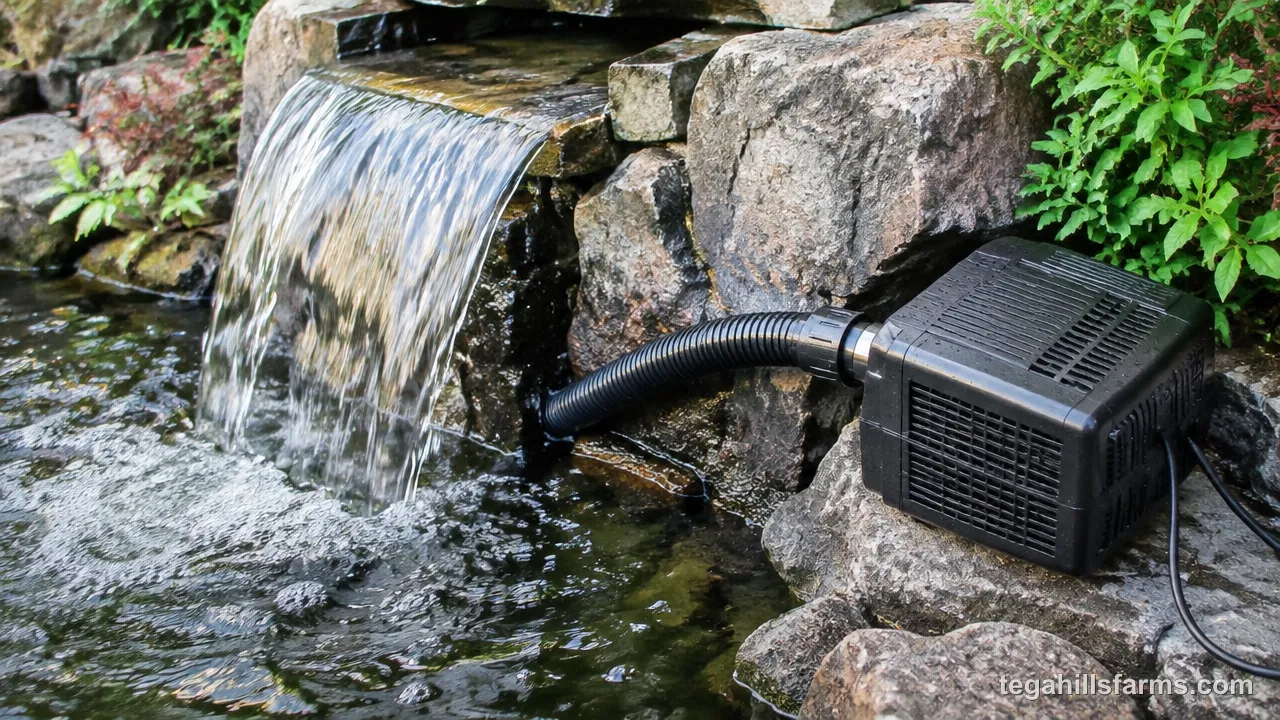
A sheet-style waterfall needs about 100 gallons per hour for every 1 inch of spillway width. Measure the lip where water pours over, multiply the inches by 100, and you have the flow target for a smooth, even sheet.
The style you want changes the multiplier. A gentle trickle needs about half that rate, roughly 50 GPH per inch. A heavy, Niagara-style curtain needs about double, roughly 200 GPH per inch.
Width matters because the water spreads across the whole lip. A wider spillway thins out the same flow, and once the layer of water gets too thin, surface tension pulls it apart into separate ribbons instead of a continuous sheet. That’s why a waterfall that looks full on a narrow lip turns into a patchy trickle when the same pump feeds a wider one. If the spillway is already built, measure it before buying the pump rather than after.
How Do You Combine Waterfall Flow With Head Height?
The pump has to deliver your spillway flow target at the waterfall’s total head, so you look for that flow at that head on the pump’s rating chart. A pump rated well above your target at zero lift may fall short once it has to push water up to the top of the falls.
Start with total head: static head from the water surface to the spillway, plus any filter head, plus a small allowance for tubing and fittings if the run is long. A 2-foot waterfall fed through a waterfall filter faces little more than its 2 feet of static head. The same waterfall fed through a pressurized filter faces those 2 feet plus the 7 feet the filter adds.
With that total in hand, find the head on the manufacturer’s flow chart and read the flow the pump produces there. That number needs to meet the spillway target. If the waterfall target is higher than your turnover baseline, the waterfall sets the pump size, and the pond simply gets faster circulation as a bonus.
What Pump Size Does a Fountain Need?
A fountain pump size follows the formula (0.002 × height × pipe length + 0.05 × height + 0.33 × pipe length) × 60, and the result is the flow in GPH the pump should deliver.
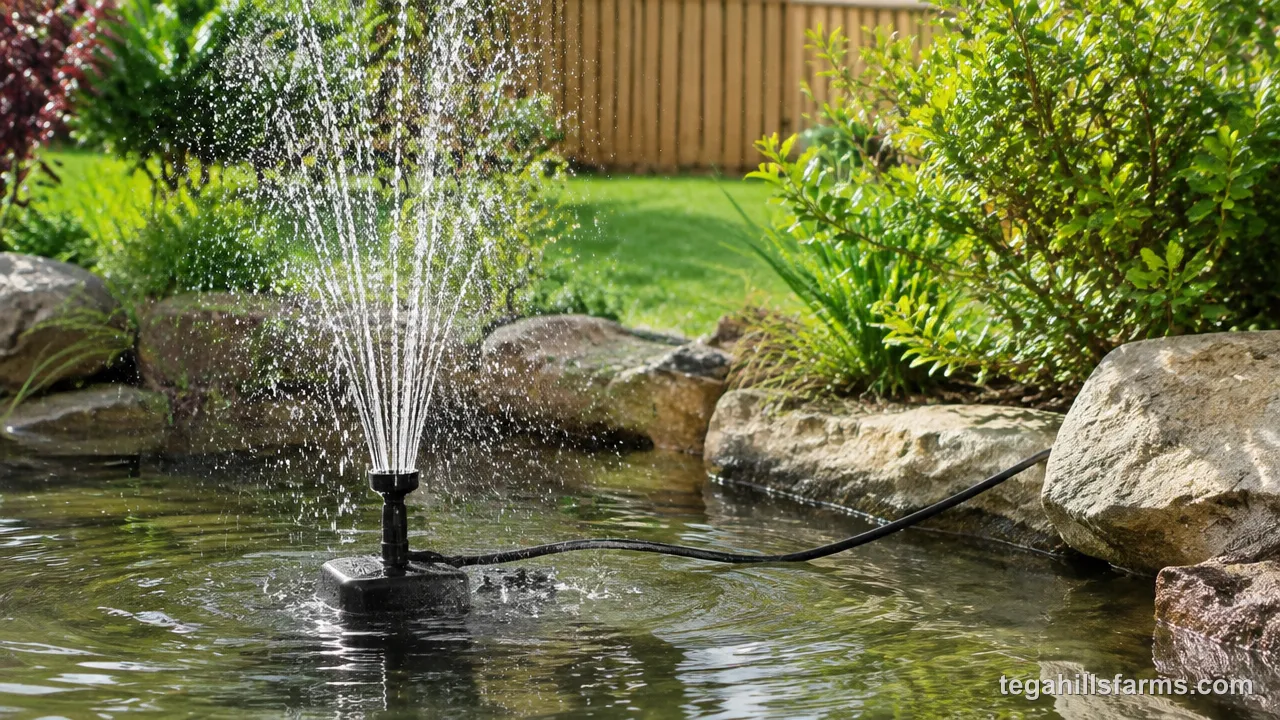
Height is the distance from the water surface to the top of the spray, so a taller plume raises the result. Pipe length is the run from the pump to the nozzle, which accounts for the friction the water meets on the way there. The formula multiplies by 60 at the end to convert a per-minute figure into gallons per hour, so the answer lines up directly with the GPH ratings on pump boxes.
Treat the result as a starting point. Nozzle type changes how much flow a spray pattern needs, since a single tall jet behaves differently from a bell or a multi-tier spray. Fittings, a diverter valve or a long horizontal run all add resistance that the formula only partly captures. I’d pick a pump that reaches the formula’s result with some margin and comes with an adjustable flow control, so you can tune the spray height once the fountain is running.
How Do You Go From Pond Dimensions to a Pump Choice Step by Step?
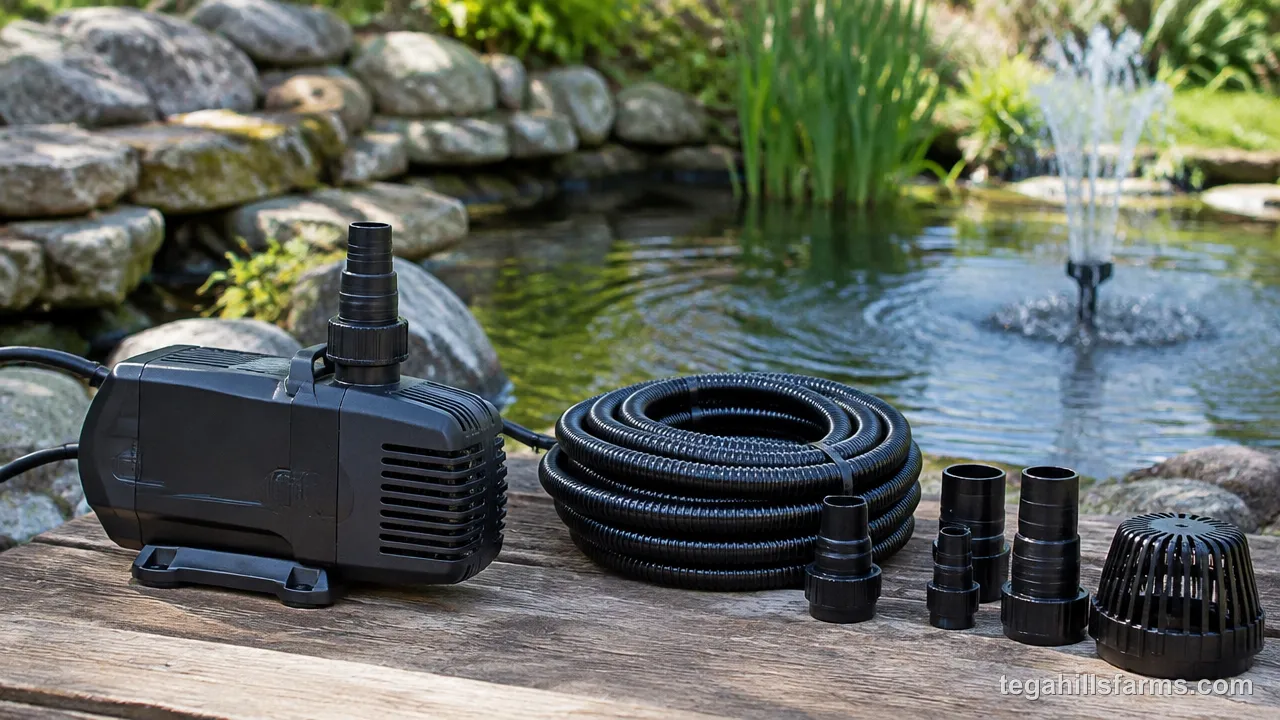
The path runs from pond volume to total head to a target GPH, and then to a pump whose flow chart meets that target at your head.
Take a rectangular pond with a waterfall that rises 2 feet above the surface and a pressurized filter in line. First, measure length, width and average depth in feet and multiply them by 7.5 to get gallons. That volume sets your turnover baseline.
Next, add up head. The waterfall gives 2 feet of static head, and the pressurized filter adds 7 feet more. If the tubing run is long or narrow, allow a little extra.
Then set the flow target. Measure the spillway in inches and multiply by 100 for a sheet. Compare that number with the turnover baseline and use whichever is higher.
Finally, check flow charts. Find your total head on each candidate’s chart and read the flow there; keep only pumps that meet the target. Budget pumps tend to hit their rating at low head, mid-range models hold flow better as head rises, and premium pumps usually add energy efficiency and longer warranties. For typical price ranges across those tiers, see the guide on how much a pond pump costs.
Does a Higher GPH Pump Use More Electricity?
Yes, in general, a higher GPH rating comes with higher wattage, because moving more water against the same head takes more power.
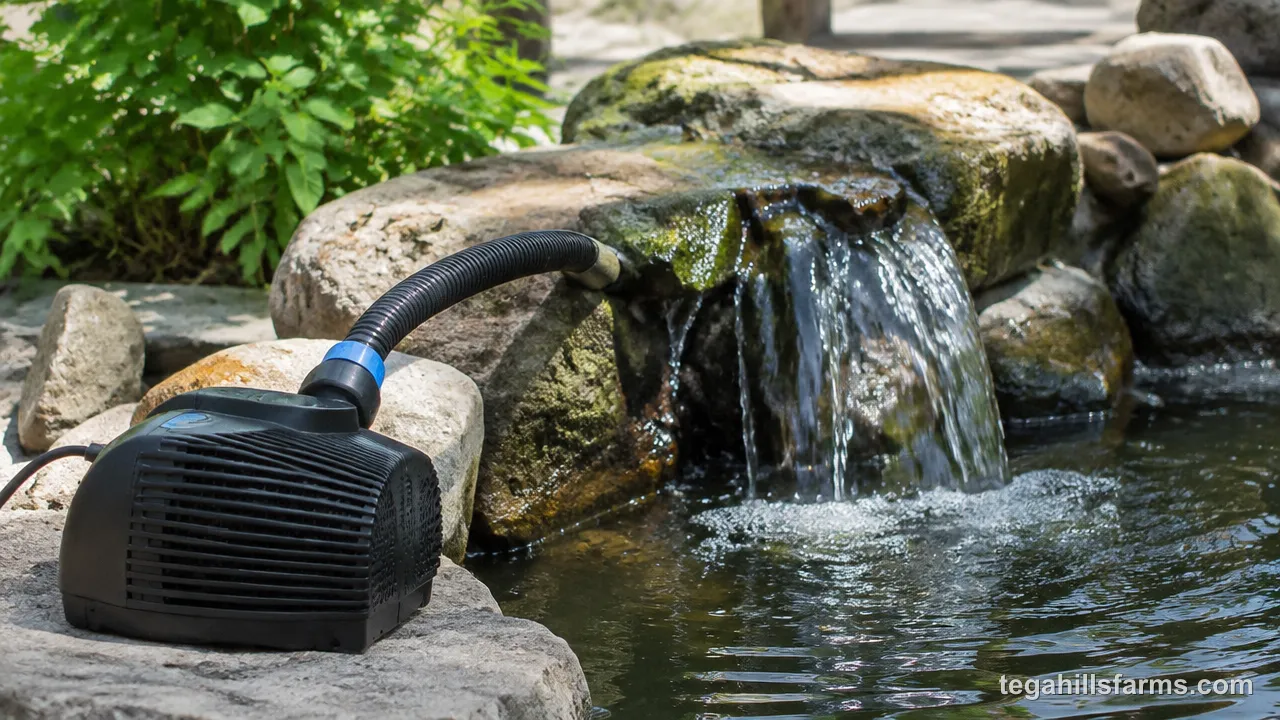
The relationship isn’t fixed, though. Two pumps with the same rating can draw very different wattage depending on motor design, since some move water far more efficiently than others. What matters for running cost is how many gallons a pump actually delivers per watt at your head, not its headline rating. A pump forced to work near the top of its head range burns power while moving little water. Because the pump runs around the clock, small differences in wattage add up across a season. For a closer look at the running cost side, see how much electricity a pond pump uses.
Plumbing almost never performs as cleanly as the math, and a pump sized to the exact calculated flow often comes up short once real tubing, fittings and a filter are attached. A valve can hold back a pump that runs a little strong, but nothing makes a weak pump push more water, which leaves you with a waterfall that never sheets properly and a second pump purchase.
Is It Better to Oversize a Pond Pump Than Undersize It?
A modest margin above your calculated flow is better than undersizing, because real installations nearly always lose some flow that the calculation didn’t catch. Long tubing runs, extra elbows, a filter that clogs between cleanings and a little debris on the intake screen all reduce delivered flow. A pump sized right at the target starts with no room for any of that.
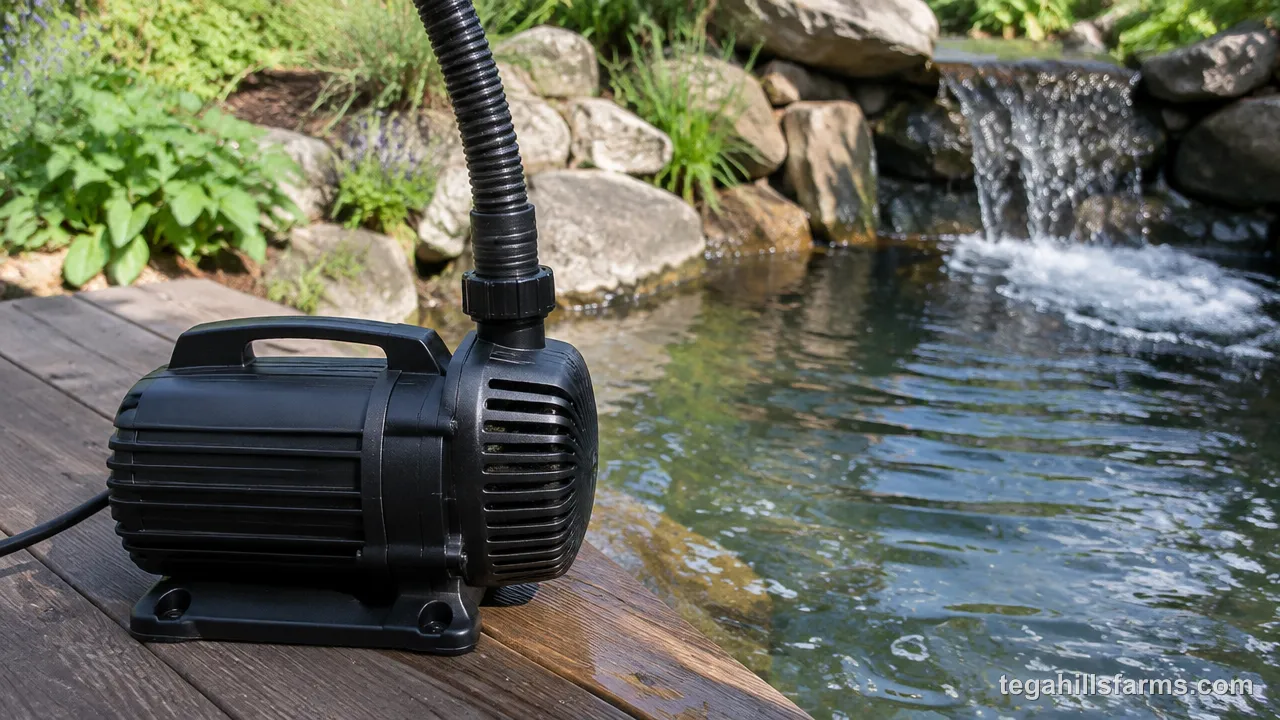
An oversized pump can be tamed. A flow control valve on the outlet line, or a pump with built-in adjustable flow, lets you dial the output down to what the pond needs. That control also lets you adjust between seasons or after you change the waterfall.
The margin should stay modest, though. A pump far larger than the pond needs draws more power around the clock for flow you then throttle away. Strong currents push fish around, tear at plant leaves and stir up sediment, which clouds the water. Excess flow can also push water through the filter too fast for it to trap debris well. I’d size for the target plus a reasonable cushion, then fine-tune with a valve.
How Do You Read a Pump Performance Curve?
The performance curve shows how much water a pump moves at each head height, and the flow at your head is the number that matters, not the headline rating. Manufacturers usually print it as a chart, with head in feet on one axis and flow in GPH on the other, or as a table listing flow at several heights.
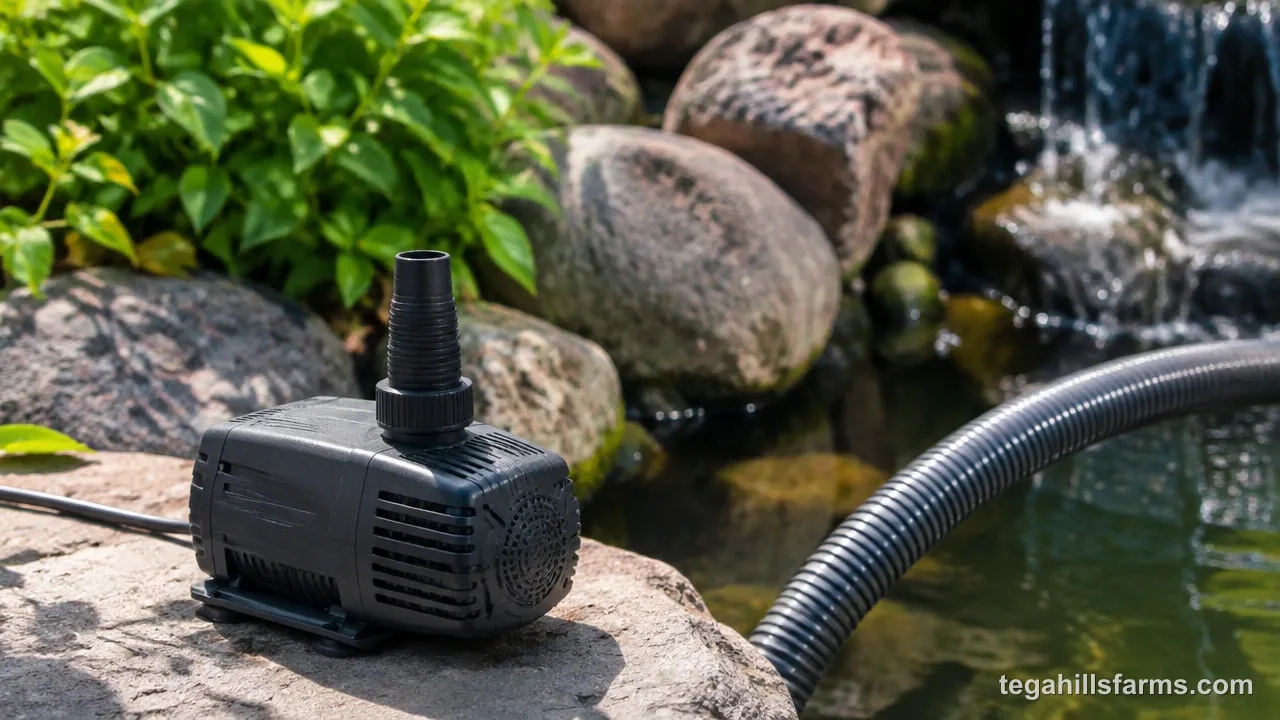
To read it, find your total head on the head axis. Follow that line across until it meets the pump’s curve, then read the flow at that point. That’s the flow your setup will actually get. The headline rating sits where head is zero, a situation that never happens in a pond with a waterfall or a filter.
Each curve also ends at a maximum head, sometimes called shut-off head, where the pump can lift water but delivers no flow. A pump running close to that limit moves very little water and works inefficiently.
Comparing two models fairly means reading both curves at the same head. A pump with a lower box rating can outperform a higher-rated one at your head if its curve drops off more slowly. Comparing the headline numbers alone can steer you to the weaker pump for your layout.
How Does GPH Change for Solar Pumps and Small Ponds?
Solar pumps and small ponds both break the usual sizing assumptions. Solar output depends on sunlight, so flow changes through the day. Small ponds and basin features hold so little water that a pump sized by the standard rules can churn them into a mess.
What Changes When You Size a Solar Pond Pump?
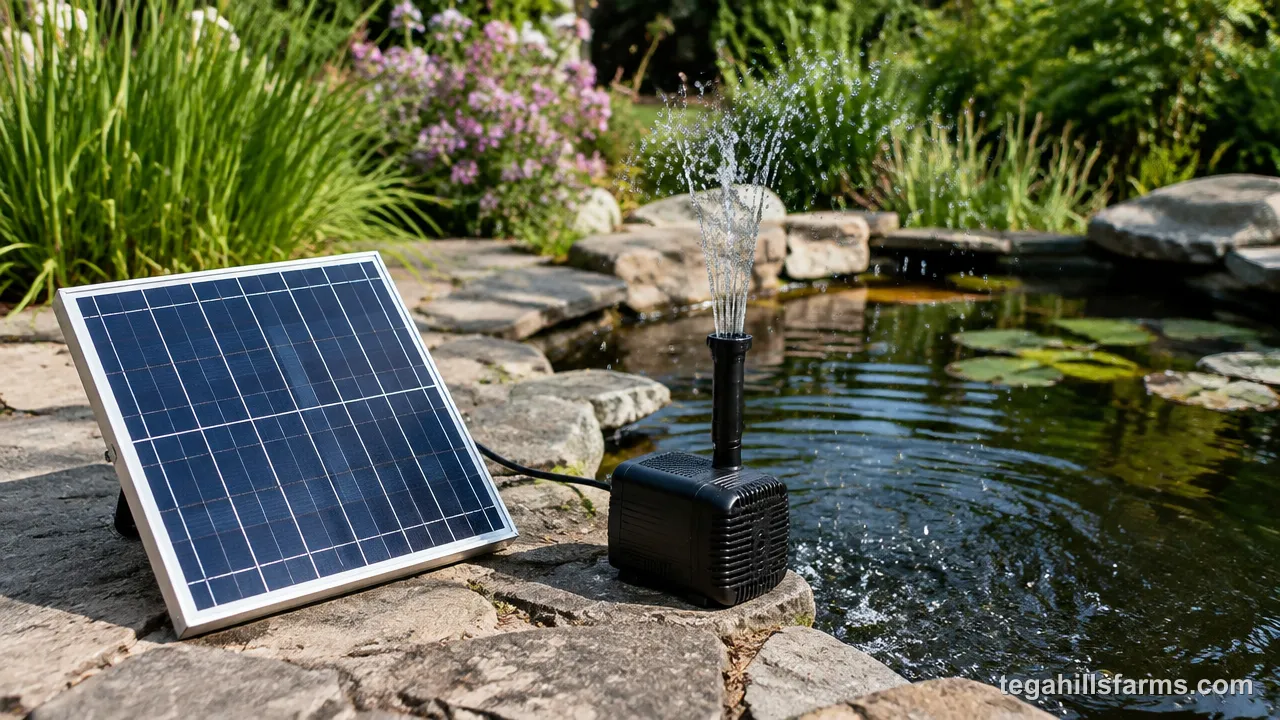
A solar pump delivers its rated GPH only in full, direct sun, so that number is a best-case figure rather than what you’ll see most of the day. Output drops in the morning and evening, under clouds and in partial shade, and stops when the sun is gone unless the unit has a battery.
That variability affects features differently. A fountain still runs as the sun fades; it just shoots lower. A waterfall needs steady flow to form a sheet, so a solar pump tends to produce an uneven trickle much of the day. Solar pumps also typically have low head capability, which rules them out for tall waterfalls or pressurized filters.
For a pond that depends on continuous filtration and oxygen, the lack of round-the-clock flow is a real limitation. The broader trade-offs between solar vs electric pond pumps come down to how much steady circulation your pond needs.
How Do You Size a Pump for a Small Pond or Basin Feature?
Small ponds and basin fountains need gentler flow than the standard guidance suggests, because a pump that’s modest for a large pond can overwhelm a small volume. In a small basin, strong flow splashes water out, drains the reservoir faster than expected and stirs up anything settled on the bottom.
Turnover still applies, but the absolute flow is low, so even a small pump can circulate the volume quickly. The bigger risk is a spray or spill that’s too forceful for the space. A tall fountain jet in a narrow basin catches the wind and lands outside the bowl.
Pick a pump with a lower rated flow, or one with adjustable flow, so you can turn it down until the water stays in the basin and the surface stays calm. Starting low and adjusting up is easier than trying to tame a pump that’s too strong for the container.
What Signs Show a Pond Pump Is Losing Flow?
A waterfall that no longer sheets across the full spillway is usually the first sign, followed by a fountain spray that sits lower than it used to. Rattling, grinding or humming without much water movement points to trouble inside the pump.
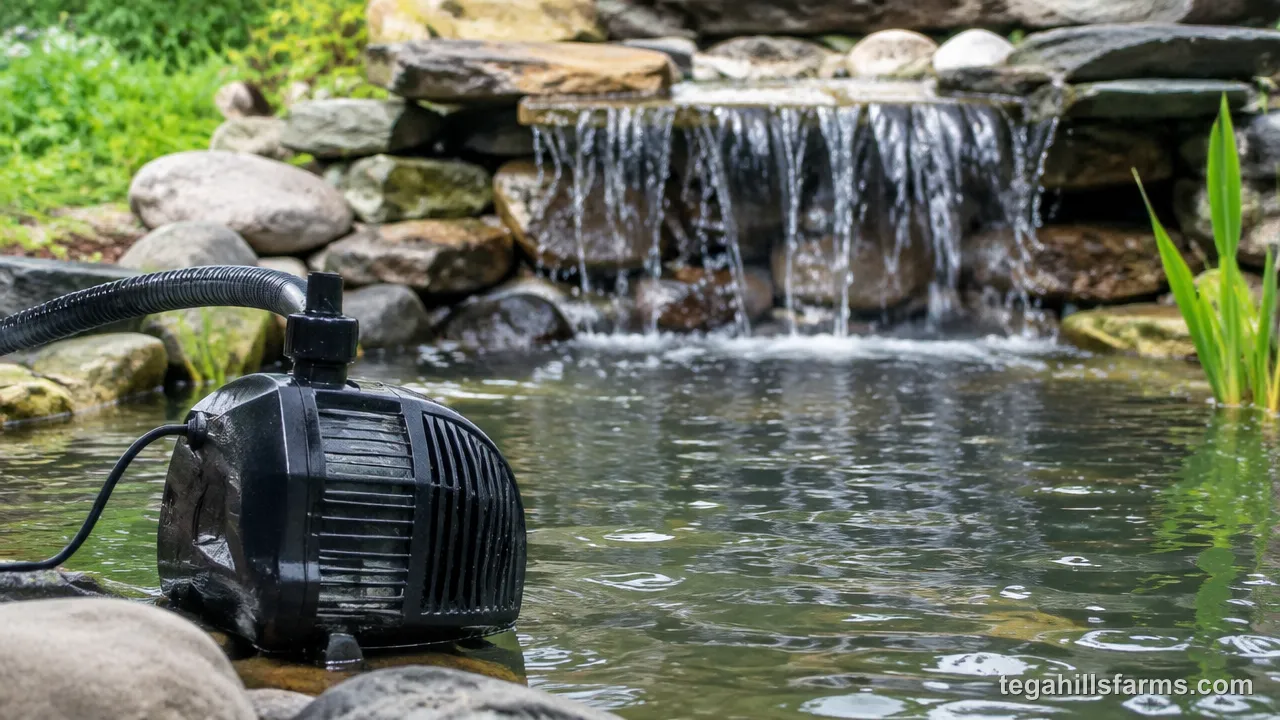
Clogging and wear look similar at first, but they behave differently. A clog from leaves, string algae or debris on the intake screen causes a fast drop in flow, and cleaning the intake, pre-filter and impeller chamber brings the flow right back. That’s routine maintenance, not a failing pump.
Wear shows up as a gradual decline that cleaning doesn’t fix. The pump impeller, the spinning part that pushes water, can chip, wear down or have its magnet weaken, and a grinding noise often means the shaft or bearings are worn.
When a clean pump still can’t reach its old flow, or the noise keeps getting worse, replacement often makes more sense than repeated repairs, especially if parts are hard to find for that model. For a sense of normal service life, see how long pond pumps last.
Pond Pump GPH Calculator FAQs
How many GPH does a small, medium or large pond need?
Any size pond needs a pump that circulates its full volume at least once every hour or two at your actual head. Calculate the gallons first, then look for a pump whose flow chart meets that number at your total head. A waterfall or heavy fish load can raise the target above the baseline.
Should a pond pump run all the time?
Yes, a pond pump should run 24 hours a day. Continuous flow keeps oxygen moving through the water and feeds the beneficial bacteria in the filter. Shutting it off overnight lets those bacteria decline and lets debris settle, which leads to cloudy water and odors.
How do you adjust pump flow after installation?
Install a flow control valve on the outlet line, or choose a pump with built-in adjustable flow. Start with the flow fully open, then close the valve gradually until the waterfall sheets cleanly or the fountain reaches the height you want. Recheck after cleaning the filter, since flow rises again.
What if your target falls between two pump sizes?
Choose the larger pump and use a valve to bring the flow down. Real plumbing and filter buildup reduce delivered flow over time, so the extra capacity gives you margin. Check both pumps’ flow charts at your head first, since the smaller one may already meet the target there.
Does pump depth in the pond count toward head?
No, head is measured from the water surface to the discharge point, not from the pump. A submersible pump sitting deeper has water above it that balances the extra depth. Only the vertical rise above the surface, plus friction from tubing, fittings and filters, counts toward total head.
Write Your Review
No reviews yet. Be the first to share your experience!