

Most homeowners splitting seasoned firewood are well served by a log splitter rated at 20 to 25 tons. Small softwood rounds need much less force, and big, knotty hardwood like oak or elm needs a machine that sits above that range. The right number depends on the wood you actually burn, not on the biggest rating you can afford.
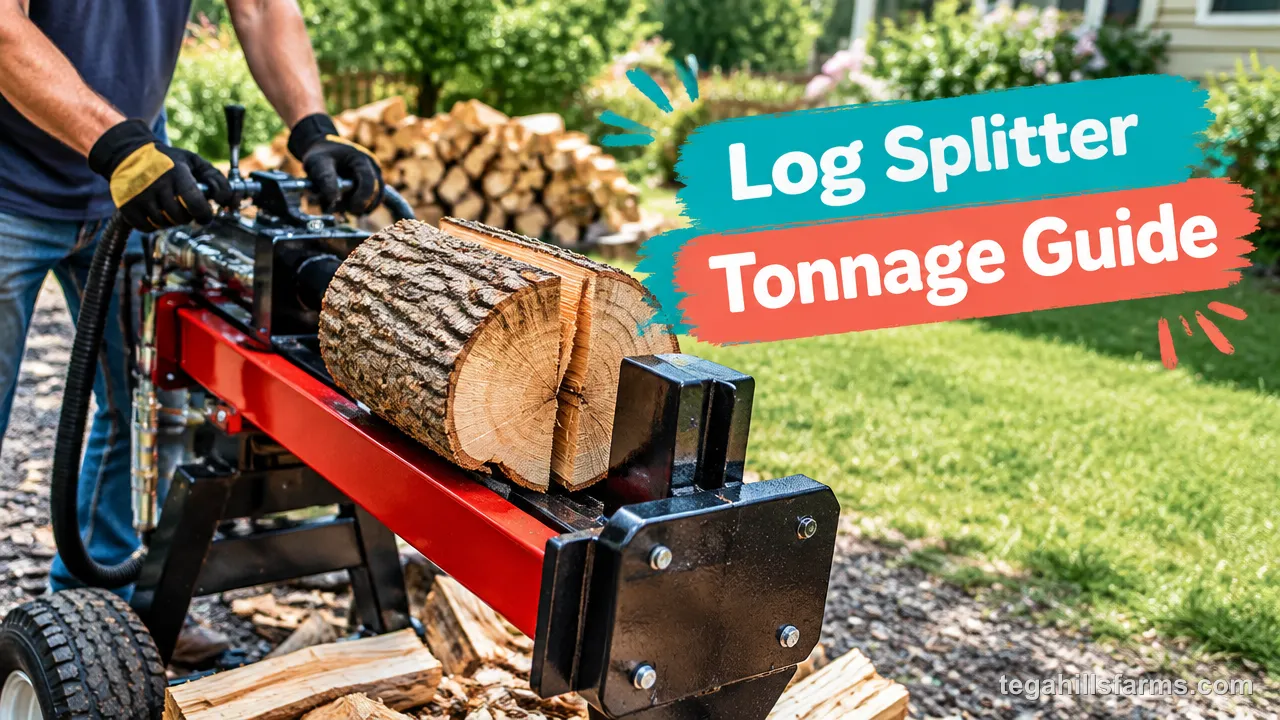
Three things set the force a log demands: the species and its hardness, the diameter of the round, and how much moisture is still in the wood. Ram speed, pump flow and engine power then decide how pleasant the machine is to run once the tonnage is right.
The worry for most buyers runs both ways. A splitter that’s too small stalls on the logs you need it for. One that’s too big costs more and takes up garage space you don’t have, and it may need a truck hitch to move.
Size the machine for the toughest wood you split every season, not for the one monster stump you deal with every few years. Renting covers that stump.
What Does Log Splitter Tonnage Actually Mean?
Tonnage is the maximum pushing force the hydraulic ram can put behind the log as it drives the round into the wedge, rated in tons of force at the system’s relief pressure.
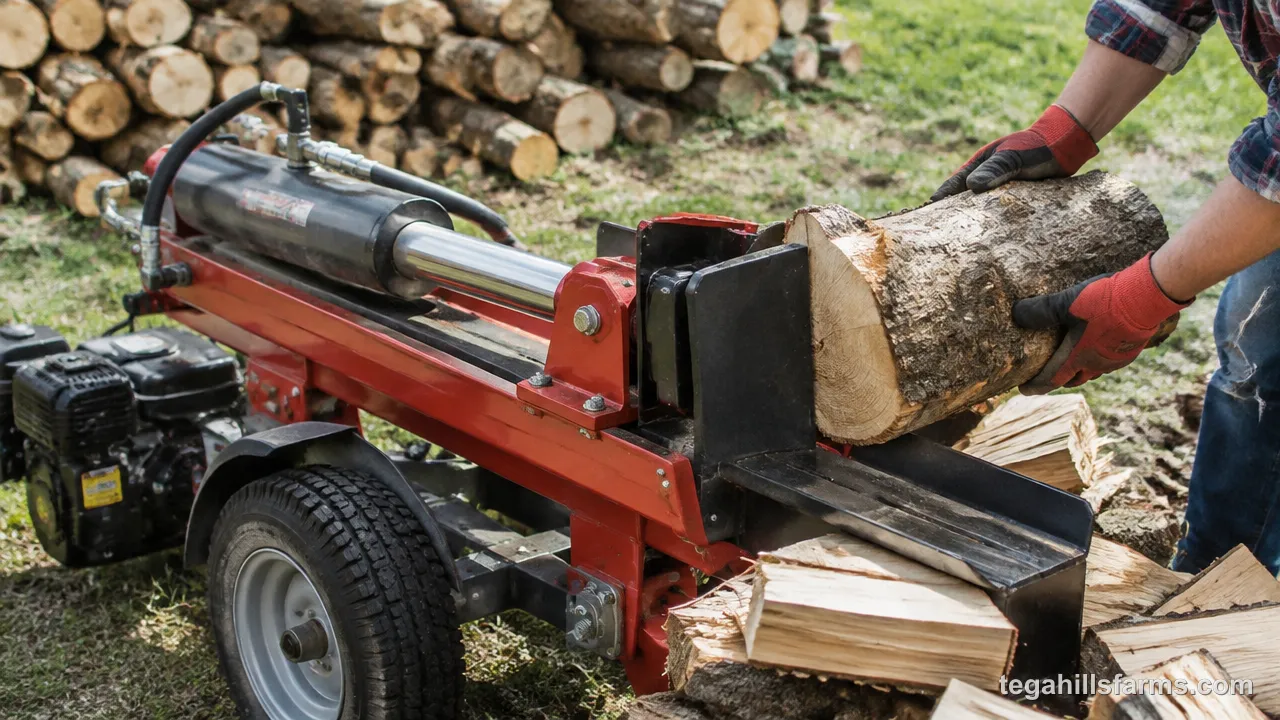
That figure comes from the hydraulic side of the machine, meaning the cylinder’s bore and the pressure the pump can build. The engine or motor doesn’t set it directly. Its job is to turn the pump, so a larger engine mostly adds speed and keeps the pump at full output under load. This is why engine size is a poor stand-in for splitting power: two machines with the same engine can carry different cylinders and different ratings.
Matching tonnage to your wood comes down to resistance. The ram has to push harder than the log’s fibers hold together. If it can’t, the wedge stops partway in and the log stays whole.
Tonnage is one of several factors in how to choose a log splitter, but it’s the one that decides whether a machine can handle your wood at all.
How Much Tonnage Do You Need for Your Wood?
Wood hardness, log diameter and moisture content together set the force a splitter needs, so the same machine can feel overpowered on one woodpile and undersized on the next.
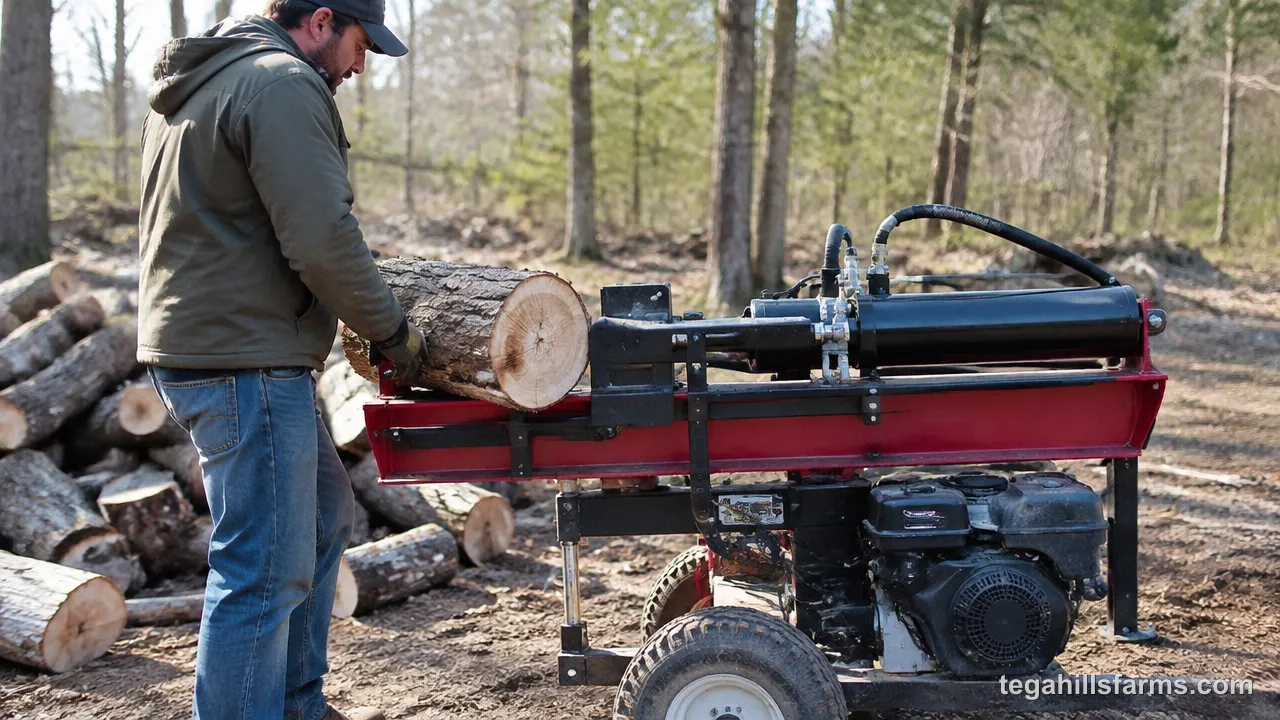
Hardness decides how tightly the fibers grip each other. Diameter decides how much of that grip the wedge has to break through in one stroke. Moisture changes how the fibers behave, and so do knots and twisted grain. When you size a machine, look at the hardest, widest and wettest wood you split often, because that is where an undersized splitter fails first.
Which Tonnage Works for Hardwood vs Softwood?
Hardwood needs far more force than softwood at the same size. A 6-inch hardwood log takes about 10 tons, while a 6-inch softwood log needs about 4. Small softwood rounds fit a light 4 to 7 ton machine, and dense hardwood pushes the requirement steeply upward as logs get wider.
The difference is in the wood itself. Oak, hickory, elm, maple and ash are dense, with long, tough fibers packed tightly together. Pine and cedar are lighter and open-grained, so the fibers separate once the wedge starts a crack. The Janka hardness scale puts a number on this: ash rates about 1,320 lbf, which places it well into hardwood territory.
At the heavy end, an oak round 24 inches across can need 30 to 37 tons. If your woodpile is mostly pine and cedar trimmings, a light machine does the job. If oak, hickory or maple fills the bulk of your winter supply, plan on a full-size hardwood class from the start.
How Does Log Diameter Change the Tonnage You Need?
A wider log puts more fiber in the wedge’s path and more surface against its sides, so required force climbs quickly as diameter grows. A tonnage chart shows this by listing wood types against diameter rows, with a force figure where each species meets each size.
To read one, find your wood and then the row matching your largest regular round. When the log falls between rows, use the next row up. Take a typical ash round of about 14 inches. Many charts have no 14-inch row, so you read the 18-inch line, which points to at least 26 tons. Rounding up builds in a margin for knots and uneven ends.
Chart values differ between manufacturers. Each assumes its own wedge shape, moisture level and cylinder design, and some charts lean conservative to cover the worst log of a species. Use any single chart as a guide to the class of machine you need, not as an exact cutoff.
Does Green Wood Need a Bigger Splitter Than Seasoned Wood?
Yes. Freshly cut green wood is wetter and its fibers bend instead of snapping, so large green hardwood rounds demand the top of the force range. Big green oak sits at the high end of what home machines deliver.
Seasoned wood behaves differently under the wedge. As logs dry, they shrink and develop checks, which are cracks running in from the ends. Those cracks give the wedge a head start, and drier fibers break apart with less push. That’s why well-seasoned, easy-splitting hardwood like ash, along with softwoods and smaller-diameter logs, works on a lighter-duty 10 to 20 ton machine.
Knots and twisted grain change the picture regardless of moisture. A knot is a branch base that runs across the main grain, and twisted or interlocked grain, common in elm, keeps fibers wrapped around each other. In both cases the wedge has to tear the wood rather than follow a split line, which can stall a machine that handles clean rounds easily. If you split green wood straight off the stump, size up a class.
What Tonnage Fits Homeowners vs Commercial Use?
The machine class depends on how much wood you split each year and how tough that wood is: occasional household firewood fits a mid-size machine, while heavy volume and commercial work call for full-size and commercial units.
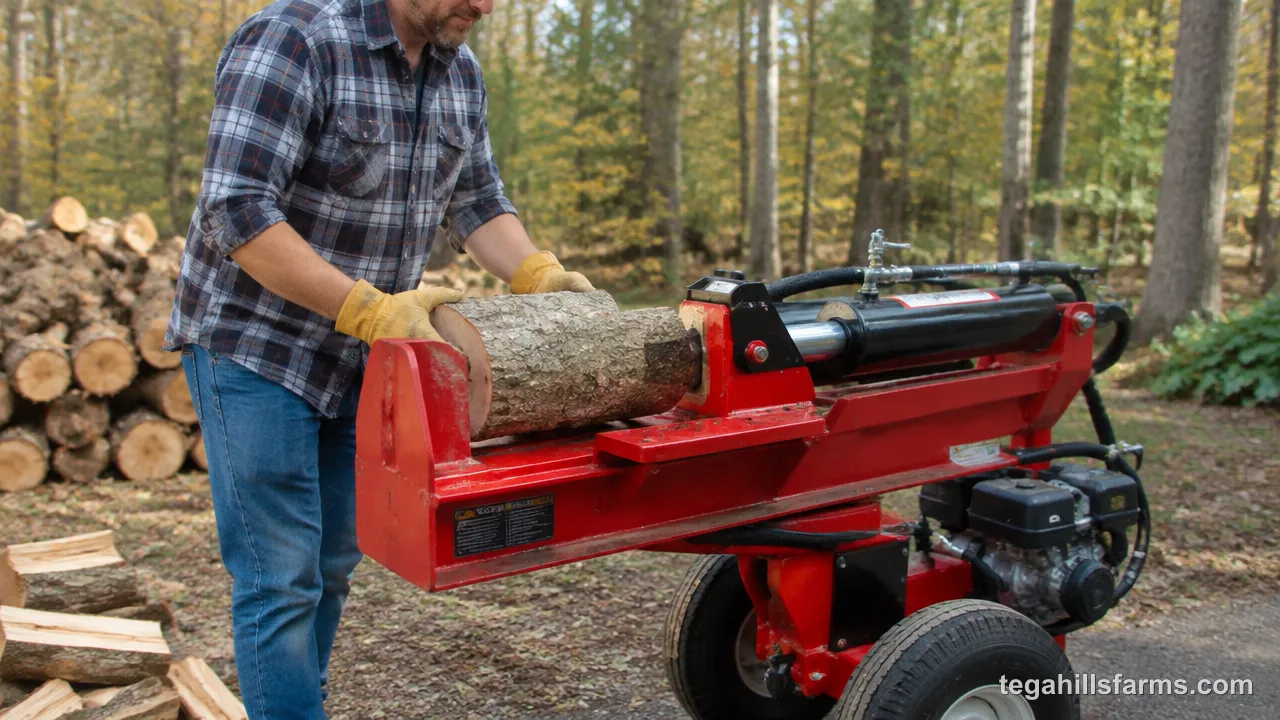
Published recommendations disagree, and the reason is what each one assumes. One common breakdown puts residential splitters at 7 to 16 tons for logs up to 24 inches. Firewood advice aimed at homeowners usually lands in the low-to-mid 20s instead. The first assumes easy, seasoned wood. The second leaves room for hardwood, knots and the occasional green log. Read any recommendation alongside the wood it assumes.
Is a 20 to 25 Ton Splitter Enough for Most Homeowners?
For most households burning seasoned firewood, yes. This class has enough force for common hardwood rounds of typical firewood length and diameter, with headroom for the knots and crooked pieces that turn up in every cord.
The lighter end of the range suits wood that has dried a season and splits cleanly: ash, maple, cherry and mixed softwoods. Those machines are smaller and easier to move around the yard. They tend to slow down on a big knotty round, though, and you’ll sometimes reposition a log and try a second time.
The heavier end gives you margin. A 25 ton machine is more likely to push through a knotted crotch piece or a green log without stalling, so you spend less time fighting individual pieces. If your supply mixes clean seasoned wood with some tougher logs each year, the upper end of this class is where I’d look. It covers the mixed woodpile without moving you into the size and weight of full-size machines.
When Do You Need a 27, 30 or 40 Ton Splitter?
Larger machines make sense in three situations: big, knotty hardwood, large green logs, and high yearly volume.
- 27 tons and up: large-diameter oak or elm with knots and twisted grain. At this force, the ram is far less likely to stall on the wood that defeats mid-size machines.
- 30 tons and up: the full-size class, covering 20 to 30+ tons, handles average hardwoods, large green logs, knotted species like oak and hickory, and high-volume firewood processing. If you heat with wood all winter and split straight off fresh-cut logs, this is your range.
- Up to 40 tons: commercial machines run 20 to 40 tons and take logs 28 to 36 inches across. They suit firewood sales, tree service cleanup and anyone feeding several stoves.
The extra capacity buys fewer failed splits on hard logs. It doesn’t make a machine faster on its own.
Should You Buy or Rent a Larger Splitter?
Owning a mid-size machine and renting a heavier one for the occasional big job is often the better split. Most rental units sit around 26 tons, which handles the oversized rounds a typical homeowner machine struggles with.
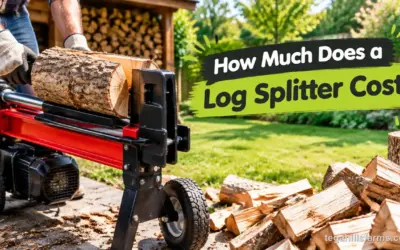
If big, tough logs show up once every year or two, say after a storm drops an old oak, a rental day covers it without the purchase, storage and upkeep. If you split hard, wide wood every season, rental fees and hauling add up, and owning the heavier machine pays back in convenience. Knowing how much a log splitter costs in each class makes that math clearer before you commit.
How Do Electric, Gas and Manual Splitters Compare on Tonnage?
Manual splitters handle logs up to about 12 to 18 inches, electric models up to about 24 inches, and gas machines up to 36 inches, with gas-engine splitters commonly rated 20 to 40 tons.
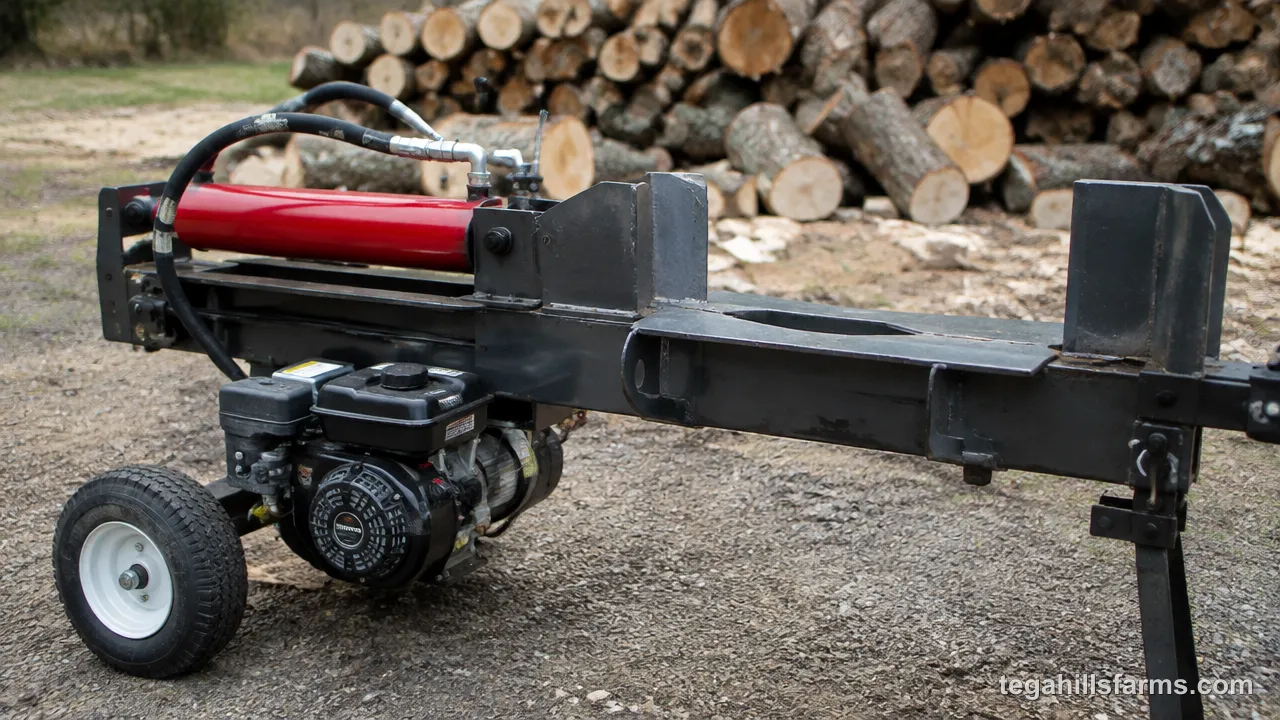
Each type differs in what drives the ram and where it fits in a working yard.
| Power source | What drives the ram | Where it works | Main tradeoff |
|---|---|---|---|
| Manual | Your own effort on a hand pump or lever | Anywhere | Slow and tiring on hard wood |
| Electric | 1.5 to 2 HP motor | Garage, shed or near the house, close to an outlet | Smaller log limit, tied to a power source |
| Gas | Engine of about 5 HP to 14 HP and up | Anywhere, including the woodlot | Noise, exhaust, engine upkeep |
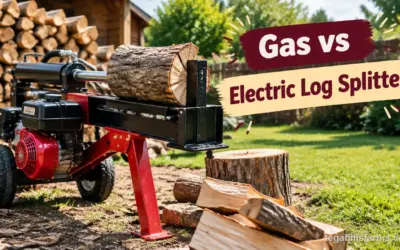
Manual units suit someone splitting kindling or small softwood rounds a few times a season. Electric splitters run quietly with no exhaust, so you can work indoors or right beside the house, but their log size limit keeps them in the light-to-moderate category. Gas machines cover the full range of tonnage and can travel to wherever the wood is. The full tradeoff between gas vs electric log splitters comes down to your log sizes and where you plan to work.
Why Do Cycle Time, Pump Flow and Engine Power Matter Alongside Tonnage?
Tonnage sets how hard the ram pushes, but pump flow, system pressure and the engine or motor decide how fast it moves, so two splitters with equal tonnage can feel very different over an afternoon.
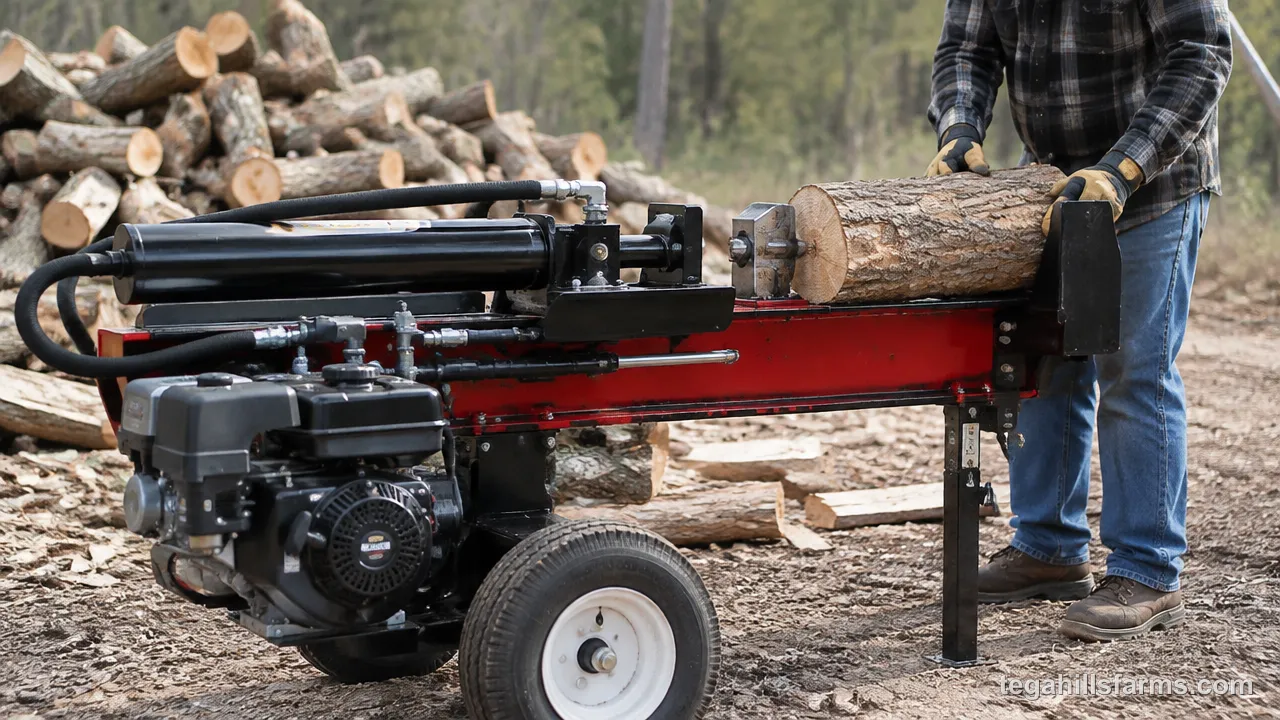
Many gas splitters use a two-stage pump to get both force and speed. The pump moves a high volume of oil at low pressure while the ram travels and meets little resistance, then switches to low volume at high pressure the moment the wedge bites into the log. The ram travels quickly through empty stroke and still delivers full force when it matters.
What Is Cycle Time and Why Does It Slow You Down?
Cycle time is how long the ram takes to extend fully and return to its starting point. Typical consumer-grade I-beam splitters take 16 to 20 seconds or more, while many commercial machines finish the round trip in 7 to 10 seconds.
That gap shows up in your day. Every log involves waiting for the ram, and every awkward round that needs a second pass doubles that wait. Over a long splitting session, a slow machine stretches the job and keeps you standing in one spot, lifting and holding logs longer.
For a homeowner splitting a few cords a year, a consumer cycle time is a fair trade for a lower price and smaller machine. If you process large volumes or split with a helper loading logs, a faster cycle keeps both of you moving.
How Do GPM, PSI and Horsepower Work Together?
Pump flow (GPM, gallons per minute) sets ram speed, system pressure (PSI) sets ram force, and the engine or motor has to supply enough power to deliver both at once. The relationship is direct: horsepower equals GPM times PSI divided by 1,714.
Pressure acting on the cylinder’s piston area produces the force at the ram, which is where the tonnage rating comes from. Flow determines how quickly oil fills the cylinder, which is how fast the ram travels. A bigger pump moves more oil and speeds the cycle, but it needs more power to turn at full pressure.
That formula gives the bare minimum. Real engines lose output to friction, heat and altitude, so the power plant needs a margin above the calculated figure. When an engine is undersized for its pump, it bogs down as pressure builds, and the machine feels sluggish even with a respectable tonnage rating.
Which Splitter Orientation Fits Your Work Style?
Horizontal splitters suit rounds you can lift onto the beam, vertical splitters let you roll heavy rounds under the wedge without lifting, and convertible H/V models switch between both positions.
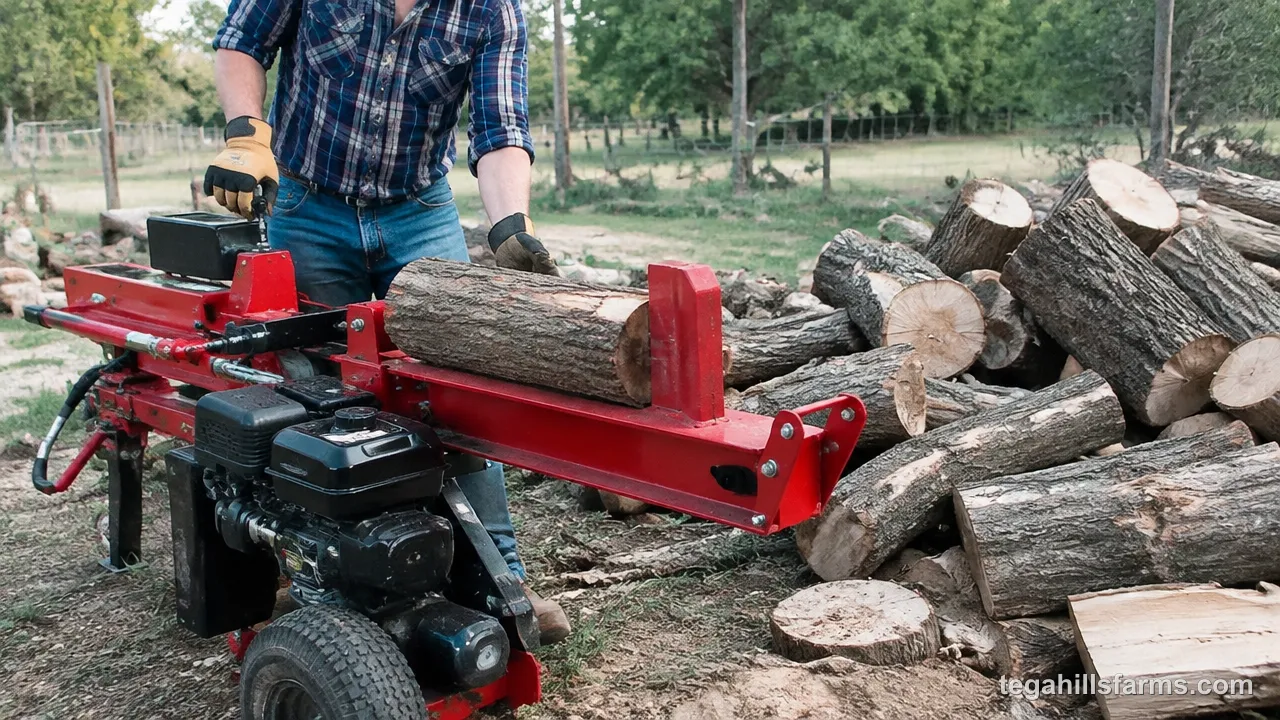
On a horizontal machine, every log goes up onto the beam by hand. That works fine for firewood-length pieces of modest diameter, and you can often stand or sit while you work. Big rounds are another matter. Lifting a heavy hardwood round onto the beam over and over is where backs give out.
In vertical mode, the beam stands upright and you tip or roll a round onto the foot plate, then lower the wedge onto it. That removes the lift entirely, which is why convertible splitters make sense for anyone dealing with large-diameter logs.
Working height matters for long sessions. A work deck around 35 inches puts the operating level at waist height, so you aren’t bending to place and catch split pieces. The right posture is part of how to use a log splitter safely, along with keeping hands clear of the wedge.
A knotty crotch piece or a twisted elm round can stop a ram dead even on a machine that sails through clean oak, and the chart you sized the splitter by never accounted for that log. Push through those stalls day after day without reading what the machine is telling you, and the damage shows up later as weak pressure, cooked oil or worn seals.
What Are the Signs Your Splitter Is Undersized or Overworked?
An undersized splitter stalls the ram partway into the log, makes a high-pitched whine as oil bypasses through the relief valve, fails to split the same log after several tries, and runs hot. A well-matched machine pushes through most logs in one smooth stroke, slowing only on the odd knot.
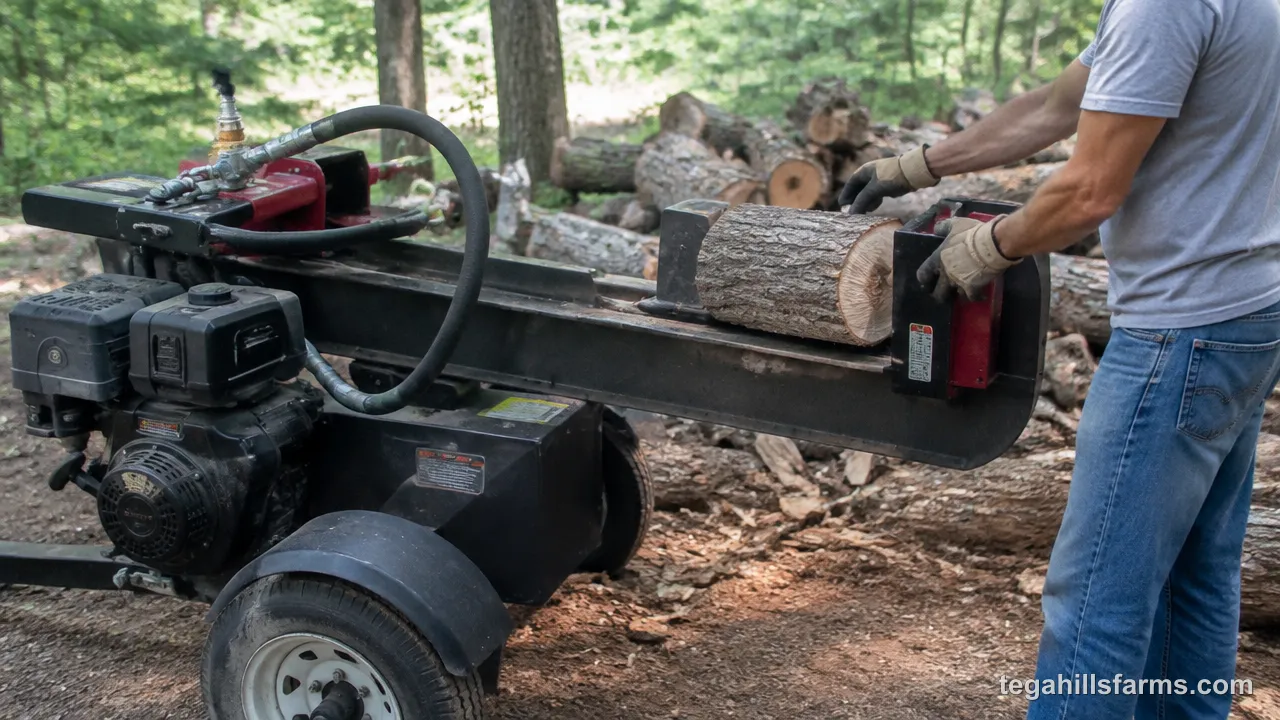
The whine is the clearest signal. The relief valve opens when pressure reaches the system’s limit, so the pump is spending its effort pushing oil back to the tank instead of moving the ram. Holding the lever in that state for long stretches heats the oil, which thins it and breaks down seals, and that heat is one of the main factors in how long log splitters last.
On gas machines, an engine that bogs and stalls repeatedly under load also points to a mismatch. If a log splitter won’t start after a heavy session, let it cool before troubleshooting further.
When you see these signs, stop forcing the log. Turn it to attack from a different angle, split from the edge instead of the center, or set the round aside for a heavier rental.
Is a Bigger Splitter Always Better, or Can You Overbuy?
You can overbuy. Extra tonnage brings more weight, a larger footprint, a bigger engine and often a towing hitch, and none of that helps if your wood is seasoned and moderate in size.
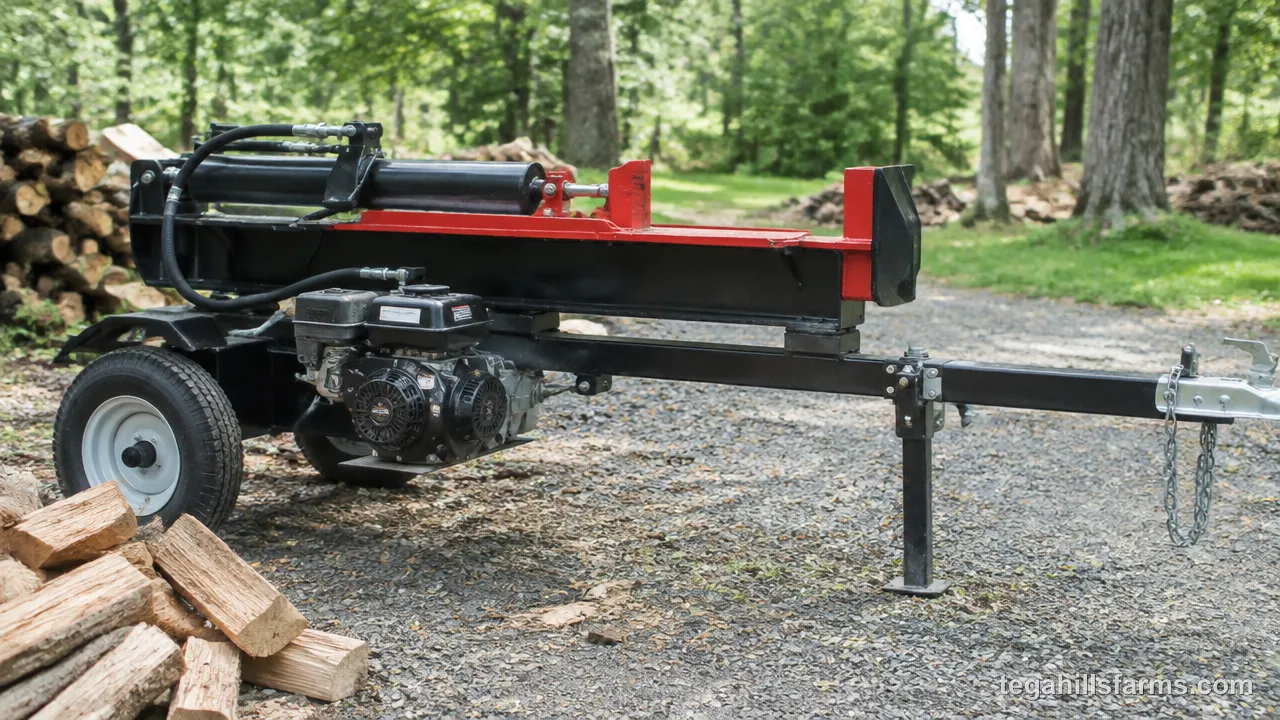
Big machines are harder to move around a small yard and take up more room in the garage or shed. Many need a vehicle to tow them, which matters if you don’t have a hitch or a place to park a trailer. A larger engine also burns more fuel and adds to the upkeep you take on each season: oil changes, filters and winter storage. If you split a cord or two of clean, seasoned wood, much of that capacity will sit unused.
Moving up a class is worth it when tough wood is your normal supply, not the exception. If you regularly split large oak, elm or green logs, or process high volume every year, the extra force saves enough time and frustration to justify the bulk.
Log Splitter Tonnage FAQ
How big a log can a 22 ton splitter handle?
A 22 ton splitter handles typical seasoned firewood rounds of common hardwoods and nearly any softwood you’ll cut to stove length. It starts to struggle on very wide, knotty oak and elm or large green hardwood. For those, rent a heavier machine or split the round from the edges inward.
Can a 10 ton log splitter split oak?
A 10 ton splitter can split small-diameter oak, especially once it’s seasoned and checked at the ends. Wide oak rounds are beyond it, and knotty or green oak will stall the ram quickly. If oak makes up most of your woodpile, a machine in the mid-20s or above is a better fit.
Can you trust tonnage claims on log splitters?
Treat tonnage as a theoretical maximum. It’s usually calculated from cylinder size and relief pressure, not measured at the wedge, and manufacturers don’t all rate the same way. Compare cylinder bore, pump size and engine power alongside the tonnage figure to judge whether a rating holds up in real splitting.
Does a higher-tonnage splitter split faster?
Not necessarily. Tonnage sets how hard the ram pushes, while pump flow and engine power set how fast it travels. A high-tonnage machine with a small pump can cycle slowly, and a mid-size machine with a two-stage pump can feel quick. Check cycle time separately when speed matters to you.
Does a bigger engine mean more tonnage?
No. Tonnage comes from the hydraulic cylinder and the pressure the system can build. The engine turns the pump, so more horsepower mainly supports more oil flow and a faster cycle. An engine that’s too small for its pump will bog down, but adding horsepower alone doesn’t raise the splitting force.
Write Your Review
No reviews yet. Be the first to share your experience!