

When a gas log splitter refuses to fire, the cause is almost always in one of three places: the fuel reaching the carburetor, the spark at the plug, or the oil level the engine’s shutdown sensor reads. Checking them in that order finds most faults with basic hand tools, before any part needs replacing.
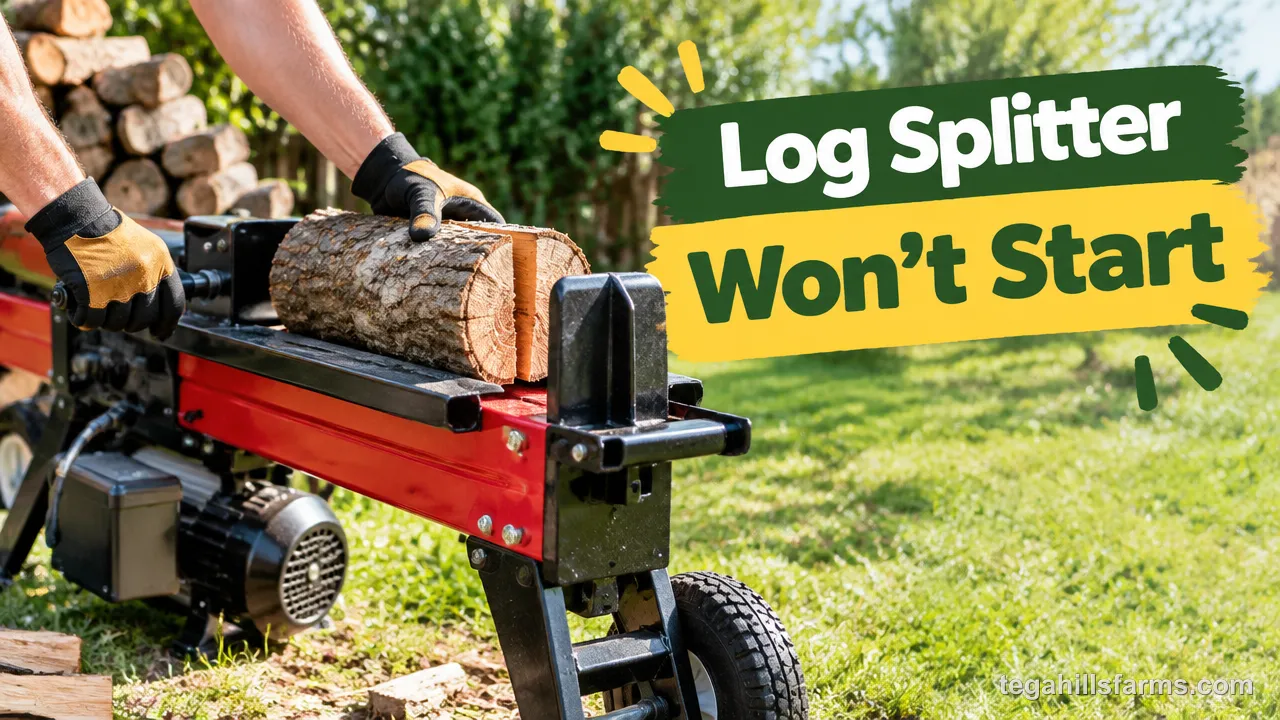
The order matters because it puts the likely, cheap problems ahead of the rare, expensive ones. Old or contaminated gas is the usual culprit after the machine sits between wood seasons. A fouled plug or a tripped low oil switch comes next. Air restriction and compression come after that, and the hydraulic side only matters once the engine actually runs.
Many owners worry most about making things worse by yanking a stuck cord, spraying too much starting fluid, or bypassing a safety switch to get the engine going. Each of those shortcuts can turn a simple fuel fix into internal engine damage, so the safe way to test each system is part of the diagnosis.
What Should You Check First When a Log Splitter Won’t Start?
Check the engine stop switch, the fuel level and fuel shut-off valve, and the choke and throttle settings. These no-tool checks solve a surprising share of no-starts before you pick up a wrench.
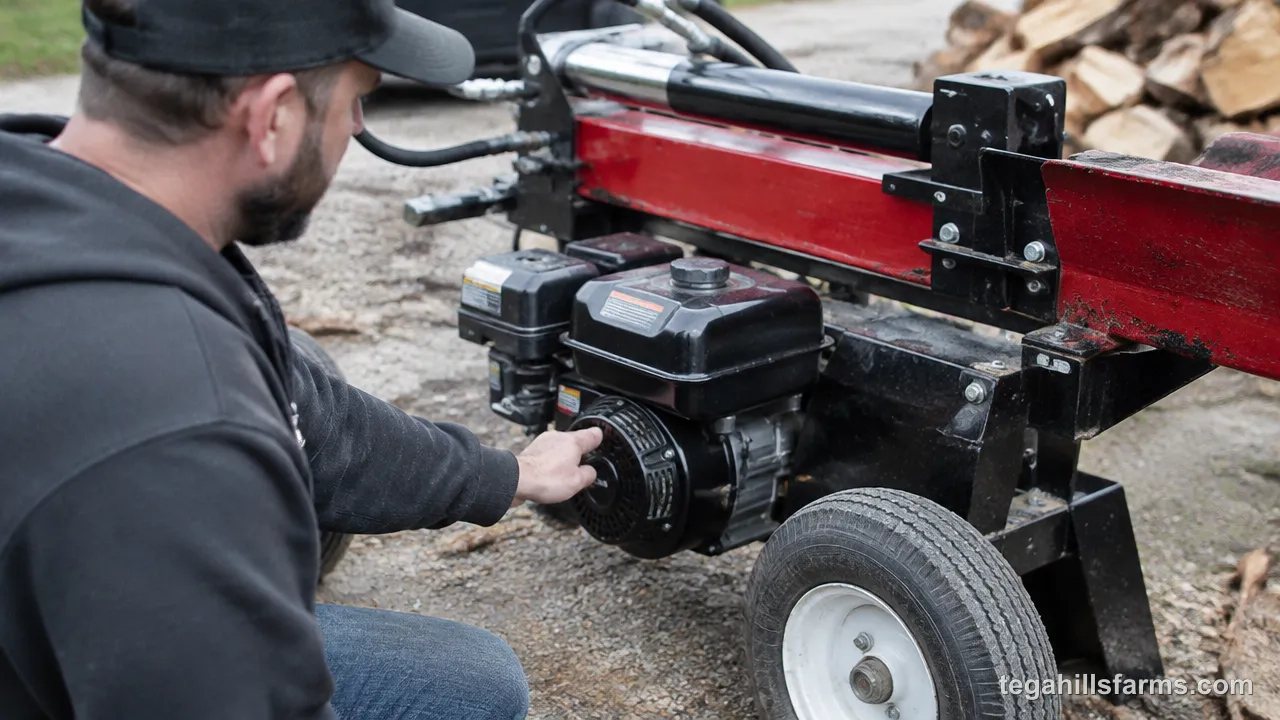
The stop switch on most splitter engines sits near the throttle lever, and it gets bumped to OFF when the machine is towed, covered or moved around the shed. The fuel shut-off valve under the tank is easy to leave closed after storage. With the valve closed, the engine may crank, burn the little fuel left in the carburetor bowl and quit. A tank that looks full in a dim garage can be close to empty, so shine a flashlight into it.
If those pass, stop guessing at parts and diagnose by system: fuel first, then spark, then air and the low oil shutdown, and compression last. An engine needs all four to fire. Testing them in that order means the common, inexpensive faults get ruled out before the costly ones.
Most of these no-start problems come down to upkeep habits and engine quality, which is also why it pays to know how to choose a log splitter that suits your wood and the amount of maintenance you’re willing to do.
Why Is Fuel the Most Common Reason a Log Splitter Won’t Start?
Fuel-related faults account for about 80% of small engine starting problems, so the fuel system deserves more of your diagnostic time than any other part of the engine.
What matters most is how long the gas sat and what happened to it between the tank and the carburetor jet. A splitter often goes untouched from late winter until the next fall’s wood pile. That gives gasoline months to break down, collect moisture and leave deposits in passages narrower than a pin. The engine can crank perfectly and still never fire if the fuel that reaches the cylinder can’t ignite.
How Does Old Gas Stop a Log Splitter From Starting?
Gasoline can begin going stale in about 30 days, and a splitter parked since last season has sat far longer than that. As gas ages, its most volatile components evaporate. What remains doesn’t vaporize well enough to light in a cold engine. The rest oxidizes into gum and varnish that coat the carburetor’s jets and float needle.
Stale fuel usually smells sour or like varnish instead of sharp and clean, and it often looks darker than fresh gas. To clear it, work outdoors with the engine cold and away from any flame or pilot light. Drain the tank and fuel line into an approved container, then drain the carburetor bowl. Take the old fuel to a household hazardous waste drop-off, following local disposal rules.
Refill with fresh gasoline rated 87 octane or higher. Adding a fuel stabilizer to that fresh gas slows the breakdown, so the same problem doesn’t wait for you next season.
What If There Is Water in the Gas Tank?
Water usually gets into fuel through condensation in a half-empty tank, or from a gas can stored outdoors with the cap loose. Ethanol-blended gas also absorbs moisture from humid air. Water is heavier than gasoline, so it sinks and shows up as clear beads or a separate layer at the bottom of the tank or carburetor bowl.
The engine can’t burn water. Once a slug of it reaches the main jet, combustion stops. Drain the tank, fuel line and carburetor bowl until the fuel runs out clean, let the parts dry, and refill with fresh gas.
Fuel-drying additives handle trace moisture, but they can’t absorb a visible layer of water. Draining is the only real fix once you can see it.
How Do You Know the Carburetor Is Clogged?
A gummed carburetor shows itself when the engine has fresh fuel and good spark but still won’t start. It may also fire only with the choke closed, surge at idle, or start and then die. Those symptoms mean fuel isn’t getting through the small passages in the right amount.
The fuel filter and fuel line sit in the same path, so rule them out first. With the shut-off valve open, pull the fuel line off at the carburetor and let it drain into a container. Strong, steady flow means the filter and line are fine and the problem is inside the carburetor. A weak trickle points to a clogged filter, a kinked line or a blocked tank vent.
To clean the carburetor, remove the bowl, spray carb cleaner through the jets and passages, and blow them clear with compressed air. Don’t run wire through a brass jet, because that can enlarge the opening and upset the fuel mix. Replacement makes more sense when varnish has hardened deep in the passages, when the float or needle is damaged, or when a careful cleaning didn’t fix it. I’d rather bolt on a new carburetor than clean the same one a third time.
How Do You Check for Spark When a Log Splitter Won’t Start?
Remove the plug, reconnect its wire, hold its metal body against bare engine metal, and pull the starter. A strong, steady spark across the gap confirms the ignition system is working.
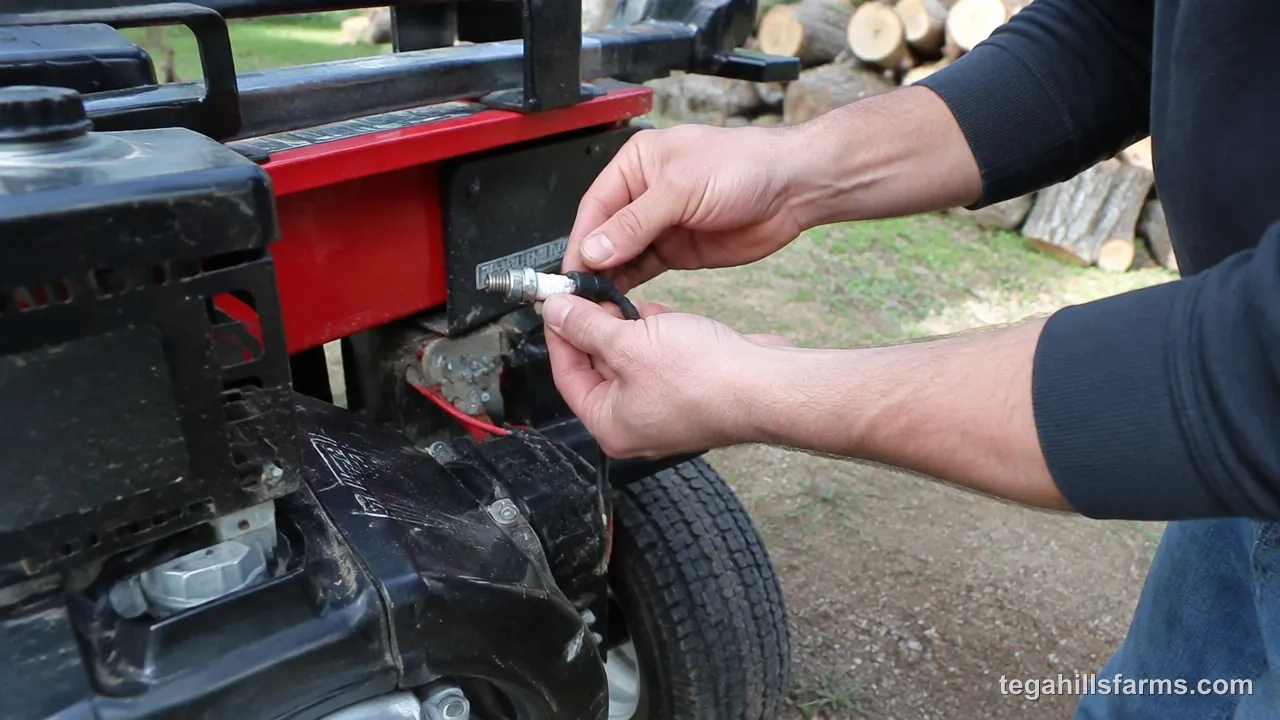
The ignition system’s job is to send high voltage to the plug at the right moment, triggered as the flywheel magnet passes the ignition coil. When nothing happens at the plug, the question is whether the plug itself failed or whether the coil feeding it did. Plugs are cheap and quick to swap. Coil diagnosis takes more care, so the plug is the sensible place to start.
What Does a Bad Spark Plug Look Like?
A bad spark plug is usually visible as soon as it comes out of the engine. Black, dry soot means the engine has been running rich, often from a choke left closed. A plug wet with gas points to flooding. An oily coating means oil is reaching the cylinder. Cracked porcelain or rounded, worn electrodes mean the plug is finished, and a new one costs less than the time spent cleaning it.
The gap between the electrodes matters as much as the plug’s condition. Too wide a gap makes the spark harder to jump, especially when cranking with a recoil starter. Too narrow a gap gives a small, weak flame that struggles to light the mixture. The correct gap comes from the engine manual for that specific engine brand, not from the splitter’s brand or a guess. Set it with a feeler gauge before installing the plug.
How Do You Do a Spark Test Safely?
A spark test is safe when fuel vapor is controlled and the plug is grounded properly. Wipe up any spilled gas, keep the tank cap on, and give vapors a minute to clear. Never hold the plug near the open spark plug hole, because fuel vapor comes out of it every time the piston moves.
Reconnect the plug to its boot. Hold the plug with insulated pliers so you don’t take a shock, and press its threads against bare metal on the cylinder head. An inexpensive inline spark tester does the same job with less risk. Pull the recoil starter briskly and watch the gap, ideally in shade.
A bright blue spark is healthy. No spark or a weak, orange spark means a bad plug or a deeper ignition problem. Try a new plug first. If spark is still missing, check that the stop switch wire isn’t grounding out the ignition. After that, the ignition coil is the next suspect, since coils can fail from heat and age.
Why Does a Low Oil Switch or Dirty Air Filter Keep the Engine From Starting?
A low oil shutdown deliberately cuts the spark when it senses low oil, and a restricted air intake upsets the fuel-air mix. Either one can block starting even with fresh gas and a healthy plug.
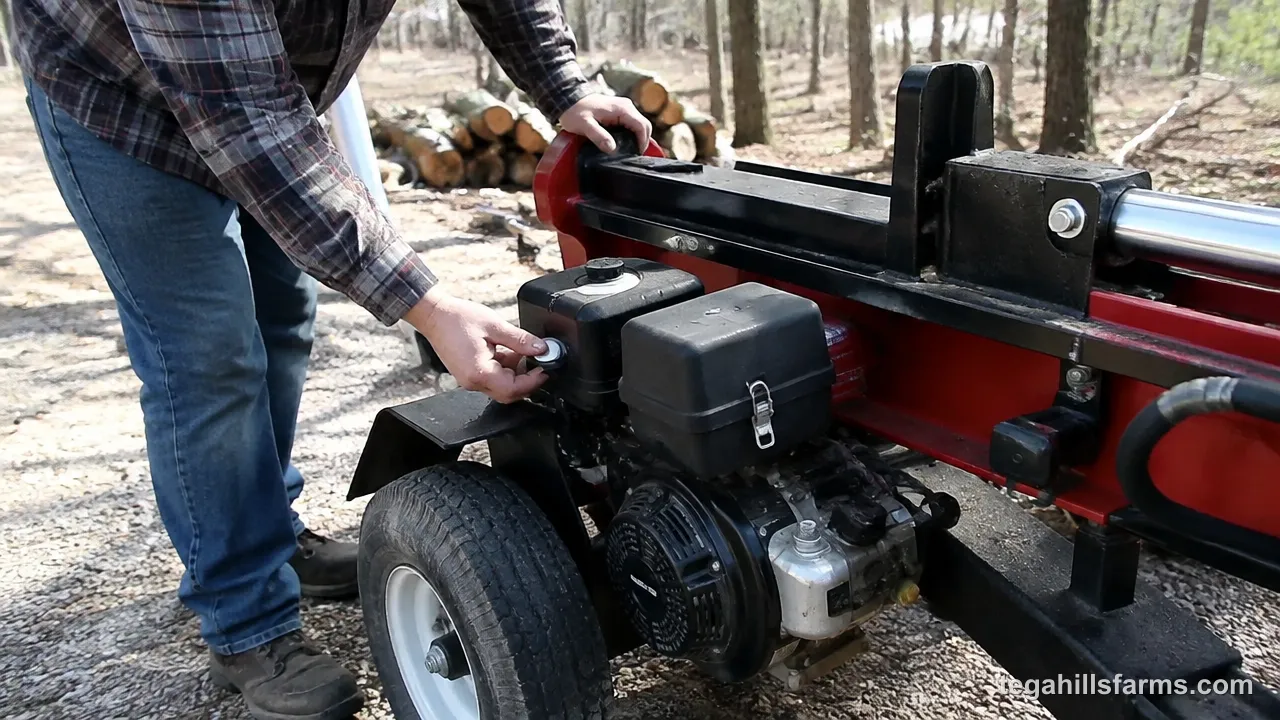
Owners often miss both because the engine cranks normally and gives no warning. The machine sounds almost ready to fire, which sends people back to the carburetor when the fix is a quart of oil or a clean filter. One cuts ignition on purpose to protect the engine. The other quietly smothers combustion.
How Does the Low Oil Switch Stop the Engine From Starting?
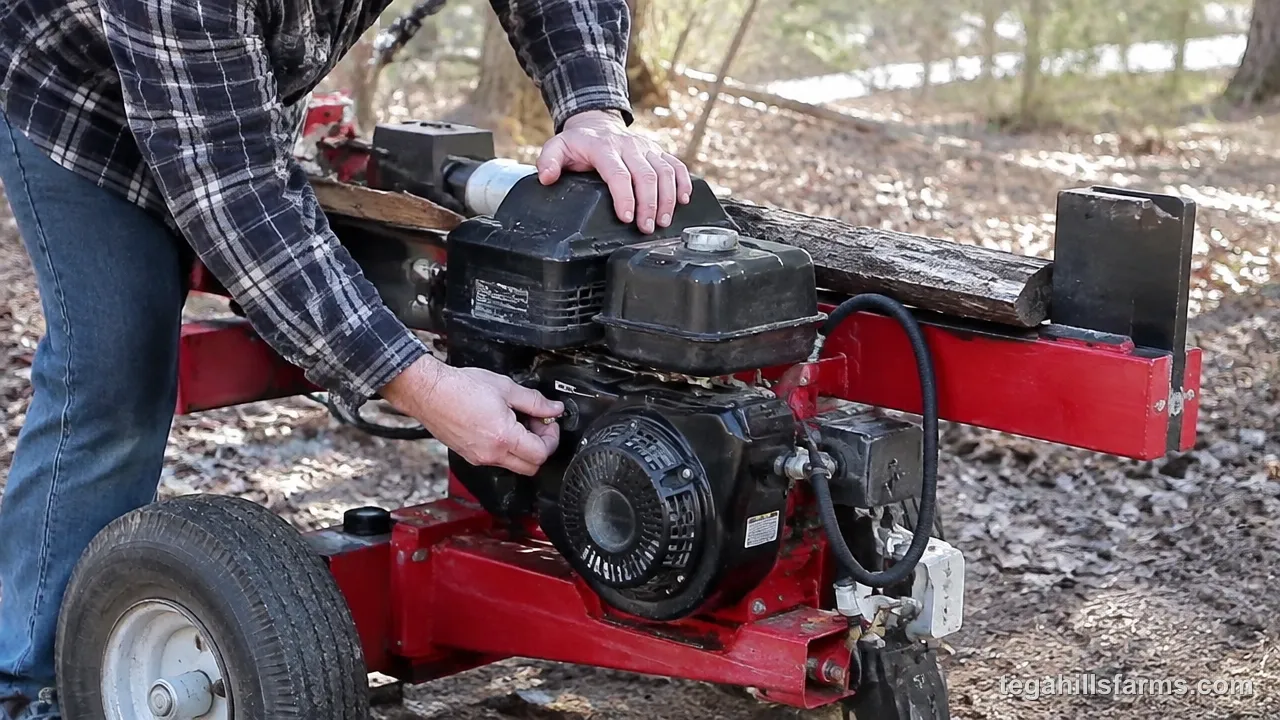
When the low oil switch senses a low oil level, it grounds the ignition, so the plug never fires. That’s why a spark test can show no spark even when the coil is fine. The sensor, sometimes called the oil sending unit, sits in the crankcase. A machine parked tilted on its hitch can make it read low even when the crankcase holds enough oil.
Move the splitter to level ground and check the engine oil level on the dipstick the way the manual describes. Some engines read with the dipstick screwed in, others with it resting on the threads. Top up with the oil type listed in the manual.
If the oil is full and there’s still no spark, inspect the sending unit wire. A chafed or pinched wire touching the engine block grounds the ignition the same way a low oil reading does. Temporarily disconnecting the switch wire is a valid test. If the engine sparks with full oil and the switch unplugged, the sensor is faulty. Reconnect it or replace it afterward, because running without that protection removes the one thing that shuts the engine down before low oil seizes it.
Can a Dirty Air Filter or Wrong Choke Setting Cause a No-Start?
A clogged air filter or a choke in the wrong position can flood or starve the engine. A dirty filter restricts air, so the mixture runs too rich and floods, especially with the choke closed.
For a cold start, set the choke to “CLOSED” or “START.” For an engine that’s already warm, set it to “OPEN.” Put the throttle in the “START” position, about one-third to one-half of the way to full speed. Leaving the choke closed after the engine catches floods it. Opening the choke too early on a cold engine starves it.
A flooded engine smells of gas and leaves the plug wet. To clear it, open the choke, move the throttle to full and pull several times. Or remove the plug, let it dry and pull the cord to blow excess fuel out of the cylinder. Wash a foam filter, and replace a paper filter once dirt has worked into the pleats.
Which Symptom Matches Your Log Splitter’s No-Start Problem?
The symptom points to the system. Spark but no start usually means fuel, starts then dies usually means the carburetor or choke, and a cord that won’t move means the engine itself is locked.
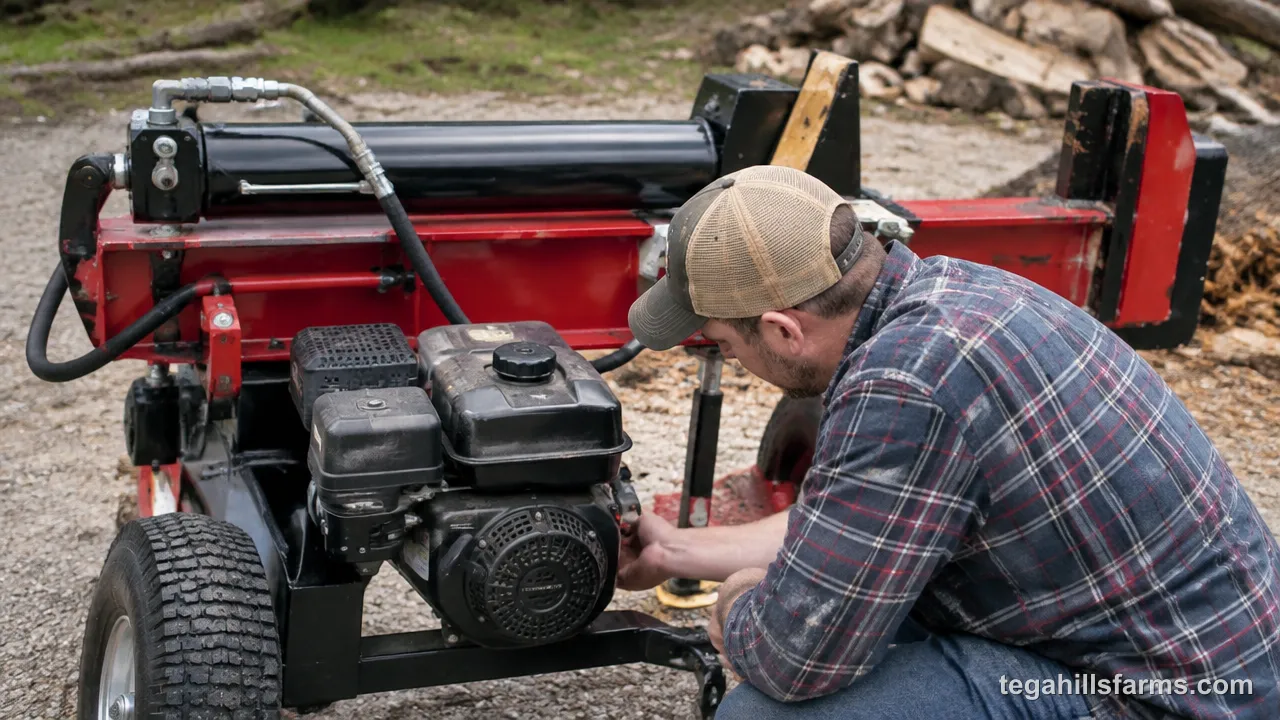
| Symptom | Likely cause | First fix |
|---|---|---|
| Spark but no start | Stale gas, closed shut-off valve, clogged carburetor | Check fuel flow at the carburetor, drain old gas |
| Starts then dies | Partly clogged carburetor jet, choke opened too early, low oil switch | Clean the carburetor, adjust choke timing, check oil level |
| Pull cord won’t move | Liquid in the cylinder, seized engine, jammed recoil starter | Remove the spark plug before pulling again |
| Engine turns over but never fires | No spark, flooded engine, low oil shutdown | Spark test, clear the flood, check oil |
| Fires briefly only with starting fluid | Fuel not reaching the cylinder | Inspect fuel filter, fuel line and carburetor |
When two symptoms overlap, start with the fix that needs fewer tools, since a choke or oil level check takes far less time than pulling a carburetor.
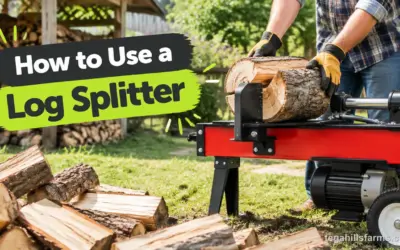
Some hard-starting complaints have nothing to do with the engine. If the control lever is engaged while you pull the cord, the hydraulic pump can add drag to every pull, and cold hydraulic fluid in winter thickens and adds more. Putting the lever in neutral before starting is part of learning how to use a log splitter.
Why Does a Log Splitter Stall or Lose Power Once It Is Running?
Stalling after a clean start comes from either the engine side or the hydraulic side, and the way the ram behaves tells you which one to chase.
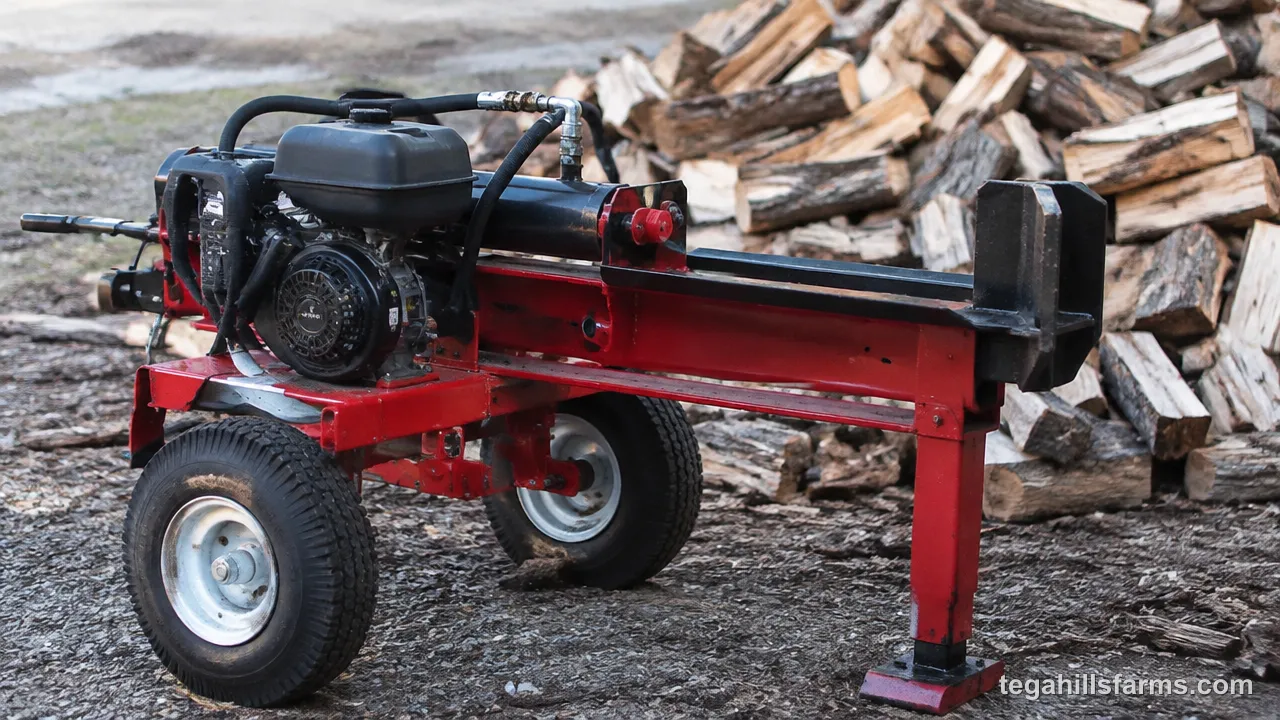
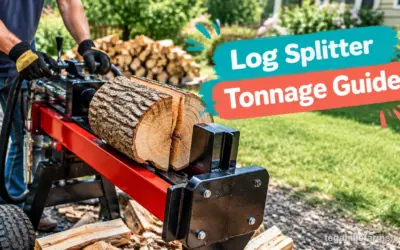
If the engine bogs or dies the moment the wedge meets a round, while the ram moved smoothly up to that point, the engine can’t supply the power the pump demands. If the engine keeps running at speed but the ram jerks, crawls or stops, the fault is in the hydraulics: fluid level, trapped air, or a worn pump or relief valve. Pump and relief valve work is often shop territory. If everything checks out and the ram still stalls on knotty oak, the machine may simply be undersized for your wood, which a log splitter tonnage guide helps you confirm.
What Causes the Engine to Die Under Load?
An engine that idles fine but quits under load usually has a fault that only shows when demand jumps. At idle, the engine needs little fuel. When the pump loads it, a partial restriction such as a dirty fuel filter, varnish in the main jet or a blocked tank vent can’t keep up, and the engine starves.
A weak spark behaves the same way. It may light the mixture at idle and misfire under the higher cylinder pressure of a hard split, so a borderline plug or coil shows up here first.
Throttle setting matters too. Splitter engines are meant to run at full throttle while splitting so the governor can deliver full power. At part throttle, the pump can drag the engine down until it stalls, even with clean fuel and good ignition.
How Do You Bleed Air Out of the Hydraulic System?
Air in the hydraulic lines makes the ram move in jerks, push weakly or chatter, and the pump often whines. Air gets in after the fluid runs low, after a hose is replaced, or when the pump runs dry. Unlike hydraulic fluid, air compresses, so the ram loses the steady push it needs to drive through a log.
Start by checking the hydraulic fluid level with the ram fully retracted and the machine on level ground. Use the fluid type listed in the manual, since mixing types can cause foaming and seal wear. Foamy or milky fluid is a sign that air or water has gotten in.
The general approach is to top off the reservoir, loosen the reservoir cap or breather as the manual directs, then start the engine and slowly cycle the ram through full extension and retraction several times. That pushes trapped air back to the reservoir, where it escapes. Recheck the level, top up, and tighten the cap. Manufacturers’ procedures differ, so follow the steps for your machine and keep hands clear of the wedge while cycling.
A starter cord that refuses to move even a few inches isn’t a fuel or spark problem at all, because something inside the engine is physically stopping the piston. Leaning harder on that handle is how a cheap, drainable mistake turns into a bent connecting rod or a snapped recoil spring.
What If the Pull Cord Won’t Move at All?
A pull cord that won’t budge usually means the engine is locked, either by liquid filling the cylinder or by internal damage. Forcing it risks bending a connecting rod or breaking the recoil. The fix starts with finding out which one you have.
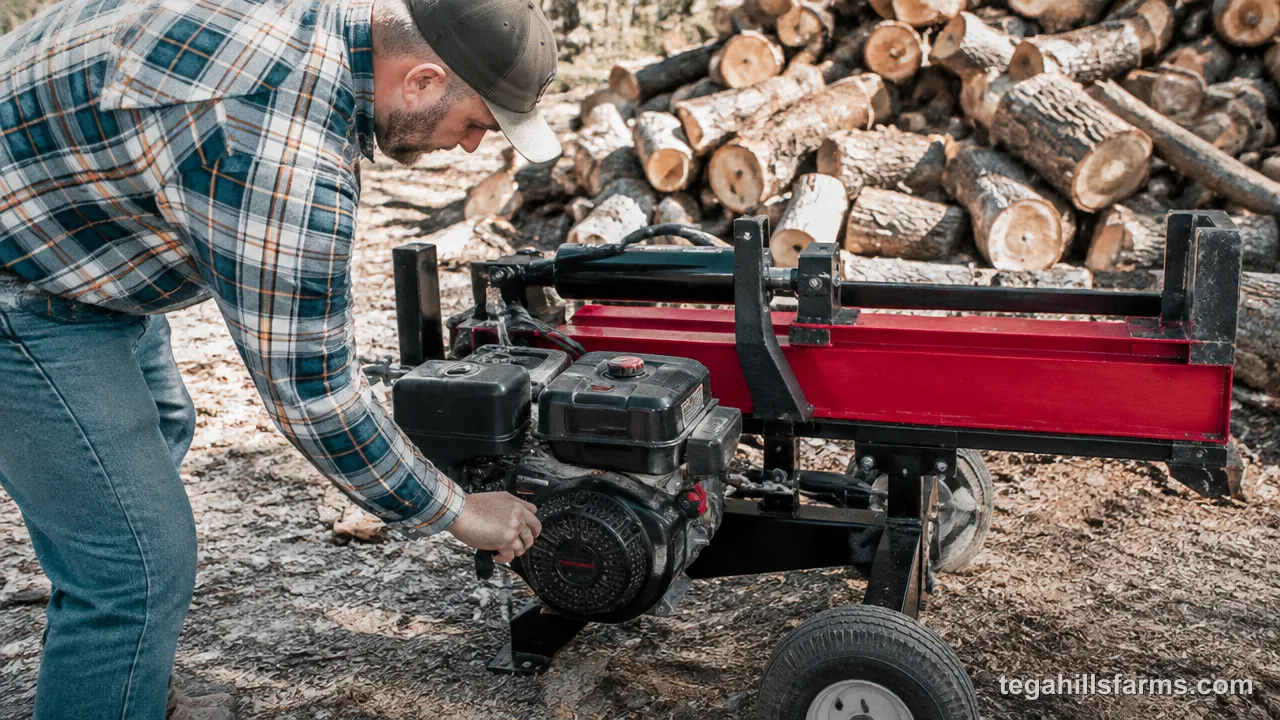
Liquid lock, or hydrolock, often happens when a stuck float needle lets fuel flow into the cylinder overnight, or when the machine was stored on its side and oil ran past the rings. Remove the spark plug and turn the engine slowly with the cord. If fuel or oil sprays out and the engine now turns freely, it was hydrolocked. Dry the plug, and change the oil if it smells of gas, since fuel in the crankcase thins it.
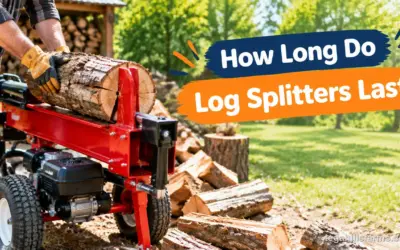
If the engine turns with a socket on the flywheel nut but the cord still won’t pull, the recoil starter is jammed. If the engine won’t turn at all with the plug out, suspect a seized piston or broken internal part. A compression check or a shop diagnosis is the next step. On an older machine, that repair bill has to be weighed against how long log splitters last before other parts start wearing out.
Why Won’t an Electric-Start or Electric Log Splitter Start?
On an electric-start gas model, a weak battery, corroded or loose terminals, or a faulty starter switch is the usual cause. On a fully electric splitter, the power supply is usually to blame. Neither problem involves fuel, so the fuel checks earlier won’t find it.
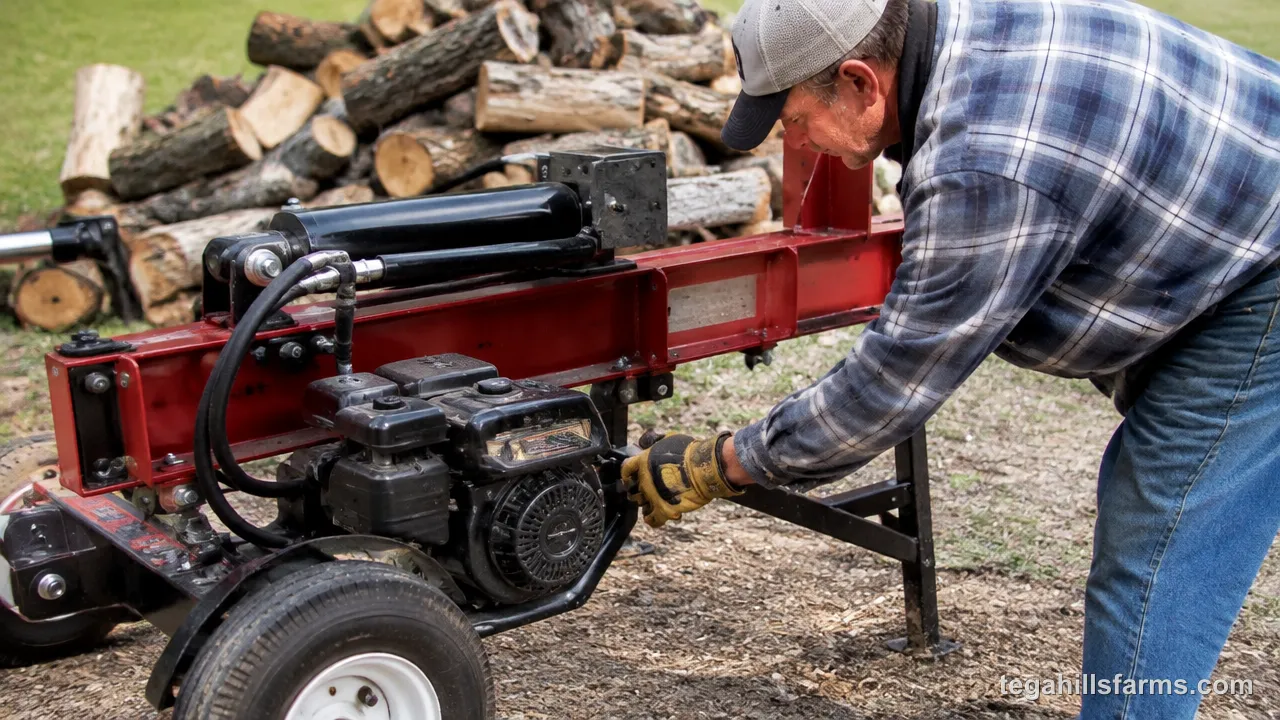
A weak battery cranks slowly or just clicks. Clean the terminals, tighten the cables and charge the battery before suspecting the starter. Most electric-start splitter engines still have a recoil starter. If the engine starts on the pull, the electrical side is the problem, not the engine.
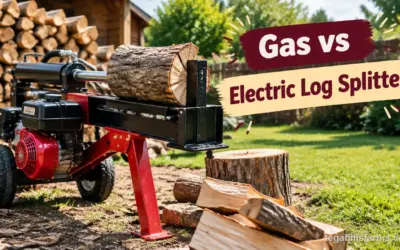
An electric splitter that won’t run often has a tripped GFCI outlet or breaker. An extension cord that’s too long or too light causes voltage drop, which makes the motor hum and trips the overload protection. Plug into the outlet directly or use the shortest, heaviest cord the manual allows. If the overload protector tripped, let the motor cool and press the reset button. A failed motor switch is the last suspect. Fewer moving parts on the electric side is one of the real tradeoffs between gas vs electric log splitters.
Is It Safe to Use Starting Fluid or Carb Cleaner to Test the Engine?
Yes, a short burst of starting fluid into the air intake is a reasonable diagnostic step, as long as it stays a test and not a starting habit. Carb cleaner sprayed the same way works similarly, since both are highly flammable.
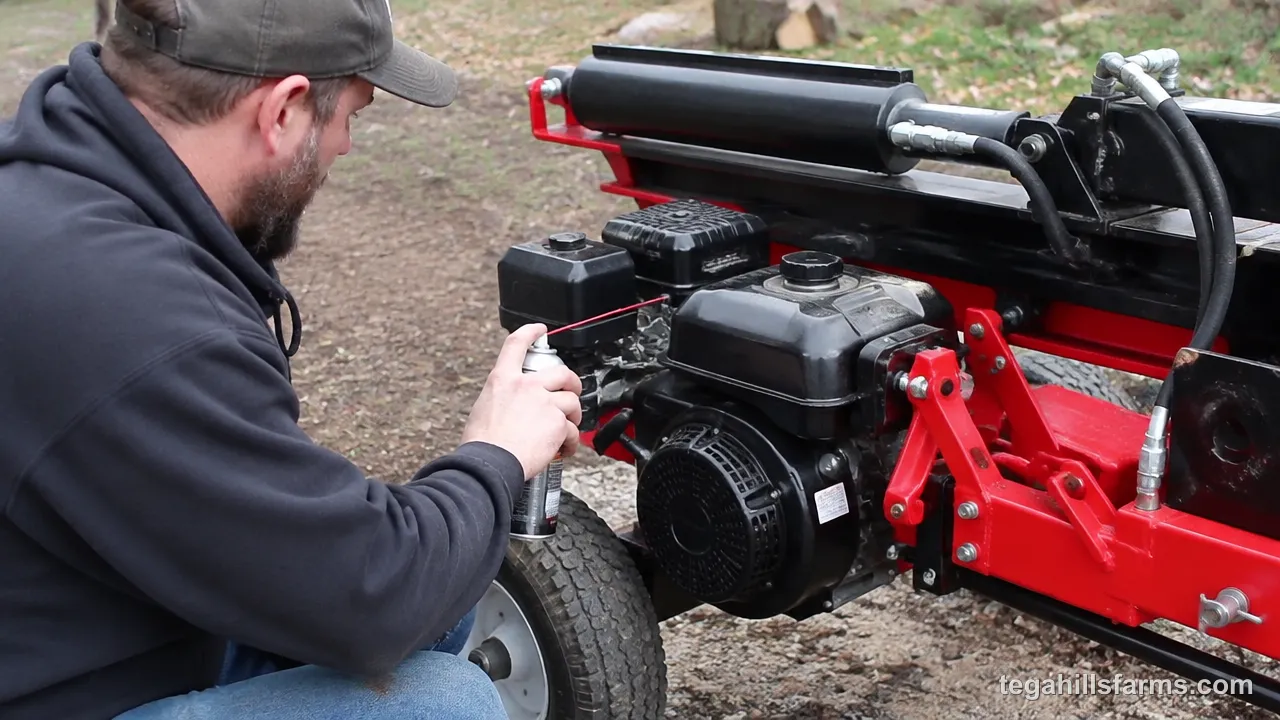
The result splits the problem in two. If the engine fires briefly on the spray and then dies, spark and compression are fine, and the fault is fuel delivery from the tank, filter, line or carburetor. If it doesn’t fire at all with a confirmed spark, look at compression or a locked engine instead.
Overuse is the risk. Ether burns fast and hard, which shocks the piston and rings, and it strips oil from the cylinder walls. An engine started this way repeatedly wears faster. Spray only outdoors, away from flames and hot exhaust, and never during a spark test with the plug out, since an open spark near ether vapor can ignite it.
How Do You Store a Log Splitter So It Starts Next Season?
A splitter put away with untreated gas in the tank and carburetor will often greet you with gummed jets and a weekend of cleaning. One stored with stabilized fuel and an empty carburetor bowl usually starts with a few pulls.
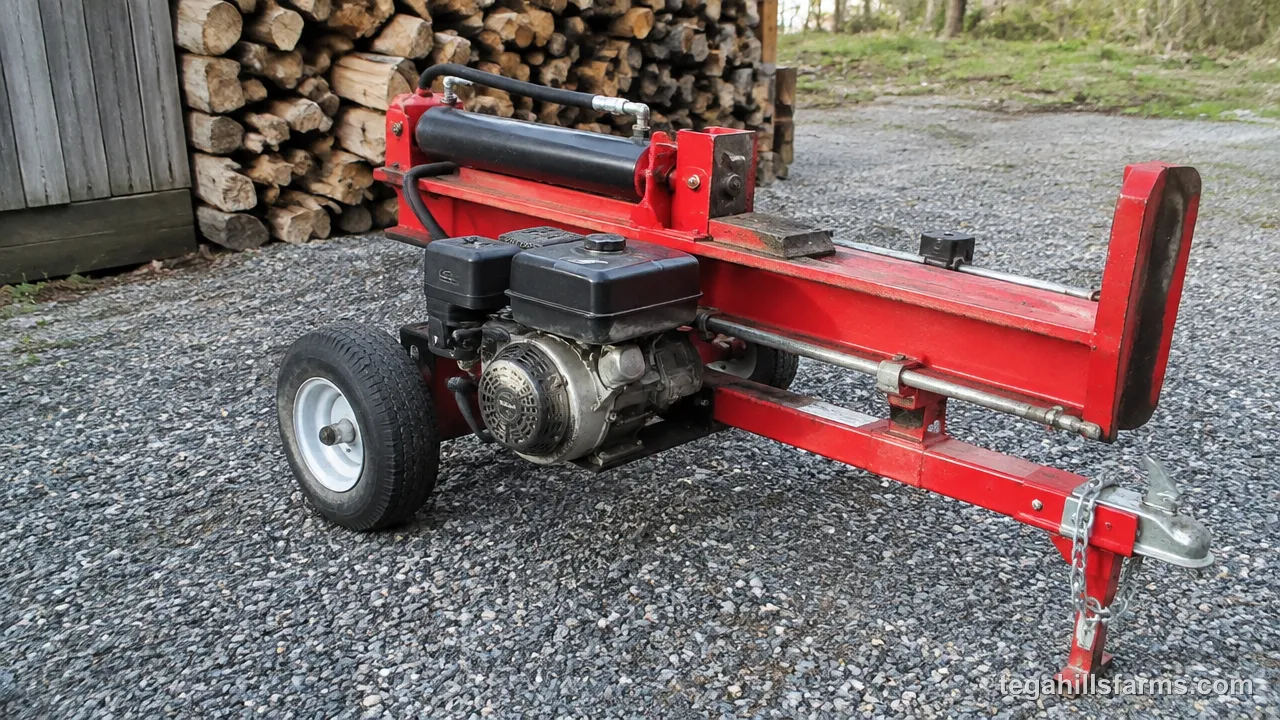
Proper storage starts with fresh gas treated with a fuel stabilizer such as Sea Foam. Run the engine for a few minutes so the treated fuel reaches the carburetor. Then close the shut-off valve and let the engine run until it stalls, or drain the bowl, so no fuel sits in the jets. Some manuals prefer a full, stabilized tank to limit condensation. Others call for a drained tank, so follow yours.
Change the engine oil before storage, since used oil holds acids that sit on internal parts for months. Retract the ram to protect the cylinder rod from rust. Keep an electric-start battery on a maintainer, and store the machine covered in a dry spot. Skipping these steps doesn’t hurt anything in November. It shows up the first cold morning you need firewood.
When Should You Repair It Yourself and When Should You Call a Shop?
Plug swaps, air and fuel filter changes, oil changes, draining stale gas and cleaning or replacing a bolt-on carburetor are all reasonable for a non-mechanic with basic hand tools. Internal engine damage is shop work. That includes a seized piston, low compression or a broken connecting rod.
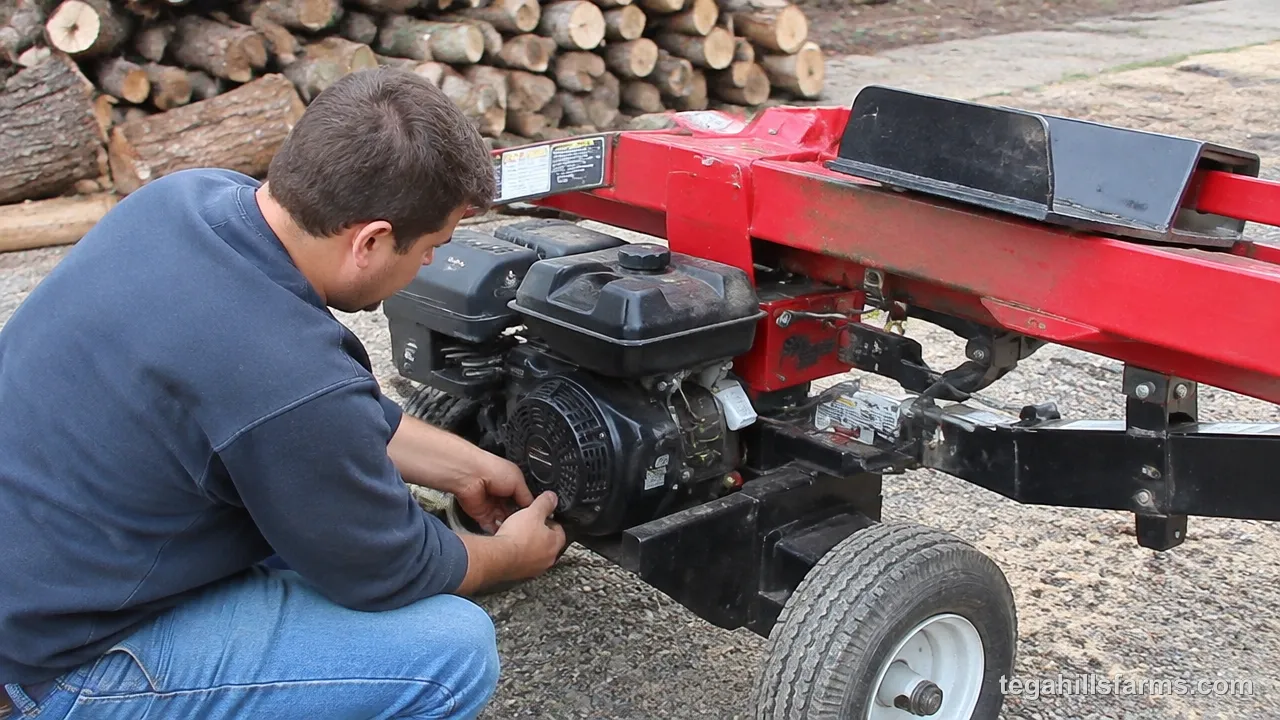
Hydraulic pump and relief valve rebuilds usually belong with a shop too, because they need pressure testing to diagnose properly. Ignition coil replacement falls in between. It’s a bolt-on part, but setting the air gap to the flywheel takes care.
Engine makers such as Kohler support service through authorized dealers, and that matters if the engine is still covered under its own terms. Check before opening it up. Age and condition decide the rest. A newer machine with a clean hydraulic system is worth repairing. An old splitter with a worn engine, leaking seals and a tired pump calls for comparing the repair quote against how much a log splitter costs new.
Log Splitter Won’t Start: Quick Answers
Can gas go bad in just a few weeks?
Yes. Gasoline can start losing its volatile components within about a month, especially ethanol blends stored in a vented can or a partly empty tank. A splitter used in fall and parked until spring almost always needs fresh fuel. A stabilizer added when you fill up keeps gas usable much longer.
Why does my log splitter start and then die?
The usual causes are a partly clogged carburetor jet, a choke opened too early on a cold engine, or a low oil switch reading a marginal oil level. Check the oil on level ground first, then try running with the choke closed a little longer. If it only stays running on choke, clean the carburetor.
Can a bad recoil starter keep the engine from starting?
Yes. If the cord pulls out but doesn’t turn the engine, the pawls inside the recoil aren’t engaging the flywheel cup. If the cord won’t retract, the recoil spring has broken. Either way the engine never spins fast enough to fire. Recoil assemblies are bolt-on parts that most owners can replace.
Do CountyLine and Champion log splitters have brand-specific starting quirks?
The engine matters more than the splitter brand. CountyLine and Champion units use engines from different makers depending on the model, and the plug gap, oil type and low oil switch behavior follow that engine. Read the label on the engine shroud and use that engine’s manual for every starting check.
Should I check the oil even if I added some last season?
Yes. Small engines burn and leak small amounts of oil, and a splitter parked unevenly can trip the low oil switch even with oil in the crankcase. Check it on level ground before each splitting session. It takes seconds and rules out one of the most overlooked no-start causes.
Write Your Review
No reviews yet. Be the first to share your experience!