

Using a log splitter comes down to four habits: set the machine on firm, level ground, load each log square against the wedge, run the control lever with your hands clear of the ram, and stop and retract before you touch a jammed or knotty piece. Those habits cover nearly every round you will feed a hydraulic splitter, from straight-grained oak to a twisted crotch piece.
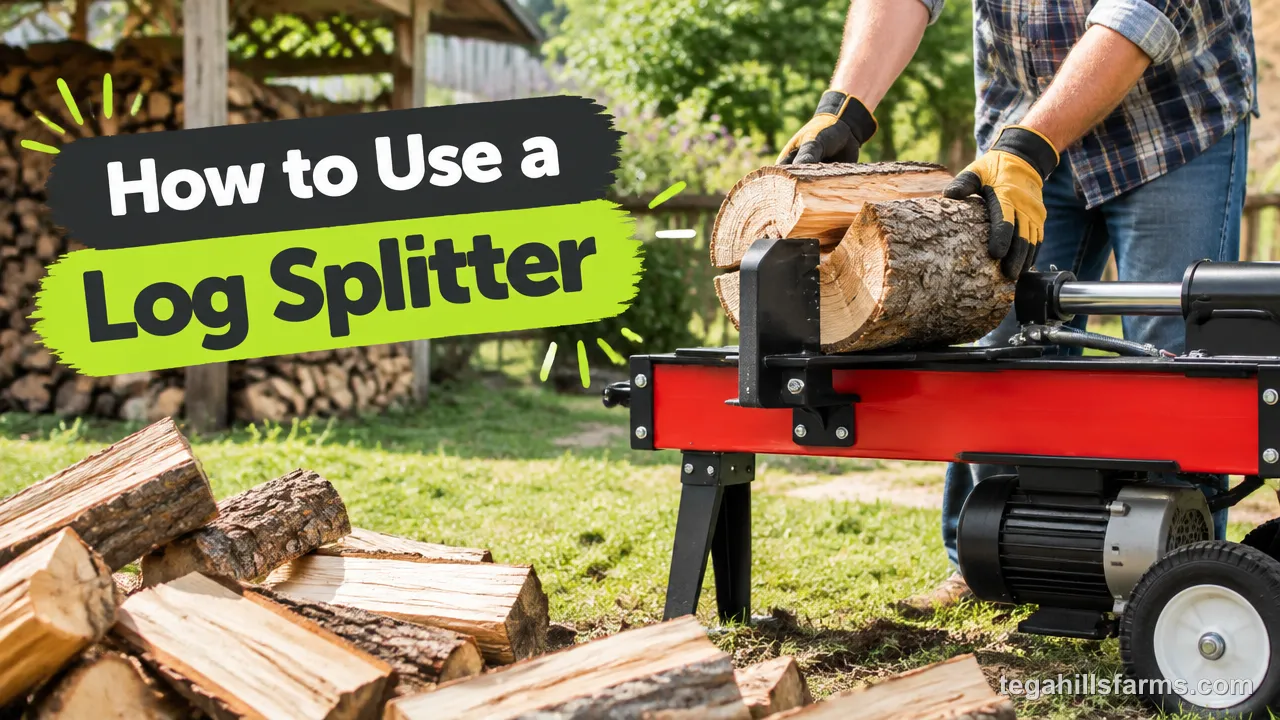
Setup matters as much as the cut itself. The hydraulic fluid level, hose condition and fuel or power supply decide whether the ram moves smoothly. Protective gear decides what happens when bark or a splinter breaks loose.
Stuck and knotty logs are where beginners get hurt or damage a machine. It usually happens because they reach in while the ram is still under pressure, or because they force a round the splitter was never sized for. Each of those problems has a safe, specific fix.
Start with the easy, straight rounds so you learn how your machine sounds under normal load. That sound becomes your baseline when a knotty piece starts to strain the engine or the pump.
What Does a Log Splitter Do and How Does It Work?
A hydraulic log splitter uses pressurized fluid to drive a ram that pushes a log into a fixed splitting wedge until the fibers tear apart along the grain.
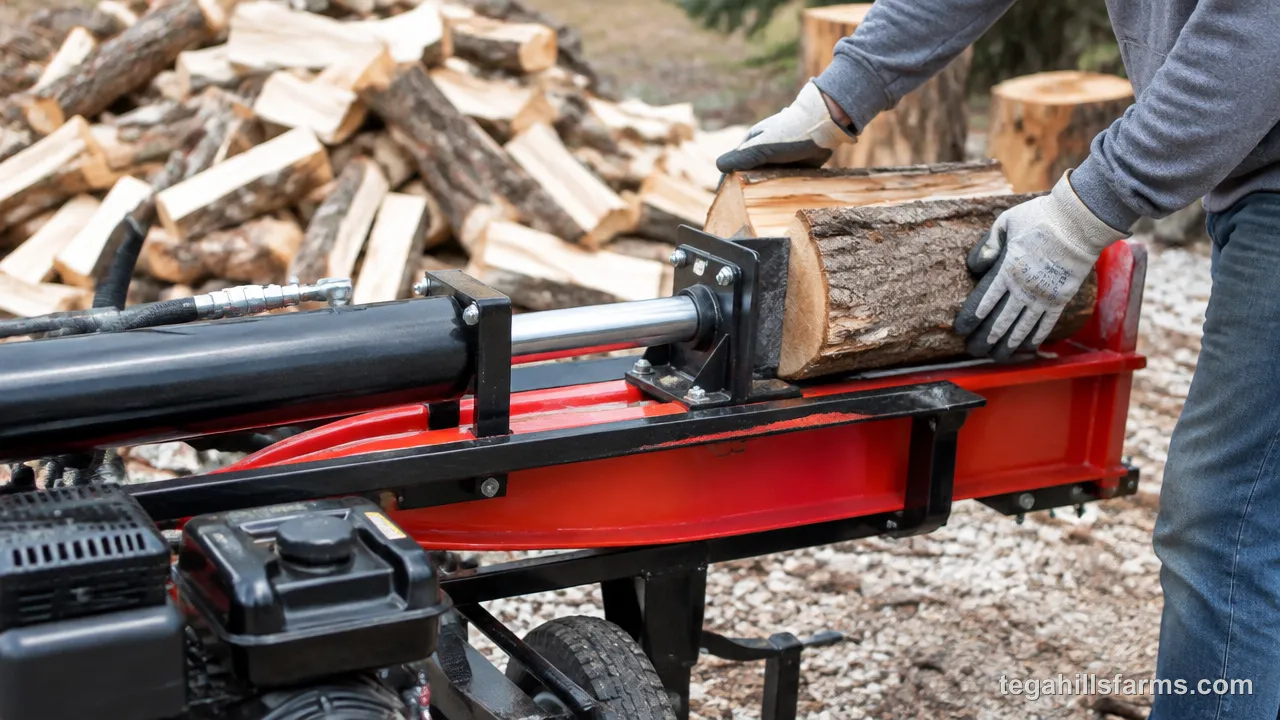
An engine or electric motor runs a pump, and the pump sends hydraulic fluid into the hydraulic cylinder. The control lever routes that fluid to extend the ram toward the wedge or retract it again. Most residential systems run at 2,500 to 3,000 PSI, which is enough to part most firewood rounds with a single push.
The parts you handle every session are the ram, the splitting wedge, the control lever and the beam or base plate where the log rests. If you’re still shopping, start with how to choose a log splitter, because the machine’s tonnage and orientation change how you load and work every log.
How Do You Set Up a Log Splitter Before Splitting?
Stable footing and a five-minute pre-start inspection decide whether the splitter stays put under load and whether the ram moves smoothly from the first cut.
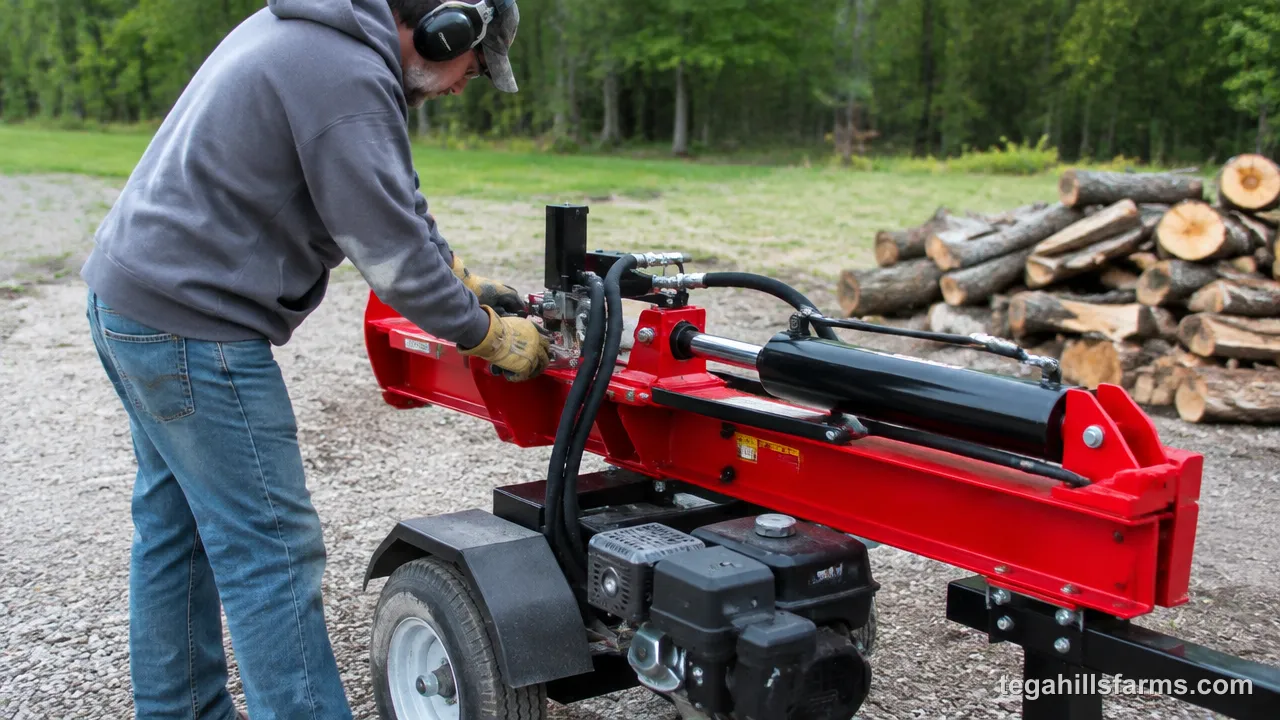
The ram can push several tons into a log. If the machine is sitting on soft or sloped ground, some of that force goes into shifting the splitter instead of splitting the wood. A worn hose or low fluid turns a routine session into a stalled ram or a pressurized leak. Getting both right before the engine runs is what lets you settle into a safe rhythm instead of reacting to surprises.
Where Should You Position the Machine?
Set the splitter on firm, level ground such as a gravel pad, a driveway or packed dirt, and chock the wheels on towable models. On a slope, the beam tilts, logs roll off before the wedge bites, and the machine can creep while the ram pushes. Soft lawn is a problem for a different reason: one wheel sinks as the session goes on, and the beam slowly drifts out of level.
Clear the space around the machine of tools, branches, hoses and anything else you could trip over. Keep kids and pets well away from the work area.
Arrange the work area so you never step across the beam. Stack the unsplit log pile on the operator’s side within easy reach, and let the split pieces fall or get tossed to the opposite side. With that layout you can pick up a round, load it, split it and move the halves without twisting your back or walking around the machine.
What Gear and Pre-Start Checks Do You Need?
Wear safety goggles, snug work gloves, steel-toe boots and hearing protection before you start the engine. Goggles stop bark and splinters that snap off under pressure. Boots protect your feet from dropped rounds. Hearing protection matters most on gas models, since you’ll be standing next to the engine for long stretches. Skip loose sleeves, scarves and jewelry that could catch on a log as it moves.
Next, check the hydraulic fluid level on the dipstick or sight gauge and top it up if it’s low. Look along the hoses and fittings for cracks, bulges or wet spots. Use a piece of cardboard rather than your hand to check for a suspected leak, because a pinhole jet of pressurized fluid can penetrate skin.
On gas models, confirm there’s fuel and engine oil. On electric models, plug into a grounded outlet with an extension cord rated for the motor’s draw. If the engine still refuses to fire after these checks, the usual causes behind a log splitter won’t start are fuel, spark and choke settings.
How Do You Split a Log Step by Step?
A clean split depends on where the log sits and how you handle the control lever, because most splitter injuries happen when hands and the moving ram share the same space.
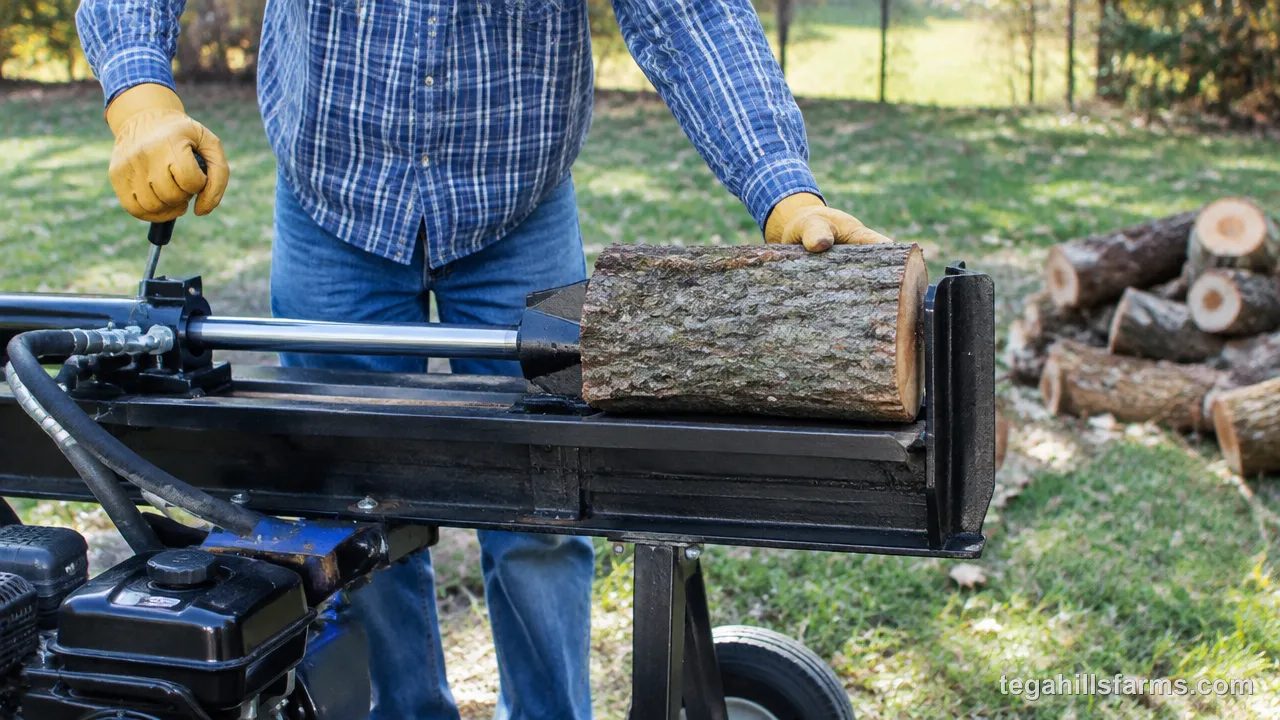
The machine’s force rating sets how much wood it can part without stalling. Splitting force equals hydraulic pressure multiplied by the area of the cylinder face, and dividing those pounds by 2,000 converts the result to tons. Oregon, for example, positions its 22-ton model for residential use and its 28-ton model for heavy-duty work. A log splitter tonnage guide matches ratings like these to wood species and diameter. That matters most once you move past straight, clean rounds.
How Do You Load a Log Onto the Splitter?
Place the log so a flat, square-cut end sits firmly against the wedge or end plate and the log runs straight along the path of the ram. An angled end lets the log slip sideways under pressure, which can make it kick off the beam instead of splitting.
Read the grain before you load. The wedge needs to enter the end of the log and run along the fibers. If one end already shows cracks from drying, turn that end toward the wedge and line the blade up with a crack, since the wood is already halfway open there.
How you load depends on the machine:
- Horizontal splitter: lift the round onto the beam with your knees bent, center it on the beam, and set it against the ram face so it can’t roll.
- Vertical splitter: stand the round upright on the base plate, centered under the wedge. Heavy rounds can be rolled onto the plate instead of lifted, which is the main reason people with large-diameter wood choose a vertical setup.
Either way, the log should sit stable on its own before you reach for the lever.
How Do You Operate the Control Lever Safely?
Keep your hands on the sides of the log only until the wedge bites, then let go completely before the ram builds pressure. Never place a hand on either end of the log, because those ends sit between the ram and the wedge, and the machine can’t tell wood from fingers.
Once the wedge has started into the wood, step back to the lever position and push the control lever forward, holding it steadily until the log parts all the way. Easing the lever on and off mid-cut lets the wood close back around the wedge and makes the next push harder. Many machines have an auto-return detent that sends the ram back on its own once released, which saves a step on every cycle.
Release the lever, let the ram retract, and wait until it stops moving before you reach for the split pieces. Some models use two-handed controls so the operator physically can’t hold the log while running the lever. On a single-lever machine, follow that same rule by habit. Only one person should ever run the controls.
How Can You Split Faster Without Losing Control?
A steady rhythm speeds up splitting more than rushing each cut. That rhythm starts with keeping every round within arm’s reach and close to beam height. Stack the next few logs on a low platform or the tailgate of a truck so you lift with your legs once instead of bending to the ground every time.
Log catchers or a log table on the far side hold the split halves at working height. That lets you turn a half and split it again into firewood without picking it up off the ground. You can also retract the ram only as far as the next piece needs instead of all the way back, which shortens each cycle without changing how you handle the log.
Work through the firewood pile from the near end and the top down. Digging rounds out from the bottom of a stack is when people strain their backs or knock logs loose onto their feet.
How Do You Handle Stuck and Knotty Logs?
Jammed logs and knotty grain both tempt beginners to reach toward the wedge, and the safe answer to both starts with releasing the lever first.
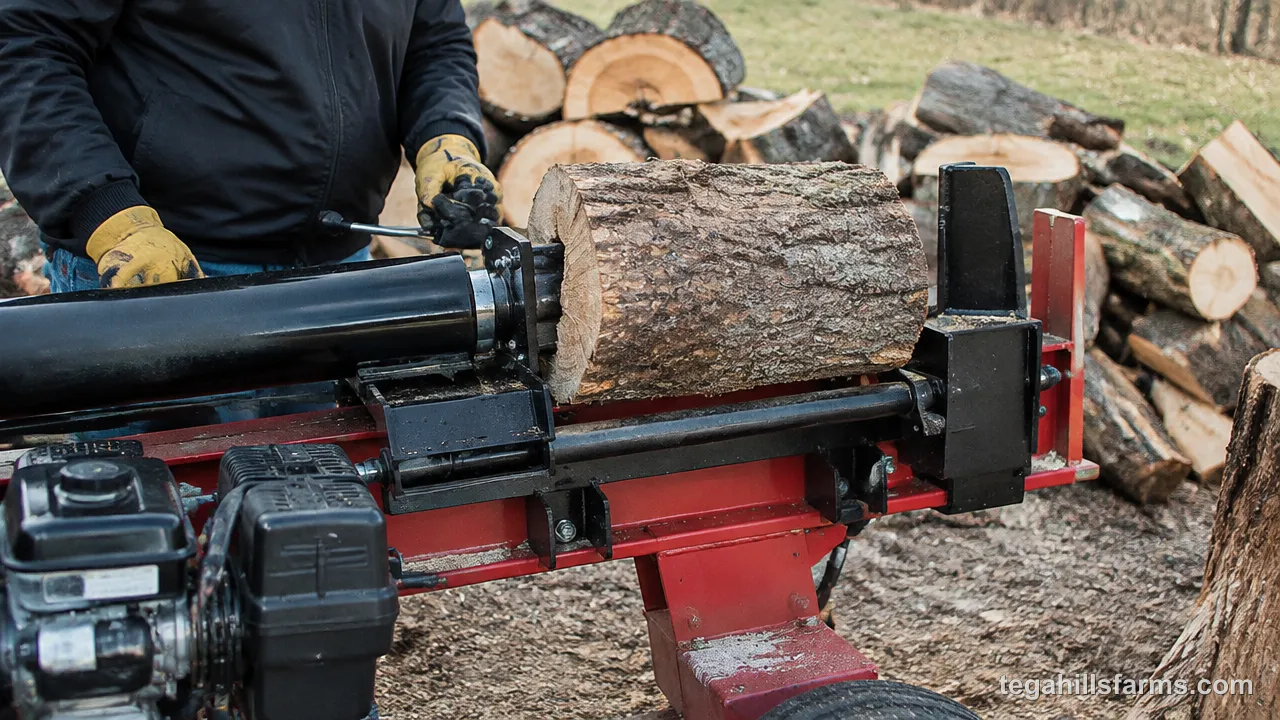
These two problems feel similar at the machine, since the ram slows, the engine labors and the log stops moving. The causes differ, though. A stuck log is a wood-on-wedge problem that shows up after the push. A knotty log resists from the start because its fibers don’t run in one direction. Recognizing which one you’re dealing with tells you whether to free the log, turn it, or take it apart in smaller pieces.
What Should You Do When a Log Gets Stuck?
Release the lever, retract the ram fully, and shut off the engine or unplug the motor before you touch the log. A log can stay wedged under real tension even after the ram backs away, and reaching in while the machine is running puts your hands in the one spot where a sudden release does damage.
With the machine off, try these in order:
- Pull the log off the wedge with a pulp hook rather than your hands, then flip it end for end and run it again from the other side.
- Restart, set a short piece of scrap wood between the ram face and the stuck log, and push the log farther onto the wedge so the split completes.
- If the log still won’t free, trim it off the wedge with a chainsaw.
If the ram won’t retract at all, keep the machine shut off and don’t pry at the log. A ram that stays extended usually points to low fluid or a control valve problem, and forcing the log out while the cylinder holds pressure can damage the machine or release that pressure toward you.
How Do You Split Logs With Knots?
Knots resist the wedge because each one is the base of an old branch, and its fibers run at an angle to the trunk’s grain. The wedge pushes against fibers crosswise instead of parting them lengthwise, so the ram slows or stalls. Crotch pieces, where the trunk forks, have twisted grain that behaves the same way.
The fix is to change where the wedge enters the wood. Turn the log so the wedge goes in from the end where the knot is smallest or sits closest to the edge. Wood away from the knot still has straight grain and parts easily.
If the knot sits in the middle, work from the outside edge. Take slabs off the sides of the round until the knot sits in a small, separate piece that you can burn whole or split last. For tougher pieces, a box wedge, which some machines accept as an attachment, spreads the wood in more than one direction at once and can open stubborn grain that a single blade only crushes. I’d rather set a twisted crotch piece aside than run it into the wedge again and again.
What If the Log Is Too Big to Split in One Pass?
Split large rounds in stages by taking slices off the edge instead of driving the wedge through the center. A thin edge bite needs far less force than splitting the full diameter, so the machine can handle a round that would stall it in the middle. Work around the circumference until the remaining core is small enough to split straight through.
Some logs are simply beyond the machine’s capacity. The signs are repeated ram stalls, an engine that bogs every time, a round that won’t fit between the wedge and the ram, or a log too heavy to lift onto the beam safely. Cut those rounds shorter with a chainsaw or set them aside.
Forcing oversize wood stresses the cylinder seals and hoses on every attempt. Over time that strain cuts into how long log splitters last.
What Should You Do After Splitting?
Ending a session means shutting down, relieving hydraulic pressure and cleaning the beam so the next start begins with a sound machine.
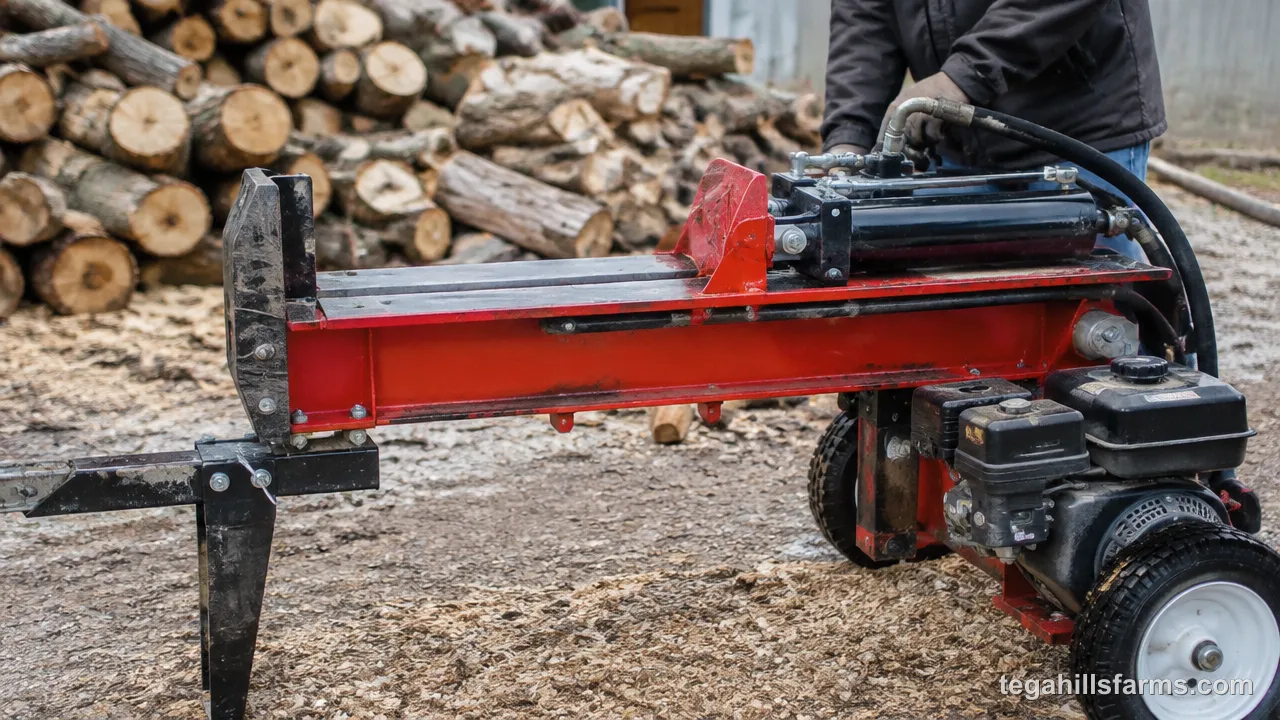
Retract the ram fully, shut off the engine or unplug the motor, and move the control lever back and forth to release pressure left in the system. Brush bark and wood chips off the beam and wedge, since debris holds moisture and hides cracks.
Take a quick look at the hoses and the fluid level before storing the machine under a cover or indoors. Change the hydraulic fluid yearly or every 50 hours of use, whichever comes first.
A round of oak cut last month and one that sat stacked through two summers can behave very differently against the wedge, and advice on which to split varies widely. Splitting wood in the wrong condition can mean stalled cuts, extra strain on the pump, or sharp fragments snapping loose toward your legs.
Is It Better to Split Green or Seasoned Wood?
For most hydraulic splitting, green wood is the easier choice. Its moisture keeps the fibers pliable, so they peel apart under the wedge with less strain on the pump and cylinder. Very dry wood tends to turn brittle, and instead of parting steadily it can break with a snap that throws chips and splinters.
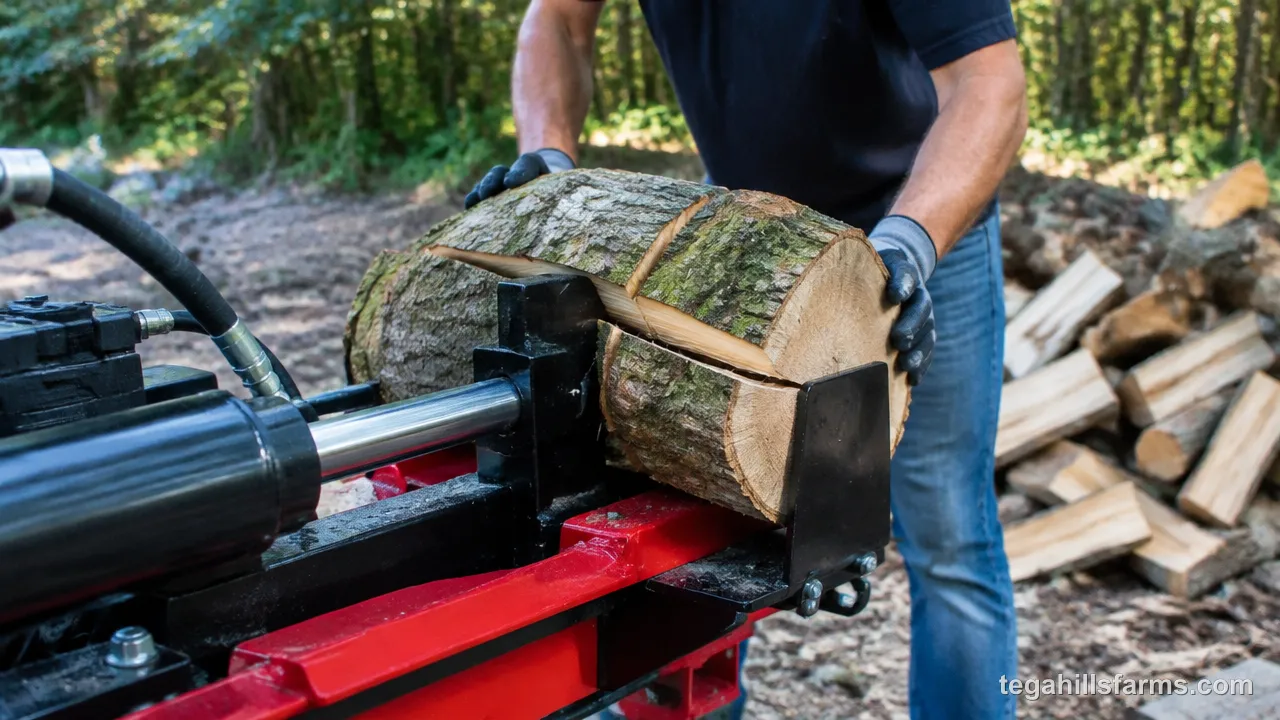
Advice varies because species behave differently. Stringy woods like elm hang together when green and can be easier once dried. Seasoned wood with deep end cracks gives the wedge a ready-made opening, which helps a smaller machine.
Let the wood in front of you decide. If a seasoned round already shows end checks, line the wedge up with them and split it. If a green piece keeps stretching apart without separating, set it aside to dry for a season. Either way, wear goggles, because both conditions can release fragments when the fibers finally let go.
What Are the Warning Signs of a Struggling Log Splitter?
A healthy splitter extends the ram at a steady speed and sounds the same from one cut to the next, so any change in speed, motion or noise is the first sign that fluid, air or wear needs attention.
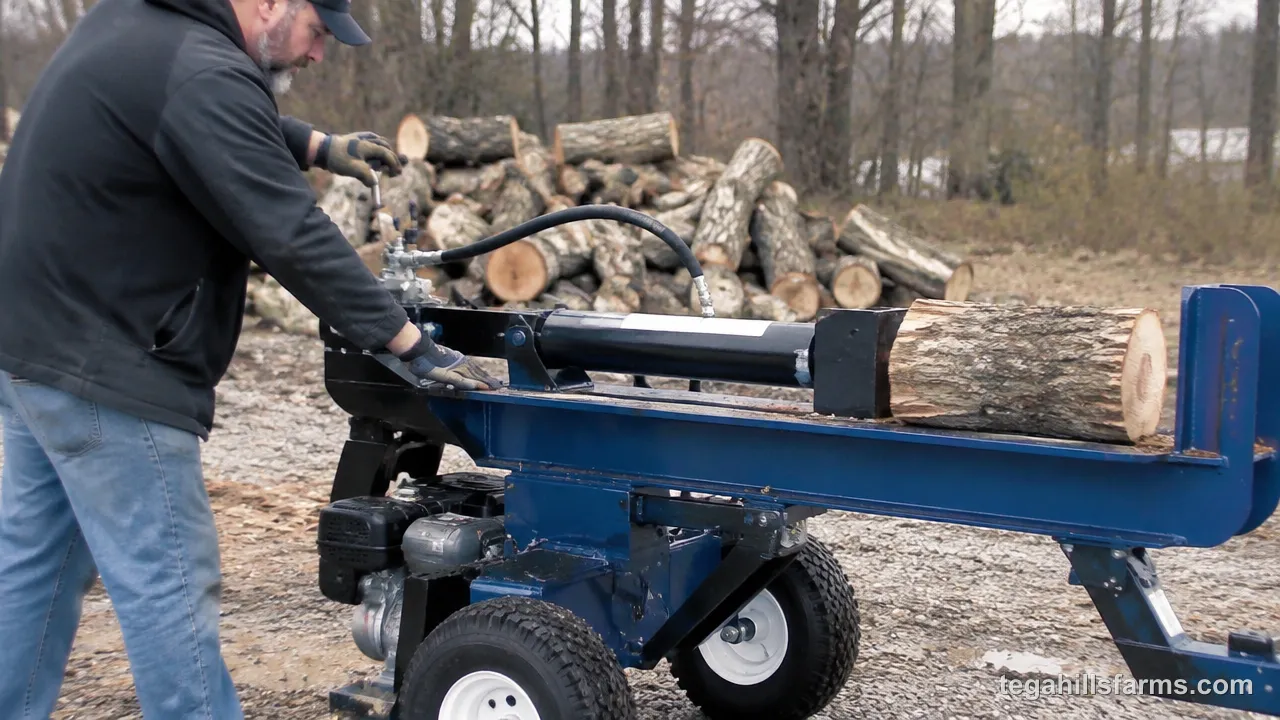
Catching those changes early matters because small hydraulic problems compound. A slightly low reservoir pulls air, air speeds up seal wear, and worn seals leak more fluid. Stopping to diagnose the first odd sound costs a few minutes. Ignoring it can end with a blown hose in the middle of a cut.
Fluid and Air Problems
Low or dirty hydraulic fluid is the most common cause of a slow or jerky ram. When the reservoir runs low, the pump draws air along with the fluid, and air compresses, so the ram stutters and feels spongy instead of pushing steadily. Fluid that is old, contaminated or too cold behaves the same way, because it moves sluggishly through the pump. Most residential pumps are built to deliver 11 to 14 GPM, so an obvious drop in ram speed points to the fluid side.
Many reservoirs have a vent or bleed screw on the fill cap that must be loosened before running the machine. Leaving it closed can starve the pump or foam the fluid. After topping up, cycle the ram fully in and out a few times to purge trapped air.
Mechanical Wear and Misuse
Overloading shows up as an engine that bogs and a ram that stalls before the log parts. That means the round is too large or too knotty for the machine’s force rating, and repeating the push only adds strain.
A dull or chipped wedge crushes wood fibers instead of cutting them, so straight logs start splitting slowly. File or grind the edge back into shape before it gets worse. Worn seals show up as fluid weeping around the cylinder rod. Aging hoses bulge, crack or turn wet at the fittings.
Stop splitting and repair the machine if you see an active leak, a bulging hose, or a crack in the beam or the wedge weld. Each of those can fail suddenly under pressure.
Log Splitter Safety and Operation FAQs
Where should bystanders stand while the splitter is running?
Bystanders belong well outside the work area, not beside the beam or near the split pile. Fragments can fly off in any direction when a log gives way, and a helper standing close is tempted to reach in. Keep children and pets indoors or behind a barrier until the machine is shut off.
Can one person run a log splitter alone?
Yes, and on most machines one operator is the safest setup. A second person loading logs while you work the lever creates exactly the hand-near-ram situation that causes injuries. If you work with a helper, let them stack and haul firewood while you handle loading and operation.
Does a manual log splitter work the same way?
A manual hydraulic splitter uses the same principle: pressurized fluid drives a ram into a wedge. You build that pressure by pumping a handle instead of running an engine. It splits more slowly and suits smaller rounds, but the same loading, hand placement and stuck-log rules apply.
How often should you inspect the machine?
Give the splitter a full inspection once a week during the splitting season, or after each use if you only split occasionally. Check the hoses, fittings, wedge edge, fluid level and beam welds. Catching a worn hose or a loose fitting between sessions is far safer than finding it under load.
Where can I find out how much a log splitter costs?
Price depends mostly on force rating, power source and whether the machine is towable. Our breakdown of how much a log splitter costs walks through those tiers, from manual and electric models for small batches of firewood to gas-powered units built for heavy seasonal splitting.
Write Your Review
No reviews yet. Be the first to share your experience!