

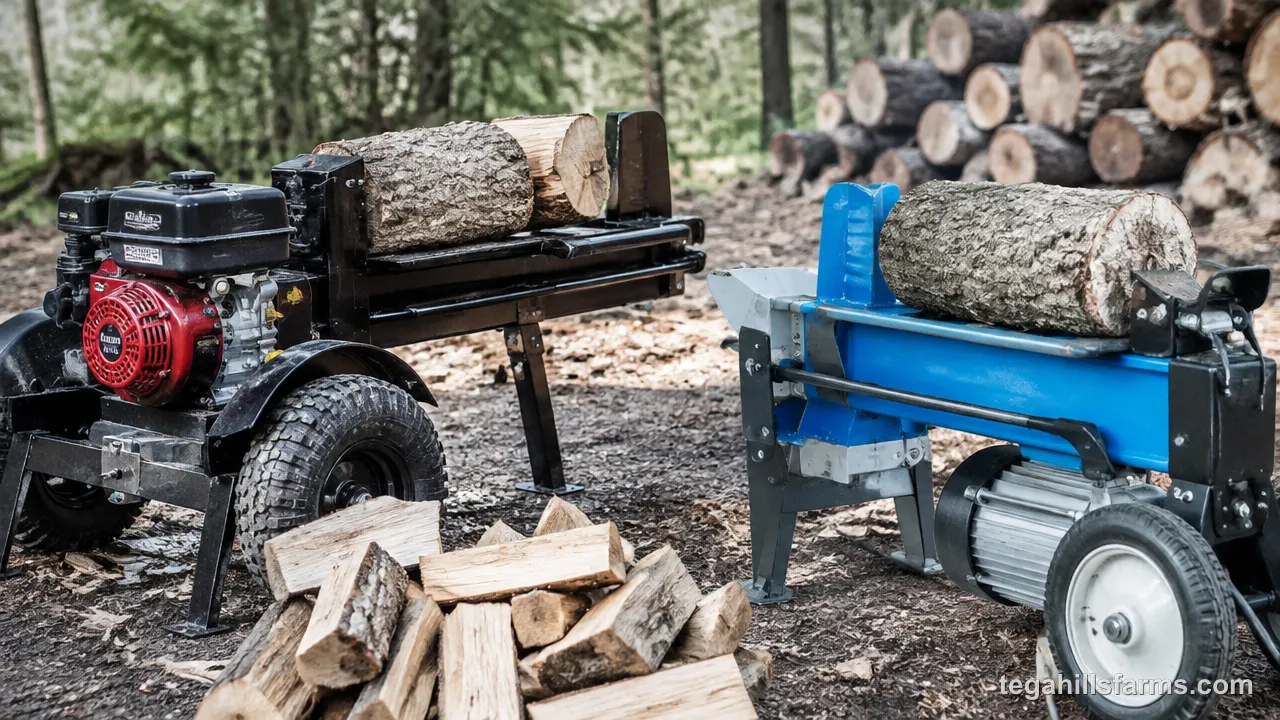
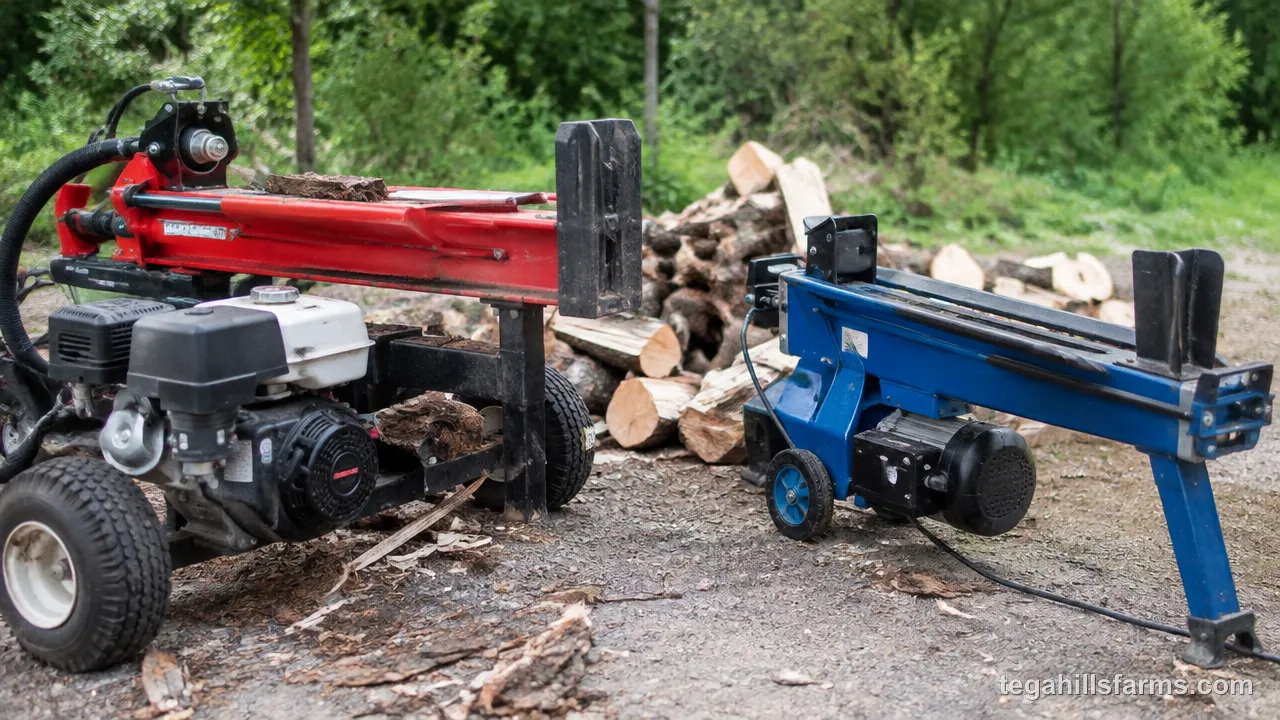
A gas log splitter uses an engine to drive its hydraulic pump. That gives it more splitting force for big hardwood rounds and lets you run it anywhere on your property. An electric log splitter plugs into a household outlet. It runs quieter, needs far less upkeep, and can work inside a ventilated garage, but it is built for smaller, seasoned wood.
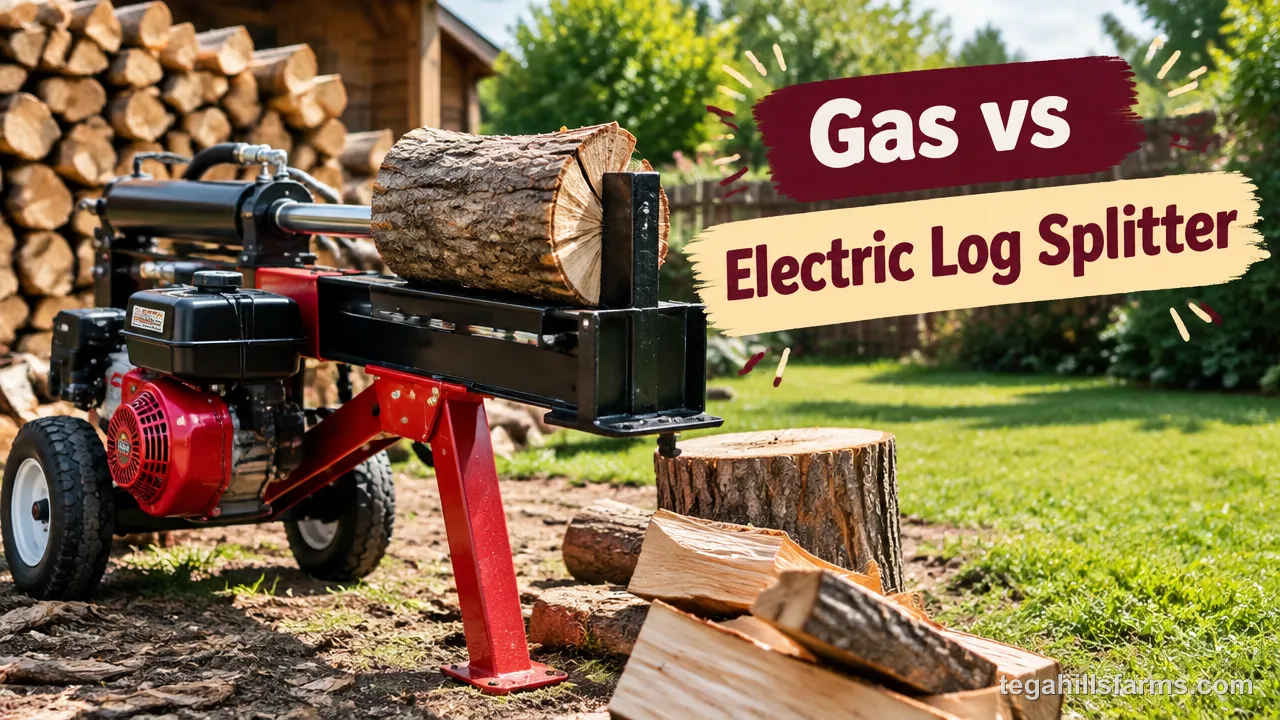
The right choice depends on five things: the size and species of the wood you split, how far your woodpile sits from an outlet, how much noise your neighbors will tolerate, how much engine maintenance you’re willing to take on, and how much you want to spend up front and each season.
Most buyers worry about one of two problems. The first is a splitter that stalls on the knotty oak rounds stacked behind the shed. The second is one that refuses to start in October after a year of sitting. Gas and electric models fail in different ways, so knowing which problem you’re more likely to face points you to the right machine.
What Is the Main Difference Between Gas and Electric Log Splitters?
It comes down to what drives the hydraulic pump: a small gasoline engine on one, and a 120V motor running off a standard household outlet on the other.
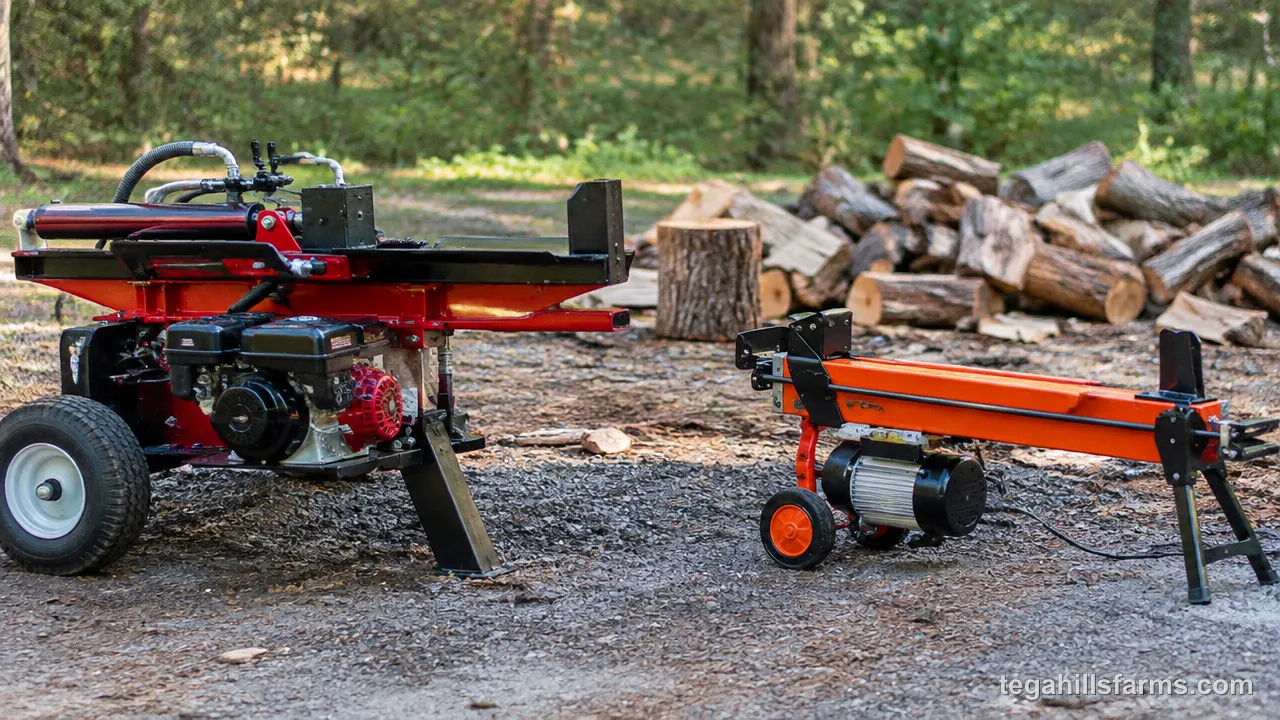
Both are hydraulic log splitters. In each, a pump pushes fluid into a cylinder, and the ram drives the log into a wedge. The power source doesn’t change how the wood splits. It changes how much force the pump can sustain and where the machine can run. Gas buys you force and freedom, and you pay for it with noise, fumes and engine upkeep. Electric buys you quiet operation and a push-button start, and you accept a cord and smaller logs in return.
| Criteria | Gas | Electric Log Splitters |
|---|---|---|
| Power source | Gasoline engine | Household-current electric motor |
| Wood it suits | Large, knotty, dense hardwood | Smaller, seasoned rounds and softwood |
| Where it runs | Anywhere it can be towed, outdoors only | Within cord reach, including a ventilated garage or shed |
| Noise | Loud, hearing protection needed | Much quieter |
| Upkeep | Engine oil, spark plug, air filter, fuel, hydraulic fluid | Hydraulic fluid, cord and motor checks |
| Purchase price tier | Higher | Lower |
If you are still weighing factors beyond the power source, our guide on how to choose a log splitter walks through the full decision.
Which Type Splits Tougher Wood: Gas or Electric?
Gas models handle the large, knotty hardwood rounds that stall most electric units, because an engine can sustain more pump pressure than an outlet-fed motor.
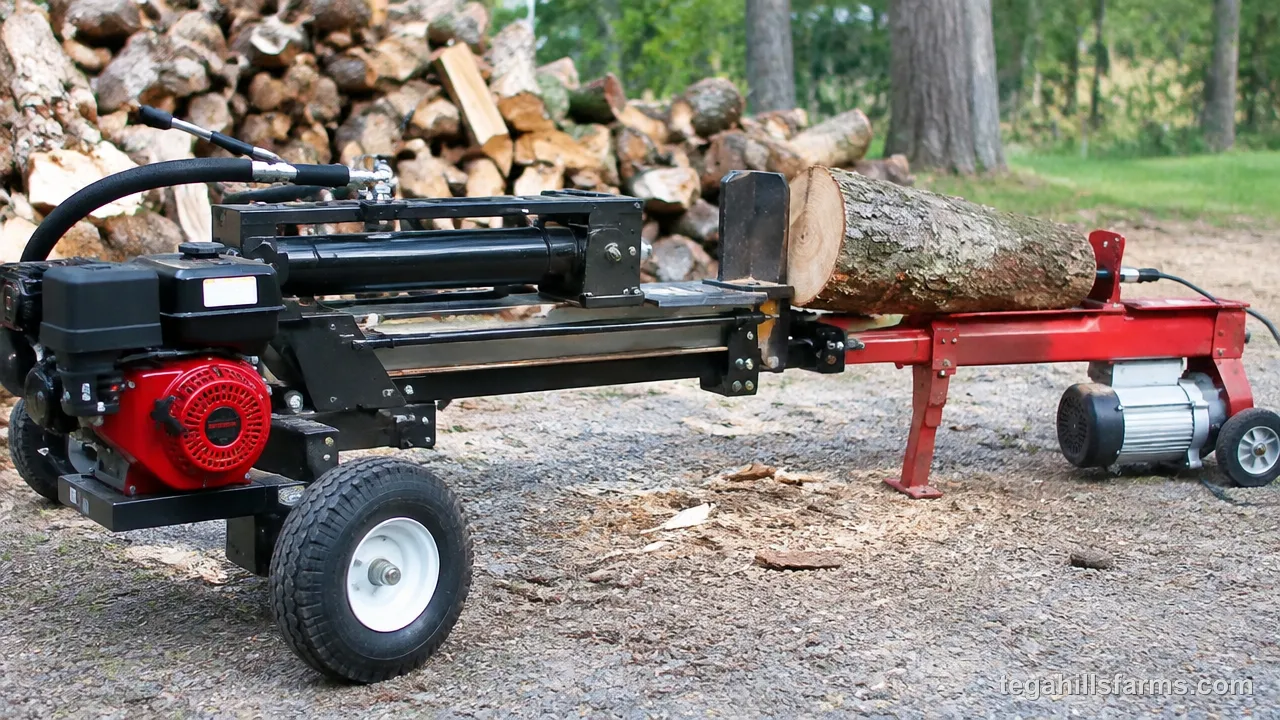
What decides this matchup is the wood in your pile: its diameter, its knots, its species and how long it has dried. Splitting force is rated in tons, and the log splitter tonnage guide matches those ratings to the log sizes and species a homeowner is most likely to face.
How Much Power Does a Gas Log Splitter Deliver?
Gas log splitters run engines from 200cc to over 400cc. That engine size is what lets them carry the highest tonnage ratings among residential splitters. A bigger engine turns a bigger hydraulic pump, so the ram keeps pushing through dense, interlocked grain instead of slowing to a crawl.
This matters most with oak, hickory and maple. Their fibers resist separating, and knots or crotch pieces concentrate that resistance in one spot. A gas splitter can grind through a twisted elbow of oak that an underpowered machine would simply stop on.
Gas models also tend to have longer beds and heavier frames, so they accept long, wide rounds without trimming them down first. Many convert to a vertical position. That lets you roll a heavy round onto the base plate instead of lifting it waist-high, which spares your back when the trunk was a big one.
The engine also holds pump pressure steady over a long session, so the last round of the afternoon splits as cleanly as the first.
Where Do Electric Log Splitters Fall Short on Power?
A typical residential electric splitter runs a 15-amp motor. That draw sits near the limit of a standard household circuit, so the motor can only spin a pump so large. The result is a lower tonnage ceiling and a ram that slows sooner under heavy load.
For seasoned softwood, and for stove-length hardwood of modest diameter that splits cleanly, that is plenty. Pine, fir and well-dried ash pop apart without a struggle.
The limit shows up on wide rounds, on knots and crotch pieces, and on green hardwood whose wet fibers bend instead of cracking. On those pieces the ram stalls partway, and you have to back the log off and reposition it, or set it aside for a maul.
Electric units also tend to have shorter beds. Long rounds need an extra chainsaw cut before they fit, and that adds time to every load.
Which Type Fits the Wood You Actually Split?
Seasoned wood splits more easily than green wood. As it dries, the end checks open into ready-made cracks for the wedge to follow. Green hardwood, especially oak and elm, holds together and demands far more force.
Softwood suits electric splitters almost regardless of moisture. Dense hardwood with knots belongs on a gas machine. Round size matters just as much. Short, narrow rounds cut to stove length stay well within electric capacity, while long, wide trunk sections call for the bed length and force of a gas unit.
Gas wins on tough wood whenever your pile includes wide, knotty or green hardwood. Electric holds its own only when most rounds are seasoned, modest in diameter and cut to stove length.
Which Is More Portable and Easier to Use Around Your Property?
Gas units go anywhere you can tow or roll them, while electric units stay within cord reach of an outlet but fit inside a garage or woodshed.
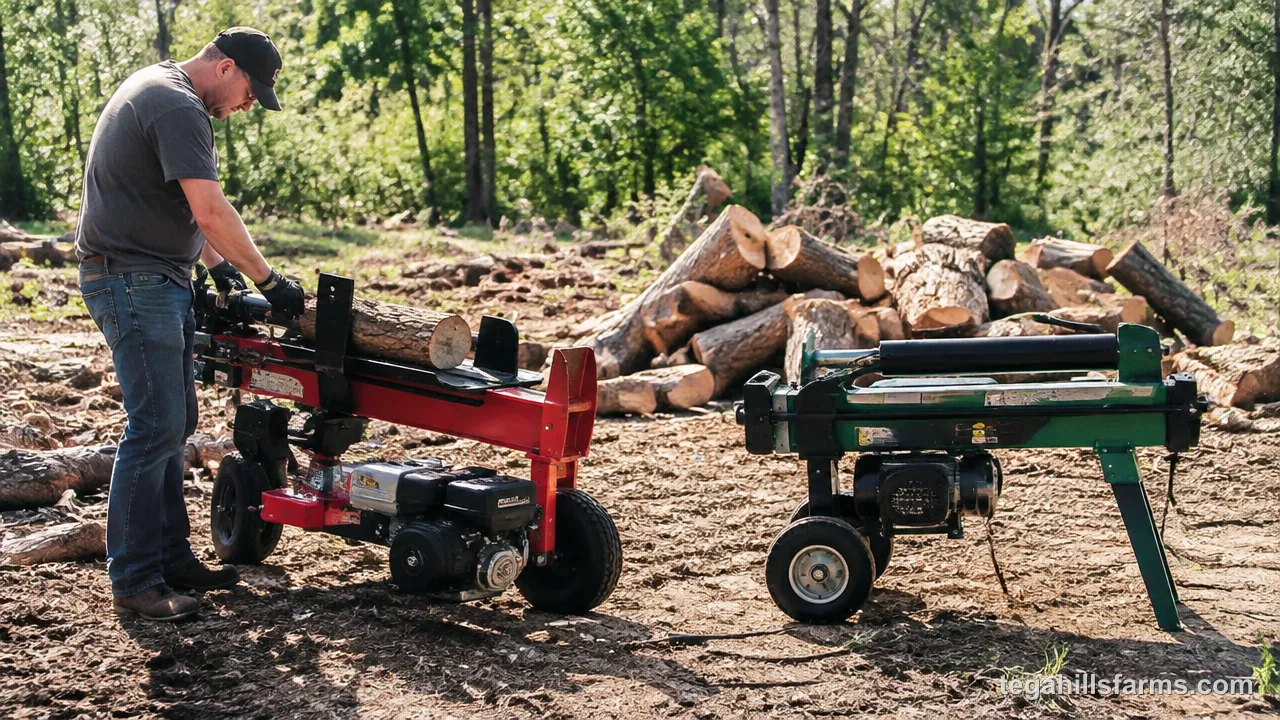
Where your trees come down, and where you store the splitter between seasons, decides this matchup. A woodpile at the back of a few acres and a woodpile beside the garage call for different machines.
How Easy Is a Gas Log Splitter to Move and Use Outdoors?
A gas splitter brings its power with it, so you can split wherever the tree came down instead of hauling every round back to the house. Many gas models are towable. They hitch behind a lawn tractor, ATV or pickup, and that saves real labor when the wood sits at the edge of a woodlot.
Check whether a model is rated for road towing or only for yard speeds before you pull it down a public road.
The trade-offs come with that freedom. Gas units are heavy, so you’re hitching and towing them rather than wheeling them by hand. They take up a lot of garage or shed floor space during the off-season. You also need a fuel can on hand, and the machine must run outdoors, away from doors and windows.
What Limits Where You Can Use an Electric Log Splitter?
An electric splitter works only as far as a safe cord reaches. Cord choice affects more than convenience.
A long, thin extension cord causes voltage drop, which starves the motor. It then runs hot, splits weakly and wears out sooner. Use an outdoor-rated cord of the heavy gauge your owner’s manual specifies, keep it as short as the job allows, and plug into a GFCI-protected outlet. A circuit that isn’t shared with other loads is less likely to trip the breaker partway through a round.
Within those limits, electric units are easy to live with. They’re light enough to wheel by hand and compact enough to tuck into a corner. They can also work inside a ventilated garage or shed when the weather turns.
Gas wins on reach for anyone splitting far from the house. Electric wins on storage and indoor flexibility when the woodpile sits near an outlet.
How Do Gas and Electric Log Splitters Compare on Noise and Indoor Use?
An engine runs loud for the entire session and puts out exhaust fumes, while an electric motor hums quietly enough to talk over and runs safely in a ventilated garage.
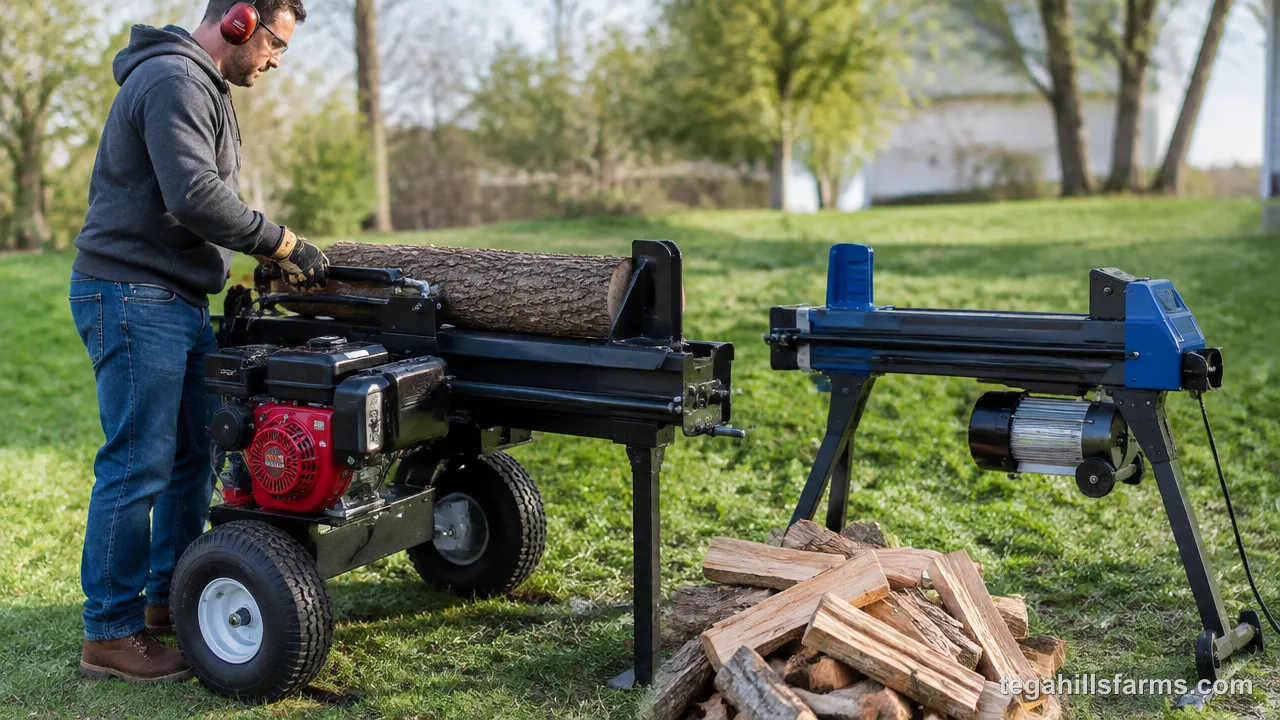
Engine noise is steady and sharp. Running a gas splitter for an afternoon calls for hearing protection, and the sound carries across a suburban lot. That makes early weekend mornings a hard sell with the neighbors. Some towns limit equipment noise by time of day, so check your local rules if houses sit close together.
Exhaust is the bigger issue. Gas engines produce carbon monoxide, which builds up quickly in an enclosed space. A gas splitter should never run inside a garage or shed, even with the door open.
An electric splitter has no exhaust. You can move it into a well-ventilated garage or open-sided woodshed and keep splitting through rain, snow or early darkness. Eye protection and gloves still apply, since the wood behaves the same no matter what drives the ram.
Electric wins on noise and indoor use for anyone working near neighbors or under a roof. Gas makes sense here only when the splitter runs outdoors, well away from the house.
Which Requires More Maintenance, Gas or Electric?
Gas models ask for far more: engine oil, spark plugs, air filters and fuel care all sit on top of the hydraulic fluid checks both types need.
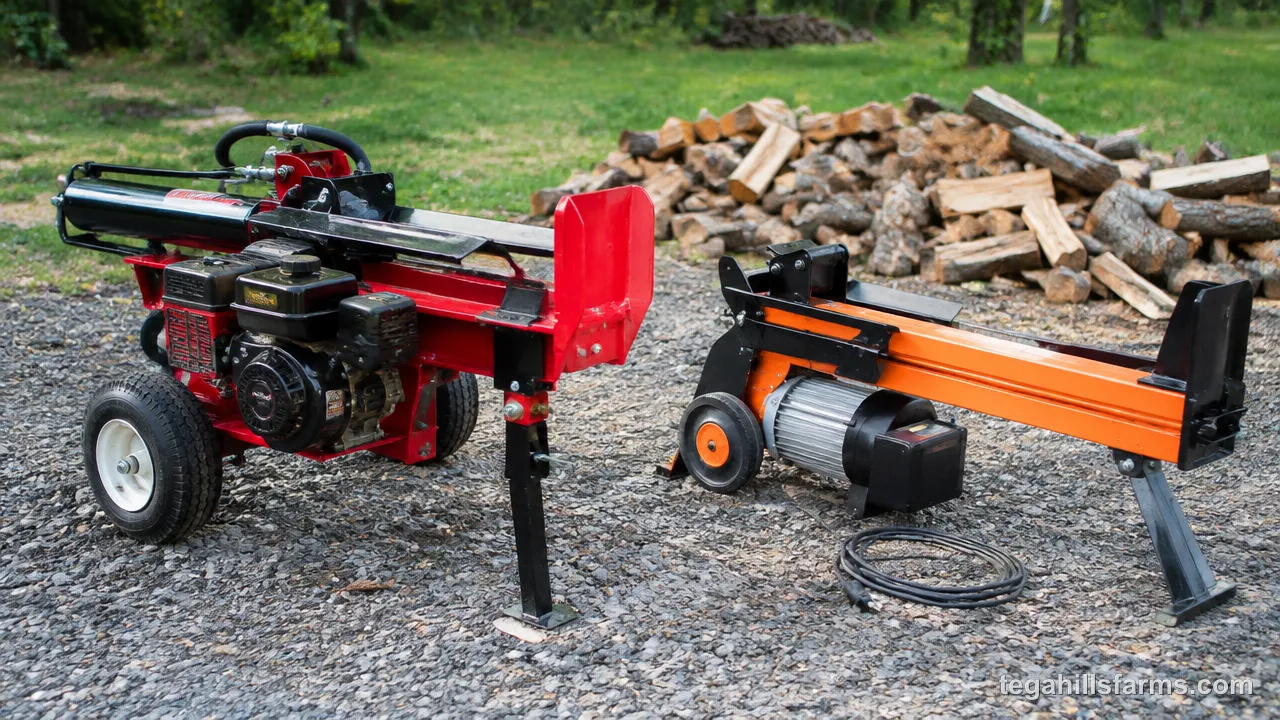
Upkeep decides whether a splitter starts and runs strong after months of sitting between seasons. It is also the biggest factor in how long log splitters last, since neglected engines and contaminated fluid wear out parts that would otherwise hold up for years.
What Does Maintaining a Gas Log Splitter Involve?
A gas owner takes on a small-engine routine. Change the engine oil on the schedule in the owner’s manual, starting with the first change after break-in. Check the spark plug each season. Clean or replace the air filter often, because bark and sawdust thrown off by splitting clog it faster than mowing does.
Fuel is the weak link. Gasoline goes stale over a few months of storage, and ethanol blends draw in moisture that gums up the carburetor. Add fuel stabilizer before storage or run the tank dry. Stale fuel is the first thing to check when a log splitter won’t start after sitting since last winter.
The hydraulic side needs attention too. Check the fluid level before each session, change the fluid and filter on the manual’s schedule, and inspect the hoses and fittings for weeping.
Skipping these jobs rarely causes a sudden breakdown. Instead it leads to hard starts, rough running and a weaker ram season after season.
What Does Maintaining an Electric Log Splitter Involve?
An electric owner skips everything engine-related: no oil, no spark plug, no air filter and no fuel to go stale. What’s left is the hydraulic system and the electrical side.
Check the hydraulic fluid level and look over the hoses and seals for leaks, following the same schedule as on a gas machine. Inspect the power cord and plug for cuts or crushed spots before each use, since a damaged cord on wet ground is a shock hazard. Keep the motor’s vents clear of sawdust so it can cool itself, and store the splitter somewhere dry so moisture doesn’t reach the windings.
Electric wins on maintenance for owners who want a machine that works after months in the shed. Gas stays reliable only for owners willing to keep up a seasonal engine routine.
How Do Gas and Electric Log Splitters Compare on Cost?
Expect electric models in the lower purchase tier and gas models higher, with gas adding fuel, oil and engine parts to every season’s running cost.
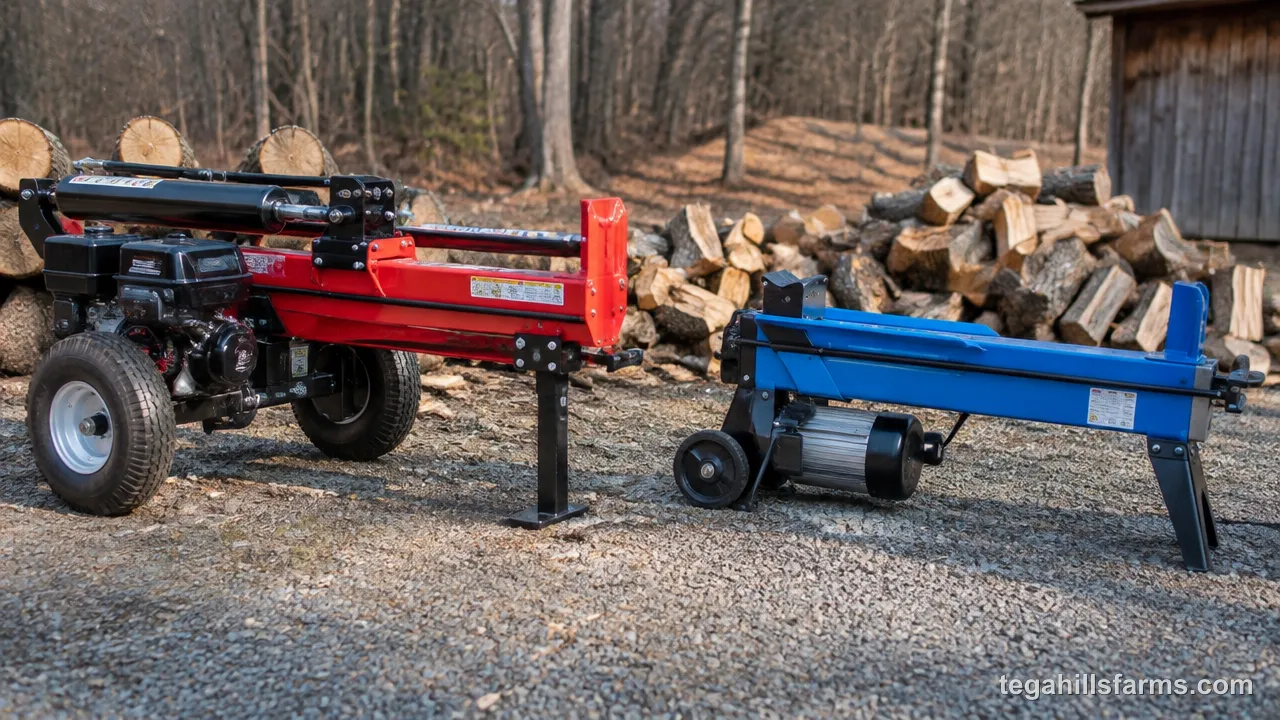
The gas premium pays for the engine, the heavier frame, towing hardware and the higher tonnage ratings that come with them. After purchase, a gas splitter keeps costing money each season through fuel, stabilizer, oil, spark plugs and air filters. An electric splitter’s running cost is the household electricity it uses during splitting, which is modest. Both types need fresh hydraulic fluid on schedule.
The price gap only means something relative to the wood you split. A machine that stalls on half your pile is no bargain, however little it cost. For typical figures by type and tonnage, see how much a log splitter costs.
Electric wins on cost for light, occasional splitting. Gas earns its higher price only when your volume and wood species would overwhelm an electric unit.
Should You Buy a Gas or Electric Log Splitter?
Buy gas if you split large volumes of hardwood on a bigger property, and buy electric if you split modest amounts of seasoned wood close to the house.
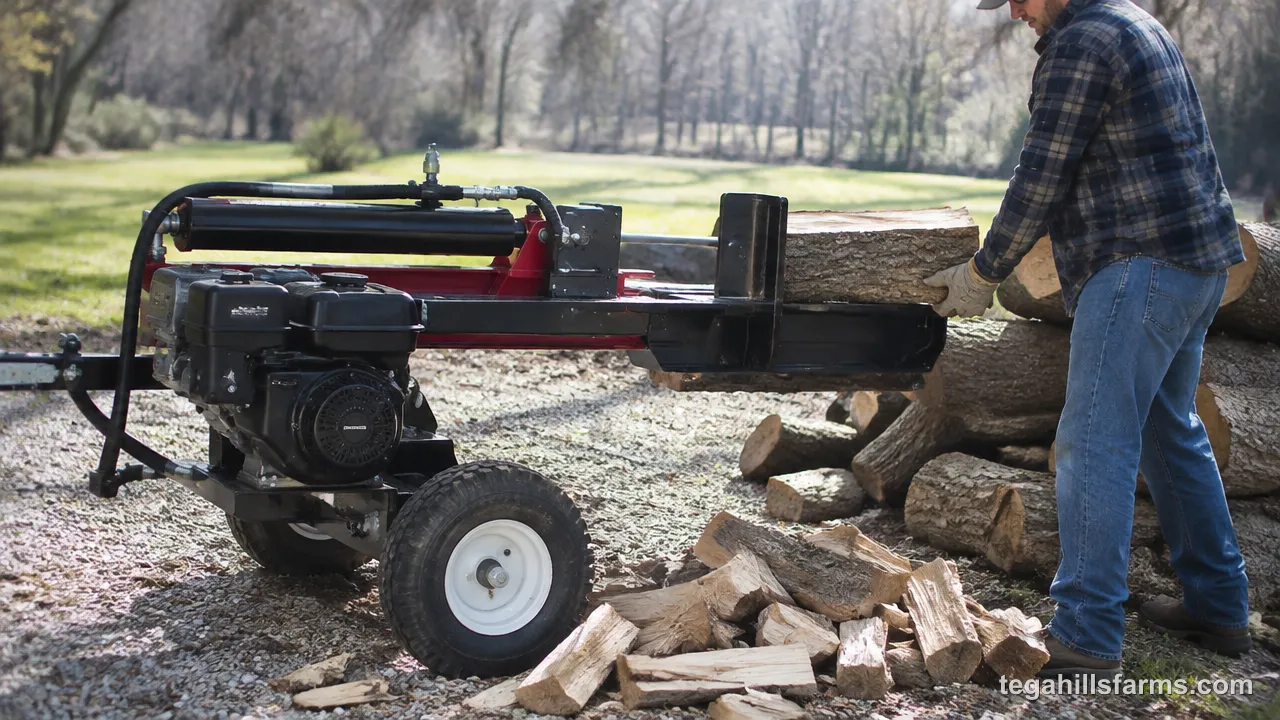
- Choose gas if you heat with wood through the winter, cut your own oak, hickory or maple, split green or wide rounds, or work a woodlot far from any outlet, and you have room to store a towable machine and don’t mind an engine routine.
- Choose electric if you burn wood mainly in a fireplace or for occasional heat, buy or cut seasoned, stove-length rounds, live on a suburban lot with close neighbors, or want to split inside a ventilated garage with almost no upkeep.
For a homeowner splitting a season’s worth of fireplace wood near the garage, I’d pick electric and never miss the engine. Once the pile turns into knotty hardwood measured by the truckload, I’d go straight to gas.
Whichever type you bring home, learning how to use a log splitter safely, with one operator, both hands clear of the wedge and a stable stance, protects you more than any spec on the box.
Battery packs now power log splitters too, and some of these machines take mid-size hardwood rounds that once called for a gas engine, with no cord to drag and no fuel can to store. The battery sets how long each session lasts, though, and a buyer who sizes the purchase only on tonnage can end up with a splitter that goes quiet halfway through the woodpile and needs hours on the charger before the next round.
Is a Battery-Powered Log Splitter Worth Considering?
A battery-powered splitter is worth a look if you want to split away from an outlet without taking on engine upkeep, as long as your logs fit its capacity and your sessions fit its runtime. It combines the cordless freedom of gas with the quiet, fume-free operation of electric.
Capacity can be substantial. NorthStar’s battery-powered model is rated at 24 tons and accepts logs up to 16 inches in diameter and 25 inches long. That puts it in range of many mid-size gas units for typical firewood rounds.
The trade-offs come from the battery. Each charge covers a limited amount of splitting, and recharging takes time, so a long Saturday session may stall unless you own spare packs. Spares add significant cost to an already premium purchase. Cold weather also cuts battery output, which matters because firewood season often runs into freezing months.
Battery models make the most sense for a woodpile far from power, close neighbors, and moderate volume. For splitting several cords in a weekend, gas still keeps working longer between stops.
When Does a Log Splitter Start Wearing Out?
A splitter is wearing out when the cycle slows, fluid starts leaking or the ram stalls on logs it used to handle. The first two often trace back to low or contaminated hydraulic fluid, so check and change the fluid before assuming the worst.
Hydraulic warning signs apply to both types. Look for oil weeping around the cylinder seals or hose fittings, a ram that creeps backward under load, or splitting force that fades as the session goes on. These usually point to worn seals, a tired valve or a pump losing efficiency.
Gas models add engine symptoms: hard starting even with fresh fuel, blue smoke, rising oil consumption and power that sags under load. On electric models, watch for a motor that hums without driving the ram, runs hot quickly or trips the breaker on rounds it once split easily.
Seals, hoses, fluid, spark plugs and filters are inexpensive repairs worth making. A cracked beam, a scored cylinder, a failed pump, or a worn-out engine or burned-out motor on an older machine usually tips the decision toward replacement.
Gas vs Electric Log Splitter FAQs
Can you run a gas log splitter inside a garage?
No. A gas engine produces carbon monoxide, which builds up to dangerous levels in an enclosed space even with the garage door open. Run a gas splitter outdoors, away from doors, windows and vents. If you need to split under a roof, an electric model in a well-ventilated garage or open-sided shed is the safer option.
What extension cord works with an electric log splitter?
Use an outdoor-rated cord in the heavy gauge listed in your owner’s manual, and keep it as short as possible. A thin or overly long cord drops voltage, which makes the motor run hot and split weakly. Plug into a GFCI-protected outlet, and keep the cord out of puddles and away from the ram.
Can an electric log splitter handle oak?
It can split seasoned oak rounds of modest diameter, especially ones cut to stove length with open end checks. Wide, green or knotty oak is where electric models stall, because the motor can’t sustain enough pump pressure to force the wedge through dense, interlocked grain. For a pile that is mostly big oak, gas is the better fit.
Should a first-time buyer start with an electric log splitter?
An electric splitter is a sensible first machine if your wood is mostly seasoned and stove-length and you split near the house. It starts at a switch, needs almost no upkeep and stays quiet. If you already know your wood will be large, green hardwood, starting with gas saves you from outgrowing the electric model within a season.
Does green wood split well on an electric log splitter?
Green softwood usually splits fine, but green hardwood is tough on electric models. Its wet fibers bend and grip the wedge instead of cracking apart, which demands more force than an outlet-powered motor delivers. Letting hardwood rounds season for a while before splitting gives an electric splitter a much easier job.
Write Your Review
No reviews yet. Be the first to share your experience!