
9 Best Garden Trowels: 2026 Top Picks Reviewed
Our top picks for the best garden trowels in 2026 are Wilcox All-Pro 102S 12″ Trowel (Best Overall), Wilcox All-Pro 100S Fine Point Trowel 10″ (Best Precision Cutting), Fiskars Ergo Garden Trowel (Best Ergonomic Design), Fiskars FiberComp Hand Trowel (Best Budget), Corona Comfort Trowel (Best Lightweight), Corona CT 3720 eGrip Transplanter (Best for Limited Hand Strength), DeWit Potting Trowel Extra-Large (Best for Containers & Patios), DeWit Welldone Planting Trowel (Best Premium), and Edward Tools Bend-Proof Garden Trowel (Best for Heavy Soil).
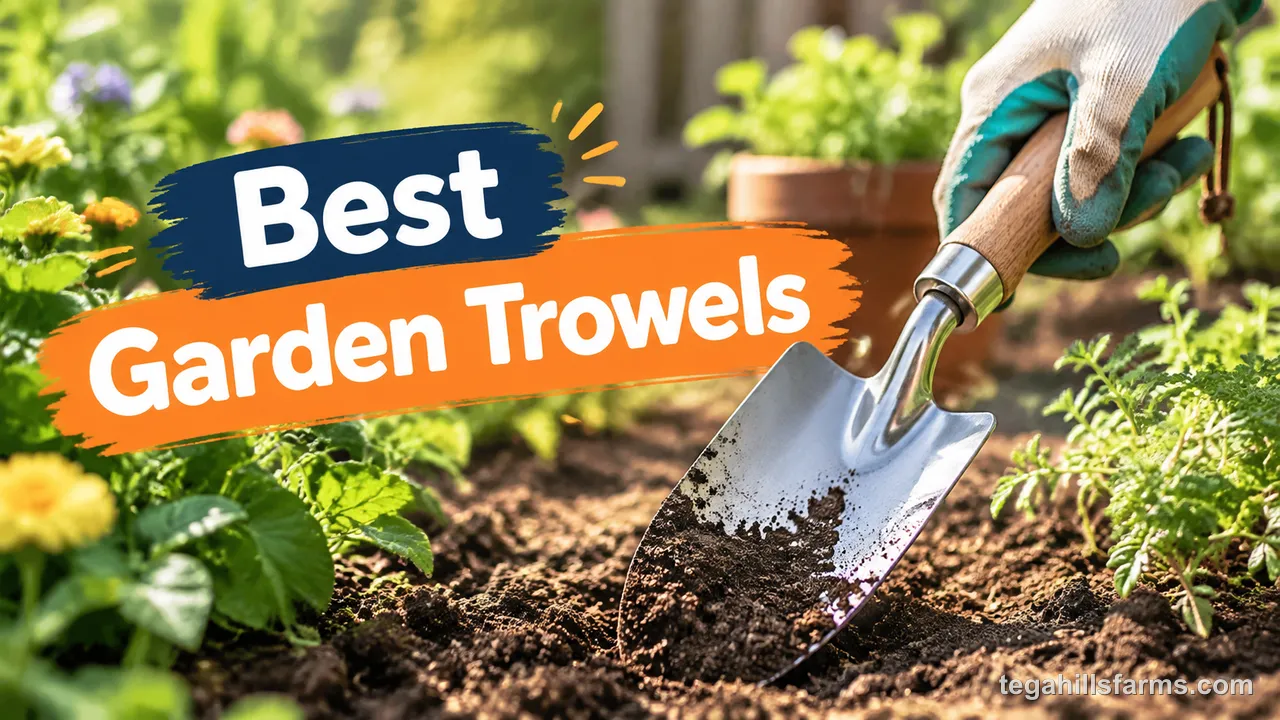
These trowels differ in three ways: blade material, handle shape, and blade design. Each one affects a different part of the job. Steel blades hold up when you pry against roots and stones. Cast aluminum keeps a trowel light and rustproof. A contoured or cushioned grip decides whether your wrist still feels fine at the end of a long planting session.
The most common trowel failure is a blade that folds at the neck on the first buried stone. The other is a handle that rubs the palm raw halfway through a flat of annuals. You can check for both before buying: see whether blade and neck are one piece, and whether the grip is shaped for a closed hand or only coated.


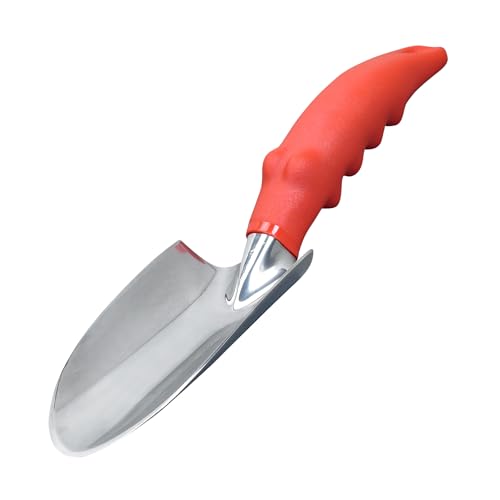
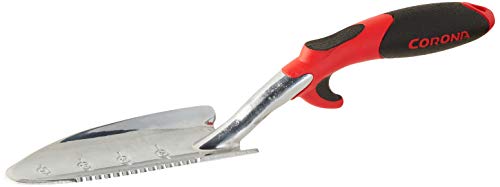


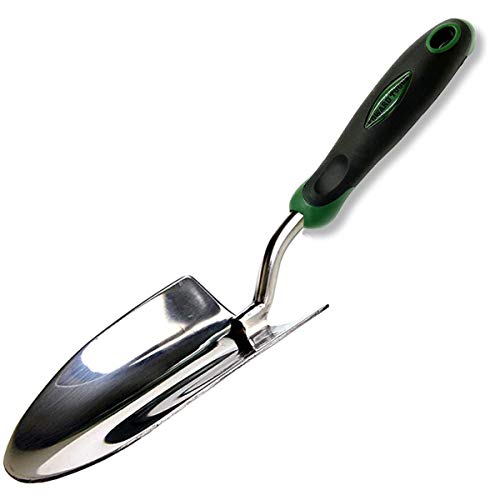
If your beds are mostly loose, amended soil, a light aluminum or alloy trowel handles nearly everything. Clay, rocky fill, and old sod are where a stiff steel blade is worth its extra weight.
What Is a Garden Trowel, and What Is It Best For?
It’s a short-handled digging tool with a scoop-shaped blade, made for planting, transplanting, setting bulbs, and moving small amounts of soil where a shovel would be too big to control.
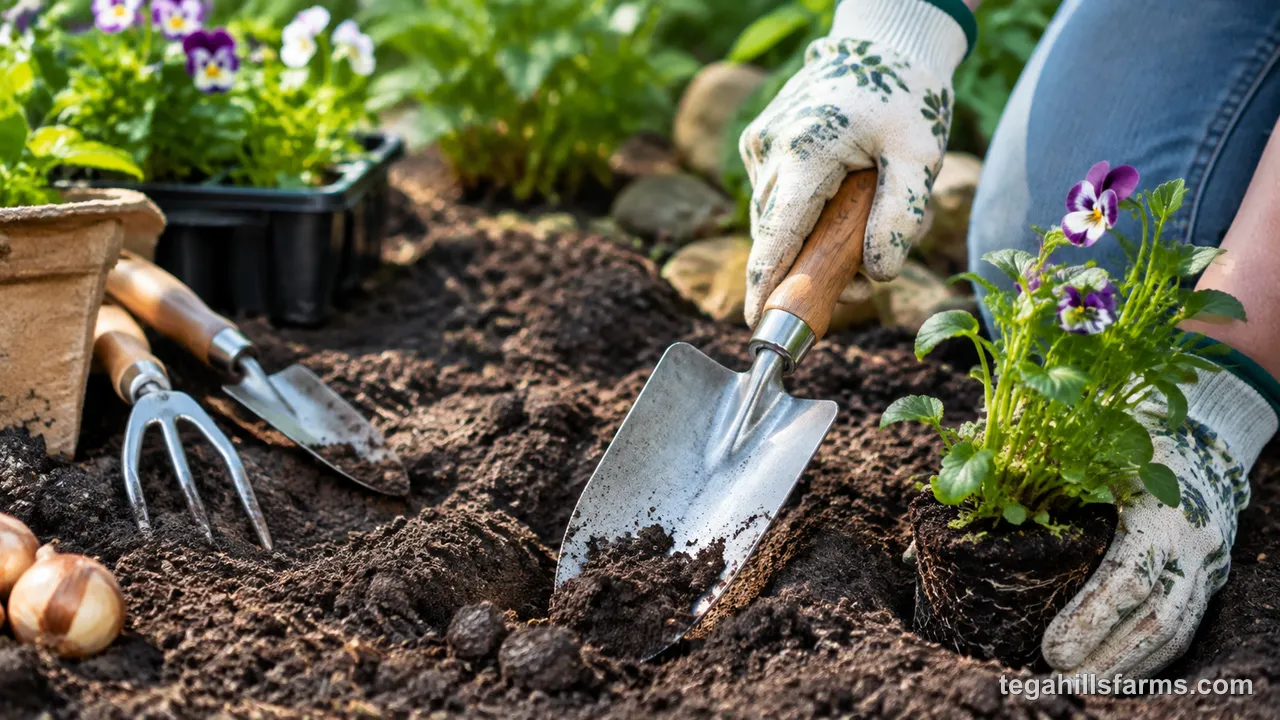
You work with one hand while kneeling or bending close to the bed, which gives you precise placement. That covers a hole sized for a nursery pot, a seedling lifted with its root ball intact, a bulb set at an even depth, or fresh mix worked into a container.
A trowel is the wrong tool for sod, thick roots, or shrub-sized holes. Those jobs need a spade’s longer handle and leverage. Because a trowel covers only close-range work, it helps to see where it sits among the best garden hand tools before you settle on one. The trowels worth owning range from all-round steel blades to fine-point diggers, transplanters, and potting scoops.
What Matters Most When Choosing Garden Trowels?
A good trowel has a blade that holds its shape under prying and a handle that stays comfortable through a long session. Neither quality shows up until the tool is in real soil. That’s why a trowel that feels fine in the store can still let you down by midseason. The construction details behind both are easy to check before you buy, and each one changes how the tool behaves in the ground.
Blade Material: Stainless Steel, Boron Steel, or Cast Aluminum?
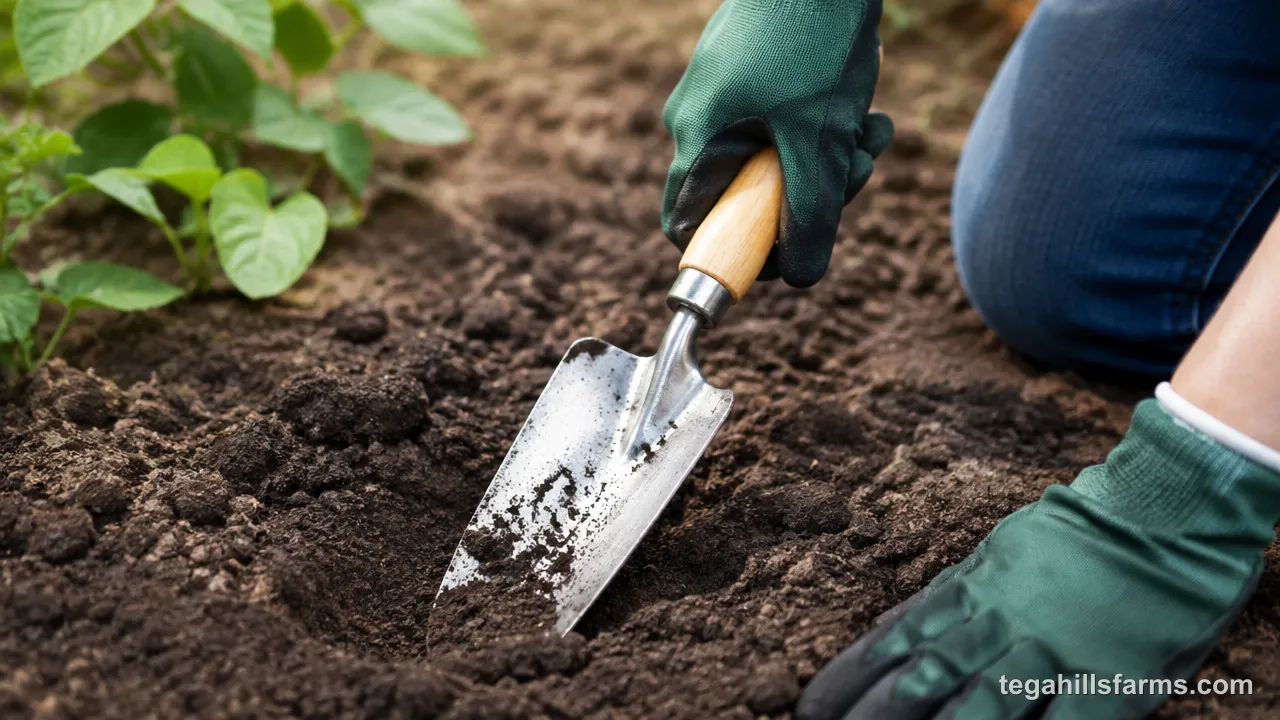
Stainless steel is the safest all-round choice. It resists rust, and when it’s thick or made as one piece, it also resists bending under prying. Boron steel is harder and takes a sharper edge, but it isn’t stainless, so it needs drying and a light coat of oil to stay rust-free. Cast aluminum is light and never rusts. It’s softer than steel, though, so prying hard against stones can wear or crack the head where a steel blade would hold.
In rocky or compacted ground, steel’s stiffness is what keeps the neck straight. In loose, amended beds, aluminum’s lighter weight matters more than prying strength. If you’d rather skip blade upkeep entirely, the best stainless steel trowels are the low-maintenance route.
Handle Shape and Grip Comfort
A handle that fills the palm and keeps the wrist straight prevents more fatigue than any blade feature. Thin, hard handles make you squeeze to keep control. That constant clamping is what leaves forearms tight and wrists sore after a long planting session.
Cushioned or rubber coatings spread pressure across the palm and hold when hands are wet. Contoured finger grips give each finger a set place. Finger guards stop the hand from sliding onto the blade when you push down. A thumb rest or palm rest lets you drive the blade with arm strength instead of grip strength.
These features matter most for wrists, because pushing into soil with a bent wrist loads the tendons. Ash wood handles feel warm and absorb sweat, but they need occasional oiling to keep from drying out.
Blade Shape, Depth Markings, and Serrated Edges
Wide, scooped blades move more soil per stroke, so they suit filling containers and digging holes in loose beds. Narrow or pointed blades slip between established plants and start holes in packed ground. A deeper curve cradles the soil, so less of it spills on the way to the pot.
Depth markings are worth having if you plant bulbs or transplant perennials often. Setting each plant at a consistent depth affects how well it roots and how evenly a bed comes up.
A serrated edge turns the trowel into a small saw for roots, old crowns, and stubborn weeds, so you don’t have to force a smooth blade through something it can’t cut. A sharpened side edge does similar work by slicing instead of sawing.
9 Best Garden Trowels for Digging, Planting, and Potting
Our top picks for the best garden trowels in 2026 are Wilcox All-Pro 102S 12″ Trowel, Wilcox All-Pro 100S Fine Point Trowel 10″, Fiskars Ergo Garden Trowel, Fiskars FiberComp Hand Trowel, Corona Comfort Trowel, Corona CT 3720 eGrip Transplanter, DeWit Potting Trowel Extra-Large, DeWit Welldone Planting Trowel, and Edward Tools Bend-Proof Garden Trowel. The stainless blades from Wilcox and Edward Tools stand up to prying in clay and around roots. The Fiskars and Corona tools keep hand strain down through long planting sessions. The two DeWit boron steel trowels split the work between scooping potting mix and cutting through roots.
#1 Wilcox All-Pro 102S 12″ Trowel — Best Overall
If you want one trowel for bulbs, clods, and roots, start here. Its 16-gauge stainless steel blade won’t bend when you lever against a stubborn root, and the plastic-coated handle holds tight even in muddy, gloved hands.
Key Specs:
- Model: 102S
- Blade: 16-gauge stainless steel
- Length: 12 in
- Weight: 0.49 lb (about 7.8 oz)
- Handle: heavy-duty plastic coating
- Made in: Iowa, USA
Detailed Review:
The stainless blade is thick enough that levering against a clod or chopping at a buried root doesn’t fold the neck. Because it’s stainless, a blade left damp on the potting bench won’t start pitting. That matters if you dig in the morning and clean up whenever you get to it.
It cuts into hard soil much as a small spade or hoe would, so breaking up stubborn clods and digging out roots don’t call for a second tool. At 12 inches overall, it also reaches the bottom of a deep bulb hole while your knuckles stay clear of the soil.
Next to the Wilcox All-Pro 100S Fine Point Trowel 10″, the extra length gives more leverage when you pry. The shorter 100S is easier to steer between crowded plants. I’d pick this longer one as the trowel that stays in the bucket year-round.
The heavy-duty plastic coating keeps a firm hold whether you’re digging or carrying material across the yard. At 0.49 lb, it’s heavier than the Corona Comfort Trowel, and that extra steel is what lets it pry without flexing. It’s made in Iowa and stows easily in a tool box or backpack.
Pros:
- 16-gauge stainless blade resists bending and rust.
- Cuts into hard soil and roots like a small spade.
- Plastic-coated handle grips firmly in wet or gloved hands.
- Made in Iowa and packs easily into a tool box.
Cons:
- Steel build feels heavier than aluminum-alloy trowels.
- Long frame is less nimble inside small pots.
Who It’s For:
Gardeners who want a single trowel for everything, from setting bulbs deep to breaking up clods and digging out roots, will appreciate its range. It also suits anyone who prefers American-made tools. If you mostly fill small patio pots, a wider, scoop-shaped blade moves potting mix faster.
Editor’s Verdict:
Buy this if you want a stainless trowel that keeps its shape in hard ground and handles nearly every planting job in a mixed garden.
#2 Wilcox All-Pro 100S Fine Point Trowel 10″ — Best Precision Cutting
Sedums, sempervivums, and other shallow-rooted plants need careful lifting, and this trowel’s fine point slips in right beside them without disturbing the neighbors. The blade is heavy-duty stainless steel.
Key Specs:
- Model: 100S
- Blade: 16-gauge stainless steel, fine point
- Length: 10 in
- Weight: 0.45 lb (about 7.2 oz)
- Handle: heavy-duty plastic coating
Detailed Review:
The fine point concentrates pushing force on a small area. It starts a hole in packed soil easily and slips in beside a plant without slicing through the next one’s roots. That’s the job it was shaped for: lifting sedums, sempervivums, and other plants with shallow roots that need careful handling.
It shares the 16-gauge stainless steel of the Wilcox All-Pro 102S 12″ Trowel, so the slimmer tip isn’t a weaker one. Prying a small rosette out of gravel or working a crown loose won’t bend it, and the stainless blade holds up in a wet rock garden.
At 10 inches, it’s shorter than the 102S, which puts your hand closer to the work and steadies small, careful movements between plants. The trade-off is leverage: deep bulb holes and big root balls are easier with the longer tool.
The plastic-coated handle keeps a firm hold whether you’re digging or carrying a lifted plant to a new spot. The compact size tucks into a backpack or tool box. I’d treat it as a partner to a broader blade, not the only trowel you own, since a pointed tip carries little soil per scoop.
Pros:
- Fine point slips between closely spaced plants.
- Lifts shallow-rooted sedums and sempervivums cleanly.
- 16-gauge stainless steel resists bending and rust.
- Short frame packs easily into a backpack.
Cons:
- Pointed tip moves little soil per scoop.
- Shorter frame gives less leverage for deep holes.
Who It’s For:
Rock gardeners and anyone tending crowded perennial beds will appreciate how easily this tip works around established crowns. It also suits succulent growers who divide and lift plants often. Gardeners who mostly dig fresh holes in open beds or fill containers will find a broader blade quicker.
Editor’s Verdict:
Keep this trowel for the delicate jobs: lifting shallow roots, working between plants, and starting holes in tight spots without disturbing anything nearby.
#3 Fiskars Ergo Garden Trowel — Best Ergonomic Design
For gardeners who dig often, the ergonomic handle gives more control and less fatigue across a long session. The cast-aluminum head resists rust.
Key Specs:
- Model: 384220-1001
- Head: polished cast aluminum
- Weight: 0.4 lb (about 6.4 oz)
- Handle: ergonomic comfort grip with hang hole
- Warranty: lifetime
Detailed Review:
The handle is the reason to choose this trowel. Its shape gives you more control over where the blade goes, so your fingers don’t have to clamp down to keep it on line while you dig a row of holes for herbs or annuals. That easier hold is what cuts fatigue over a long session.
The cast-aluminum head adds power for digging into tough soil and resists rust, so a trowel left in a damp shed or beside the garden hose stays clean. The polished head keeps its edge through heavy use, so it slices into soil instead of pushing it aside.
At 0.4 lb, it’s easy to carry around the yard. The hang hole lets it live on a pegboard instead of at the bottom of a bucket where blades get knocked around. Fiskars backs it with a lifetime warranty.
I’d hesitate in rocky ground. The Edward Tools Bend-Proof Garden Trowel uses one-piece stainless steel built for prying stones out of clay, and I’d give that job to steel rather than a cast-aluminum head. For beds, herb gardens, and turning soil, the comfort of this handle is what you’ll notice.
Pros:
- Ergonomic handle improves control and reduces hand fatigue.
- Cast-aluminum head resists rust in damp storage.
- Polished head keeps its edge through heavy use.
- Hang hole makes wall storage simple.
- Backed by a lifetime warranty.
Cons:
- Aluminum head suits prying stones less than one-piece steel.
- Polished finish shows scratches quickly after gritty digging.
Who It’s For:
If you garden often and your hands feel it by the end of a session, this handle’s focus on control and reduced fatigue makes it worth a look. Herb growers and bed planters who keep tools in a damp shed also benefit from the rust-resistant head.
Editor’s Verdict:
Choose it for comfortable, rust-free digging in beds and herb gardens when hand fatigue matters more to you than prying power.
#4 Fiskars FiberComp Hand Trowel — Best Budget
This trowel is light, rustproof, and easy on the budget. Its oversized cast-aluminum head moves soil in bigger scoops, so turning a bed of annuals or opening holes for herb starts goes quickly.
Key Specs:
- Model: 79786931J
- Head: oversized cast aluminum
- Handle: FiberComp fiber composite with hang hole
- Warranty: full lifetime
Detailed Review:
The oversized head carries more soil with each stroke, so a bed gets turned or a series of planting holes gets dug in fewer passes. Fiskars polishes the head to keep its edge through heavy use. The aluminum resists rust, so it won’t pit after a rainy night by the raised beds.
The FiberComp body is a lightweight fiber composite that won’t rust either, so no part of the trowel suffers from damp storage. A light build means less weight to lift with every scoop, and the ergonomic handle adds control so your hand isn’t fighting the tool.
The big head has a trade-off in compacted ground. More blade surface meets more resistance on each push, so in dense clay or rocky soil you’ll work harder than you would with a pointed or narrower blade. It does its best work in prepared beds, raised beds, and herb gardens where the soil is already loose.
For a budget trowel, it still comes with a full lifetime warranty. The hang hole keeps it on a hook by the back door instead of lost in the mulch.
Pros:
- Oversized head moves more soil with each scoop.
- Fiber composite and aluminum build won’t rust.
- Light build eases arm strain over many holes.
- Affordable, with a full lifetime warranty.
Cons:
- More blade surface meets more resistance in packed clay.
- Wide scoop is clumsy between crowded seedlings.
Who It’s For:
New gardeners stocking a first tool bucket, and anyone wanting a spare to leave by the raised beds, get dependable everyday digging without a big outlay. It also fits herb growers working in loose soil. Gardeners facing rocky or compacted ground should look for a one-piece steel blade instead.
Editor’s Verdict:
Expect quick, rust-free digging in prepared beds from an affordable trowel that’s backed for life, as long as you don’t ask it to pry rocks.
#5 Corona Comfort Trowel — Best Lightweight
Long afternoons in raised beds are easier with this light, balanced trowel, which is built as a single piece of aluminum alloy so there’s no joint to work loose. Its 3-inch blade slips between seedlings.
Key Specs:
- Model: CT 3010I
- Construction: one-piece aluminum alloy
- Blade width: 3 in
- Overall length: 12 in
- Weight: 0.35 lb (about 5.6 oz)
- Warranty: limited lifetime
Detailed Review:
Corona gives this trowel a light feel with solid balance, so the weight sits comfortably in your hand and fatigue stays down during extended sessions. The one-piece aluminum alloy construction also means it won’t rust on a damp bench.
The narrow blade is where the control comes from. It digs between seedlings in a raised bed without disturbing the plants beside them, yet it’s sturdy enough to push into soil for bulbs and transplants. The compact frame stays easy to steer in confined corners.
Its 12-inch overall length matches the Wilcox All-Pro 102S 12″ Trowel, but at 0.35 lb it’s the lighter of the two. You gain a quicker tool for planting rows of starts, and you give up the thick stainless steel the Wilcox relies on for prying clods and roots.
The cushion grip handle softens pressure on the palm. Corona designed the trowel for professional-grade use and backs it with a limited lifetime warranty. I’d hand it to someone planting a long row of seedlings before I’d give them a heavier steel blade.
Pros:
- One-piece aluminum alloy has no joint to loosen.
- Light, balanced feel reduces hand fatigue.
- 3-inch blade works neatly between plants in raised beds.
- Cushion grip handle softens pressure on the palm.
Cons:
- Aluminum alloy gives less prying strength than thick stainless.
- Narrow blade moves less soil when filling containers.
Who It’s For:
Raised-bed growers and anyone planting seedlings into crowded rows get precise control from this trowel without much weight to carry. It also fits gardeners who notice hand fatigue before the job is done. People who regularly dig in rocky fill will want a heavier steel blade.
Editor’s Verdict:
Pick this when a light, balanced tool matters to you. It plants seedlings and bulbs neatly in tight beds and leaves your hand fresh for the next row.
#6 Corona CT 3720 eGrip Transplanter — Best for Limited Hand Strength
Anti-slip thumb rises and finger guards keep this transplanter steady when your grip is weak. Depth markings on the long blade take the guesswork out of setting small perennials and bulbs, and the serrated edge saws through roots so you don’t have to force them.
Key Specs:
- Model: CT 3720
- Weight: 0.36 lb (about 5.8 oz)
- Blade: long, with depth markings and serrated edge
- Grip: ErgoGRIP handle with anti-slip thumb rise and finger guards
- Extra: built-in bag ripper
Detailed Review:
The anti-slip thumb rise gives your thumb a place to press, so downward force comes from the arm instead of a tight squeeze. Finger guards keep your hand from sliding forward onto the blade when you push. Together they add stability that a weak or painful grip can’t supply, and the ergonomically shaped handle reduces hand stress and fatigue.
Depth markings on the long blade show how deep each hole is as you dig. Small perennials and bulbs go in at the right depth without stopping to measure, which saves a lot of kneeling and checking across a bed of bulbs.
The serrated edge cuts through roots and into the ground with less effort, which matters when sawing can replace forcing. The built-in bag ripper opens bags of potting mix or compost, so you aren’t hunting for scissors or straining to tear plastic with sore fingers.
At 0.36 lb, it’s light to hold. The long transplanting blade is built for depth rather than volume, so scooping large amounts of soil takes more passes. I’d point gardeners with arthritic hands toward this one, because its grip features take pressure off the joints that hurt.
Pros:
- Thumb rise and finger guards add stability with less squeezing.
- Depth markings help set bulbs at consistent depths.
- Serrated edge cuts roots with less force.
- Bag ripper opens potting mix without another tool.
Cons:
- Long transplanting blade moves little soil per scoop.
- Serrated edge needs care when brushing soil off by hand.
Who It’s For:
Anyone living with arthritis, a weak grip, or sore wrists will find the stabilizing grip makes transplanting much less of a strain. Bulb planters who want consistent depths without a ruler also benefit. If your main job is filling large containers, a wide potting scoop will move soil faster.
Editor’s Verdict:
Reach for this transplanter when your hands need help. The thumb rise and finger guards steady the grip while the serrated edge does the cutting.
#7 DeWit Potting Trowel Extra-Large — Best for Containers & Patios
Repotting houseplants or filling patio containers goes faster with this wide, curved blade, which carries a full scoop of mix without spilling over the rim. It’s tempered boron steel, made in Holland.
Key Specs:
- Model: 31-0906
- Blade: tempered boron steel, wide and curved
- Handle: ash wood
- Length: 11 in
- Weight: 0.5 lb (8 oz)
Detailed Review:
The wider, shorter boron steel blade is shaped for potting. A short blade keeps a heavy scoop of mix close to the handle, so it doesn’t strain your wrist. The width carries more mix per pass when you’re filling a large pot or topping off a window box.
The curve keeps the work tidy. It cradles the soil so it lands in the container instead of on the patio, the balcony floor, or the plant saucer, which means less sweeping after you repot.
Tempered boron steel makes the blade strong yet light, and the whole tool weighs 0.5 lb with its ash wood handle. DeWit has made tools in Holland since 1898, and this trowel carries a lifetime guarantee.
The short, wide shape is the trade-off. It’s a scoop first, so digging deep holes in an in-ground bed or prying at roots is better left to a longer, narrower blade. On a patio full of containers, though, it’s the tool I’d keep within reach.
Pros:
- Wide curved blade carries potting mix without spilling.
- Short blade keeps heavy scoops easy on the wrist.
- Tempered boron steel is strong yet light.
- Ash wood handle and lifetime guarantee.
Cons:
- Short, wide shape is awkward for digging deep holes.
- Boron steel needs drying after use to avoid rust.
Who It’s For:
Container gardeners, balcony growers, and anyone who repots houseplants often will appreciate how cleanly this scoop moves mix from bag to pot without dusting the patio. It also suits renters who garden entirely in pots. Gardeners planting mostly in open beds will get more from a longer, narrower digging blade.
Editor’s Verdict:
Use it as a dedicated potting scoop. It keeps patios clean, moves mix quickly, and comes with a lifetime guarantee on its Dutch-made boron steel.
#8 DeWit Welldone Planting Trowel — Best Premium
When roots, dead perennials, and stubborn weeds get in the way of planting, the sharpened sides and serrated left edge of this heat-treated boron steel trowel cut right through them. It works like a hori hori and a trowel in one.
Key Specs:
- Model: 31-3346
- Blade: hardened, heat-treated boron steel
- Edges: sharpened sides, serrated left edge
- Handle: FSC-certified ash hardwood
- Weight: 0.5 lb (8 oz)
- Made in: Holland
Detailed Review:
Sharpened from side to side, with a serrated left edge, this trowel cuts as readily as it digs. You can slice or saw through a root crossing a planting hole, a dead perennial crown, or a vine wrapped around a fence post without putting the trowel down for pruners.
The blade is hardened boron steel, heat-treated for strength, so those sharp edges also break up hardened soil and help you mix fertilizer into a planting hole. That combination is why it works like a hori hori knife and a trowel in one. It suits gardeners who’d rather carry a single tool around the beds.
It’s a premium trowel, and the materials show where the money goes: heat-treated boron steel, an ash hardwood handle from FSC-certified forests, Dutch manufacturing, and a lifetime guarantee. At 0.5 lb, it stays light enough for a long session of planting and weeding.
The sharp edges need some care. Wipe soil off with a rag rather than a bare hand. Hang the trowel on a hook instead of tossing it into a bucket, where the edges dull against other tools.
Pros:
- Sharpened sides cut roots, vines, and dead perennials.
- Serrated left edge saws through stubborn growth.
- Heat-treated boron steel holds up in hard soil.
- FSC-certified ash handle and Dutch-made build.
Cons:
- Sharp edges demand care when cleaning or carrying.
- The premium build and hardened boron steel come at a price that suits its Best Premium label.
Who It’s For:
Experienced gardeners who want one premium tool for planting, root cutting, and weeding will use every edge on this trowel. It also fits anyone clearing old perennial beds tangled with roots and vines. If you mostly plant into loose, prepared soil, the sharpened edges won’t justify the extra cost.
Editor’s Verdict:
Invest in this one if you want a trowel that also cuts, slices, and weeds, made from heat-treated boron steel and backed by a lifetime guarantee.
#9 Edward Tools Bend-Proof Garden Trowel — Best for Heavy Soil
Rocky ground and heavy clay are where one-piece stainless steel matters, and this trowel is built so the neck won’t fold when you pry out a stone. The oversized head moves more soil per scoop.
Key Specs:
- Construction: one-piece polished stainless steel
- Head: oversized
- Grip: ergonomic rubber with contoured finger grips and palm rest
- Weight: 0.44 lb (about 7 oz)
- Warranty: lifetime, replaced if bent
Detailed Review:
One-piece stainless steel means there’s no weld or rivet between blade and handle. The force of prying a stone loose or chopping into clay runs through solid metal instead of a joint. That’s what makes the trowel bend-proof, and Edward Tools backs it with a lifetime warranty that replaces it if you manage to bend it.
The oversized head moves soil in greater volume. Once you’ve broken the surface of a clay bed, each scoop lifts more, so each hole takes fewer strokes. The polished stainless finish also resists rust after a day in wet ground.
The rubber grip has contoured finger grips and a palm rest, so you can drive the blade with the heel of your hand instead of squeezing harder. Compared with the plastic-coated handle on the Wilcox All-Pro 102S 12″ Trowel, the contours give each finger a set place, which steadies the push in dense ground.
At 0.44 lb, it stays manageable for a long session. If clay and rock describe most of your yard, it’s worth comparing the best trowels for hard soil, since the right head size depends on how much you lift versus how much you pry.
Pros:
- One-piece stainless steel resists bending under prying.
- Oversized head moves more soil per scoop.
- Contoured rubber grip and palm rest steady the push.
- Lifetime warranty replaces the trowel if it bends.
Cons:
- Oversized head is bulky between closely spaced plants.
- Big blade needs loosened soil to scoop efficiently.
Who It’s For:
Homeowners stuck with clay, rocky fill, or compacted ground around a new build need a trowel that won’t fold under prying, and this one is built for that job. It also suits anyone who has bent a trowel before. For delicate work around shallow-rooted plants, a fine-point blade gives better control.
Editor’s Verdict:
Count on this trowel for clay and rocky beds. The one-piece stainless body resists bending, and the warranty covers it if it ever does.
Which Garden Trowel Fits Your Soil, Space, and Hands?
Start from the toughest job you do most often, because that’s where a weak blade bends or a poor grip wears your hand down. Blade build, handle shape, and weight pull in different directions. Stiff steel that pries stones adds weight. A wide scoop that fills pots fast is clumsy between plants. A light tool that spares the wrist gives up some prying strength. Match those trade-offs to your own beds and the choice gets much easier.
Heavy Clay, Rocky, and Compacted Soil
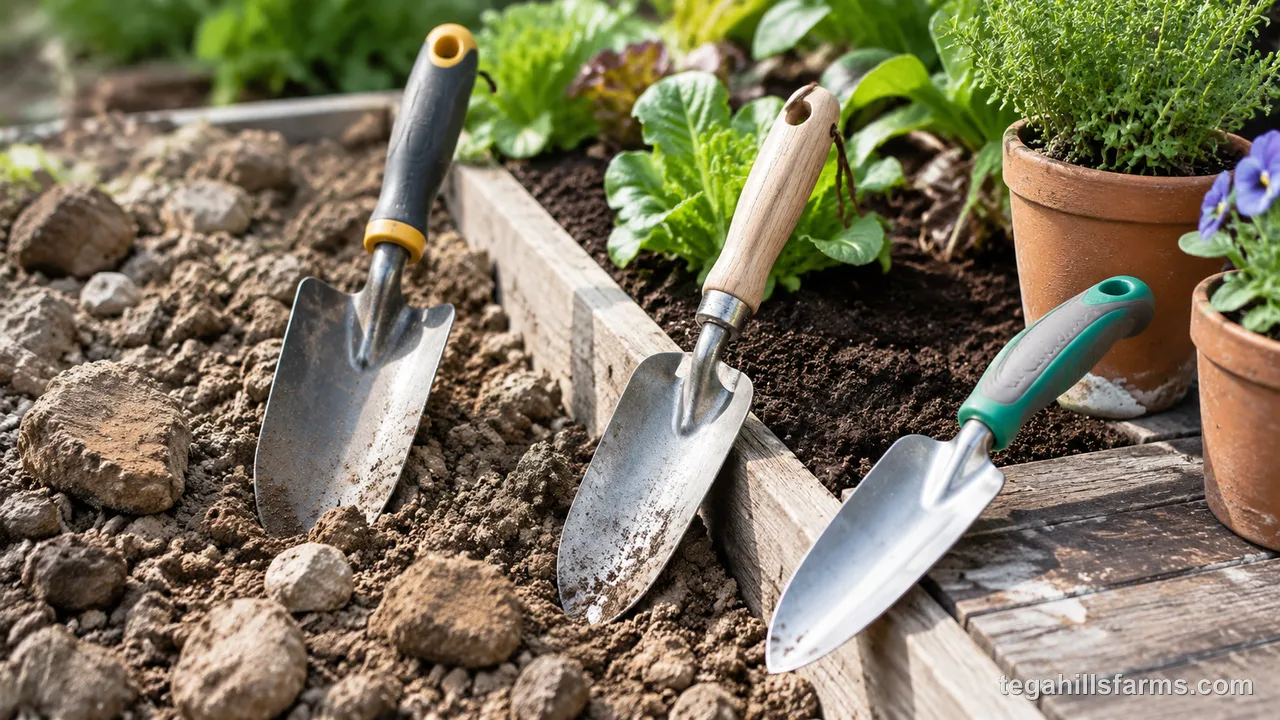
Dense, rocky ground calls for a stiff steel blade with no weak joint. The Edward Tools Bend-Proof Garden Trowel and the Wilcox All-Pro 102S 12″ Trowel both fit that need. Edward’s one-piece stainless body and oversized head lift more clay per scoop once the surface is broken, and its palm rest lets you drive the blade without squeezing. The Wilcox’s thick stainless blade cuts into hard soil like a small spade and handles clods and roots.
For starting holes in packed ground before you widen them, the fine point of the Wilcox All-Pro 100S Fine Point Trowel 10″ concentrates force on a small area. The DeWit Welldone Planting Trowel also helps, because its sharpened boron steel edges break up hardened soil and cut roots. Save wide aluminum scoops for beds that are already loose.
Raised Beds, Containers, and Patio Pots
Tight spaces reward a narrow blade and a compact, balanced frame. That’s why the Corona Comfort Trowel suits raised beds: its slim blade works between seedlings without disturbing the plants beside them. For containers and patio pots, the DeWit Potting Trowel Extra-Large fits better, because its wide, short, curved blade carries mix from bag to pot without spilling over the rim.
Overall length matters more than it seems. A shorter tool keeps your hand close to the work, which helps when you’re reaching into a deep pot or the middle of a crowded bed. Herb boxes and small starts favor a pointed tip like the Wilcox All-Pro 100S Fine Point Trowel 10″. If herbs make up most of your planting, the best trowels for herbs are worth comparing.
Sore Wrists, Arthritis, and Limited Hand Strength
Gardeners with arthritis or a weak grip get real relief from stabilizing features, and the Corona CT 3720 eGrip Transplanter is built around them. It has an anti-slip thumb rise, finger guards, and a serrated edge that cuts roots so you don’t have to force them. For long sessions of general planting, the Fiskars Ergo Garden Trowel pairs an ergonomic handle that reduces fatigue with a light cast-aluminum head.
Weight matters because every scoop lifts the tool along with the soil. The Corona Comfort Trowel combines a light, balanced one-piece build with a cushion grip, which keeps hand fatigue down across many holes. If you need to push into firm ground, the palm rest on the Edward Tools Bend-Proof Garden Trowel lets you use the heel of your hand instead of your fingers.
Thick roots, dense sod, and buried stones stop a trowel blade cold, because a short handle puts all the force through your wrist with almost no leverage behind it. If you keep forcing the wrong tool, you usually end up with a bent neck, a shredded root ball, or a wrist that aches long after the stubborn shrub is out.
When Should You Use a Hori Hori Knife or Long-Handled Tool Instead of a Trowel?
Switch tools when the job turns into cutting, deep weeding, or work you can’t do kneeling. A hori hori knife has a narrow, sharpened steel blade, often with a serrated edge. It slices through roots, divides perennial clumps, and pries out taprooted weeds that a scoop-shaped blade only tears. For dandelions and dock, a dedicated weeder is faster still, and the best manual weeders are designed to pull them out root and all.
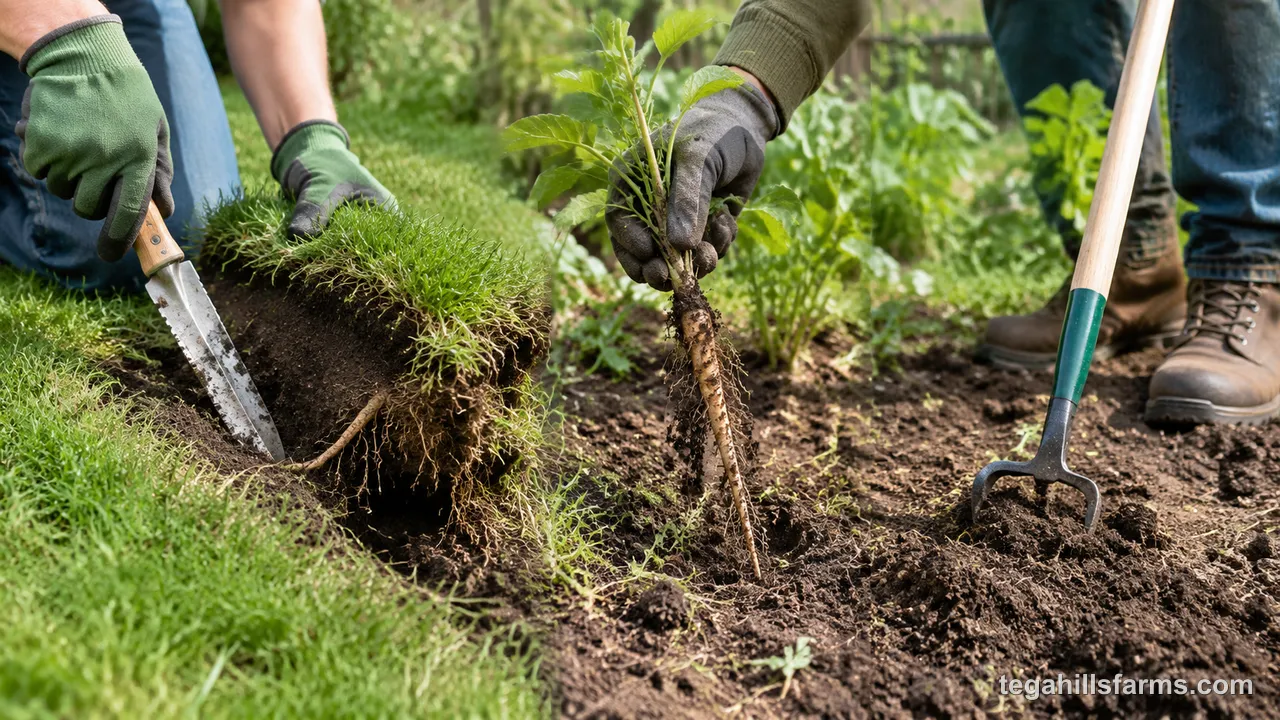
Long-handled tools take over when the area grows or your knees and back can’t handle kneeling. A border spade turns a bed or cuts through sod with your body weight doing the work. A long-handled cultivator loosens soil between rows while you stand. A long-handled transplanting spade digs shrub-sized holes that would take a trowel far too long.
The DeWit Welldone Planting Trowel sits in between. Its sharpened sides and serrated edge borrow from the hori hori, but it still has a trowel’s short handle. For root-bound shrubs or a lawn full of weeds, reach for the longer tool.
What Are the Signs a Garden Trowel Needs Replacing?
Replace a trowel when the neck bends, the blade cracks, or the handle loosens in a way you can’t fix. Each of these means the tool will fail again under the same pressure. You can sometimes straighten a bent neck in a vise, but steel that has bent once usually bends at the same spot again.
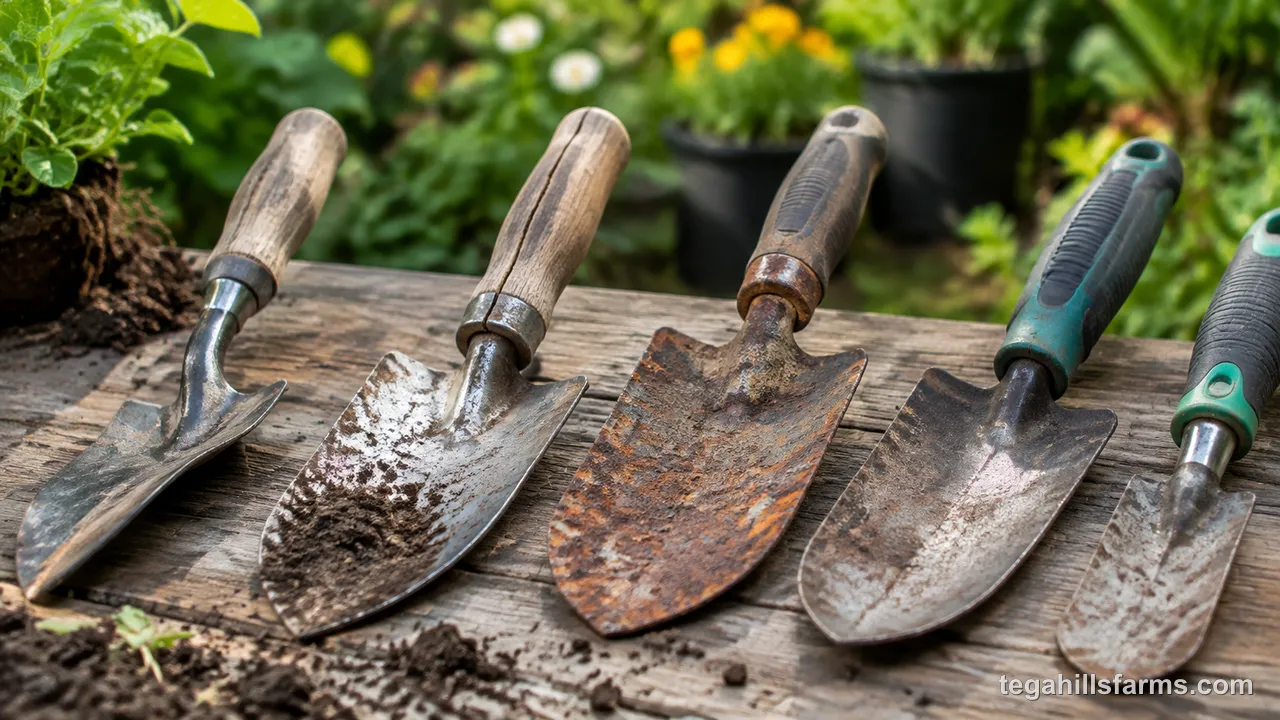
Other problems can be fixed:
- Surface rust: rub it off with steel wool, then oil the blade.
- Deep pitting: if it eats into the edge, it weakens the blade, so replace the trowel.
- Dull edge: a file is all it needs.
- Worn grip: wrap it with tape.
- Split wooden handle: on a riveted trowel, this is usually the end of the tool.
If you’re replacing a trowel on a tight budget, look at trowels under $20 with a one-piece blade instead of a riveted neck. The joint is where inexpensive trowels usually give out first.
Why Do Trowel Sizes and Weights Differ Between Listings?
One page quotes overall length while another gives blade length alone, and the gap between the two can be several inches.
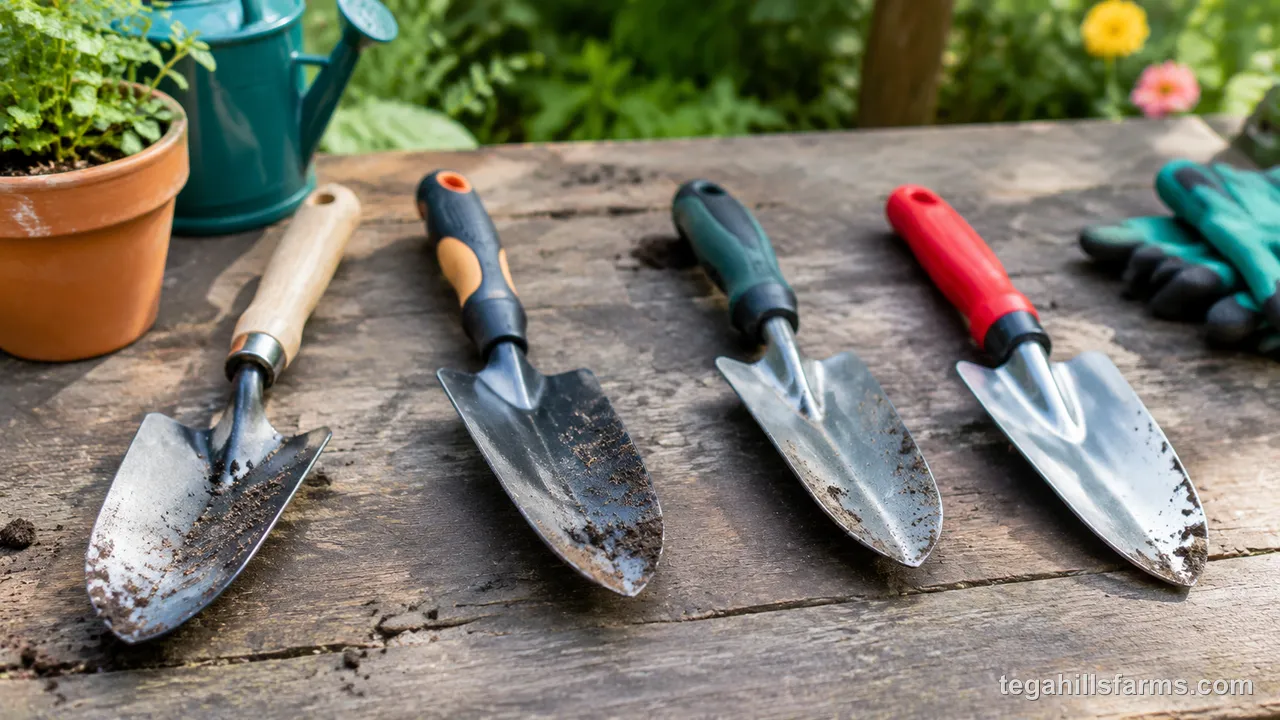
Model variants add to the confusion. A brand may sell the same trowel in several lengths, handle colors, or blade finishes under one product page, and the photos don’t always match the version you’ll receive. Retailers also round figures differently or convert them from metric units.
Before buying, check the model number on the listing, such as 102S or CT 3720, against the manufacturer’s own page. Then compare overall length and blade width side by side.
How Do You Clean, Sharpen, and Store a Garden Trowel?
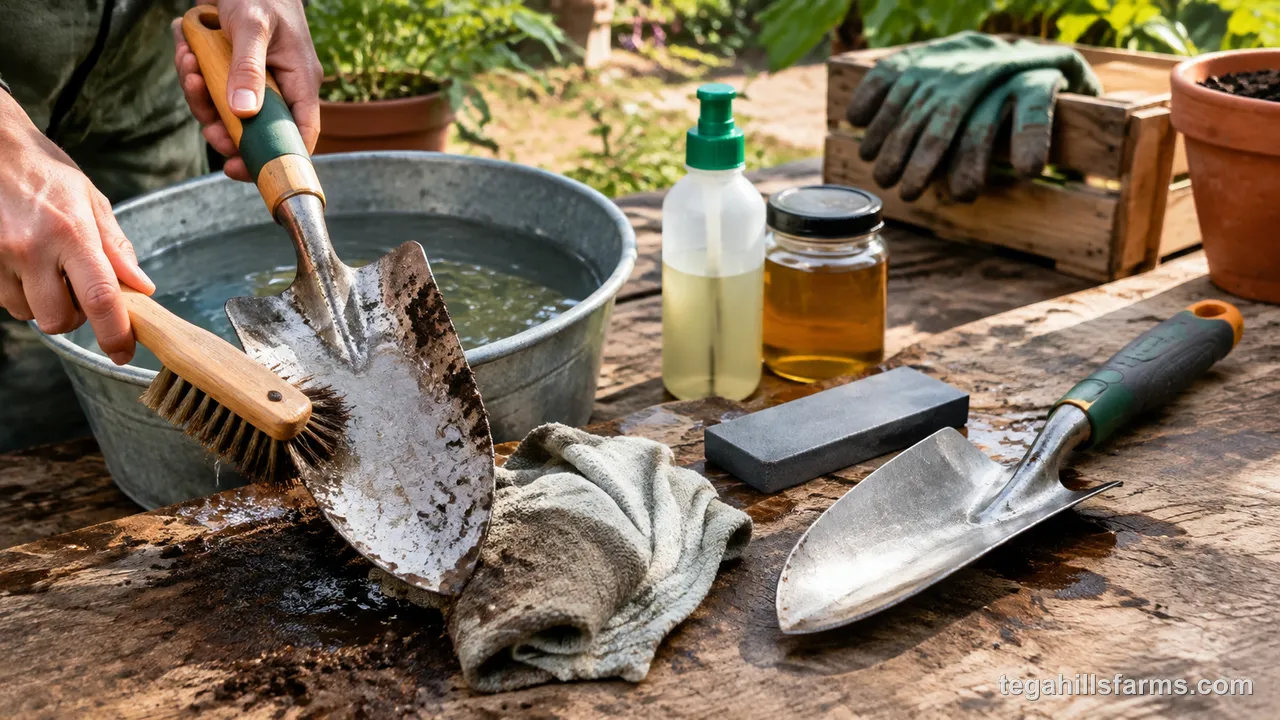
Most trowels that fail early do so from neglect, not hard use. Soil left on a blade holds moisture against the metal, and a wooden handle left out in the sun and rain dries and cracks. A few minutes after each session, plus a short routine at the end of the season, keeps steel and aluminum blades working for years.
Cleaning and Rust Prevention
After each use:
- Knock off loose soil.
- Rinse the blade.
- Scrub stuck clay with a stiff brush.
- Dry the trowel completely before putting it away.
Moisture trapped under dried soil starts rust on steel and the white, chalky corrosion that can form on aluminum.
Stainless steel and aluminum resist rust well, but they still benefit from a clean, dry finish, especially after working with fertilizer, which leaves salts that attack metal. Boron and carbon steel need one more step: after drying, wipe on a thin coat of light machine oil or camellia oil. If light rust appears, rub it off with steel wool and oil the spot.
Sharpening and Winter Storage
Sharpen when the edge rounds over and starts tearing roots instead of slicing them. Clamp the trowel and push a mill file along the existing bevel in one direction, following the factory angle until the edge feels keen again. A few strokes per side are usually enough. Serrated sections need a tapered file worked into each tooth, or you can leave them alone if they still bite.
Before winter, clean and dry every trowel, oil the steel blades, and rub boiled linseed oil into ash or other wooden handles so they don’t dry out and split. Hang tools on a pegboard or hook in a dry shed or garage. A bucket on the floor collects condensation, and the edges knock together.
Frequently Asked Questions About Garden Trowels
Can left-handed gardeners use any garden trowel?
Most trowels work in either hand, because the blade is symmetrical and the handle is straight or evenly contoured. The exceptions are tools with a serrated edge on one side only, such as the DeWit Welldone Planting Trowel, and grips molded for one hand. Check which side the serration is on before buying.
Is stainless steel better than aluminum for a trowel?
Stainless steel is better for prying in clay, roots, and rocky soil, because it resists bending and holds its shape. Aluminum is lighter and won’t rust, which makes it easier on your hands in loose, prepared beds. Choose based on the hardest soil you dig, not the easiest.
Are trowel and fork sets worth buying?
A set makes sense when you’re starting out, since a hand fork loosens soil and lifts weeds that a trowel only chops. When you compare the best garden tool sets, check that each piece is built as well as a standalone version and isn’t there just to fill the box.
What’s the difference between a trowel and a transplanter?
A transplanter has a longer, narrower blade, often with depth markings, for moving seedlings, small perennials, and bulbs at a set depth. A trowel’s broader scoop moves more soil per stroke and handles general digging. The Corona CT 3720 eGrip Transplanter is a good example of the transplanter style.
Should a garden trowel blade be sharp?
Yes. A sharp edge cuts into soil and through small roots with less force, which saves your wrist on every push. Touch the edge up with a file whenever it starts tearing instead of slicing. Handle trowels with sharpened sides carefully when you clean them or carry them around the garden.
More Guides on Best Garden Trowels
- Best Trowels Under $30
- Best Trowels Under $50