
9 Best Garden Pitchforks (2026): Expert Picks
Our top picks for the best garden pitchforks in 2026 are Fiskars Ergonomic Garden Fork 48in (Best Overall), Fiskars SmartFit Telescopic Spade Fork 43-51in (Best Ergonomic Design), Truper Garden Fork 4-Tine 29in BJ-4P (Best for Beginners), Berry&Bird 4-Tine Stainless Digging Fork (Best All-Season Tool), Berry&Bird Stainless Steel Digging Fork 37.4″ (Best Premium), VNIMTI Garden Fork 4-Tine 45in Wooden Handle (Best Durability), FARMHOLYCOWKING 4-Tine Spading Fork 45-Inch (Best for Raised Beds), COSITA Pitch Fork 44-in Fiberglass Handle (Best Budget), and VNIMTI Pitchfork 5-Tine Steel Handle 45in (Best for Heavy Soil).
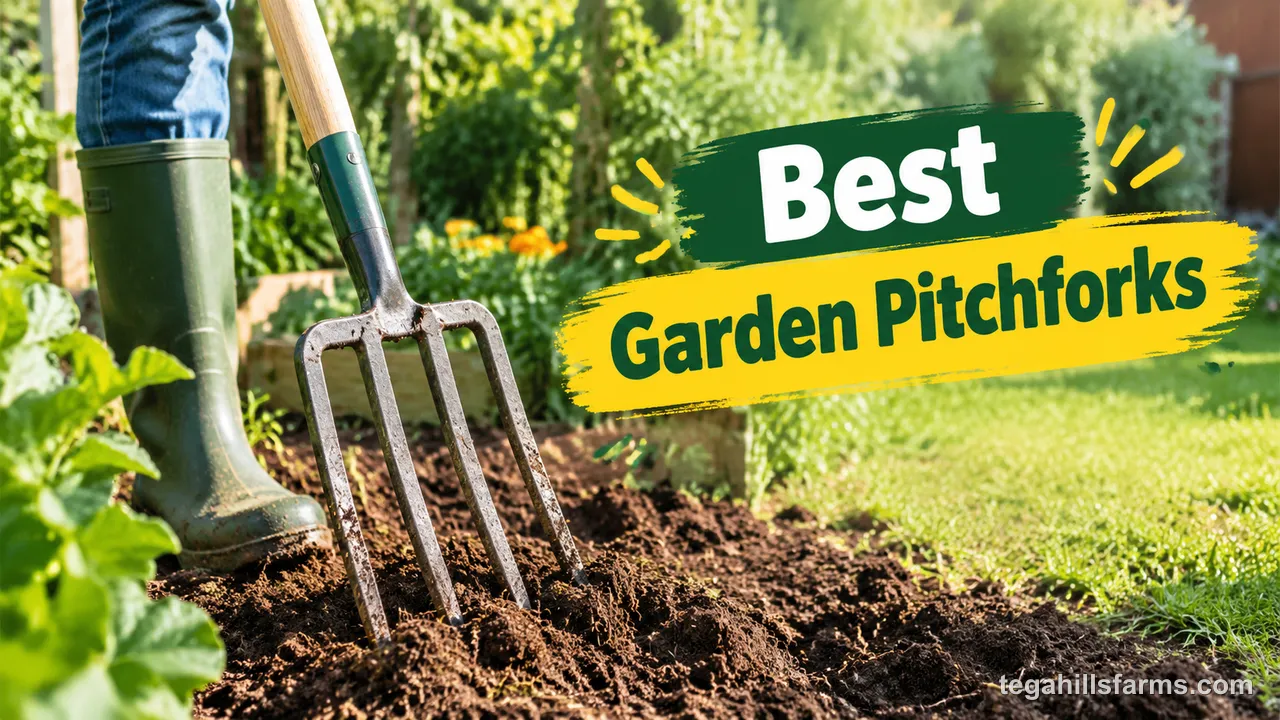
These forks differ in ways you feel in the yard: how the head is made and from what steel, whether the grip is a D, Y or T shape, what the shaft is made of, and how length and weight sit against your height. Those details decide whether a fork slides into hard ground or flexes, and whether your wrists ache after the first bed.
Most buyers worry about bending, the kind of failure where tines fold the first time they meet a root or a pocket of clay. A forged head, a solid joint at the handle and a tool matched to the job keep a fork working for years instead of one season.


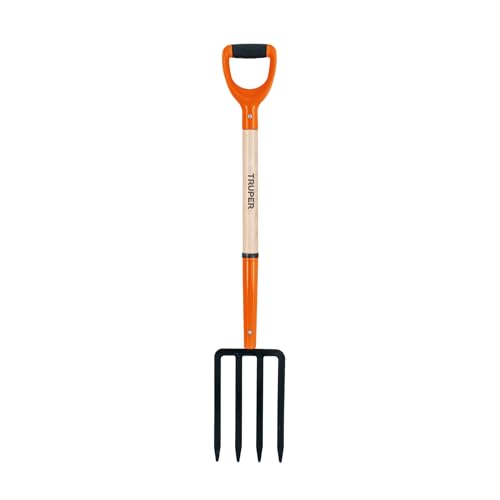

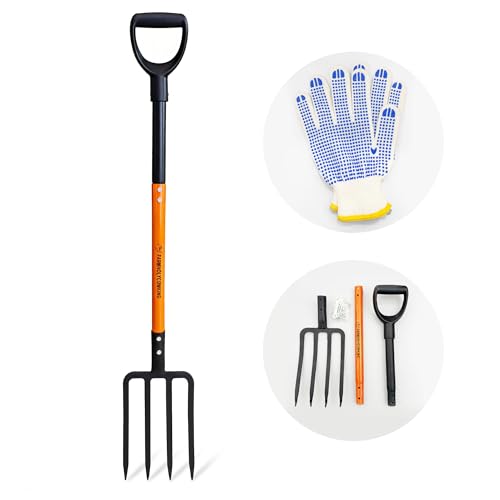


If your beds are mostly loose mix and compost, a lighter fork will do more for your back than a heavy digging fork. On clay, weight and a firm grip earn their place.
What Is the Difference Between a Garden Fork and a Pitchfork?
Digging forks carry a few thick, squared tines that pry into soil, while forks sold for hay and manure carry longer, thinner, wider-spaced tines made for lifting loose material.
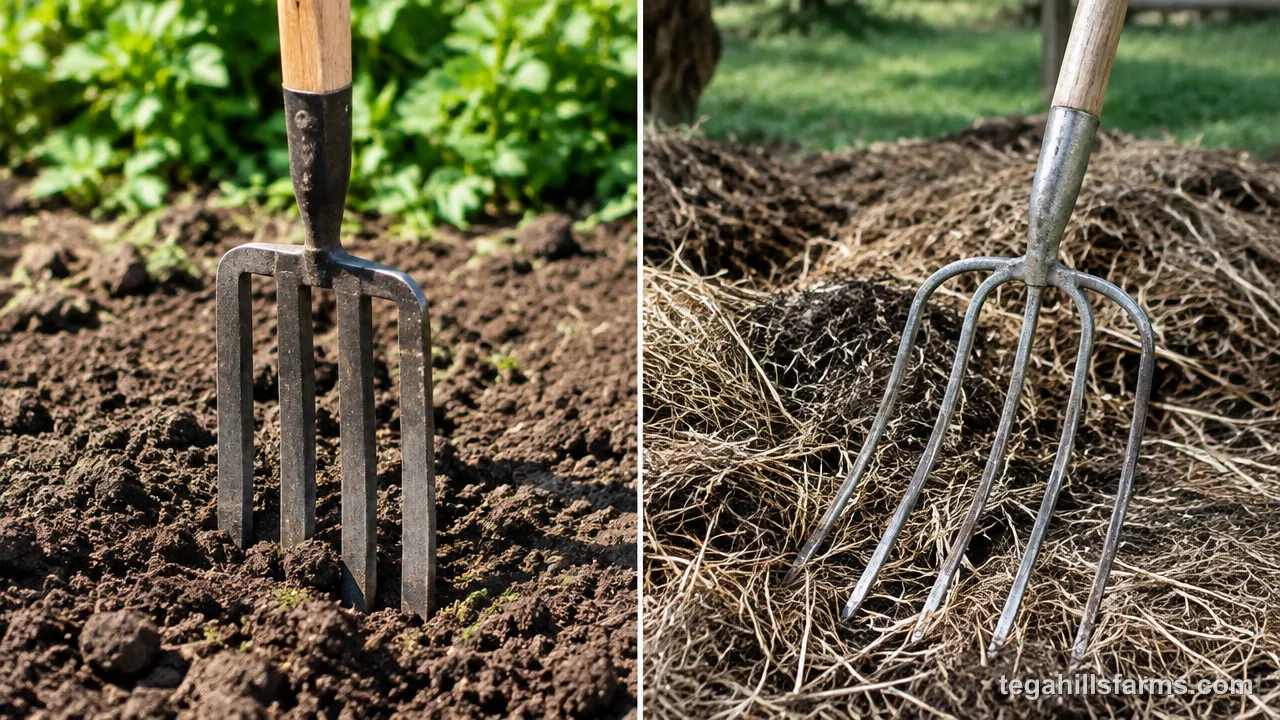
The digging side goes by several names: digging fork, spading fork and border fork, which is a smaller version for tight beds. All of them use stiff tines that hold their shape when you lever back against packed ground, because a square or flattened cross-section spreads the force along the tine. Manure and bedding forks sit at the other end. Their thin, often curved tines slip into a pile and carry a load, but the same thin profile concentrates the force when you pry, so they bend in clay.
Retailers blur the two names, and many four-tine digging forks are listed as pitchforks. The tine description tells you more than the product name does. For the rest of the shed, our roundup of the best garden hand tools covers spades, trowels and rakes that pair with a good fork.
What Should You Look for in a Garden Pitchfork?
The choice comes down to how closely the fork’s build matches your soil and your body, because a fork made for clay can wear out someone tending soft beds, and a light fork bends where the ground is packed. Getting that match right shows up every time you garden as less fatigue, steadier leverage and a tool that doesn’t need replacing after one wet spring.
Which Tine Count and Head Material Work Best?
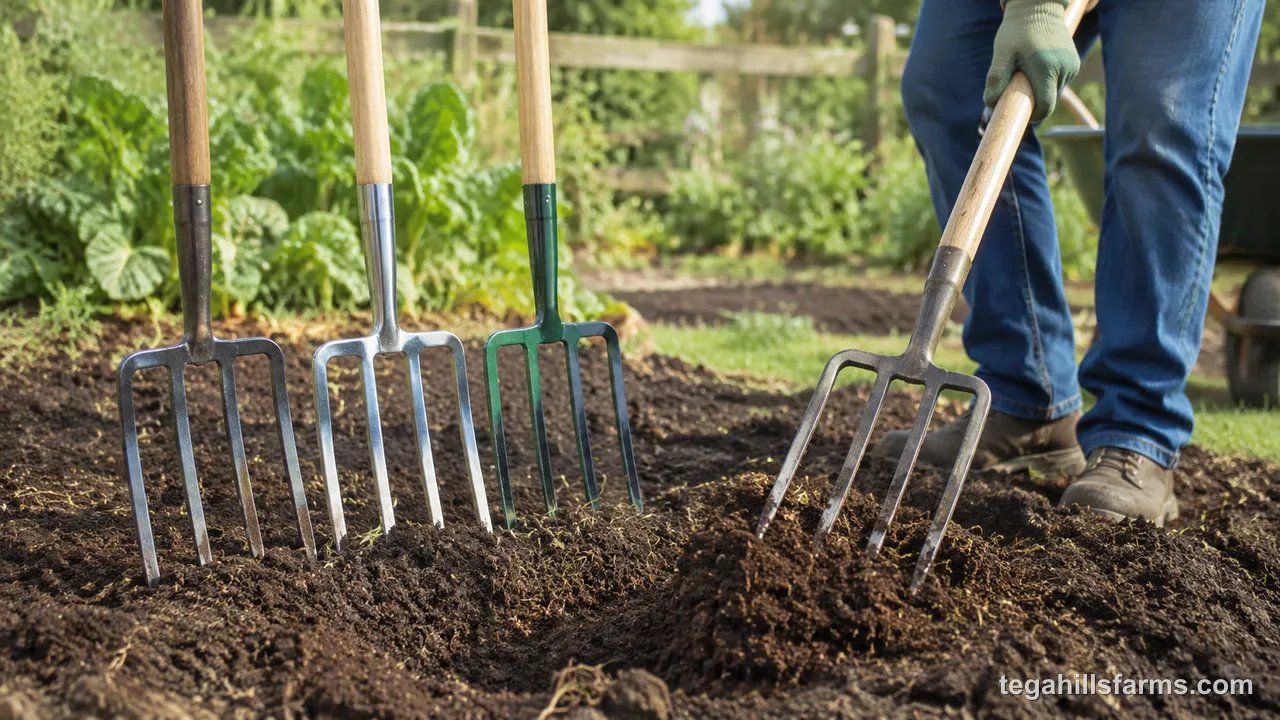
Four thick tines suit most home digging, since each push is spread across a few stiff points that resist bending in firm soil. Forks with more or thinner tines carry loose material such as compost and straw without it slipping through, but thin tines flex when you pry against hard ground. A forked head with five thick, forged tines combines a wider bite with stiffness, at the cost of extra weight.
Head steel matters as much as tine count. Forged carbon steel is tough and takes a sharp point, but it rusts quickly if you put it away wet. Boron steel is a carbon steel hardened with boron, so it resists bending and wear better, though it still needs drying after use. Stainless steel shrugs off rust and lets sticky soil slide off more easily. Because stainless tends to be softer than hardened carbon steel, tine thickness and a forged one-piece head count for more on a stainless fork.
D-Handle, T-Handle or Straight Shaft: Which Grip Fits You?
A D-handle or Y-handle suits repeated lifting and turning, because the closed loop keeps your hand inside the grip and your wrist close to neutral as the load comes up. That position lets you use your forearm and shoulder instead of bending the wrist on every scoop, which is where strain builds over a long session.
A T-handle gives an open crossbar you can push down on with both hands and twist, so it suits hard digging and pulling out roots. Your hands can slide off the ends when the fork is loaded, though, and the wrist rotates more during lifting.
A straight shaft with no grip is common on hay and bedding forks. It lets you slide your hands along the shaft to toss material at different distances, but it gives you nothing to hook your hand around when you pry soil.
Wood, Fiberglass or Steel: Which Handle Material Lasts?
Ash hardwood is light for its strength and absorbs vibration, so it feels comfortable when a tine hits a stone. It needs occasional oiling and dry storage, because wood left out in the rain swells and shrinks until it cracks or the joint loosens.
Fiberglass doesn’t rot or warp and handles weather with little care. The trade-off shows up as the surface wears: once the outer coating breaks down or the shaft cracks, loose fibers can work their way into your palms.
Steel shafts are the stiffest against prying and won’t break in compacted ground. They are heavier, pass more shock to your hands and can rust where the paint wears through.
The joint ties it all together. On wood handles, a metal ferrule or collar holds the head; on fiberglass, a bonded socket does the same job; on steel, a welded or one-piece build does. A sound joint keeps the head from rocking, and a loose one is the first sign a fork is wearing out.
How Much Weight and Handle Length Feel Right?
Handle length should let you stand nearly upright with the tines in the ground and your hands on the grip, so the push comes from your legs and body weight rather than your lower back. Taller gardeners need a long shaft to avoid stooping. Shorter handles keep the fork close to your body for precise work in tight beds, but they make you bend on open ground. A telescopic handle resolves the mismatch when people of different heights share one tool.
Weight works both ways. A heavier fork uses its own mass to drive the tines into hard ground, so each push goes deeper. Lifting it again and again, though, tires your arms and shoulders, especially when you’re moving compost or mulch. A lighter fork makes long sessions easier and suits older gardeners or anyone with limited hand strength, though firm soil may take more pushes to get through.
9 Best Garden Pitchforks of 2026
In ranked order, the forks are Fiskars Ergonomic Garden Fork 48in, Fiskars SmartFit Telescopic Spade Fork 43-51in, Truper Garden Fork 4-Tine 29in BJ-4P, Berry&Bird 4-Tine Stainless Digging Fork, Berry&Bird Stainless Steel Digging Fork 37.4″, VNIMTI Garden Fork 4-Tine 45in Wooden Handle, FARMHOLYCOWKING 4-Tine Spading Fork 45-Inch, COSITA Pitch Fork 44-in Fiberglass Handle and VNIMTI Pitchfork 5-Tine Steel Handle 45in.
The split that decides most purchases runs between steel-handled forks made to bite into packed ground, like the VNIMTI five-tine fork and the FARMHOLYCOWKING, and the COSITA’s lightweight fiberglass shaft, which is built for loose material. The two Fiskars forks and the wood-handled forks from Truper, Berry&Bird and VNIMTI sit between those ends. Together they cover raised beds, general digging, compost turning, mulch handling and compacted soil, for gardeners of different heights and hand strength.
#1 Fiskars Ergonomic Garden Fork 48in — Best Overall
Gardeners who dig in hard, stony beds get a stiff fork that keeps them upright. The boron steel head carries sharp prongs that bite into packed ground, and the 48-inch overall length with a D-shaped grip lets most people lever soil loose without folding over the bed.
Key Specs:
- Length: 48 in (122 cm)
- Weight: 4.6 lb (2.08 kg)
- Head material: boron steel
- Tines: 4 sharp prongs
- Grip: D-shaped handle
- Model: 1001413
Detailed Review:
Boron steel gives this head its stiffness, which is why Fiskars aims it at hard and stony soil where softer tines spread apart after a few seasons of prying. The prongs come sharp, so they pierce crusted ground on the first push instead of skating across it, and that saves the extra jabbing that wears out your shoulders.
The long shaft puts the D-shaped grip high enough that you can rock the head back with your body weight rather than bending at the waist. Because the D grip closes around the hand, it suits small and large hands alike and keeps the fork from twisting when a tine catches a root.
Next to the Fiskars SmartFit Telescopic Spade Fork 43-51in, this fork carries a little more weight. That extra heft helps the tines sink into firm ground, though you notice it after an afternoon of lifting compost. I point most home gardeners to this fork first, since it handles rough digging and routine bed work without demanding a particular height or hand size.
Pros:
- Boron steel head stands up to hard, stony soil.
- Sharp prongs pierce crusted ground on the first push.
- Long shaft keeps you upright while levering soil.
- D-shaped grip fits small and large hands.
Cons:
- Long shaft feels unwieldy in tight, crowded beds.
- Extra weight builds arm fatigue during long lifting sessions.
Who It’s For:
Homeowners who dig new beds, divide perennials and work hard or stony ground will get the most from this fork, especially if bending low strains their back. Gardeners who mainly toss light mulch or straw will be happier with a lighter fork built for loose material.
Editor’s Verdict:
A dependable all-round digging fork: hard boron steel, sharp prongs and a long reach make it as comfortable in stony soil as in an established bed.
#2 Fiskars SmartFit Telescopic Spade Fork 43-51in — Best Ergonomic Design
Households with tall and short gardeners sharing one tool should look here. Its telescopic shaft adjusts from 43 to 51 in, so each person can set a back-friendly working height, and the wider D-handle leaves room for gloved hands.
Key Specs:
- Length: 43–51 in (1.10–1.30 m), telescopic
- Weight: 4 lb (1.8 kg)
- Head: forged boron steel, 4 tines
- Grip: wider D-handle
- Model: 1070717
Detailed Review:
The telescopic handle changes how this fork fits your body. Extending the shaft lets a tall gardener push the tines in while standing straight, and shortening it gives a smaller person a grip they can drive down on instead of reaching up to.
The forged boron steel head with sharp tines is built for hard, stony ground, so the adjustable shaft doesn’t come at the cost of a weaker head. The same head aerates a lawn and rakes out stones or weed clumps, which makes it more than a bed-digging tool.
Compared with the Fiskars Ergonomic Garden Fork 48in, it is a touch lighter, and that difference adds up over a long session of turning beds. The wider D-handle helps too, since your hand sits comfortably whatever its size and the wrist stays aligned as you lift.
The trade-off is the adjustment itself. A sliding shaft adds a joint that a solid shaft doesn’t have, so wiping soil away from it after use keeps the adjustment smooth for years.
Pros:
- Telescopic shaft sets a comfortable height for different users.
- Wider D-handle leaves room for gloved hands.
- Boron steel head handles hard, stony ground.
- Doubles for lawn aeration and raking out stones.
Cons:
- Adjustment joint needs cleaning to keep sliding smoothly.
- Extra mechanism adds parts a one-piece shaft avoids.
Who It’s For:
Gardeners who share tools across a household, or whose back complains after bending over beds, get the clearest benefit from a shaft that adjusts to their posture. If you want the simplest tool possible, with nothing to set or clean around, a solid-shafted fork suits you better.
Editor’s Verdict:
Fiskars paired a strong boron steel head with a shaft that adapts to the person holding it, a combination that makes long digging sessions easier on the back.
#3 Truper Garden Fork 4-Tine 29in BJ-4P — Best for Beginners
First-time fork buyers will find this one easy to control. The forged one-piece steel head pairs with a 29-inch ash handle and a Comfort Grip Y-handle, so you work close to the soil with steady leverage in small beds and borders.
Key Specs:
- Handle: 29 in ash wood with metal ferrule and collar
- Head: forged one-piece steel, 4 tines
- Grip: Comfort Grip Y-handle
- Weight: 3.6 lb
- Model: BJ-4P (11018)
Detailed Review:
A forged one-piece head has no welded seam between tines and socket, and that simplicity makes the fork forgiving for someone still learning how hard to pry. The metal ferrule and collar reinforce the spot where the ash handle enters the head, which is the joint that tends to loosen first on a wood-handled fork.
The short handle keeps the fork close to your body. You get fine control when you turn soil between perennials or loosen a narrow bed, and the Comfort Grip on the Y-handle holds steady through repeated lifting and turning of compost.
Its light weight makes it easy to carry around the yard and to lift load after load of loose soil. The short reach is the trade-off, because on open ground you’ll bend or kneel more than with a long-shafted fork and you can’t put your full body weight behind each push.
I like it as a first fork because there’s little to go wrong: a one-piece head, a reinforced joint and a grip that’s easy to hold.
Pros:
- Forged one-piece head avoids weak welded seams.
- Ferrule and collar reinforce the handle joint.
- Short handle gives close control in tight beds.
- Comfort Grip Y-handle stays secure during repeated lifts.
Cons:
- Short reach means more bending on open ground.
- Ash handle needs oiling and dry storage.
Who It’s For:
Anyone buying a first garden fork for compact beds, borders or compost bins will appreciate how little this tool asks of them. People with long rows to dig, or who want to stay fully upright while working, will be more comfortable with a longer-handled fork.
Editor’s Verdict:
Simple, well-joined and easy to steer, this Truper builds good digging habits without punishing early mistakes.
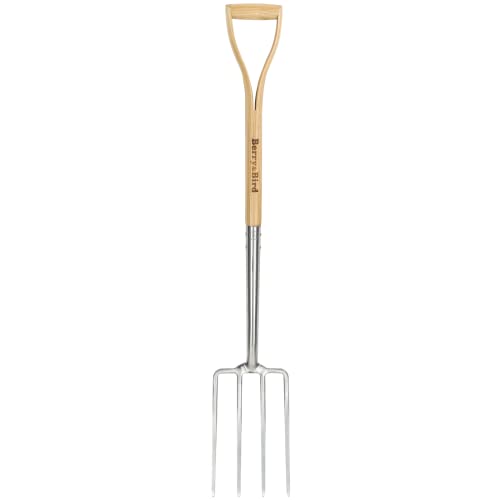
#4 Berry&Bird 4-Tine Stainless Digging Fork — Best All-Season Tool
Gardeners whose fork chores shift with the calendar, from spring bed prep to summer mulching and fall leaf collection, get one tool that handles each job. Its stainless steel head shrugs off rust between them.
Key Specs:
- Head: stainless steel, 4 tines
- Handle: ash wood Y-handle from an FSC-certified forest
- Weight: 6.25 lb
- Warranty: 2 years, plus 30-day free replacement
- Model: 922
Detailed Review:
Because the head is stainless, it can sit in a damp shed between spring digging and fall cleanup without the orange bloom that carbon steel picks up. Wet soil also releases from stainless more readily, so the tines stay clear when you turn a soggy bed.
The tines cover a wide spread of work. They turn and aerate beds, screen soil, mulch, gravel and grass, and lift leaves, straw or hay to wherever fertilizer or cover is needed, so one fork can replace a separate bedding fork for seasonal cleanup.
The solid ash Y-handle grips firmly and is built not to loosen over time, and its shape makes it easy to hang on a hook between jobs. Berry&Bird makes these forks by a traditional manual process with ash from an FSC-certified forest, and the wood grows smoother the more you use it.
Next to the Fiskars Ergonomic Garden Fork 48in, it carries noticeably more weight. That mass helps it bite into soil, but tossing straw or leaves for a long stretch tires your arms sooner.
Pros:
- Stainless head resists rust in damp storage.
- Handles soil, mulch, gravel, leaves, straw and hay.
- Ash Y-handle built not to loosen over time.
- Two-year warranty with 30-day free replacement.
Cons:
- Heavier build tires arms during long tossing sessions.
- Ash handle needs dry storage to avoid cracking.
Who It’s For:
Yard owners who want one fork for spring digging, summer mulching and fall leaf duty will get steady use from this tool, especially if their shed stays damp. If arm fatigue limits how long you can work, a lighter fork will be kinder to your shoulders.
Editor’s Verdict:
Rust-resistant, broad in its uses and backed by a warranty, this fork can stay in rotation from the first thaw to the last leaf.
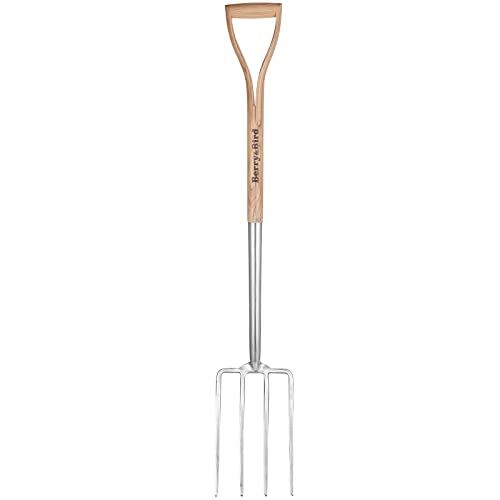
#5 Berry&Bird Stainless Steel Digging Fork 37.4″ — Best Premium
If you want a fork that wipes clean quickly and holds its shape under hard prying, this is the one to look at. Its polished stainless head sheds sticky soil, and a 10-year warranty stands behind it.
Key Specs:
- Length: 37.4 in
- Head: polished stainless steel, 4 tines
- Handle: FSC-certified ash hardwood, D-shaped non-slip grip
- Warranty: 10 years, plus 30-day free replacement
- Model: 004
Detailed Review:
Polishing the stainless head reduces how much dirt clings to it, so heavy soil falls away as you lift instead of building up between the tines. End-of-day cleanup becomes a quick rinse and wipe rather than scraping.
The steel is built for heavy work and is designed not to bend even under high-strength digging. That matters when you break hard soil blocks, turn compost or lift potatoes and perennials with their roots attached, all jobs where a weaker head would flex.
The streamlined ash handle is strong and light, and the D-shaped grip keeps your wrist in a neutral position, which cuts the strain that builds when the wrist bends on every lift. Its compact overall length moves easily between plants, but a tall gardener will bend more than with a longer fork.
The price puts this fork in the premium tier, and the warranty is where that shows: the Berry&Bird 4-Tine Stainless Digging Fork comes with two years of coverage, while this one carries ten. I think that longer coverage, together with the polished finish, is what justifies paying more here.
Pros:
- Polished stainless head sheds sticky soil.
- Built not to bend under heavy digging.
- D-shaped grip holds the wrist in a neutral position.
- Ten-year warranty plus 30-day free replacement.
Cons:
- Compact length means more bending for tall gardeners.
- Premium price asks more up front than basic forks.
Who It’s For:
For a gardener who values a tool that looks good on the wall and cleans up fast after heavy soil, this fork fits well. It also makes a thoughtful gift for a keen gardener. Tall users who dislike stooping should consider a longer-shafted fork.
Editor’s Verdict:
Polished steel, a wrist-friendly grip and a decade of warranty coverage make this a fork to keep for many seasons.
#6 VNIMTI Garden Fork 4-Tine 45in Wooden Handle — Best Durability
Rocky ground and hard soil are where this fork proves itself. Its heavy-duty tines are built not to break or bend among stones, and the hardwood handle with a metal Y-grip avoids the fiber splinters a worn fiberglass shaft can leave in your palms.
Key Specs:
- Length: 45 in overall
- Weight: 4.5 lb
- Tines: 4, heavy-duty steel
- Handle: sturdy hardwood with metal Y-grip
Detailed Review:
VNIMTI builds this head to hold its shape in hard soil and in ground full of rocks, the conditions that bend lighter forks. That makes it the fork to reach for when you double dig a new bed and keep striking stones.
The metal Y-grip adds a second layer of durability. It stands up better than plastic grips and won’t fade in the sun, so a fork left by the beds all summer keeps a solid hold. The sturdy hardwood shaft avoids the fiber cracking that a worn fiberglass handle can develop.
Its uses run from lifting bulbs and quick transplants to flipping compost, and the handle length makes it easy to get your weight over the head. The weight stays manageable for older gardeners, so durability doesn’t come with a heavy lift.
Compared with the VNIMTI Pitchfork 5-Tine Steel Handle 45in at the same length, this fork weighs far less, so it is easier to lift and swing all afternoon. You give up the heavier fork’s downward drive in compacted ground, though.
Pros:
- Built not to break or bend in rocky soil.
- Metal Y-grip won’t fade under sun exposure.
- Hardwood shaft avoids fiberglass splinter problems.
- Manageable weight suits older gardeners.
Cons:
- Wood shaft needs oiling and dry storage.
- Lighter build drives less forcefully into compacted ground.
Who It’s For:
Bulb growers, compost keepers and anyone whose beds turn up stones with every push will appreciate a fork made to hold its shape. Older gardeners also get a tool they can lift comfortably. If your ground is dense and compacted, a heavier fork with foot support will work faster.
Editor’s Verdict:
Built to resist bending in rocky soil and fitted with a grip that holds up in the sun, this VNIMTI is made for years of hard digging.
#7 FARMHOLYCOWKING 4-Tine Spading Fork 45-Inch — Best for Raised Beds
Raised-bed and compost gardeners get a sturdy all-steel tool. Its four evenly spaced tines slide into bed soil and lift material precisely, while the 45-inch length and enhanced D-handle let you work over a bed edge without hunching.
Key Specs:
- Length: 45 in
- Tines: 4, balanced spacing
- Head: reinforced steel
- Handle: steel with enhanced D-handle
Detailed Review:
Balanced tine spacing is what suits raised beds. The tines go into loose bed soil cleanly and give you precise control when you aerate around plants or break up compost in a confined space.
Both the head and the handle are steel, and the reinforced build resists bending even in compacted ground or wet compost. A waterlogged compost pile is heavy, and a steel shaft carries that load without flexing.
Next to the COSITA Pitch Fork 44-in Fiberglass Handle, which isn’t meant for compacted soil or clay, this fork can handle packed ground as well as loose mulch. The trade-off sits in the shaft: steel shrugs off rough use but is less forgiving on your hands when a tine strikes something hard.
The length and enhanced D-handle together give leverage that eases back strain, and the grip stays secure when your gloves are wet. That combination keeps seasonal bed turning and mulch moving comfortable from one end of the yard to the other.
Pros:
- Steel head and handle resist bending in packed soil.
- Even tine spacing gives precise control around plants.
- Enhanced D-handle provides a secure, comfortable grip.
- Handles wet compost without the shaft flexing.
Cons:
- All-steel build passes more shock to your hands.
- Steel shaft needs drying after use to prevent rust.
Who It’s For:
If you tend raised beds, keep a compost bin going and move mulch around the yard, this fork covers all three jobs with one sturdy tool. Gardeners sensitive to vibration in their hands may find a wood-handled fork gentler.
Editor’s Verdict:
Expect a stiff, dependable tool that moves between bed soil, wet compost and mulch without complaint.
#8 COSITA Pitch Fork 44-in Fiberglass Handle — Best Budget
Barn, mulch and compost chores call for a light fork, not a heavy digger. This one pairs a heat-treated steel head with a weather-resistant fiberglass shaft and a cushioned D-grip, so lifting hay, straw or compost all morning wears your shoulders less.
Key Specs:
- Length: 44 in
- Head: heat-treated steel, 4 tines
- Handle: fiberglass with non-slip cushion grip
- Grip: D-grip
- Assembly: tool-free, reinforced joint
Detailed Review:
The heat-treated steel head pierces and lifts dense hay, straw and compost while resisting bending, rust and corrosion. It isn’t recommended for compacted soil or clay, so treat it as a material fork rather than a digging fork and keep it out of hard ground.
The fiberglass shaft is contoured to reduce muscle strain, and its non-slip cushion grip stays secure in wet or muddy conditions. Because fiberglass won’t splinter, warp or corrode like wood, the fork can live in a barn or greenhouse without special care.
Assembly is tool-free and takes seconds, and the reinforced joint between head and shaft keeps the head from wobbling. The D-grip and balanced weight distribution ease hand and shoulder strain over a long session of spreading mulch.
Its price sits at the budget end, which makes it an easy second fork for loose material alongside a heavier digging fork. If cost is the main filter, the best pitchforks under $30 make a useful shortlist to compare.
Pros:
- Fiberglass shaft resists weather, splinters and warping.
- Cushion grip stays secure in wet, muddy conditions.
- Heat-treated tines resist rust and corrosion.
- Tool-free assembly with a reinforced joint.
Cons:
- Not suited to compacted soil or clay.
- Lightweight build gives little drive in firm ground.
Who It’s For:
Small-farm keepers, greenhouse growers and gardeners spreading mulch or turning compost get a weatherproof, easy-handling fork at a budget-friendly price. Anyone who needs to break up packed beds should pick a digging fork such as the FARMHOLYCOWKING 4-Tine Spading Fork 45-Inch instead.
Editor’s Verdict:
For lifting and spreading loose material, this fiberglass fork does the job well and keeps its shape through wet weather.
#9 VNIMTI Pitchfork 5-Tine Steel Handle 45in — Best for Heavy Soil
Hard, compacted or dry ground needs mass and leverage, and this fork brings both: five forged carbon steel tines, a steel T-handle and a wide foot plate you can stand on to drive the head down. It is built for hard work.
Key Specs:
- Length: 45 in
- Weight: 8 lb
- Tines: 5 forged, sharp tines
- Build: one-piece high-strength carbon steel
- Handle: steel T-handle with non-slip grip
- Foot plate: wide, for downward force
- Model: HT_18
Detailed Review:
The fork’s own mass adds downward thrust and stability, so the tines keep going into packed soil where a lighter fork stalls. The one-piece carbon steel build and forged tines resist bending and breaking when they meet that resistance.
Stepping on the wide foot plate puts your body weight behind the push and steadies your balance. The plate also acts as a fulcrum when you lever back, which drives the tines into hard or dry soil with less arm effort.
The steel T-handle and non-slip grip give two-handed control for twisting out weed roots or lifting potatoes, and the anti-slip surface helps reduce hand and wrist fatigue. The reach lets you work without bending low.
All that strength costs handling effort. Next to the VNIMTI Garden Fork 4-Tine 45in Wooden Handle, which has the same length, this fork is much heavier to carry and lift between holes. I’d keep it for the hardest ground in the yard and use a lighter fork for compost and mulch.
Pros:
- Five forged carbon steel tines resist bending.
- Wide foot plate adds body weight to each push.
- Heavy build drives tines into compacted soil.
- Non-slip T-handle grip gives two-handed control.
Cons:
- Heavy build tires you when lifting loose material.
- T-handle offers less wrist support during repeated lifting.
Who It’s For:
Homeowners breaking new ground, digging out weed roots in packed soil or harvesting potatoes from hard beds need real downward force, and this fork supplies it. Gardeners with limited strength, or who mostly move compost and mulch, will be happier with a lighter wood-handled fork.
Editor’s Verdict:
When the soil fights back, this fork’s weight, five tines and foot plate win the argument.
Which Garden Pitchfork Fits Your Job?
The right pick depends on matching tine strength and fork weight to the material you move, since a fork built for packed ground feels clumsy in loose compost and a light material fork bends in clay. That match also decides how your back and wrists feel at the end of a session.
Which Pitchfork Handles Clay and Compacted Soil?
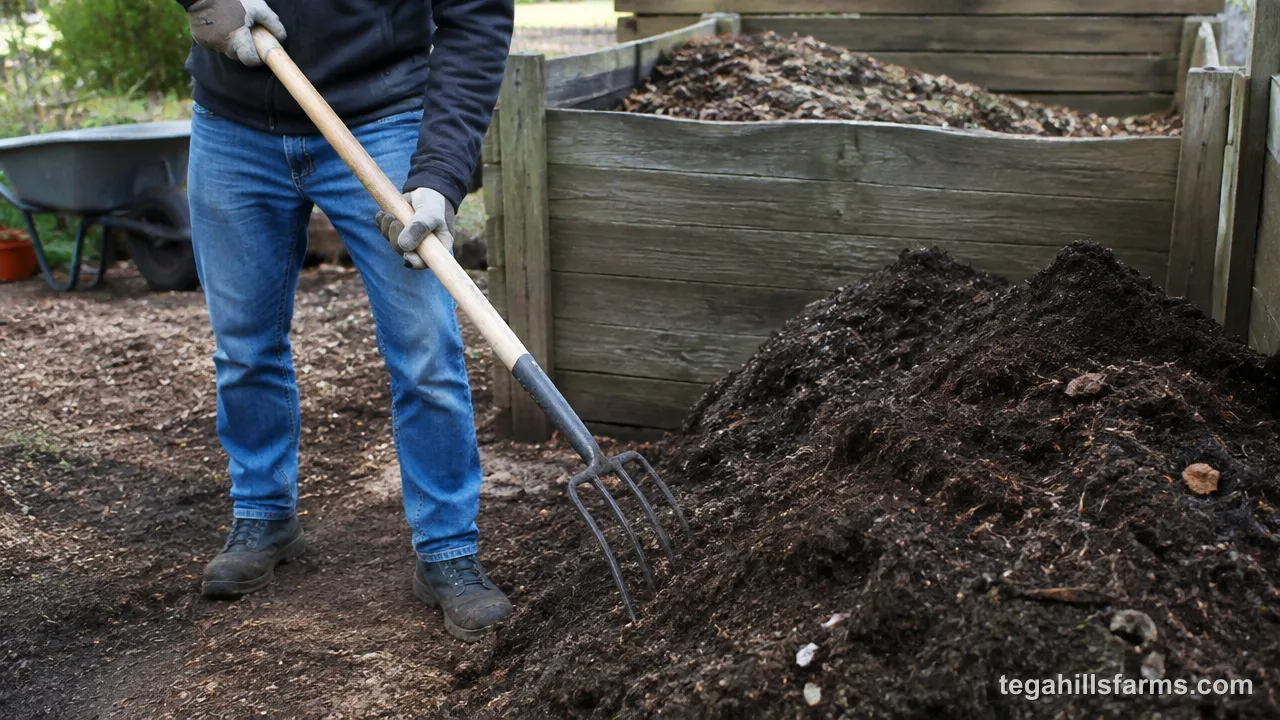
Heavy forks with thick tines, a stiff handle and a foot plate suit clay and compacted soil, because their mass and the push from your foot carry the tines past the crust that stops lighter forks. The VNIMTI Pitchfork 5-Tine Steel Handle 45in and the FARMHOLYCOWKING 4-Tine Spading Fork 45-Inch both fit that role, and the boron steel Fiskars forks handle stony ground well.
Thin tines made for hay and straw fail here in two ways. Either they stall on the surface, or they bend when you pry back against a clod that won’t give.
Soil moisture matters as much as the tool. Squeeze a handful of clay: if it crumbles, it’s ready to dig; if it smears into a ribbon, wait, because forking wet clay compacts it further. Rocking the fork gently after each push opens channels for air and water, and the best pitchforks for soil aeration focus on that job for lawns as well as beds.
Which Pitchfork Is Best for Compost and Mulch?
For compost, mulch, straw and manure, a fork with a light shaft and tines spaced to hold the material lifts more per scoop and tires you less, because loose material doesn’t need prying force. The COSITA Pitch Fork 44-in Fiberglass Handle is built around that idea, with a shaft that also shrugs off the moisture of a compost heap.
Tine spacing changes what stays on the fork. Wider spacing carries long straw and coarse mulch cleanly, while closer spacing holds crumbly, finished compost that would otherwise fall through. Thin tines slip into a packed pile easily but flex if you try to lever a matted layer apart.
Sturdier digging forks, such as the Berry&Bird stainless models or the FARMHOLYCOWKING, double for soil and compost work. Their extra weight makes a long session of turning harder on your arms. For a closer look at forks built around that task, the best pitchforks for compost turning narrow the field further.
Which Pitchfork Is Easier on Your Back and Wrists?
A fork whose length matches your height, with a D or Y grip and a moderate weight, puts the least strain on your back and wrists. The long shaft keeps you upright, the closed grip keeps the wrist near neutral, and a lighter build means less to lift each time.
Telescopic shafts, like the one on the Fiskars SmartFit Telescopic Spade Fork 43-51in, let taller gardeners extend the handle and shorter ones bring the grip down to a comfortable height. Wider D-handles and cushioned grips help anyone with limited hand strength, because a relaxed grip tires less than a clenched one.
The trade-off is driving power. Lighter forks need more pushes in firm soil, and they rely on your effort rather than their own mass. Older gardeners working mostly in established beds gain more from comfort than from weight, while anyone breaking new ground may accept a heavier fork for a shorter job.
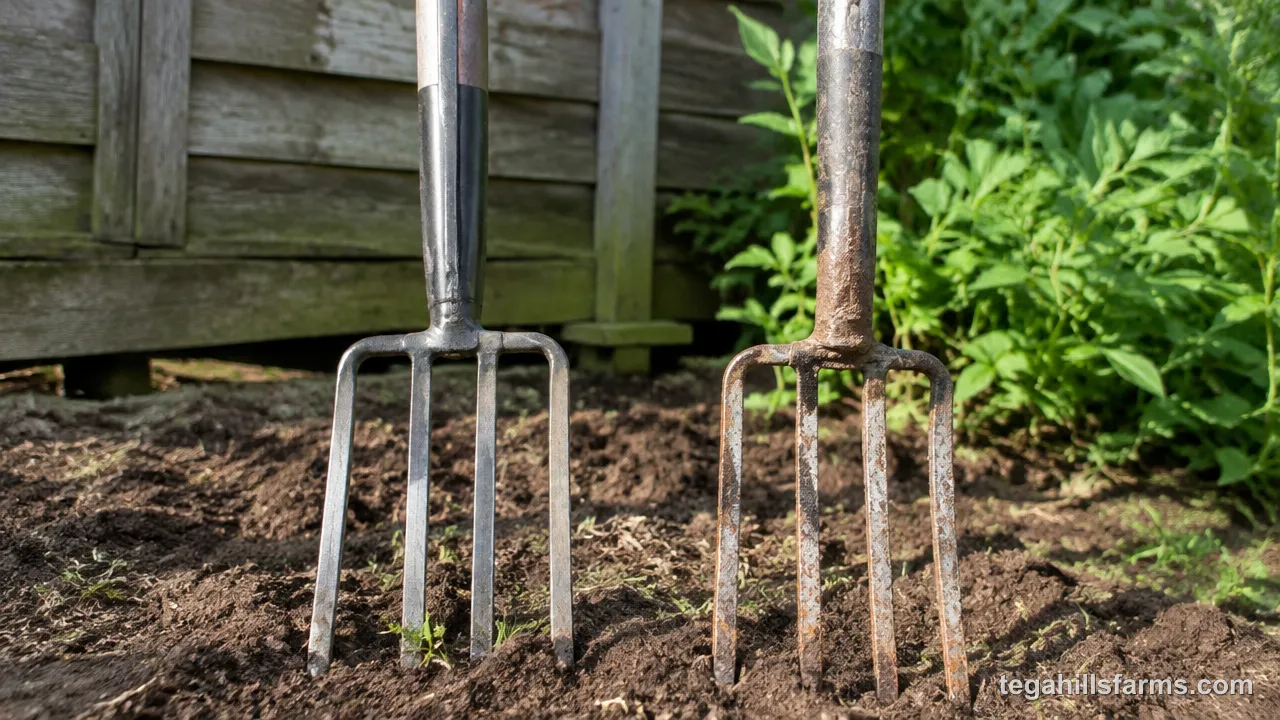
Soil left to dry on a fork’s tines holds moisture against the steel overnight, and that thin crust is where rust starts on carbon and boron heads. Over a season, the pitting spreads while the wood at the joint swells and shrinks until the head rocks on every push, and a fork with years of tine life left ends up retired.
How Do You Keep a Garden Fork From Rusting and Loosening?
Rust and a loose head are the two ways a fork fails early, and both start with habits rather than with the steel. A well-kept fork comes out of the shed in spring with clean tines and a head that doesn’t move; a neglected one shows orange pitting and a gap at the ferrule.
How Do You Clean, Dry and Oil the Tines?
Scrape off clinging soil while it’s still damp, using a stick or putty knife, then rinse the head and dry it with a rag before it goes back in the shed. Carbon and boron steel heads benefit from a light wipe of oil afterward, such as boiled linseed oil or a general-purpose machine oil, which keeps moisture off the bare metal. Stainless heads only need cleaning and drying, since the steel resists rust on its own.
Wood handles last longer with a yearly conditioning. Sand any rough spots, rub in boiled linseed oil, let it soak in, and wipe off the excess. Lay linseed-soaked rags flat outdoors to dry, because a crumpled oily rag can heat up on its own. Fiberglass handles only need wiping and storage out of direct sun.
For winter, hang forks off the floor in a dry spot, where concrete moisture and freeze-thaw cycles can’t reach the steel or the joint.
When Should You Replace a Handle or the Whole Fork?
A sound head on a damaged handle usually deserves a new handle, while a damaged head means the fork should go. Replace a wood handle that shows cracks running along the grain, splinters that keep returning after sanding, or rot near the ferrule. A fiberglass shaft with exposed, loose fibers or a visible crack is no longer safe to grip or lever on.
A loose head often comes from a worn pin or rivet at the ferrule, and reseating or replacing that fastener can restore a solid fit. If the head still rocks afterward, the handle end has shrunk or split and needs replacing.
Tines tell you when to retire the fork. A tine that has bent more than once, cracked, or chipped at the tip has fatigued steel that will fail again, often while you’re levering hard. A cracked weld at the socket is the same signal.
How Can You Tell a Well-Built Fork From One That Bends?
A durable fork has a head forged in one piece, with thick tines that run straight into a long socket or strapped joint, while forks that bend usually have thin, stamped tines welded to a crossbar. Forging aligns the steel through the whole head, so force travels from tine to handle without a weak seam; a weld concentrates stress at one spot, and that’s where the tine folds in hard ground.
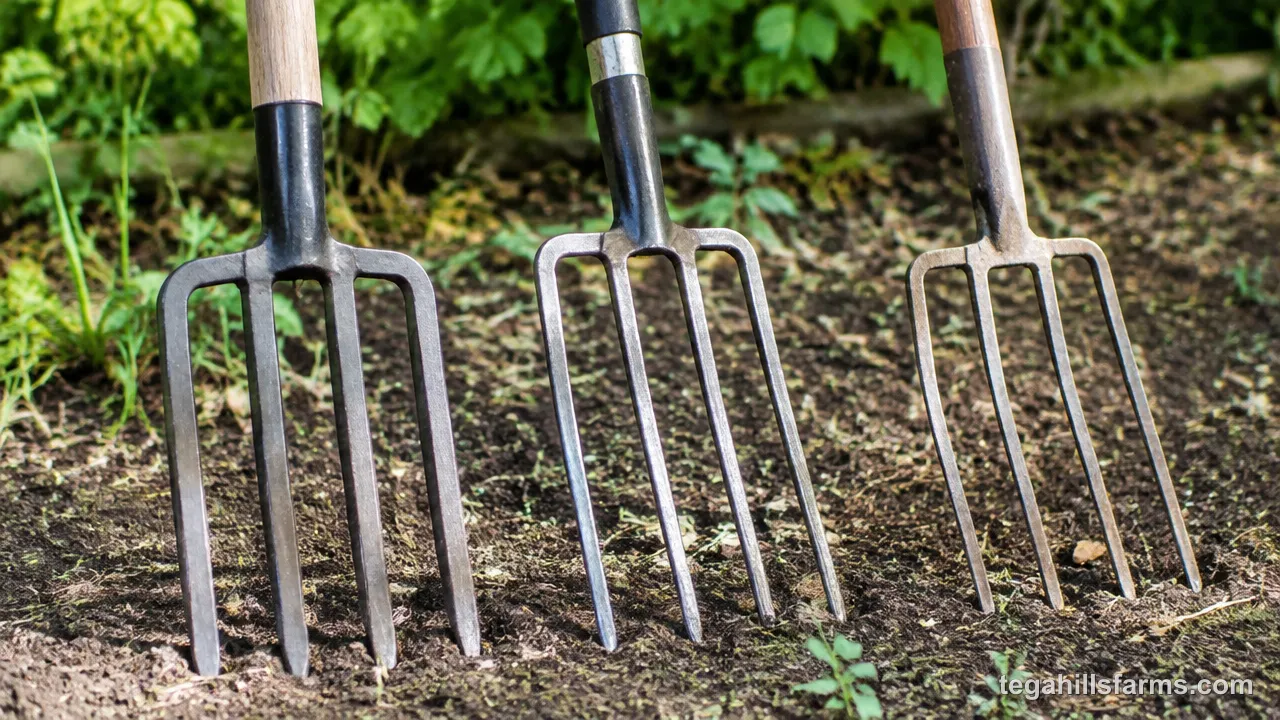
On a product page, look for the words “forged” and “one-piece,” a named steel such as boron or carbon steel, and a description of how the head meets the handle, such as a ferrule, collar or reinforced joint. Vague phrases like “heavy duty” without a material named tell you little. A clear note that a fork isn’t meant for compacted soil is honest guidance that it’s a material fork. The same checks carry over to spades and hoes, and the wider guide on how to choose garden tools applies them across the shed.
What Else Do Gardeners Ask About Pitchforks?
Can a pitchfork replace a shovel?
Not entirely. A fork loosens soil, lifts root crops and turns compost with less effort, because tines slice in where a blade pushes against the whole face of the soil. It can’t scoop loose soil, sand or gravel, which falls between the tines, so most gardeners keep both tools.
Is one fork enough for a small garden?
Usually, yes. A digging fork with a D or Y grip handles bed preparation, dividing perennials and turning a compost bin in a compact yard. Shorter handles maneuver well between plants and along fences, and the best pitchforks for small gardens lean toward that compact, easy-to-steer build.
Is it better to dig with a fork in wet or dry soil?
Moist soil is best. Saturated soil sticks to the tines and compacts as you work it, while bone-dry ground resists penetration and strains the handle. Wait until a squeezed handful crumbles rather than smears, then dig; the tines go in more easily and the soil breaks into a workable texture.
Can you use a garden fork to harvest potatoes and other root crops?
Yes, and it bruises fewer tubers than a shovel. Push the tines in well outside the plant, lever back gently so the whole clump lifts, then pull potatoes or carrots from the loosened soil by hand. Working from the outside in keeps the tines away from the crop.
Is it safe to leave a pitchfork lying in the yard?
It’s risky. Tines pointing up can injure a foot, and a fork lying flat can flip its handle up when stepped on. Lean it against a wall with tines down and facing in, or hang it on a hook, which also keeps the head dry and off the ground.
More Guides on Best Garden Pitchforks
- Best Pitchforks for Large Yards
- Best Pitchforks Under $100
- Best Pitchforks Under $50
- Best Long Handle Pitchforks