
8 Best Manual Lawn Aerators: 2026 Top Picks and Buying Tips
Our top picks for the best manual lawn aerators in 2026 are Walensee 15-Spike Manual Lawn Aerator (Best Overall), LawnVigor Manual Core Aerator (Best for Heavy Soil), Saker 15-Spike Manual Lawn Aerator (Best Rust-Resistant), Yard Butler ID-6C Manual Coring Aerator (Best Lightweight), GrdnCare 38 Inch 15-Spike Lawn Aerator (Best Easy Assembly), FLMAQE Manual Core Aerator 2 Hollow 2 Spike (Best Budget), Asunrise 21″ Rolling Lawn Aerator (Best Premium), and PPZ 3-Tine Manual Core Aerator (Best for Small Yards).
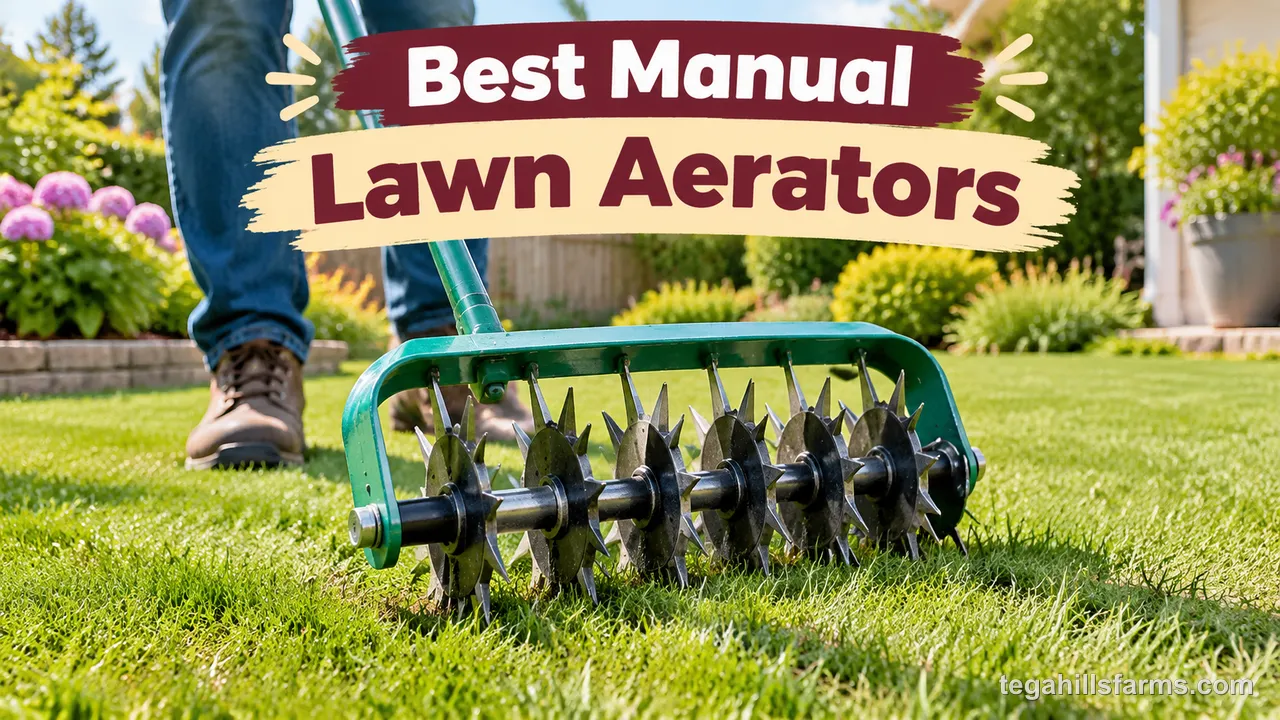
Choosing among them comes down to three things: what the tines do to the soil, how far the handle keeps you from bending, and how well the frame holds up against rust, rocks and years of storage. Hollow tines pull plugs from the ground. Spikes press holes. A roller trades the foot pedal for a steady push.



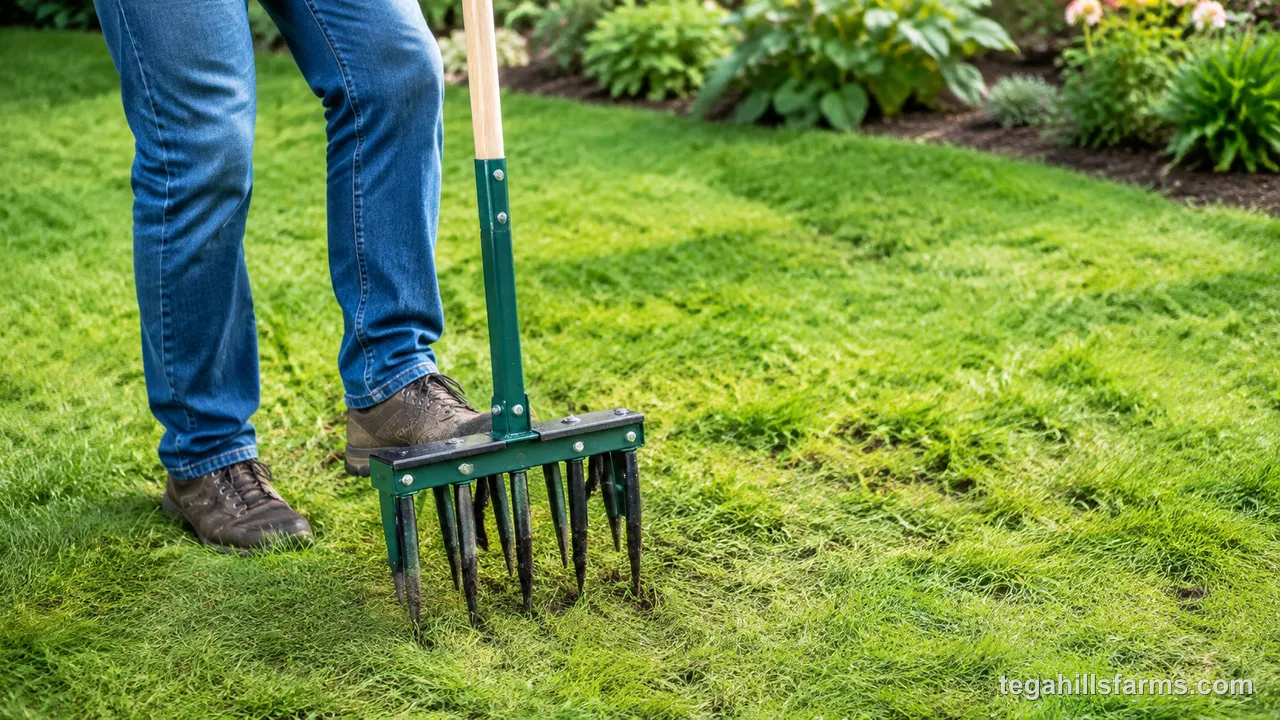
Compacted soil is the problem a manual aerator solves. On packed ground, water runs off instead of soaking in, roots stay shallow, and thin patches won’t take new seed. The bigger risk is spending a weekend stepping on a tool that bends on the first stone or barely loosens the ground. That makes durability and the right tine design as important as comfort.
What Is a Manual Lawn Aerator and Who Needs One?
It’s a foot-powered frame of spikes or hollow tines that opens up the turf, so air, water and nutrients reach grass roots instead of sitting on top of packed soil.
You step on a pedal or push a roller, the tines sink in, and each hole gives roots room to spread. That helps wherever the ground gets packed down: paths that kids and dogs wear across the grass, spots where water puddles or runs off, and thin patches that won’t hold seed. A hand-operated aerator suits homeowners with modest lawns, a few problem spots or limited storage. It also lets you aerate exactly where the damage is instead of running a machine over healthy turf. It belongs beside pruners and trowels in our roundup of the best garden hand tools, which shows how it fits into a basic kit.
Core, Spike or Rolling: Which Type of Manual Aerator Works Best?
Hollow-tine core designs do the most to relieve real compaction. Spike and rolling tools give up some of that relief in exchange for less effort or faster coverage.
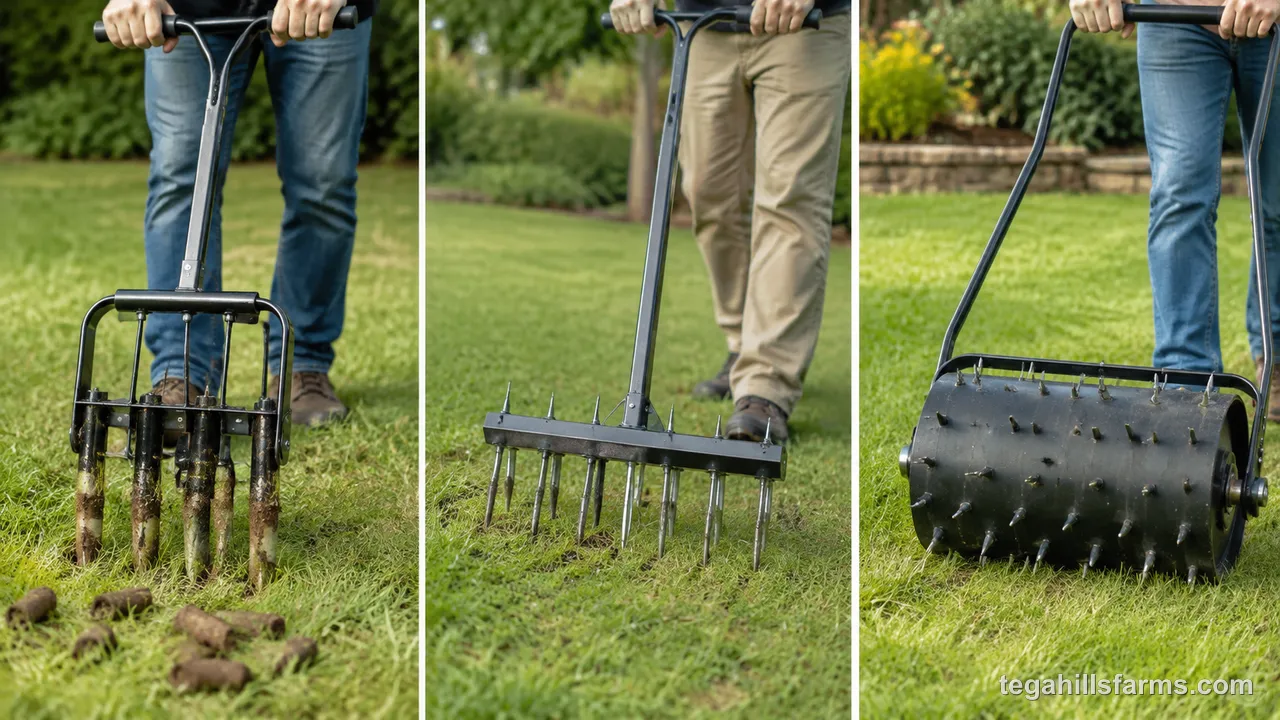
The design decides what happens to the soil around each hole. That in turn decides whether a weekend of aerating actually loosens packed ground or only dents it. The design also changes how the work feels in your body, because stepping, lifting and pushing load the back, knees and hands in different ways. The type that suits your lawn has to suit you as well.
How Do Core Aerators Pull Plugs From Compacted Soil?
A core aerator takes soil out instead of moving it around. Each hollow tine cuts a narrow cylinder as it enters the ground. When you lift the tool, that plug comes out with it and drops onto the surface, leaving an open hole where water, air and fertilizer can reach the roots.
Removing soil is what makes coring work on compacted ground. A solid spike pushes earth sideways and packs the walls of the hole even tighter. A pulled plug makes space without adding pressure, so the surrounding soil can loosen as roots grow into the gaps. That’s why the best manual lawn aerators for clay soil use hollow tines rather than spikes, and why I’d start with a core tool on any lawn that holds puddles.
The trade-offs are effort and clogging. Pulling a plug takes more force than pressing a spike, especially in firm ground. Sticky or wet soil can also pack inside the tines until they stop cutting cleanly. Plug-release inserts or open-sided tines help with this, and so does working soil that is moist rather than muddy.
What Do Spike Aerators Do Well, and Where Do They Fall Short?
Spike aerators handle light compaction and small patches well. Their solid tines punch quick holes that let water soak in instead of running off the surface. They leave no plugs to clean up, they go in with less force than hollow tines, and they often carry many spikes per frame, so each step covers more ground.
Their weakness shows in dense or sticky ground. A spike makes room by shoving soil to the sides, which can squeeze the walls of each hole and leave heavy clay almost as tight as before. In loose, fast-draining soil that side effect matters much less, which is why spike designs fit naturally among the best manual lawn aerators for sandy soil. Sticky clay also grips spikes and clogs the frame. In that kind of soil, a spring-ejection system that pushes dirt off after each lift makes a real difference.
Where Do Rolling Aerators Fit In?
A rolling aerator replaces the step-and-lift motion with a steady push. Spikes mounted on a drum or wheel turn as you walk behind it. The tool covers a wide strip with every pass, and the effort goes into walking rather than pressing down on a pedal again and again.
That kind of coverage suits open, fairly level lawns where you can make long, straight runs. Tight corners, curved beds and slopes are harder, because the roller needs room to turn and firm footing to keep the spikes biting. Storage is different too: a long handle and a wide drum take up more wall or floor space than a slim step-on tool. Most rolling models also press holes with spikes rather than pulling plugs.
What Should You Look for in a Manual Lawn Aerator?
The right tool matches your soil, your lawn’s layout and your body. A mismatch on any of these turns aeration into a slow, sore job.
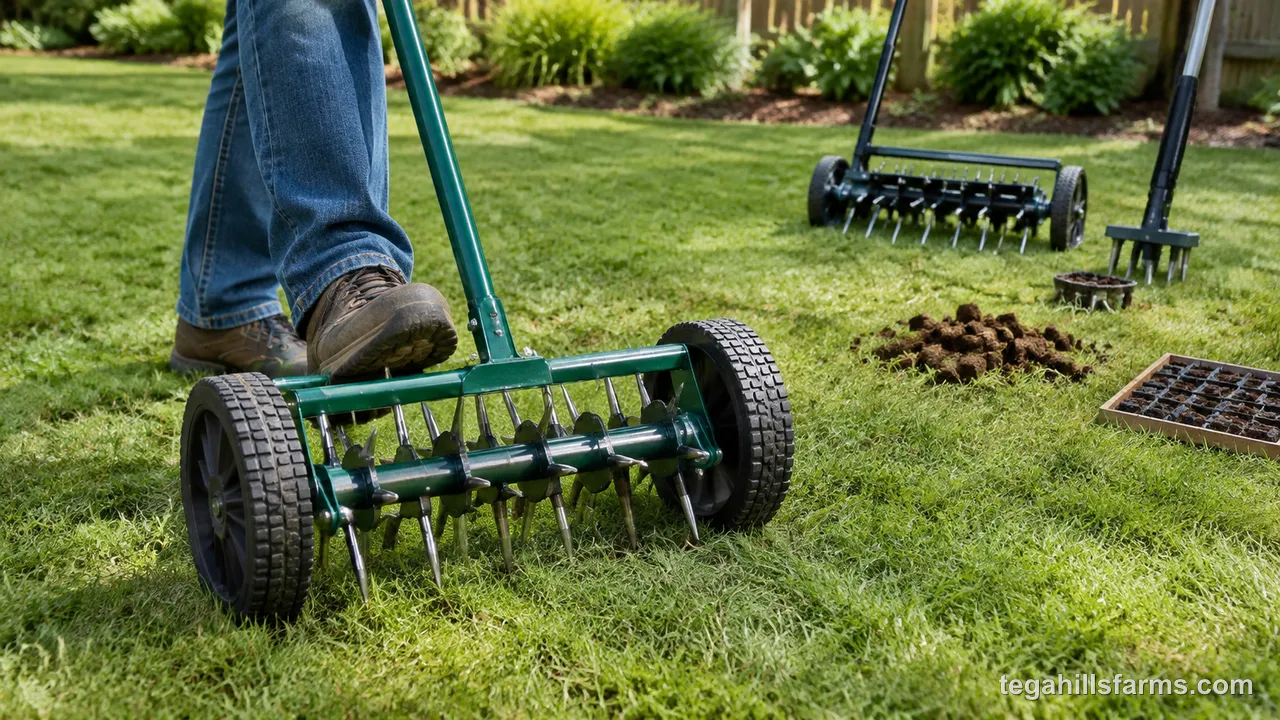
A sharp, sturdy aerator can still feel wrong after a long session if the handle forces you to bend. A comfortable one wears out fast if its tines rust or its joints work loose. The same reasoning behind how to choose garden tools applies here: judge the tool by how it feels late in the job and how it ages, not only by how it looks on the shelf.
Which Lawn Size and Soil Condition Suit a Manual Aerator?
Hand aeration works best on small lawns, spot repairs, worn paths, and the compacted strip along a driveway or play area. Because you place each hole yourself, you can focus on the damaged ground and leave healthy turf alone, which a rented machine can’t do as precisely. That precision is what sets the best manual lawn aerators for small lawns apart from heavier equipment.
Soil condition changes how you go about it. Bone-dry ground resists tines and can bend them. Water it a day or two ahead and start once the soil is moist but not muddy.
Rocky ground calls for care with any hand tool, because a tine that hits a stone can deflect and bend. Probe suspicious spots before you start. If rocks are common in your yard, choose a frame with hardened or reinforced spikes.
Why Do Handle Height and Foot Bar Design Matter for Comfort?
Handle height and foot bar width decide where the strain lands. A handle that reaches waist height or higher lets you stand upright and drive the tines with your body weight. A short handle makes you bend at the waist on every step, and that is where back fatigue builds up over a session.
Grip padding protects your hands. A cushioned T-handle spreads pressure across the palm instead of concentrating it in the fingers, which helps older gardeners and anyone with arthritis or limited hand strength. An adjustable handle lets you set the height to suit your own frame.
The foot bar does most of the work. A wide bar spreads your weight across the sole of your shoe, so the tines go in under steady pressure without a hard stomp, and it gives you more leverage in firm soil. A narrow bar digs into the arch of your foot and slips on wet days.
How Do Steel, Coatings and Fasteners Affect Durability?
Tine material sets the baseline for durability. Heat-treated or carburized steel holds its shape when it meets stones or packed clay. Softer metal bends, and a bent tine starts pushing holes at an angle. Powder coatings and rust-resistant finishes protect the frame between uses, since soil left on bare metal holds moisture against it.
Joints are the next weak point. Bolted or screwed connections spread the load and can be tightened again when they loosen. A cracked weld usually means replacing the whole aerator.
Replaceable tines add years to a tool’s life. Tines wear out before the frame does, and a fresh set restores the aerator without buying a new one.
8 Best Manual Lawn Aerators for Home Lawns
Ranked from first to last, the picks are Walensee 15-Spike Manual Lawn Aerator, LawnVigor Manual Core Aerator, Saker 15-Spike Manual Lawn Aerator, Yard Butler ID-6C Manual Coring Aerator, GrdnCare 38 Inch 15-Spike Lawn Aerator, FLMAQE Manual Core Aerator 2 Hollow 2 Spike, Asunrise 21″ Rolling Lawn Aerator and PPZ 3-Tine Manual Core Aerator. The list mixes spike frames, hollow-tine core tools, a hybrid and a push-style roller. The top pick is a spike design built for small, lightly compacted areas rather than dense clay. If water pools on your lawn because the ground is packed hard, the hollow-tine picks will relieve more compaction than the higher-ranked spike tools. If comfort and quick coverage matter more, the spike and rolling options ask less of your hands and back.
#1 Walensee 15-Spike Manual Lawn Aerator — Best Overall
Small lawns, lawn edges and bare spots with light compaction are where this tool shines. Its 15 iron spikes sit in three rows, so every press of the foot pedal opens a full grid of holes, and the 34.6-inch handle keeps you upright while you work.
Key Specs:
- Model: GTL-111
- Spikes: 15 iron spikes in three rows, each about 2.8 in long
- Handle: 34.6 in, cushioned T-handle
- Construction: heavy-duty iron with a powder-coated finish
- Design: detachable for assembly, carrying and storage
Detailed Review:
The three-row spike layout is why this tool covers ground quickly. Fifteen spikes enter together, so one step does the work of several passes with a narrow single-row tool. That gives even coverage on edges and bare patches before seeding. Each spike runs about 2.8 inches, longer than the 2.3-inch spikes on the Saker, so each hole reaches a little deeper into the topsoil.
Comfort comes from the 34.6-inch handle and the cushioned T-handle. Together they let you stay upright and push with your body weight instead of bending at the waist. The foot pedal adds leverage, so the spikes are driven by your leg rather than your arms and wrists. That makes it easier for anyone with limited hand strength.
As a spike tool, it presses holes rather than pulling plugs. It isn’t built for heavy sticky clay, rocky ground or whole-lawn jobs, and hard, dry soil needs watering first to soften it. For routine touch-ups on edges and before overseeding, it’s the tool I’d recommend to someone who values comfort over brute force.
The heavy-duty iron frame has a powder-coated finish for repeated outdoor use. The detachable design breaks down for carrying and compact storage.
Pros:
- Fifteen spikes open a full grid of holes per step.
- The 34.6-inch handle keeps your back upright.
- Cushioned T-handle eases pressure on your palms.
- Detachable design breaks down for compact storage.
- Powder-coated iron holds up to repeated outdoor use.
Cons:
- Solid spikes press soil aside instead of removing plugs.
- Not suited to sticky clay or rocky ground.
- Dry, hard soil needs watering before use.
Who It’s For:
Gardeners tending small lawns, edges and thin patches with light compaction will get steady, upright work from this tool, and the cushioned grip suits hands that tire quickly. Anyone dealing with sticky clay or rocky soil should look for a hollow-tine core design instead.
Editor’s Verdict:
A comfortable, well-built spike tool that covers small, lightly compacted areas quickly, as long as you keep it away from rocky ground and heavy clay.
#2 LawnVigor Manual Core Aerator — Best for Heavy Soil
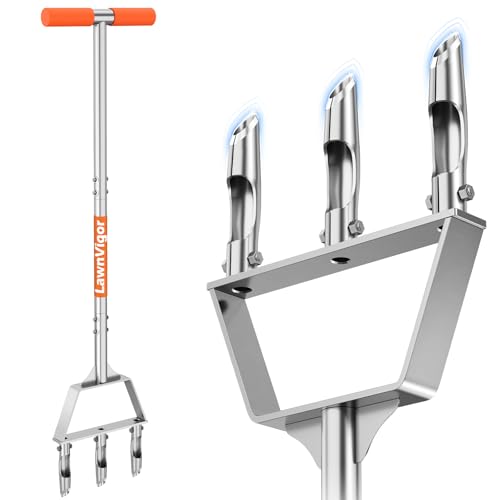
Dense, compacted soil needs a tool that removes earth rather than pushing it aside, and these 3 heat-treated hollow tines pull real plugs from the ground. White plastic inserts push each plug free.
Key Specs:
- Model: LV-ALT4-ORANGE-Z0
- Tines: 3 heat-treated hollow tines, replaceable
- Plug release: white plastic inserts inside the tines
- Frame: bend-resistant steel
- Foot pedal: wide
- Handle: non-slip ergonomic grip
Detailed Review:
Hollow tines set this tool apart from the spike designs. Each tine cuts a core and lifts it out, leaving an open hole for water and roots instead of squeezing the surrounding soil tighter. The heat-treated tines hold up in tough soil, and the holes they leave are larger and deeper, which helps water soak in and roots grow.
Sticky ground tends to pack hollow tines solid, and the white plastic inserts are LawnVigor’s answer to that. As long as they stay in place, plugs eject cleanly instead of jamming inside the tines. When a tine eventually wears or bends, you can replace it rather than retire the whole tool, which keeps the bend-resistant steel frame in service much longer.
The non-slip handle sits at a height that limits bending. The wide foot pedal spreads your weight, so the tines go in under steady pressure from your leg. Press straight down and pull straight up: rocking or prying the tool sideways while the tines are in the ground strains them. Water dry soil before you start.
Assembly tools come in the box, and the intuitive design goes together in minutes.
Pros:
- Hollow tines remove plugs for deeper water and root access.
- Plastic inserts help push plugs out of the tines.
- Replaceable tines extend the tool’s working life.
- Wide pedal spreads foot pressure evenly.
Cons:
- Fewer tines mean more steps to cover an area.
- Twisting or prying in the ground can damage tines.
- Dry soil must be watered before the tines bite well.
Who It’s For:
Anyone fighting dense, compacted turf or clay that drains slowly will get more from pulled plugs than from pressed holes, and replaceable tines suit buyers who keep tools for many seasons. Gardeners covering large, open lawns may find the step-by-step pace slow.
Editor’s Verdict:
For packed ground, this hollow-tine tool does the real work of core aeration, and its replaceable tines keep it in service season after season.
#3 Saker 15-Spike Manual Lawn Aerator — Best Rust-Resistant
Gardeners whose tools sit in a damp shed should look here first. Thickened iron under a rust-resistant coating, plus a double-layer spring that ejects soil from the 15 spikes as you work, keeps this aerator clean and protected through season after season of use.
Key Specs:
- Model: X72945-Black
- Spikes: 15 iron spikes, 2.3 in long
- Construction: thickened iron with a rust-resistant coating
- Soil ejection: built-in double-layer spring
- Handle height: adjustable, 32.2 to 35.4 in
- Extras: pair of protective gloves
Detailed Review:
Rust usually starts where soil and moisture sit against bare metal. That makes the coating over thickened iron the feature that matters most over several seasons. The double-layer spring supports it by pushing soil and debris off the spikes as you lift, so less wet dirt clings to the frame between uses and you never stop to scrape by hand.
The foot pedal is fastened with high-strength screws instead of being welded. That spreads the load across the joint, raises its load capacity and lowers the risk of a break at the weakest point. Bolted joints also stay serviceable, because a loose screw can be tightened while a cracked weld usually ends the tool’s life.
The handle adjusts from 32.2 to 35.4 inches, so taller and shorter gardeners can both set a grip that limits bending. The 2.3-inch spikes are shorter than the Walensee’s 2.8-inch spikes, which means slightly shallower holes with each step.
Trim the lawn and check soil moisture before you start, since soft soil lets the spikes penetrate easily. A pair of protective gloves comes in the box.
Pros:
- Rust-resistant coating protects the thickened iron frame.
- Double-layer spring clears soil without hand scraping.
- Screwed pedal joints avoid weak welded seams.
- Adjustable handle fits users of different heights.
- Protective gloves are included.
Cons:
- Spikes press holes rather than pulling soil plugs.
- Shorter spikes reach less deep than the Walensee’s.
Who It’s For:
Homeowners who store tools in an open shed or damp garage get the most from the coating, and the adjustable handle helps households where gardeners of different heights share one tool. Readers facing heavily compacted clay will relieve more pressure with a hollow-tine design.
Editor’s Verdict:
The bolted pedal and coated iron make this a spike aerator built to survive damp storage and repeated seasons without fuss.
#4 Yard Butler ID-6C Manual Coring Aerator — Best Lightweight
At 1.77 lb, it’s easy to carry and lift between holes. Older gardeners and anyone with limited strength get dual coring plugs, a long handle and a foot bar for leverage without wrestling a heavy frame.
Key Specs:
- Model: ID-6C (100051046)
- Weight: 1.77 lb
- Tines: dual coring plugs
- Construction: powder-coated steel
- Handle: long, with cushioned grips
- Foot bar: built for leverage
Detailed Review:
Low weight helps most in the lifting half of each step. You press the coring tines in with the foot bar, then raise the whole tool back out. At 1.77 lb, the ID-6C asks far less of your shoulders and wrists on each lift than the 3.53 lb FLMAQE, and that difference adds up over a session.
Coring tines pull plugs rather than pressing holes, so this light frame still relieves compaction the way core aeration should. The trade-off is that a light tool depends more on your body weight on the foot bar to drive the tines into firm ground.
The long handle gives extra leverage and keeps you upright, so there’s no bending over the work. The cushioned grips spread pressure across the palm, which helps hands that ache after an hour of yard work.
Powder-coated steel is built for year-round use and resists the corrosion that ruins cheap metal tools. Rinsing soil off the tines and hanging the tool to dry keeps that coating intact.
Pros:
- Light weight makes lifting between holes easy.
- Coring tines pull plugs instead of pressing holes.
- Cushioned grips ease pressure on hands.
- Powder-coated steel resists rust.
Cons:
- Light frame needs more body weight in firm soil.
- Covers less area per step than multi-spike frames.
Who It’s For:
Older gardeners and those with limited hand or arm strength will appreciate a coring tool they can lift all afternoon, especially for spot work on compacted paths and thin patches. People covering a broad lawn may prefer a design that opens more holes per step.
Editor’s Verdict:
Light, coated steel and cushioned grips put real core aeration within reach of gardeners who can’t manage a heavy tool.
#5 GrdnCare 38 Inch 15-Spike Lawn Aerator — Best Easy Assembly
Pre-drilled bolt holes let this aerator go together without tools. Its 15 iron spikes are cleared after every step by a dual-layer system of 6 auto-reset springs, while the 38-inch adjustable handle and wide non-slip footrest give stable leverage to gardeners who want to start the day the box arrives.
Key Specs:
- Model: 00-1
- Spikes: 15 iron spikes
- Cleaning: dual-layer system with 6 auto-reset springs
- Handle: 38 in, adjustable, cushioned grip
- Frame: heavy-duty steel with a rust-proof coating
- Footrest: wide, non-slip
Detailed Review:
The bolt-on design uses pre-drilled holes, needs no tools, and ships with everything required. That means the aerator is ready for the lawn within one short setup instead of an afternoon of hunting for wrenches.
The six springs sit in two layers and clear mud from all 15 spikes on each lift. That matters most in damp or sticky soil, where spikes would otherwise clog and stop opening clean holes. You keep stepping instead of stopping to scrape.
The handle reaches 38 inches and adjusts, which is taller than the Saker’s 32.2 to 35.4-inch range and helps taller gardeners stand straight. The cushioned grip and wide non-slip footrest keep each push steady, so your weight goes straight down through the spikes instead of rocking the frame.
The steel frame carries a rust-proof coating for outdoor work. Like any spike tool, it opens channels by pressing soil aside. Clay-heavy ground goes easier when you mow first and water a day or two ahead.
Pros:
- Tool-free bolt-on assembly with pre-drilled holes.
- Spring system clears mud from spikes every step.
- Adjustable 38-inch handle suits taller gardeners.
- Wide non-slip footrest steadies each push.
Cons:
- Spikes press soil aside instead of removing plugs.
- More springs mean more parts to keep clean.
Who It’s For:
Buyers who dread fiddly assembly or don’t own a toolbox will have this running quickly, and taller gardeners gain from the adjustable handle. Damp, sticky yards benefit from the spring cleaning too, though anyone needing deep compaction relief should consider a hollow-tine model.
Editor’s Verdict:
Quick to build and self-cleaning in damp soil, this spike aerator removes two everyday frustrations of hand aeration: assembly and clogging.
#6 FLMAQE Manual Core Aerator 2 Hollow 2 Spike — Best Budget
First-time aerators get both tine types in one affordable tool. Two hollow cores pull plugs while two solid spikes press holes, and all 4 heat-treated tines run 4.7 inches long, so each step reaches deep into pre-watered soil.
Key Specs:
- Model: 001
- Weight: 3.53 lb
- Tines: 2 hollow cores and 2 spikes, each 4.7 in, heat-treated
- Handle: long, comfort-grip
- Assembly: semi-assembled, about 5 minutes with included tools
Detailed Review:
Mixing hollow and solid tines gives a beginner both methods in one frame. The hollow cores lift plugs to relieve compaction, while the spikes open extra channels between them. At 4.7 inches, the tines reach well past the 2.8-inch spikes on the Walensee, which helps water and nutrients get deeper into the root zone.
That depth only pays off in softened ground. Pre-watering lets the heat-treated tines penetrate and pull plugs cleanly. On dry, hard soil, the long tines meet more resistance with every step.
The comfort-grip handle reduces hand fatigue, and its length keeps you from bending over the work. At 3.53 lb, it’s heavier to lift between holes than the 1.77 lb Yard Butler, though still easy to carry around a yard.
Setup is quick because the tool ships semi-assembled with the tools needed to finish it. Shoppers who want to stay at the low end of the market can also compare the best manual aerators under $50.
Pros:
- Hollow and spike tines combine plugging with extra channels.
- Tines run 4.7 inches for deep penetration.
- Comfort-grip handle reduces hand fatigue.
- Ships semi-assembled with tools included.
- Affordable entry point into core aeration.
Cons:
- Long tines struggle in dry soil without pre-watering.
- Four tines mean many steps across a lawn.
Who It’s For:
Beginners who want to try core aeration without a big outlay will find a sensible starting tool here, especially for small patches they can water beforehand. Gardeners who skip pre-watering or work hard, dry ground will end up fighting the long tines.
Editor’s Verdict:
Hollow-and-spike tines at an affordable price make this a sensible first aerator, provided you water the ground before you start.
#7 Asunrise 21″ Rolling Lawn Aerator — Best Premium
Open, flat lawns suit this push-style tool. A 21-inch roller carrying 45 carburized spikes opens a wide strip with every pass, while the 75-inch handle lets you walk upright instead of stepping and bending over a pedal.
Key Specs:
- Model: LA001-CA
- Width: 21 in
- Spikes: 45 preassembled carburized spikes
- Handle: 75 in, quick-clip connections
- Weight: 17.5 lb
- Support: 12-month service commitment
Detailed Review:
A rolling design changes the work entirely. Instead of pressing a frame in and lifting it out, you push the 21-inch roller across the grass and its 45 spikes punch holes as it turns. The effort becomes a steady walk, which is easier on the knees and hips for anyone who finds repeated stepping tiring.
The spikes are carburized, a surface-hardening treatment that helps them resist bending when they strike rocks or compacted soil. They mount on a fork made of high-strength round steel tubing rather than flat iron sheet. Every screw is torqued and backed with a gasket, so the spikes stay tight pass after pass.
At 75 inches, the handle stands well beyond the GrdnCare’s 38-inch handle, so you push from a fully upright stance. It assembles in moments with snap-on quick-clip connectors, and the connection stays free of wobble at full length.
The trade-offs come with size. At 17.5 lb, it takes more effort to lift and store than a step-on tool, and its spikes press holes rather than pulling plugs. A 12-month service commitment backs this premium build.
Pros:
- The 21-inch roller covers a wide strip each pass.
- Carburized spikes resist bending on rocks.
- The 75-inch handle keeps you fully upright.
- Torqued screws with gaskets keep spikes tight.
- Backed by a 12-month service commitment.
Cons:
- At 17.5 lb, it’s heavy to lift and carry.
- Spikes don’t pull plugs from compacted soil.
- Wide roller is awkward in tight beds and corners.
Who It’s For:
Owners of open, fairly level lawns who find pedal work hard on their knees will move faster pushing this roller, and the premium build suits buyers who want one tool for years. Small, cramped yards with tight corners are better served by a step-on tool.
Editor’s Verdict:
Carburized spikes, a steel-tube fork and a long handle make this a durable, back-friendly way to cover open lawn without a pedal.
#8 PPZ 3-Tine Manual Core Aerator — Best for Small Yards
Worn paths, bare patches and compacted strips between flower beds are the targeted jobs this core tool is built for, rather than whole-lawn coverage. Its 3 open-side hollow tines lift cores right where you aim.
Key Specs:
- Tines: 3 open-side hollow tines
- Handle: padded T-handle
- Foot bar: wide step bar
- Frame: metal, dual-shaft layout
Detailed Review:
Using it is simple: stand the tines upright on moist soil, step evenly on the foot bar, then pull the tool straight up. The open-side hollow tines lift small cores out of firm ground, so each hole stays open for water and roots instead of collapsing back on itself.
Comfort comes from two places. The padded T-handle gives both hands an even hold, and the wide step bar spreads downward pressure, so the tines go in with body weight rather than a hard stomp. The dual-shaft frame keeps the tines aligned, which protects them from bending sideways during normal use.
Placement is the whole point of this design. It handles localized maintenance well, but covering a full lawn a few cores at a time would be slow work.
Soil prep matters more here than with a spike frame. Water dry ground lightly and let it drain, or work after light rain. Avoid frozen, rocky, root-filled, soaked or very dry ground. Never twist the tool or use it as a pry bar, because the tines are built to go straight in and straight out.
Pros:
- Hollow tines lift cores from firm, compacted spots.
- Padded T-handle gives a comfortable hold for both hands.
- Wide step bar spreads foot pressure.
- Dual-shaft frame keeps tines aligned.
Cons:
- Slow going for whole-lawn coverage.
- Needs moist, rock-free soil to work well.
Who It’s For:
Small yards with a handful of worn paths, bare patches or packed spots near walkways are exactly where this tool earns its place. Anyone hoping to cover the entire lawn quickly will want a rolling or multi-spike design instead.
Editor’s Verdict:
Precise placement and a steady T-handle make this core tool a good fit for fixing problem spots one at a time.
A spike that hits a buried rock in clay can fold sideways without a sound, and the tool still looks fine leaning against the shed wall. From then on, every step presses grass flat instead of opening the soil, and a full Saturday of aerating leaves the lawn as packed as it started.
How Can You Tell When a Manual Aerator Needs Replacing?
An aerator needs replacing when its tines no longer go in straight and come out clean, because from that point each step flattens grass instead of opening soil. Bent or dull spikes are usually the first sign. The holes come out ragged or angled, and you have to stomp harder to reach the same depth.
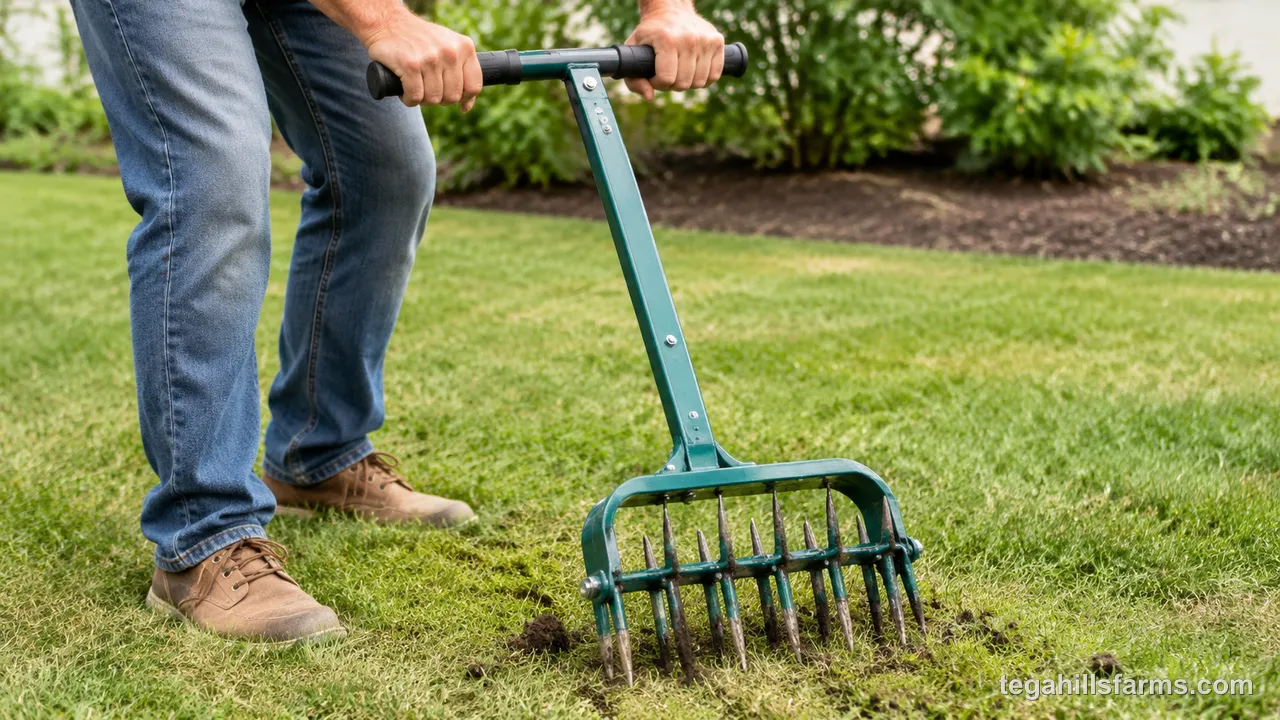
A wobbly foot bar or loose handle joint usually comes next. On bolted frames, tightening or replacing the hardware fixes it. A cracked weld rarely holds after repair. Rust that flakes through the coating weakens tines from the inside. Hollow tines that clog every few steps, even in moist soil, often have burred or bent edges that grab dirt.
Replaceable tines turn many of these failures into a quick fix, but a bent or cracked frame means it’s time for a new tool. Knocking soil off after each use, drying the tool fully and storing it indoors over winter slows all of this wear.
Should You Buy a Manual Aerator or Rent a Machine?
A manual aerator is the better buy when the job is small, targeted or recurring. A rented machine fits when a large lawn is compacted from edge to edge. With a hand tool, you can treat worn paths and problem patches whenever they appear, with no trailer, no fuel and no rental pickup to plan around.
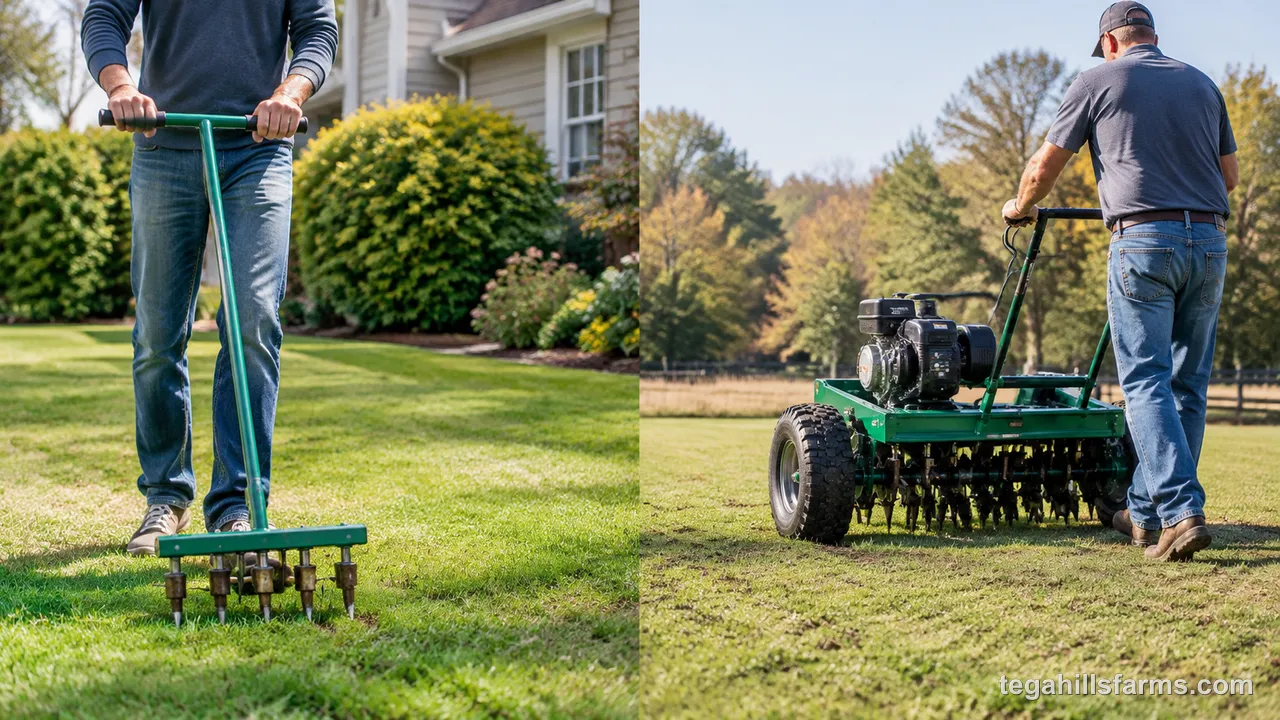
On bigger lawns, effort decides it. Covering broad turf one step at a time takes hours of pressing and lifting, and that load lands on your back, knees and hands. A gas-powered core aerator uses engine weight to do the same work, though it’s heavy to load, hard to steer around beds and still tiring to handle. Before renting, look at the best manual lawn aerators for large lawns, since rolling and wide multi-spike designs narrow the gap.
How often you aerate matters too. A tool you own comes out every spring and fall for spot work, while a rental makes sense for an occasional whole-lawn job.
When and How Should You Aerate by Hand?
Aeration only pays off when the grass can grow into the holes quickly. That means both the time of year and the condition of the soil on the day you work shape the result. Getting either one wrong can leave open holes that dry out, or tines that bend before the job is done.
Which Season Suits Cool-Season and Warm-Season Grass?
Aerate cool-season grasses such as Kentucky bluegrass, tall fescue and perennial ryegrass in early fall, with early spring as a second choice. Aerate warm-season grasses such as Bermuda, zoysia and St. Augustine from late spring into early summer. Both windows line up with each grass’s strongest growth, so roots fill the holes and the turf closes over them before heat or cold sets in.
Timing also affects seeding. Fall aeration on a cool-season lawn is followed by cool nights and warm soil, which suits overseeding. Spring aeration is followed by summer heat that can dry out young seedlings. Aerating dormant warm-season grass in fall gives weeds open soil with no active grass to compete against them.
Your USDA Hardiness Zone hints at which grass type you’re likely growing. Transition-zone lawns often mix both types, though, so identify the grass itself and follow its growth cycle.
What Prep and Technique Keep Aeration Clean and Effective?
Clean, effective hand aeration starts with soil that’s moist but not muddy. Water dry ground a day or two before, or work after a soaking rain once any standing water has drained. Mow the lawn short beforehand so the tines reach the soil instead of tangling in grass.
Push the tool straight down and lift it straight up. Twisting or levering it sideways bends tines and loosens joints faster than any amount of normal use. Place holes close together across compacted spots, overlapping slightly as you move. Make a second pass at a right angle over the worst areas, where water pools or the grass has thinned the most.
Leave the soil plugs on the lawn. They break down after a few rains or mowings and return their soil to the surface, where it settles around the grass.
What Else Do Readers Ask About Manual Lawn Aerators?
Do aerator shoes work as well as a manual aerator?
Aerator shoes strap short spikes under your boots, so they press shallow holes as you walk and never pull plugs. The straps loosen, sizing varies, and balance gets awkward on uneven ground. A frame aerator with a foot bar and handle gives steadier footing and deeper, more consistent holes, especially on compacted soil.
What should you do right after aerating?
Spread grass seed and fertilizer while the holes are still open, since they give both a direct path into the soil. Water lightly and regularly over the following weeks to keep new seed moist. Keep heavy foot traffic off the area until fresh growth fills in the bare spots.
What should you check before pushing tines into the lawn?
First, mark sprinkler heads, shallow irrigation lines, buried pet-fence wires and low-voltage lighting cables. Call 811 a few days ahead so underground utilities get marked, even for shallow hand work. Then walk the area for rocks, roots and buried debris that could bend tines.
Does a manual aerator remove thatch?
No. Aeration and dethatching are separate jobs. Pulling cores breaks up a thin thatch layer slightly and helps it decompose by mixing in soil, but a thick, spongy mat needs a dethatching rake or a power dethatcher. Remove heavy thatch first, then aerate so the tines reach the soil underneath.
How often should you aerate by hand?
Most lawns benefit from aerating once a year during their main growing season. Heavy clay and high-traffic areas may need attention in both spring and fall, while sandy, lightly used lawns can often go longer between sessions. Water pooling after rain, or soil that resists a screwdriver, are signs a lawn is due.
More Guides on Best Manual Lawn Aerators
- Best Manual Aerators Under $100
- Best Manual Aerators Under $150