

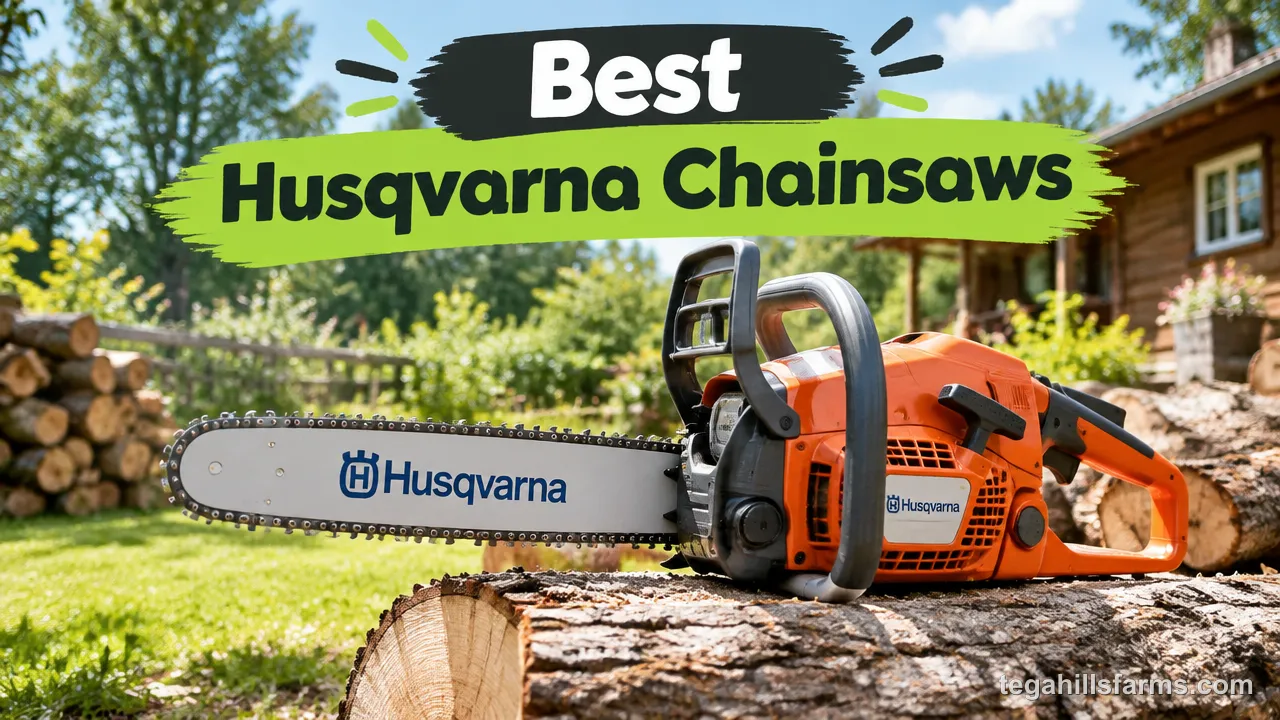
Our top picks for the best Husqvarna chainsaws in 2026 are Husqvarna 120 Mark III 16in (Best Overall), Husqvarna 450X Rancher (Runner Up), Husqvarna 130 16in (Best Budget), Husqvarna Power Axe 350i 18in (Best Cordless), Husqvarna 460 Rancher 24in (Also Great), Husqvarna 445S Chainsaw 18in (Also Great), Husqvarna 455 Rancher 20in (Also Great), Husqvarna 435 Chainsaw 16in (Also Great), Husqvarna 135 Mark II 16in (Also Great) and Husqvarna 555 (Best Durability). The light homeowner saws handle limbs, brush and storm cleanup. The Rancher models and the 555 have the engine size for firewood and clearing wooded land.
Four things decide which Husqvarna fits your yard: the power source, how much engine you can carry through a full session, a guide bar matched to that engine, and how easily the saw starts after weeks on a shelf. A bigger engine pulls a longer bar through hardwood without slowing down. Every extra pound also sits in your arms when you limb a downed tree at waist height.


What matters most with any chainsaw is whether it starts once the storm has passed and a limb is lying across the driveway. Husqvarna’s starting aids, chain brakes and air cleaning systems are built for that moment. For someone who isn’t a mechanic, they count for more than a few extra cubic centimeters of displacement.
How Does Husqvarna Organize Its Chainsaw Lineup?
The saws are sorted by user into homeowner, landowner, logger and arborist classes, and the classes differ mainly in engine size, build and how much cutting each is built to take.
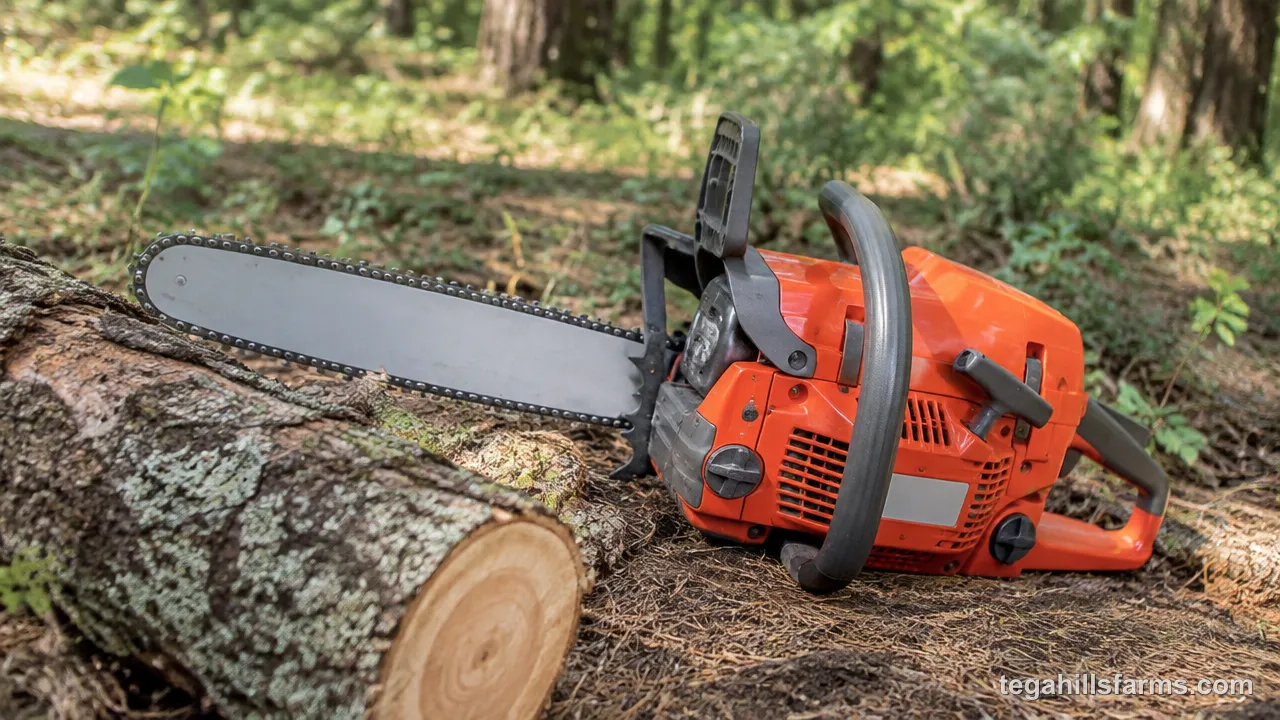
Homeowner saws such as the 120 Mark III, 130, 135 Mark II and 435 use small engines and short bars. They’re meant for pruning, storm limbs and the occasional load of firewood. Landowner saws, including the Rancher models and the 445S, step up in displacement and weight so they can keep a longer bar moving through firewood rounds and property clearing. Logger saws like the 555 add tougher internals, such as a magnesium crankcase and a three-piece crankshaft, for long sessions most weekends. Arborist saws are compact top-handle machines for trained climbers working up in a tree.
The lineup is still mostly gas, but the battery line keeps growing, and the Power Axe 350i brings that side of the brand to an 18-inch bar. If Husqvarna itself is still an open question for your yard, line it up against the best chainsaw brands before you settle on a model.
What Should You Look for in a Husqvarna Chainsaw?
The work you give the saw and how long you run it in one session matter far more than the model number on the housing. Model numbers roughly follow engine size. Even so, two saws a few numbers apart can feel completely different after an hour of bucking, because weight, bar length and the starting system change how tired you get and how often the saw cooperates. When those choices fit your yard, the saw gets used. When they don’t, you end up with a machine that’s too heavy to enjoy or too small for the wood you have.
Should You Buy a Gas or Battery Husqvarna Chainsaw?
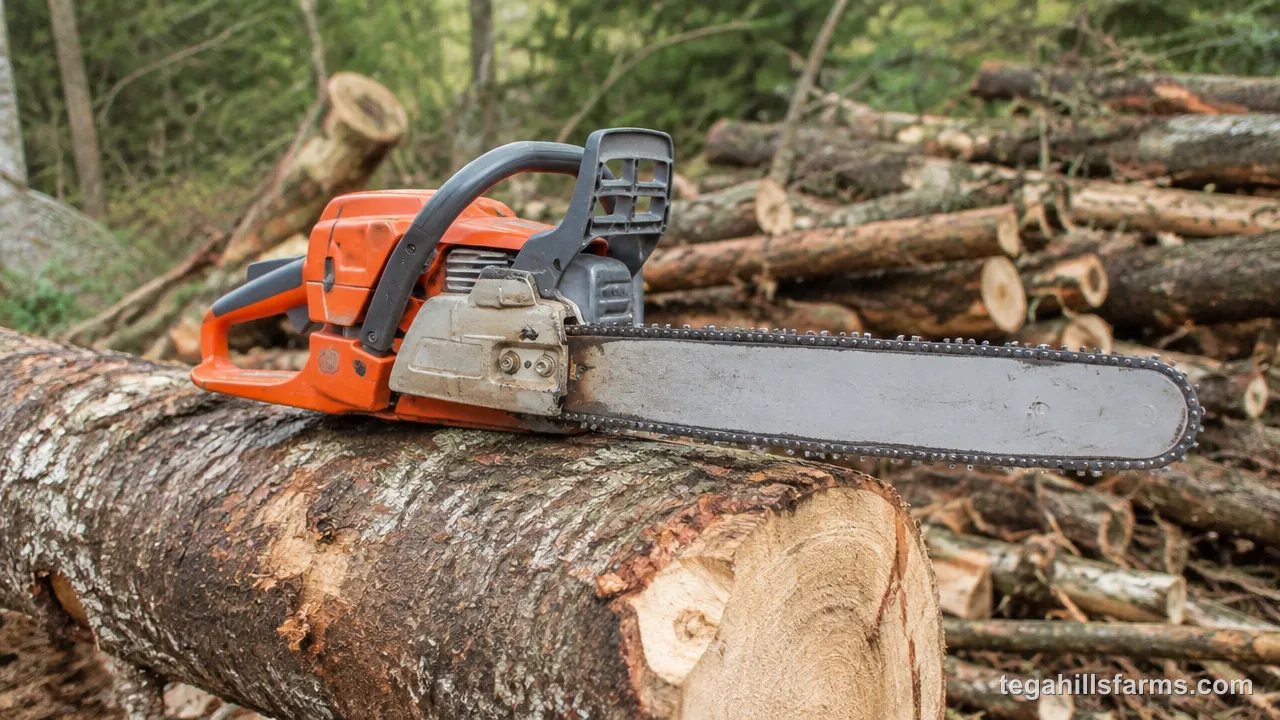
Gas is the better choice for long, heavy cutting sessions. Battery is better for short jobs close to the house, where quiet running, trigger starting and no fuel to manage matter more than endurance. A gas saw keeps cutting as long as you have mixed fuel, and refilling is quick, so bucking a whole downed oak in one afternoon favors gas. That endurance comes with upkeep: mixing two-stroke fuel, replacing a fouled spark plug, and draining or stabilizing fuel before winter so the carburetor doesn’t gum up. Gas saws are also louder, they send more vibration into your hands, and every start begins with a pull cord.
A battery saw starts with a trigger and runs quietly enough to use early on a Saturday without bothering the neighbors. It also shakes far less. Its limit is the battery. A heavy job means stopping to recharge, and the battery should spend winter indoors rather than in a cold shed. That makes battery saws a good fit for pruning, trimming and cleanup, but not for a full cord of firewood. If your garage already runs on another battery platform, compare Husqvarna’s cordless option with the best EGO chainsaws and the best Greenworks chainsaws before you commit to a second set of packs.
What Guide Bar Length Do You Need?
Guide bar length sets how thick a piece of wood you can cut cleanly without having to work around the trunk. A bar that’s too long for the engine takes more away than it adds. A longer bar lets you fell and buck thicker trunks without cutting from both sides, but it drags more chain through the wood, so a small engine bogs down and the chain slows.
The extra length also puts more weight out front. That tires your arms and makes the bar tip harder to control, and the tip is where kickback starts. Every Husqvarna lists a recommended bar range, and most homeowners are better off near the short end of it. The saw stays balanced, the chain keeps its speed, and limbing at waist height stays manageable from the first cut to the last.
How Much Engine Power and Weight Do You Actually Need?
Most homeowners need a light saw with a small engine. Only regular firewood cutting or clearing hardwood justifies the weight of a mid-size or pro-grade engine. Displacement, listed in cubic centimeters, is the size of the engine, and horsepower is the output it delivers. Together they decide whether the chain keeps its speed when the cut gets deep in oak or hickory. A bigger engine also holds up through a long session without bogging, which is why the Rancher and professional saws have more of both.
That power comes with weight, and you feel it. Every limbing cut and every lift from the ground adds up, and a tired operator is more likely to let the bar drift or lose control after a kickback. A light saw is also easier to steer along fence lines and through brush piles.
When you’re choosing between a smaller and a larger model from the same brand, think about the wood you cut most often and how long you cut at a stretch. I’d pick the lighter saw unless you buck firewood every season or work a wooded lot. A heavy saw bought for a rare big tree makes every routine job harder.
Which Starting and Safety Features Are Worth Having?
An inertia-activated chain brake, an assisted starting system and easy chain tensioning are worth having. They cover kickback, flooding and a loose chain, which are the problems that trip up owners who aren’t mechanics. The chain brake trips when kickback throws the saw back toward you. The momentum of the front hand guard engages the brake and stops the chain without you reaching for anything.
Air purge is a small primer bulb that pushes air out of the carburetor and fuel line, so fuel reaches the engine in fewer pulls. A fuel pump does a similar priming job. Smart Start lowers the resistance in the starter cord, and a combined choke/stop control keeps you from flooding the engine by leaving the choke on. Side-mounted tensioning puts the adjustment screw where you can reach it without working across the bar, and tool-less tensioning skips the wrench entirely. A chain left loose can jump the bar.
What Do Low Vib, X-Torq, Air Injection and AutoTune Actually Do?
Each one deals with a specific nuisance of running a two-stroke saw, from hand fatigue to wasted fuel at low speed and clogged filters and carburetor tuning. None of them is there to add raw cutting speed.
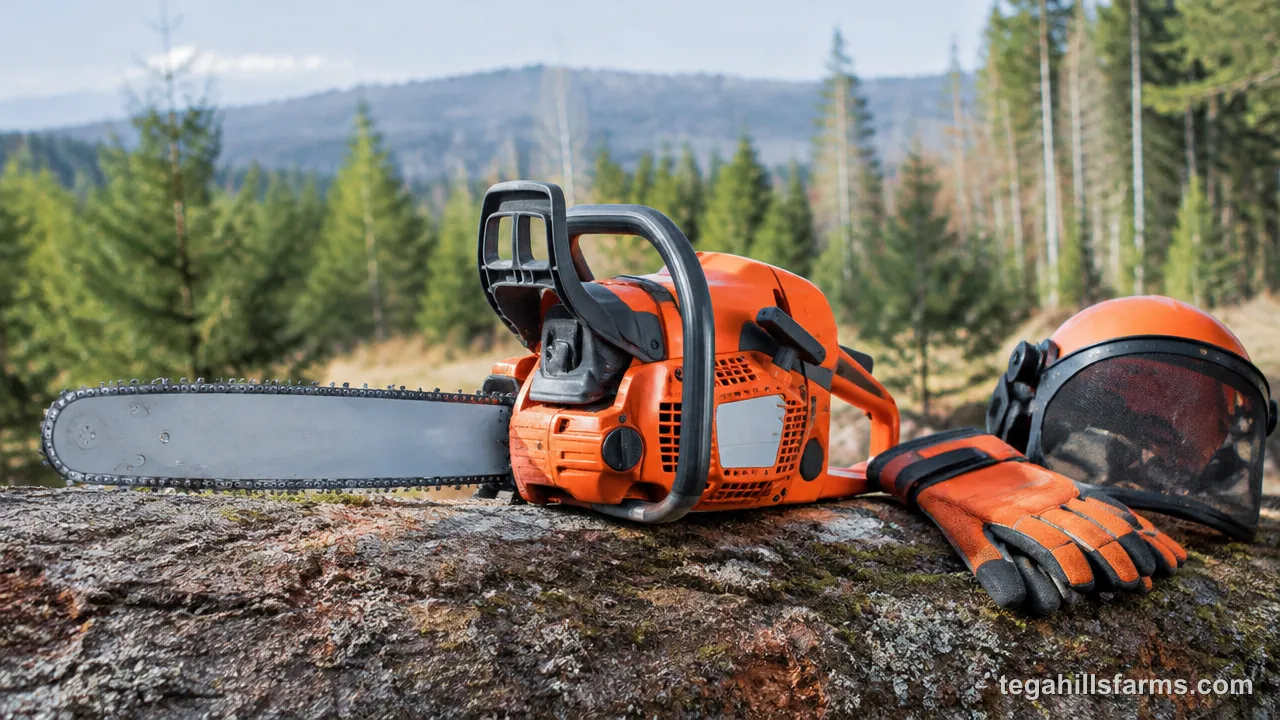
Low Vib puts dampeners between the engine and the handles, so less of the engine’s buzz reaches your hands. Over a long session that means less numbness and a steadier grip, which also means better control of the bar.
X-Torq is a two-stroke engine design that brings in a charge of fresh air ahead of the fuel mix to sweep exhaust out of the cylinder. Less unburned fuel escapes with the exhaust, so emissions and fuel use drop compared with older two-stroke engines. The engine also delivers strong power at low RPM, which helps the chain keep moving when a cut pinches.
Air Injection uses the spinning flywheel fan to throw heavier dust and sawdust outward before the intake air reaches the filter. The filter clogs more slowly, so you clean it less often and the engine gets cleaner air for longer.
AutoTune adjusts the carburetor mix on its own as temperature, altitude, fuel and a dirty filter change how the engine runs. That saves you a tuning job that really needs a tachometer to do properly.
X-Torq runs every gas saw in the picks. Low Vib comes on the homeowner saws, the 445S and all three Ranchers. Air Injection appears on the 120 Mark III, 130, 135 Mark II and 435 and on the 455 and 460 Ranchers. AutoTune is on the 450X Rancher and the 555.
10 Best Husqvarna Chainsaws for Home and Property Work
Our top picks for home and property work are the Husqvarna 120 Mark III 16in, Husqvarna 450X Rancher, Husqvarna 130 16in, Husqvarna Power Axe 350i 18in, Husqvarna 460 Rancher 24in, Husqvarna 445S Chainsaw 18in, Husqvarna 455 Rancher 20in, Husqvarna 435 Chainsaw 16in, Husqvarna 135 Mark II 16in and Husqvarna 555. The homeowner saws and the battery Power Axe 350i are light enough to carry through a full day of pruning and storm cleanup. The Ranchers and the 445S have the displacement for firewood and clearing wooded property, and you carry more weight with every cut. The 555 is for owners who need a pro-grade saw built to last through hard, frequent use.
#1 Husqvarna 120 Mark III 16in — Best Overall
For a homeowner who wants one gas saw that starts without a fight, the 120 Mark III pairs air purge with a combined choke/stop control that lowers the risk of flooding. Its 38-cc X-Torq engine covers limbs and small trees.
Key Specs:
- Engine: 38-cc, 1.8-HP X-Torq, 2-cycle
- Bar: 16 inches (recommended 14–18 inches)
- Weight: 10.7 pounds
- Starting: air purge, combined choke/stop control
- Safety: inertia-activated chain brake
- Extras: Air Injection, Low Vib dampeners, automatic oiler
Detailed Review:
Air purge and the single choke/stop lever make starting a short, repeatable routine, which matters most after the saw has sat in the garage between storms. There’s no separate choke to forget, and a forgotten choke is the usual cause of a flooded engine. That’s the main reason I’d put this saw in front of a first-time gas owner.
The 1.8-HP X-Torq engine is sized for pruning, storm limbs and firewood from smaller trees. Push it into thick hardwood with a full-length bar and it slows down, so it rewards patience rather than force.
Next to the Husqvarna 130 16in, this saw carries noticeably more weight, but it accepts bars up to 18 inches where the 130 stops at 16. That leaves room for a longer bar later if your wood runs thicker. The price is more weight in your arms on long cleanup days.
Low Vib dampeners and Air Injection come standard, along with an automatic oiler that keeps the bar and chain lubricated as you cut. An inertia-activated chain brake handles kickback, so the safety basics are covered on a saw built for homeowners.
Pros:
- Air purge and choke/stop lever keep starting simple.
- Accepts bars up to 18 inches as your wood grows.
- Low Vib dampeners ease hand fatigue on long jobs.
- Automatic oiler lubricates the bar and chain while cutting.
Cons:
- Weighs more than the 130 with similar engine size.
- 1.8-HP engine slows in thick hardwood.
Who It’s For:
Homeowners who want one dependable gas saw for pruning, storm limbs and occasional firewood will be well served, especially if hard starting soured them on past saws.
Editor’s Verdict:
A sensible first gas saw: simple to start, easy to maintain and sized for the jobs a typical yard produces.
#2 Husqvarna 450X Rancher — Runner Up
Firewood season is where the 450X Rancher earns its place, with a 50.2-cc, 3.4-HP X-Torq engine and AutoTune keeping the carburetor set through a long day of bucking. Starting follows the same routine cold or warm.
Key Specs:
- Engine: 50.2-cc, 3.4-HP X-Torq, 2-cycle
- Bar: 20 inches
- Weight: 14.9 pounds
- Engine management: AutoTune
- Cooling: patented crankcase design
- Vibration control: Low Vib dampeners
Detailed Review:
AutoTune adjusts the engine on its own as the day warms up, the air filter fills with dust or you switch to a new can of fuel. If you cut hard each fall and let the saw sit for months afterward, that takes care of the carburetor tuning that would otherwise mean a trip to the shop.
Starting is 40 percent easier, and the routine stays the same whether the engine is cold or still warm from the last cut. That helps when you stop to roll a log and restart a few minutes later. Cutting runs 30 percent faster, so a pile of rounds goes down in less time.
The patented crankcase design improves engine cooling, which protects the engine during long stretches at full throttle. Compared with the Husqvarna 445S Chainsaw 18in, the 450X has more horsepower and a longer bar, and it weighs a little more in return.
It’s a heavy saw, and you feel that while limbing a downed tree. Low Vib dampeners take some of the sting out of long sessions, but this is a saw you set down between cuts, not one you carry around the yard all morning.
Pros:
- AutoTune keeps the carburetor set without manual tuning.
- Same starting routine whether the engine is cold or warm.
- 3.4-HP engine keeps pace in firewood rounds.
- Crankcase design improves cooling for longer engine life.
Cons:
- Heavy weight tires your arms during limbing.
- AutoTune problems need a dealer, not a screwdriver.
- More saw than light pruning calls for.
Who It’s For:
Landowners who cut firewood every fall or clear trees from a wooded lot get a saw that holds its tune and its pace through long sessions. If you only trim limbs near the house, you’ll find the weight more burden than benefit and will do better with a light homeowner saw.
Editor’s Verdict:
Buy the 450X if firewood is a yearly job; AutoTune and the bigger engine make long cutting days easier to get through.
#3 Husqvarna 130 16in — Best Budget
At 5.67 pounds, the 130 is easy to carry around the yard for pruning and cleanup, and its fuel pump and combined choke/stop control keep starting straightforward. The 2-HP X-Torq engine suits limbs and small trees.
Key Specs:
- Engine: 38-cc, 2-HP X-Torq, 2-cycle
- Bar: 16 inches (recommended 14–16 inches)
- Weight: 5.67 pounds
- Starting: fuel pump, combined choke/stop control
- Safety: inertia-activated chain brake
- Extras: Air Injection, Low Vib dampeners, automatic oiler
Detailed Review:
You notice the low weight first on a cleanup day. Every lift from the ground and every limb cut at waist height takes less out of your arms, so your control stays steady late in the job.
The fuel pump primes the carburetor, and the combined choke/stop control lowers the chance of flooding, so a saw that sat through the summer still starts with a predictable routine. An inertia-activated chain brake handles kickback.
The 2-HP X-Torq engine and a bar range that tops out at 16 inches make this a saw for smaller wood. Compared with the Husqvarna 120 Mark III 16in, it can’t take a longer bar, but it weighs far less, which is the better deal if your work is mostly pruning and storm limbs.
For an affordable way into Husqvarna gas saws, it still comes with Air Injection, Low Vib dampeners and an automatic oiler. The savings come from engine size and bar reach, not from stripping out the features that keep a saw running well and comfortable to use.
Pros:
- Light weight keeps long cleanup sessions manageable.
- Fuel pump and choke/stop control simplify starting.
- Affordable entry into Husqvarna gas saws.
- Air Injection and Low Vib dampeners come standard.
Cons:
- Recommended bars stop at 16 inches.
- Small engine bogs when bucking thick hardwood.
Who It’s For:
Buyers on a tight budget who need a gas saw for pruning, hedgerow limbs and storm cleanup get one that’s easy to carry and easy to start. If you plan to cut firewood from thicker trunks, the Husqvarna 120 Mark III 16in accepts a longer bar.
Editor’s Verdict:
For light yard work, the 130 delivers dependable starting and low weight without asking much of your wallet.
#4 Husqvarna Power Axe 350i 18in — Best Cordless
Cutting near the house, where engine noise and fuel cans are a nuisance, suits the Power Axe 350i, which runs a brushless motor and ships with its battery and charger. Boost Mode adds 25 percent more power on demand.
Key Specs:
- Motor: brushless
- Bar: 18 inches
- Weight: 7.72 pounds
- Power control: push-button Boost Mode
- Chain: X-Cut with tool-less tensioning
- Kit: battery and charger included
Detailed Review:
The brushless motor runs quietly and efficiently and holds up well over time. There’s no pull cord, no fuel to mix and no carburetor to gum up over winter. You squeeze the trigger and cut, which suits a saw that comes out for short jobs.
Cutting power is greater than comparable gas saws, and Boost Mode keeps extra power in reserve for when a cut gets thicker. Saving the boost for those cuts lets routine trimming run at the standard setting.
The X-Cut chain stays sharp a long time, so you file less often, and tool-less tensioning lets you take up slack by hand right in the yard. Both matter on a battery saw, where a dull or loose chain slows the cut and drains the battery faster.
Next to the Husqvarna 120 Mark III 16in, it carries a longer bar at a lower weight. What you give up is endurance. A gas saw refuels and keeps going, while this one has to wait on a charge once the battery runs down, so it fits jobs that come in bursts rather than an all-day firewood session.
Pros:
- Trigger start with no fuel to mix.
- Boost Mode adds power for thicker cuts.
- X-Cut chain holds its edge between sharpenings.
- Tool-less tensioning makes slack adjustments quick.
- Battery and charger ship in the same box.
Cons:
- Long sessions mean stopping to recharge.
- Battery needs indoor storage through cold winters.
Who It’s For:
If you cut in short bursts close to the house — trimming limbs, clearing a fallen branch, tidying a fence line — and want to skip fuel mixing and pull cords, this saw fits the way you work. If you’ll be bucking firewood through a long afternoon, a gas Rancher will serve you better.
Editor’s Verdict:
The Power Axe 350i makes the most sense for quiet, quick jobs where instant starting matters more than all-day runtime.
#5 Husqvarna 460 Rancher 24in — Also Great
Big trunks and thick firewood rounds call for the 460 Rancher’s 60.3-cc, 3.6-HP X-Torq engine, which is built to pull bars up to 24 inches. A 7-degree offset front handle improves grip.
Key Specs:
- Engine: 60.3-cc, 3.6-HP X-Torq, 2-cycle
- Bar: 24 inches (recommended 13–24 inches)
- Weight: 13.2 pounds
- Starting: Smart Start, combined choke/stop control
- Handling: 7-degree offset front handle, Low Vib dampeners
- Oiling: automatic adjustable oil pump
Detailed Review:
The 60.3-cc engine has the displacement to keep a long chain moving through wide hardwood rounds, where a smaller saw slows and starts to bind. The recommended range goes all the way down to 13 inches, so you can also fit a short bar for limbing and switch back to the long bar for bucking.
The offset front handle angles your front grip so your wrist sits more naturally during long horizontal cuts, and the Low Vib dampeners cut down the buzz reaching your hands. On a saw this size, both make an afternoon of bucking more manageable.
Smart Start and the combined choke/stop control keep starting easy for an engine this big, and Air Injection protects the filter on dusty jobs. The adjustable oil pump lets you raise oil flow to match a long bar, which keeps the chain from running dry in deep cuts.
Next to the Husqvarna 455 Rancher 20in, it has more displacement and a longer bar at the same weight. You pay for that in handling, since a long bar puts more length out front every time you limb or trim.
Pros:
- 60.3-cc engine pulls a long bar through big rounds.
- Wide bar range covers limbing and bucking setups.
- Offset front handle improves grip on long cuts.
- Adjustable oil pump matches oil flow to bar length.
Cons:
- Long bar feels unwieldy for limbing and pruning.
- More saw than limbs and small trees require.
Who It’s For:
Property owners facing big hardwood trunks, storm-felled trees or a woodlot that supplies firewood each winter will appreciate a saw that swings a long bar with power to spare. If your wood is mostly limbs and small trees, a homeowner saw will be lighter and easier to live with.
Editor’s Verdict:
Pick the 460 Rancher when the trees on your land are wide enough that bar length matters more than easy handling.
#6 Husqvarna 445S Chainsaw 18in — Also Great
Slim and quick to start thanks to Smart Start, the 445S suits owners who limb a downed tree and cut it into firewood on the same afternoon. Its 50-cc X-Torq engine cuts 20 percent faster.
Key Specs:
- Bar: 18 inches (recommended 13–20 inches)
- Weight: 14.3 pounds
- Starting: Smart Start
- Chain: X-Cut
- Build: reinforced crankcase, slim body, Low Vib dampeners
Detailed Review:
The slim body lets the 445S slip between branches when you limb a downed tree, and it keeps the saw close to your body during bucking cuts. That matters on a saw with this much engine, because a narrow saw is easier to steer than its weight suggests.
The reinforced, patented crankcase improves cooling, which protects the engine through long stretches of hard cutting. The X-Cut chain stays sharp longer, so you spend less time filing between tanks of fuel.
The Low Vib dampeners sit between the engine and the chassis, so less vibration reaches the handles over a long session. Smart Start lowers pull effort, and an inertia-activated chain brake handles kickback.
Next to the Husqvarna 450X Rancher, the 445S has less horsepower and a shorter bar but weighs a little less. Its recommended bar range, from 13 to 20 inches, falls between the homeowner saws and the big Ranchers, which makes it a flexible mid-size choice.
Pros:
- Smart Start reduces pull effort on every start.
- X-Cut chain stays sharp longer between filings.
- Slim body steers easily through tight limbing work.
- Reinforced crankcase aids cooling during long sessions.
Cons:
- Weighs more than the 455 and 460 Ranchers.
- Recommended bars stop at 20 inches for wide trunks.
Who It’s For:
Anyone who splits time between storm cleanup and regular firewood cutting gets a mid-size saw that stays sharp and handles well in close quarters. If wide trunks are a regular part of your work, the Husqvarna 460 Rancher 24in takes a longer bar.
Editor’s Verdict:
Mid-size power in a body that’s easy to steer through brush makes the 445S an easy saw to live with.
#7 Husqvarna 455 Rancher 20in — Also Great
Regular firewood cutting is what the 455 Rancher handles well, pairing a 3.5-HP X-Torq engine with a 20-inch bar and Smart Start for easier pulls. It takes bars up to 24 inches.
Key Specs:
- Bar: 20 inches (recommended 13–24 inches)
- Weight: 13.2 pounds
- Starting: Smart Start
- Handling: 7-degree offset front handle, Low Vib dampeners
- Extras: Air Injection, automatic oiler
Detailed Review:
The 3.5-HP engine has enough pull to keep chain speed up across typical firewood rounds, and the 20-inch bar is short enough to control when you limb the tree before bucking it. If a wider trunk comes along, the recommended range lets you fit a longer bar without switching saws.
The offset front handle and Low Vib dampeners make long bucking sessions easier on your wrists and hands. Since the saw weighs the same as the bigger 460, that comfort counts over a full afternoon.
Smart Start keeps pull effort low, Air Injection spares the air filter on dusty cuts, and an inertia-activated chain brake handles kickback. The automatic oiler keeps the bar and chain lubricated without any input from you.
Set beside the Husqvarna 460 Rancher 24in, the 455 has less displacement and ships with a shorter bar, though the two are close in horsepower. That makes the 455 easier to handle for everyday property work, while the 460 is the better match for a steady diet of wide trunks.
Pros:
- 3.5-HP engine keeps pace in firewood rounds.
- 20-inch bar balances reach and control.
- Accepts bars up to 24 inches when needed.
- Offset front handle eases strain on long cuts.
Cons:
- Too heavy for quick pruning jobs near the house.
- Needs regular fuel mixing, plug and filter care.
Who It’s For:
Firewood cutters who process their own wood every year and clear the occasional fallen tree get a saw balanced between reach and control. If your trunks run wide on a regular basis, the Husqvarna 460 Rancher 24in brings more displacement and a longer bar.
Editor’s Verdict:
For regular firewood cutting, the 455 Rancher strikes a practical balance of power, bar reach and handling.
#8 Husqvarna 435 Chainsaw 16in — Also Great
Air purge and Smart Start get the 435 running with little pull effort, which suits an owner who cuts a few times a season and wants no fuss at the starter. Its 40-cc X-Torq engine handles limbs and small trees.
Key Specs:
- Engine: 40-cc, 2.2-HP X-Torq, 2-cycle
- Bar: 16 inches (recommended 13–18 inches)
- Weight: 9.78 pounds
- Starting: air purge, Smart Start
- Efficiency: up to 60 percent lower emissions, up to 20 percent better fuel efficiency
- Extras: flip-up fuel cap, Air Injection, Low Vib dampeners
Detailed Review:
Air purge plus Smart Start covers both halves of a hard start: fuel reaches the carburetor before the first pull, and the pull itself takes less effort. For a saw that spends most of the year on a shelf, that’s the difference between cutting right away and fighting the starter.
The X-Torq engine burns fuel more efficiently and puts out less exhaust, so a tank goes further and you breathe less smoke. The flip-up fuel cap opens by hand and closes firmly, which is easier with gloves on and harder to leave half-tightened.
Next to the Husqvarna 120 Mark III 16in, the 435 makes more horsepower and weighs less, and both accept bars up to 18 inches. That gives you a little more cutting speed in a slightly lighter saw, which helps when you’re working through a pile of storm limbs.
Low Vib dampeners and Air Injection come standard, and an inertia-activated chain brake handles kickback. The 2.2-HP engine is still a homeowner engine, though, so it does better on limbs and small trees than on wide hardwood.
Pros:
- Air purge and Smart Start make starting easy.
- Efficient X-Torq engine cuts emissions and fuel use.
- Flip-up fuel cap opens and seals without tools.
- More horsepower than the 120 Mark III at lower weight.
Cons:
- Homeowner engine slows in wide hardwood.
- Recommended bars stop at 18 inches.
Who It’s For:
Suburban owners with mature trees, a fence line to keep clear and storm limbs to deal with get an efficient gas saw that starts easily and is comfortable to carry around the lot. It isn’t the saw for someone who cuts firewood from big hardwood trunks.
Editor’s Verdict:
Choose the 435 if easy starts and fuel economy matter more to you than raw cutting speed.
#9 Husqvarna 135 Mark II 16in — Also Great
At 4.7 pounds, the 135 Mark II is light enough to carry from one end of the yard to the other without wearing you down, and Smart Start keeps each pull easy. Side-mounted tensioning simplifies chain care.
Key Specs:
- Engine: 38-cc, 2.1-HP X-Torq, 2-cycle
- Bar: 16 inches (recommended 14–16 inches)
- Weight: 4.7 pounds
- Starting: Smart Start, choke/stop control
- Chain care: side-mounted tensioning, automatic oiler
- Extras: Air Injection, Low Vib dampeners
Detailed Review:
This is a very light saw, and over a long day of pruning and brush clearing, that low weight keeps your arms fresh and your cuts controlled. Picking it up between cuts takes almost no effort, so you’re less tempted to cut from an awkward position just to avoid bending down.
Side-mounted tensioning puts the adjustment where you can reach it without working across the bar. A new chain stretches as it wears in, and a tensioner that’s easy to reach means you’ll actually check slack as often as you should.
Smart Start and the choke/stop control keep starting predictable, and the 2.1-HP X-Torq engine delivers strong power at low RPM for limbs and small trees. Air Injection and Low Vib dampeners come standard.
Next to the Husqvarna 130 16in, it has the same displacement and bar range but weighs less. If low weight is what you want most from a homeowner saw, that difference is the reason to choose this one.
Pros:
- Very low weight eases long pruning sessions.
- Smart Start reduces pull effort.
- Side-mounted tensioning makes slack checks easy.
- Air Injection keeps dust away from the filter.
Cons:
- Short bar range limits work on thicker trunks.
- Small engine is slow through dense hardwood.
Who It’s For:
Owners who tire quickly with heavier tools, or who mostly prune, trim and clear brush, will appreciate how little this saw asks of their arms, and the easy tensioning keeps chain care from becoming a chore. It isn’t built for felling sizable trees or bucking thick firewood.
Editor’s Verdict:
Light, easy-starting and simple to keep tensioned, the 135 Mark II is the saw I’d hand to someone who mainly prunes.
#10 Husqvarna 555 — Best Durability
Built around a magnesium crankcase, a three-piece crankshaft and a 59.8-cc X-Torq engine, the 555 is meant for owners who run a saw hard, often and in dense wood. AutoTune handles the carburetor.
Key Specs:
- Bar: 24 inches (recommended 18–24 inches)
- Weight: 13 pounds
- Build: magnesium crankcase, three-piece crankshaft
- Starting and tuning: Smart Start, AutoTune
- Chain: X-Cut, side-mounted tensioning
Detailed Review:
The magnesium crankcase and three-piece crankshaft give the 555 internals built for the heat and load of long, full-throttle sessions. Strong engine cooling serves the same purpose: a saw that keeps running through season after season of hard use.
The 4.16-HP X-Torq engine pulls hard in dense wood. Next to the Husqvarna 460 Rancher 24in, it makes clearly more horsepower from a slightly smaller engine, which is where the pro-grade engineering shows.
AutoTune keeps the engine tuned in any conditions, and Smart Start keeps pull effort low on a big engine. The X-Cut chain holds its edge, and side-mounted tensioning keeps slack adjustments quick between cuts. An inertia-activated chain brake handles kickback.
The recommended bar range starts at 18 inches, so this saw is set up for felling and bucking, not short-bar pruning. If you only cut now and then, its durability goes unused, and a homeowner saw will be easier to live with.
Pros:
- Magnesium crankcase and three-piece crankshaft built for hard use.
- 4.16-HP engine pulls hard in dense wood.
- AutoTune keeps the engine tuned without manual adjustment.
- Side-mounted tensioning speeds up chain adjustments.
Cons:
- Long minimum bar rules out short pruning setups.
- Pro-grade build is wasted on occasional yard work.
Who It’s For:
Heavy users who cut most weekends, work dense hardwood or keep a woodlot in order get a saw built for durability and sustained power. A homeowner who trims limbs each spring will be carrying more saw than the work requires.
Editor’s Verdict:
The 555 earns its pro-grade build when the saw runs most weekends in dense wood.
Which Husqvarna Chainsaw Should You Pick for Your Job?
How often you cut and how much weight you can control for a full session matter more than horsepower when you choose a saw. A saw that’s too heavy either stays in the shed or wears you out by mid-afternoon, and a tired operator loses control of the bar. A saw that’s too small bogs down in the wood you actually have. Matching the saw to your regular work keeps cutting safer and keeps the saw in use.
Which Pick Suits Light Pruning and Yard Cleanup?
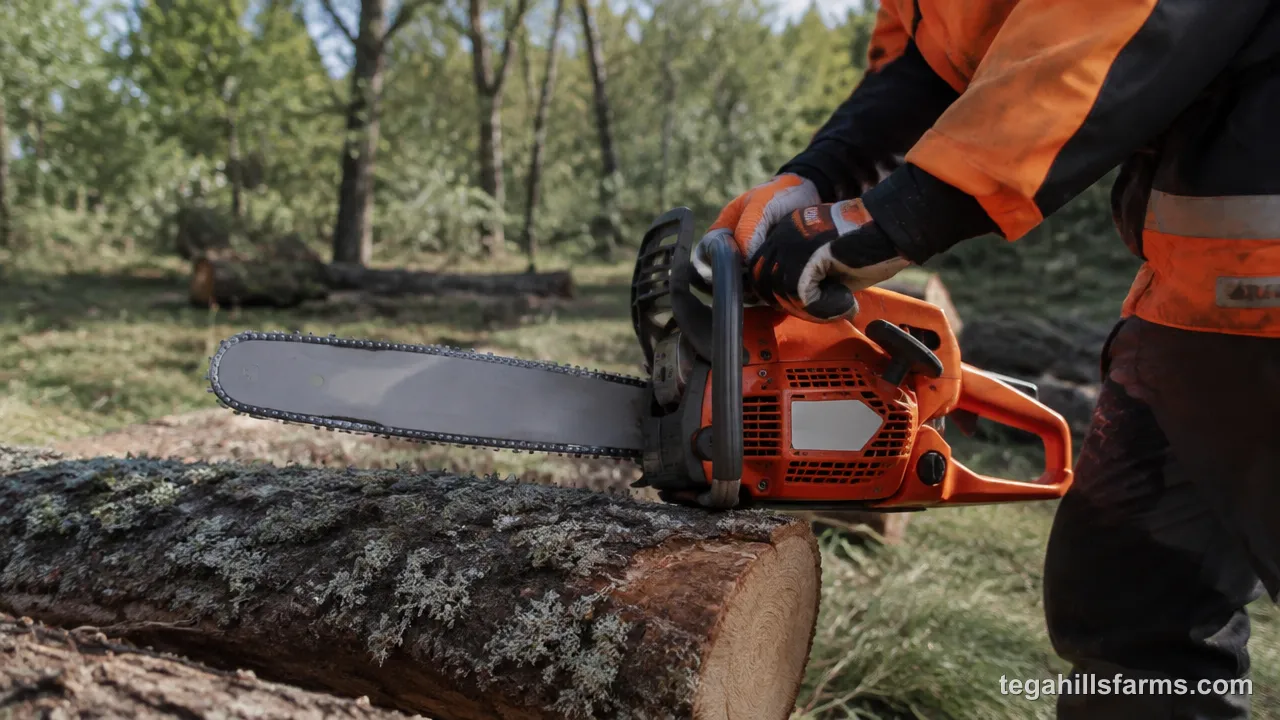
The 135 Mark II, 130 and 435 fit occasional limb cutting, brush and small storm debris. The 120 Mark III is the all-rounder of the light group, and the Power Axe 350i is the cordless option. For this kind of work you pick the saw up and set it down over and over, so low weight and easy restarts matter more than horsepower. A shorter bar is also easier to steer around branches and fence wire.
The Power Axe 350i makes more sense than gas when cutting comes in short bursts near the house, when noise would bother the neighbors, or when you’d rather not keep mixed fuel on hand. If your tool shelf already holds another brand’s batteries, the best Ryobi chainsaws and the best Makita chainsaws may run on packs you own.
Which Pick Suits Firewood and Property Work, and Is the 455 or 460 Rancher Better?
The 450X Rancher, 445S, 455 Rancher and 460 Rancher are the picks for regular firewood cutting and clearing wooded property. Between the two Ranchers, the 455 is the better fit for typical firewood, and the 460 earns its place on bigger trunks. The 450X adds AutoTune for owners who cut often, and the 445S brings a slim body and an X-Cut chain.
Both Ranchers take the same bar range and weigh the same, so the difference is in the engine and the bar each ships with. The 460 has more displacement and comes with a 24-inch bar, which gives it the torque to keep a long chain moving through wide hardwood rounds. Horsepower differs only slightly, 3.6 against 3.5, so the 460’s real advantage is pulling a long bar without bogging. The 455’s 20-inch bar is easier to control when you limb a tree after felling it, and it keeps the saw’s balance closer to your hands. I’d take the 455 for typical firewood and property cleanup and step up to the 460 when wide trunks are a regular part of the work.
Which Pick Is Built for Frequent, Demanding Use?
The 555 is worth its weight and complexity when you cut in long sessions, work dense hardwood or need a saw built to last through years of hard use. The magnesium crankcase, three-piece crankshaft and strong cooling are designed around hard running, and AutoTune keeps the engine in tune as conditions change over a long day.
For a typical homeowner, it’s overkill. Its recommended bar range starts long, so it won’t run a short pruning bar. When AutoTune needs service, the fix goes through a dealer rather than a screwdriver. If your cutting is seasonal, a homeowner saw covers light work with less weight, and a Rancher handles firewood without the pro-grade build.
Cutting a limb from a ladder leaves one hand on the rungs and one on the saw, a grip no rear-handle saw is balanced for. The weight sits behind your hand, the bar tip wanders, and a kickback in that position has nowhere to go but toward you.
Is a Top Handle Saw Better for Tree Pruning?
No, not for most homeowners. That design is balanced for trained climbers working from a harness, and a light rear-handle saw held in both hands is safer for pruning from the ground. A top handle saw puts the rear grip directly over the engine, which makes it compact and balanced at the handle so an arborist can maneuver it up in the canopy.
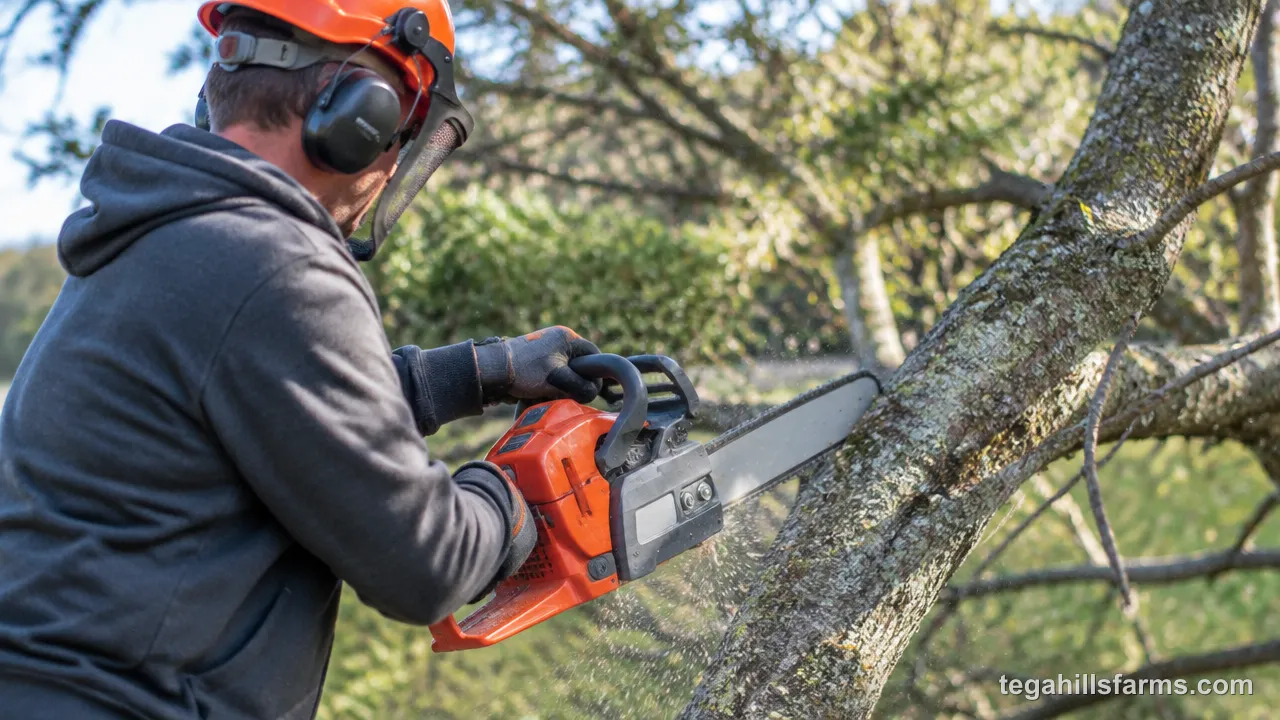
That compact layout also makes one-handed use tempting, and one-handed cutting is where kickback becomes dangerous, because a single arm can’t hold the saw against the force. Top handle saws also run short bars and small engines. They aren’t meant for felling or bucking large logs, and the short handle gives you little leverage in a big cut.
A homeowner who only prunes needs reach without a ladder. Use a pole saw for high limbs. For anything you can reach from the ground, use a light rear-handle saw such as the 135 Mark II or the 130. Limbs that require climbing are a job for an arborist.
Should You Buy an Older Used Husqvarna Chainsaw or a New One?
A used older pro saw makes sense if you can check compression and rebuild a carburetor; for everyone else, a new X-Torq saw is the safer buy. Older Husqvarna pro saws hold their value because they were built for hard use and are simple to work on, with a basic carburetor and no electronics.
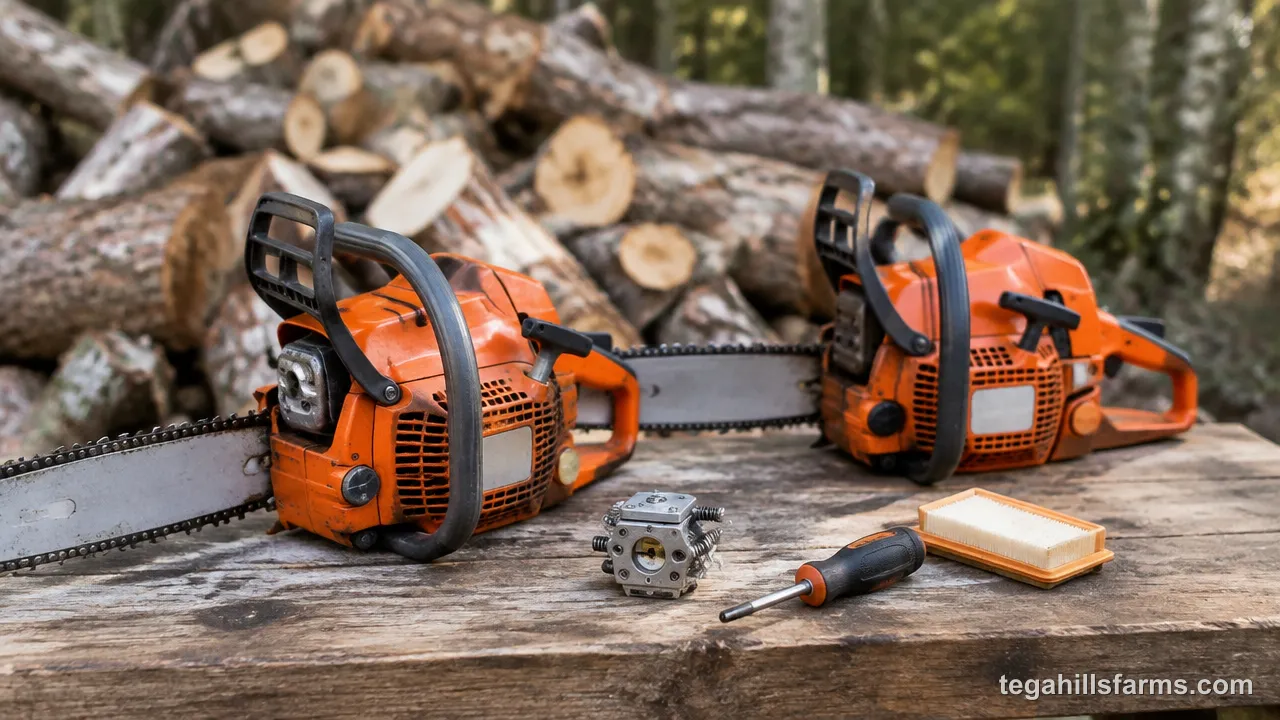
The trade-offs are real. Parts for discontinued models get harder to find, and the quality of aftermarket parts varies. Years of wear may not show from the outside. Older two-stroke designs burn more fuel and put out more exhaust than X-Torq engines, and most of them predate assisted starting like Smart Start, so starting takes a firmer pull.
Before you buy used, pull the cord slowly and feel for strong compression. Remove the muffler and look at the piston through the exhaust port for vertical scoring. Check the bar rails and drive sprocket for wear, and inspect the fuel lines for cracks. Make sure the chain brake stops the chain and the chain doesn’t creep at idle. Rev the saw near a light surface to confirm the oiler throws a line of oil.
How Do You Mix Fuel Correctly for a Two-Stroke Husqvarna Saw?
The engine has no oil sump, so the oil blended into the gas is the only lubrication the piston, cylinder and crankshaft bearings get. Too little oil lets friction and heat build until the cylinder scores or the engine seizes, and that damage usually means a rebuild. Too much oil leaves carbon on the spark plug and the muffler screen. The result is heavy smoke, a fouled plug, hard starting and lost power.
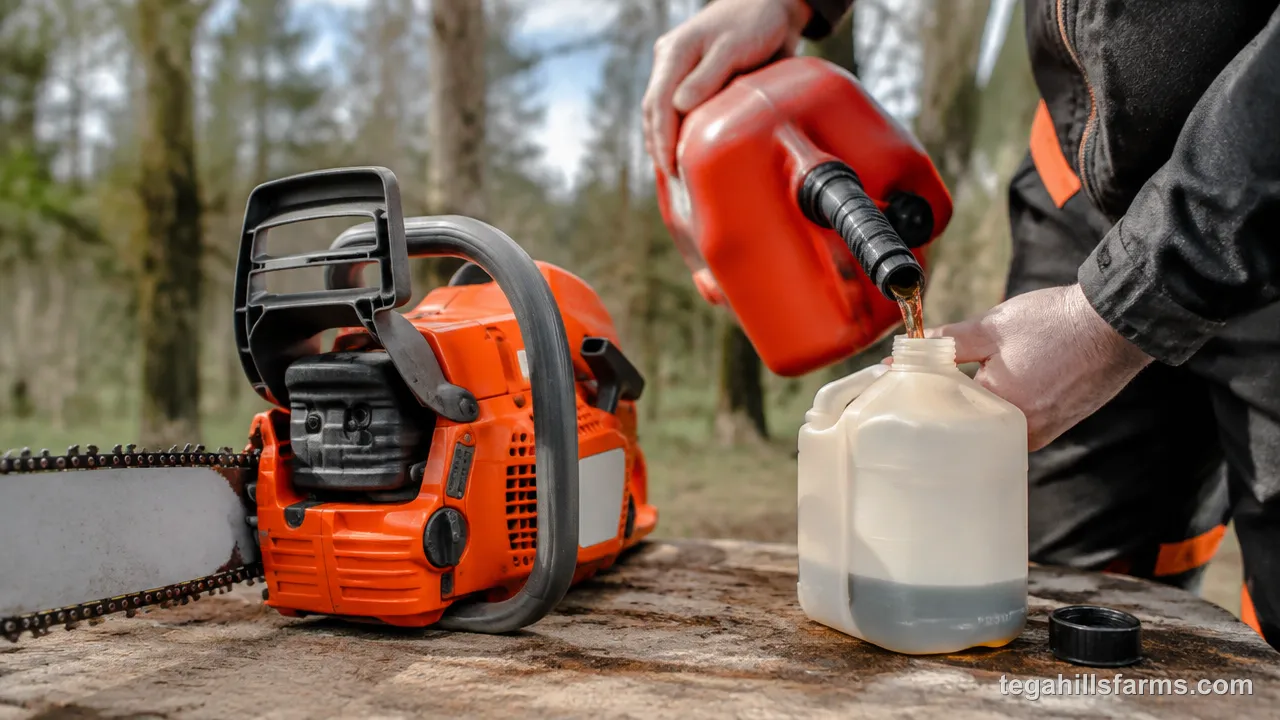
A bad mix shows up as a saw that’s hard to start, smokes more than usual, fouls plugs or bogs under load. Follow the ratio in your saw’s manual. Measure the oil for the amount of gas you’re mixing instead of guessing, and use two-stroke oil made for air-cooled engines with fresh gas.
Mixed fuel goes stale, and ethanol in pump gas pulls in moisture over time. Mix in small batches you’ll use up soon, add a fuel stabilizer, and keep the can sealed in a cool spot out of the sun. Before long storage, drain the tank and run the carburetor dry. Ethanol-free premixed fuel is another option, since it stays usable longer between jobs.
Write Your Review
No reviews yet. Be the first to share your experience!